Contemporary Design Examples to Copy in Your Home
See contemporary design examples for living rooms and beyond: what the style means, its core traits, how it differs from modern, and how to get the look.

By Julio Arco
Architect and online interior designer
In this post
Contemporary design is the style of right now: clean lines, a restrained palette, mixed textures and furniture that is easy to live with. It borrows from several eras, so it keeps shifting. The examples below show how that looks in real rooms, with a living room as the main case.
If you're wondering where to start, pick a quiet neutral base, add one or two natural materials, and keep the floor plan open enough to walk through comfortably. Everything else is detail.
What does contemporary design mean?
Contemporary simply means designed in the present. Unlike historic styles, it has no fixed rulebook. Compare that with something like Greek Revival, which the National Park Service describes as inspired by the classical Greek temple and popular in America from the 1830s to the 1860s. A style like that has a start and end date and a checklist of features. Contemporary has neither, so it reflects what people are building and decorating with today.
That flexibility is also why it gets confused with modern design. Modern refers to a specific early-to-mid 20th century movement. Contemporary is looser, softer and more willing to mix things in.
Contemporary interior design characteristics
Most contemporary rooms share a handful of traits:
- Simple, uncluttered forms with clean lines and few ornamental details.
- A neutral base (warm white, greige, charcoal) with one or two accent colors.
- Texture doing the work that pattern and ornament did in older styles.
- Natural materials such as wood, stone, wool and linen.
- Layered lighting and plenty of daylight.
- Open, flexible layouts with clear paths through the room.
Compare that with the Italianate style, whose dominant characteristic was the low, overhanging roof with decorative eave brackets. Contemporary rooms go the other way: the decoration is edited down so the shapes and materials can speak.
Contemporary design examples for a living room
The living room is where most people want to see the style in action. A few combinations that work:
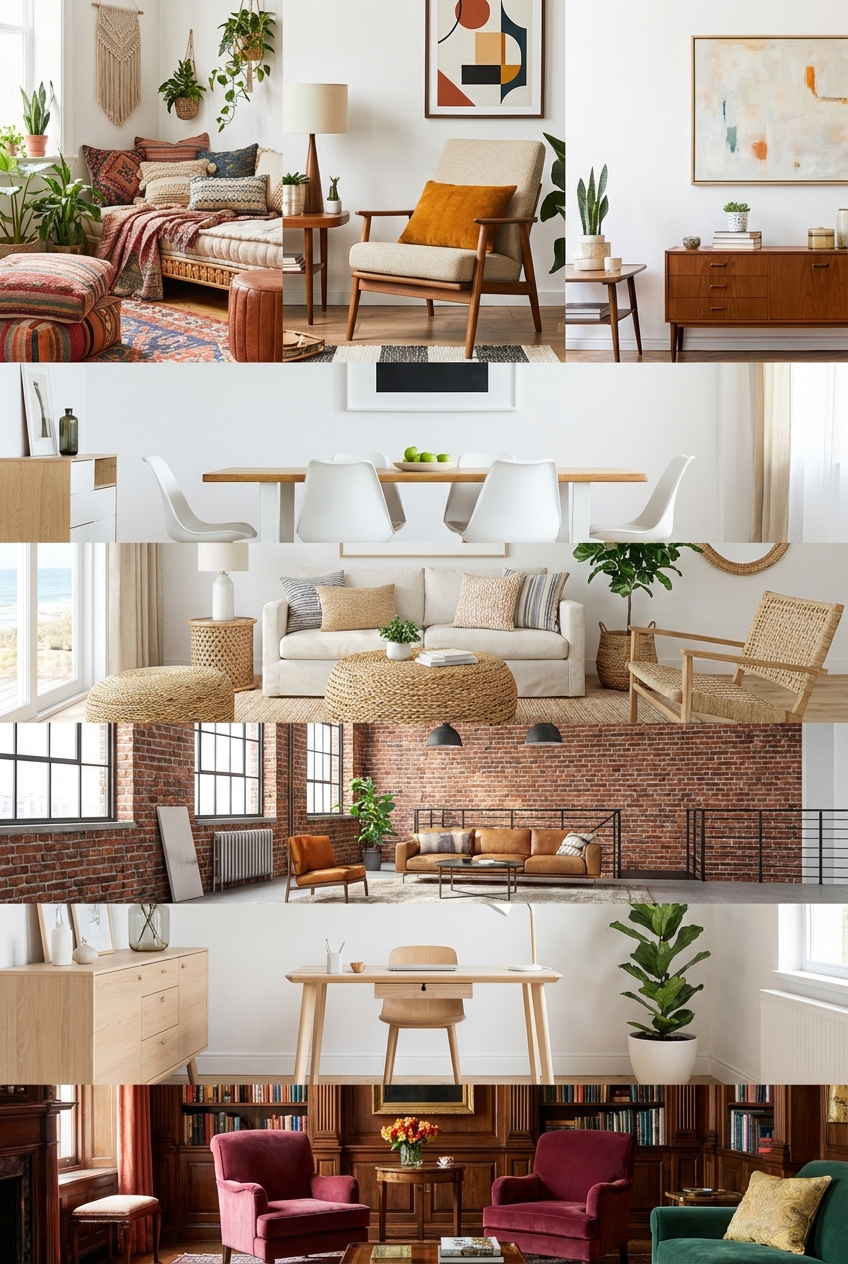
Warm neutral with a dark anchor
Soft white walls, a greige rug and a charcoal sofa. The dark piece gives the eye a place to land while the rest stays calm. Add a black pendant or floor lamp to repeat the contrast.
Minimalist contemporary
Few pieces, low profiles, empty surfaces. Minimalist contemporary interior design relies on proportion: one well-sized sofa, one table, one large artwork. If you have a dog, this look is easier to clean, but choose a performance fabric so the clear lines don't show every paw print.
Organic contemporary
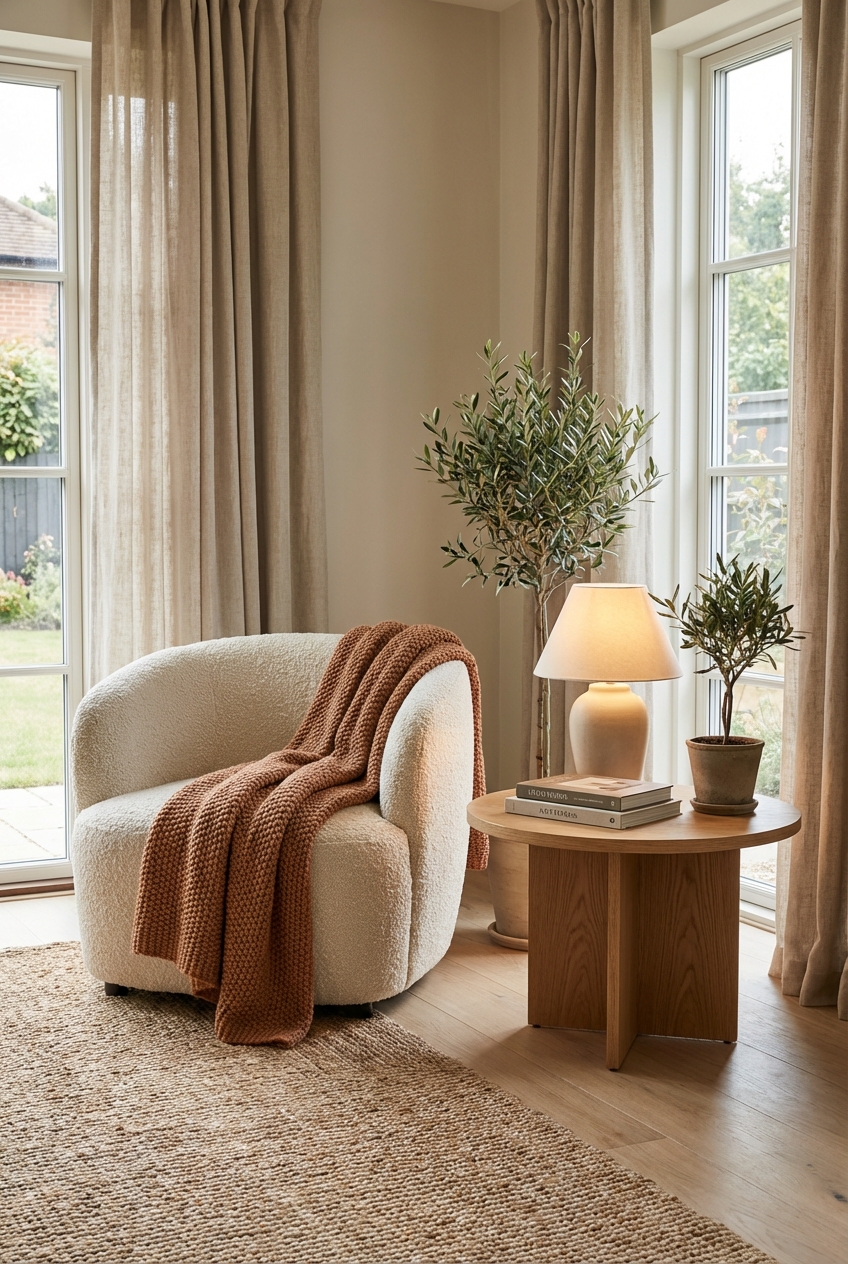
Rounded furniture, a wool or jute rug, a linen throw and a large plant. Wood and stone keep the room warm instead of sterile.
Mixed old and new
A contemporary sofa beside a vintage coffee table works if you repeat one material or color elsewhere, such as the wood tone in a shelf or frame.
Examples beyond the living room
In a kitchen, contemporary usually means flat-front cabinets, minimal hardware, a matte or low-sheen finish and one standout material like stone or wood on the counters or island. In a bathroom, think large-format tile, a floating vanity and simple metal fixtures in one finish. In a bedroom, a low platform bed, symmetrical bedside lamps and layered bedding in two or three tones create the calm the style is known for.
Contemporary vs. modern design
Modern design draws on a particular period and tends to be stricter: strong geometry, minimal ornament, certain signature materials. Contemporary design is current and fluid. It can include curves, warm woods and softer textures that a strict modern room might avoid. If you like the order of modern but want something less severe, contemporary is the easier fit.
Types of contemporary design
There is no official list, but these are the variations you'll see most:
- Minimalist contemporary: pared back, very few objects.
- Warm or organic contemporary: natural textures and rounded shapes.
- Transitional-leaning contemporary: clean lines mixed with a few traditional pieces.
- Industrial-leaning contemporary: black metal, concrete and reclaimed wood.
Pick the one that matches how much stuff you actually own and how much upkeep you'll tolerate.
How to get the look at home
Start with color and light
Choose a neutral base and test paint samples on more than one wall. North-facing rooms read cooler and south-facing rooms read warmer, and warm bulbs can push gray toward taupe.
Choose furniture with clean shapes
Contemporary interior design furniture usually has simple frames, exposed legs and low backs. Exposed legs let light and sight lines pass under the piece, which makes a room feel larger. As an architect, I recommend washable covers or performance fabric on any sofa a dog is allowed on.
Mind the layout
Leave about 30-36 inches for main walkways and anchor seating around one focal point, such as a fireplace, a view or a media wall. In an open plan, a rug helps define the seating zone. For tighter rooms, see our small living room ideas.
Layer texture instead of pattern
Pair a smooth leather or velvet piece with nubby wool and a linen throw. Keep one metal finish dominant, and prefer matte or low-sheen surfaces over high gloss.
Add trends in small doses
Warm neutrals, curved silhouettes and sculptural lamps are common right now. Bring them in through accessories so you can swap them later without redoing the room.
For more room-by-room inspiration, browse more contemporary examples and this effortless contemporary room. If your home leans masculine in tone, these living room ideas pair well with the dark-anchor approach above.
Frequently asked questions
What does contemporary design mean?
It means design of the present day. It has no fixed rules, so it blends clean lines, neutral colors and natural textures from several periods.
What are some examples of contemporary?
A living room with a warm neutral palette and a charcoal sofa, a kitchen with flat-front cabinets and stone counters, or a bedroom with a low platform bed and layered bedding.
What are the different types of contemporary design?
Common variations are minimalist, warm or organic, transitional-leaning and industrial-leaning contemporary. They share clean lines and a restrained palette.
Can I mix modern and vintage pieces?
Yes. Repeat one material or color across the old and new pieces so the mix feels intentional.
Filed under
ArticlesMeet the author
Written by an architect.
Julio Arco is a passionate architect with years of experience in architecture, interior design, urban design, and housing. He studied at prestigious universities across North America and Europe.

- Name
- Julio Arco
- Job
- Architect and online interior designer
- Studied
- Architecture, ITESM · Urban Design and Housing, McGill
- Partner
- Thor, Australian Shepherd
- Thor’s title
- Head of quality control