Contemporary Design Examples for Living Rooms and More
See contemporary design examples you can copy: what the style means, how it differs from modern, and how to build the look in a living room.

By Julio Arco
Architect and online interior designer
In this post
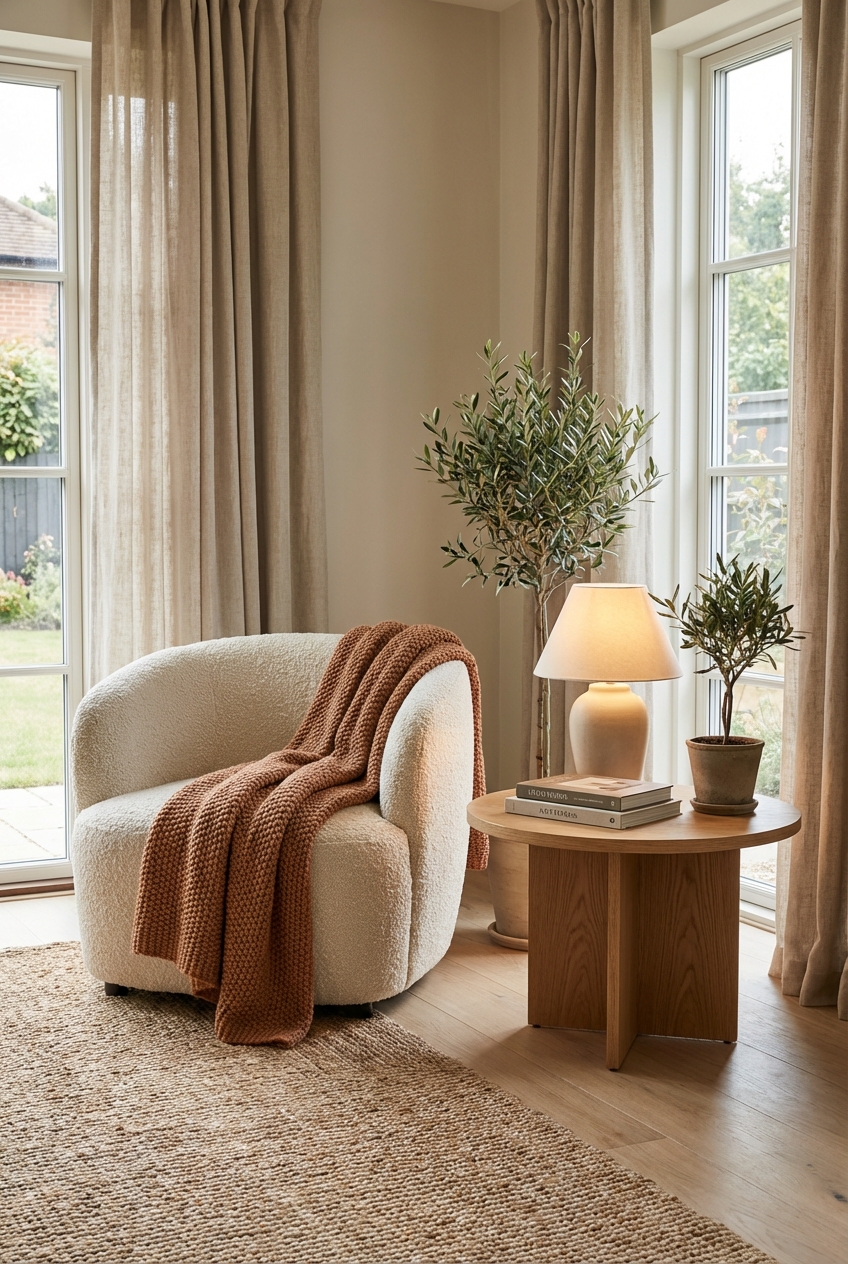
Contemporary design is the style of right now: clean lines, a calm neutral base, a few natural materials and very little clutter. If you want a quick example, picture a soft neutral sofa, one sculptural lamp, a large rug and a couple of big plants. That's it, and it works.
Below you'll find what the style means, how to tell it from modern design, and several living room examples you can copy at home.
What does contemporary design mean?
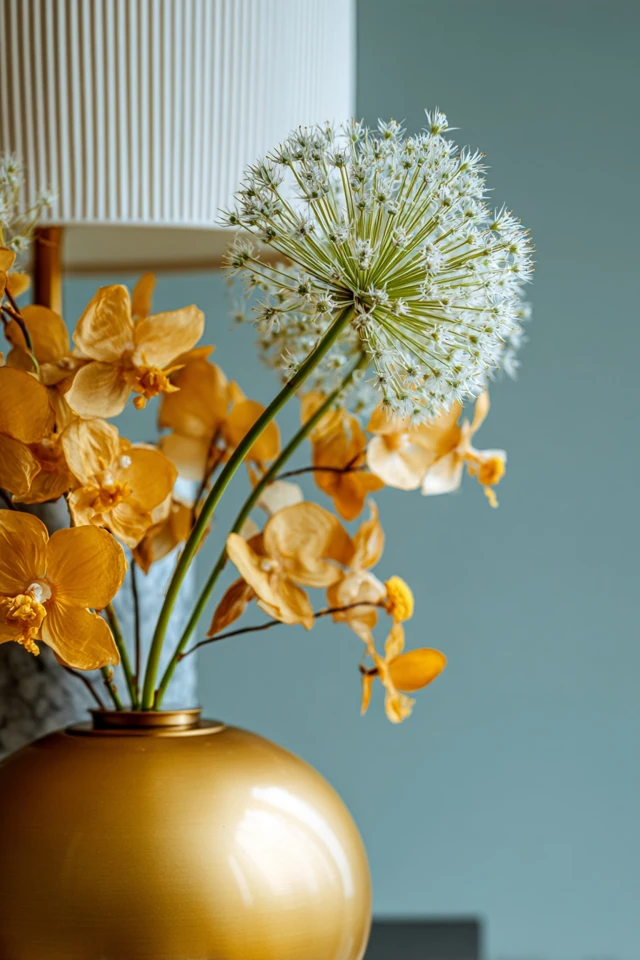
Contemporary design describes what's current. Unlike a historical style with fixed rules, it shifts with the times, borrowing from modern, minimalist and organic looks. Compare that with a style that is pinned to a period: the National Park Service describes the Greek Revival style as popular in America during the 1830s through the 1860s. Contemporary has no such dates, which is why it keeps changing.
Modern design, by contrast, usually points to the early-to-mid 20th century: strict geometry, flat planes, little ornament. Contemporary interiors are softer. Curves, texture and warm materials show up much more often.
Contemporary interior design characteristics
- A neutral base (warm white, greige, soft gray) with one or two accent colors.
- Clean lines and uncluttered surfaces.
- Texture doing the work that pattern would do in a traditional room: linen, wool, boucle, wood, stone.
- Layered lighting: a main source, task lights and a few accent lights.
- Natural light and plants.
- Furniture scaled to the room, with visible legs and low profiles.
Balance matters more than any single piece. If you have a dramatic artwork, keep the furniture around it low and the finishes quiet, so the eye has one place to land.
Contemporary design examples for the living room
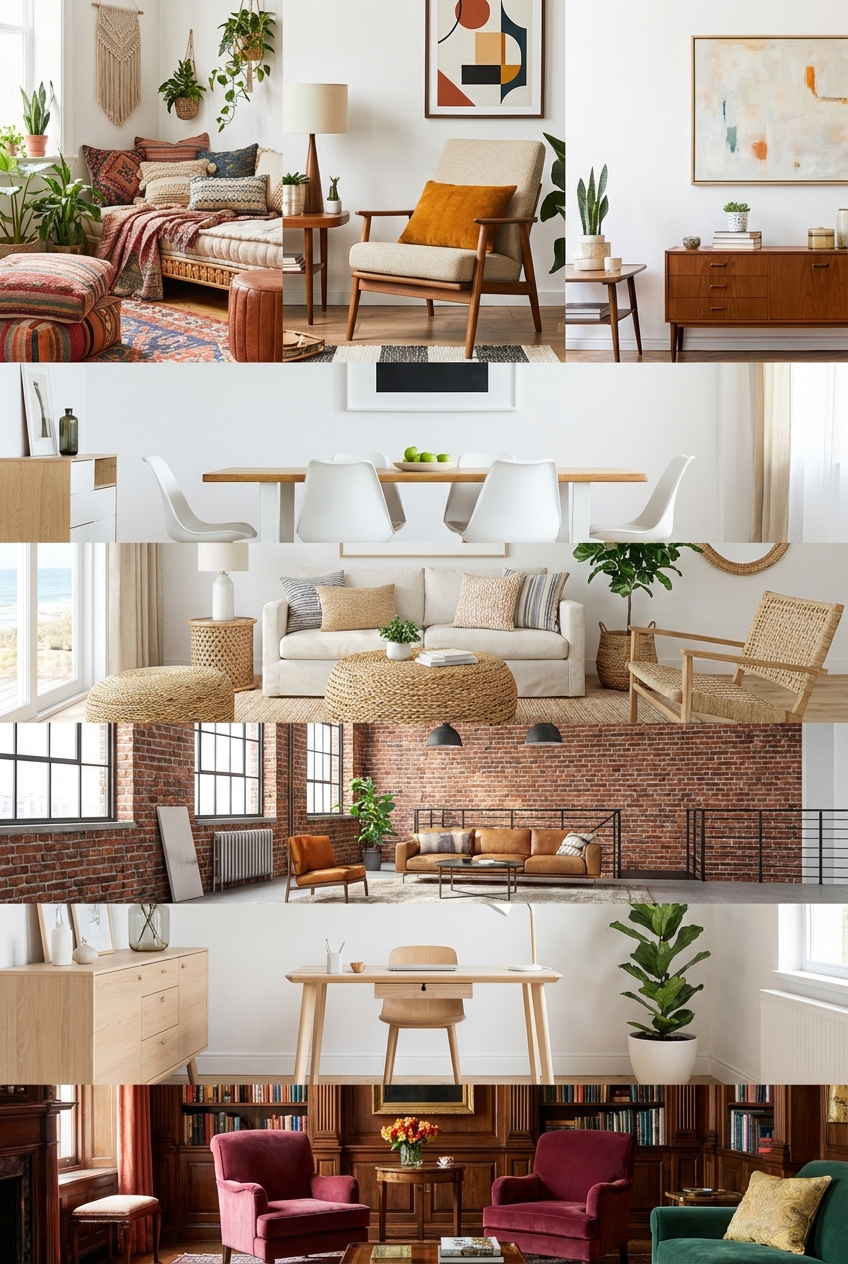
These are looks I'd point to when someone asks where to start. Each one rests on the same basics: a controlled palette and a clear focal point.
The neutral, textured room
A pale sofa, a wool rug, linen curtains and a wood coffee table. Nothing is bold, but every surface feels different to the touch. This is the safest version and the easiest to live with.
Minimalist contemporary
Fewer pieces, more empty floor. Minimalist contemporary interior design relies on proportion: one good sofa, one low table, one lamp. Storage is closed so surfaces stay clear. It looks calm, but it can feel cold, so add warm bulbs and a wood or woven element.
Organic contemporary
Curved sofas, rounded side tables, stone, jute and big plants. The shapes are soft and the colors come from nature. As an architect, I'd choose this version for a room with a lot of foot traffic, since rounded corners are kinder to hips and knees.
Warm contemporary with one bold accent
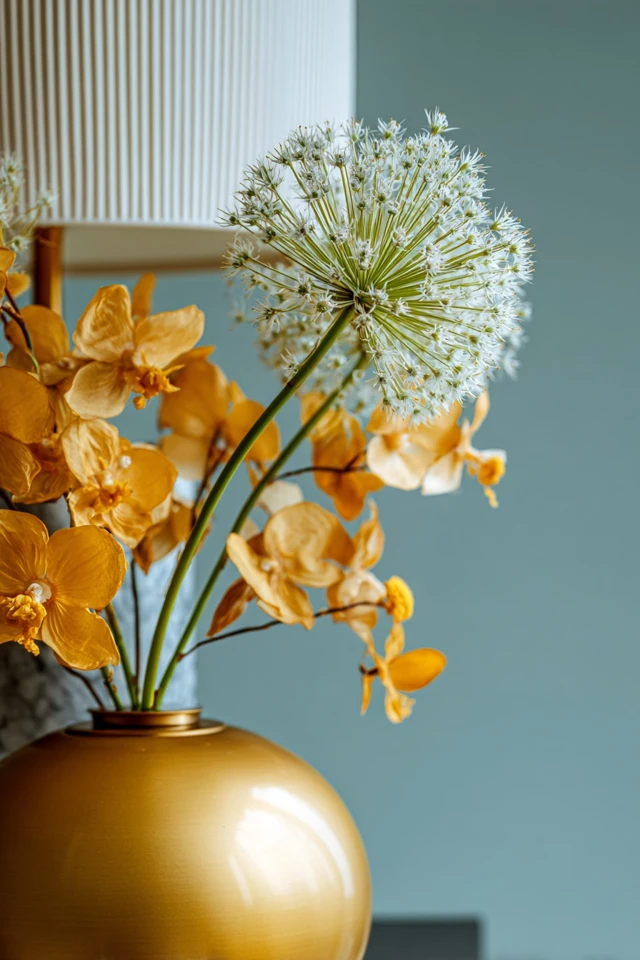
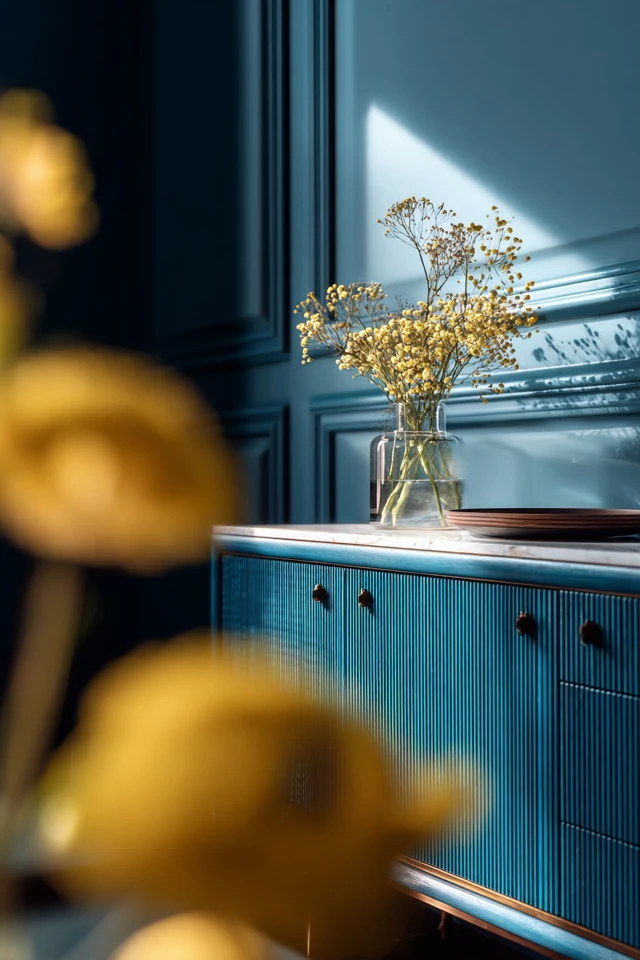
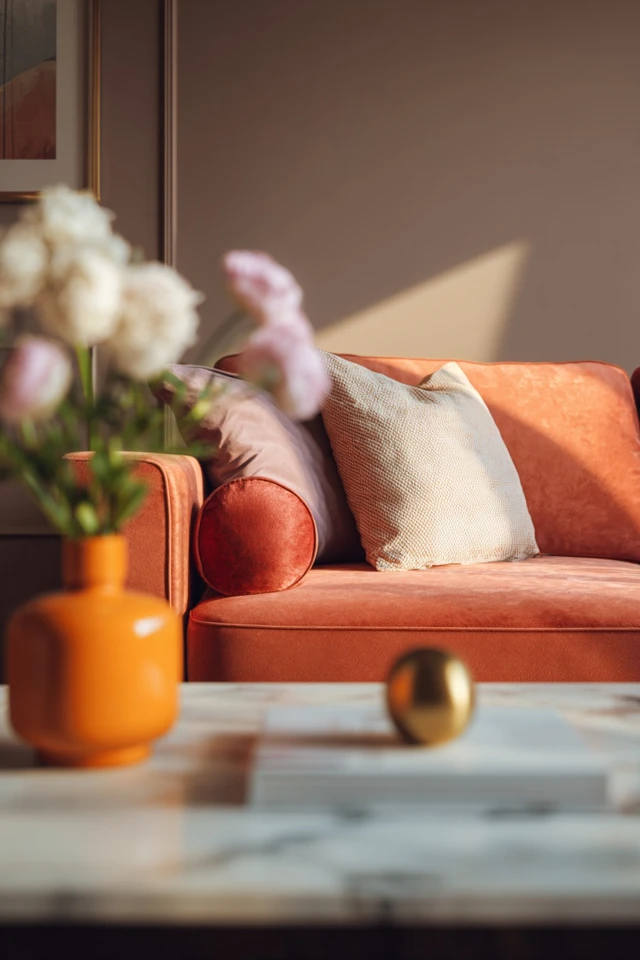
Keep the large surfaces muted and put saturation in a pair of armchairs or one piece of art. Highly saturated color is energizing in small doses and tiring across whole walls.
How to build the look at home
Start with a neutral anchor
Pick a neutral sofa and rug first, then layer color and texture with pillows, throws and art. Swapping a pillow is cheap. Swapping a sofa is not.
Arrange for conversation
Pull seating into a loose oval or U-shape instead of lining it up along the walls. Leave about 30-36 inches for main walkways, and keep the rug large enough that at least the front legs of the sofa and chairs rest on it.
Choose contemporary interior design furniture with care
Look for simple silhouettes, slim or tapered legs and upholstery in tight weaves. If a dog shares your sofa, I recommend washable covers or performance fabrics over loose-weave bouclé, which snags easily. Leather and wood can look great but scratch, so think about claws before you buy.
Mix materials, keep metals consistent
Wood for big planes like floors or shelving, soft textiles for upholstery and curtains. Choose one metal finish per room, such as brushed brass or matte black, so it doesn't look jumbled. Matte finishes read as understated, while glossy ones reflect light and can cause glare, so use them sparingly.
Light it in layers
Combine ambient, task and accent light. A large pendant can anchor a seating area, and wall sconces free up floor space. Check paint samples at different times of day, because warm bulbs deepen warm tones and cool LEDs mute them.
Edit before you add
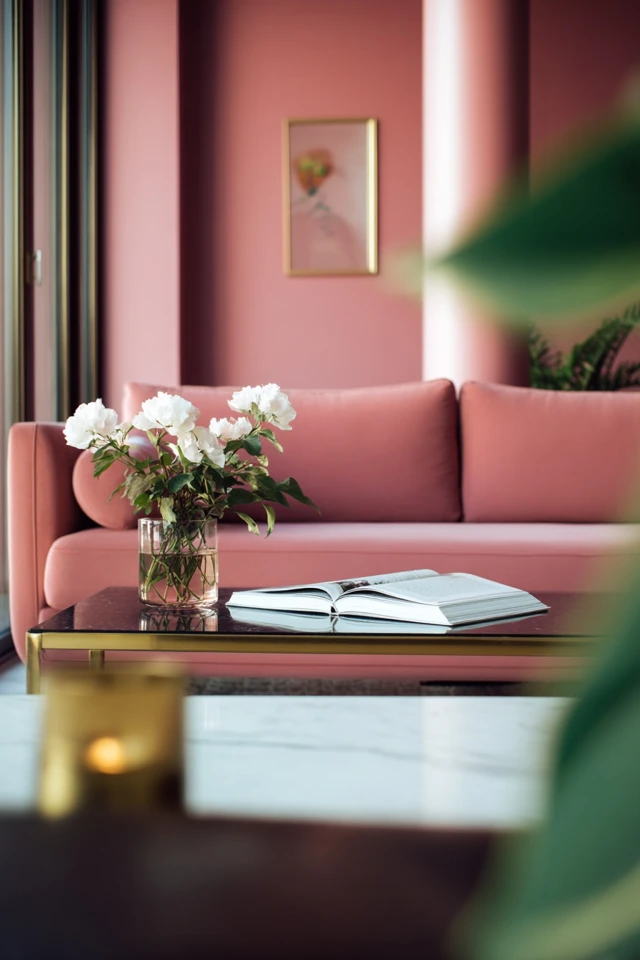
Remove duplicates and anything you don't love. Group accessories in odd numbers when you display them; it usually looks more natural than pairs. One large plant or a few small pots adds color and texture without clutter.
Adapting the style to small and large rooms
In a small room, choose multifunctional pieces like storage ottomans, add vertical storage and keep sightlines open. In a large room, create several smaller zones, such as a reading corner and a conversation area, so the space feels human-scaled. A rug and a console or low bookcase can divide an open plan without blocking views.
Which trends are worth borrowing?
Curved furniture and sustainable materials are common in current contemporary rooms. Use trendy pieces as accents, such as an arched mirror or a sculptural lamp, and keep the sofa and dining table classic in shape and neutral in color. That way, refreshing the room later means changing a lamp, not the whole layout.
For more inspiration, see more contemporary design decor examples, a look at TV room design, and fireplace and TV wall ideas.
Frequently asked questions
What are some examples of contemporary?
Common examples are a neutral living room with textured fabrics, a minimalist space with few pieces, and an organic room with curved furniture and plants. Each one uses clean lines and a restrained palette.
What are the different types of contemporary design?
The most common types are neutral and textured, minimalist, organic and warm contemporary with an accent color. They share the same base and differ in how much they add.
Can contemporary design feel warm and inviting?
Yes. Warm lighting, wood, wool and linen soften clean lines, and a few personal items keep the room from feeling like a showroom.
How do I make a small contemporary room feel larger?
Use a light, cohesive palette, scale furniture down and keep floor space visible. Mirrors and layered lighting also help.
Filed under
ArticlesMeet the author
Written by an architect.
Julio Arco is a passionate architect with years of experience in architecture, interior design, urban design, and housing. He studied at prestigious universities across North America and Europe.

- Name
- Julio Arco
- Job
- Architect and online interior designer
- Studied
- Architecture, ITESM · Urban Design and Housing, McGill
- Partner
- Thor, Australian Shepherd
- Thor’s title
- Head of quality control