Dog Friendly Backyard No Grass: Ideas That Work

By Julio Arco
Architect and online interior designer
In this post
- Why skip the lawn at all?
- What can you put in a backyard instead of grass for dogs?
- Which ground cover plants are dog friendly?
- How do you prepare the ground?
- How do you lay out a yard without grass?
- Shade, water and seating
- Doing it on a budget, in stages
- What about color and calm?
- Frequently asked questions
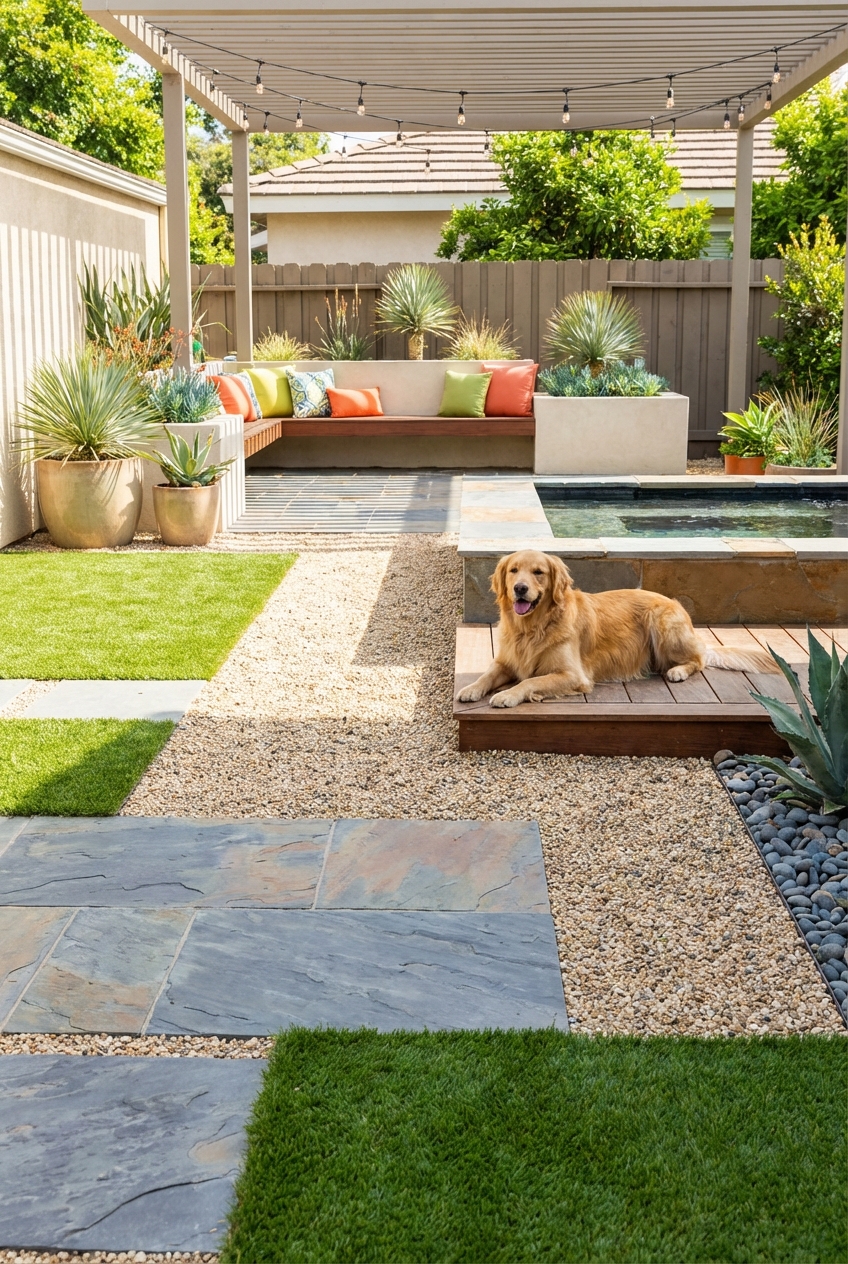
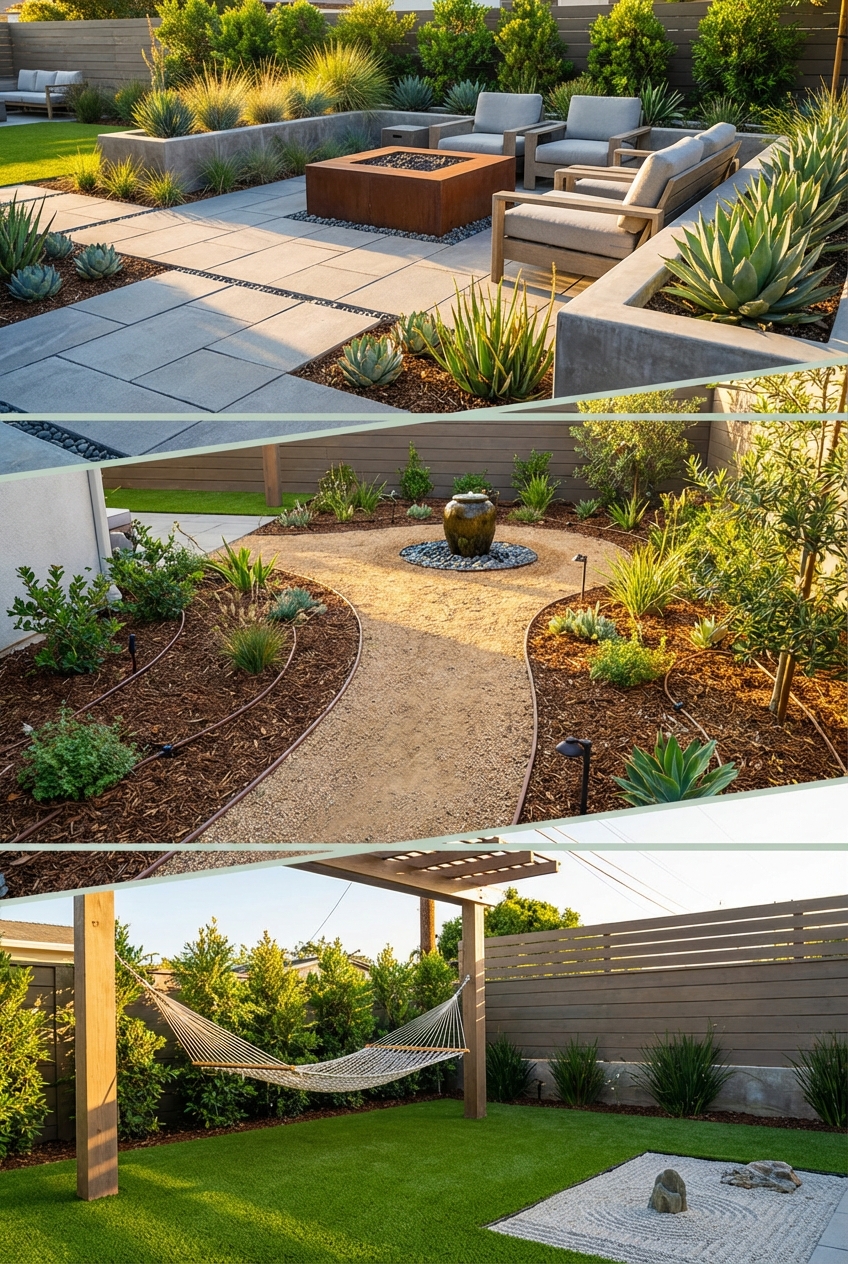
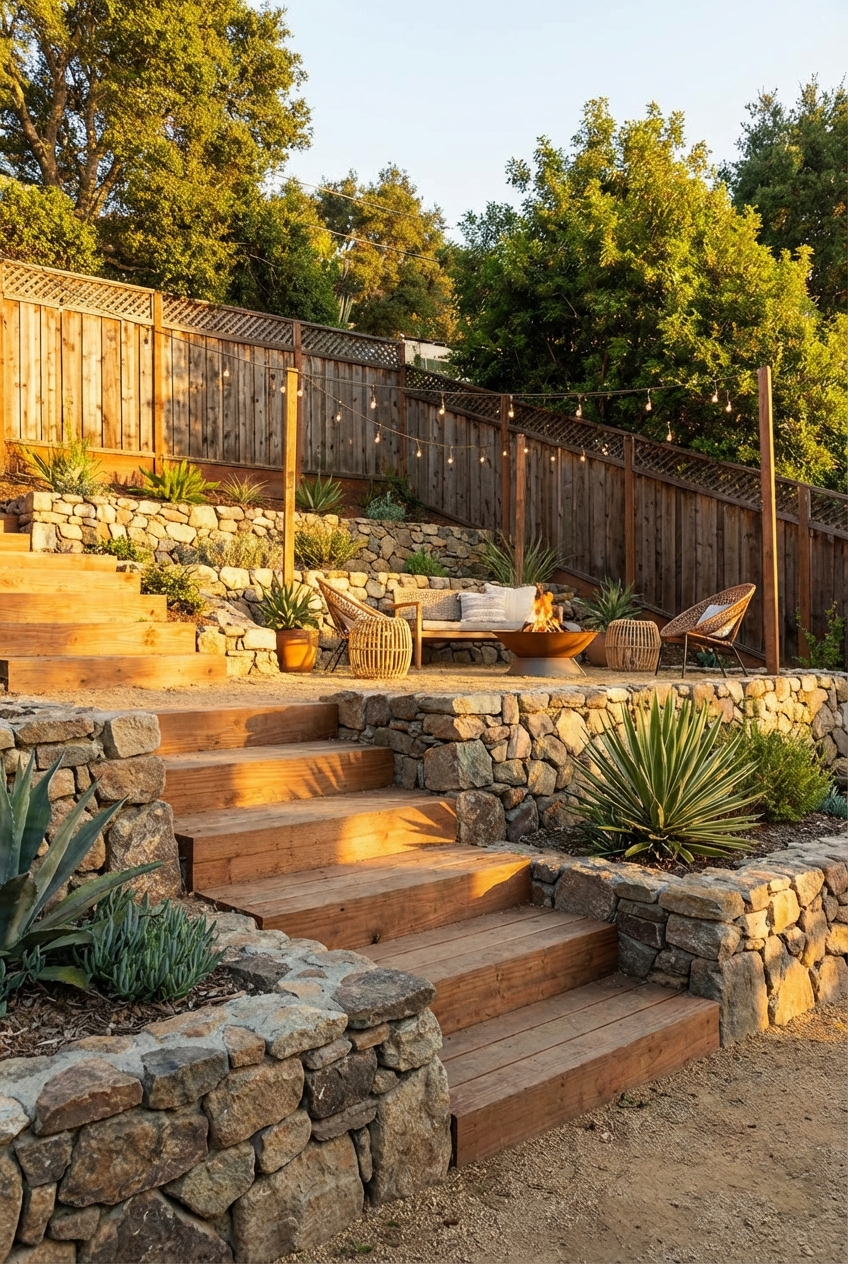
A dog friendly backyard with no grass comes down to three things: a durable surface where your dog runs and plays, a few tough plants in defined beds, and a clear path or two so nobody tramples the rest. Most yards do best with a mix of materials, not a single replacement.
If your lawn is patchy, muddy or just a chore, you're in good company. Below are the options I'd consider first, what each does well, and where each one falls short with a dog in the picture.
Why skip the lawn at all?
Grass asks a lot of you. The University of Maryland Extension notes that turfgrasses require constant maintenance that comes with costs, including pesticide exposure for humans and pets, pollution and water waste. If your lawn is already failing, the same extension suggests considering a renovation when it is more than 50% weeds. That is a good moment to choose something else instead of reseeding.
Dogs add their own wear: running routes, urine spots and digging. A surface designed for that traffic will look better than grass fighting a losing battle.
What can you put in a backyard instead of grass for dogs?
These are the main choices for low maintenance grass alternatives for dogs, with the trade-offs that matter.
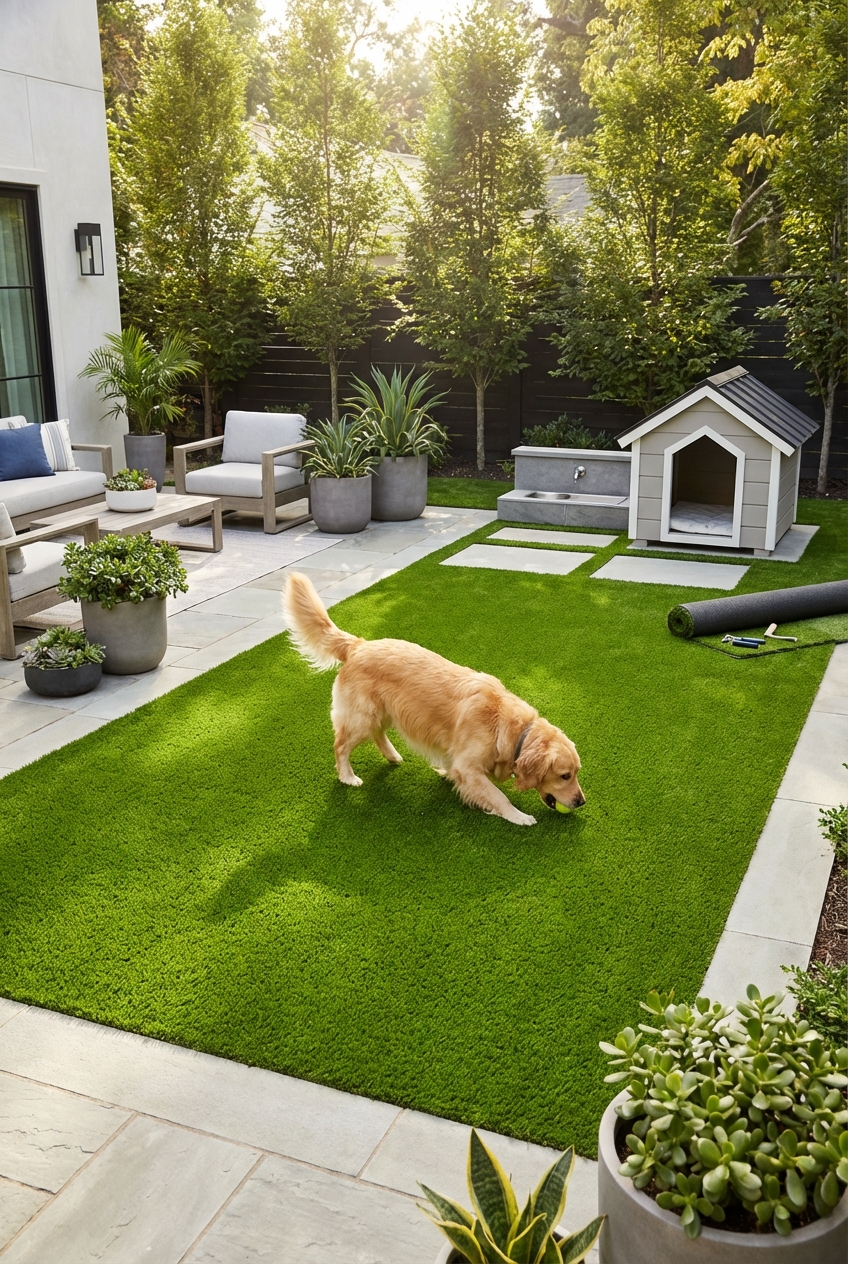
Artificial turf
It stays green, drains when installed over a proper base, and handles hard running. The downsides: it can get hot in full sun, and urine odor needs regular rinsing. Choose a pet-rated product with good drainage and ask the installer how the base is built.
Gravel and pea gravel
Affordable, quick to lay and very good at drainage. Rounded pea gravel is kinder on paws than sharp crushed stone. Keep it to potty zones and side runs, since some dogs will pick up stones. If yours chews rocks, skip it.
Mulch and wood chips
Soft underfoot and cheap, which makes them good for play areas. One firm warning: cocoa mulch contains the same compound that makes chocolate toxic to dogs. Use plain wood chips and check with your vet if your dog eats something it shouldn't.
Pavers, flagstone and decking
Hard surfaces make clean, durable seating areas and paths. They're pricier, but they last and hose off easily. Leave gaps between stones for drainage or plant tough ground cover in the joints.
Which ground cover plants are dog friendly?
Dog friendly ground cover plants should be low and spread easily. Colorado State University Extension describes suitable ground covers as low-growing (generally less than 24 inches) and spreading easily. Clover is a popular pick because white clover does not show pet urine damage.
Before you buy anything, check each plant against a pet-toxicity list such as the ASPCA's, and ask your vet about anything your dog likes to nibble. Penn State Master Gardener Holly List suggests that containers with tender plants may keep them safer, rather than being in the ground. I agree: pots are an easy way to enjoy a plant you're unsure about.
Plant in groups of a single species instead of one mixed jumble. Master Gardener Deb Christopher points out that if disease or pest problems arise, an entire monoculture planting may be killed, so drifts or groups of single species give a patchwork-quilt effect.
How do you prepare the ground?
Fix the cause of the failure first. The University of Maryland Extension advises you to correct conditions such as soil compaction and poor drainage before filling in a declining area. For planting beds, Colorado State recommends working in 3 to 5 cubic yards of compost or other organic amendment per 1,000 square feet.
Skip plastic landscape cloth under plants. Penn State Extension says plastic or synthetic landscape cloth can increase erosion and water runoff.
How do you lay out a yard without grass?
Think in zones, the way you would indoors. As an architect, I'd start with the dog's own routes: where it runs to the fence, where it waits at the door, where it lies in the shade. Then put the hard-wearing surface on those lines.
- A main path about 36 inches wide, in pavers or compacted gravel, from the door to the gate or seating area.
- A potty area with gravel or turf, close to the door and easy to hose.
- A digging zone, if your dog digs: a sandbox-style bed of soft soil or sand with a border, so the habit has a legal home.
- Planting beds set back from the fence. Penn State suggests a 2- to 3-foot buffer between the fence and the planting beds, so patrol routes don't run through your plants.
Shade, water and seating
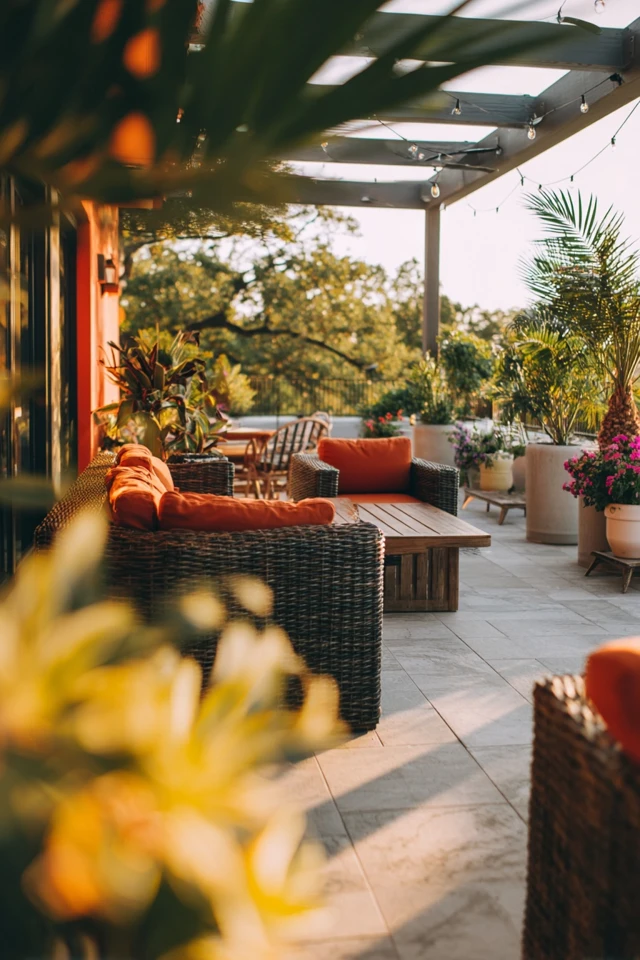
Gravel, turf and stone all heat up in sun. A pergola, shade sail or a tree gives your dog somewhere cool to lie. Keep a water bowl in the shade, and consider a shallow pool or splash area for summer.
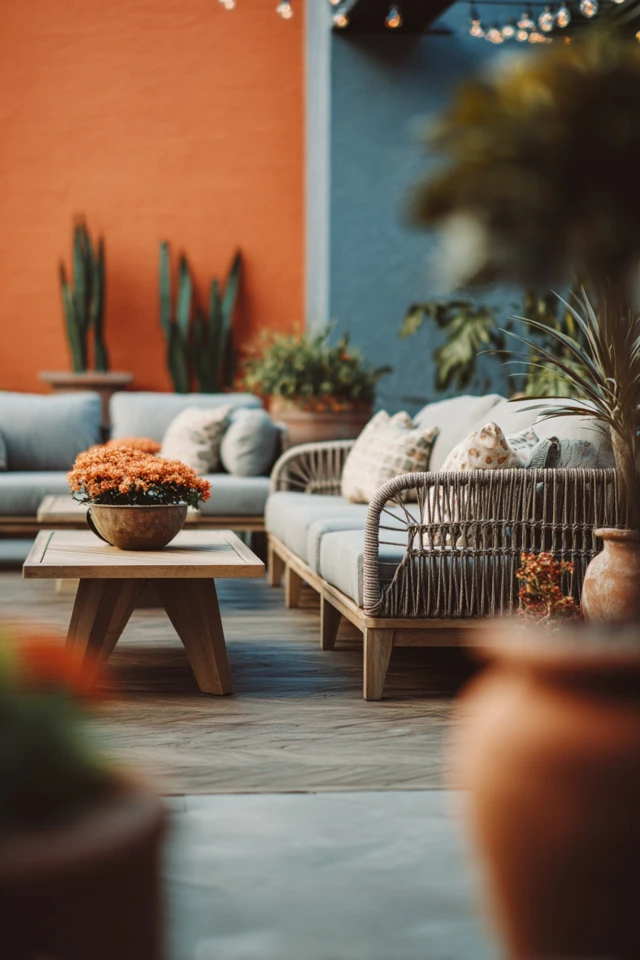
For seating, a pavered patio near the house keeps the human zone clean and gives you a good view of the whole yard. If the backyard feeds into the house, a matching palette outside and in makes both feel bigger; the ideas in this pool house post carry over well to a patio.
Doing it on a budget, in stages
You don't need to redo everything at once. Start with the path and the potty zone, since they take the most wear. Then add mulch or gravel to the rest, and plant ground cover as money allows. Gravel and wood chips are the cheapest to DIY. Turf and pavers are better left to a second phase, or to a pro if drainage is tricky.
Small yards do well with one main surface and a few containers. A compact space with a single gravel run, a pot cluster and a bench feels intentional, not bare. For more on making tight spaces work indoors, see these small living room ideas.
What about color and calm?
Muted greens, sandy neutrals and soft grays keep a yard restful for people. I don't have a verified source that a particular color calms anxious dogs, so I'd put your effort into shade, routine and a quiet corner instead. If your dog's anxiety is a concern, your vet is the right person to ask.
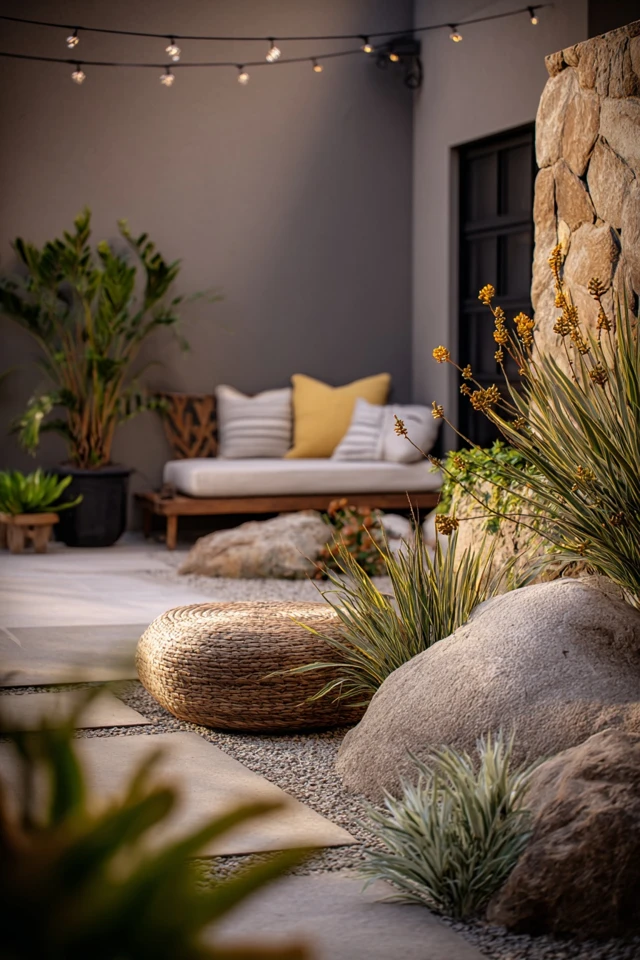
Keep upkeep in mind as you choose: rake gravel now and then, top up mulch each year, and rinse turf. A yard you'll actually maintain beats a perfect one you won't.
Frequently asked questions
What can I put in my backyard instead of grass for dogs?
Common choices are pet-rated artificial turf, pea gravel, plain wood chip mulch, pavers and low ground covers such as clover. Most yards work best with two or three of these combined by zone.
What to do with a backyard that doesn't grow grass?
Check for compaction, poor drainage or heavy shade, then pick a surface that suits those conditions instead of reseeding. Mulch, gravel, pavers and shade-tolerant ground covers all handle spots where grass fails.
What color calms dogs' anxiety?
There is no reliable color fix for dog anxiety. Shade, a predictable routine and a quiet resting spot help more, and your vet can advise on persistent anxiety.
Is gravel safe for dogs?
Rounded pea gravel is usually comfortable for paws, but dogs that eat stones should not have access to it. Check with your vet if your dog swallows anything it shouldn't.
Filed under
ArticlesMeet the author
Written by an architect.
Julio Arco is a passionate architect with years of experience in architecture, interior design, urban design, and housing. He studied at prestigious universities across North America and Europe.

- Name
- Julio Arco
- Job
- Architect and online interior designer
- Studied
- Architecture, ITESM · Urban Design and Housing, McGill
- Partner
- Thor, Australian Shepherd
- Thor’s title
- Head of quality control