Dog Friendly Backyard No Grass: Materials and Layout
Ideas for a dog friendly backyard with no grass: which materials to use, which to avoid, how to lay out zones, and how to keep costs and upkeep low.

By Julio Arco
Architect and online interior designer
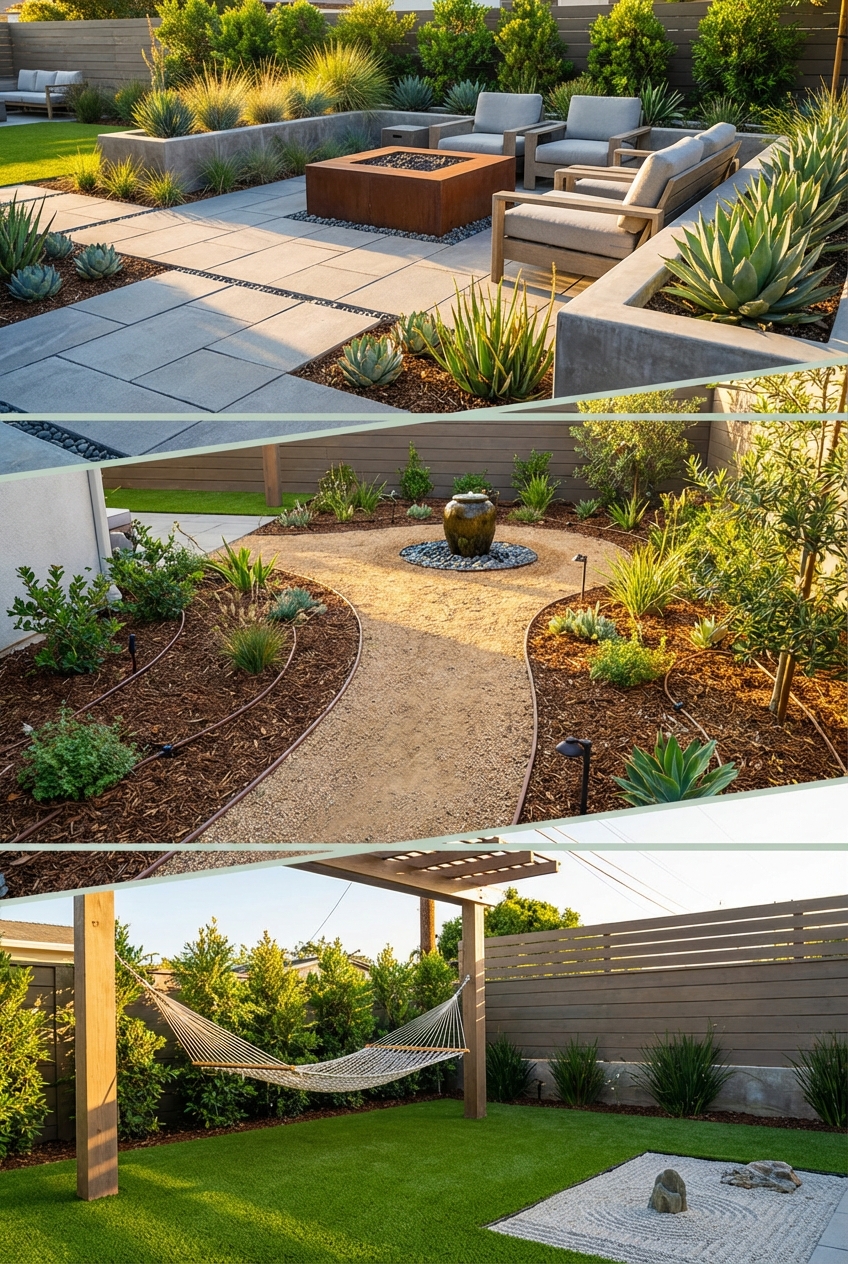
In this post
If your lawn is a mud patch with a few brave weeds, you can stop fighting it. The most practical replacements for grass in a dog yard are a firm hardscape for people, a draining surface for your dog's bathroom spot, and tough, low-growing plants in the borders.
Below are the materials worth considering, what to avoid, and how to lay everything out so the yard stays usable with very little upkeep.
Why give up the lawn at all?
Grass and dogs are a hard pairing. Paws wear paths, urine leaves burnt patches, and digging is a hobby. Keeping turf alive also takes work. The University of Maryland Extension notes that turfgrasses require constant maintenance that comes with costs, including pesticide exposure for people and pets, pollution and water waste.
If your lawn is already in decline, it helps to know when to stop patching it. The same extension suggests considering a renovation once a lawn is more than 50% weeds. At that point, replacing it is often cheaper than nursing it.
What can you put in a backyard instead of grass for dogs?
There is no single winner. Most good no grass backyard ideas for dogs combine two or three of these surfaces.
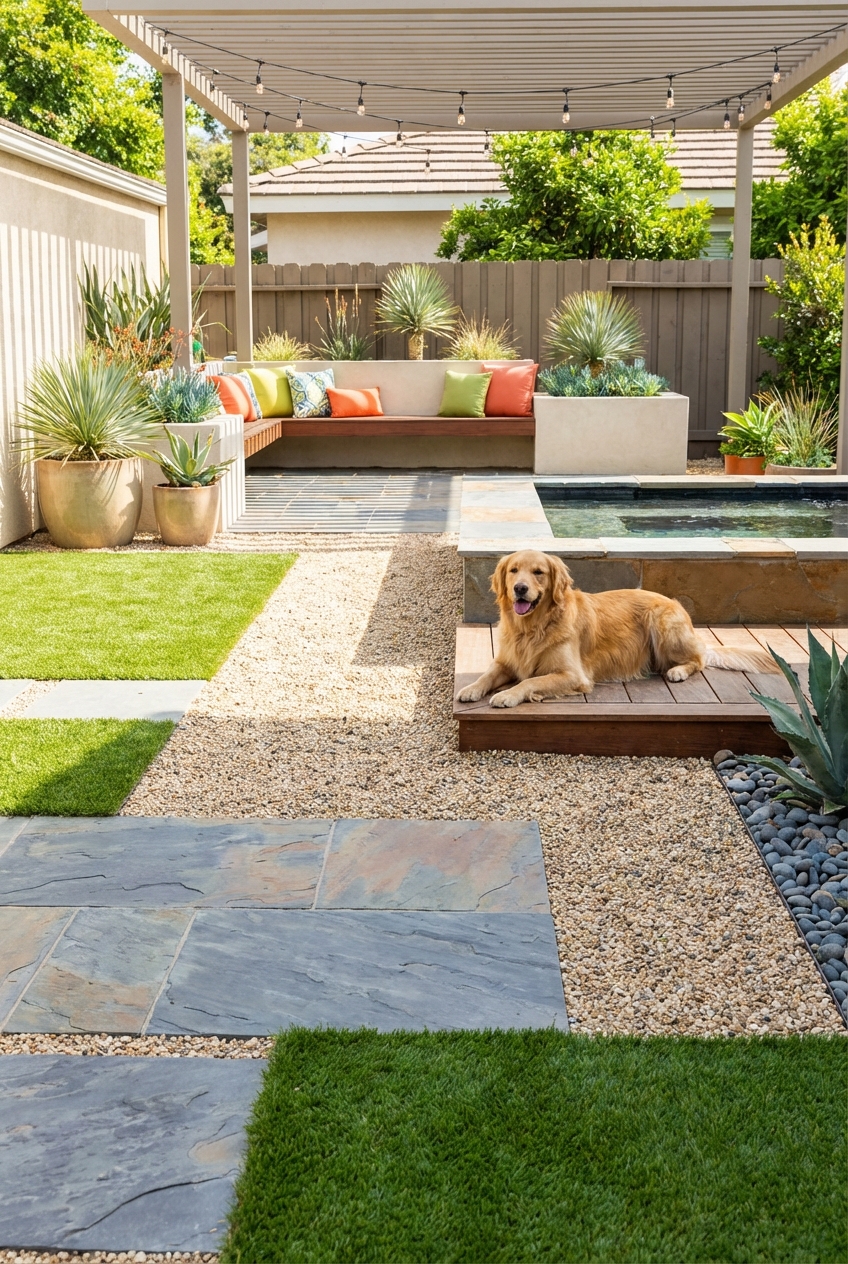
Pea gravel and river rock
Gravel drains fast, so it dries quickly after rain and rinses clean with a hose. Choose rounded pea gravel, not sharp crushed stone, which is rougher on paws. It gets hot in direct summer sun, so keep some shade over it. Chair legs sink into loose gravel, so don't use it under a dining set.
Artificial turf
Pet-rated turf with a drainage backing suits small yards and shady spots where grass won't grow. It needs regular rinsing and a good base underneath, and it can heat up in full sun. Treat it as a dedicated potty and play strip rather than a whole-yard solution. If turf is on your list, these backyard turf ideas cover layouts in more detail.
Pavers and flagstone
Large flat pavers give you a stable patio and a durable path for dog traffic. Set them on a compacted base with a slight slope away from the house, about 1/4 inch per foot, so water doesn't pool.
Mulch and wood chips
Wood chips are soft, cheap and good for planting beds and play corners. One warning: cocoa mulch contains the same compound that makes chocolate toxic to your dog, so skip it. Chips can also splinter or get chewed by dogs that like to carry sticks around, so test a small area first.
Which ground cover plants are dog friendly?
Dog friendly ground cover plants should be low, spreading and tough enough for foot traffic. Colorado State University Extension describes suitable ground covers as plants that are low-growing (generally less than 24 inches) and spread easily.
White clover is a useful option for dog owners, since the UC Marin Master Gardeners report that white clover does not show pet urine damage. Whatever you choose, check each plant against the ASPCA toxic plant list or ask your vet before planting, because some common ground covers are poisonous if chewed.
Prepare the soil first. Colorado State suggests working 3 to 5 cubic yards of compost into 1,000 square feet before planting. For a small bed, scale that down proportionally.
Plant in groups of one species rather than a single mixed jumble. Deb Christopher, a Master Gardener in Westmoreland County, advises: "If disease or pest problems arise, the entire monoculture planting may be killed. Instead, consider planting drifts or groups of single species, providing a patchwork-quilt effect." You can read it in Penn State Extension's guide to native groundcovers.
How do you lay out a yard without grass?
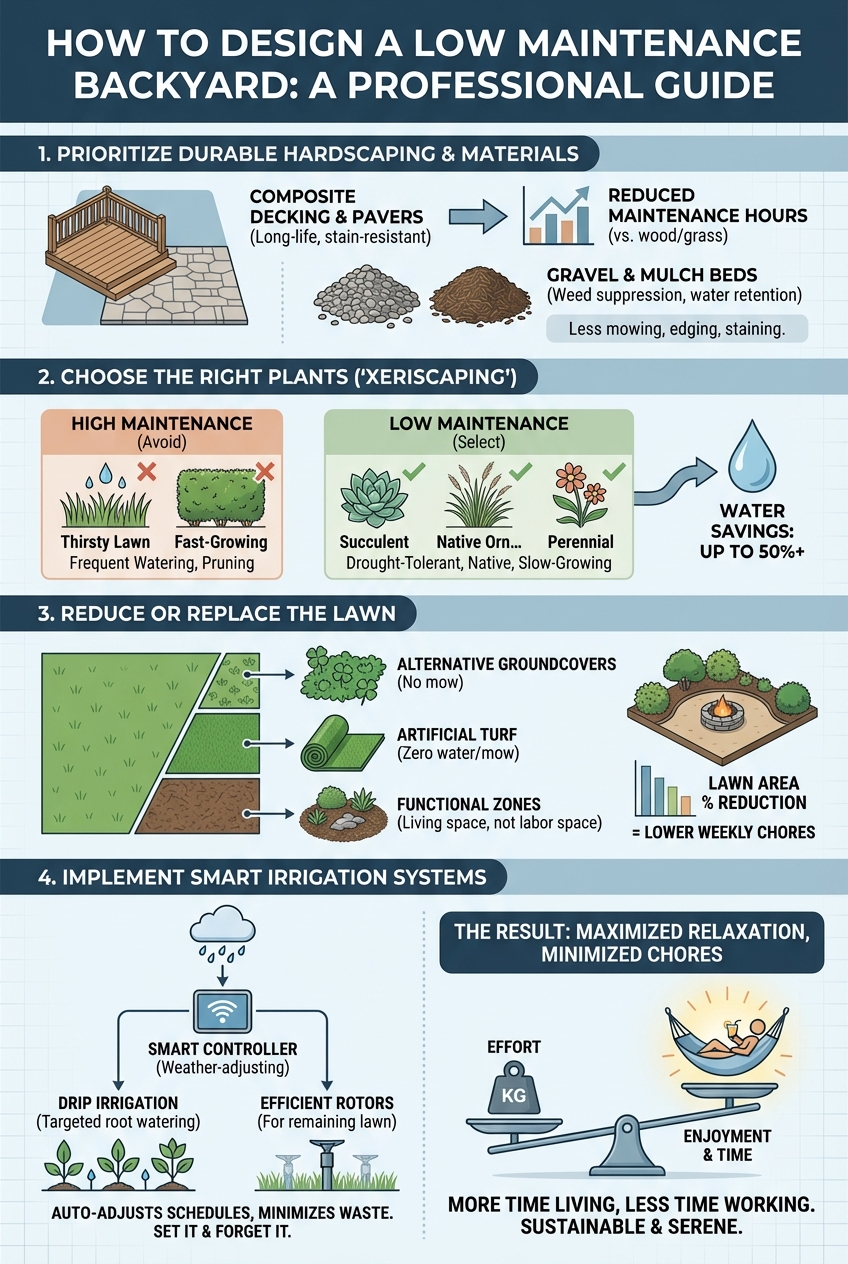
Start by watching the yard for a full day. Note where the sun is strongest and where water collects after rain. Put the patio where it drains and gets some shade, and the dog's gravel or turf strip on well-drained ground away from the dining area.
A rough split of about 60 percent hard surfaces to 40 percent planting keeps maintenance down, though it's a guideline, not a rule. Some more working dimensions:
- Main paths: 36-48 inches wide, so two people (or a person and a dog) can pass.
- Secondary paths through beds: about 24 inches.
- Dining area: at least 36 inches behind each chair, which puts a six-person table on a patio of roughly 10 by 12 feet.
- Fire pit: well clear of the house and wooden fences, with room to sit back from the heat.
Leave a buffer along the fence too. Penn State Extension recommends a 2- to 3-foot buffer between the fence and the planting beds, which gives your dog a patrol lane and protects the plants.
What about a small yard?
A small dog friendly backyard no grass setup works best with one surface doing most of the job. Run pavers or gravel edge to edge, add one raised or containerized planting zone, and grow upward with trellises and wall planters. Penn State Master Gardener Holly List notes that "Containers with tender plants may keep them safer, rather than being in the ground."
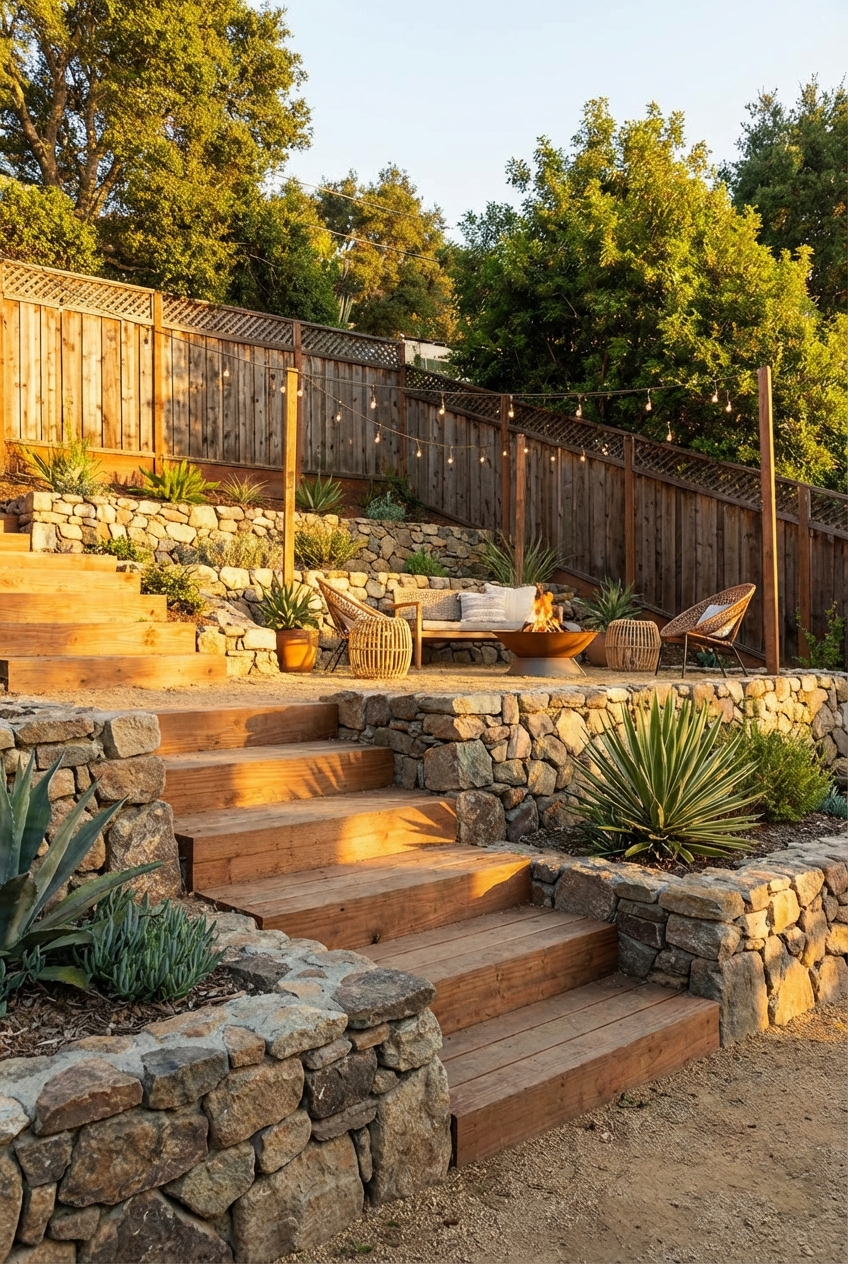
If your small yard slopes, these budget friendly sloped backyard ideas can help you handle terracing and drainage.
How do you do it on a budget or DIY?
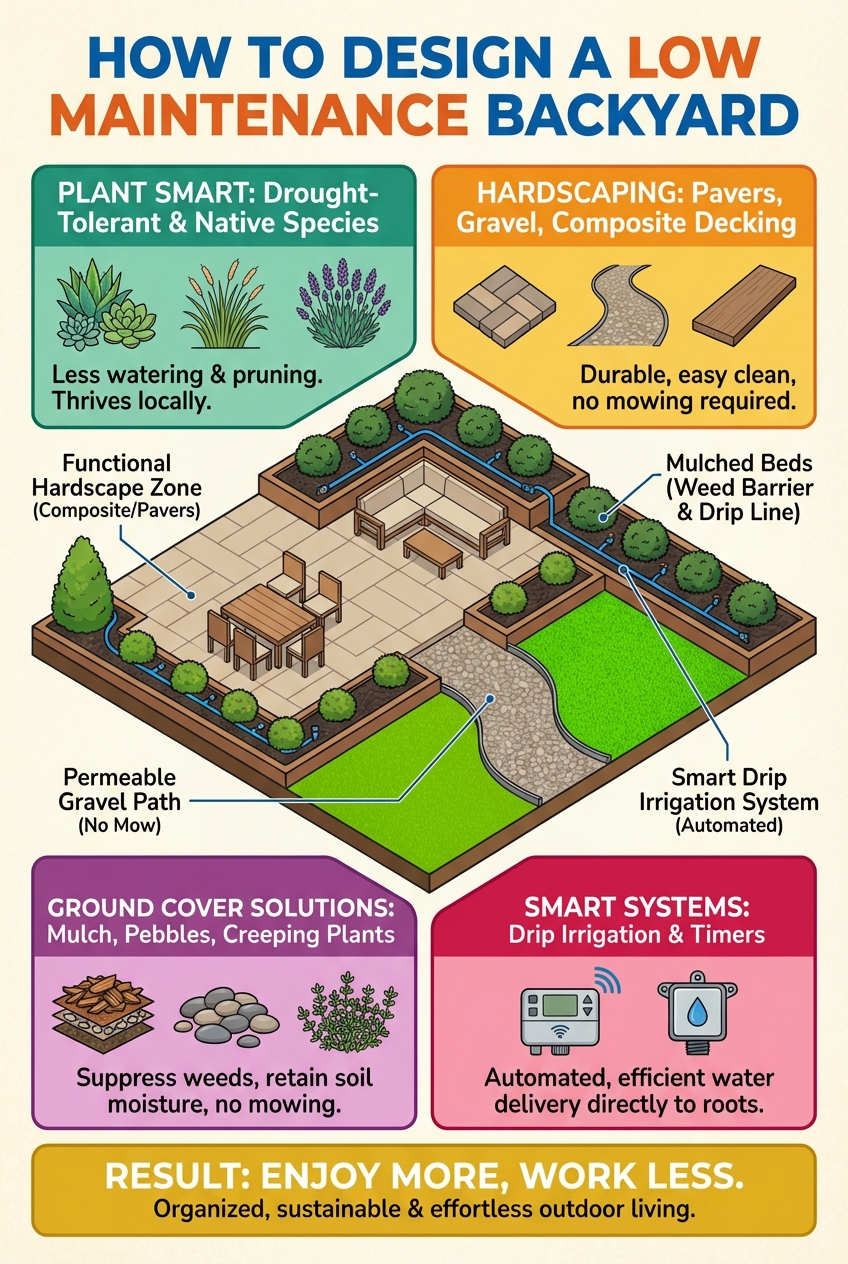
Gravel, wood chips and starter plants are the cheapest route, and all of them are DIY-friendly. Buy 1-gallon plants and give them a couple of seasons to fill in. Do the heavy work first: grade for drainage, lay the base, then plant.
On weed barrier, I'd skip it under plantings. Penn State Extension says it is not recommended to use plastic or synthetic landscape cloth on top of or under the soil because it can increase erosion and runoff. Under a gravel path, a compacted base and a deep layer of stone does most of the weed control. Cover bare soil in beds with about 3 inches of mulch.
Before you dig, call 811 to have underground utilities marked, and check HOA rules if you have them. For tricky drainage or retaining walls, bring in a licensed professional.
Where should the dog's own zone go?
As an architect, I'd give dogs two dedicated areas: a quick-draining bathroom strip (gravel or pet turf) near the back door, and a digging or play corner with soft, loose material such as sand or wood chips. A dog that has an approved place to dig is less likely to excavate your beds. Add shade, a bowl of water, and a bench or paving where you can sit and watch.
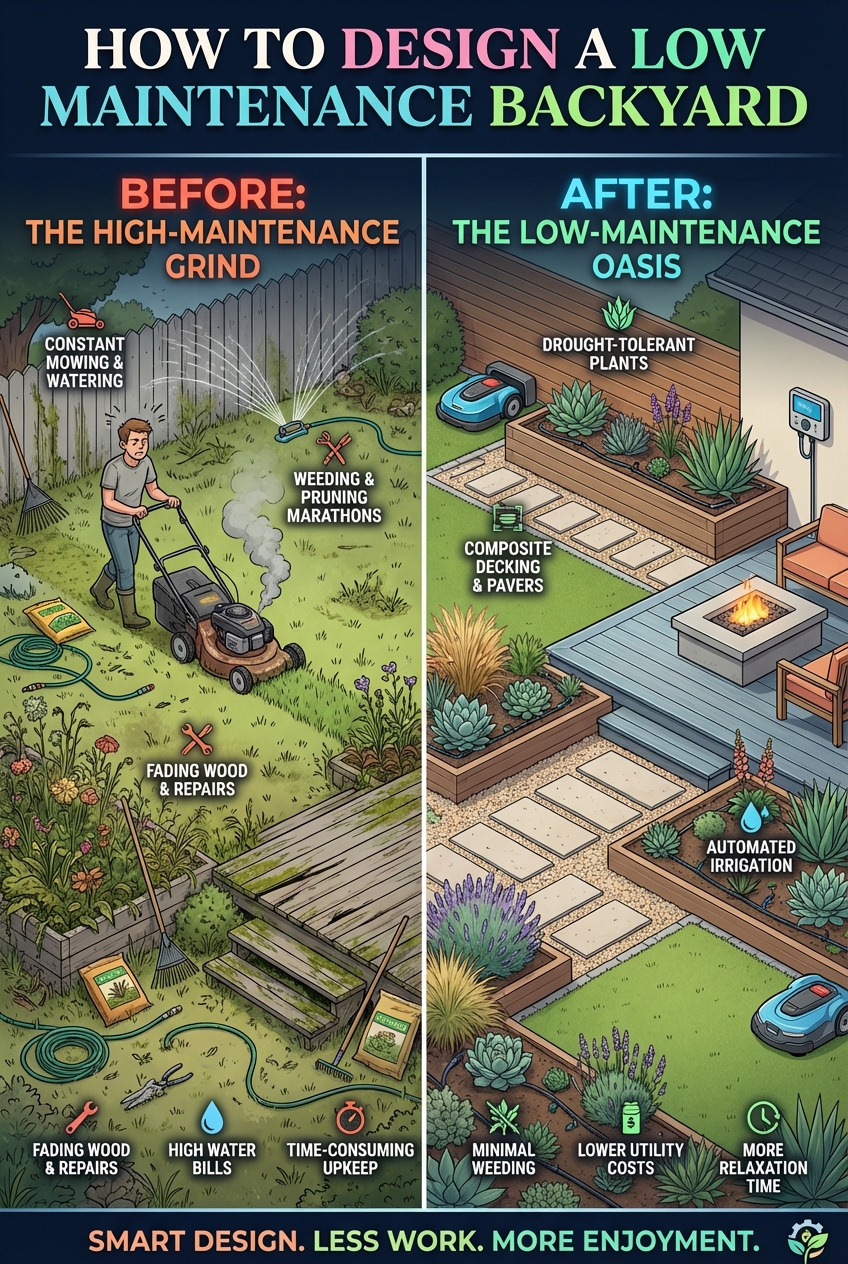
Keep the plants near the play area sturdy, and keep anything toxic out of reach. Your vet can tell you what to avoid for your particular dog.
Frequently asked questions
What can I put in my backyard instead of grass for dogs?
Pea gravel, pavers, pet-rated artificial turf, wood chips and low ground covers like white clover are the usual choices. Most yards do best with a mix: a hard surface for people, a draining surface for the dog, and planting along the edges.
What to do with a backyard that doesn't grow grass?
Find out why it fails, often shade, compaction or poor drainage, then work with it. Shady or compacted areas suit gravel, mulch, pavers or shade-tolerant ground covers more than another round of seed.
What is the cheapest way to replace grass for dogs?
Wood chips and pea gravel are generally the cheapest, and you can lay them yourself. Start with small plants and let them spread.
Is gravel safe for dogs' paws?
Rounded pea gravel is usually more comfortable than sharp crushed stone, but it can get hot in full sun. Check with your vet if your dog has sensitive or injured paws.
Filed under
ArticlesMeet the author
Written by an architect.
Julio Arco is a passionate architect with years of experience in architecture, interior design, urban design, and housing. He studied at prestigious universities across North America and Europe.

- Name
- Julio Arco
- Job
- Architect and online interior designer
- Studied
- Architecture, ITESM · Urban Design and Housing, McGill
- Partner
- Thor, Australian Shepherd
- Thor’s title
- Head of quality control