Asian Landscape Design: Principles, Plants and Layout
Learn the core principles of Asian landscape design, how to lay out a Japanese-style garden, and which plants and materials suit small yards.

By Julio Arco
Architect and online interior designer
In this post
- What is Asian landscape design?
- What are the key elements of a Japanese garden?
- How do you lay out a Japanese garden?
- Which plants work in an Asian-style garden?
- What about small spaces and front yards?
- Ground cover, lawn alternatives and soil
- Making it work with a dog
- Bring the same calm indoors
- Frequently asked questions
Asian landscape design is built on a few repeatable moves: a calm, limited palette, layered green planting, a clear sense of enclosure, and a path that reveals the garden slowly. You don't need a big yard or a temple budget to use them. A corner of a backyard is enough.
Below you'll find the principles, the Japanese garden elements people search for most, a simple layout sequence, plant and ground choices, and a few notes for dog owners.
What is Asian landscape design?
It's a family of garden traditions from Japan, China, Korea and Southeast Asia, not a single look. What they share is a close relationship with nature. Michigan State University's Beal Botanical Garden notes that most Asian garden designs are influenced by cultural philosophies, and the design spirit is always surrounded by nature.
Landscape architect Yun Cao, writing about that collection, puts the goal well: "Including culture into the garden makes the space meaningful rather than just a plant collection." In practice, that means every rock, path and plant is there for a reason.
What are the key elements of a Japanese garden?
Authorities list them differently, so treat any "six elements" count as a convenient grouping. These are the ones that matter most in a home yard:
- Rocks, placed as the garden's structure and often set in odd-numbered groups.
- Water, real or suggested with gravel raked into patterns.
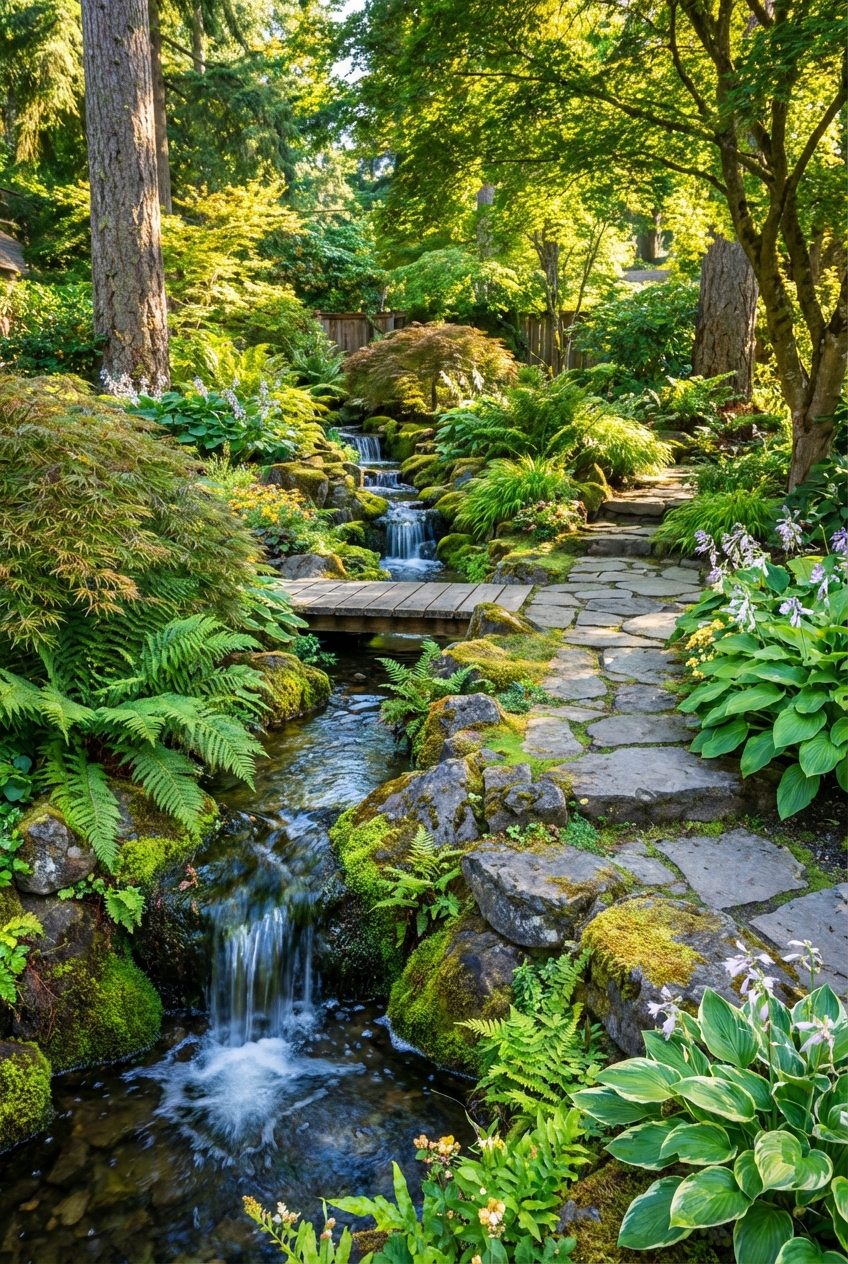
- Evergreen and layered plants, especially moss, ferns, pruned shrubs and a few trees.
- A path, usually stepping stones that slow your pace.
- Enclosure, such as a bamboo fence, a wall or a hedge.
- An ornament or focal point, like a lantern, a basin or a single sculptural tree.
How do you lay out a Japanese garden?
Start with the view from where you'll sit most, usually a window or patio. Design for that frame first.
- Mark the boundary and decide what to hide. A fence or screen planting gives the sense of retreat.
- Pick one focal point, such as a large rock, a small tree or a basin, and place it off-center.
- Lay a path that bends so you can't see the whole garden at once. Stepping stones should be spaced for a comfortable stride.
- Add the larger plants, then shrubs, then ground cover, so heights step down toward the path.
- Finish with gravel, mulch or moss, and leave some empty ground on purpose. Open space is part of the design.
As an architect, I'd sketch this on paper first and mark the sightline from your seat. It's much cheaper to move a line than a boulder.
Which plants work in an Asian-style garden?
Foliage does the heavy lifting. Think varied greens in different leaf shapes: ferns, hostas, Japanese maples, boxwood or similar clipped shrubs, bamboo (in a contained bed, since many types spread aggressively) and ornamental grasses. Flowers are used sparingly, often a single seasonal accent like azalea or camellia where your climate suits them.
Plant in groups of one species rather than scattering singles. Master Gardener Deb Christopher of Westmoreland County warns that in a monoculture, disease or pests can wipe everything out, and suggests "planting drifts or groups of single species, providing a patchwork-quilt effect." Drifts also match the look you want here. Check what's hardy in your area with a local nursery or extension office.
What about small spaces and front yards?
Small Asian garden ideas depend on editing. One tree or large shrub, one stone grouping, a short path and a ground layer is a complete garden. A narrow side yard or a front entry can hold a gravel bed with three rocks and a single pruned shrub.
For a front yard, use the same logic: a screen or low wall for privacy, a path that curves to the door, and repeated plants rather than many varieties. Keep colors few so the space feels larger.
Ground cover, lawn alternatives and soil
Moss and low plants replace lawn in many Asian gardens. Colorado State University Extension says plants that are low-growing (generally less than 24 inches) and spread easily are suitable ground cover plants. They also point out the benefit of preparing the bed: incorporate 3 to 5 cubic yards of compost or other organic soil amendment into 1000 square feet of area.
If you're removing struggling turf, University of Maryland Extension suggests that a lawn is worth overhauling when it is more than 50% weeds. Skip plastic landscape cloth under your gravel or mulch: Penn State Extension says it is not recommended to use plastic or synthetic landscape cloth on top of or under the soil, as it can increase erosion and water runoff.
Making it work with a dog
Asian style backyard ideas are mostly calm, so they suit dogs that patrol and nap. A few adjustments help:
- Keep a firm, wide path. Dogs will take the shortest line, so make the stepping stones follow it.
- Use a pet-friendly ground layer where the dog plays. UC Marin Master Gardeners note that white clover does not show pet urine damage.
- Fence off any loose gravel pools or ponds the dog could treat as a bath.
- Check every plant against the ASPCA toxic plant list, or ask your vet, before you buy. Several popular Asian garden plants are not safe to chew.
Bring the same calm indoors
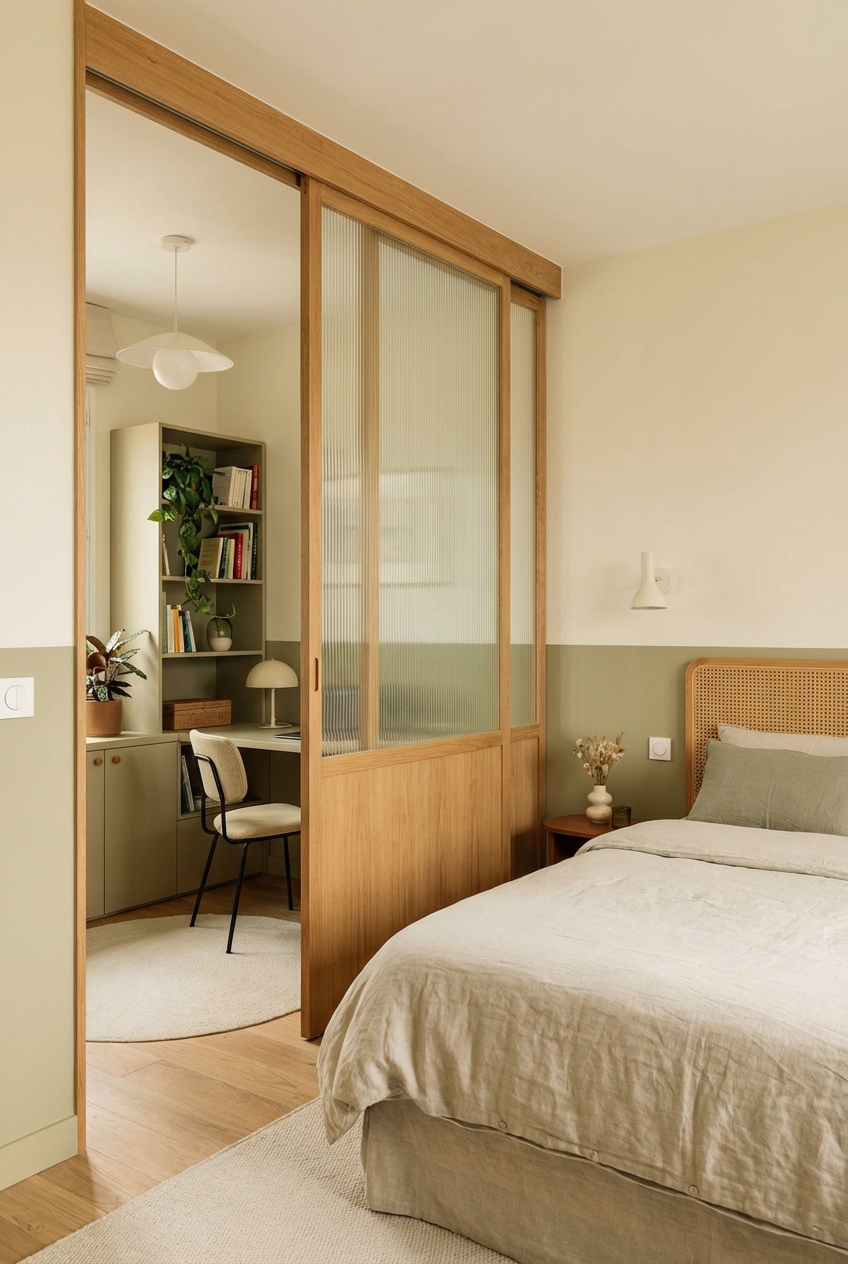
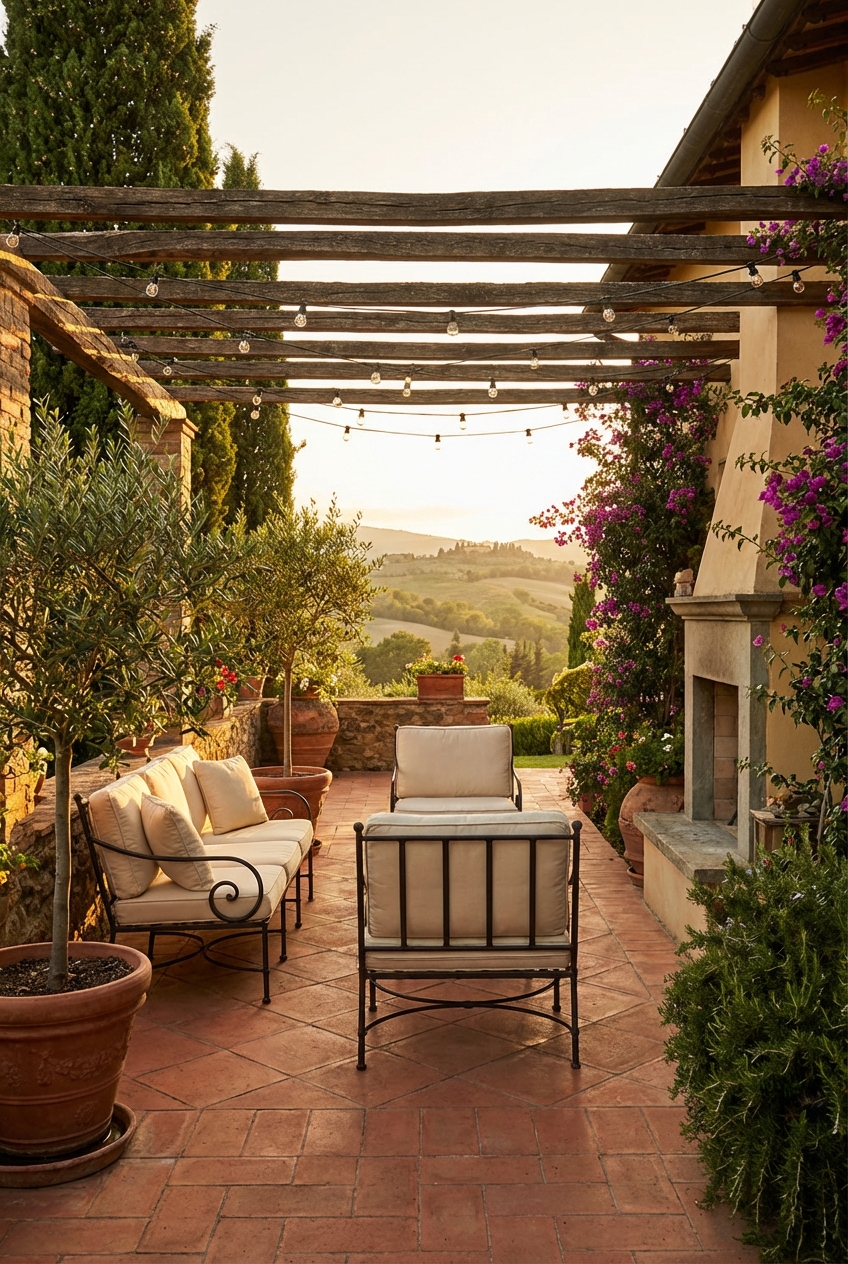
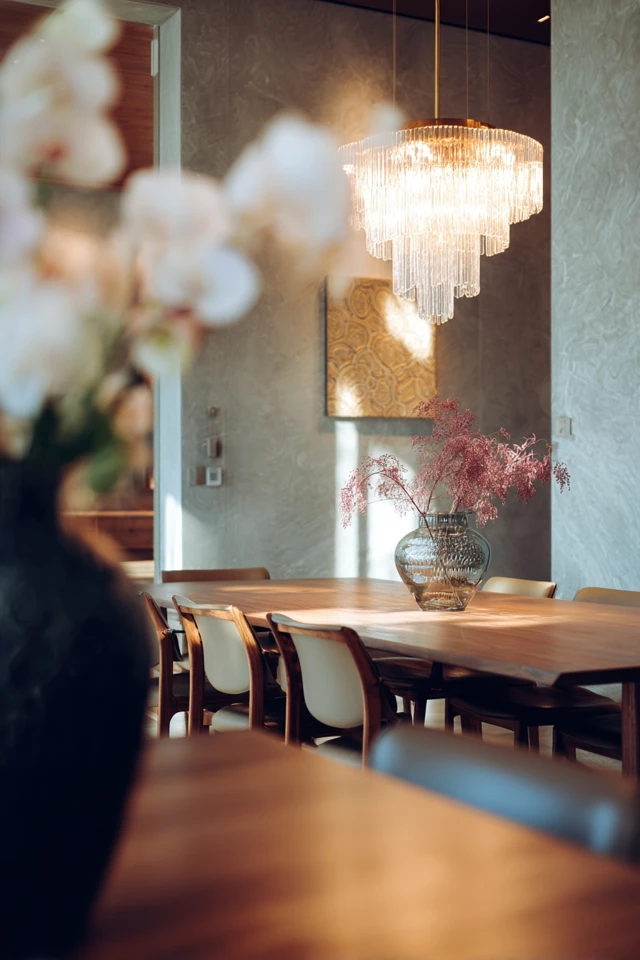
The same restraint carries inside. A single focal object, natural materials and few colors work in a living room too. For ideas, see small living room ideas, or extend the mood outdoors with pergola designs that frame a seating spot overlooking the garden. If you like muted greens, olive green decor is a natural match.
Frequently asked questions
What are some ideas for Asian-style landscaping?
Try a gravel or moss bed with a few large rocks, a curving stepping-stone path, a bamboo screen and a single pruned tree. Layered foliage and a limited color palette give the look.
What is Japanese landscaping called?
It is commonly called a Japanese garden. Particular styles have their own names, such as karesansui for dry rock gardens and chaniwa for tea gardens.
What are the six key elements of a Japanese garden?
Lists vary, but they usually include rocks, water, plants, a path, enclosure and an ornament such as a lantern. Use them as a checklist, not a rule.
How do you make an Asian garden low maintenance?
Choose slow-growing evergreens, mulch or gravel beds and ground cover instead of lawn, and keep the plant list short. Contain bamboo, which can spread.
Filed under
ArticlesMeet the author
Written by an architect.
Julio Arco is a passionate architect with years of experience in architecture, interior design, urban design, and housing. He studied at prestigious universities across North America and Europe.

- Name
- Julio Arco
- Job
- Architect and online interior designer
- Studied
- Architecture, ITESM · Urban Design and Housing, McGill
- Partner
- Thor, Australian Shepherd
- Thor’s title
- Head of quality control