Pergola and Gazebo Ideas for Patios, Pools and Small Yards

By Julio Arco
Architect and online interior designer

In this post
A pergola is an open frame of posts and overhead beams that gives you partial shade and a defined outdoor room. A gazebo is usually a freestanding structure with a solid or semi-solid roof, so it gives more shelter and costs more to build. Pick a pergola for dining areas, walkways and house-side patios, and a gazebo when you want a roofed spot to sit in the rain.
Below are layout ideas, material trade-offs and the mistakes that tend to spoil an otherwise good structure.

Pergola or gazebo: what is the difference?
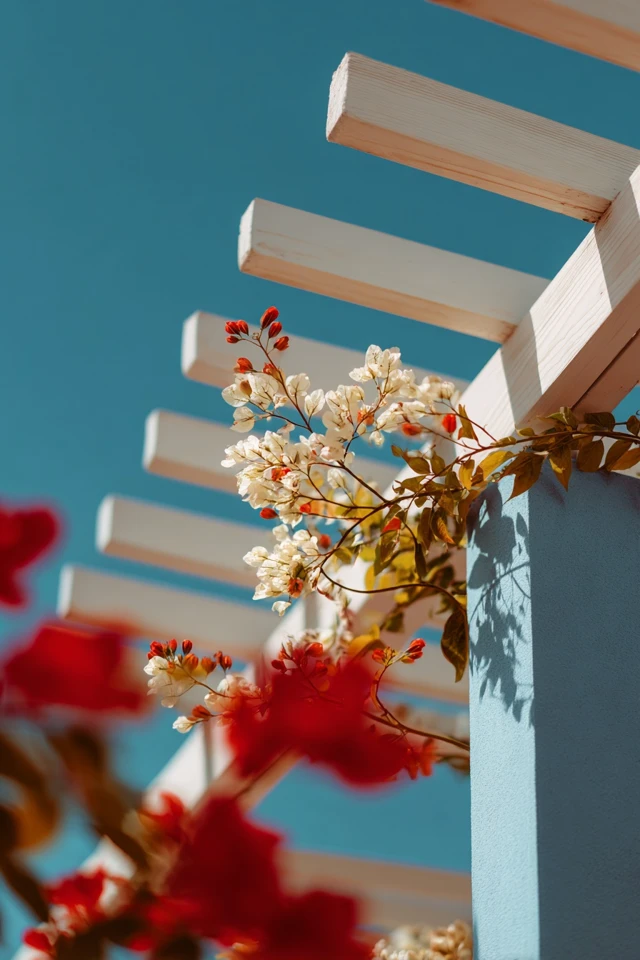
The roof is the main difference. A pergola has open rafters or slats, so sun and breeze filter through. A gazebo has a full roof, often pitched or hexagonal, and is often built as a standalone pavilion in the garden.
That changes how you use each one. Under a pergola, light moves across the day and you can add climbing plants, retractable canopies or shade cloth. Under a gazebo, you get steady shade and rain cover, but less airflow and a heavier visual presence in the yard.
Which is cheaper, a pergola or a gazebo?
In general, a pergola is the cheaper structure, because it needs less roofing material and a simpler frame. Pergola or gazebo, which is cheaper in your case still depends on size, material and whether you hire a builder. I won't quote prices here, since they vary a lot by region. Get two or three local quotes for the same footprint and compare them like for like.
Kits are usually cheaper than a custom build, but check the thickness of posts and the hardware before you buy. Building from scratch can save money if you already own the tools and can read a basic plan. If you are not comfortable with footings and structural connections, pay a professional for that part.
Which material should you choose?
Wood
Wooden pergola and gazebo ideas look warm and age well, and they are easy to customize with notches, curved ends or a stain. Cedar and redwood resist rot better than untreated pine. Plan on re-staining or sealing every few years.
Metal
Metal pergola and gazebo ideas suit modern yards. Aluminum doesn't rust and needs little upkeep, while steel is stronger but needs a good coating. Metal gets hot in direct sun, so keep dark finishes away from spots where a dog likes to lie on the ground or where bare feet walk.
Vinyl and fiberglass
These are low-maintenance and don't need painting. The look is plainer, and the beams are usually less adjustable than wood, so check span limits for the size you want.

Should it be attached to the house or freestanding?
Pergola ideas attached to house walls work well over a back door, because the structure gives you shade right where you step outside and needs fewer posts. The attachment must be fastened properly into the framing and flashed to keep water out of the wall. Ask a licensed contractor to handle that connection.
A freestanding pergola can sit wherever the yard needs it: beside a pool, at the end of a path or over a dining set in the middle of the lawn. It costs more in posts and footings, but you can choose the sun angle and the view. The same logic applies to gazebo ideas attached to house walls, which are less common and need more careful roof detailing where the two roofs meet.
Pergola and gazebo ideas for small spaces
In a small yard, keep the frame light. Slim posts, a single row of slats and a pale or dark neutral finish take up less visual space than heavy timbers.
- Put a narrow pergola along one side of a patio wall and use it as a dining or reading nook.
- Use a corner pergola so the open yard stays whole.
- Grow a vine on one side only, so the frame doesn't turn into a green wall.
- Choose a small round or square gazebo only if you have room to walk around it.
For a table and four chairs, allow about 10 by 10 feet of covered area, plus room to pull chairs out. If you also plan a pool area, our pool house ideas show how a shaded structure can sit beside the water.

Design ideas by style
Match the structure to the house. A craftsman or farmhouse suits chunky wood posts and exposed rafters. A contemporary house looks right with black or white metal and clean, flat lines. If the interior has a modern look, the contemporary design ideas on this blog can help you carry it outside.
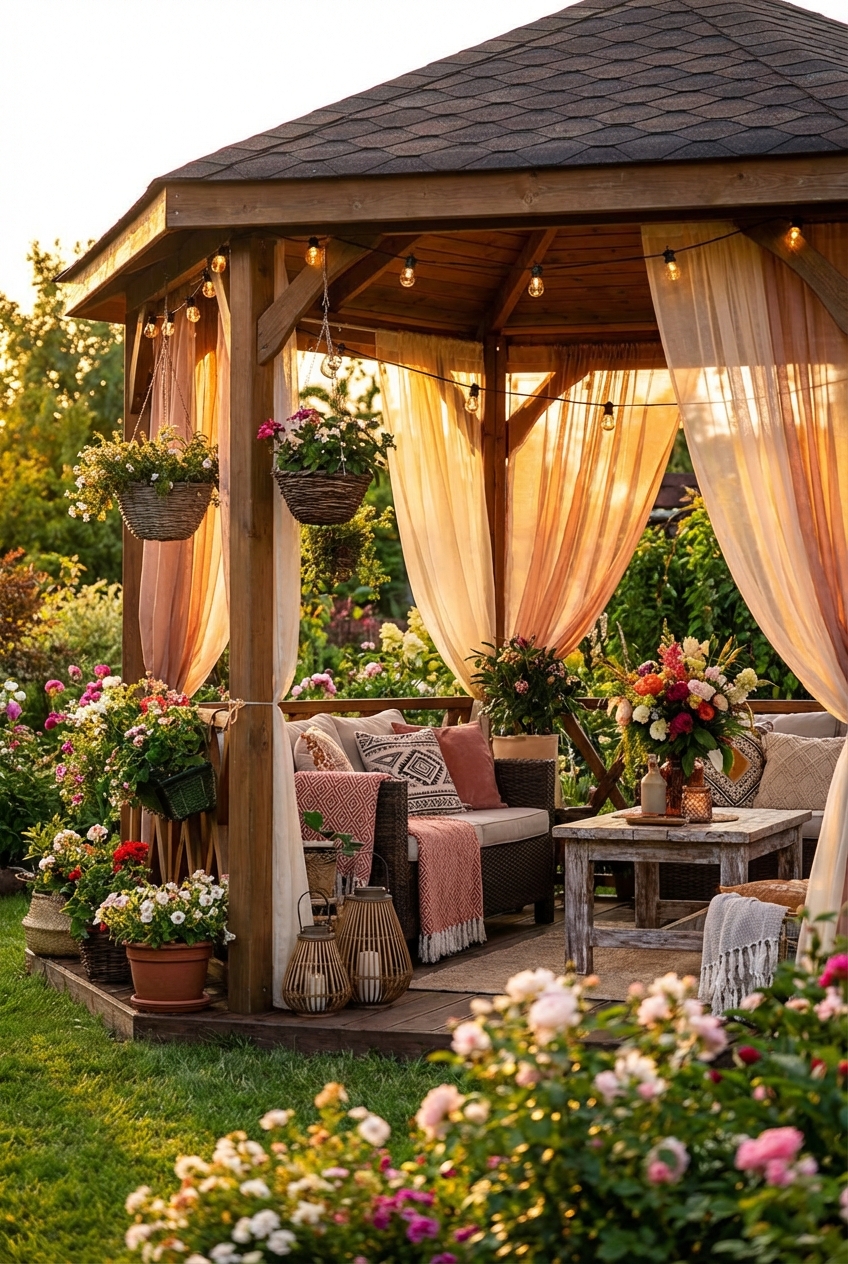
- Add outdoor curtains or a retractable shade for flexible cover.
- String lights along the rafters for evening use.
- Place a rug that is made for outdoors under the seating group to define the zone.
- Run the beams in the direction that gives the best shade for the hours you use the space.

Common pergola mistakes to avoid
- Building too small. If chairs hang past the edge, the structure won't shade anyone.
- Skipping footings. Posts need a proper anchor for your soil and wind conditions.
- Ignoring sun direction. Check where the shadow falls at the hours you actually sit outside.
- Leaving out permits. Many areas require one for a permanent structure, so call your local building department first.
- Choosing a finish that gets too hot or needs constant upkeep.
As an architect, I recommend sketching the structure with string and stakes on the ground first. Live with it for a weekend before you commit.

Building your own or buying a kit
A kit works if you want a fast, predictable result and the size fits your plan. A custom build gives you the exact size and details, and it can be cheaper if you do the labor. Whichever you choose, have a licensed professional review anything attached to the house or involving electrical work for lights or fans.
Frequently asked questions
Which is cheaper, a pergola or a gazebo?
A pergola is usually cheaper because it has an open roof and a simpler frame. Compare local quotes for the same size and material to see the real difference.
What are common pergola mistakes?
The usual ones are building too small, weak footings, ignoring sun direction and skipping permits. Staking out the footprint first helps you catch most of them.
Is it cheaper to buy a pergola or build one?
A kit is often cheaper and faster, while a DIY build can save money if you own the tools and have the skills. Hire a professional for footings and any connection to the house.
Can a pergola work in a small yard?
Yes. A slim, corner or wall-side pergola gives a defined seating spot without cutting the yard in half.
Filed under
ArticlesMeet the author
Written by an architect.
Julio Arco is a passionate architect with years of experience in architecture, interior design, urban design, and housing. He studied at prestigious universities across North America and Europe.

- Name
- Julio Arco
- Job
- Architect and online interior designer
- Studied
- Architecture, ITESM · Urban Design and Housing, McGill
- Partner
- Thor, Australian Shepherd
- Thor’s title
- Head of quality control