Bedroom Aesthetic Ideas: Playful Pattern, Calm Sleep
Bedroom aesthetic ideas for a playful, graphic room that still sleeps well: pattern rules, layout measurements, lighting and fixes for small rooms.

By Julio Arco
Architect and online interior designer
In this post
- What is the FunHaus bedroom aesthetic?
- What does a FunHaus bedroom include?
- How do you mix patterns without the room feeling busy?
- Layout and proportions that make it livable
- How to make your bedroom look aesthetic, step by step
- Aesthetic bedroom ideas with lights
- Small bedroom aesthetic ideas
- Master bedroom and other room variations
- Common mistakes and fixes
- Finishing touches
- Frequently asked questions
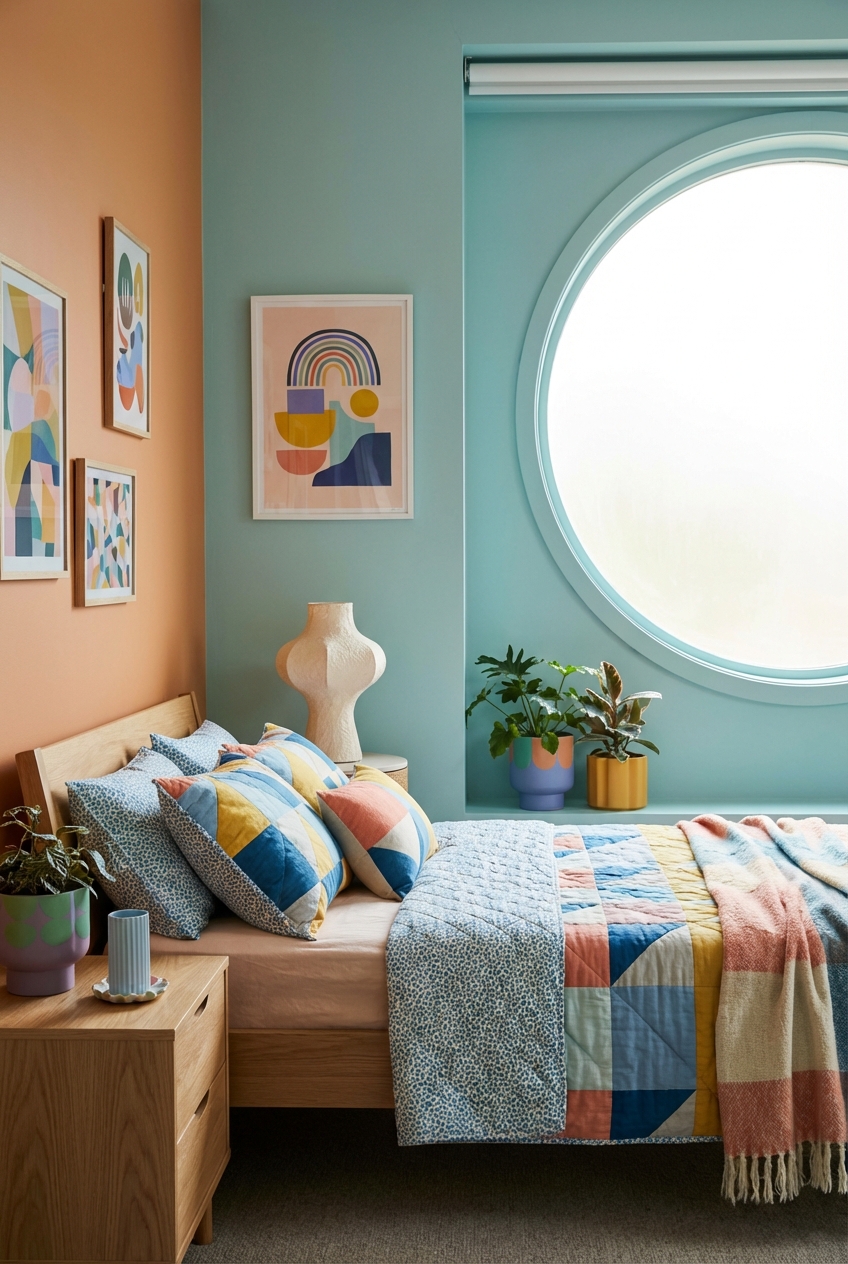
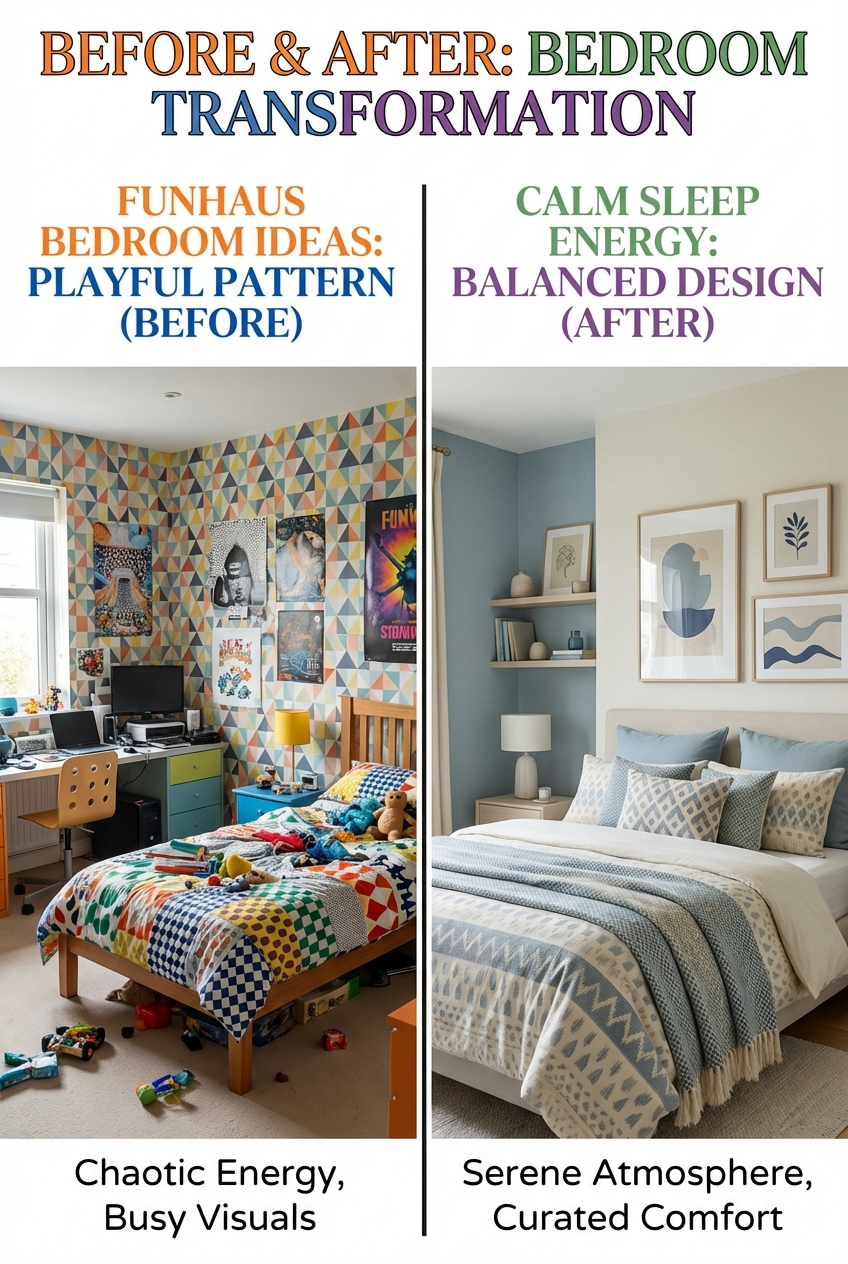
If you want a bedroom that looks bold by day and sleeps quietly at night, the FunHaus aesthetic is a good place to start. It borrows geometric shapes, color blocking and a sense of humor from Memphis-style and Bauhaus-influenced design, then keeps the loudest elements out of your sleeping view.
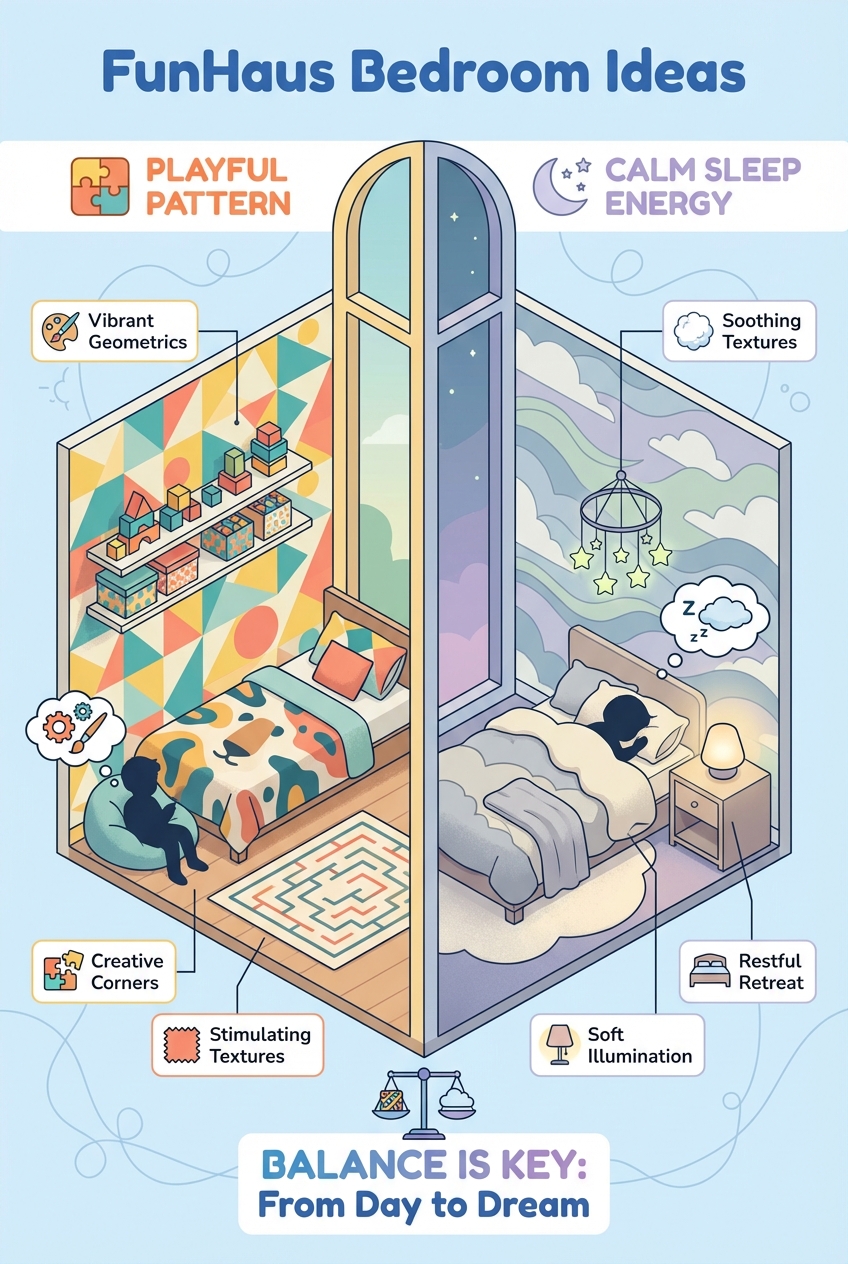
The short version: put the busiest pattern behind the headboard, mix pattern scales, soften hard lines with textiles, and use warm, dimmable light. The sections below cover how to do each of those, with measurements.
What is the FunHaus bedroom aesthetic?
FunHaus is maximalism with a skeleton. It uses primary or near-primary colors, circles, stripes, checks and squiggles, but it organizes them with a clear structure so the room doesn't turn chaotic.
It suits people who find an all-white, all-beige "serene" bedroom dull. It also works for renters, since most of the look lives in textiles, lamps and art rather than permanent changes. If you're still working out how to determine your bedroom style, try this: picture the room you'd want to walk into at 6 p.m. If it's colorful and a little silly, this style probably fits. If it's pale and hushed, look at the misty, soft-textured approach instead.
What does a FunHaus bedroom include?
A handful of ingredients do most of the work.
- Geometric shapes in rugs, headboards or lamps.
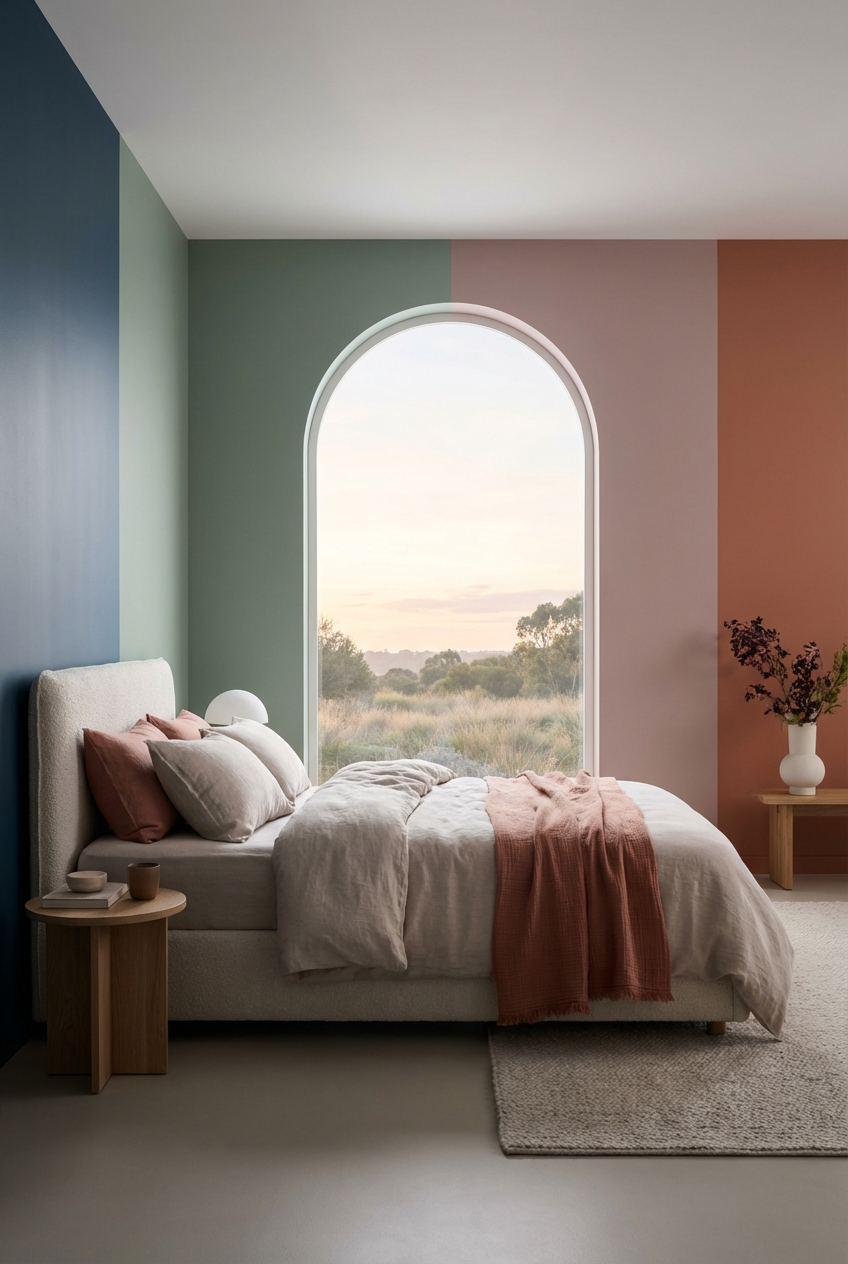
- Color blocking, such as a painted circle behind a nightstand or one wide stripe wrapping the room, instead of a fully painted wall.
- A mix of hard and soft materials: a metal bed frame with quilted bedding, for example.
- Graphic textiles like checked throws and striped pillows that share at least one color.
That shared color is what makes the pattern mix read as intentional. A rug with forest green in it, plus a pillow with a little forest green, can carry completely different shapes.
How do you mix patterns without the room feeling busy?
Use scale. Pick one large pattern (usually the rug or art), one medium pattern (pillows or curtains) and one small pattern or a textured solid (a throw). Three patterns is a sensible limit for a standard bedroom. Add more only in tiny doses, like a book cover or a small vase.
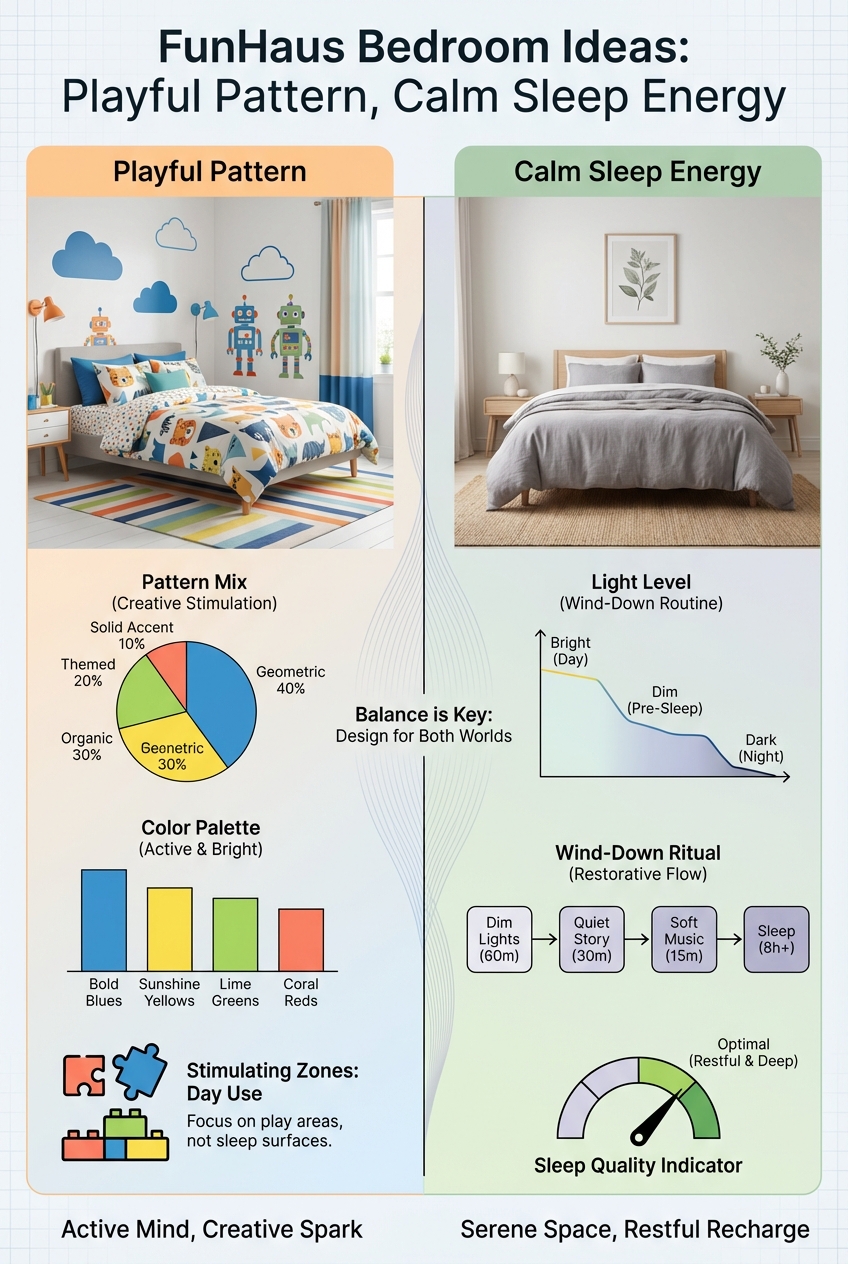
A simple proportion helps: about 60 percent calm or neutral, 30 percent main pattern and color, 10 percent loud accents. It's a rule of thumb, not a law, but it keeps the loud parts loud enough to notice.
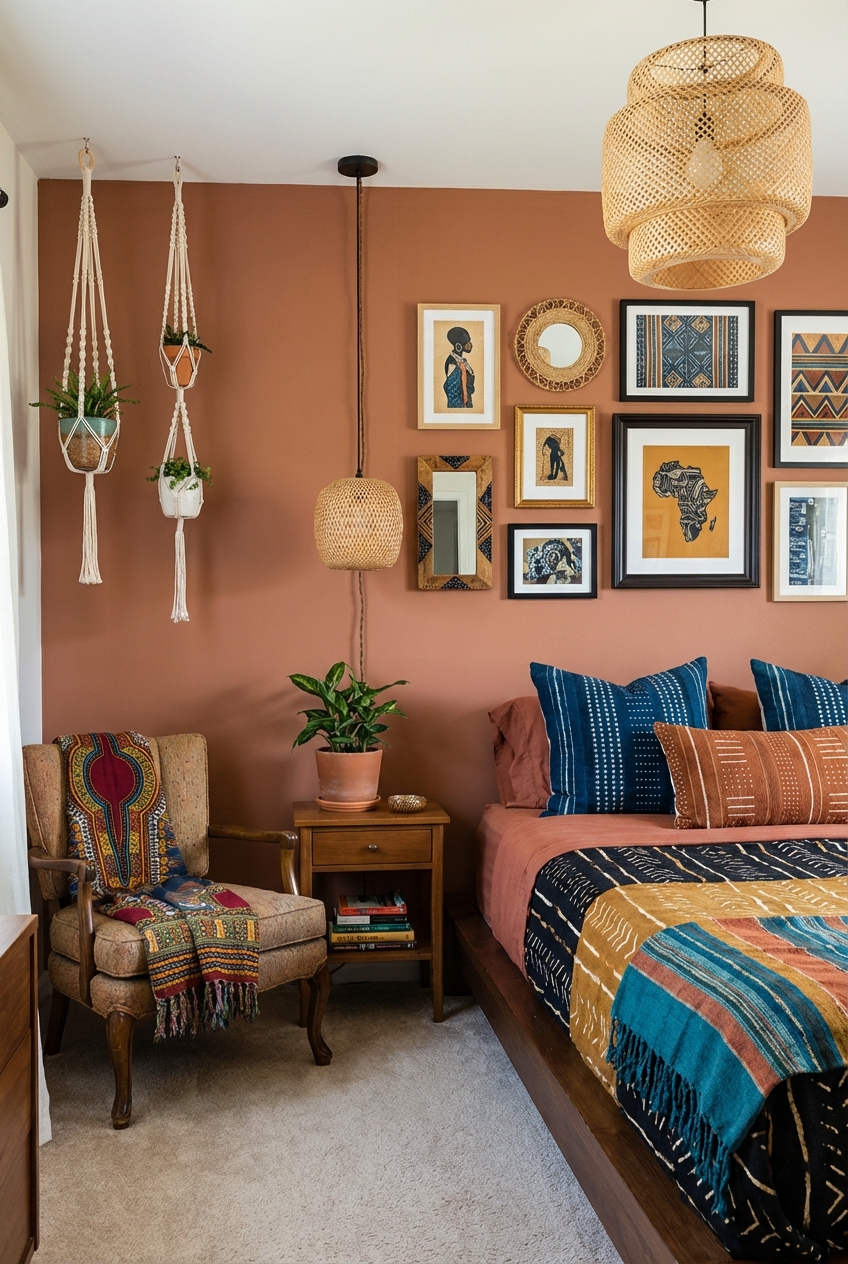
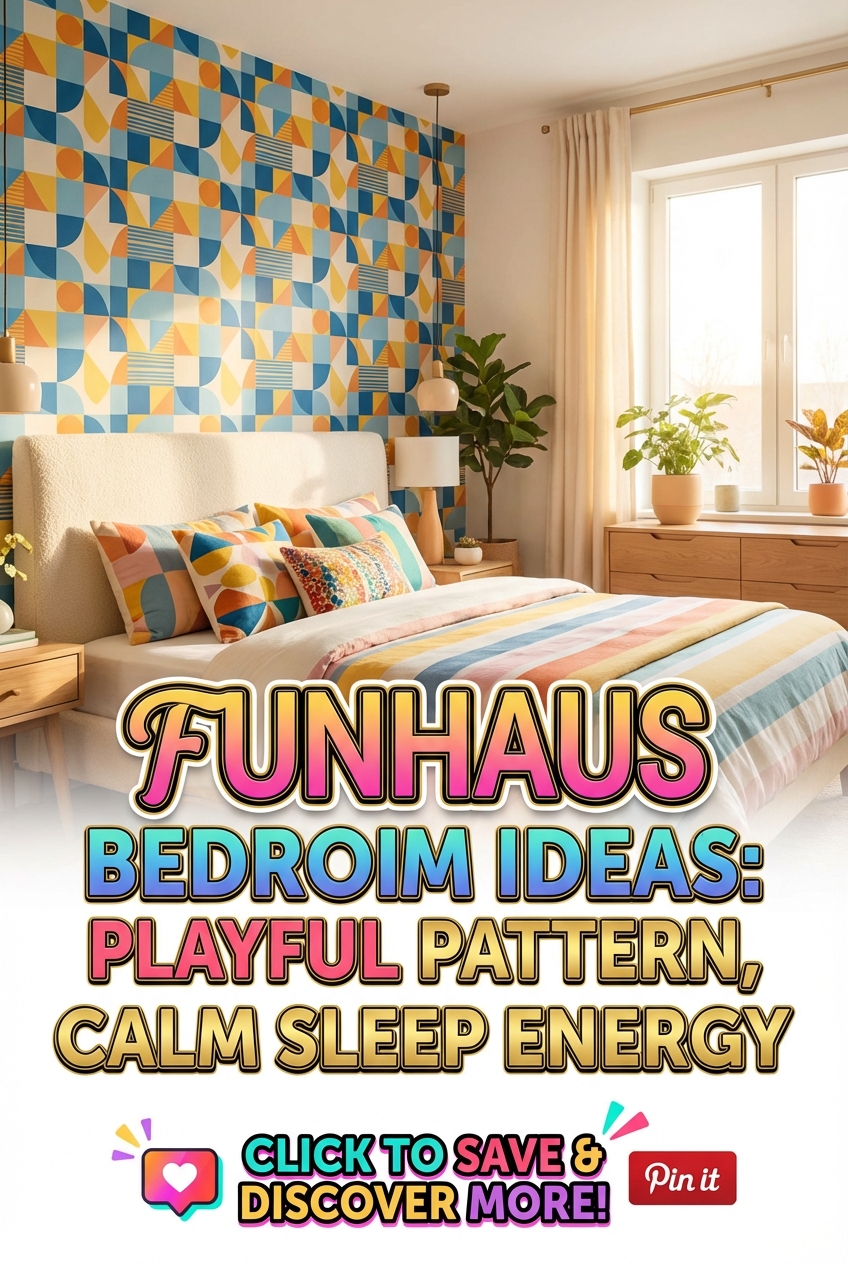
Sleep matters here too. As an architect, I'd put the boldest pattern on the wall behind the bed. You see it when you walk in, and it's out of your sightline once you're lying down. Keep the area around your pillow in cooler or quieter tones like soft gray, blue or green.
Layout and proportions that make it livable
A playful room that's hard to walk through gets stressful fast. These are widely used guidelines:
- Leave about 30-36 inches for main walkways. In a tight room, about 24 inches beside the bed is a workable minimum.
- Queen beds usually take an 8x10 rug and kings a 9x12. Aim for roughly 18-24 inches of rug beyond the foot and sides of the bed.
- Keep nightstand tops close to mattress height, within a couple of inches, so reaching for water in the dark is easy.
- Hang art over the bed about 6-10 inches above the headboard so it reads as part of the furniture.
How to make your bedroom look aesthetic, step by step
- Start with a neutral base: white, light gray or a pale putty on the walls.
- Choose one hero piece, such as a multicolor rug or large artwork, and pull your palette from it.
- Use a solid, textured duvet (linen or crinkled cotton) as a resting place for the eyes.
- Layer two medium-scale shams and one smaller-scale lumbar pillow.
- Add curves to offset the grid: a round mirror, a rounded headboard, a mushroom-shaped lamp.
- Bring in a reflective surface like chrome or a mirrored tray. Glossy finishes bounce light around, while matte ones absorb it.
- Hang drapes high and wide. A solid matching the wall is calm; a bold stripe adds energy.
- Edit. If a corner feels busy, swap a pattern for a solid. If it feels sterile, add a plant or a stack of colorful books.
Aesthetic bedroom ideas with lights
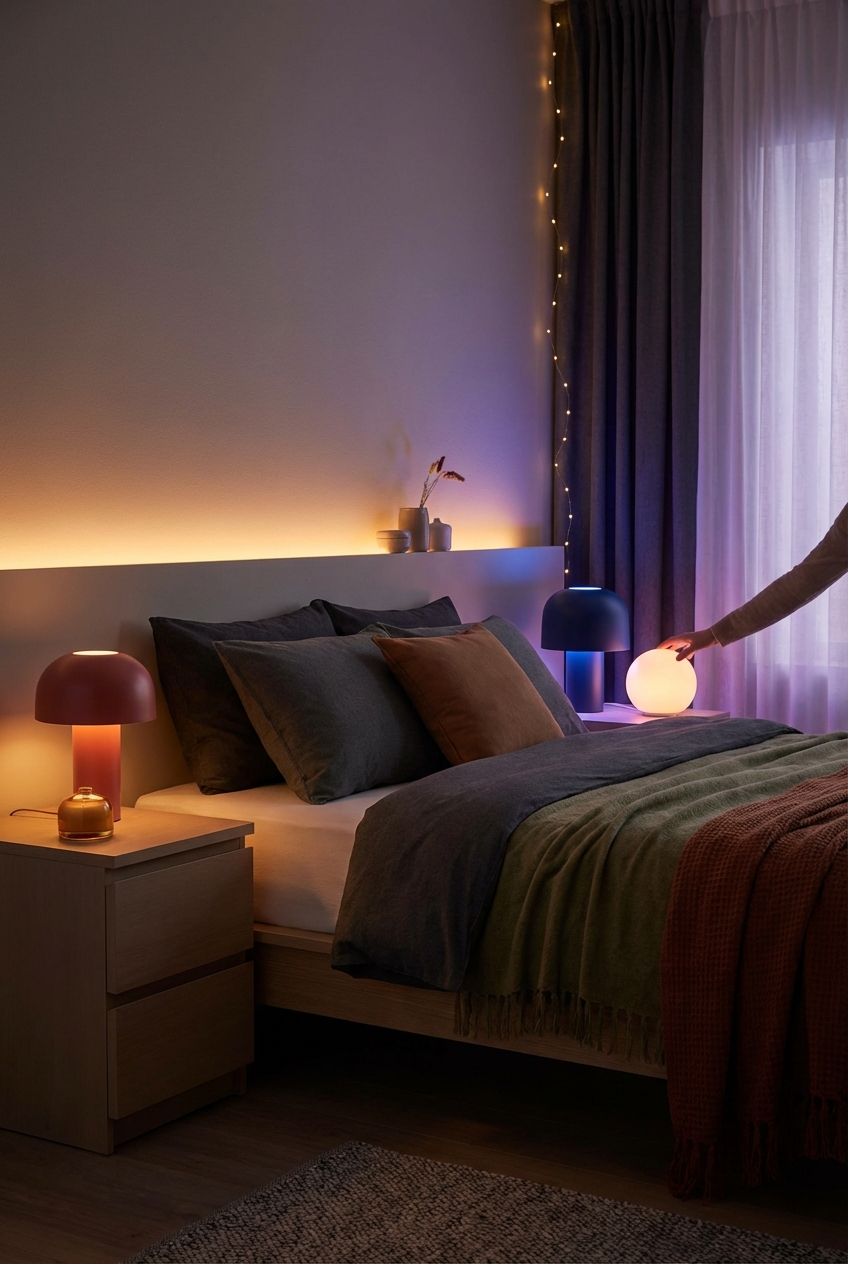
Lighting is the quickest way to switch the room from playful to sleepy. Use warm bulbs (around 2700K) and put the lamps on a dimmer. A sculptural semi-flush fixture or a paper lantern replaces a plain overhead light and adds shape without adding pattern. Two bedside lamps give a soft pool of light at head height.
I recommend a dimmer switch in every bedroom; it costs little and changes the mood more than most decor. For wiring a new switch, hire a licensed electrician. If you want to go further on the color side, see our guides to bedroom light colors for sleep and the best bedroom colors for sleep.
Small bedroom aesthetic ideas
In a small room, go vertical. A tall shelving unit with colorful bins can replace a bulky dresser, and a wall-mounted swing-arm lamp frees up a tiny nightstand. Keep the base palette light and choose one or two pops of primary or neon color.
Renters can get the look with large rugs, floor-to-ceiling curtains and removable wall decals. Lightweight fabric-covered foam boards hung on adhesive hooks also work. A subtly patterned rug is a gentler choice if full graphic pattern feels like too much.
Master bedroom and other room variations
A larger primary bedroom has space for zones. Add a reading nook with a curvy armchair and floor lamp, and use a bigger-scale wallpaper or color on the bed wall. A guest room can lean fun over calm, since nobody sleeps there for long. In a kid's or teen room, choose washable rugs and sturdy furniture, and use pegboards so the pattern can change as they grow. For more on balancing play and practicality, read FunHaus decor for families.
Common mistakes and fixes
- Too many small patterns make a room look cluttered. Apply the large, medium, small scale rule.
- A rug that's too small makes the room feel disjointed. You should be able to step onto it from both sides of the bed. If a big patterned rug is out of budget, layer a smaller one over an inexpensive jute rug.
- A matching bedroom set flattens the style. Mix finishes: metal frame, wood nightstands, painted dresser.
- All bright yellow and orange can be too stimulating near the pillow. Keep those colors as accents.
Finishing touches
- Hide lamp and charger cables with cord covers; tangled wires undercut a graphic room.
- Add at least one large plant. Leaf shapes soften the geometry. If you have pets, check with your vet or the ASPCA's plant list before choosing one.
- Use a level for art and shelves. In a line-heavy room, a crooked frame stands out.
- Choose fabrics rated for heavy wear so colors don't pill or fade. This matters most if a dog or cat shares the bed.
- Try a clean or woody scent as part of your wind-down routine; see our scent stacking guide.
Before you finish, stand in the doorway and note the first thing you see. That should be your fun moment. Then lie on the bed and look at the ceiling: if it's a flat white blank, a very pale blue tint or light texture is an easy upgrade.
Frequently asked questions
What are the different aesthetics for bedrooms?
Common named looks include boho, minimalist, cottagecore, pastel, dark academia and maximalist styles like FunHaus. Each is defined by a color range, materials and a level of pattern, so pick the one whose mood you'd want at the end of the day.
How do I make my bedroom look aesthetic?
Choose a limited palette, one hero piece such as a rug or artwork, and warm dimmable lighting. Then layer textiles in different pattern scales and edit until each corner has a clear focus.
Can I use this style in a room with dark walls?
Yes. Navy or charcoal makes bright colors stand out more. Add plenty of lamps and mirrors so the room doesn't feel cave-like.
Is this style childish?
It can be if you use only pure primary red, blue and yellow. Shift to terracotta, cobalt and mustard, and add materials like marble or polished chrome for a more grown-up look.
Filed under
ArticlesMeet the author
Written by an architect.
Julio Arco is a passionate architect with years of experience in architecture, interior design, urban design, and housing. He studied at prestigious universities across North America and Europe.

- Name
- Julio Arco
- Job
- Architect and online interior designer
- Studied
- Architecture, ITESM · Urban Design and Housing, McGill
- Partner
- Thor, Australian Shepherd
- Thor’s title
- Head of quality control