Breakfast Nook Ideas: Stripe Cushions & Sculptural Seats
Breakfast nook ideas with bold stripe cushions and sculptural seating, plus table, bench and lighting measurements that make a small nook work.

By Julio Arco
Architect and online interior designer
In this post
- What makes a FunHaus nook work?
- What size should a breakfast nook table and bench be?
- How high should the pendant hang?
- Small kitchens, corners and bay windows
- Breakfast nook bench ideas and storage
- How do you make a breakfast nook yourself?
- Which materials hold up in a nook?
- How do you keep stripes from taking over?
- Frequently asked questions
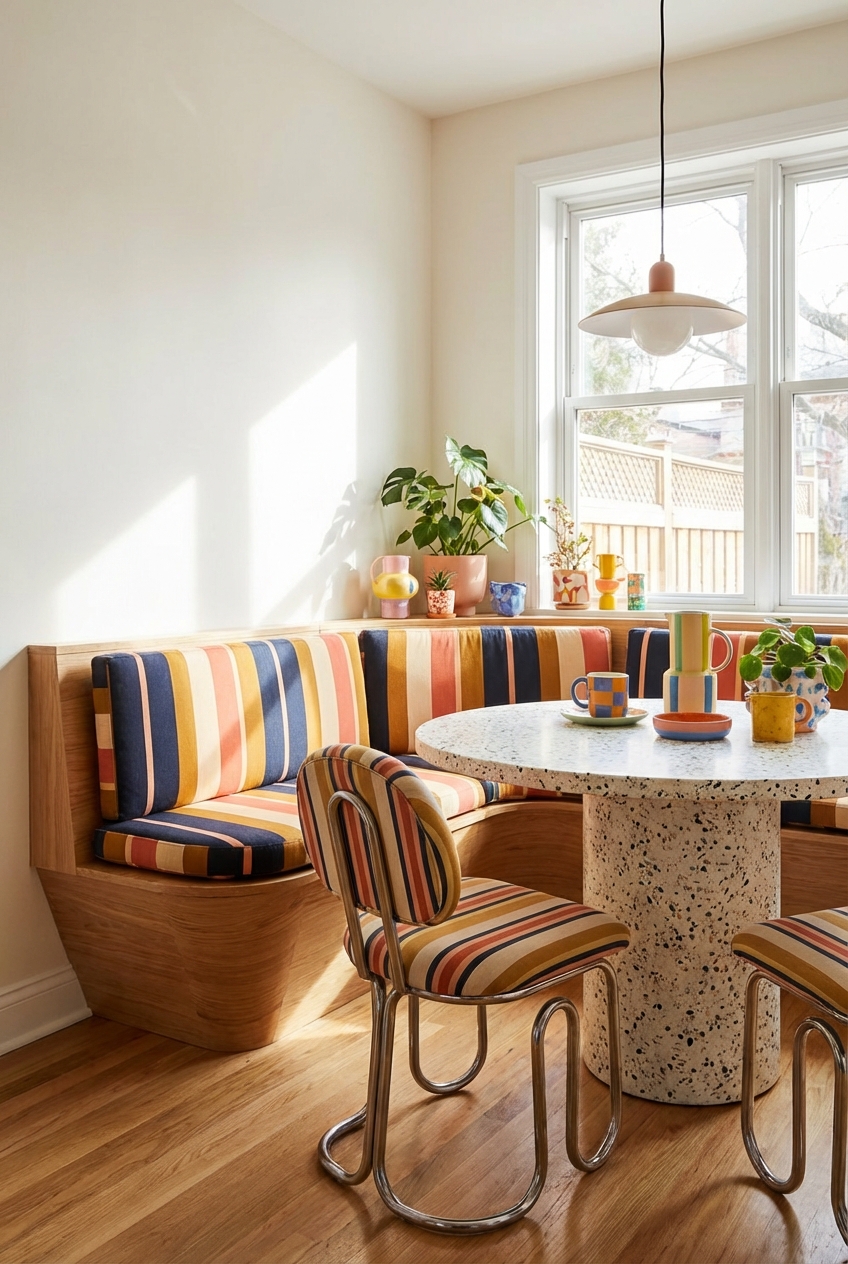
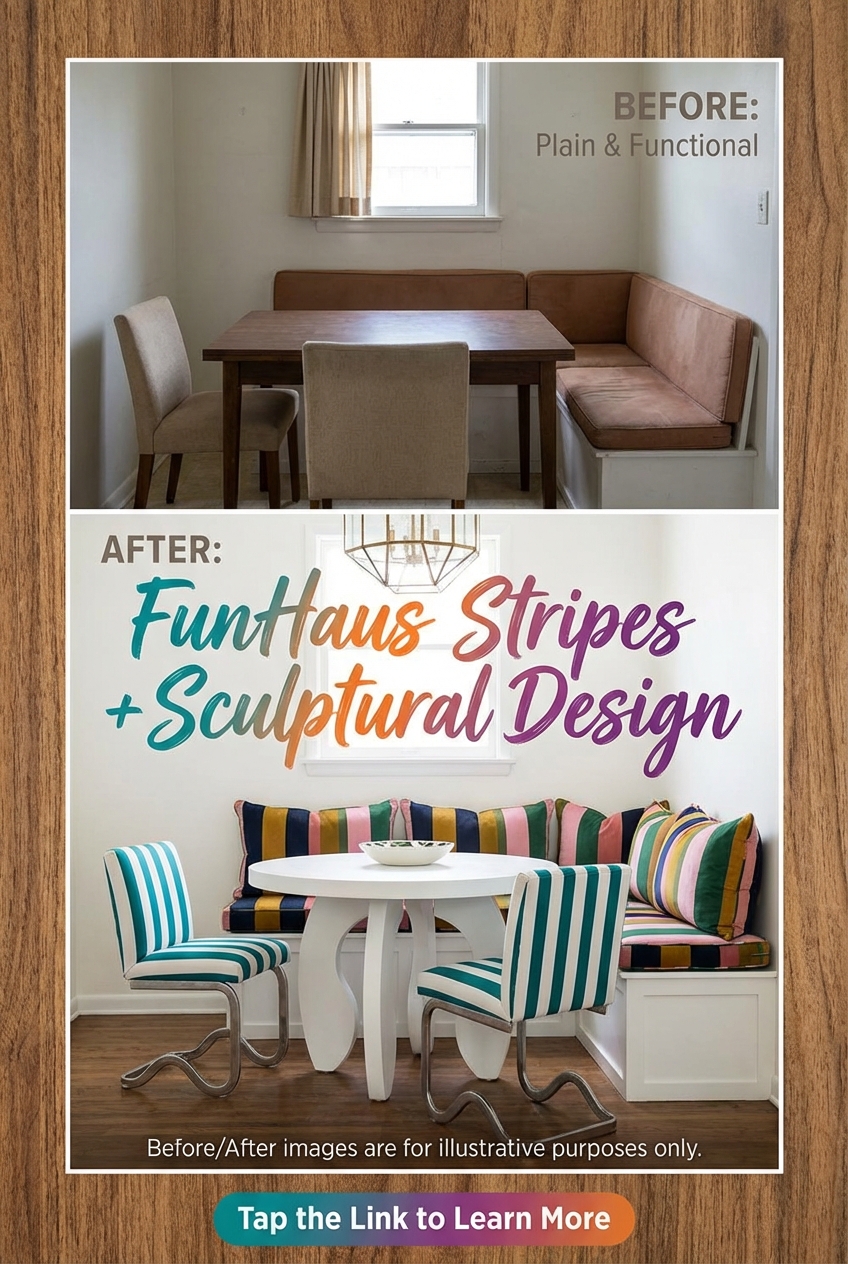
The easiest way to make a breakfast nook feel designed is to pair one loud, graphic element with one soft, odd-shaped one: wide stripe cushions on the bench, and a sculptural chair or two on the other side of the table. I call this mix FunHaus, a mash-up of Bauhaus geometry (tubular steel, simple shapes) and the playful color of the Memphis Group.
It's a good fit if you're tired of beige kitchens, and it's more practical than it looks. Stripes hide small stains better than solid linen, and plastic or sealed-wood chairs wipe clean.
What makes a FunHaus nook work?
Three things: bold stripes, seating with a curve, and a light fixture that has presence. The stripes bring rigid lines, so the furniture should break them with rounded backs, tubular frames or molded shapes.
Stripe cushions
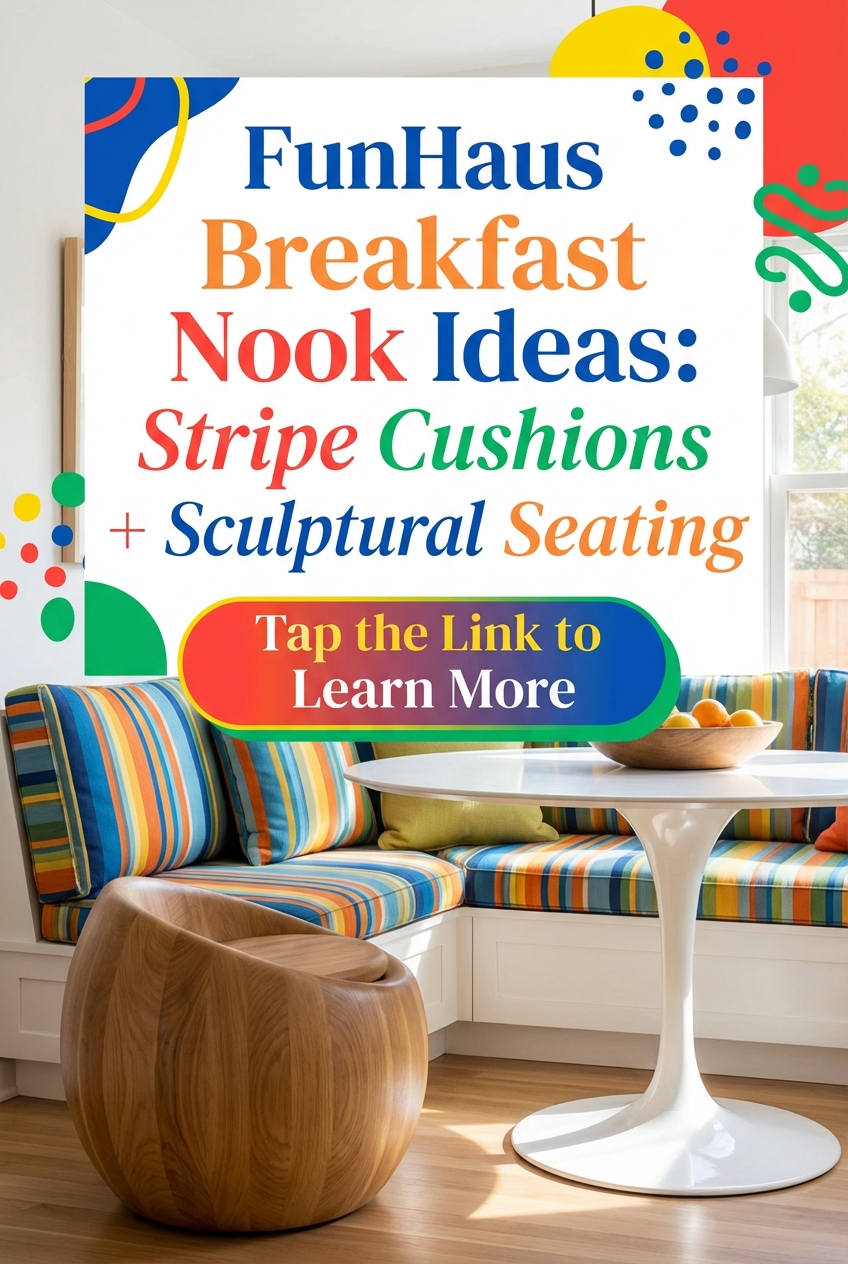
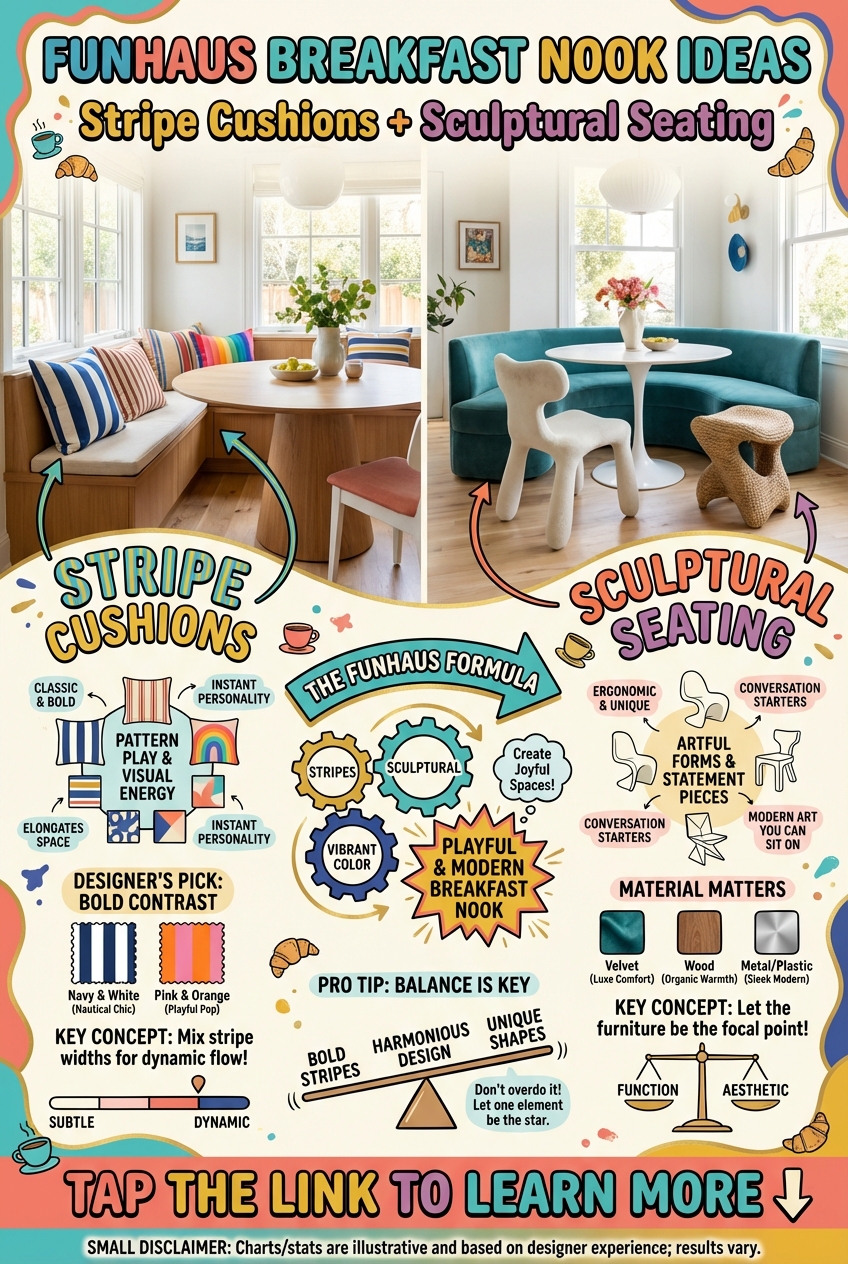
Skip thin farmhouse ticking. Wide cabana stripes, roughly 2-4 inches, read as architecture and look more modern. Mixing directions helps: vertical stripes on the back cushion, horizontal on the seat, diagonal on a pillow. Black and white or navy and white anchor the space, while mustard and lilac or cobalt and emerald push it into playful territory. If you go with wide stripes, a solid piping on the edges tidies the look.
Sculptural seating
Cantilever tubular-steel chairs, chunky rounded upholstered chairs and molded plastic chairs all work. Whatever you pick, sit in it first. Some thin wire or shell chairs are miserable without a seat pad, and a dining chair needs back support more than it needs a good silhouette.
What size should a breakfast nook table and bench be?
Most dining tables are about 30 inches high, and a comfortable seat is about 18 inches high once compressed. That leaves roughly 10-12 inches between seat and tabletop. If you're building a banquette with thick cushions, allow an inch or two for the cushion to sink.
- Let the table overlap the bench by about 3-4 inches so you can slide in without leaning forward.
- Plan about 24 inches of table width per adult. You can squeeze kids to about 20.
- Choose a pedestal or an inset trestle base for the breakfast nook table. Four corner legs mean banged knees.
- A round or oval top moves better in a tight nook than a square one.
A pedestal base can wobble if it's too light for the top, so look for a heavy or cast base when you pair a vintage base with a new top.
How high should the pendant hang?
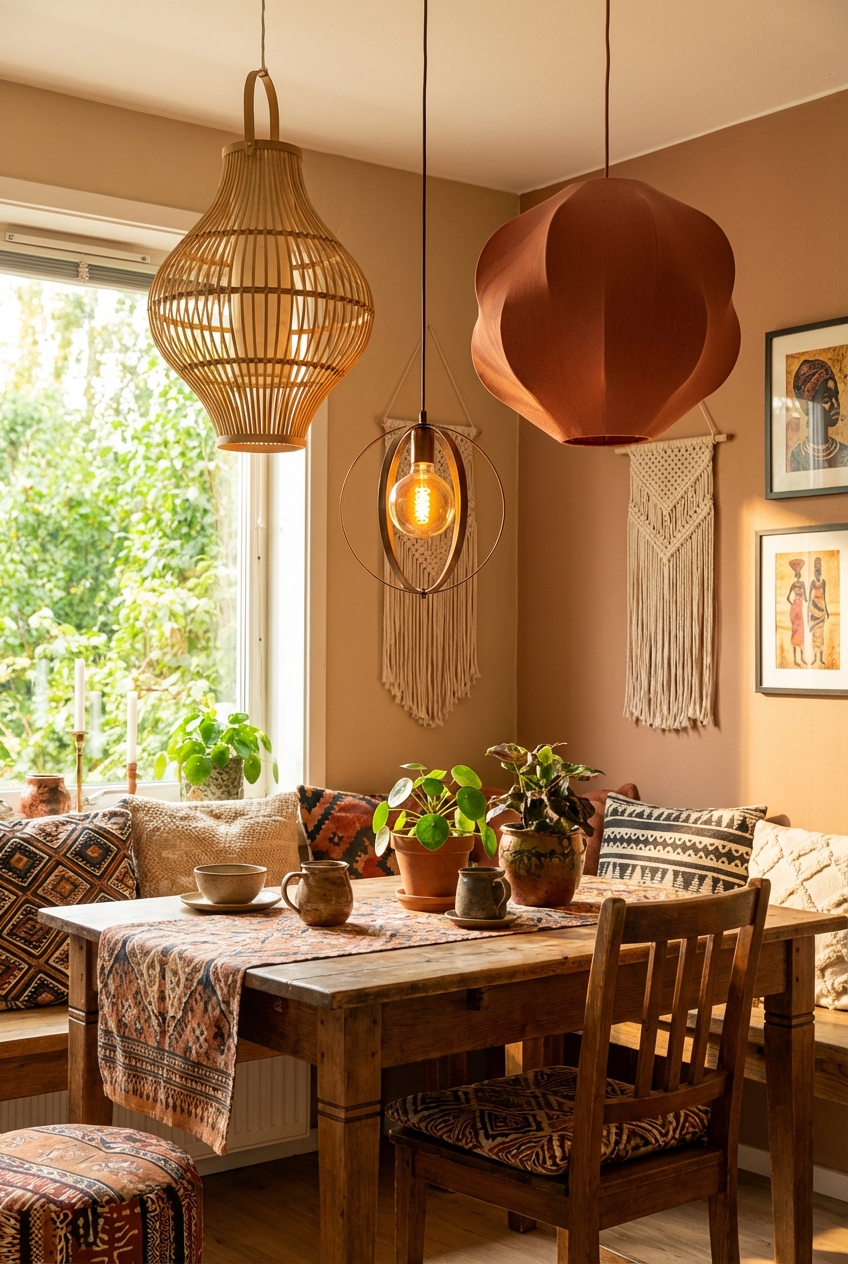
Hang the bottom of the fixture about 30-34 inches above the tabletop. If the table is small, people lean over it, or the fixture is wide or spiky, go to 34-36 inches. A globe, dome or Sputnik shape echoes the curves of the chairs. For more lighting ideas, see breakfast nook lighting with lanterns and sculptural shades.
Small kitchens, corners and bay windows
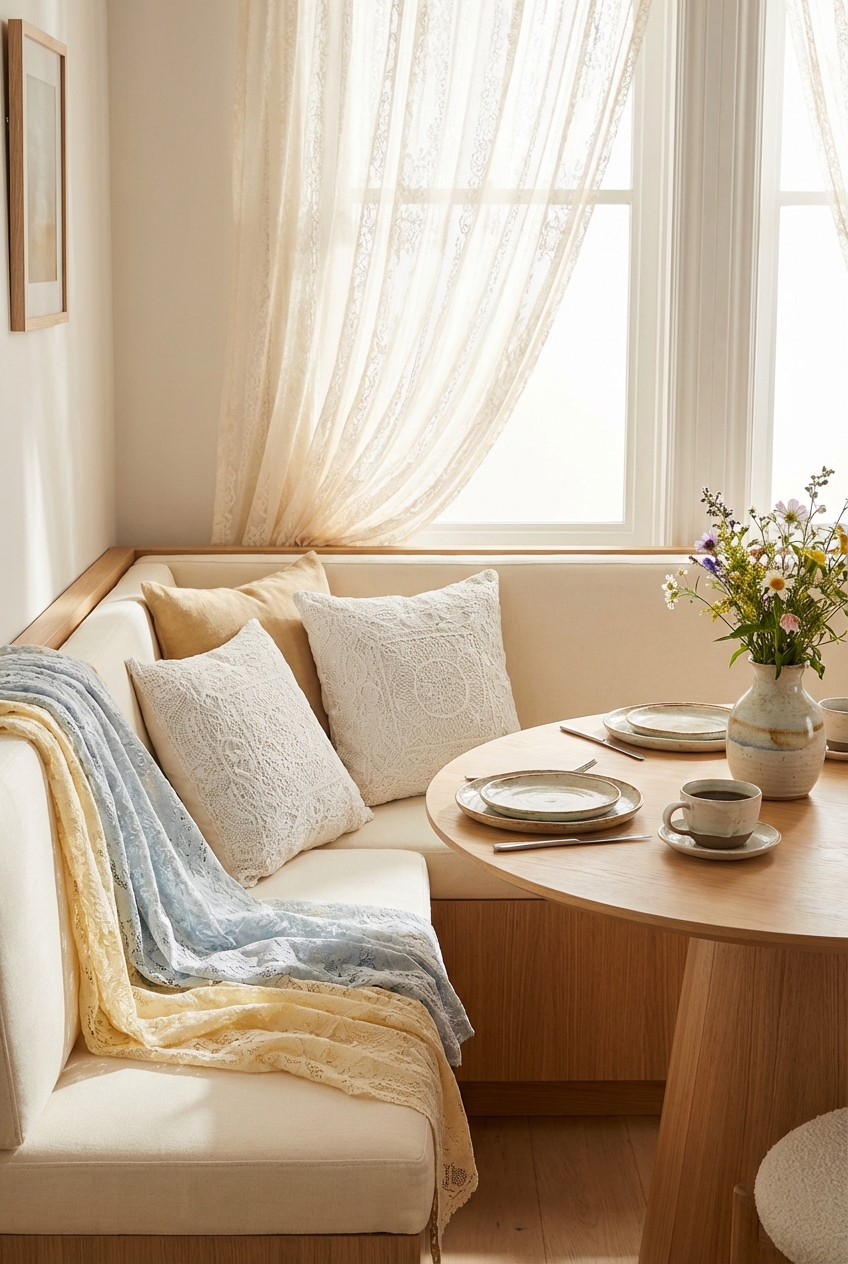
For breakfast nook ideas for small kitchens, the corner is your friend. A corner breakfast nook uses two walls as backs, so you need only one table and a few seats. More small-space layouts are in this guide to small-space nooks.
- Corner cut-out: hang art low, at seated eye level. If there's no ceiling junction box over the table, wall sconces are easier than a pendant (have an electrician handle any new wiring).
- Bay window: build the bench to follow the window's angles to save floor space, and keep window treatments light, such as roller shades.
- Island extension: treat the island's back as the wall for the bench and check that the counter overhang doesn't hit heads.
Breakfast nook bench ideas and storage
A breakfast nook with storage earns its keep. Hinge the bench seat or fit drawers underneath, and use it for rarely used gadgets or bulk pantry items. Check that the bench doesn't block outlets: cut access holes in the baseboard or route a power strip inside.
If you rent, a small armless loveseat or a dining bench pushed against the wall gives the built-in look with no construction. Peel-and-stick wallpaper behind it defines the zone.
How do you make a breakfast nook yourself?
For breakfast nook ideas DIY, build in layers rather than buying everything at once.
- Set the backdrop. Color-drench walls, trim and ceiling in one hue for a boxed-in feel, or keep it white so the furniture pops.
- Place or build the bench first, since everything else depends on it.
- Make the cushions. High-density foam cut to size, wrapped in striped fabric and stapled to a plywood backing, is a no-sew method.
- Add the table, then one or two sculptural chairs on the open side.
- Hang the light last, once you can judge the height from a seated position.
As an architect, I'd keep seat cushions smooth rather than tufted, because buttons trap crumbs. Put tufting on the back cushions if you want it. Zippered covers make washing easier in homes with kids or pets, and I'd rather see you save for a good cover fabric than for an expensive chair. For care, see how to clean chair cushions.
Which materials hold up in a nook?
Coffee, jam and denim dye all end up on the bench. Solution-dyed acrylic outdoor fabrics are made for hard wear and clean easily. High-resilience foam with a layer of batting around it keeps cushions plump instead of squashed. Stone tabletops need care too: Iowa State University Extension notes that soapstone does not need sealing but, like butcher block, needs regular oiling.
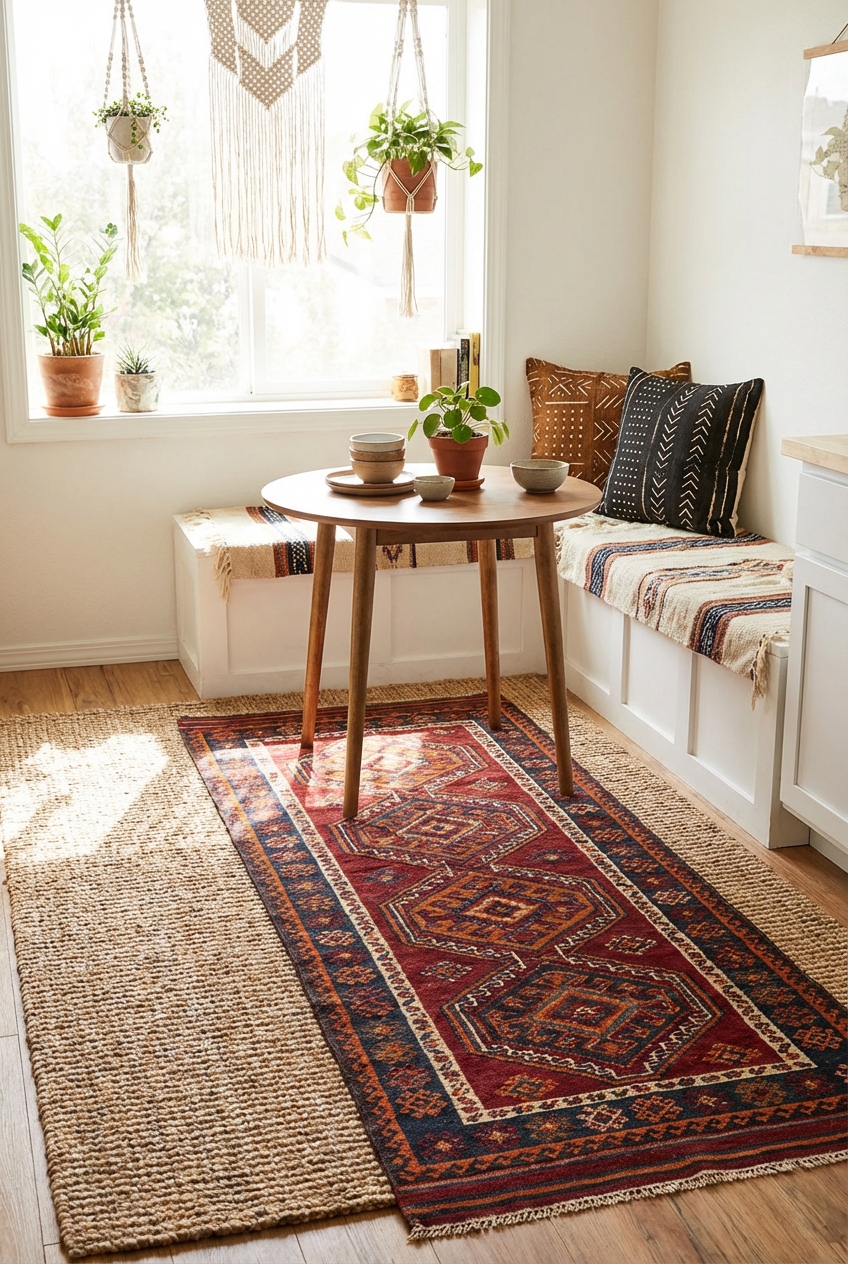
If you add a rug, keep it flat and low. The U.S. Access Board says carpet that is thick, cushiony, or loose impairs accessibility, particularly for wheelchair maneuvering. Extend a rug well past the table so chair legs stay on it, or skip it. For ideas, see rugs for a breakfast nook.
How do you keep stripes from taking over?
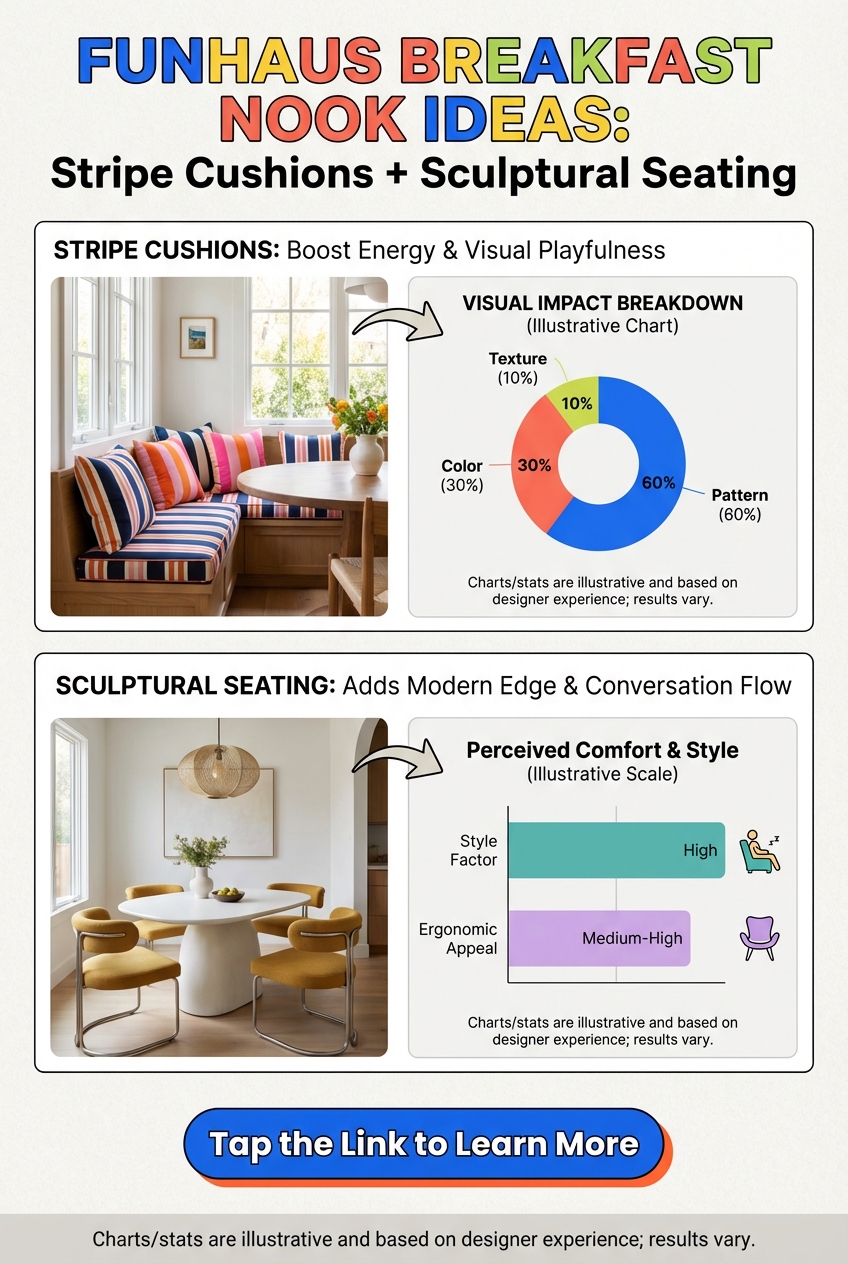
Give the eye somewhere to rest. A simple split: about 60% of the room in a calm solid (walls, floor), 30% in the main pattern (the stripes), and 10% in accents like the sculptural chairs. Stripes on walls, floor and cushions all at once is too much. To use stripes with restraint, see minimal black and white stripe decor, or carry the energy to the next room with FunHaus dining room ideas.
A final check for modern breakfast nook ideas: include at least one glossy surface (chrome, plastic) and one soft one (velvet, wool), and put a heavy bowl or vase on the table that won't tip.
Frequently asked questions
Can I mix different woods in a breakfast nook?
Yes, but keep the tones close, such as all light ash or all dark walnut. Let color and pattern provide the contrast instead of competing wood grains.
Are sculptural chairs comfortable?
Some are, some aren't, so sit in them before buying. Molded shells with a little flex can be comfortable, while thin wire chairs usually need a seat pad.
What if I'm a renter and can't build a banquette?
Push a small armless loveseat or dining bench against the wall. Peel-and-stick wallpaper behind it marks out the nook without construction.
How high should a breakfast nook table be?
About 30 inches is standard. Pair it with a seat around 18 inches high so there are roughly 10-12 inches between seat and tabletop.
Filed under
ArticlesMeet the author
Written by an architect.
Julio Arco is a passionate architect with years of experience in architecture, interior design, urban design, and housing. He studied at prestigious universities across North America and Europe.

- Name
- Julio Arco
- Job
- Architect and online interior designer
- Studied
- Architecture, ITESM · Urban Design and Housing, McGill
- Partner
- Thor, Australian Shepherd
- Thor’s title
- Head of quality control