Game Room Ideas: Cozy, Modern Setups That Work
Game room ideas for adults, small rooms and budgets: layout, seating, lighting, storage and acoustics, with practical sizes and what to put in the room.

By Julio Arco
Architect and online interior designer
In this post
- How do you design a game room?
- What to put in a game room
- Choose a theme and a calm palette
- Lighting and RGB that don't fight your screen
- Seating that holds up to long sessions
- Modern game room ideas for storage and display
- Game room ideas for small rooms and tight budgets
- Soften the sound
- Frequently asked questions
A good game room does three things: it lets you see the screen without glare, it gives you a comfortable place to sit for hours, and it keeps cables and clutter out of sight. Get those right and the style (dark and moody, light and airy, retro arcade) is the easy part.
Below are the ideas I'd start with, in the order I'd make the decisions: layout first, then seating, lighting, color, storage and sound.
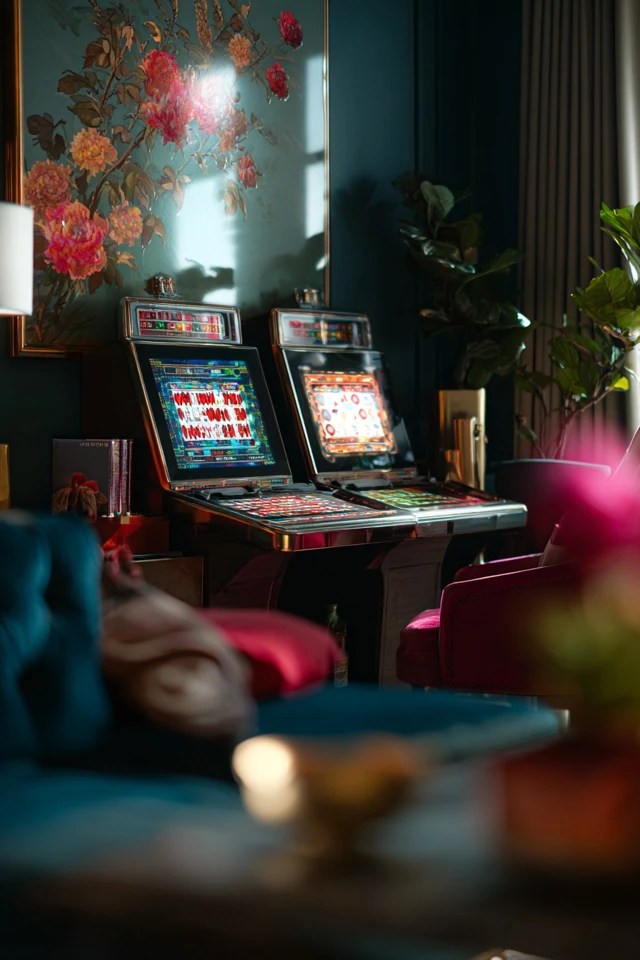
How do you design a game room?
Start by listing what the room has to do. Solo PC play, couch co-op, streaming, board games and movie nights each need different furniture and different sightlines. Most rooms end up with two zones at most, so pick the main one and let the other fit around it.
Leave about 30-36 inches for a main walkway, and keep the seating distance from a TV long enough that you aren't scanning the screen. A desk for a multi-monitor setup usually needs 24-36 inches of depth. Mark the layout on the floor with painter's tape before you buy anything. It takes ten minutes and prevents most layout regrets.
What to put in a game room
If you're wondering what to put in a game room, this is the short list I'd work from:
- A screen setup: a desk and monitor, or a TV on a wall or low console.
- Comfortable seating: a desk chair with adjustable lumbar support, plus a sofa, sectional or floor seating for guests.
- Layered lighting you can dim.
- Closed storage for controllers, cables and games, and a little open shelf for the things you like to look at.
- A rug and some soft materials to control echo.
Extras such as a pool table, pinball machine or bar are fun, but they need real floor area. A pool table needs clear space around it for a cue swing, so check the room's dimensions before you fall in love with one.
Choose a theme and a calm palette
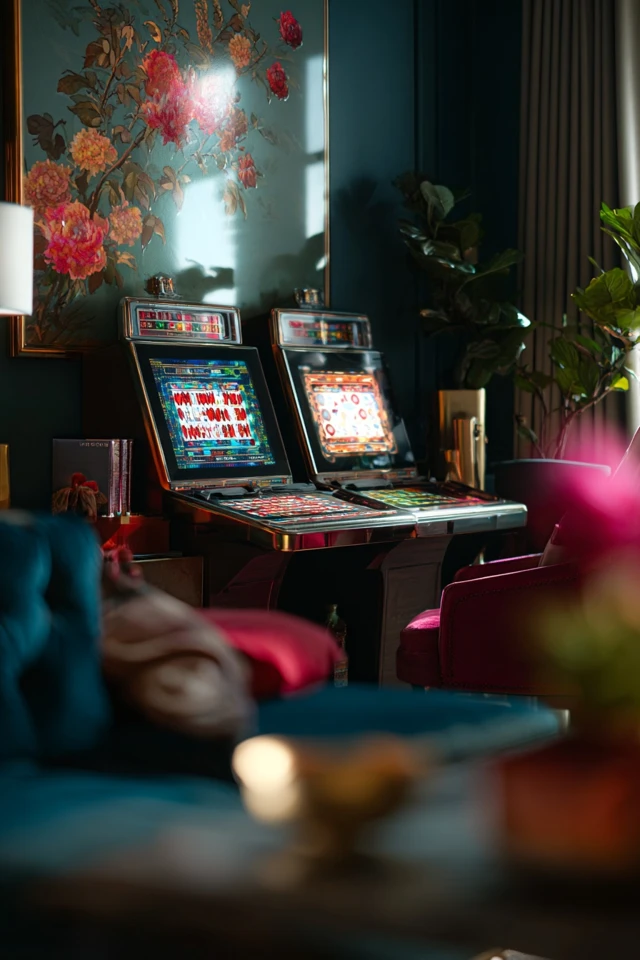
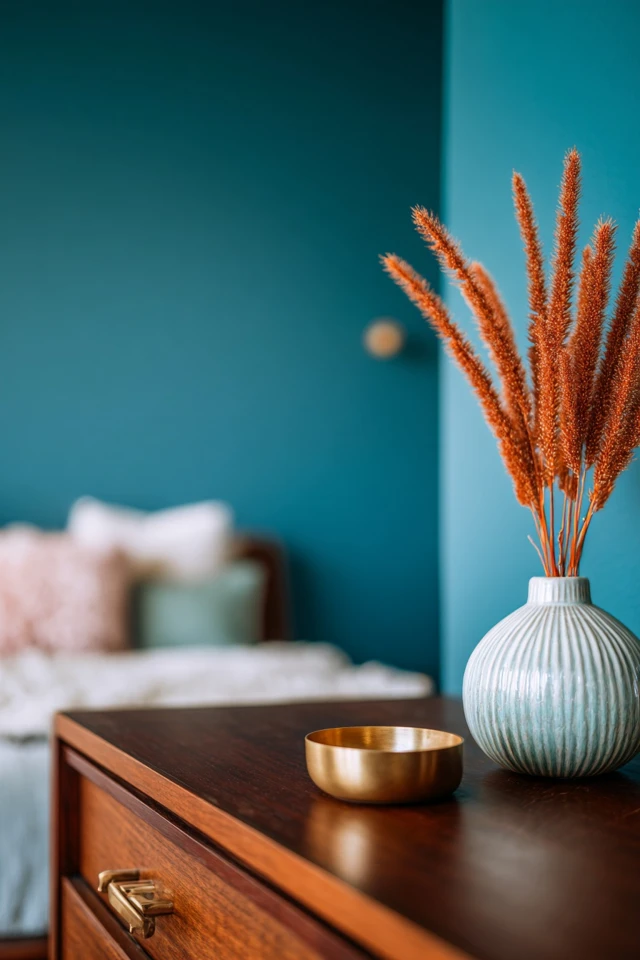
Dark walls make screens look more prominent and reduce the contrast between a bright display and the room around it. Deep navy, charcoal and muted green all work, and they pair well with warm wood so the room doesn't feel like a cave. If the room is small and has little daylight, a mid-tone or a warm gray can be easier to live with than a very dark color.
Highly saturated color is tiring in large doses. I recommend keeping walls muted and putting the bright color in small things you can swap: cushions, posters, a lamp. That is also the cheapest way to try a theme.
Lighting and RGB that don't fight your screen
Glare is the main enemy. Avoid putting a window or a bright fixture behind or directly opposite a screen. Use curtains you can close, and matte finishes on the wall behind the monitors.
Build light in layers: a dimmable ceiling or floor light for general use, a task light at the desk, and a soft LED strip behind the monitors or TV. A strip behind the screen reduces the harsh contrast between the display and a dark wall. RGB is fine when it's one accent, set to a warm or single color. Full rainbow across every surface gets old fast, and it's very hard to relax under.
Seating that holds up to long sessions
For desk play, choose the chair for adjustability, not looks. Set the monitor so the top of the screen is near eye level and keep your elbows at about 90 degrees. For lounging, a deep sofa or sectional with washable or performance fabric is practical, especially if a dog or a snack-prone friend is going to use it. As an architect, I'd always pick a cover I can wash over a fabric that looks great but can't take a spill.
Modern game room ideas for storage and display
Modern rooms look calmer when most things are hidden. Use closed cabinets or a low credenza for consoles, controllers and boxed games, and keep open shelves for a small rotating selection of collectibles. Wall-mounted shelves free the floor, which matters in any room under about 120 square feet.
Plan cables early. A tray under the desk, braided sleeves and a labeled power strip make the difference between a tidy setup and a tangle. If you're adding outlets or running new circuits, hire a licensed electrician.
Game room ideas for small rooms and tight budgets
In a small room, go vertical and low. A wall-mounted monitor arm, a fold-down or narrow desk, a bench with storage inside, and floor cushions that tuck away all keep the floor open. Light, desaturated walls and a mirror placed away from the screen help the room feel larger. Our minimalist living room tips cover the same less-is-more approach, and if your game corner is part of a shared room, a partition can separate it visually.
For game room ideas on a budget, spend where your body touches the room (chair, desk) and save everywhere else:
- Paint one wall instead of all four.
- Use plug-in LED strips and a dimmable lamp instead of new fixtures.
- Frame posters or game art in inexpensive frames.
- Make acoustic panels from fabric-wrapped insulation, or simply add a rug and curtains.
Soften the sound
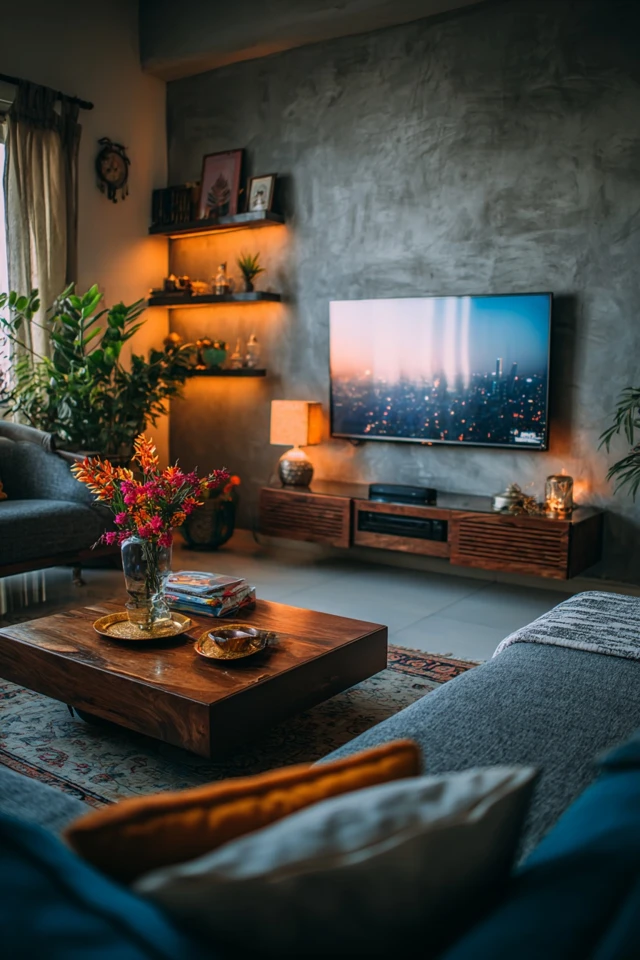
Hard walls and floors make a room echo, which hurts both game audio and voice chat. A thick rug, lined curtains, upholstered seating and a bookcase on an empty wall all absorb sound. Place soft materials opposite the hard, reflective surfaces, and test the audio from where you actually sit.
If you like plants in the room, they add a little natural texture and soften the tech. If you have a dog or cat, check with your vet or the ASPCA's plant list before choosing which ones.
Frequently asked questions
What should I put in a game room?
Start with a screen setup, comfortable seating, dimmable layered lighting, and closed storage for gear. Add a rug for sound, then extras like a table or bar if you have the floor space.
What are the must-haves in a gaming room?
An adjustable chair, a glare-free screen position, good cable management and lighting you can dim. Everything else is a preference.
What are some ideas for a game room on a budget?
Paint a single wall, use plug-in LED strips, build fabric acoustic panels and invest only in the chair and desk. Thrifted shelves and framed posters add personality cheaply.
How can I make a small gaming room feel larger?
Use light, muted wall colors, wall-mounted storage and low-profile furniture. Keep the floor clear and choose pieces that do two jobs, like a bench with storage.
Filed under
ArticlesMeet the author
Written by an architect.
Julio Arco is a passionate architect with years of experience in architecture, interior design, urban design, and housing. He studied at prestigious universities across North America and Europe.

- Name
- Julio Arco
- Job
- Architect and online interior designer
- Studied
- Architecture, ITESM · Urban Design and Housing, McGill
- Partner
- Thor, Australian Shepherd
- Thor’s title
- Head of quality control