Shiplap Walls: Modern Ideas, Install Steps and Costs
Shiplap walls explained: modern styles, horizontal vs vertical boards, how to attach shiplap to a wall, and what affects cost, with pet-friendly tips.

By Julio Arco
Architect and online interior designer
In this post
Shiplap walls are horizontal or vertical boards with a small groove or overlap between them, fixed to a wall to add texture and a clean line pattern. For a modern look, use narrow boards, a tight gap, and a quiet paint color, and keep it to one wall.
It's very common to love the look and worry it will feel too farmhouse. It doesn't have to. Board width, orientation and finish do most of the work, and the sections below walk through each choice.
What is shiplap, and why does it suit modern rooms?
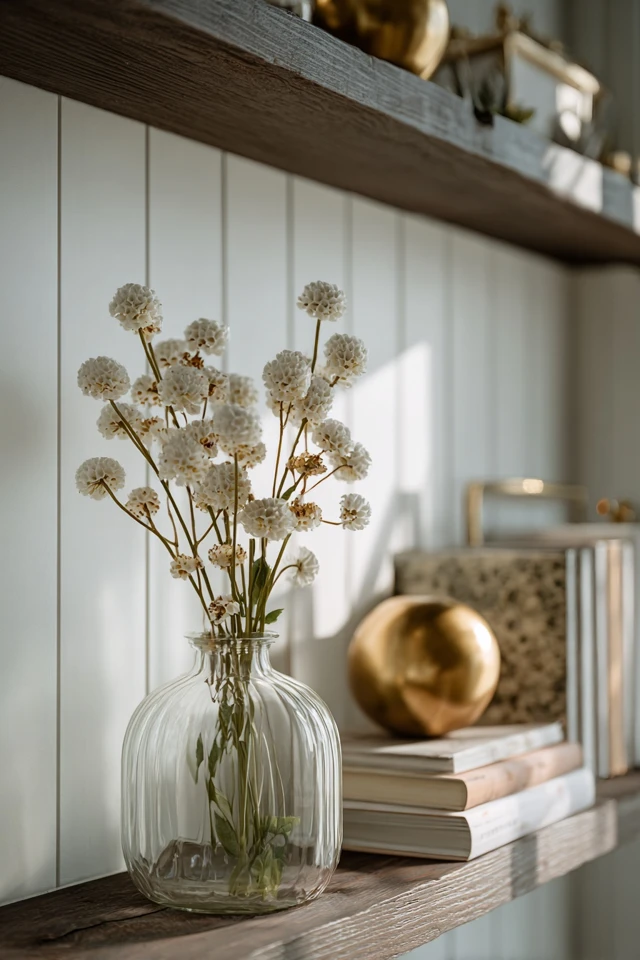
Shiplap started as exterior and utility cladding, with boards that overlap or notch together so water runs off. Indoors, the name now covers most narrow wall boards with a visible seam, including tongue-and-groove and simple flat panels with a routed gap.
The appeal is rhythm. Repeated seams create a fine line pattern that adds depth without adding color. Because the lines are regular, they pair well with plain furniture, and the wall reads as texture instead of decoration.
Where should you use shiplap walls?
One wall is usually enough. Covering every surface makes a room feel like a cabin, and you lose the contrast that makes the feature wall work.
- Behind a bed or sofa, where it anchors the furniture and gives the eye a place to land.
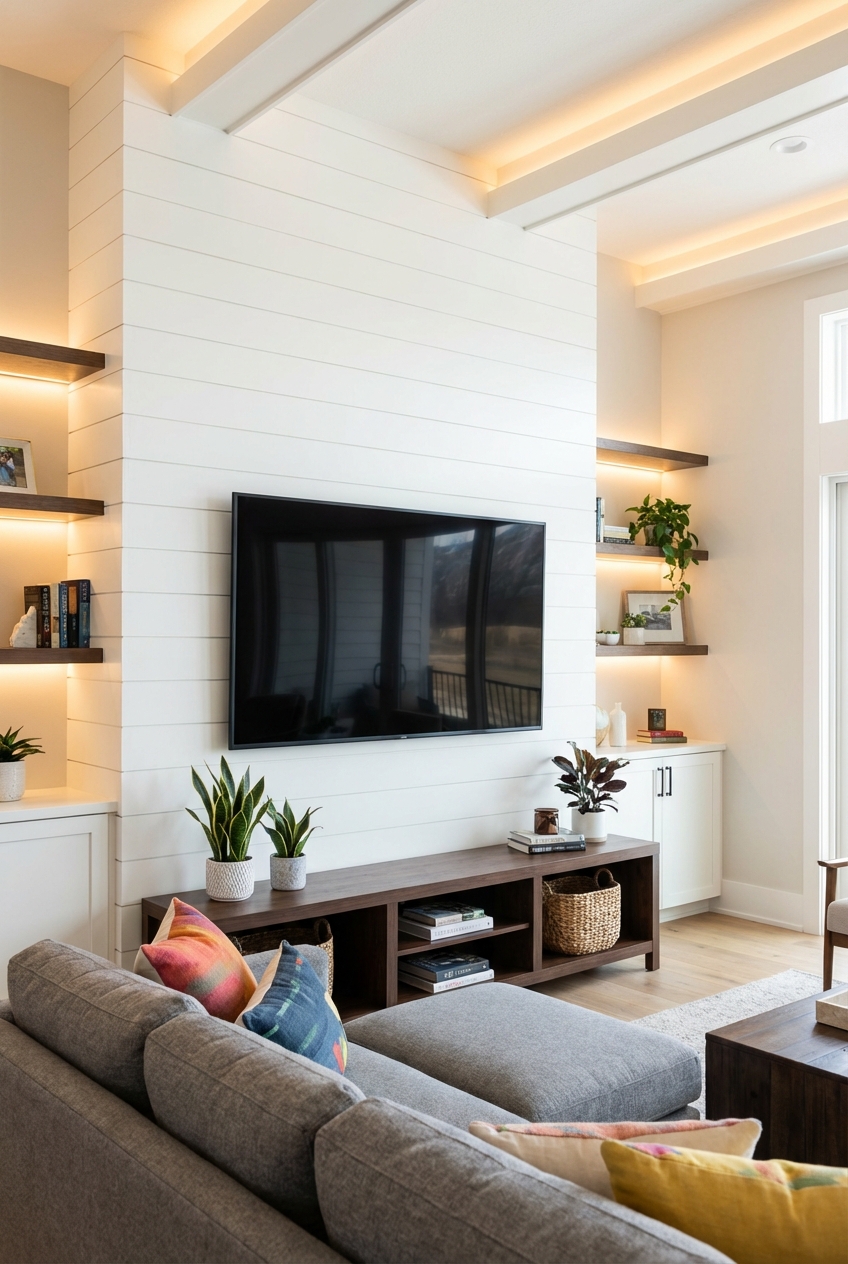
- As a shiplap TV wall, where the lines give a large black screen some context. Run the boards before mounting and locate studs for the bracket. If you plan a fireplace below, see these fireplace ideas with a TV.
- In an entry or hallway, where a durable, wipeable painted surface handles bags, leashes and muddy paws better than flat paint.
- Around built-ins. Shiplap at the back of a shelf unit adds depth, as in these bookshelf ideas.
Horizontal or vertical shiplap: which one should you pick?
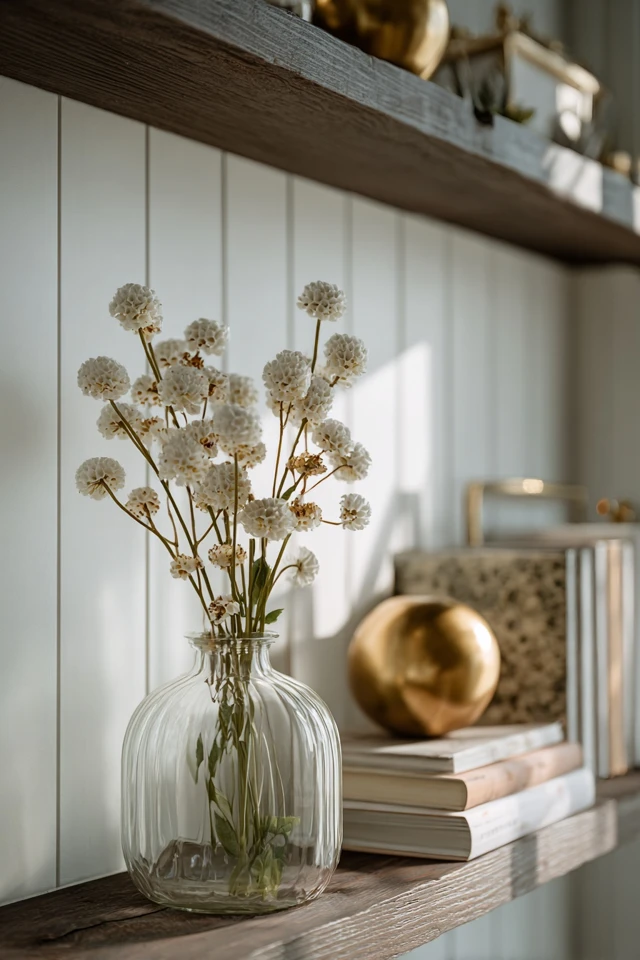
Horizontal lines lead the eye sideways, so they make a narrow room feel a little wider. A vertical shiplap wall pulls the eye up, which helps in rooms with low ceilings. This is a perception effect, not a magic trick, but it's reliable enough to plan around.
As an architect, I'd choose vertical boards for a hallway or entry with a standard ceiling, and horizontal boards behind a sofa or bed. Mixing both in one room works only if you separate them by zone and keep the same paint color.
Which board width and color look most modern?
Narrow boards, roughly 4 to 6 inches wide, with a thin gap read as refined. Wider boards, around 8 inches, feel bolder and more rustic. A smaller gap looks more like fabric; a deeper one throws stronger shadows.
White shiplap walls are the safe classic because they brighten a room and let the texture show. Pick a slightly warm or soft white instead of stark white, and test a large sample at morning and evening. Glossy paint highlights every flaw and makes sharp shadows in the gaps, while matte or low-sheen softens them. In kitchens, entries and anywhere pets rub against the wall, satin is easier to wipe clean.

Deep greens, charcoal and warm greys also work for a modern shiplap wall, especially in a bedroom or reading corner where you want a calmer, cozier feel.
How to attach shiplap to a wall
The basic method is the same for real boards and ready-made panels. For electrical outlets, plumbing or structural questions, call a licensed professional.
- Measure the wall and mark stud locations with a stud finder. Boards should be fixed into studs, not just drywall.
- Let the boards sit in the room for a couple of days so they adjust to the humidity.
- Start from the bottom or the top, whichever is more level, and check the first board with a level. Everything after it follows that line.
- Fix each board with construction adhesive and finish nails into the studs. Use a small spacer to keep the gap consistent.
- Cut around outlets with the power off at the breaker, and extend the boxes if the boards add thickness.
- Fill nail holes, caulk the seams at corners and edges, then prime and paint.
Finish the edges with trim or a simple baseboard and a clean top cap. Raw edges are the quickest way to make a good wall look unfinished.
What do shiplap wall panels and boards cost?
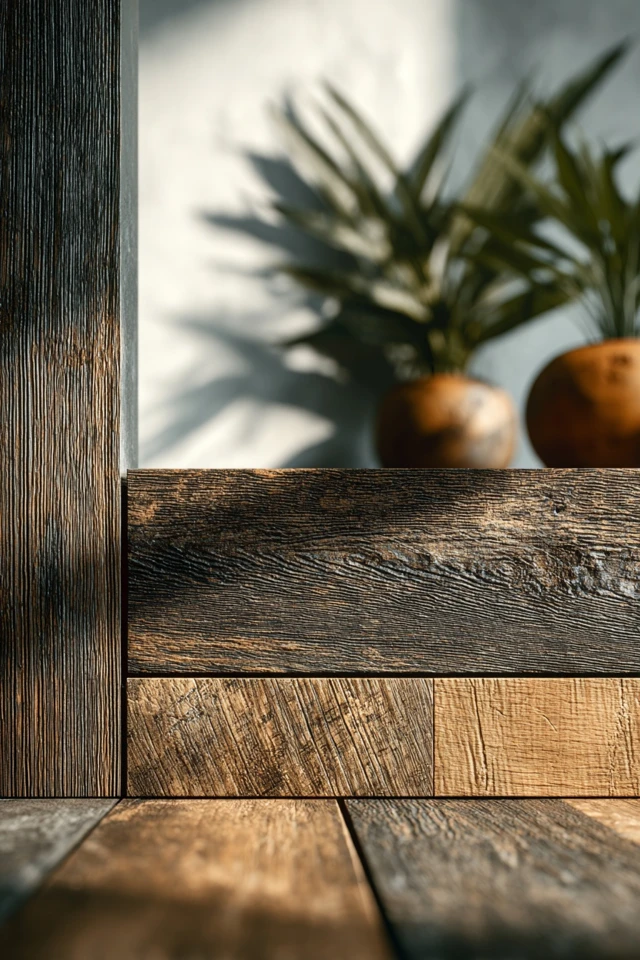
Shiplap walls cost depends on material, wall size and who does the work. Solid wood boards cost more than MDF or PVC panels, and ready-made shiplap wall panels save labor because they cover more area per piece. Paint, trim, adhesive and nails add up, so budget for them. Prices vary by region and supplier, so get a measured quote for your wall before you decide.
As for whether it's cheaper than drywall, plain drywall usually costs less per square foot. Shiplap is a finish you add on top, so you pay for it in addition to a sound wall.
Downsides to know before you start
- Seams collect dust, so plan on a soft brush or vacuum attachment now and then.
- Wood can swell or warp in damp rooms. Use sealed or moisture-resistant boards in bathrooms and kitchens.
- Painted joints can crack if wood moves. Caulk helps.
- Removal is messy, so choose a timeless color.
Is it out of style? The farmhouse version, with wide boards and heavy distressing, has peaked. Narrow, tidy boards in a quiet color keep working because they behave like plain texture.

Finally, pair shiplap with soft things: a woven rug, linen curtains, a wool throw. They counter the straight lines, and they're kind to a dog's paws and your ears. For another texture-led feature wall, try wallpaper on a staircase wall.
Frequently asked questions
What are the downsides of shiplap?
Seams trap dust, wood can swell in damp rooms, and painted joints may crack over time. Sealed boards, caulk and a soft brush for cleaning reduce most of these problems.
Is shiplap out of style?
Wide, heavily distressed boards look dated to many people. Narrow boards with a tight gap in a soft white or deep neutral still look current.
Is it cheaper to drywall or shiplap?
Drywall alone is generally cheaper. Shiplap is added over a finished wall or framing, so it costs extra for materials, paint and labor.
Can I mix horizontal and vertical shiplap in one room?
Yes, if each direction has its own zone, such as vertical in an entry and horizontal on the living room wall. Keep one paint color so it feels connected.
Filed under
ArticlesMeet the author
Written by an architect.
Julio Arco is a passionate architect with years of experience in architecture, interior design, urban design, and housing. He studied at prestigious universities across North America and Europe.

- Name
- Julio Arco
- Job
- Architect and online interior designer
- Studied
- Architecture, ITESM · Urban Design and Housing, McGill
- Partner
- Thor, Australian Shepherd
- Thor’s title
- Head of quality control