Reading Nook Ideas: A Calm Bedside Writing Corner
Reading nook ideas for the bedroom: how to fit a calm bedside writing corner with the right desk size, warm light, seating and a rug, even in a small room.

By Julio Arco
Architect and online interior designer
In this post
- What makes a bedside nook feel cute and calm?
- How big should the desk and chair be?
- How do you set it up step by step?
- What lighting works best for a bedside nook?
- What are the best things to put in a reading or writing nook?
- How can you make a cheap nook?
- What if the room is small or shared?
- Common mistakes to avoid
- Frequently asked questions
A bedside writing nook needs four things: a desk or shelf about 18-22 inches deep, a chair you can pull out without hitting the bed, a warm and dimmable light, and a soft rug underfoot. Get those right and the rest is styling.
Most bedroom reading nook ideas work just as well for journaling, and they suit a small room. If you can't fit a full office, this is the version that does.
What makes a bedside nook feel cute and calm?
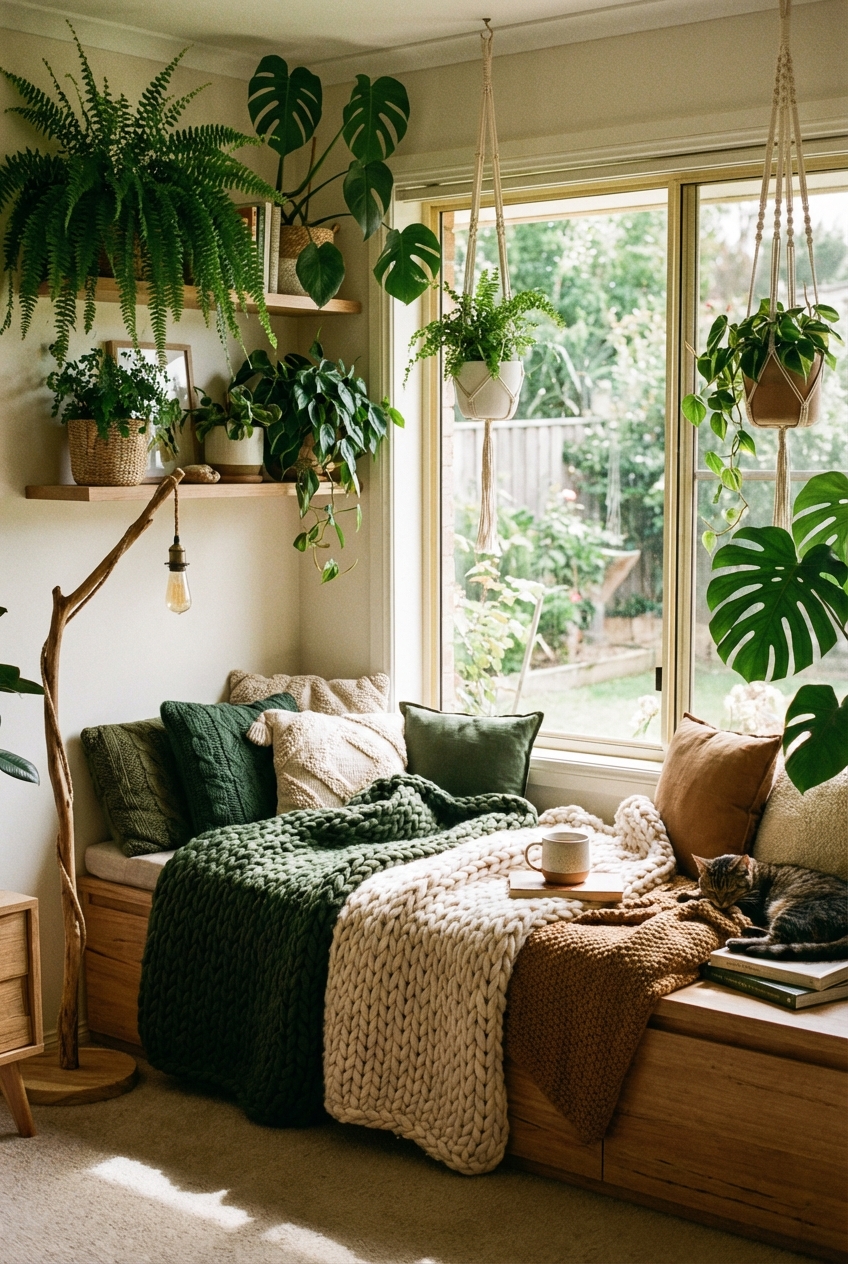
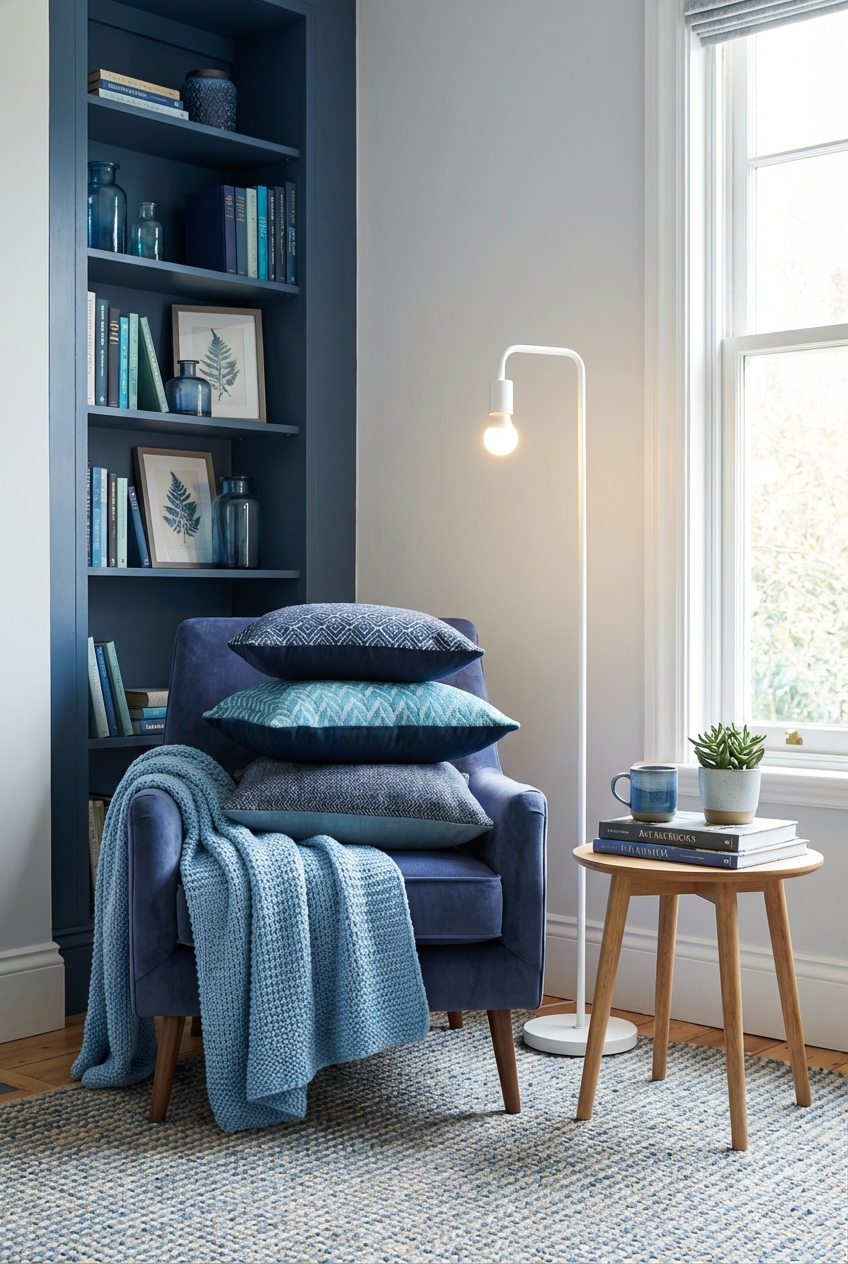
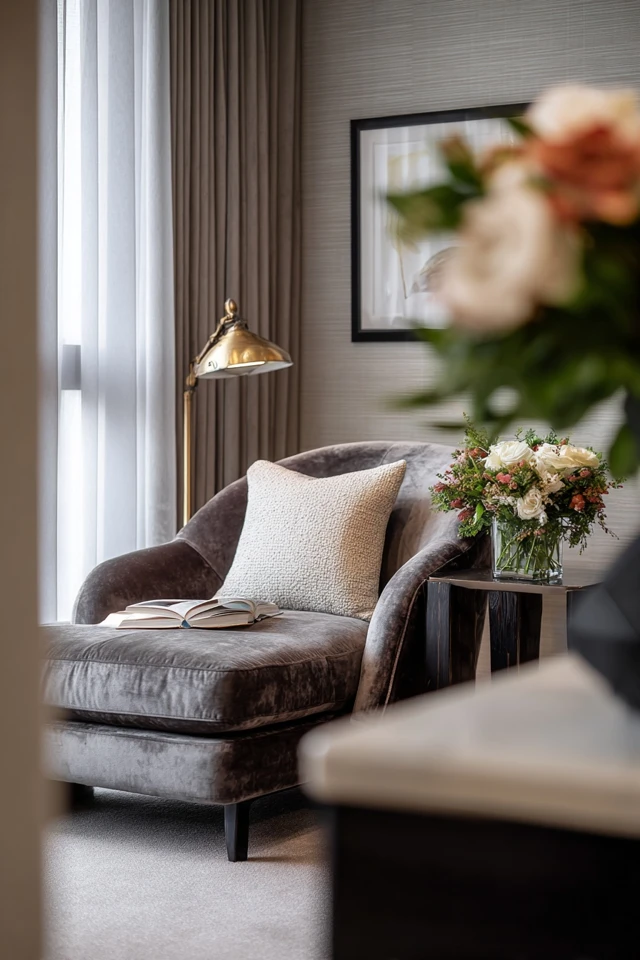
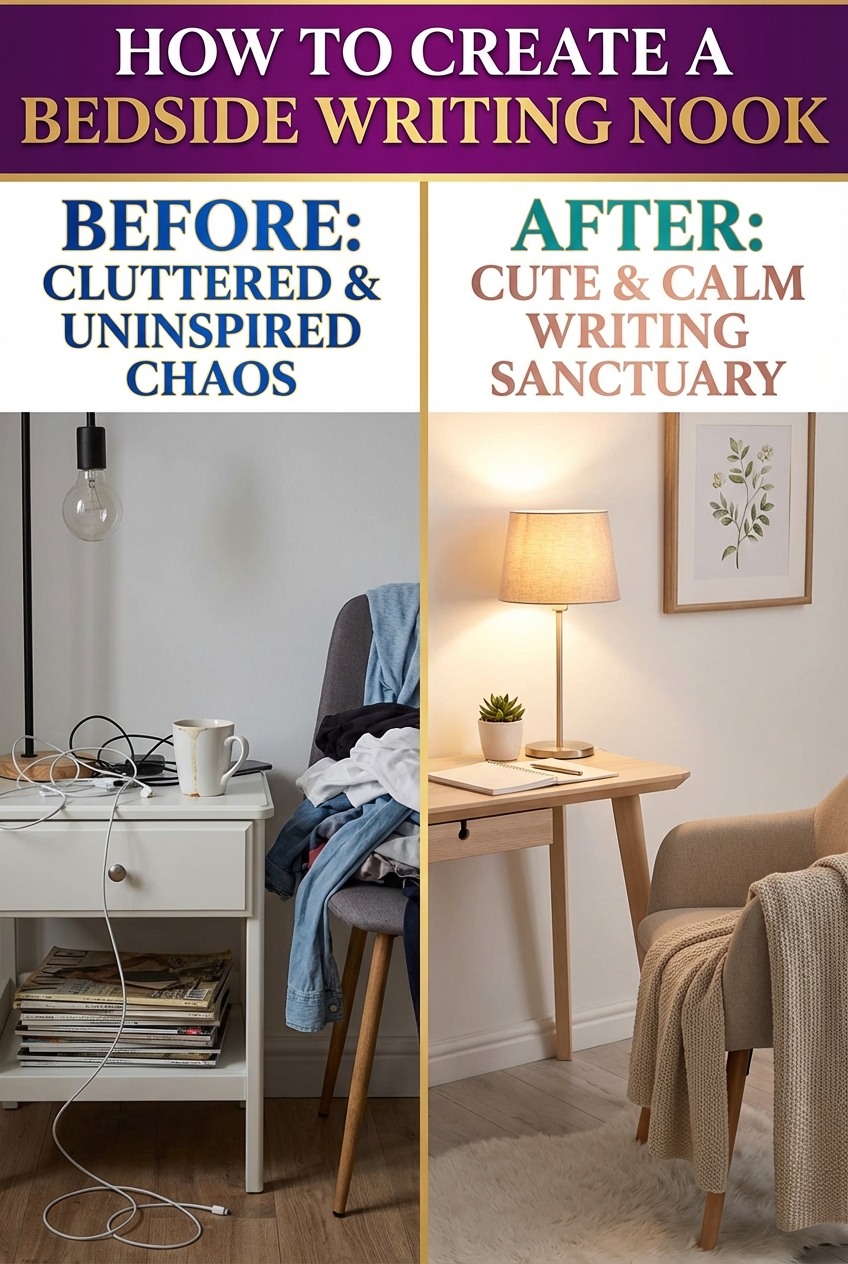
Calm comes from low visual noise: a limited palette, soft textures and few objects. Avoid harsh contrast such as bright white against jet black, which is tiring to look at in a bedroom.
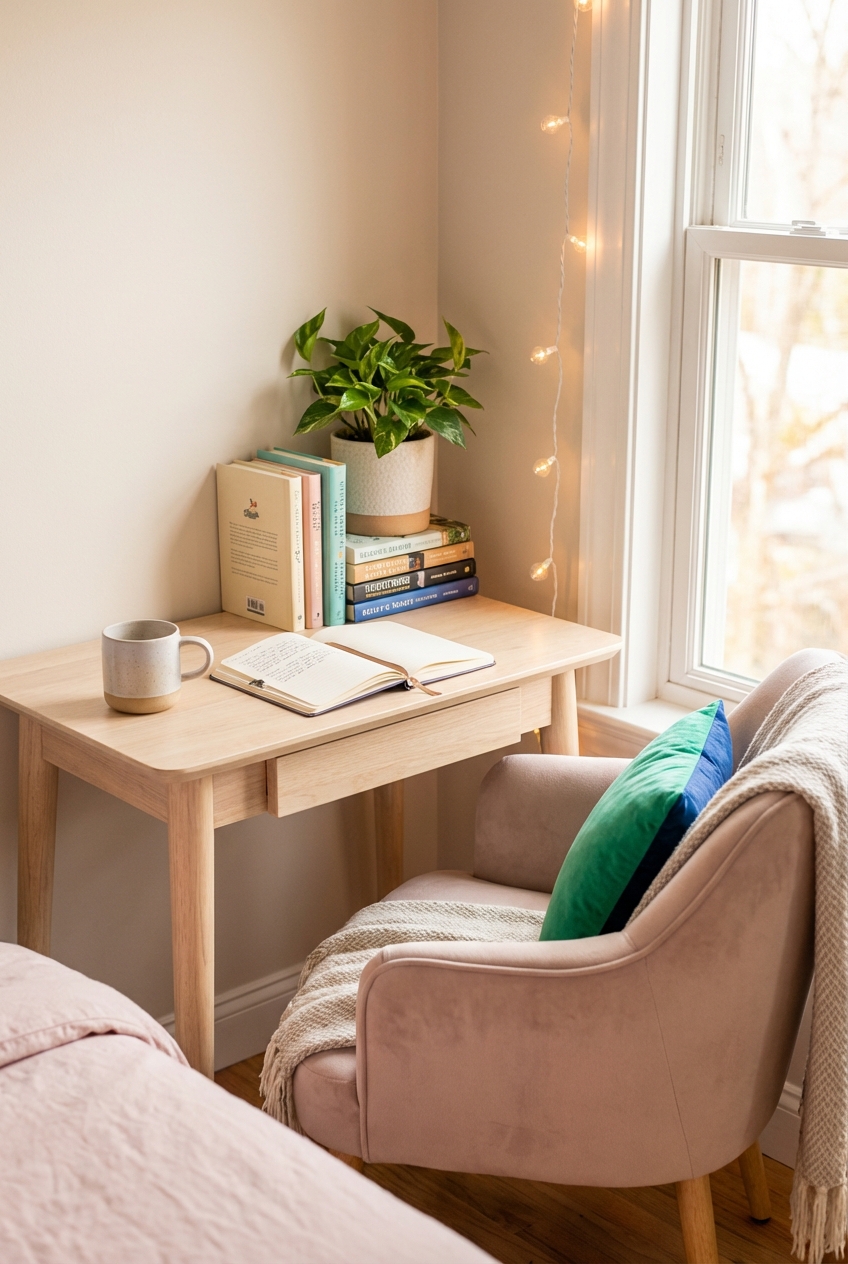
Cute comes from a few pieces with personality, like a desk with turned legs, a vintage-style chair or a lamp with a pleated shade. Natural materials (oak, linen, wool) blend easily with bedding. Think about how things feel in the hand, too: a ceramic mug for pens, a good notebook, a wool rug.
How big should the desk and chair be?
Scale matters when furniture sits next to your bed. These are the proportions I'd use:
- Writing surface height: about 28-30 inches. If your mattress is tall, keep the desk a little lower than the top of the bed so it doesn't loom.
- Depth: 18-22 inches holds a notebook or laptop without eating the floor.
- Width: at least 30 inches, with a knee space of about 20 inches.
- Clearance behind the chair: about 36 inches to pull it out and sit down comfortably.
- Seat to underside of desk: about 10-12 inches, so your wrists stay relaxed.
Short on room? A stool or backless chair tucks fully under the desk. It's fine for short sessions, but choose a chair with a back if you write for an hour or more.
How do you set it up step by step?
- Measure the gap between the bed and the nearest wall. Leave a clear path around the foot of the bed.
- Pick one anchor piece. A shallow writing table or secretary desk often fits better than a computer desk, and it can double as a nightstand.
- Choose a chair that looks like an accent chair, such as a slipper chair or a bentwood bistro chair.
- Add a small lamp on the side opposite your writing hand so your shadow doesn't fall on the page.
- Hide cords with adhesive clips down the desk leg and a box for the power strip.
- Lay a small rug so all four chair legs stay on it when you pull out. A 3x5 foot rug usually works in a corner.
Setting up in a family room instead? The same logic applies to a compact command center: one small footprint, clear zones.
What lighting works best for a bedside nook?
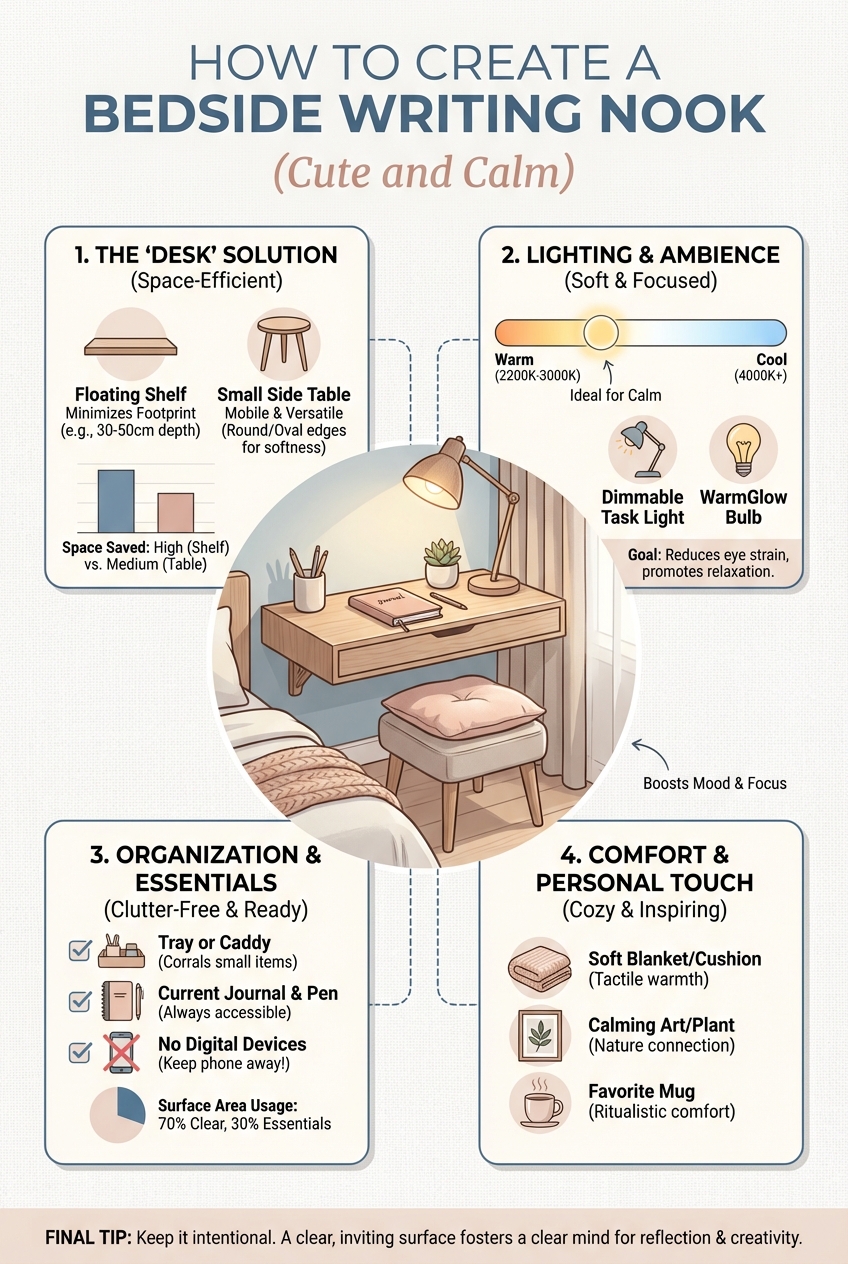
Use a warm bulb, around 2700K, and make it dimmable. Color temperature is one of the main ways light's appearance is described, as the U.S. Department of Energy's color and spectrum page explains, so check the number on the box.
It also matters for sleep. The Department of Energy notes that "Light plays a key role in setting and regulating the body's biological clock." Keep evening light low and warm, and aim it at the page.
Pick a lamp with an opaque shade that sends light down. A clear glass shade shows the bare bulb and creates glare. If the desk is tiny, a wall sconce frees up the surface. LED bulbs are a sensible choice: the Department of Energy says good-quality white LED products are expected to last 30,000 to 50,000 hours or longer.
What are the best things to put in a reading or writing nook?
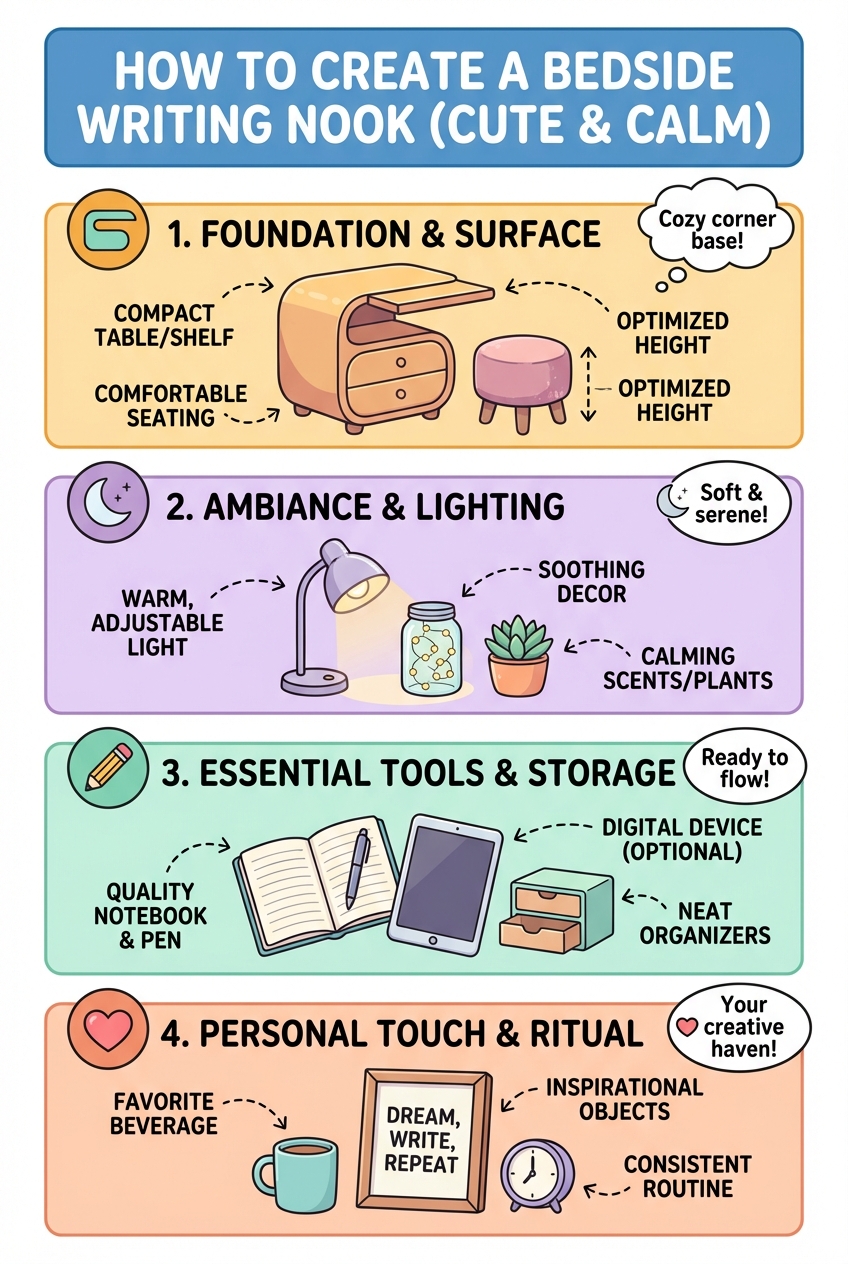
The basics are a surface, a chair, a lamp and a rug. For styling, keep to about three small items: a vase of dried flowers, a tray for pens and one framed piece. Keep decor to about a third of the desk so you have space to write.
- A small box or tray for loose paper and envelopes.
- A plant with a saucer, such as a pothos, to protect the wood. If you have pets, check with your vet that the plant is safe before bringing it home.
- A small wastebasket for scrap paper.
- Felt pads under chair legs to protect floors and quiet movement.
For more shelf and seating ideas, see these affordable reading nook designs and the best side tables for poetcore nooks.
How can you make a cheap nook?
If you're wondering how to make a cheap reading nook, spend on the two things you touch and use most: the chair and the lamp. Flat-pack desks with clean lines look fine when the lamp and textiles are good. A thrifted bowl or mug makes a pen holder. A secondhand chair with a washable cushion cover is a sound pick, especially if a dog likes to claim it.
Splurge only where it lasts: solid wood, a good chair, or a floating desk. As an architect, I'd anchor a floating desk into at least two wall studs, and I'd bring in a licensed professional if you're unsure what's behind the wall.
What if the room is small or shared?
For reading nook ideas for small spaces, go shallower rather than smaller. A shelf 16 inches deep that runs the width of a wall can beat a deep desk that blocks the path to the bathroom. I recommend putting the flow of the room ahead of furniture size every time.
- Studio: use a desk that doubles as a dining table and a chair that turns to face the room.
- Guest room: keep styling minimal and leave paper, a pen and the Wi-Fi password.
- Larger bedroom: place the desk by a window for daylight and anchor it with a bigger rug.
- No room at all: a C-table that slides over the bed edge, or a fold-up wall desk.
To separate the nook from the bed, use a different wall color, a tall plant or a small screen.
Common mistakes to avoid
- A wobbly desk. Look for an H-frame or cross-bar base.
- Cool, blue-toned bulbs. Choose warm white even for task lamps.
- A chair too low for the desk, which makes wrists ache.
- Too many cute objects and no room to write.
- Mismatched hardware. Keep drawer pulls in one finish, and test that drawers glide quietly.
One more tip: keep work email out of this corner. Reserve it for journaling and analog habits so your brain links it with winding down.
Frequently asked questions
What are some good things to put in a reading nook?
Start with a comfortable chair, a warm dimmable lamp, a small surface and a rug. Add a tray or box for loose paper and one or two personal items.
How to make a cheap reading nook?
Buy a simple flat-pack desk, then spend on the chair and lamp. Thrifted bowls, a secondhand chair and a washable cushion cover keep costs down.
Is a bedside nook bad for sleep?
It depends on use. Stressful work tasks can make the bedroom feel busy, while journaling and reading under warm, dim light fit a wind-down routine.
How do I make the nook feel separate from my bed?
Define it with a rug, a different wall color, a tall plant or a small floor screen.
Filed under
ArticlesMeet the author
Written by an architect.
Julio Arco is a passionate architect with years of experience in architecture, interior design, urban design, and housing. He studied at prestigious universities across North America and Europe.

- Name
- Julio Arco
- Job
- Architect and online interior designer
- Studied
- Architecture, ITESM · Urban Design and Housing, McGill
- Partner
- Thor, Australian Shepherd
- Thor’s title
- Head of quality control