Patio Style Ideas: Shade, Seating and Small-Space Layouts
Patio style ideas that work: shade, seating zones, lighting, materials and small-patio layouts, with clear measurements you can use this weekend.

By Julio Arco
Architect and online interior designer
In this post
- What are the different types of patio styles?
- How do you plan a covered patio with seating areas?
- Which shade works for which patio?
- Small patio style ideas that save floor space
- Patio style ideas on a budget
- Which materials and colors hold up outdoors?
- How do you use lighting and fire for ambiance?
- What are the latest patio design trends?
- Frequently asked questions
The patio style that works best starts with shade and a clear job for the space: dining, lounging, or a bit of both. Pick the shade first (pergola, awning, sail or umbrella), then arrange seating, a rug and lighting underneath it.
Below are patio style ideas organized by what you actually have to decide: layout, shade, materials, color, lighting and trends. Most of them scale down to a small patio and several cost very little.
What are the different types of patio styles?
Most patios fall into a few broad looks, and you can mix them.
- Cozy rustic: wood, stone, woven seating, warm textiles.
- Coastal: light neutrals, soft blues, rope or rattan details, breezy fabrics.
- Modern: clean lines, powder-coated metal, a restrained palette, matte finishes.
- Indoor-outdoor dining: a table sized like a dining room table, close to the kitchen door.
- Resort-style: loungers, tall planters and one big shade element.
Choose the one that echoes your house. A patio that borrows a material or color from the interior feels like another room instead of an afterthought.
How do you plan a covered patio with seating areas?
Start with function. Will people eat here, talk, read, or all three? Let the answer set the layout, then use shade, rugs and planters to mark each zone.
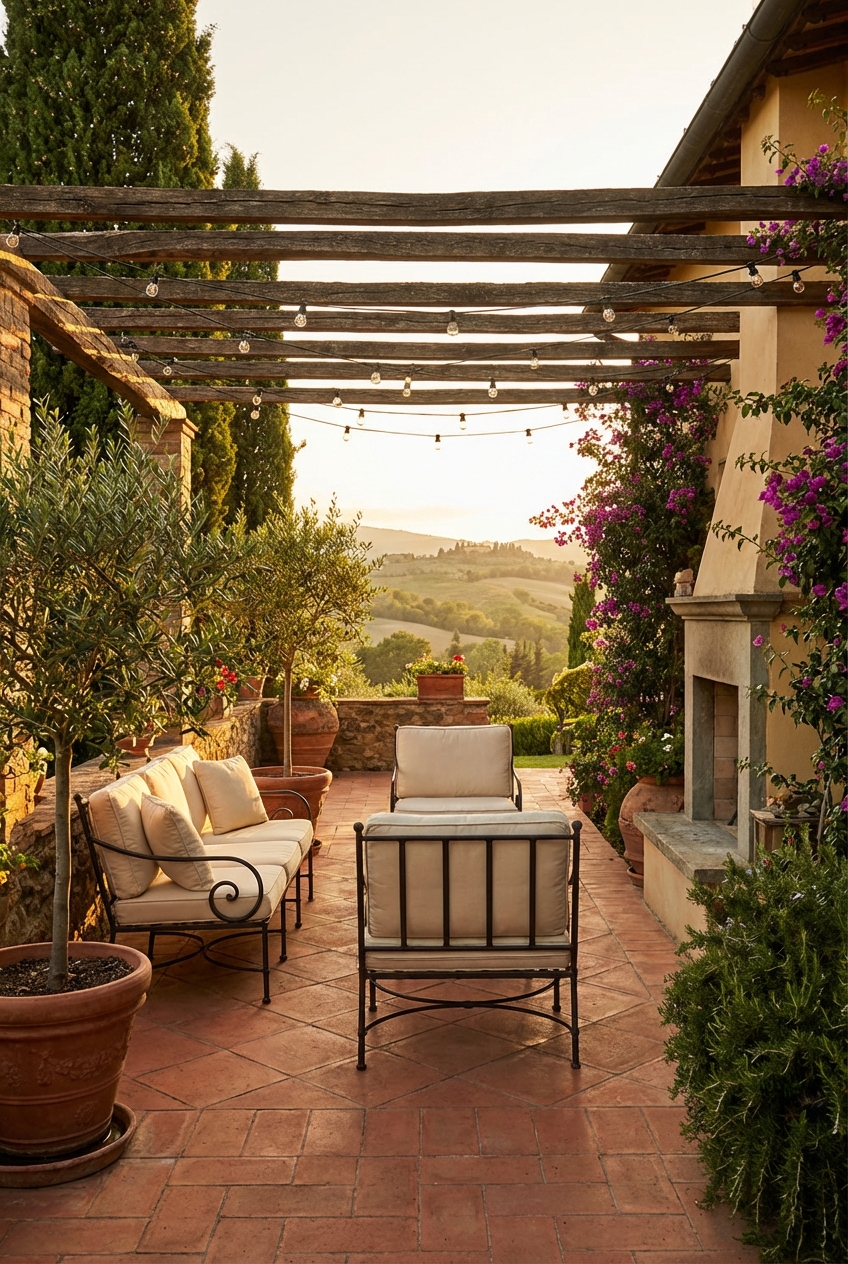
A pergola can anchor a dining table, while a retractable sail or umbrella covers a lounge that you can open up on cooler days. On a larger covered patio with seating areas, break the space into two or three human-scale zones instead of pushing everything against the house.
Keep a main walkway about 30-36 inches wide and don't park a low coffee table in it. Link the patio to the way you move through the house too: Mississippi State University Extension advises that patios and decks tie directly into the home's main circulation areas. A patio you have to detour to reach rarely gets used.
Watch where the sun lands before you commit. A sun-path app, or just checking the same spot in the morning, noon and late afternoon, prevents the classic mistake of a dining table that glares at you at 5 p.m.
Which shade works for which patio?
- Pergola: permanent, good for dining, and a frame for vines.
- Retractable awning: ideal for small patios and balconies because it folds away.
- Sail shade: flexible and affordable, and the angled shape adds interest.
- Umbrella: the cheapest option and easy to move as the sun shifts.
Scale matters. A bistro set under a huge fixed pergola feels lost, and a big dining set under a small umbrella feels cramped. As an architect, I recommend layering a permanent shade with a movable one, so you're not stuck with whatever the sun does in July.
Small patio style ideas that save floor space
Small patio style ideas come down to doing more with less floor area.
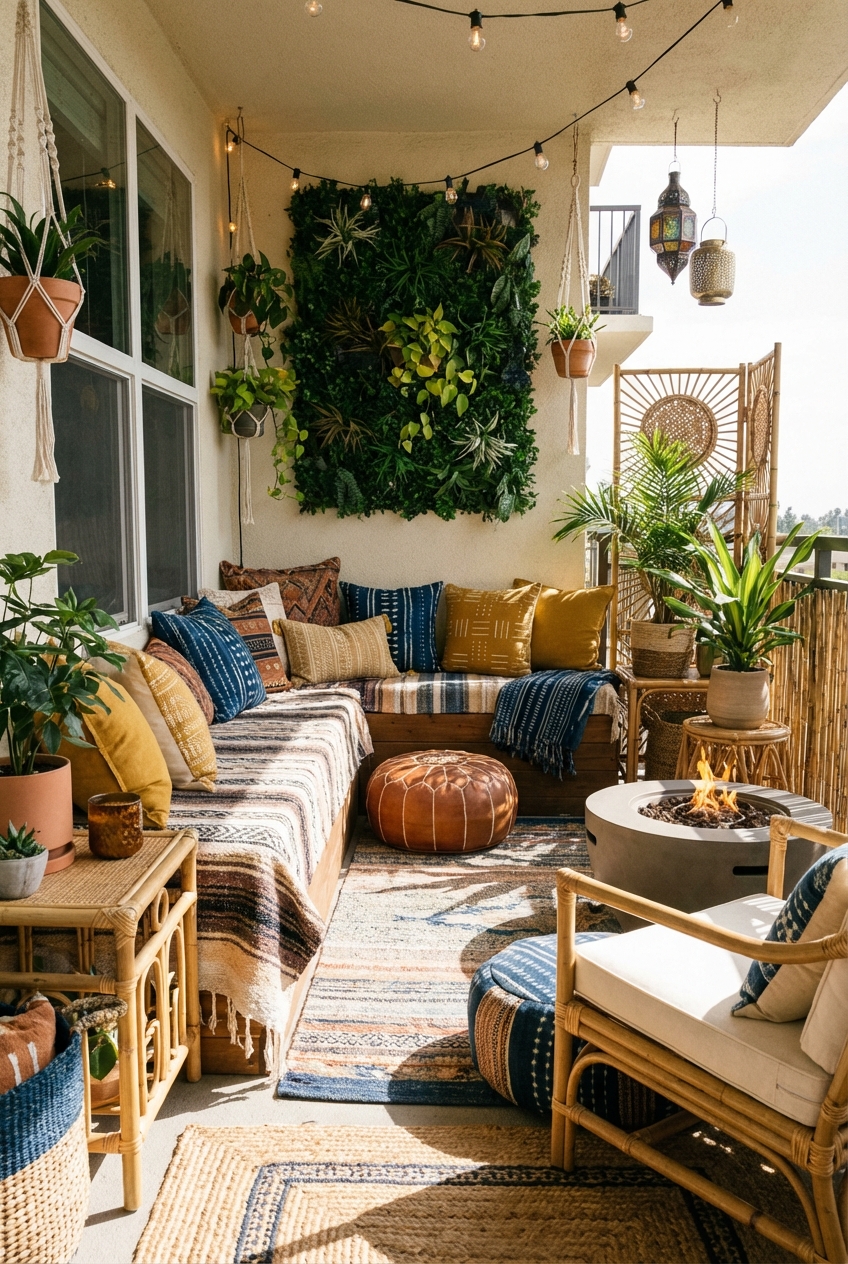
- Choose multi-use furniture: a bench with storage, nesting tables, folding chairs.
- Pick slim pieces with visible legs so you can see the ground beneath them.
- Grow upward with trellises and wall planters.
- Use a retractable awning instead of a fixed structure.
- Keep colors light and limit the palette to two or three tones.
The same logic applies to a small backyard: one defined seating zone beats several half-sized ones.
Patio style ideas on a budget
You don't need new construction to change a patio. The biggest visual return usually comes from a few inexpensive moves.
- An outdoor rug sized so the front legs of the seating sit on it.
- String lights with warm bulbs.
- Potted plants grouped in odd-numbered clusters at different heights.
- New cushion covers instead of new furniture.
- A sail shade or umbrella before a pergola.
If you have a dog and part of the yard is worn out, groundcover can be cheaper than reseeding turf. The UC Marin Master Gardeners note that white clover does not show pet urine damage, which makes it a forgiving choice beside a patio edge. If you use a mix of plants, consider what Master Gardener Deb Christopher of Westmoreland County says in Penn State Extension's piece on native groundcovers: "If disease or pest problems arise, the entire monoculture planting may be killed. Instead, consider planting drifts or groups of single species, providing a patchwork-quilt effect."
Which materials and colors hold up outdoors?
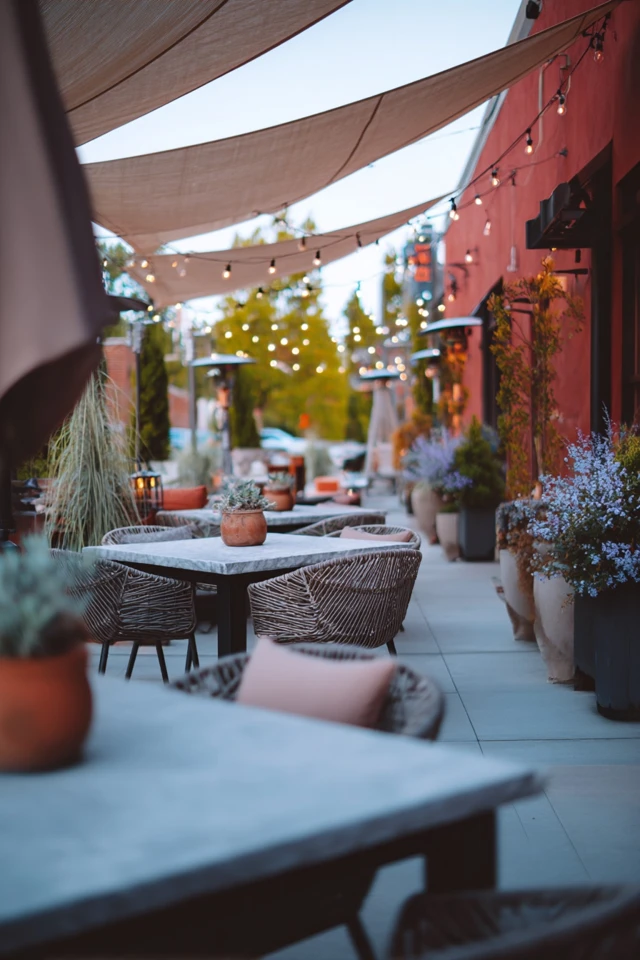
Mix textures the way you would indoors: smooth metal tables with woven chairs, or a rough stone planter with a soft fabric overhead. Contrast gives the eye somewhere to land.
- Wood, rattan and stone feel connected to the landscape. Use treated wood or composite for decking.
- Powder-coated aluminum or stainless steel gives clean lines and takes weather well.
- Solution-dyed acrylic and olefin fabrics resist fading and mildew.
- Matte finishes cut glare, and sealed stone and weather-resistant stains are easy to maintain.
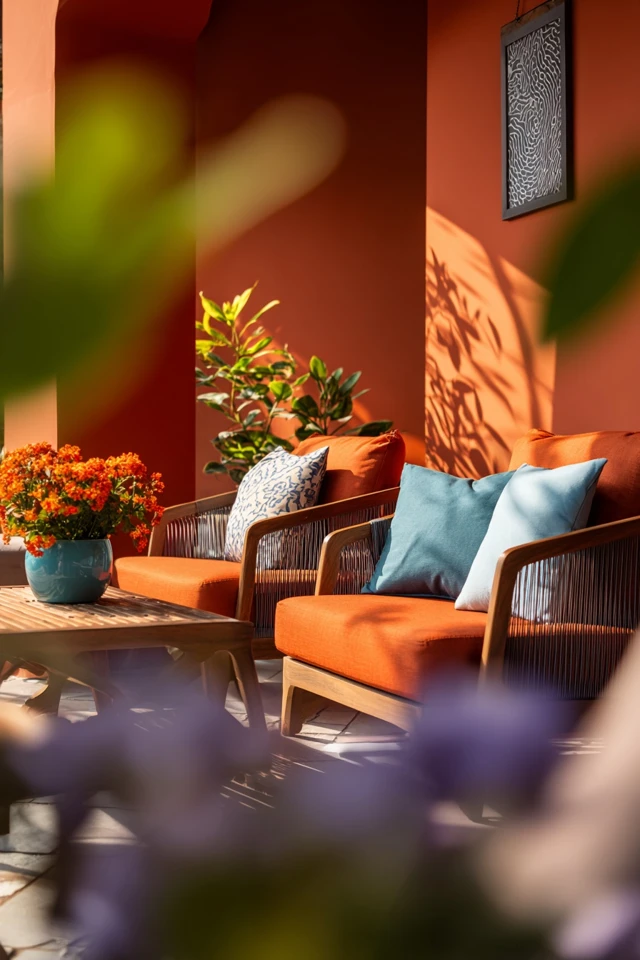
For color, warm tones such as terracotta and ochre suit dining and evening gatherings. Cool blues, greens and slate grays read as calmer and more spacious, which suits a lounge or reading corner. Fabric that looks crisp white at noon can look warm under string lights, so check swatches in daylight and at dusk.
If you like planning an outdoor color scheme the way you would an indoor one, our post on what colors go with brown covers earthy palettes that suit wood and stone.
How do you use lighting and fire for ambiance?
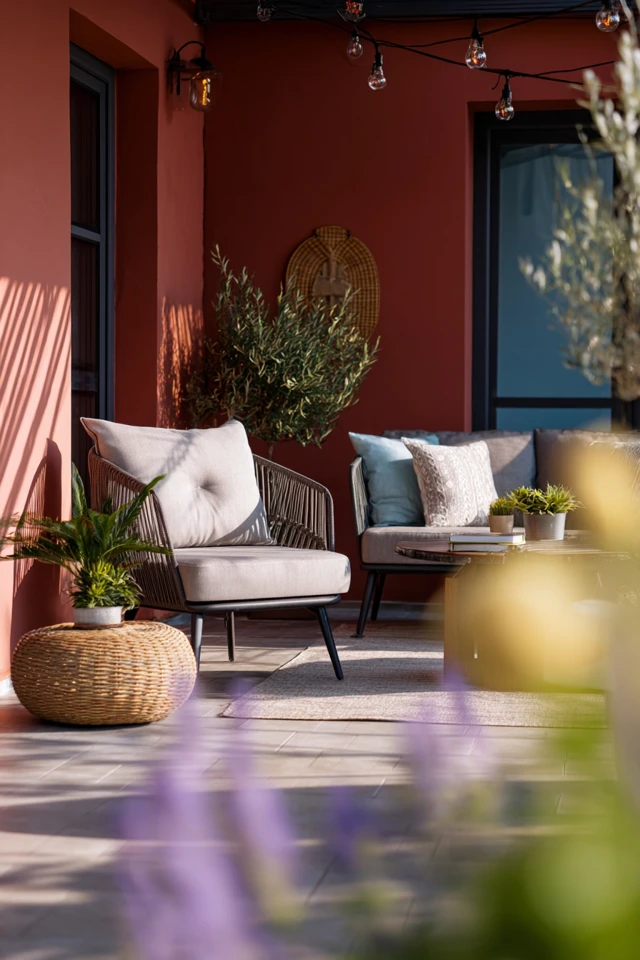
Lighting extends a patio into the evening. Use a few sources at different heights: string lights or dimmable overheads, low path lights, and a candle or lantern on the table. Warm bulbs around 2700K-3000K feel inviting, while cooler ones feel like a parking lot.
A fire pit or outdoor fireplace is a natural focal point. Place it where the shaded seating has a clear view of it, keep it a safe distance from fabric shade and overhead structures, and follow local rules and the manufacturer's clearances. For anything gas-fed or built in, hire a licensed professional.
Planning an outdoor entertaining area near a pool? Our ideas for a pool house on a budget pair well with a resort-style patio.
What are the latest patio design trends?
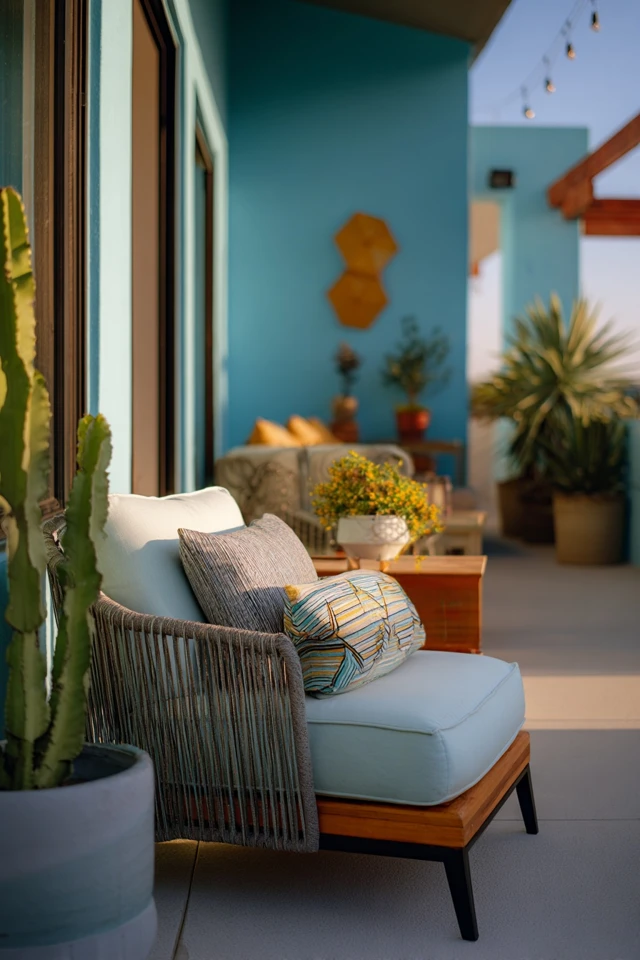
The latest patio design trends lean toward flexible shade (retractable roofs and motorized screens), modular furniture, sustainable materials such as reclaimed wood, and plantings that support local pollinators.
I'd bring a trend in through cheap, swappable items like cushions, a pattern or a planter color, and keep big purchases (the pergola, the dining table) classic. Trends fade faster than a good frame does.
Not sure where to start with plants and groundcover? Colorado State University Extension describes suitable groundcovers as low-growing (generally less than 24 inches) plants that spread easily. They soften hard edges and reduce the amount of lawn you have to maintain. If you're covering soil, note that Penn State Extension does not recommend plastic or synthetic landscape cloth because it can increase erosion and runoff.
Frequently asked questions
What is the trend for a patio?
Flexible shade, modular seating, natural and reclaimed materials, and layered warm lighting are the common directions. Pick one or two and keep the rest classic so the patio doesn't date quickly.
What are some basic ideas for a patio design?
Define one main use, add shade, anchor the seating with an outdoor rug, and light the space for evening. Add plants at different heights for privacy and softness.
How can I make a small patio feel larger?
Use light colors, slim furniture with visible legs, and vertical plantings that draw the eye up. Keep the walking path clear so the floor reads as open.
What are durable fabric choices for outdoor cushions and curtains?
Solution-dyed acrylic and olefin are common choices because they resist fading and mildew. Check the manufacturer's care instructions before buying.
Filed under
ArticlesMeet the author
Written by an architect.
Julio Arco is a passionate architect with years of experience in architecture, interior design, urban design, and housing. He studied at prestigious universities across North America and Europe.

- Name
- Julio Arco
- Job
- Architect and online interior designer
- Studied
- Architecture, ITESM · Urban Design and Housing, McGill
- Partner
- Thor, Australian Shepherd
- Thor’s title
- Head of quality control