Colors That Go With Brown: What Works and What to Skip

By Julio Arco
Architect and online interior designer
In this post
- How does brown work on the color wheel?
- Which colors go with brown furniture?
- What are the best wall colors for brown furniture?
- What color makes brown pop?
- What colors don't go well with brown?
- How do you pair dark brown with other colors?
- Brown palettes by room and mood
- How to test a palette before you paint
- Frequently asked questions
Cream, soft white, blue, green and warm accents like rust or terracotta all go well with brown. Brown is a neutral, so it plays nicely with almost anything, as long as you watch the undertone (warm or cool) and keep some light colors in the room so it doesn't feel heavy.
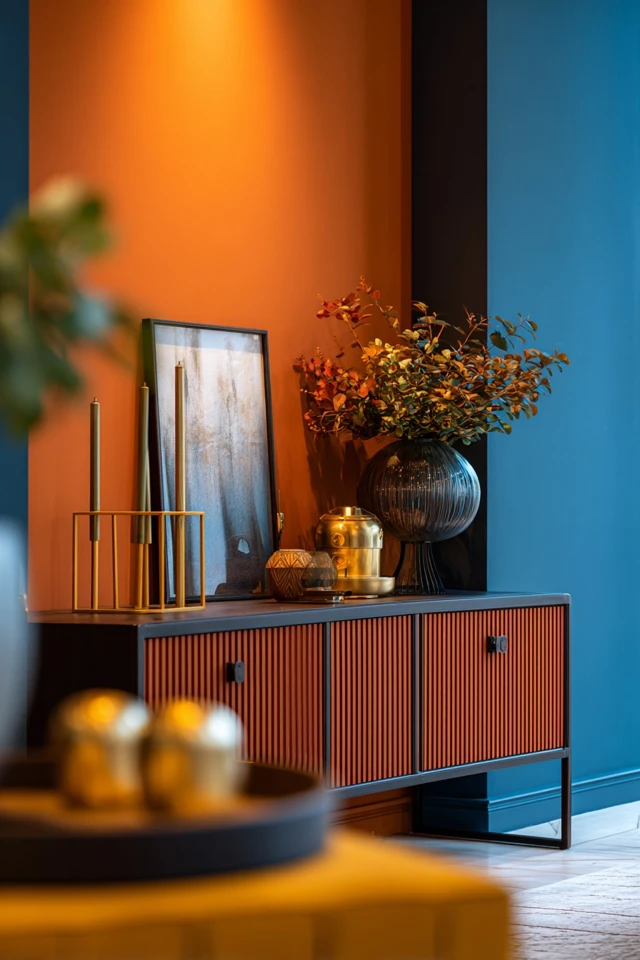
If you're wondering what color compliments brown most reliably, my pick is a blue. It sits opposite orange on the color wheel, and brown is basically a dark, muted orange, so the two balance each other.
How does brown work on the color wheel?
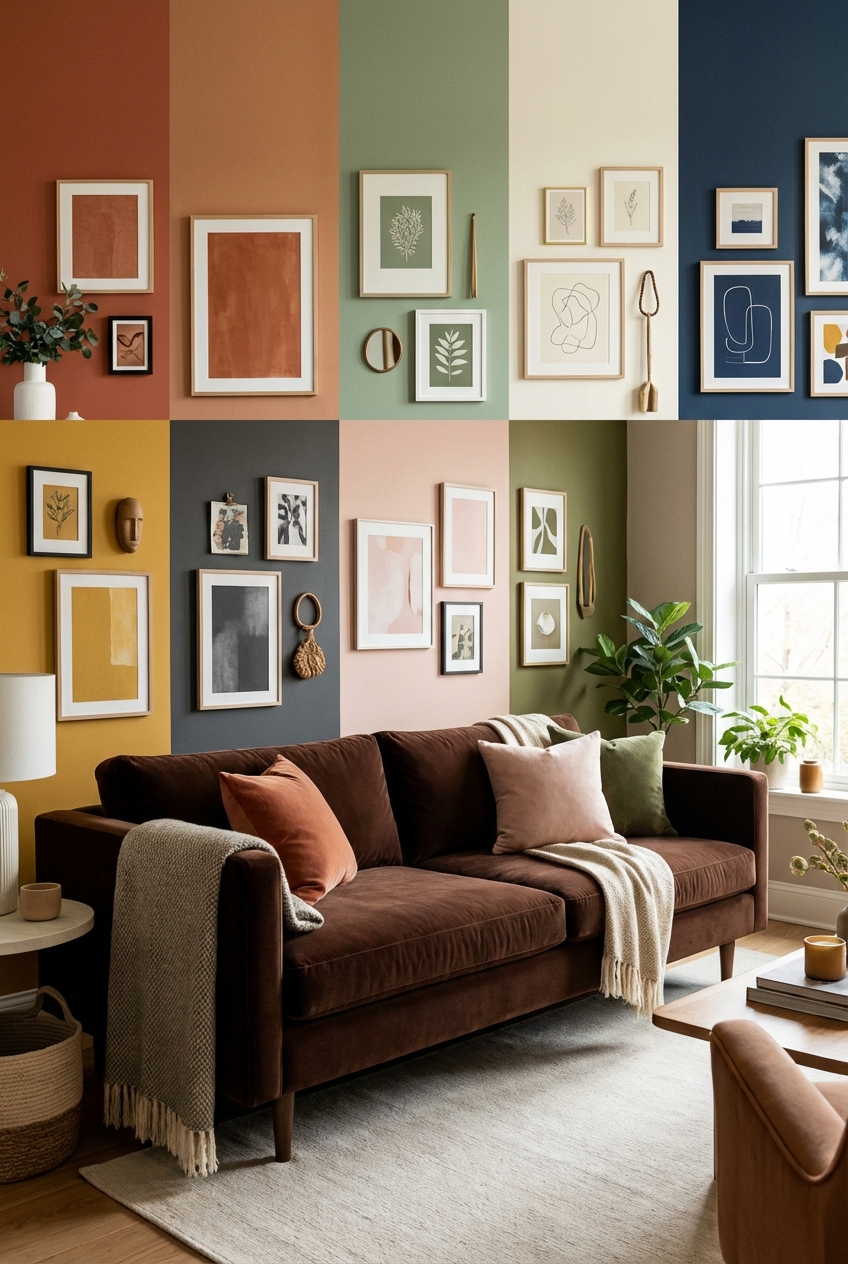
Brown is a dark, desaturated version of orange or yellow-orange. That explains why it pairs so easily with its opposite (blue) and with its neighbors (rust, mustard, olive). A warm walnut leans red or orange. A cool espresso or taupe leans gray or green.
Match temperatures when you want calm, and mix them when you want contrast. Warm walnut with terracotta feels cozy and layered. Cool espresso with slate blue feels crisp and a bit more formal.
Which colors go with brown furniture?
Start with the furniture's undertone, then choose walls and accents around it. Hold a fabric or paint sample next to the piece instead of judging from memory.
Cream, white and beige
This is the easiest route and the best for small rooms. Light walls bounce light around and keep a big brown sofa from swallowing the space. Warm creams suit warm browns; softer, grayer whites suit cool browns.
Blue and green
Navy, slate and teal give brown a refined contrast. Olive, moss and sage echo nature and feel calm, which suits bedrooms and dens. There is some research on blue interiors: in a study led by Isabella S Bower at Deakin University, the researchers reported that "blue coloring of the built environment increases autonomic range and is associated with modulations of brain activity linked to emotional processing." In plain terms, blue measurably affects how the body responds to a room, so choose the shade with intent.
Rust, terracotta, mustard and blush
These warm accents sit next to brown on the wheel, so they look layered and harmonious. Use them in pillows, a throw or art rather than on all four walls, or the room can turn muddy.
What are the best wall colors for brown furniture?
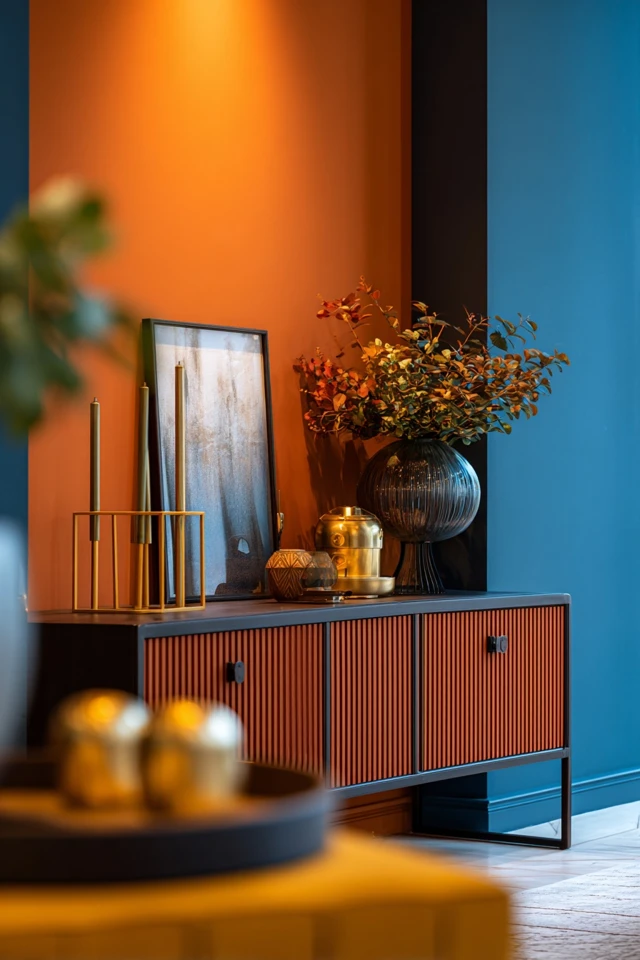
For wall colors that go with brown furniture, I'd start with a warm greige, a creamy white or a muted sage. Each gives the furniture room to stand out. If you want more drama, a deep navy on one wall makes wood and leather look richer.
Pick walls that are lighter than the furniture. That alone solves most "my room feels heavy" problems. A slightly lighter ceiling helps too.
What color makes brown pop?
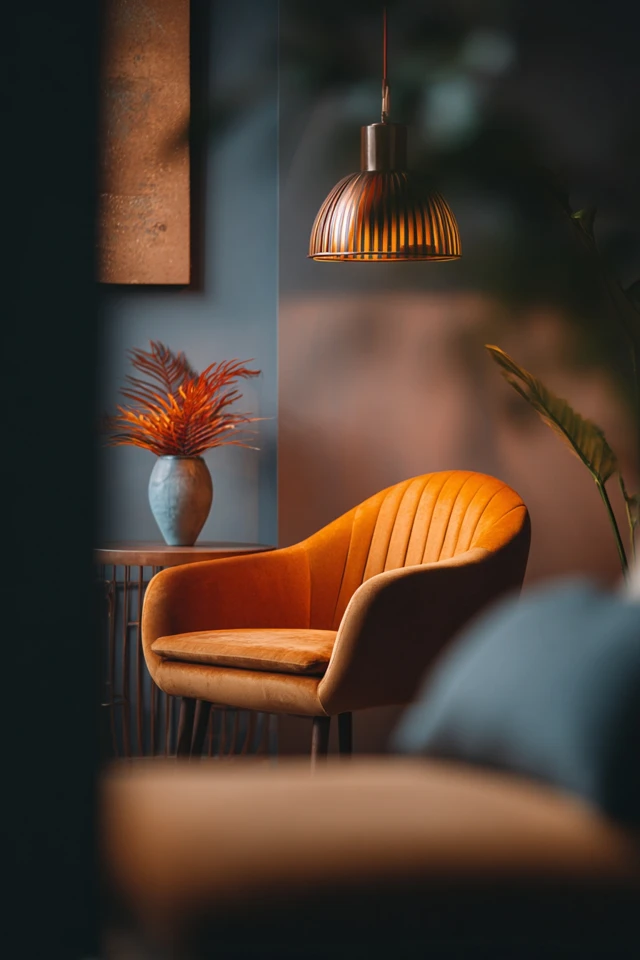
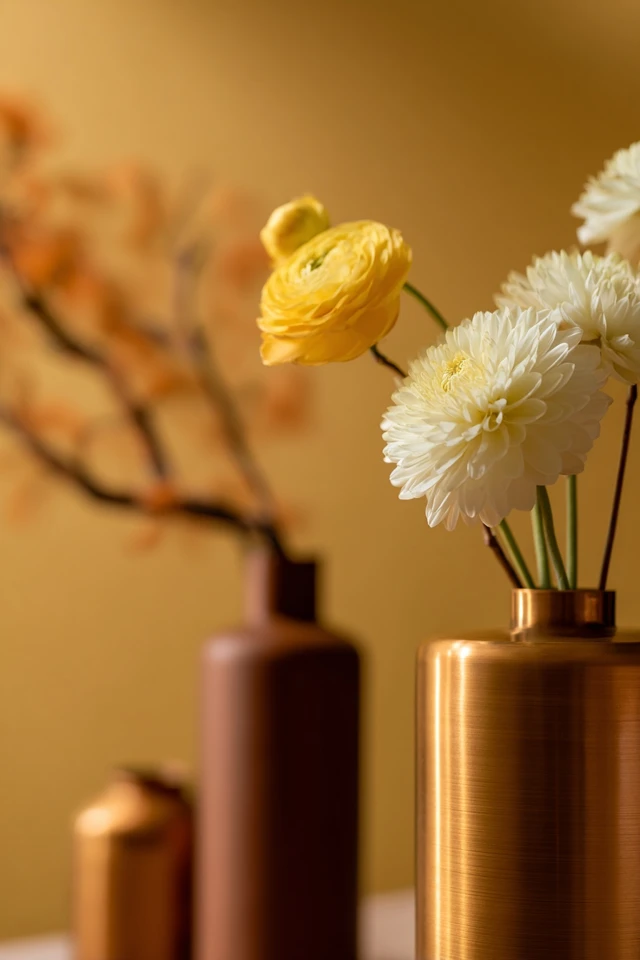
Contrast does the work. Cream, soft white and pale blue make dark brown stand out, and a single saturated accent (mustard, teal or deep green) adds energy. Metallics also help: brass and copper warm up brown, while brushed nickel or matte black suit cooler tones.
What colors don't go well with brown?
Few colors are truly off limits, but some combinations fall flat:
- Brown walls with brown furniture in the same shade and finish. Everything blends into one block.
- Muddy mid-tones such as dull olive-gray or beige-pink next to a warm brown. They make both look dirty.
- Bright, cool pinks or neon shades against dark brown, which tend to clash with the earthy base.
- Too much black with dark brown, which can feel cave-like without enough light.
If you're unsure, test a swatch. Most failures are about undertone and lighting, not the color name.
How do you pair dark brown with other colors?
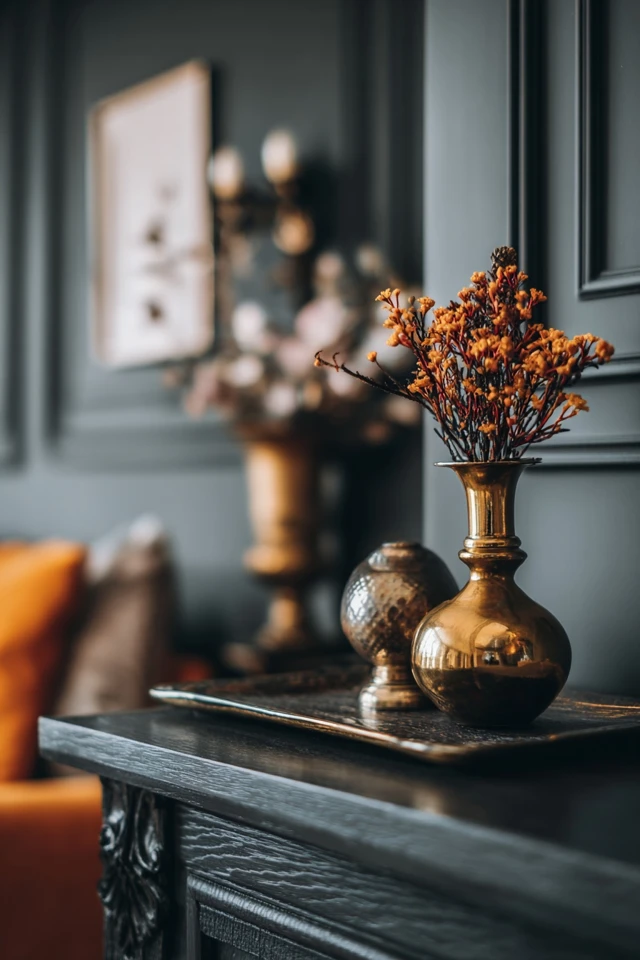
Colors that go with dark brown need to carry light. Use three levels: light on the walls, medium in rugs and textiles, and dark in the furniture. Add a small accent color, a cushion, a piece of art or one chair, so the room doesn't read as all brown.
Mix textures as well. Leather, linen, velvet and bouclé all catch light differently, which keeps a brown-heavy palette from looking flat. If a dog or cat shares the sofa, I recommend washable covers or tightly woven fabrics that are easy to wipe down, since pet hair shows more on light upholstery.
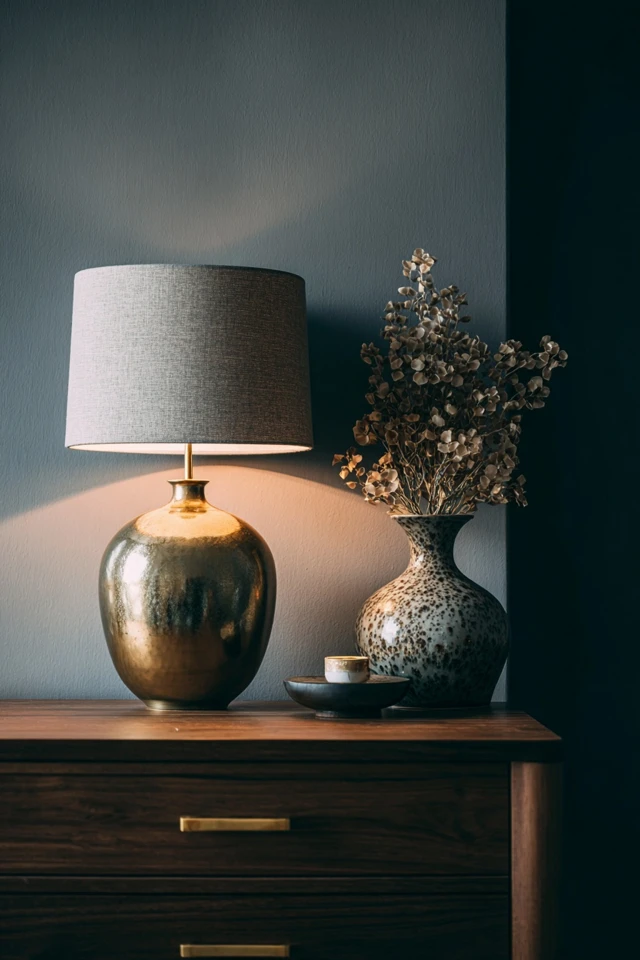
Brown palettes by room and mood
- Living room: brown leather sofa, cream walls, a blue or green rug. Add warm lighting for evenings.
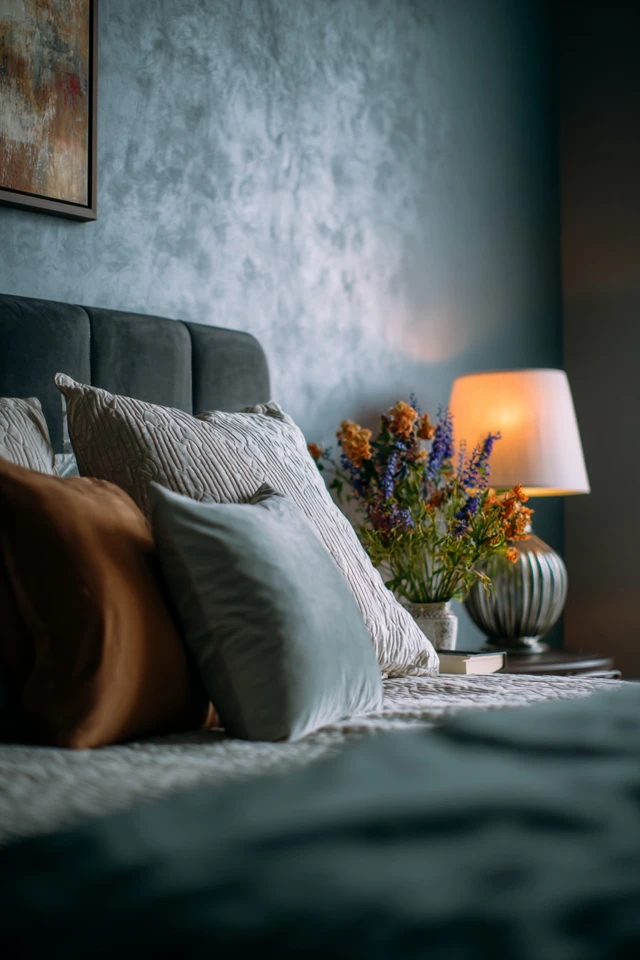
- Bedroom: soft sage or greige walls with walnut furniture and linen bedding. Keep it low contrast for rest.
- Small room: lighter, cooler browns on the walls, richer browns in the furniture, plus a mirror to bounce light.
- Modern or minimalist: taupe and mushroom tones, clean-lined furniture and one matte black accent.
For more palette ideas, see our post on what colors go with brown furniture, or look at how color works in a modern bedroom and a TV room.
How to test a palette before you paint
- Get paint, fabric and rug samples.
- Put them next to your brown furniture, not on a white shelf.
- Look at them in morning light and with your evening bulbs. Incandescent bulbs warm browns, while cool LEDs keep them crisper.
- Choose the one that still looks good at both times.
Keep walkways clear as you rearrange, about 30-36 inches for a main path, and let a lighter rug or runner mark the route.
Frequently asked questions
What color compliments brown?
Blue is the classic complement, since brown is a muted orange. Cream, sage and rust also work well, depending on whether your brown is warm or cool.
What color makes brown pop out?
Light neutrals like cream and soft white, or a saturated accent such as teal or mustard, make brown stand out. Brass or copper accents add warmth.
What is the 3 color rule?
It means using three colors in a room: a dominant one for walls and large pieces, a secondary one for furniture or textiles, and an accent for small items. Brown can be any of the three.
Can I mix patterns when brown is the dominant color?
Yes. Vary the scale (large rug, medium pillows, small accents) and repeat one color, such as brown or cream, so the patterns feel connected.
Filed under
ArticlesMeet the author
Written by an architect.
Julio Arco is a passionate architect with years of experience in architecture, interior design, urban design, and housing. He studied at prestigious universities across North America and Europe.

- Name
- Julio Arco
- Job
- Architect and online interior designer
- Studied
- Architecture, ITESM · Urban Design and Housing, McGill
- Partner
- Thor, Australian Shepherd
- Thor’s title
- Head of quality control