Banquette Seating Ideas for Kitchens and Small Spaces

By Julio Arco
Architect and online interior designer
In this post
- What are the pros and cons of banquette seating?
- Kitchen banquette seating ideas that suit different layouts
- Built-in or freestanding banquette?
- Can you add storage to a banquette?
- Small banquette seating ideas
- What are the key measurements?
- What type of table is best for banquette seating?
- Fabrics that survive daily use and pets
- How much does it cost, and can you build one yourself?
- Finishing touches
- Frequently asked questions
A banquette is a bench built or fixed along a wall or corner, paired with a table. It seats more people in less floor area than separate chairs, and it gives a kitchen or dining nook a clear, cozy center. If you have a corner, a bay window or a stretch of unused wall, you probably have room for one.
Below are the layouts that work, the measurements to plan around, and the materials that hold up to spills, kids and dogs. The goal is a modern banquette seating design that looks intentional and is comfortable to sit in for a long dinner.
What are the pros and cons of banquette seating?
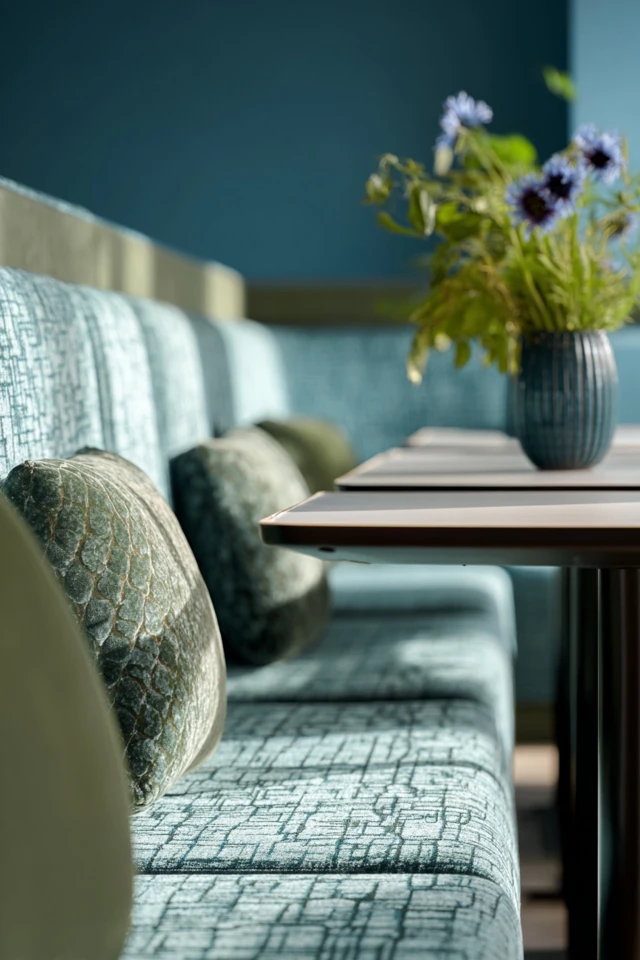
The main advantage is space. Cornell's Intypes entry on padded perimeter seating notes that banquettes maximize seating by filling up corners and allowing more guests to be seated than would fit at tables with individual chairs. That is why restaurants use them so much.
Other upsides: the seat base can hold storage, the layout defines a dining zone in an open plan, and nobody has to drag a chair across the floor.
The drawbacks are real too:
- It's harder to slide in and out of the middle seat, so the person against the wall tends to stay put.
- Built-in versions are permanent and cost more than a set of chairs.
- Upholstery gets heavy use, so fabric choice matters.
- Fixed seating can't easily flex for a crowd, unless you add a couple of stools or a bench on the open side.
Kitchen banquette seating ideas that suit different layouts
Corner or L-shaped banquette
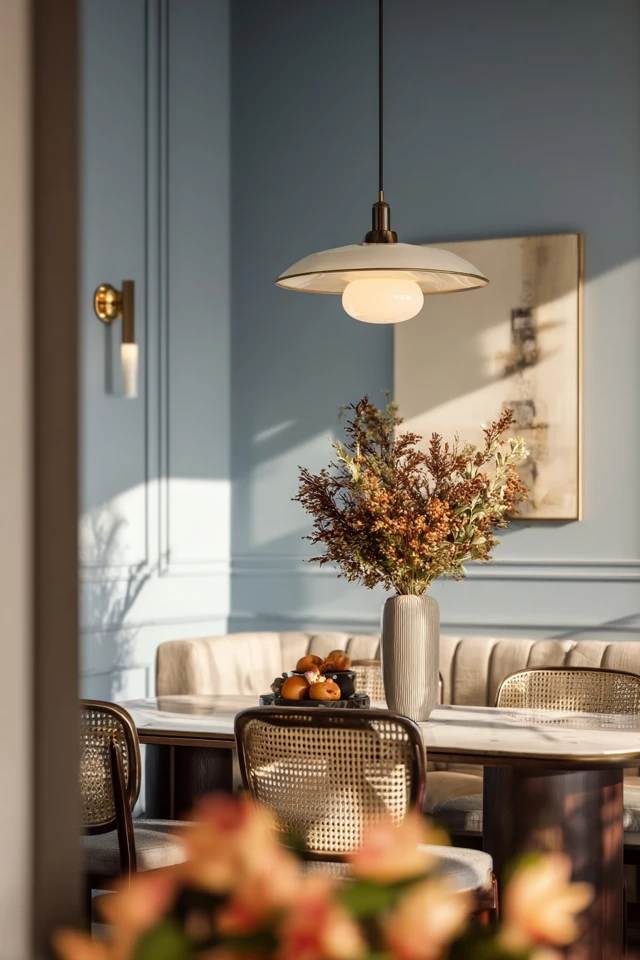
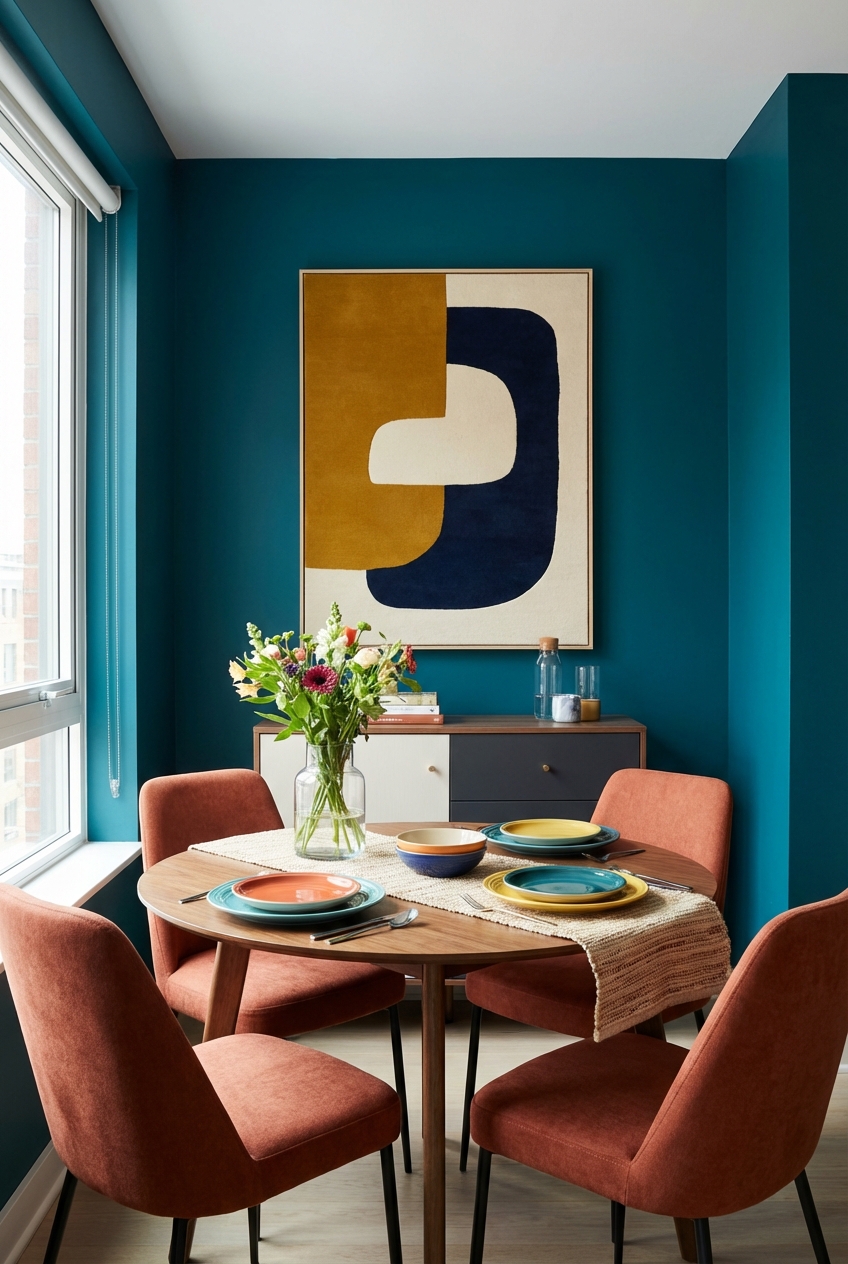
This is the classic for compact kitchens and breakfast nooks. Two benches meet at a right angle and share one corner, so you get the most seats from the least wall. A round or oval table is easier to slide into than a rectangular one, and it has no sharp corner at hip height.
Straight banquette along one wall
Good for long, narrow rooms. Put the bench against the long wall and chairs on the open side, which keeps the walkway free at the table's end. In an open-plan room, a straight banquette with its back to the living area also works as a soft divider.
Bay window banquette
A curved or angled bench that follows a bay uses space that is otherwise hard to furnish, and the daylight makes it the nicest seat in the house. Check the window sills first: the backrest should sit below them or be shaped around them.
Banquette next to an island
If you have a kitchen island, you can pair a bench on one side with stools on the other for a dining and prep zone. Leave about 36 inches of clear aisle where people walk.
Built-in or freestanding banquette?
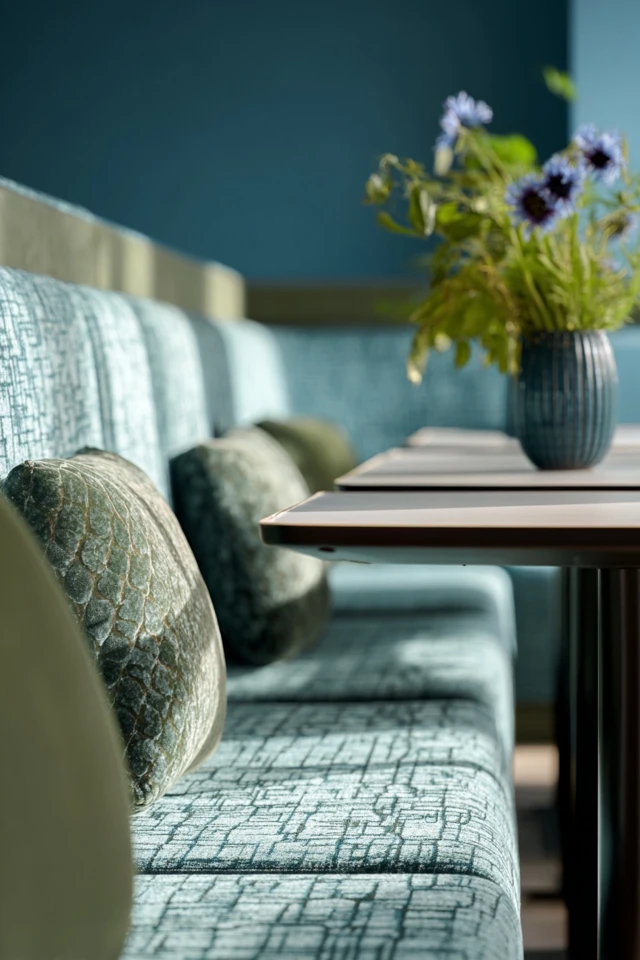
Built in banquette seating is framed into the wall or cabinetry, so it looks custom and can include drawers or a lift-up seat. It suits owners who plan to stay and have a carpenter available.
A freestanding banquette is a finished bench you place against the wall. It costs less, moves with you, and suits renters. The tradeoff is that the gaps at the wall and floor collect crumbs, so check how it sits against your baseboard.
As an architect, I'd go built-in only when the corner is square and the layout won't change, because an out-of-square wall is much harder to fix after the base is built.
Can you add storage to a banquette?
Yes, and it's one of the best reasons to build one. A kitchen banquette with storage can use lift-up seats for bulky items such as table linens, serving platters or seasonal dishes, or deep drawers that open toward the room. Lift-up lids need clear space in front and a soft-close or hinge stay so they don't drop on fingers. For ideas you can start on now, see these affordable banquette seating ideas with storage.
Small banquette seating ideas
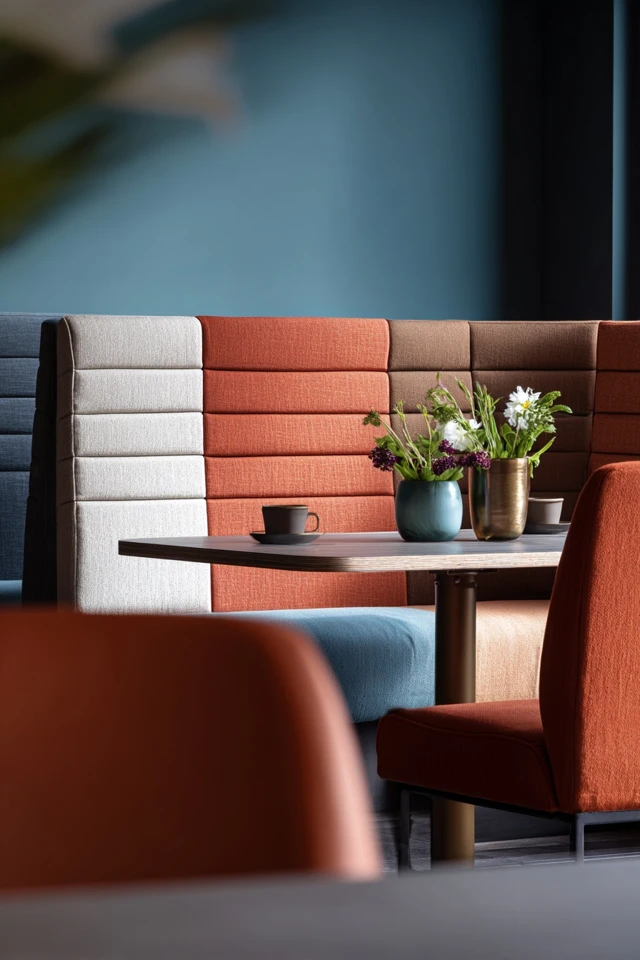
In a tight nook, every inch counts, so trim where you can:
- Choose a pedestal or single-leg table so no one bumps a table leg.
- Keep the backrest low and slim, or use a wall-mounted cushion instead of a boxed back.
- Use a bench with a lift-up seat so you don't need a separate cabinet for storage.
- Pick light upholstery and a pale wall behind it to keep the corner from feeling heavy.
- Use a round table for a corner; it lets more people squeeze in.
A bench for two along a short wall, with a pair of chairs opposite, is a perfectly good banquette. It doesn't have to be a big L.
What are the key measurements?
These are common comfort ranges, not hard rules. Mock them up with cardboard or painter's tape before anyone cuts wood.
- Seat depth: about 16-22 inches. Shallower is better for upright dining, deeper for lounging.
- Seat height: about 17-19 inches, similar to a dining chair.
- Table clearance: about 10-12 inches between the seat top and the underside of the table.
- Space per person along the bench: about 22-24 inches.
- Walkway behind chairs or around the open side: about 30-36 inches.
I recommend sitting at the mock-up for a full meal's worth of time. If your back wants support, add a slight recline to the backrest rather than making the seat deeper.
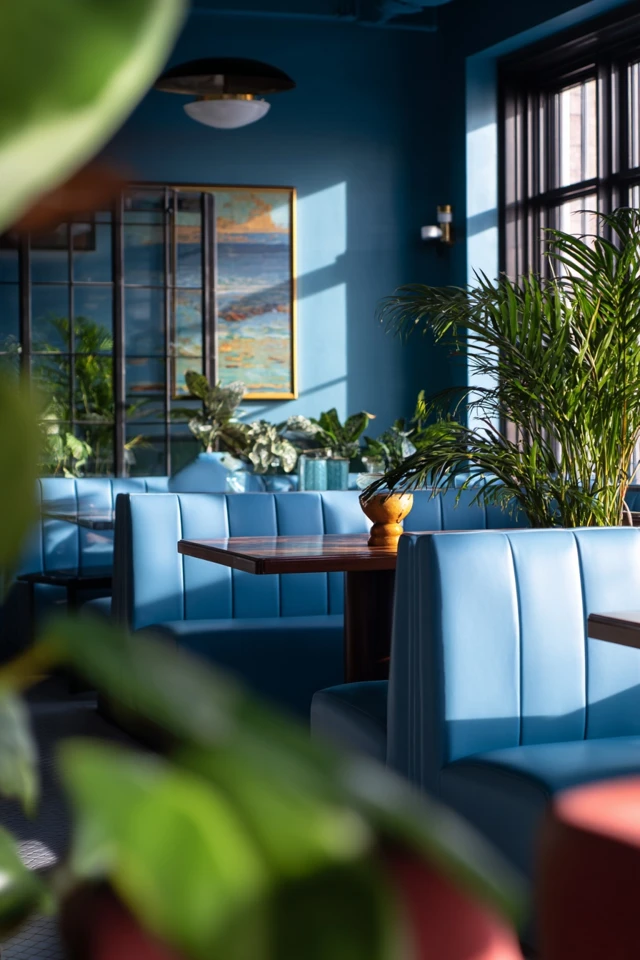
What type of table is best for banquette seating?
A table with a pedestal or a central base is the easiest, because there are no legs to climb over. Round and oval tables suit corner banquettes and let people slide in on a curve. Rectangular tables work for straight benches. If you choose a table with legs, set them at the corners and keep the bench-side legs back from the seat edge.
Pick a tabletop with softly rounded edges if kids will be sliding in and out. A durable surface such as sealed wood or laminate handles daily use, and a solid top is easier to wipe than one with deep grooves.
Fabrics that survive daily use and pets
Banquette cushions take spills, backpacks and the occasional muddy paw. Performance fabrics, tightly woven textiles and faux leather wipe clean and hold up well. Boucle and velvet look great but catch claws and crumbs, so save them for throw pillows if a dog has seat privileges.
Removable, washable seat covers make upkeep easier. If your pet is allowed on the bench, check with your vet about any cleaning products you use on surfaces they lie on.
How much does it cost, and can you build one yourself?
Costs vary widely with materials, finishes and whether a carpenter builds it, so get a few local quotes rather than trusting a single figure. A simple DIY banquette is a plywood or lumber box frame with a hinged or fixed top, foam, and upholstery fabric, built to your measurements. Basic carpentry skills and a staple gun get you far.
If your plan involves moving walls, running wiring or adding outlets or lighting, call a licensed professional for that part. For a wider kitchen refresh around the banquette, take a look at these modern chic kitchen ideas.
Finishing touches
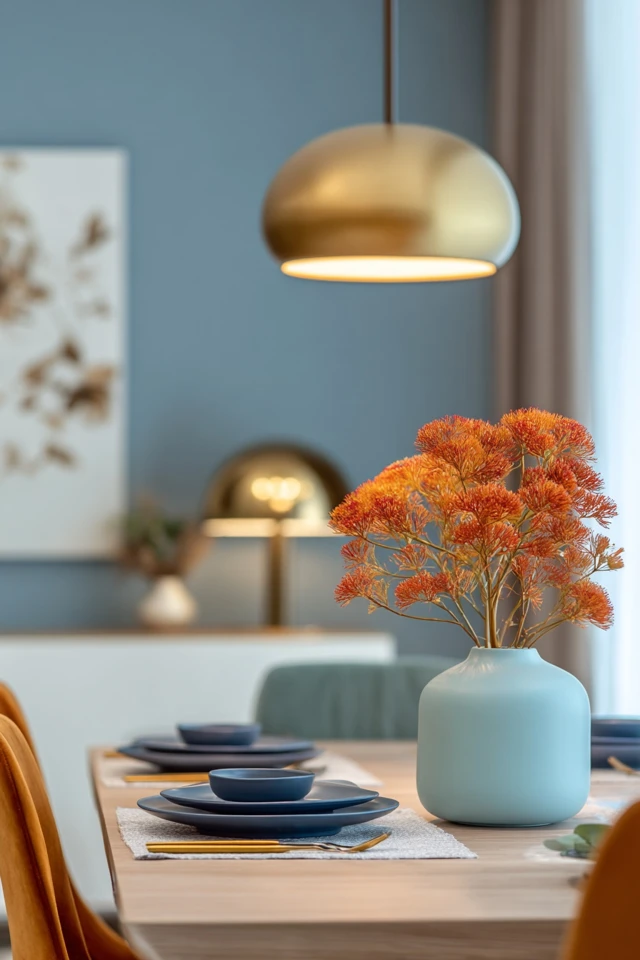
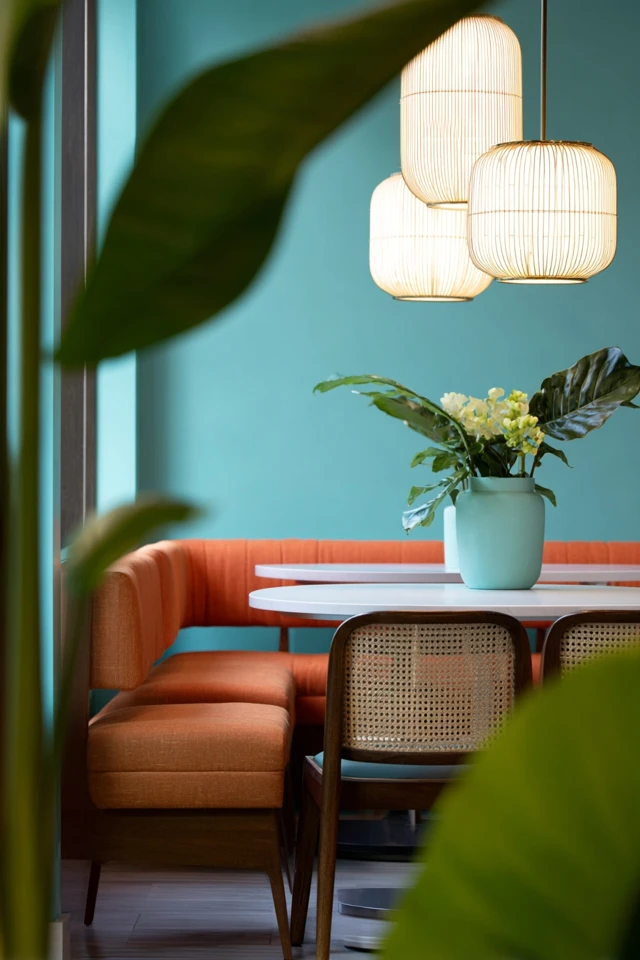
Hang a pendant roughly 30-36 inches above the tabletop, centered on the table rather than the room. Add a rug that extends at least 24 inches beyond the table edge so chairs stay on it when pulled out. A wall sconce or a picture rail above the backrest softens the wall, and a mix of two large back cushions and a couple of smaller pillows keeps the bench comfortable without looking staged.
Frequently asked questions
How can I make my own banquette seating at home?
Build a box frame from plywood or lumber to your measured seat depth and height, add a plywood top (hinged if you want storage), then pad it with foam and upholster. Mock the size with cardboard first and bring in a licensed pro for any wiring or wall changes.
How much does it cost to build banquette seating?
It depends on size, materials and whether you hire a carpenter, so prices swing a lot. A DIY frame with foam and fabric costs far less than a custom built-in, and local quotes are the only reliable way to budget.
Is a banquette comfortable for long meals?
It can be, if the seat is about 16-22 inches deep with a slightly reclined back and a cushion with enough give. Test the mock-up for a full meal before you commit.
Can a banquette work in a small kitchen?
Yes. A corner or short straight bench with a round pedestal table seats several people in a few square feet, and a lift-up seat adds storage.
Filed under
ArticlesMeet the author
Written by an architect.
Julio Arco is a passionate architect with years of experience in architecture, interior design, urban design, and housing. He studied at prestigious universities across North America and Europe.

- Name
- Julio Arco
- Job
- Architect and online interior designer
- Studied
- Architecture, ITESM · Urban Design and Housing, McGill
- Partner
- Thor, Australian Shepherd
- Thor’s title
- Head of quality control