Modern Tropical Living Room Ideas for Every Space

By Julio Arco
Architect and online interior designer

In this post
A modern tropical living room comes down to three things: a calm neutral base, a few leafy greens, and natural textures like rattan, linen and wood. Skip the literal palm-print everything and the room reads as relaxed instead of themed.
It works in a studio apartment as well as a big open plan. What changes is scale, so the sections below cover color, materials, plants, layout and a simple order for styling the room.

How to make a room look tropical without a theme
If you're wondering how to make a room look tropical, start with materials and light, not motifs. Woven furniture, a jute or sisal rug, and big leafy plants say "tropical" more convincingly than a single printed pillow.
Then repeat. Pick one or two wood tones and one metal finish, and use them across the room so everything looks chosen together. Keep the main palette to two dominant colors with a couple of accents.
Pair curved, organic shapes with straight ones. A round wicker chair next to a rectangular coffee table is a good example: the curves soften the room, and the straight lines keep it modern.
What colors work in a modern tropical living room?
Use a warm off-white or soft greige on the walls and sofa, then bring in greens: sage, jade or a deeper emerald. Terracotta, ochre or warm coral work as warm accents, and a dark shade such as matte black or deep wood grounds the rest.
Keep saturated colors small. A vivid mango pillow or a teal chair is lively. A whole wall of it gets tiring fast. The same logic applies if you want modern tropical bedroom ideas, where calmer tones tend to suit sleep better, and it's how I'd approach tropical bedroom colors too.
Light changes everything. Rooms with a lot of daylight can carry deeper greens. Dimmer rooms look better with warm neutrals and a few reflective surfaces. For lamps, warm bulbs around 2700K-3000K feel cozy, while 3500K-4000K looks crisper and more contemporary.

Which materials and furniture suit the style?
Texture does most of the work here. Layer a few natural materials and keep the finishes matte or low-sheen.
- Rattan and wicker for chairs, pendant lights and baskets.
- Teak, walnut or oak in medium to dark tones to ground the palette.
- Linen and cotton upholstery, with sisal or jute underfoot.
- Stone or terrazzo for a tabletop or planter, as a cool, hard contrast.
- Brushed brass or aged bronze for warmth, matte black for edge.
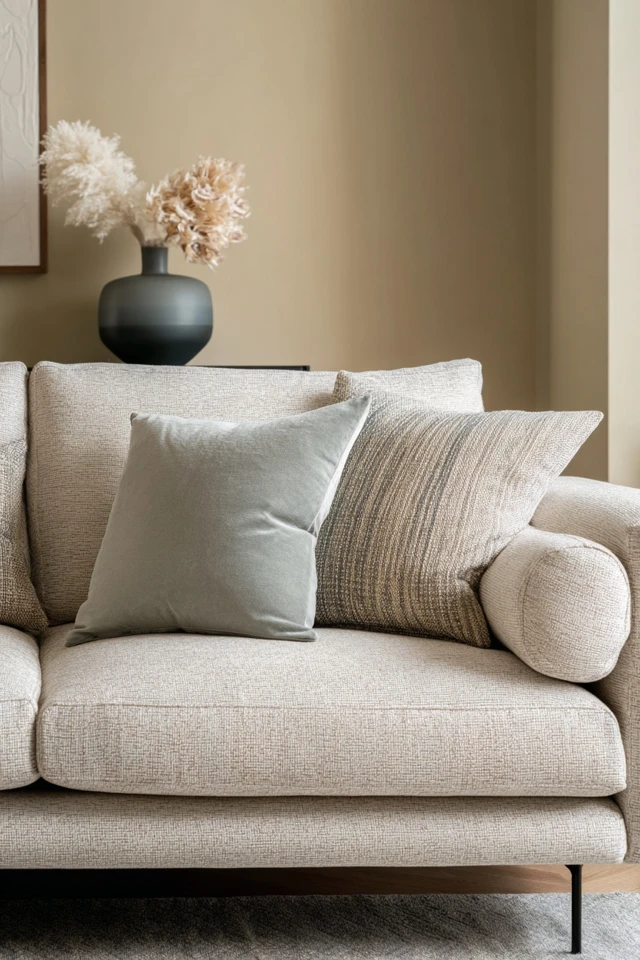
A good combination is a linen sofa, a chunky knit throw, a jute rug and a smooth wooden coffee table. Add glossy ceramic planters for a little sheen. Glossy surfaces bounce light, matte ones absorb it, so a few of each keep the room from feeling flat.
If you have a dog or cat, choose washable slipcovers and tightly woven fabrics. Loose weaves and chunky knits catch claws. As an architect, I'd also pick a sturdy jute or sisal blend over delicate seagrass for a high-traffic floor.
How do you use plants and patterns?
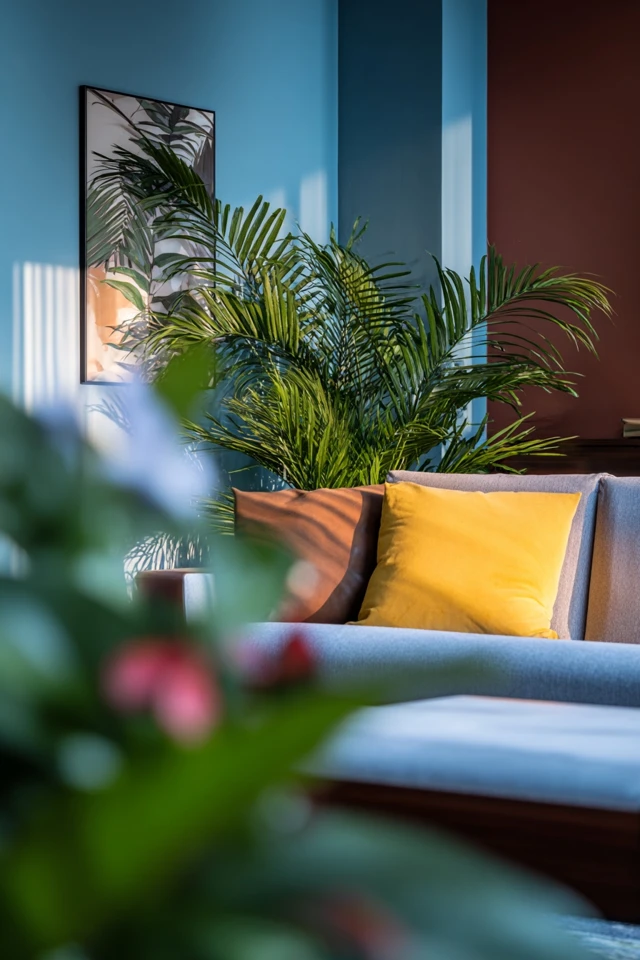
Group plants in odd numbers, three to five together, at different heights. A tall floor plant, a mid-size one on a stool and a trailing one on a shelf gives the room a natural rhythm. If you like small-scale greenery, a terrarium fits on a side table.
Check every plant before you buy it if pets share your home. Some popular tropical houseplants are toxic to dogs and cats, so confirm with your vet or a pet-safe plant list.
For patterns, mix three at different scales: a large botanical print, a medium geometric and a small stripe or dot. Put the boldest on pillows or one accent chair and keep the sofa plain. A shared color across all three holds them together.
How should you arrange the furniture?
Decide what the room is mainly for (lounging, TV, reading, entertaining) and arrange around that. Keep walkways clear, about 30-36 inches for the main path.
- Choose a rug large enough that at least the front legs of the sofa and chairs sit on it.
- Face the seating toward the focal point, whether that's a window, a fireplace or a screen.
- Use open shelving or a plant grouping to divide zones without blocking sightlines.
In a small room, go for low-profile seating, slim side tables, and storage ottomans. A mirror opposite a window bounces daylight deeper into the room. In a large room, make two or three zones with rugs and floor lamps, and use bigger statement pieces like a hammock chair or a substantial wooden table so nothing looks lost.
What order should you style it in?
- Clear the room and note where light comes in and where you look from the door.
- Place the sofa, chairs and rug.
- Add side tables, shelving and plants.
- Finish with textiles, art and small objects.
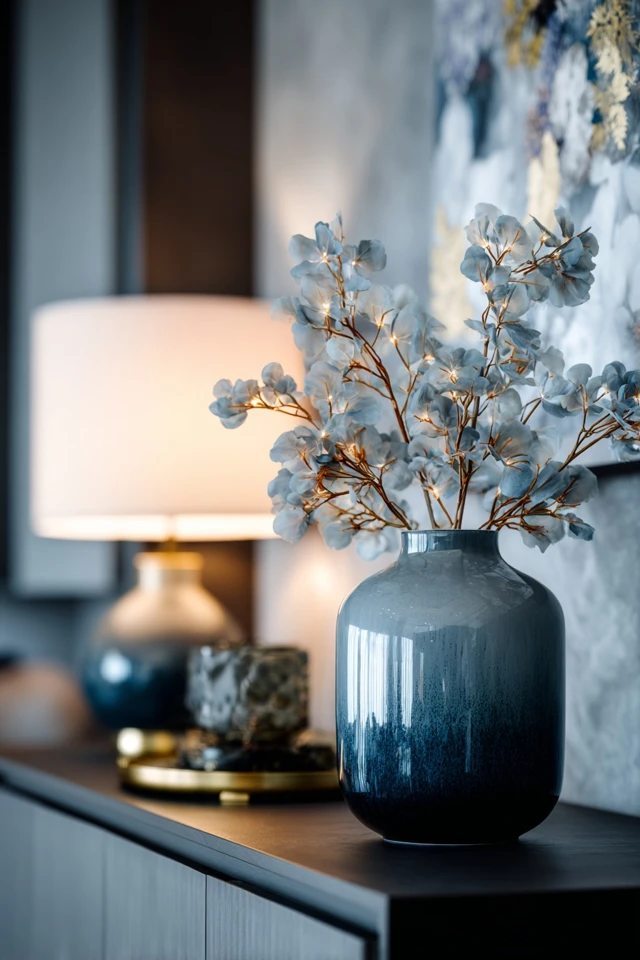
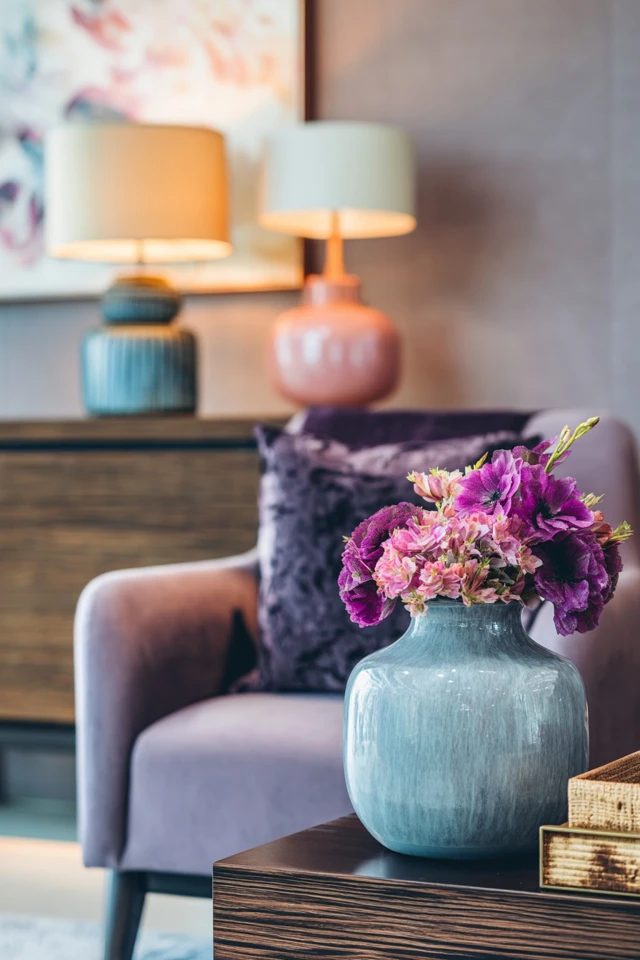
Paint and large furniture are the expensive part, so keep them neutral and classic. Trendier items, like patterned cushions or a bold vase, are cheap to swap later. A warm beige base also pairs well with greens, if you want more ideas for it, see this beige living room post. Add a few personal pieces, such as travel textiles or family art, so the room doesn't look like a catalog page.
Frequently asked questions
How to make a room look beachy?
Use a sandy or soft white base, add linen, jute and light wood, and keep accents in sea blues and greens. Keep it simple: a few natural textures look more beachy than lots of shell or anchor decor.
How can I make a small living room feel bigger and still tropical?
Use light walls, low-profile furniture and a mirror opposite a window. Keep bold prints to pillows or one accent chair, and use vertical plants to avoid taking up floor space.
Can I mix several patterns without the room looking busy?
Yes. Choose one dominant pattern, add a second at a different scale and a quiet third, and repeat one color across all of them.
What lighting suits a modern tropical living room?
Layer warm overhead light, a reading lamp, and a small uplight for plants or art. Dimmers let you shift from bright daytime to a softer evening mood.
Filed under
ArticlesMeet the author
Written by an architect.
Julio Arco is a passionate architect with years of experience in architecture, interior design, urban design, and housing. He studied at prestigious universities across North America and Europe.

- Name
- Julio Arco
- Job
- Architect and online interior designer
- Studied
- Architecture, ITESM · Urban Design and Housing, McGill
- Partner
- Thor, Australian Shepherd
- Thor’s title
- Head of quality control