Modern Terrarium Ideas for Every Room and Budget

By Julio Arco
Architect and online interior designer
In this post
The easiest modern terrarium is a single glass vessel with clean lines, a few plants and a surface it can own: a console, a shelf, a desk corner. Keep the container simple, keep the plants few, and put it where it gets bright, indirect light.
Below you'll find ideas by room and size, how to style a terrarium so it looks planned rather than parked, and the light and watering basics that decide whether it survives.
What makes a terrarium look modern?
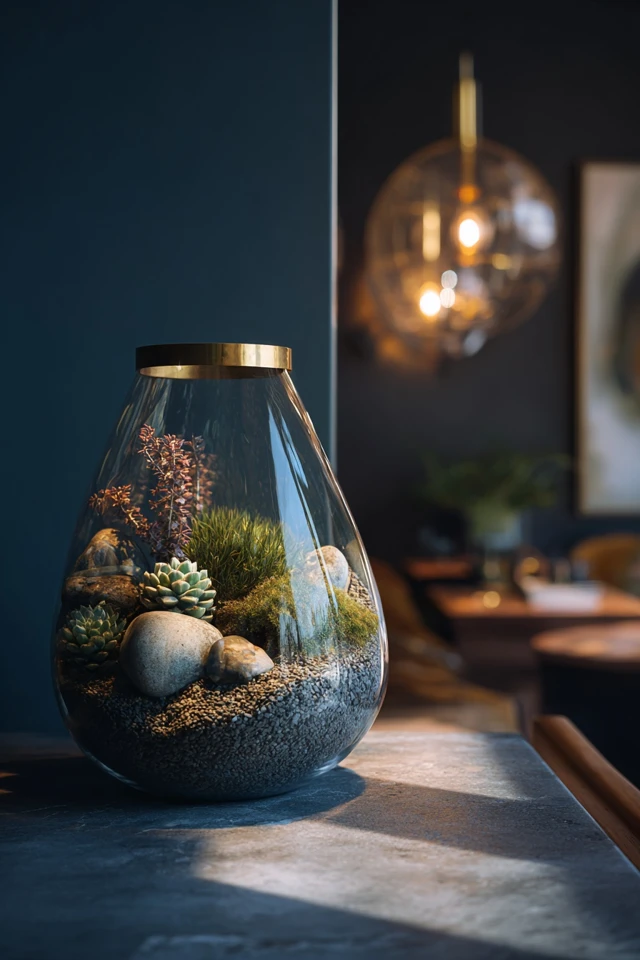
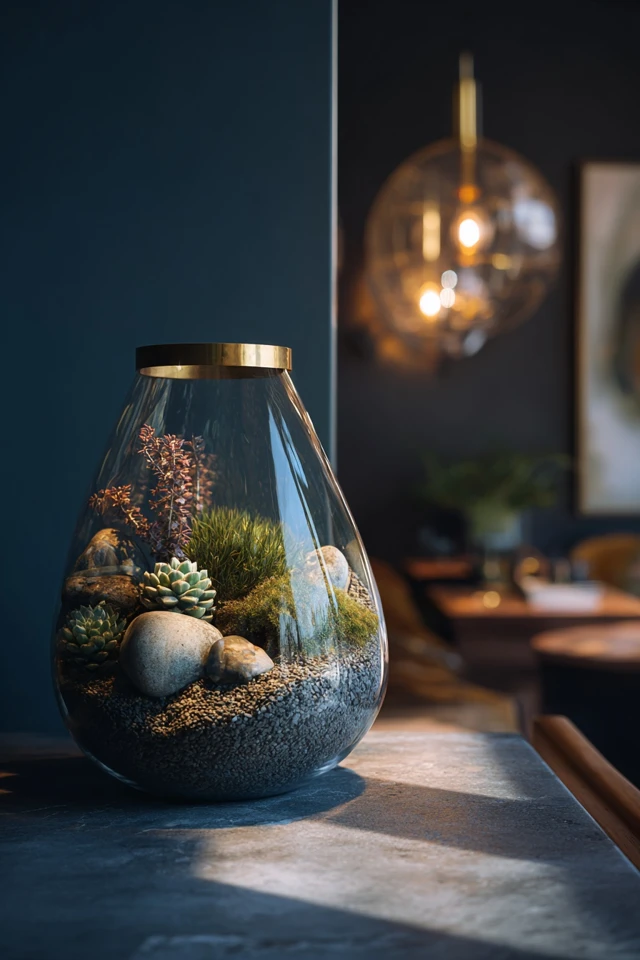
Modern terrariums are quiet. Think geometric glass, thin metal frames, a clear sphere or a tall cylinder, with a restrained planting inside. The container does the styling, so the plants don't need to shout.
A few principles help. Contrast works well: smooth glass against rough moss, or a delicate fern against an angular base. Repeating a finish also helps. If the terrarium has a brass frame, echo it in a lamp or a drawer pull nearby, and the object reads as part of the room.
Where to put a terrarium in your home
Entry console
A tall glass cylinder or a lidded case suits a console because it sits at eye level and gets looked at every day. Leave breathing room around it so it doesn't compete with keys and mail.
Desk or shelf
A small desktop terrarium is the best place to start. Balance it on a shelf with something of similar visual weight, like a stack of books or a framed print, so it doesn't look like it's floating.
Coffee table or mantel
Small terrariums work in groups here. Two or three at different heights, with even spacing, look deliberate. Use books or a low stand to vary the heights.
Bedroom nightstand
Choose a low, soft-colored planting and keep it away from the edge. A moss-heavy design suits a bedroom, since it's calm and needs little attention. For a bolder plant-led bedroom, see these tropical bedroom ideas.
Small-space terrarium ideas
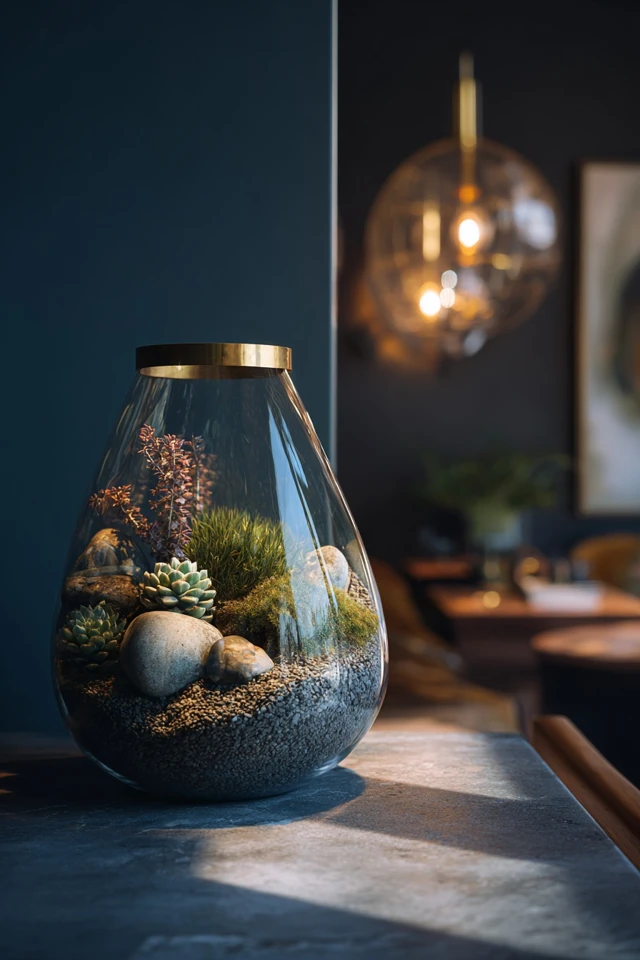
In a studio or a narrow hallway, go vertical. A tall cylinder takes up the footprint of a mug and still gives you a focal point. Wall-mounted glass trays or hanging globes free up the surface altogether.
A terrarium placed against a mirror or in front of a light wall reads larger, because the reflection doubles the greenery. Keep the area around it clear, though. A terrarium that gets bumped on the way to the bathroom won't last.
Budget-friendly ways to build one
You don't need a designer vessel. A clear glass jar, a large vase or a fishbowl all work, as long as the glass is clean and the shape is simple. A plain container with good plants beats a fancy one with crowded ones.
- Use a jar or vase you already own.
- Buy two or three small plants rather than a full set.
- Finish with moss and a few stones, which cost little and add texture.
- Put it on a wooden tray or a stack of books instead of buying a stand.
Which plants suit a terrarium?
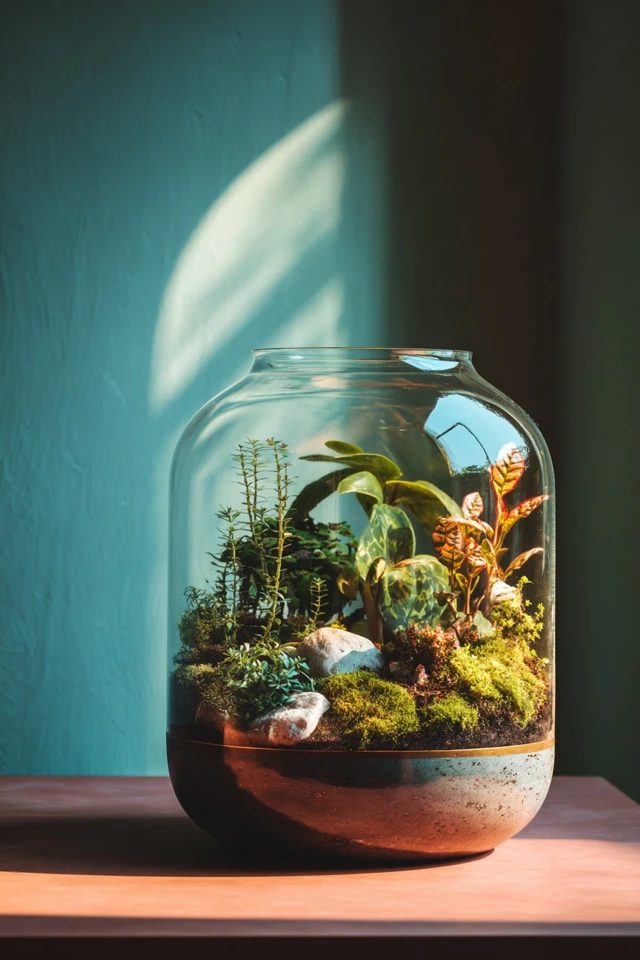
Match the plants to the container. Closed or partly closed glass holds humidity, which suits ferns, mosses, fittonia and peperomia. Open bowls dry out faster and suit succulents, which prefer less moisture. Don't mix the two groups in one vessel.
If you share your home with a dog or cat, check any plant with your vet before you bring it in. Some common houseplants are toxic to pets, and a low glass bowl is easy for a curious nose to knock over. As an architect, I'd put the terrarium on a shelf or console, out of reach, which also keeps it away from walkways.
Light and watering basics
Light is the first thing to get right. Iowa State's extension notes that most houseplants grow and look their best in bright, indirect light, and that light levels drop quickly as you move away from a window. A terrarium several feet from the glass may be too dim to keep plants healthy.
Direct sun is the opposite problem. Glass traps heat, and the University of Wisconsin's horticulture extension warns that too much light can result in wilting, burning, and a washed out appearance of leaves. A bright spot beside a window, out of the strongest sun, is the safer choice. If your room is dim, a small grow light is a reasonable fix.
Watering is where most terrariums fail. The same Wisconsin page says that improper watering is a primary cause of plant death. Most terrariums have no drainage hole, so add water in small amounts, and let the soil dry slightly between waterings for open containers.
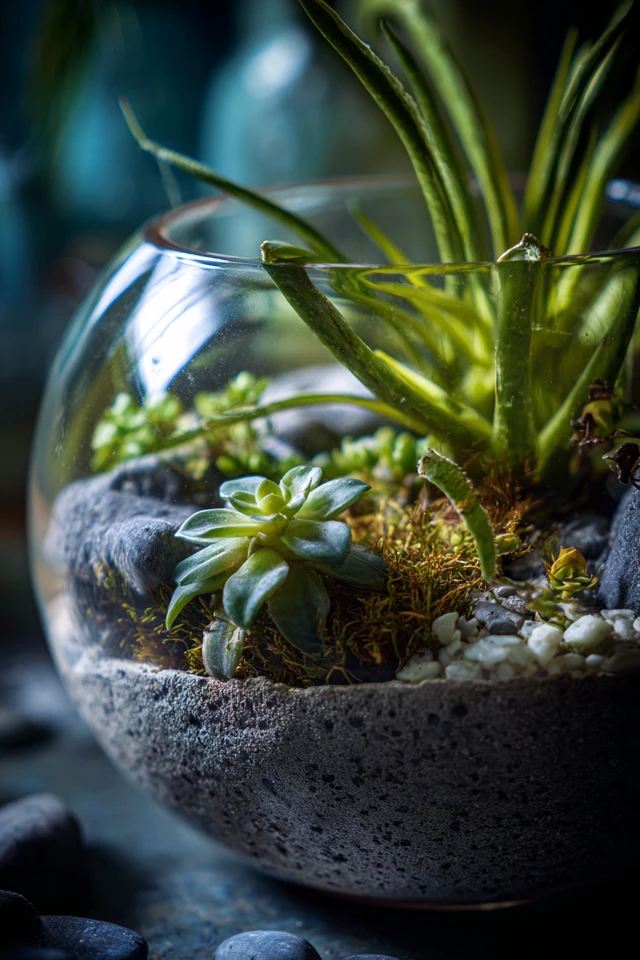
Styling tips that make it look intentional
- Group in odd numbers, such as three, and vary the heights.
- Choose one dominant material (glass and brass, or glass and wood) and keep the rest quiet.
- Place the terrarium against a plain background so the shapes read clearly.
- Use warm, low-glare lighting in the evening, since it shifts greens toward amber.
- Leave empty space around it. One good terrarium looks better than five crowded ones.
If your room has a textured backdrop, such as the ones in these brick wall ideas, a clear glass terrarium picks up the contrast nicely. In a kitchen, a small one on a windowsill or open shelf fits well with the styling in these chic kitchen ideas, as long as it's away from the stove and its grease.
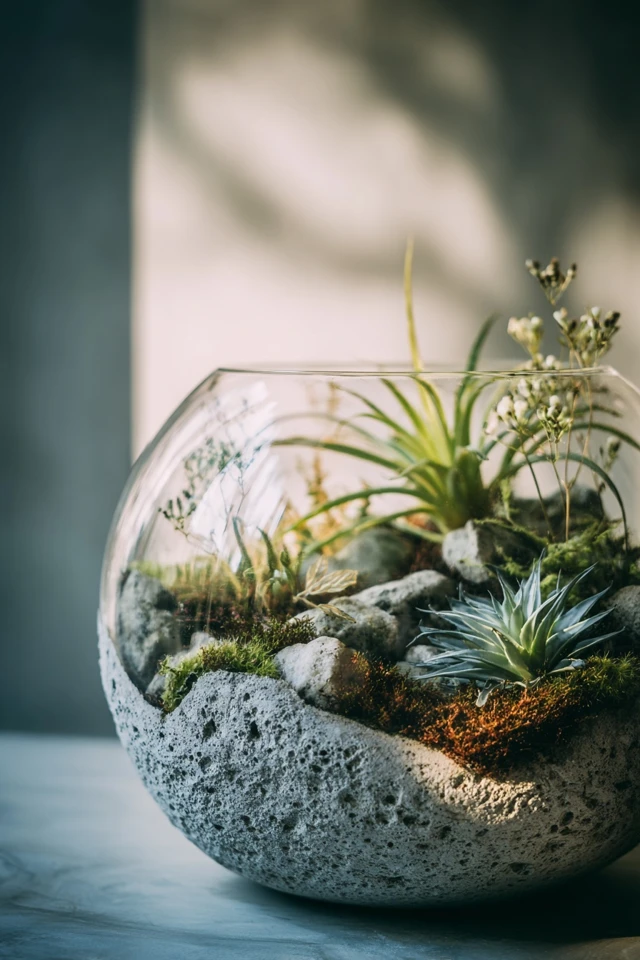
For a first try, pick one clear jar, two humidity-loving plants and a bright, indirect spot. Watch how the soil and leaves respond for a few weeks before you add a second one.
Frequently asked questions
What is the best terrarium for a low-light apartment?
A closed or partly closed terrarium with shade-tolerant plants such as ferns, moss or peperomia is the most forgiving. Place it near a window with indirect light, or add a small grow light if the room is dim.
Do terrariums need drainage holes?
Most glass terrariums don't have them, so water in small amounts and avoid leaving standing water in the base. A layer of gravel under the soil gives excess water somewhere to go.
Are terrarium plants safe around dogs and cats?
Not all of them. Check each plant with your vet before you buy, and keep the terrarium on a shelf or console that pets can't reach.
Filed under
ArticlesMeet the author
Written by an architect.
Julio Arco is a passionate architect with years of experience in architecture, interior design, urban design, and housing. He studied at prestigious universities across North America and Europe.

- Name
- Julio Arco
- Job
- Architect and online interior designer
- Studied
- Architecture, ITESM · Urban Design and Housing, McGill
- Partner
- Thor, Australian Shepherd
- Thor’s title
- Head of quality control