Rubber Flooring for the Home: Warm, Practical Styling
How to style rubber flooring at home: where it works, which colors and finishes to pick, and how to keep it warm underfoot and easy to clean.

By Julio Arco
Architect and online interior designer
In this post
Rubber flooring can look warm in a home if you treat it as a quiet base and put the personality in rugs, textiles, wood and lighting. Choose a matte or low-sheen finish in a warm neutral, keep the pattern off the floor, and it will feel soft underfoot and stay easy to clean.
It works best in busy, messy rooms: kitchens, mudrooms, playrooms, laundry rooms, home gyms and pet areas. Here is how to make it look like a choice and not a compromise.
Where does rubber flooring make the most sense at home?
Rubber is cushioned, handles moisture well and dampens footstep noise. That makes it a good match for rooms with spills, wet boots, kids, or a dog that skids across hard floors. As an architect, I'd put it first in the rooms where you currently dread the cleanup.
In a living room or bedroom it can also work, but the style matters more there. Look at planks or large tiles with a subtle, even tone, and avoid the commercial-gym look of heavy flecks and studs.
Which colors work best?
Floors are the largest surface in a room, so their color sets the mood for everything above them. A warm taupe, sand or soft brown rubber echoes wood and pairs easily with most furniture. Gray or charcoal reads more modern and gives colorful art and textiles a clean backdrop.
Light changes the result. A south-facing room with plenty of sun can take a warm floor without trouble. In a room with cooler north light, a slightly warmer tone keeps the floor from looking flat. Get a sample and look at it morning and evening before you order.
If you want a color to carry through the room, pick wall and textile shades that sit well next to your floor. Our guide to colors that go with yellow is a useful reference if you like a sunny accent against a neutral base.
Matte or glossy: which finish should you choose?
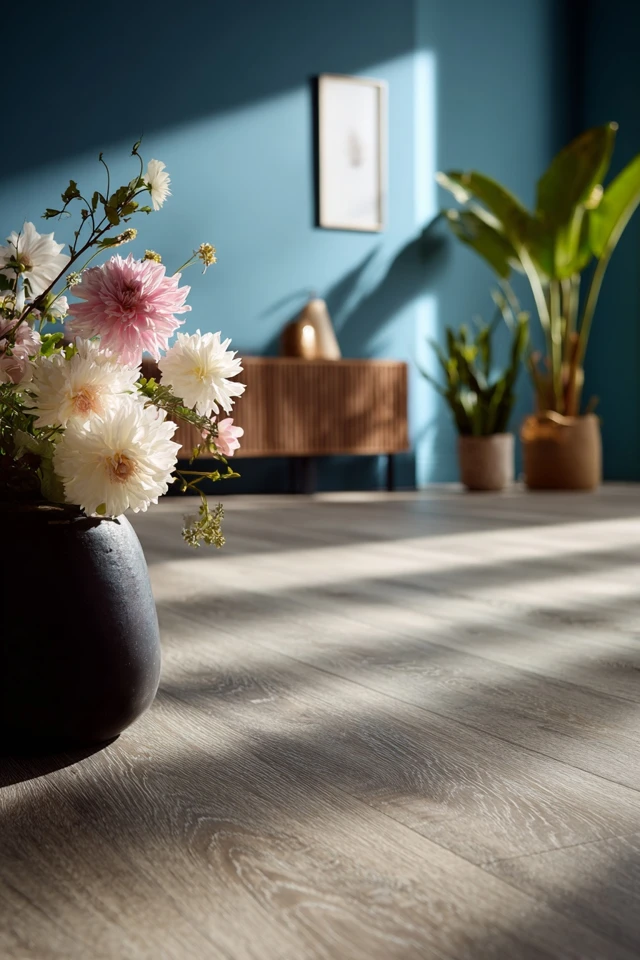
Glossy surfaces bounce light and show every scuff, footprint and speck of dust. Matte and satin finishes absorb light, soften shadows and hide wear. In a high-traffic home, I recommend matte or low-sheen rubber nearly every time.
A little texture helps too. A fine grain or light surface pattern hides crumbs and paw prints better than a perfectly smooth plane.
How do you make rubber feel warm and not clinical?
Layer it. Rubber supplies the comfort and durability, and other materials supply the warmth.
- Add wood furniture, shelving or cabinet fronts to balance the floor's more industrial feel.
- Use woven baskets, linen, wool and cork for texture. A cork board or two on the wall adds another natural surface.
- Define seating areas with a washable rug, which also gives you a softer spot to sit.
- Use warm-toned bulbs in living areas and brighter, neutral light in kitchens and work zones.
If you do use a rug, check what is on its backing before placing it. Some rug pads and backings can stain or discolor flooring over time, so ask the flooring manufacturer what they recommend.
How should you plan the layout?
A continuous floor helps open-plan rooms feel calm. You can mark zones with furniture and rugs rather than changing materials. Keep about 36 inches clear for main walkways between furniture groupings, which is a comfortable minimum for most households.
In a small room, a lighter, even-toned floor keeps the eye moving across the space. Tall plants, shelves and art draw attention up. In a sunny room, place seating so glare doesn't land on screens; our small sunroom ideas cover that situation in more detail.
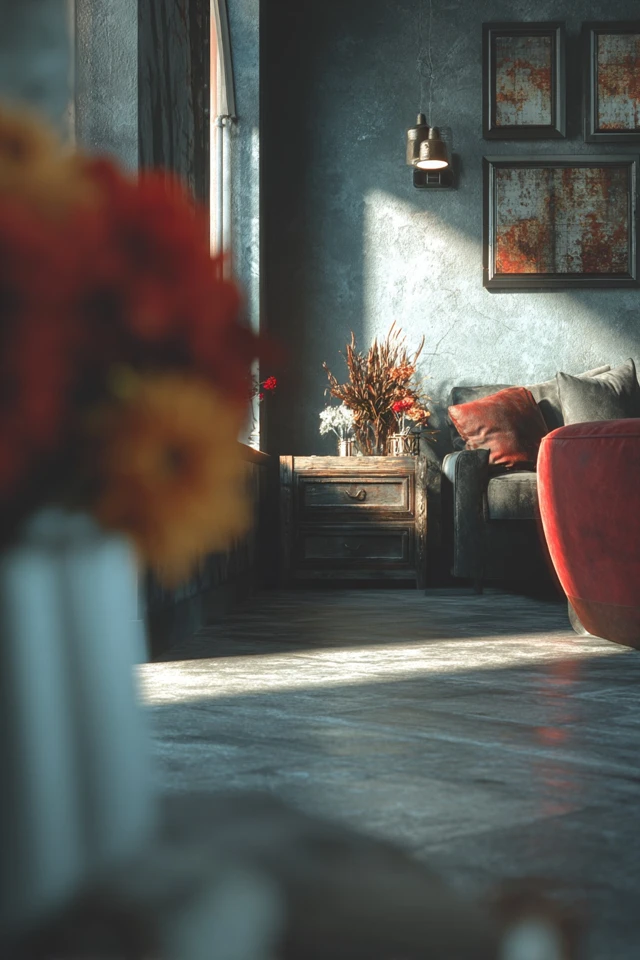
What should you check before installing?
- The subfloor needs to be flat, dry and clean. Rubber follows what is underneath it, so bumps will show.
- Heavy furniture can leave dents in softer rubber. Wide furniture feet or protective pads spread the load.
- New rubber can have a noticeable smell at first. Ventilate the room and ask the manufacturer how long it usually lasts.
- If you have underfloor heating, confirm with the manufacturer that the product is approved for it, and have a licensed professional handle the installation.
- Use the cleaning products the maker recommends. Harsh solvents can dull or damage the surface.
If you have pets, ask your vet if you have any concerns about a new floor material, particularly for older dogs with joint problems who need extra traction.
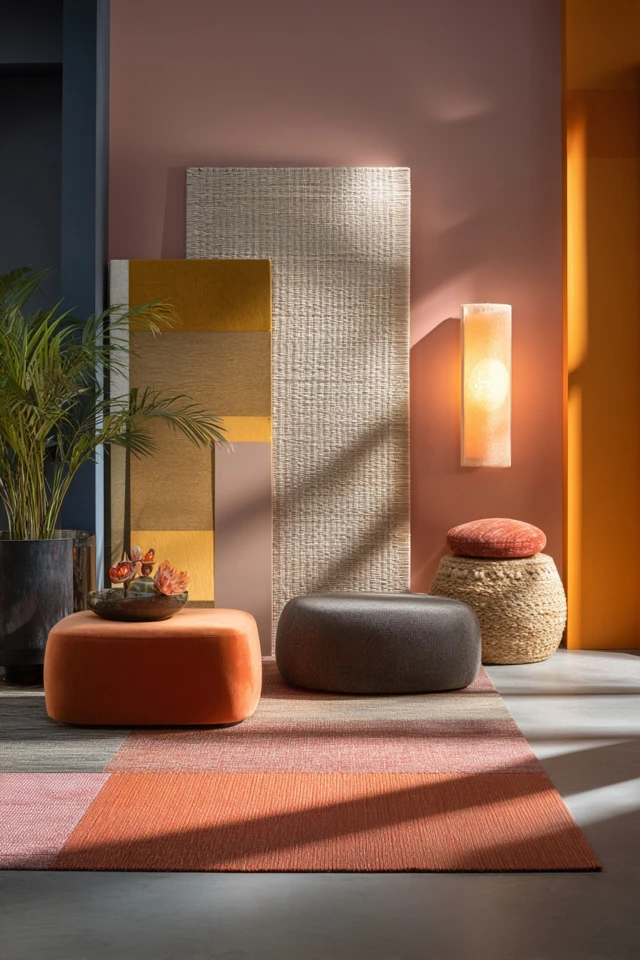
Keeping the look timeless
Pick a floor tone that will survive a few paint changes. Then use textiles, art and accessories for trends, because they are cheap to swap and the floor isn't. A calm, consistent floor also lets you mix patterns in cushions and throws without the room feeling busy.
Frequently asked questions
Can rubber flooring be used with underfloor heating?
Some rubber flooring products are approved for use over radiant heat and others aren't. Check the manufacturer's specifications first, and have a licensed professional handle the installation.
How can rubber flooring help a small room feel larger?
A light, even-toned rubber floor gives the eye one unbroken surface to travel across. Pair it with light walls and keep furniture low and minimal.
How do you mix patterns without creating visual chaos on a rubber floor?
Keep the floor plain and add pattern through cushions, throws and rugs in a shared palette. Vary the scale of the patterns, such as one large and one small, so they don't compete.
Does rubber flooring smell?
New rubber can have a noticeable odor at first, which varies by product. Ventilate the room, and ask the manufacturer how long to expect it.
Filed under
ArticlesMeet the author
Written by an architect.
Julio Arco is a passionate architect with years of experience in architecture, interior design, urban design, and housing. He studied at prestigious universities across North America and Europe.

- Name
- Julio Arco
- Job
- Architect and online interior designer
- Studied
- Architecture, ITESM · Urban Design and Housing, McGill
- Partner
- Thor, Australian Shepherd
- Thor’s title
- Head of quality control