Small Kitchen Lighting Ideas That Make Rooms Feel Bigger

By Julio Arco
Architect and online interior designer
In this post
- What is the best lighting for a small kitchen?
- Small kitchen ceiling lighting ideas
- Under-cabinet lighting for a small kitchen
- Which small kitchen light fixtures work without an island?
- What color temperature and bulbs should you use?
- How do you add mood lighting to a kitchen?
- What are the current kitchen lighting trends?
- A simple weekend plan
- Frequently asked questions
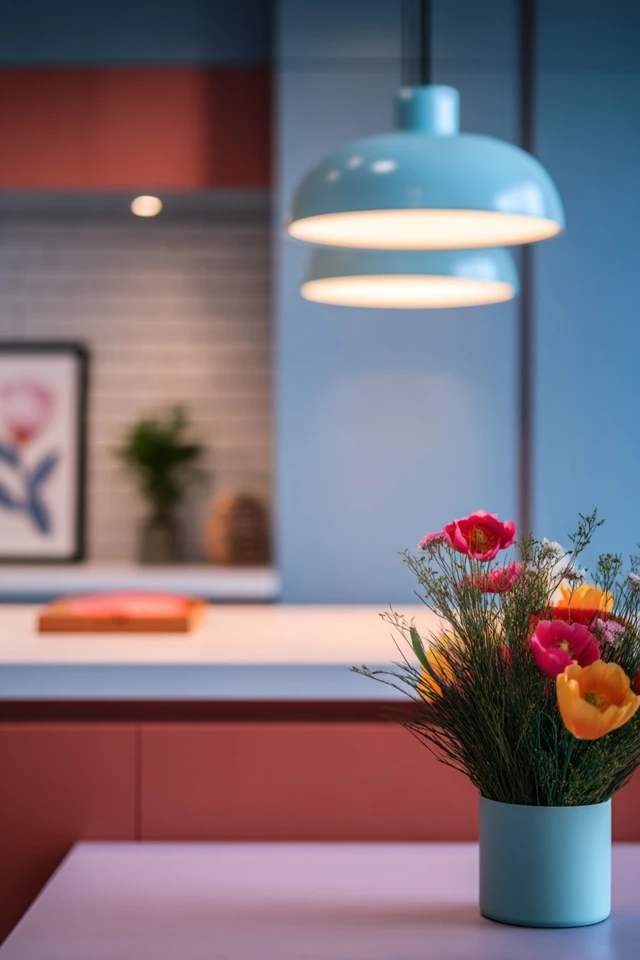
The best lighting for a small kitchen is layered: one even source overhead, bright task light under the cabinets, and a small accent or dimmable source for the evening. A single ceiling fixture leaves shadows on the counter, and that is what makes a compact kitchen feel cramped.
It's very common to inherit a kitchen with one builder-grade light in the middle, so don't feel bad if that's yours. The fixes below are mostly small, and several can be done in a weekend.
What is the best lighting for a small kitchen?
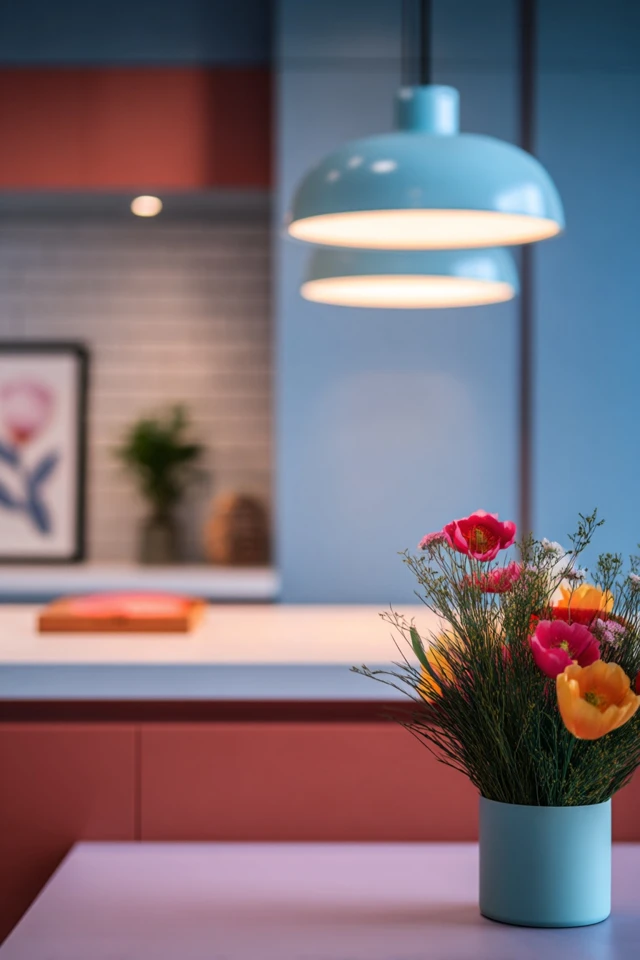
Think in three layers. Ambient light fills the room, task light sits where you cut, stir and wash, and accent light adds depth and mood. Small kitchens tend to have plenty of ambient light and almost no task light, so start there.
This isn't a new idea. A National Agricultural Library history of step-saving kitchens records the advice to arrange for good lighting at all work centers, at night as well as during the day. Lighting each work zone, not just the room, is still the sound approach.
Small kitchen ceiling lighting ideas
Recessed downlights and flush-mount fixtures keep the ceiling clear, which matters in a narrow kitchen where you need headroom and clean sightlines. Space recessed lights so their beams overlap on the counters, and avoid placing them directly behind where you stand, because your body will cast a shadow on the work surface.
If you prefer a visible fixture, choose a shallow flush or semi-flush mount with a diffuser. A big bowl-shaped pendant in a small room eats visual space. For wiring changes, hire a licensed electrician.
Under-cabinet lighting for a small kitchen
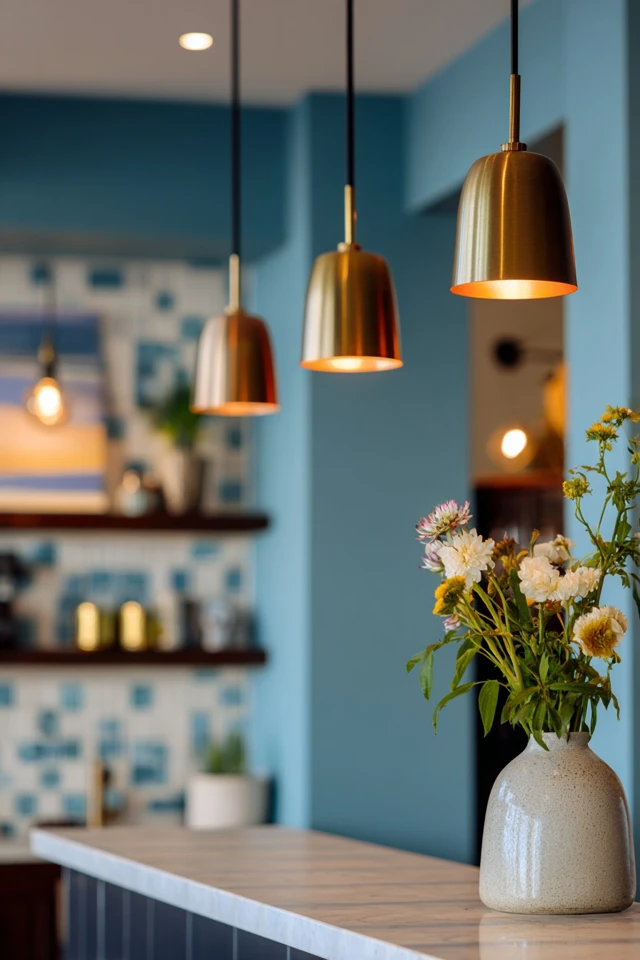
This is the single most useful upgrade. A slim LED strip or bar under the upper cabinets puts light directly on the counter and removes the shadows your head and shoulders create.
- Mount the strip toward the front of the cabinet, roughly 2-4 inches from the edge, so the light lands on the work surface instead of reflecting in the backsplash.
- Pick a diffused or frosted strip if you have a glossy backsplash, since bare dots of light can show as glare.
- Put it on its own switch or dimmer so it can double as a night light.
LEDs also suit tight kitchens because they run cool and last. The U.S. Department of Energy's LED basics page says good-quality white LED products are expected to last 30,000 to 50,000 hours or even longer.
Which small kitchen light fixtures work without an island?
Without an island, you have fewer places to hang things, which is fine. Use these instead:
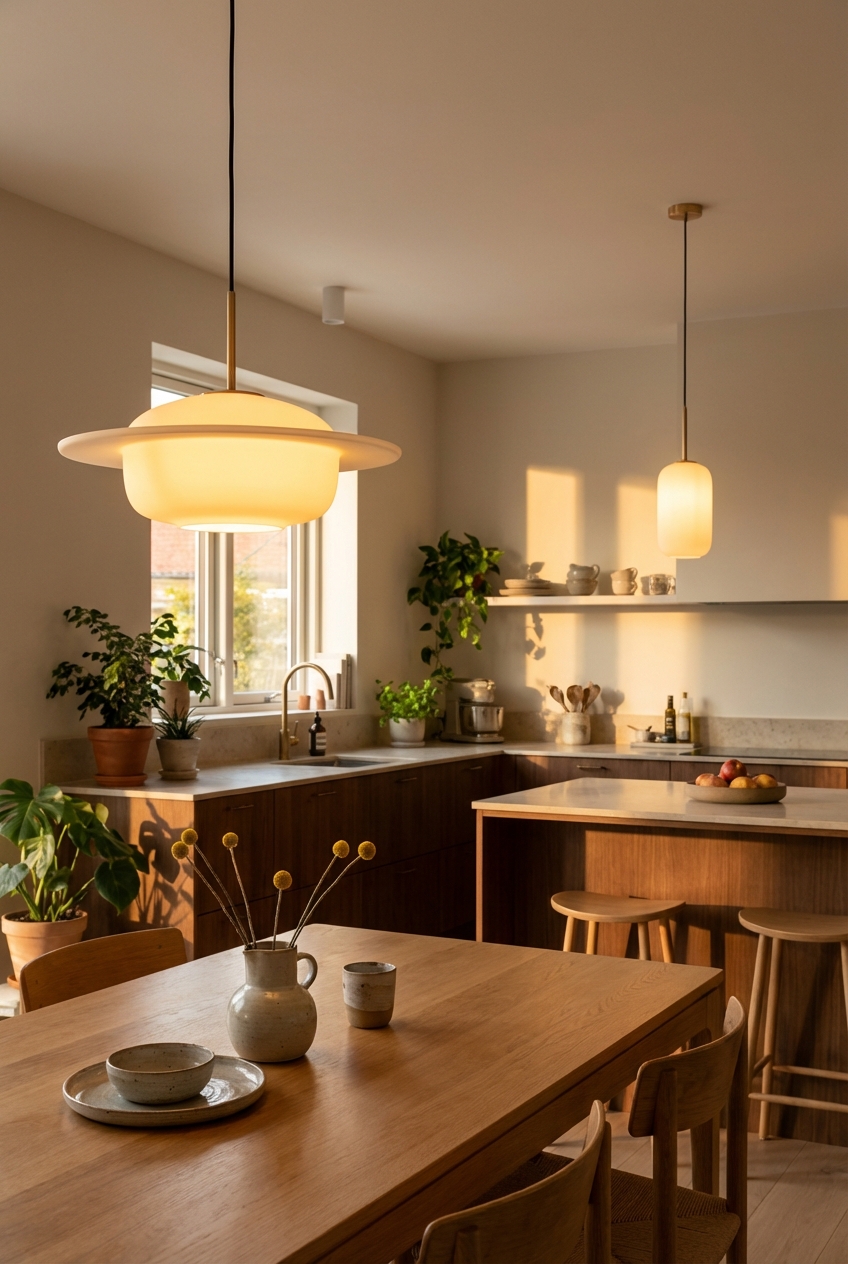
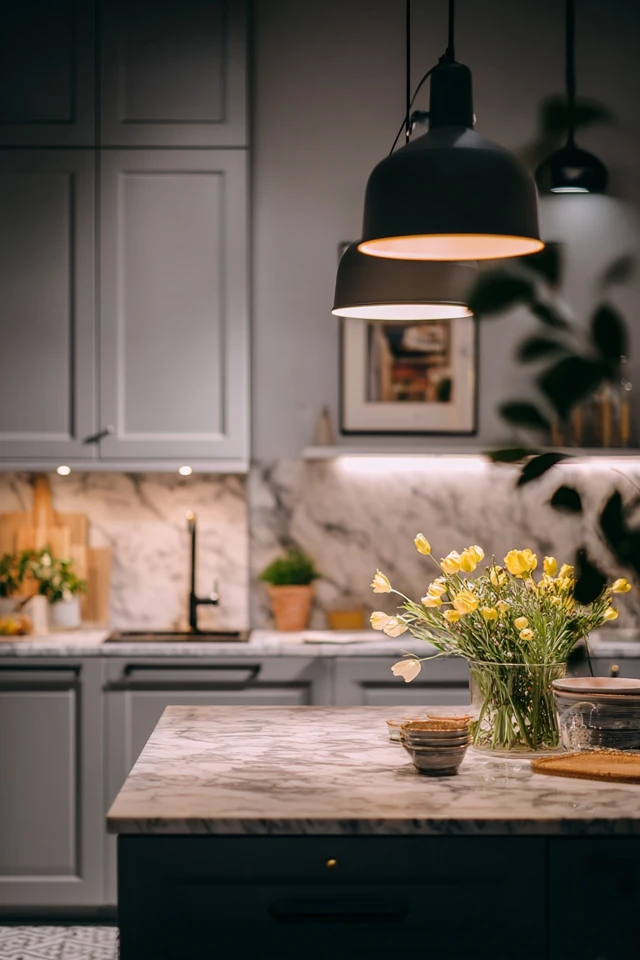
- A single small pendant over the sink or a breakfast nook, to anchor the room without crowding it.
- A linear LED fixture above an open shelf or window, in place of a bulky pendant.
- A swing-arm wall sconce beside a nook or at the end of a galley, which saves counter and ceiling space.
- A short track or rail with small heads, aimed at the counter and cooktop.
As an architect, I'd choose fewer, smaller fixtures over one statement piece in a kitchen under about 100 square feet. Scale decides whether a light looks chic or hogs the room.
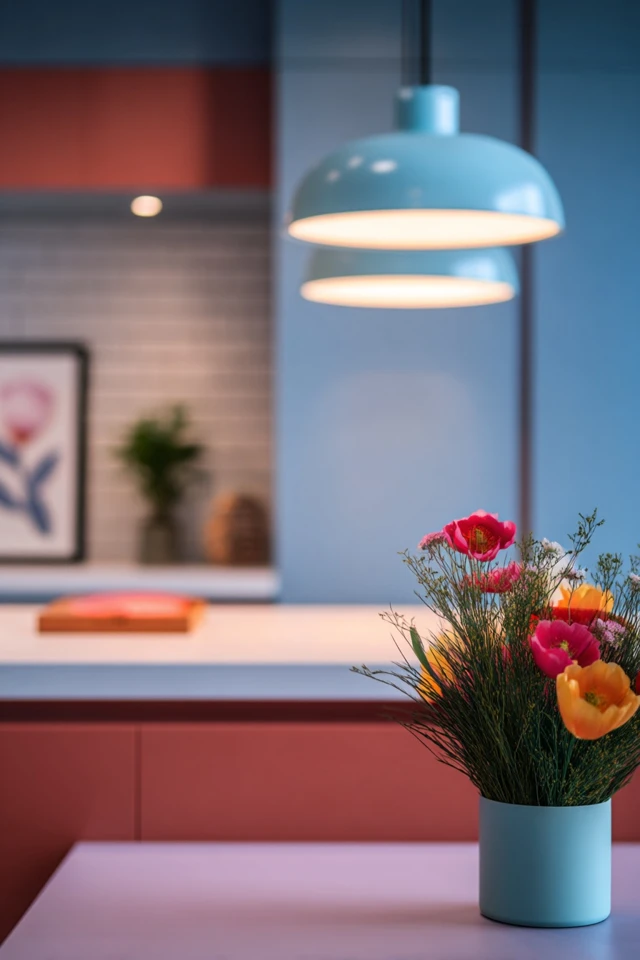
What color temperature and bulbs should you use?
Color temperature is measured in kelvins, and the Department of Energy describes correlated color temperature as one of the primary metrics for the visual appearance of light. In practice, warm white (2700-3000K) feels cozy, and neutral to cool white (about 3500-4000K) is crisper for prep.
Pick one temperature for the whole kitchen if you can. Mixed whites side by side look like a mistake, especially in a small room where everything is in view at once. If you want a split, keep task light neutral and put the warmer bulbs in a pendant or sconce. Look for a high color rendering index (90 or above) so food and countertops look true.
How do you add mood lighting to a kitchen?
Put the ambient layer and any pendant on dimmers, and keep a low accent source for evenings: a sconce, a lamp on the counter, or LEDs under the cabinets turned down low. Dimming lets the same room go from chopping onions to late-night tea.
Evening light matters for more than looks. The U.S. Department of Energy notes that "Light plays a key role in setting and regulating the body's biological clock." I recommend warm, dim light in the hour or two before bed, particularly if your kitchen opens onto a living area.
The Illuminating Engineering Society and the International Dark Skies Association, in a joint publication, say their "Five Principles advocate thoughtful deployment of light at night, optical control to direct light only where it is necessary, using the minimum amount of light necessary, use of controls to use light only when necessary, and careful selection of color temperature." Dimmers and zoned switches follow that advice nicely.
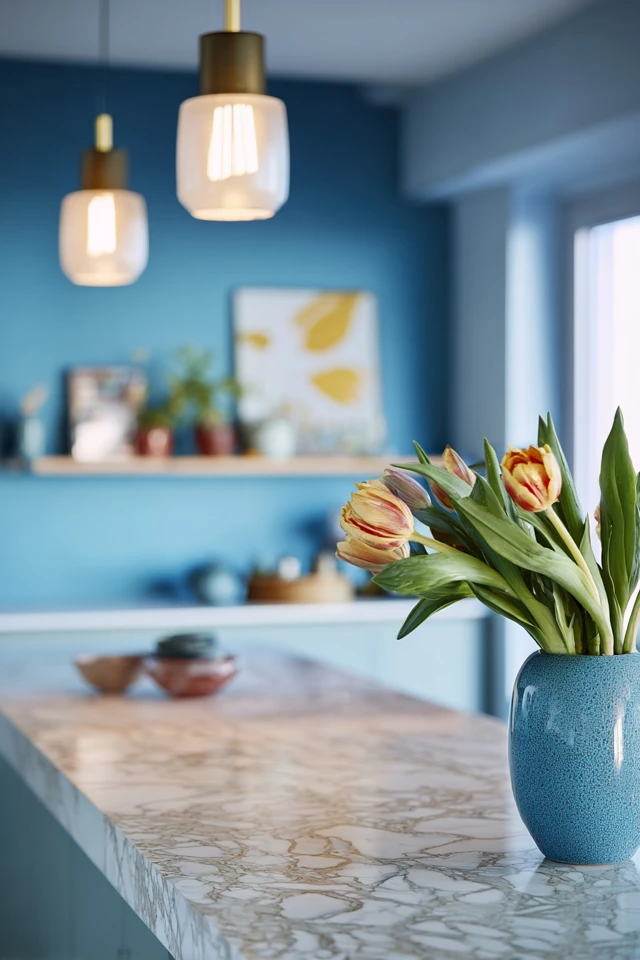
What are the current kitchen lighting trends?
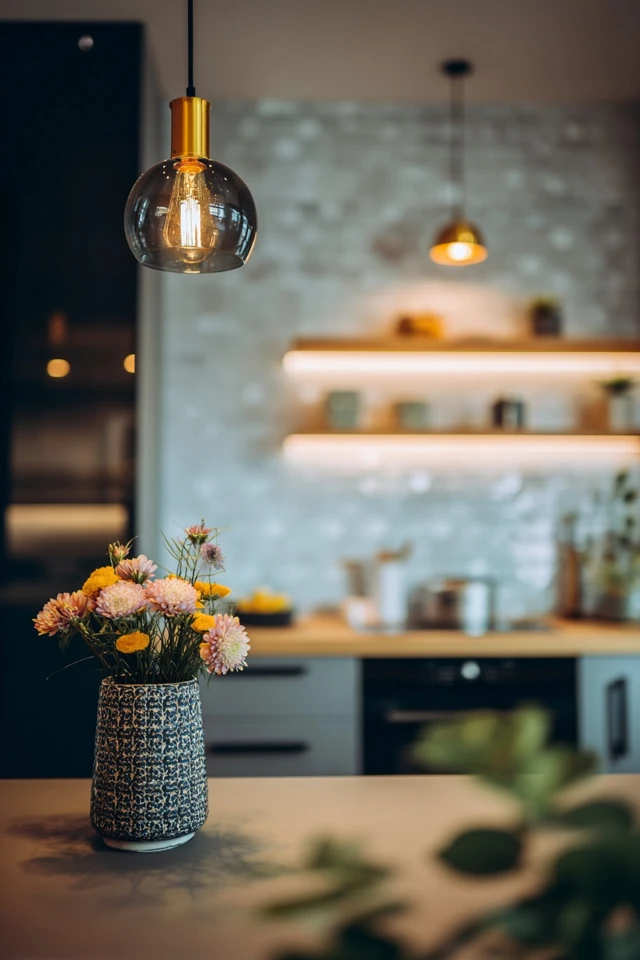
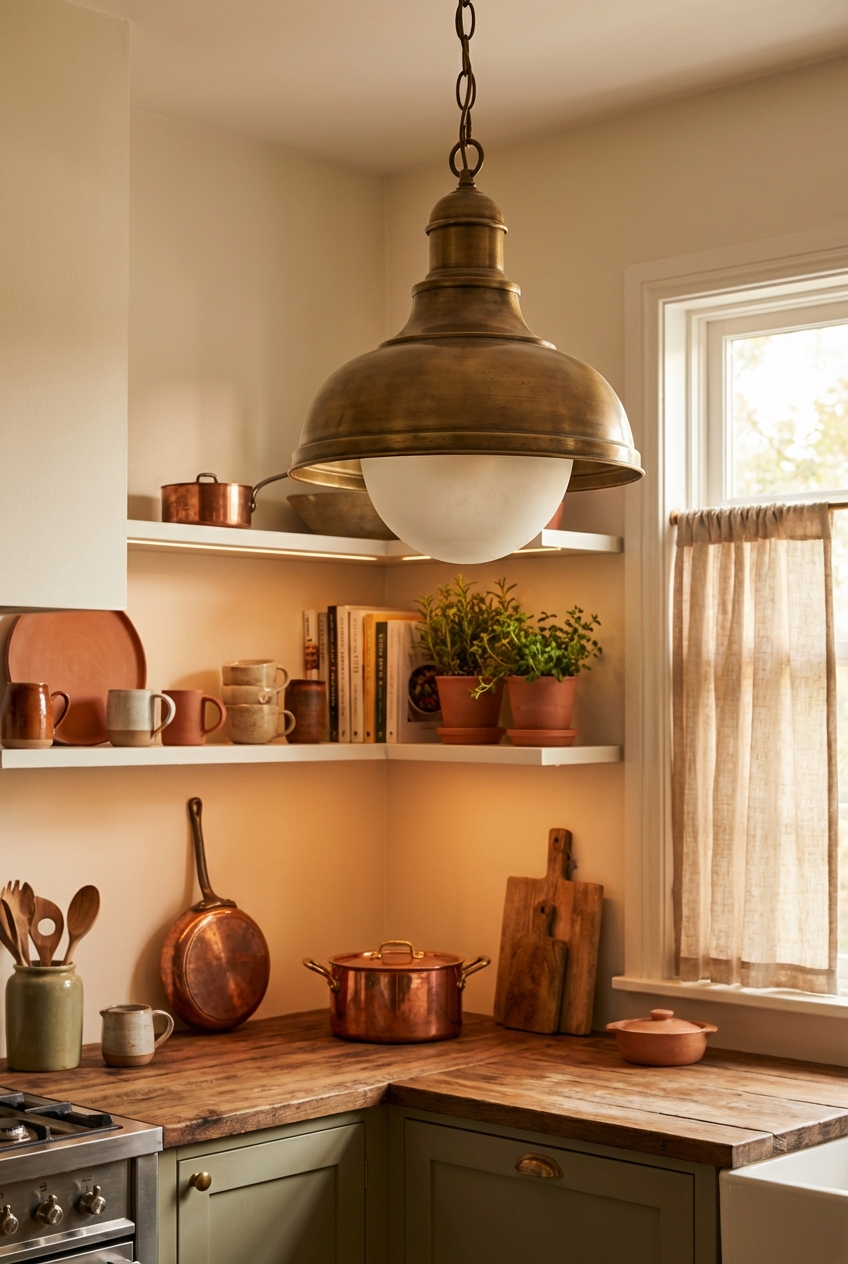
Popular directions include slim linear fixtures, warm-toned metals such as brass, integrated LED strips, and dimmable layered schemes. Treat these as swappable details. Changing a pendant shade or a fixture finish is cheaper than redoing a ceiling, and it dates less when the trend turns.
Finishes matter too. Glossy backsplashes and light counters bounce light into corners, while matte cabinets soften it. If you're also rethinking paint, see our kitchen colors ideas, and for more fixture inspiration, our small kitchen lighting inspiration and simple small kitchen lighting ideas posts have more examples. Short on storage too? Try these small pantry ideas.
A simple weekend plan
- Replace the ceiling bulb or fixture with a neutral-white, high-CRI LED.
- Add plug-in or hardwired LED strips under the upper cabinets.
- Install a dimmer on the overhead circuit.
- Add one small pendant or sconce for the evening layer.
Keep cords tidy and out of reach of pets that chew, and call a licensed electrician for any hardwired work.
Frequently asked questions
What is the best lighting for a small kitchen?
A layered setup works best: shallow ceiling lighting for general light, LED strips under the cabinets for the counters, and a dimmable accent source. Keep fixtures slim so they don't crowd the room.
What are some good kitchen lights for a small kitchen?
Recessed downlights, a flush or semi-flush mount, under-cabinet LED bars, a small pendant over the sink, and a wall sconce all suit tight spaces. Choose low-profile pieces and avoid oversized pendants.
What is the current trend for kitchen lighting?
Slim linear fixtures, warm metal finishes, integrated LED strips and dimmable layers are common choices. Apply them through swappable details like shades and fixture finishes.
Can I light a small kitchen without an island?
Yes. Use a small pendant over the sink or nook, under-cabinet strips, and a sconce or short track aimed at the counters.
Filed under
ArticlesMeet the author
Written by an architect.
Julio Arco is a passionate architect with years of experience in architecture, interior design, urban design, and housing. He studied at prestigious universities across North America and Europe.

- Name
- Julio Arco
- Job
- Architect and online interior designer
- Studied
- Architecture, ITESM · Urban Design and Housing, McGill
- Partner
- Thor, Australian Shepherd
- Thor’s title
- Head of quality control