Small Kitchen Lighting Ideas: Layers That Work

By Julio Arco
Architect and online interior designer
In this post
- What is the best lighting for a small kitchen?
- Small kitchen ceiling lighting ideas
- Under cabinet lighting for a small kitchen
- Which color temperature should you pick?
- Mood lighting for the kitchen
- Placement and fixture sizing at a glance
- What are the current kitchen lighting trends?
- A weekend order of operations
- Frequently asked questions
The best lighting for a small kitchen is layered: one even source overhead, a strip of light under the wall cabinets for the counters, and a small accent or two for atmosphere. One ceiling fixture alone leaves shadows exactly where you chop and stir, and that is what makes a small room feel cramped.
It's very common to inherit a kitchen with a single light in the middle of the ceiling, so don't feel bad if that's yours. You can fix it in an afternoon without rewiring, and the steps below go from the biggest improvement to the smallest.
What is the best lighting for a small kitchen?
Think in three layers. Ambient light fills the room, task light sits close to the work surfaces, and accent light adds depth and mood. In a small kitchen each layer can be modest, but all three should exist.
The idea is old. A U.S. Department of Agriculture history of efficient kitchens, Step-Saving Kitchens from the National Agricultural Library, includes the advice to arrange for "good lighting at all work centers at night as well as during the day." Work centers still means the sink, the stove and the prep counter.
Small kitchen ceiling lighting ideas
Your ceiling light sets the base level, so choose something that spreads light rather than a single bright point.
- Flush-mount or semi-flush fixtures suit low ceilings because nothing hangs into the room.
- Recessed lights give an even wash. Space them so the light overlaps along the counters, and keep them a little closer to the wall than to the room center so cabinet fronts are lit too.
- A linear fixture works well in a galley kitchen because it follows the shape of the room.
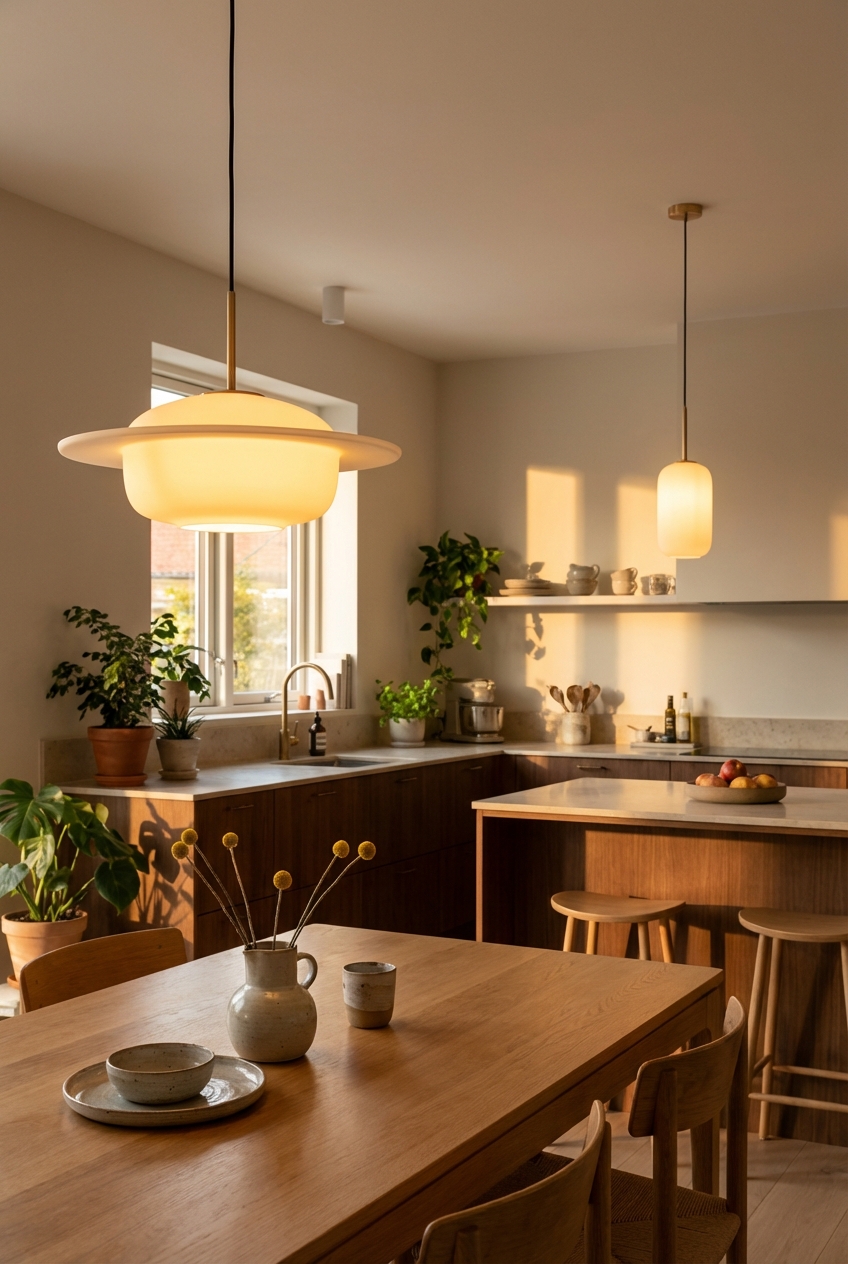
As an architect, I'd pick several small sources over one oversized fixture. A big shade in a tiny ceiling takes over the room, while a few low-profile lights stay quiet.
Small kitchen lighting ideas with no island
Without an island there is nothing to hang pendants over, which simplifies things. Put the ambient light on a dimmer, run light under the cabinets, and add one pendant or wall light over a breakfast nook or window only if there's a spot for it. If you do hang pendants over an island or peninsula, keep the bottom about 30-36 inches above the countertop so nobody bumps a head.
Under cabinet lighting for a small kitchen
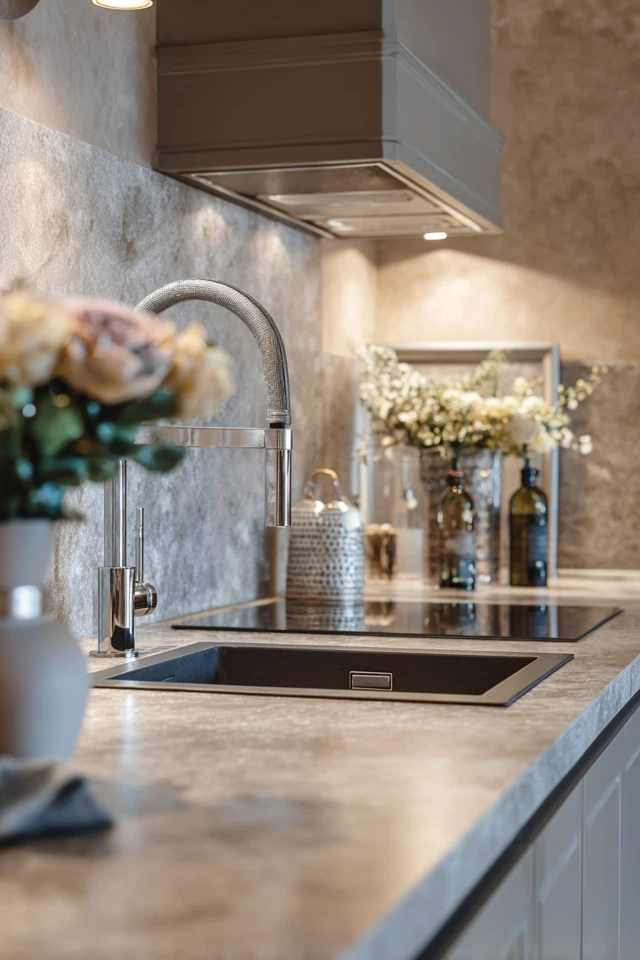
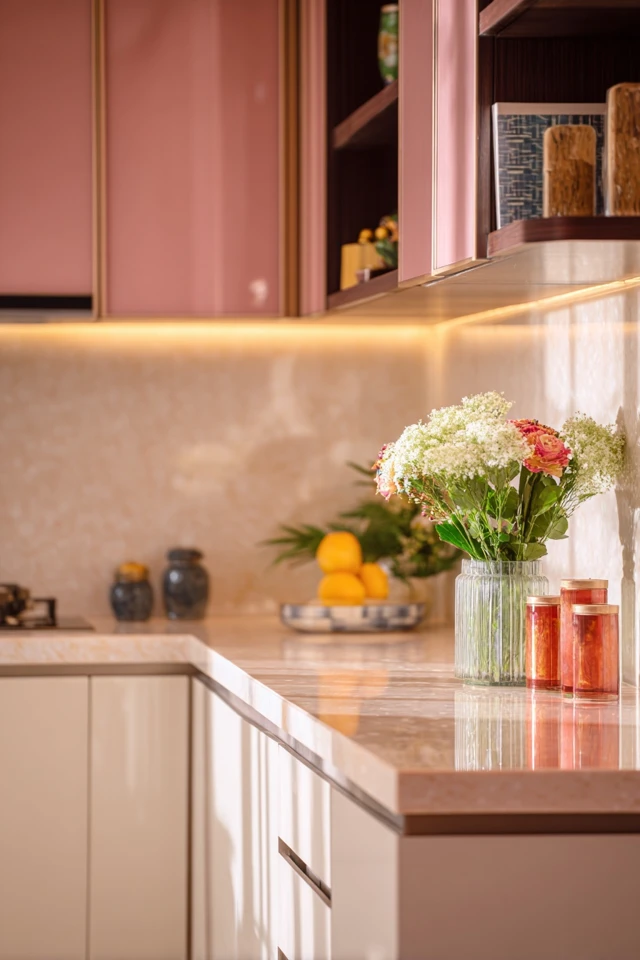
This is the single most useful upgrade. Light coming from above and behind you puts your own shadow on the counter, and a strip mounted at the front underside of the wall cabinet removes it.
Plug-in and stick-on LED bars are fine for renters and need no electrician. If you want hardwired lights, hire a licensed electrician. Mount strips toward the front edge of the cabinet, not against the wall, so the backsplash doesn't show a glare streak. A matte or honed backsplash handles this better than high-gloss tile.
LEDs are also a sensible choice for tight spaces. The Department of Energy says LED lighting is already the most energy-efficient lighting technology, and good-quality white LED products are expected to last 30,000 to 50,000 hours or longer, so a strip hidden under a cabinet is something you rarely touch again.
Which color temperature should you pick?
Color temperature is measured in kelvins. The Department of Energy describes correlated color temperature as one of the primary metrics for the visual appearance of light. In practice, here is how I'd use it:
| Where | Color temperature | Effect |
|---|---|---|
| Ceiling and general light | 2700-3000K | Warm, flatters wood and warm paint |
| Under-cabinet task light | 3000-4000K | Crisper, easier for reading food and labels |
| Accent light on shelves | 2700K | Soft glow, cozy in the evening |
Keep every source in the room within a similar range. Mixing a very warm bulb with a very cool strip looks like a mistake, not a choice. Look for bulbs with a high color rendering index (90 or above is a good target) so tomatoes still look like tomatoes.
Mood lighting for the kitchen
A kitchen that is also where you eat, work and unwind needs a softer evening setting. Put the ceiling light on a dimmer, then switch the under-cabinet strips on their own for a low glow. Add a small light inside a glass-front cabinet or along an open shelf if you have one.
There's a body-clock reason to dim at night. The Department of Energy notes that "Light plays a key role in setting and regulating the body's biological clock." Bright, cool light at 10 p.m. for a glass of water is more than you need.
Placement and fixture sizing at a glance
- Stove and sink: make sure each has direct light. A range hood light alone rarely covers the whole cooktop.
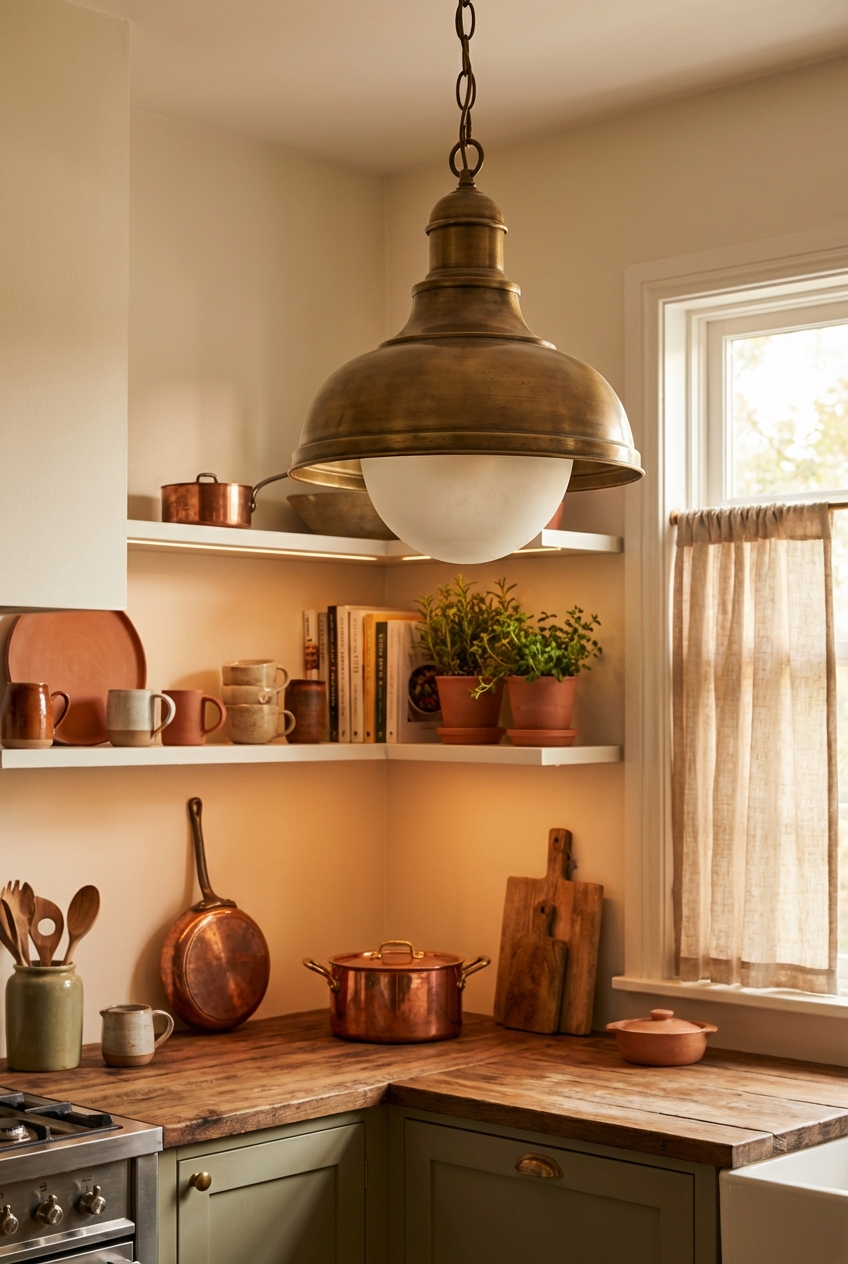
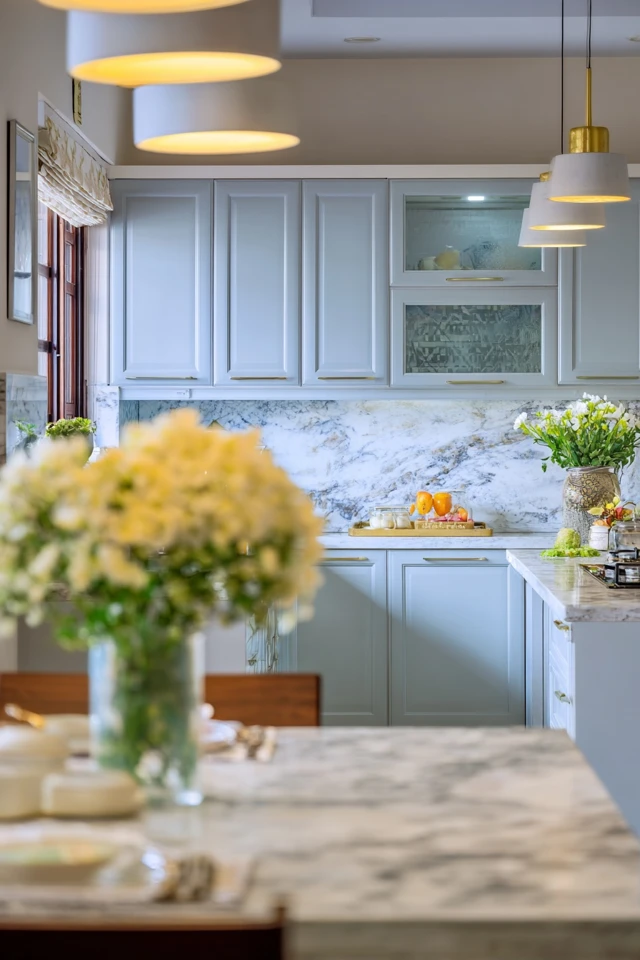
- Pendants: choose small, low-profile small kitchen light fixtures with open or translucent shades so you can see through them.
- Sconces: slim wall lights suit narrow rooms where a pendant would crowd the walkway.
- Track or adjustable heads: useful when you can't add under-cabinet lights, since you can aim them at the counter.
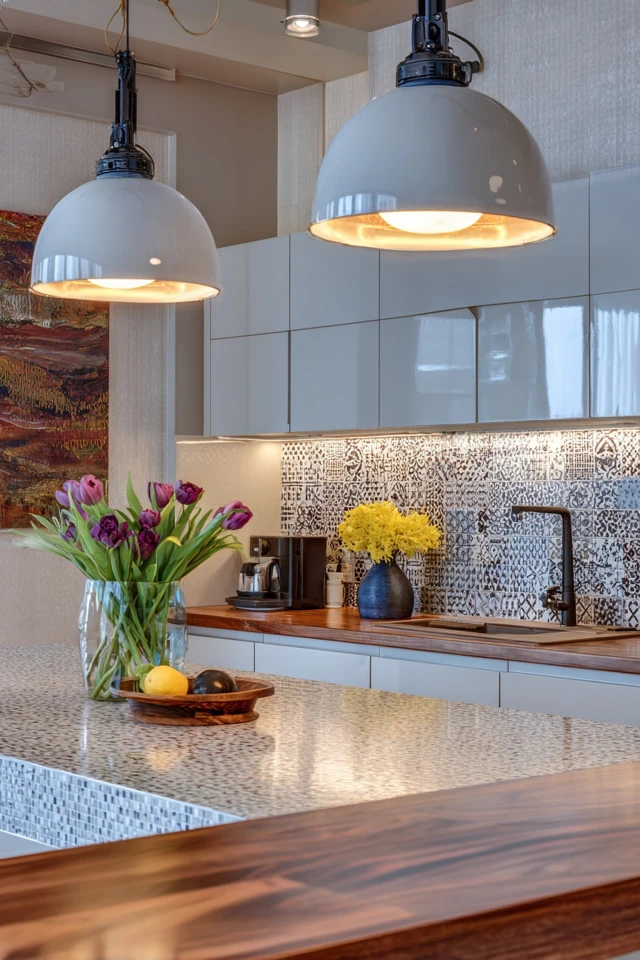
Finishes matter too. Glossy surfaces bounce light and brighten a small room, but they can glare under bare strips. Satin and honed finishes soften the light and hide fingerprints, which helps in a kitchen with sticky paws and hands. For more on surfaces and color, see our kitchen colors ideas.
What are the current kitchen lighting trends?
Layered lighting, warm dimmable LEDs, slim linear fixtures and hidden strip lights are the directions that keep showing up, and they are all practical in small rooms. I'd treat any bold pendant as a single accent and keep the rest of the lighting plain, so you won't tire of it. The Illuminating Engineering Society and the International Dark Skies Association also advocate using the minimum amount of light necessary and using controls to use light only when necessary, which is a good argument for dimmers and separate switches.
If you are planning the wider room, you may also like more small kitchen lighting ideas and a black and white kitchen scheme.
A weekend order of operations
- Swap the ceiling bulb or fixture for a warm, dimmable option.
- Add plug-in or stick-on strips under the wall cabinets.
- Put each layer on its own switch or plug so you can control them separately.
- Add one accent light on a shelf or inside a glass cabinet.
Frequently asked questions
What are some good kitchen lights for a small kitchen?
Flush-mount or recessed ceiling lights, LED strips under the wall cabinets and a slim linear or small pendant fixture cover most small kitchens. Choose low-profile options so nothing crowds the ceiling.
How can I layer lighting if I only have one ceiling fixture?
Add plug-in or stick-on LED bars under the cabinets and a small lamp or shelf light. These need no rewiring, so they suit renters.
Can I mix metal finishes on small kitchen fixtures?
Yes. Pick one dominant metal and one accent, and repeat the accent in a couple of places so it looks planned.
Filed under
ArticlesMeet the author
Written by an architect.
Julio Arco is a passionate architect with years of experience in architecture, interior design, urban design, and housing. He studied at prestigious universities across North America and Europe.

- Name
- Julio Arco
- Job
- Architect and online interior designer
- Studied
- Architecture, ITESM · Urban Design and Housing, McGill
- Partner
- Thor, Australian Shepherd
- Thor’s title
- Head of quality control