Small Garden Features: 9 Ideas That Fit Tight Spaces
Small garden features that work in tight spaces: rock beds, seating, climbers, planters, water and zoning, with sizes and low-care tips.

By Julio Arco
Architect and online interior designer
In this post
- What is the best layout for a small garden?
- Build a rock bed as a low-care focal point
- Add height with climbers, trellises and green walls
- Use planters and hanging baskets
- Create a small seating area
- Add a water feature or another focal point
- Keep the planting palette short
- Replace tired lawn with something easier
- Frequently asked questions
A small garden needs fewer things, placed with more care. Pick one focal point (a rock bed, a water bowl, a bench), add height with climbers or a trellis, and keep the planting palette short. That covers most of what makes a tiny yard feel designed instead of crowded.
Below are the features I'd consider first, with sizes and trade-offs. Most are simple small garden features you can build in a weekend, and many work on a budget.
What is the best layout for a small garden?
Start by deciding what the garden is for: sitting, growing, playing, or just looking at from the window. Then give each use a zone, even if the zone is only 4 by 4 feet. Leave about 30-36 inches for any path you walk along regularly, and keep the middle of the space as open as you can.
Diagonal lines help. A path or deck set at an angle makes a rectangular yard read as longer. Put your focal point at the far end, so the eye travels across the whole space first.
Build a rock bed as a low-care focal point
Rock gardens are one of the most reliable low maintenance small garden features. Gravel, a few larger boulders and a handful of tough plants give structure all year with almost no mowing, watering or feeding.
Group stones in odd numbers and bury about a third of each boulder so it looks settled. Use one type of rock, since mixing several tends to look busy at this scale. For a modern look, choose pale gravel, clean edges and two or three plant types repeated.
Skip plastic landscape cloth under the gravel. Penn State Extension does not recommend plastic or synthetic landscape cloth because it can increase erosion and water runoff. If you have a dog who digs, use heavier, rounded stone (not sharp crushed rock) and check the paw comfort on hot days.
For more shapes and layouts, see our rock garden ideas.
Add height with climbers, trellises and green walls
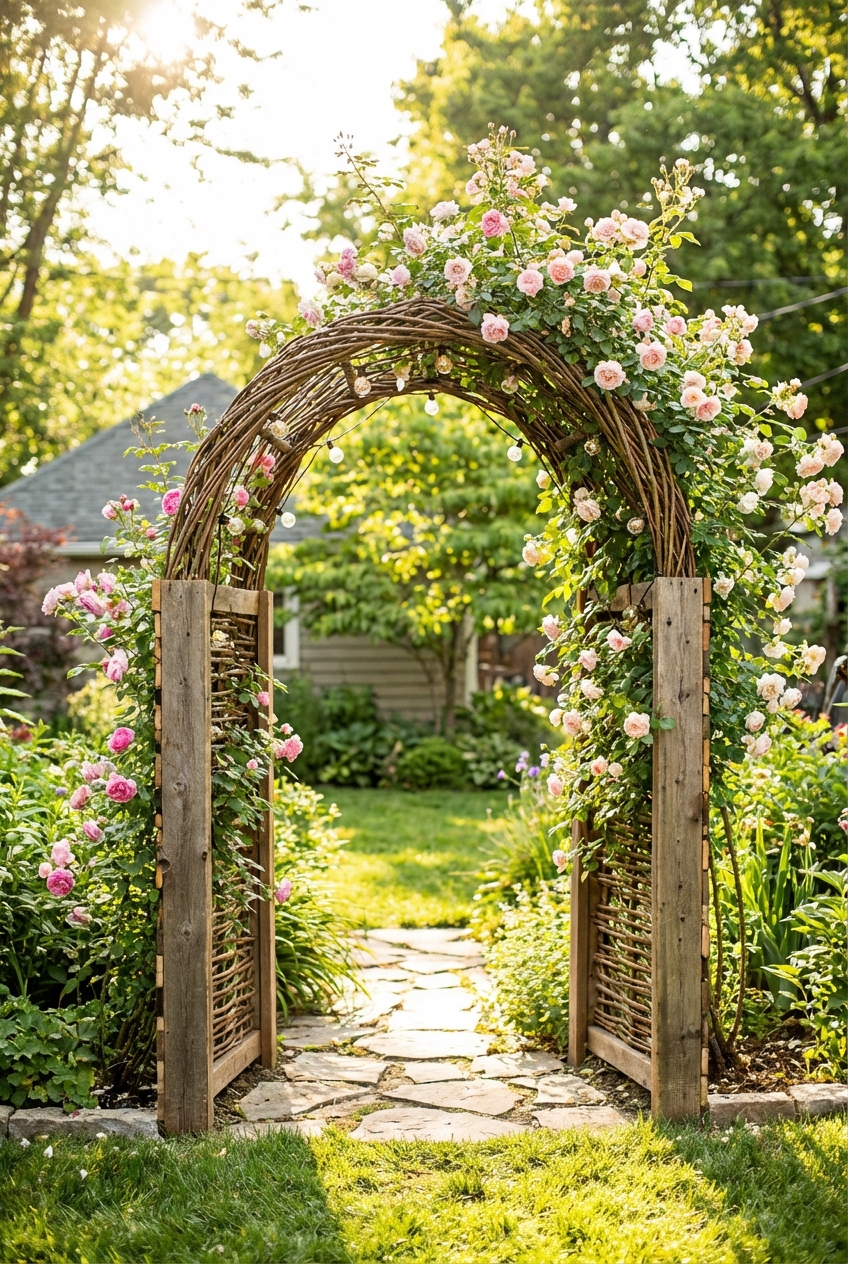
When floor space is tight, go up. A trellis against a fence, an obelisk in a pot or a slim pergola over a bench adds layers without eating into the yard. Climbers on a wall also soften hard boundaries, which makes the garden feel larger.
Fix supports firmly to a sound wall or post, and ask a licensed professional about anything freestanding and tall, like a pergola, in windy areas.
Use planters and hanging baskets
Containers are the easiest way to add color on a budget, and you can move them as the light changes. Group three or four pots of different heights instead of scattering many small ones. Large pots hold moisture longer than small ones, so they need less watering.
If your dog chews plants, check any plant against the ASPCA toxic plant list or ask your vet before it goes in a pot at nose height.
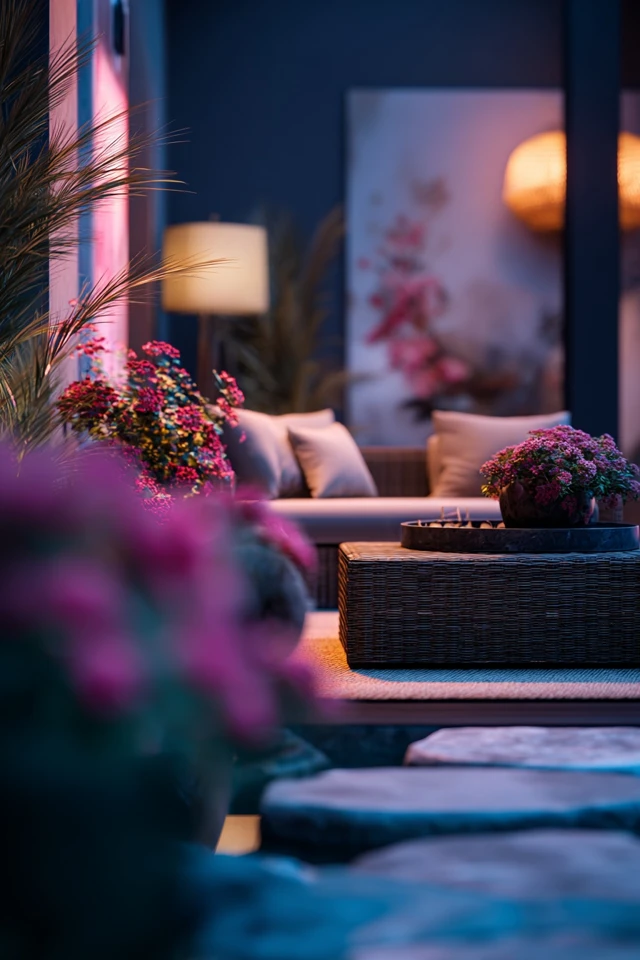
Create a small seating area
A bench, two chairs and a tiny table are enough. Allow roughly 24 inches of clear space in front of a seat for legs, and set the seating where you'll see the best part of the garden. A corner works well because it uses the space you'd never walk through anyway.
The surface matters as much as the seat. Gravel, pavers or a small deck all give a firm base, and each gives the garden a cleaner edge than grass patches too small to mow.
Add a water feature or another focal point
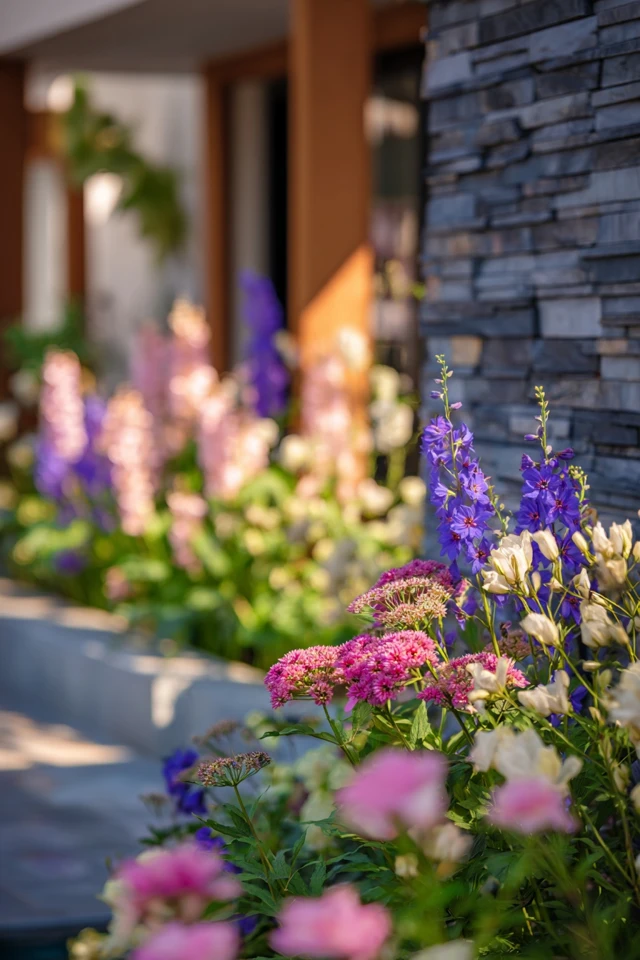
A small bubbling urn, a basin or a wall spout adds sound that helps mask street noise. If you have pets or small children, choose a feature with no open standing water, such as a pebble-pool fountain with the reservoir hidden below. Any electric pump should be wired by a licensed electrician.
No water? A sculptural boulder, a single specimen tree or a painted wall panel does the same job.
Keep the planting palette short
Three or four plant types repeated look calmer than ten different ones. Planting in drifts of one species also reduces risk. Master Gardener Deb Christopher of Westmoreland County says, per Penn State Extension: "If disease or pest problems arise, the entire monoculture planting may be killed. Instead, consider planting drifts or groups of single species, providing a patchwork-quilt effect."
When you plan spacing, the University of Florida's IFAS guidance suggests using 85% of the high end of the range for the plant spread, so plants fill in without crowding.
Replace tired lawn with something easier
A small patch of struggling grass is a lot of work for little reward. Ground covers are a good swap: Colorado State Extension notes that plants that are low-growing (generally less than 24 inches) and spread easily are suitable ground cover plants. If pets use the area, UC Marin Master Gardeners report that white clover does not show pet urine damage.
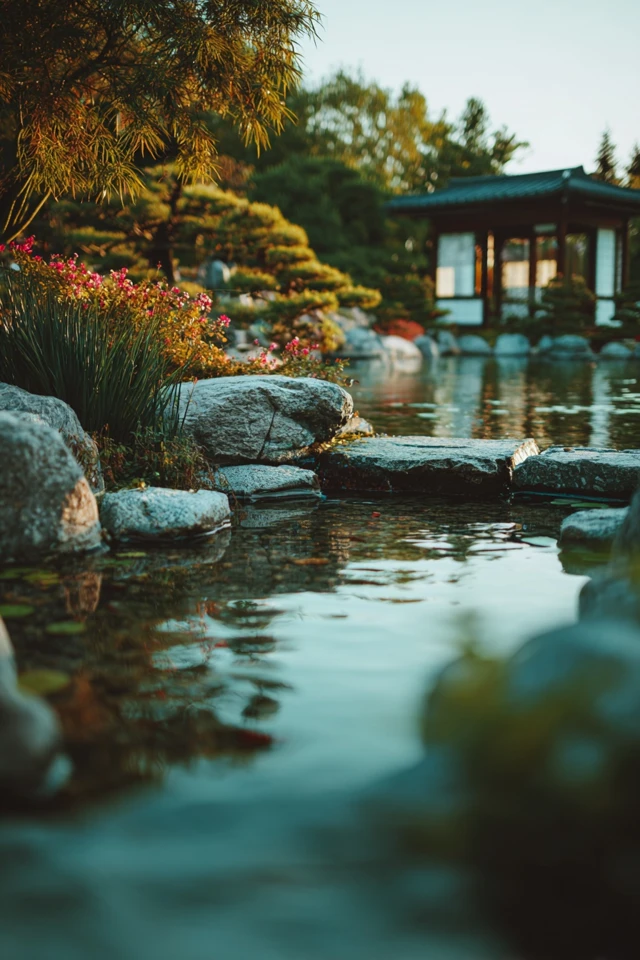
For a calmer, more minimal take on stone and planting, our Japanese garden ideas show how few elements you need.
Frequently asked questions
What are some ideas for a small garden?
Try a rock bed, a trellis with climbers, a cluster of containers, a small seating corner and one focal point such as a fountain or boulder. Pick two or three rather than all of them.
What are some examples of garden features?
Common garden features include water features, pergolas, trellises, seating, raised beds, rock gardens, planters, paths and sculptural stones.
What is the 3-5-7 rule in landscaping?
It is a common design guideline to plant or place items in odd-numbered groups, such as 3, 5 or 7, because they look more natural than even pairs.
How can I add small garden features on a budget?
Start with containers, gravel and a few local stones. Grow climbers from seed or cuttings and reuse a secondhand bench.
Filed under
ArticlesMeet the author
Written by an architect.
Julio Arco is a passionate architect with years of experience in architecture, interior design, urban design, and housing. He studied at prestigious universities across North America and Europe.

- Name
- Julio Arco
- Job
- Architect and online interior designer
- Studied
- Architecture, ITESM · Urban Design and Housing, McGill
- Partner
- Thor, Australian Shepherd
- Thor’s title
- Head of quality control