Basement Office Ideas (and Garage Office Options)
Basement office ideas plus garage conversion tips: layout, lighting, ergonomics, and what to check about permission before you start building.

By Julio Arco
Architect and online interior designer

In this post
A basement or a garage can both make a good office, as long as you solve the same three problems: light, temperature and a workstation that fits your body. Basements tend to be quieter and more private. Garages tend to have more natural light and easier access, but they need more work on insulation and the floor.
This post covers both. It starts with whether a basement suits an office, then moves through layout, lighting, ergonomics, finishes and the permission question for garages.

Is a basement good for an office?
Often, yes. A basement is usually away from household noise, which helps on calls, and it gives you a door you can actually close at the end of the day. Its weak points are the opposite of a garage's: little daylight, and a risk of damp and cool air.
Before you buy any furniture, check for moisture: musty smells, stains on the walls, or a white powdery residue on the concrete. If you see any of that, fix the source first. For anything involving waterproofing, egress or electrical work, I recommend a licensed professional.
Pets are another reason basements work well. A dog can nap on a rug in a quiet room while you work, and hard flooring is easy to clean. Just keep cords tucked away and out of chewing range.
How do you make an office in a basement?
Start with the layout
Measure the room and mark where windows, stairs, the panel and any utilities sit. Put the desk where it gets the most daylight, even if that is only a small window. Leave about 30-36 inches behind the chair so you can stand up and walk past without squeezing.
Divide the room by function: a work zone, a storage wall and, if there is room, a small reading chair. A rug under the desk or seating area defines each zone without building walls and softens echo on a hard floor.
Treat the floor and walls
Bare concrete is cold and loud. Interlocking floor tiles with a moisture barrier, or a washable rug over a sealed floor, make it warmer underfoot. Light, matte wall colors bounce light around without glare. Matte paint also avoids the harsh reflections that glossy surfaces create on a screen.
How should you light a basement or garage office?
Light matters more here than in most rooms because daylight is limited. Layer it: an ambient overhead fixture, a task lamp on the desk and a soft light along a wall or shelf. Dimmers let you adjust through the day.
LEDs are a sensible choice. The U.S. Department of Energy says good-quality white LED lighting products are expected to have a useful life of 30,000 to 50,000 hours or even longer, so you won't be climbing a ladder often in a high basement ceiling.
Color temperature changes how a room feels. Warmer light suits evenings and reading, cooler light suits focused desk work. The Department of Energy notes that correlated color temperature (CCT) is one of the primary metrics used to characterize the visual appearance of light, so check the CCT number on the box rather than guessing from the bulb's name.
Light also affects your sleep. In the Department of Energy's words, "Light plays a key role in setting and regulating the body's biological clock." In a windowless room, I'd use brighter, cooler light in the morning and dim it in the evening.

What makes a productive basement workspace?
Ergonomics decide whether you can sit there for hours. OSHA's computer workstation guidance recommends the top of the monitor at or just below eye level. It also says that elbows stay in close to the body and are bent between 90 and 120 degrees. Adjust the chair and desk height until those two things are true.
A few more choices that help:
- A supportive task chair rather than a dining chair.
- Vertical storage such as wall shelves or a pegboard, to keep the floor open.
- Cable channels along the wall so cords stay off the floor.
- Acoustic panels or a thick rug if calls echo.
- A plant or two near the brightest spot, plus natural textures like wood, to make the room feel less closed in. Check with your vet that any plant is safe if you share the room with a pet.
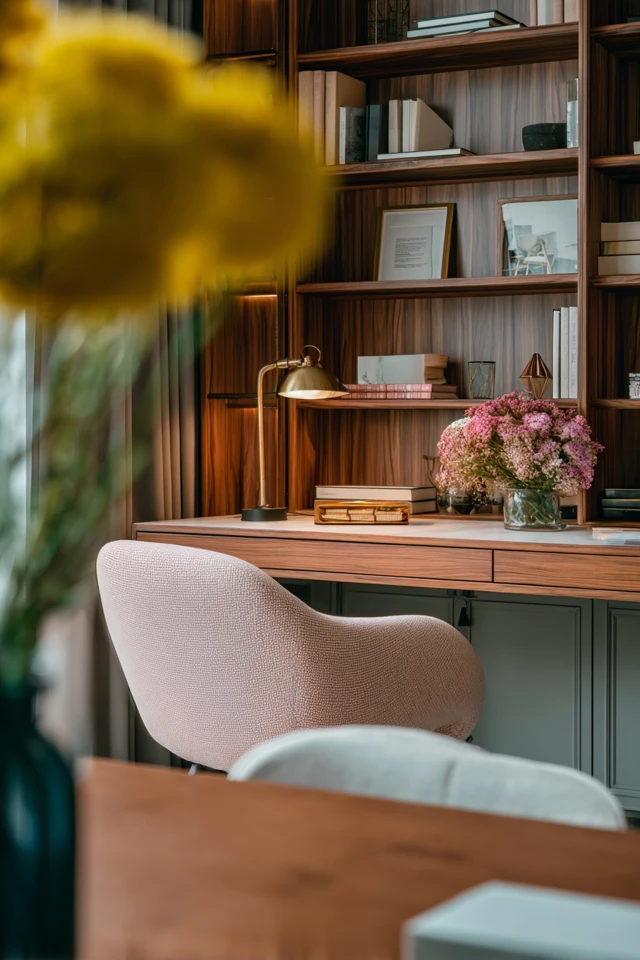
Which style ideas work in a basement or garage?
Minimalist
A plain desk, one shelf wall and a limited palette keep a low-ceilinged room from feeling crowded. Light neutrals with a warm undertone work well.
Industrial
Exposed concrete, black metal and wood suit a garage especially well, since you are working with what is already there. Add a rug and fabric so it doesn't sound like a warehouse.
Nature-inspired
Sage or muted green on one wall, wood shelving and a few plants soften a space without windows. See also our basement bedroom ideas for more ways to handle low light below ground.
Multipurpose
If the room also serves as a guest space or gym corner, choose a fold-down desk or a cabinet that closes over your work. Modular furniture lets you reset the room in minutes.

Can you turn a garage into an office?
Yes, and a home office in a garage is common. The work is mostly practical: insulate the walls and the door, deal with the slab (a moisture barrier and a floor covering), add heating or cooling, and put in enough outlets and lighting.
Garage office ideas often start with replacing the vehicle door with an insulated wall and a window, which brings in daylight and makes the room feel like part of the house.
Do you need permission to convert a garage?
It depends on where you live. Many places treat a garage conversion as a change of use and ask for a building permit, and some neighborhoods or HOAs add their own rules, such as parking requirements. Call your local building department before you start, and use a licensed electrician for new circuits. Rules vary too much for a general answer to be safe.
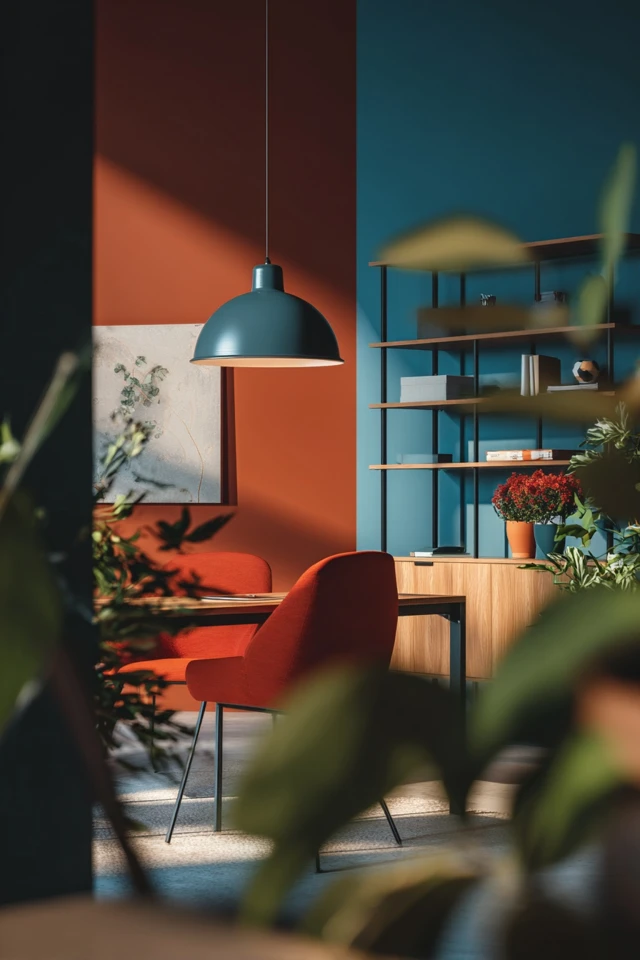
If you want more room-by-room inspiration, the home office designs and gray office posts show finishes and palettes that translate well to either space.
Frequently asked questions
Is basement good for offices?
Usually, yes. Basements are quiet and private, but you need to confirm the space is dry and add good lighting because daylight is limited.
Can you have an office in your garage?
Yes. Insulating the walls and door, treating the slab and adding heating, cooling and lighting makes a garage comfortable year-round.
Do I need permission to convert my garage into an office?
Often you do, since many areas require a building permit for a conversion and some HOAs have their own rules. Ask your local building department before work begins.
How can I make a small garage or basement office feel larger?
Use light matte walls, a compact desk and vertical storage so the floor stays open. Layered lighting also keeps corners from feeling dark.
Filed under
ArticlesMeet the author
Written by an architect.
Julio Arco is a passionate architect with years of experience in architecture, interior design, urban design, and housing. He studied at prestigious universities across North America and Europe.

- Name
- Julio Arco
- Job
- Architect and online interior designer
- Studied
- Architecture, ITESM · Urban Design and Housing, McGill
- Partner
- Thor, Australian Shepherd
- Thor’s title
- Head of quality control