Bedroom Accent Wall Colors: Grey, Blue, Green and More
Pick bedroom accent wall colors that suit your light and layout. Grey, soft blue, deep green and warm neutrals, plus which wall to paint and finish tips.

By Julio Arco
Architect and online interior designer
In this post
- What is the rule for accent walls?
- Should an accent wall be lighter or darker?
- Which bedroom accent wall colors work best?
- How do you choose between warm and cool tones?
- Which finish and texture suit an accent wall?
- How do you make it work in a small or odd-shaped room?
- How to test your color before painting
- Frequently asked questions
The best color for a bedroom accent wall is one that suits your light and the mood you want at night. Grey is the safest pick and works in almost any room. Soft blues and muted greens are the most soothing, and deep charcoal or navy gives a cozy, dramatic backdrop.
Paint the wall behind the bed, keep it a few shades deeper than the other walls, and test the color in your own light before you commit. The rest of this post explains how.
What is the rule for accent walls?
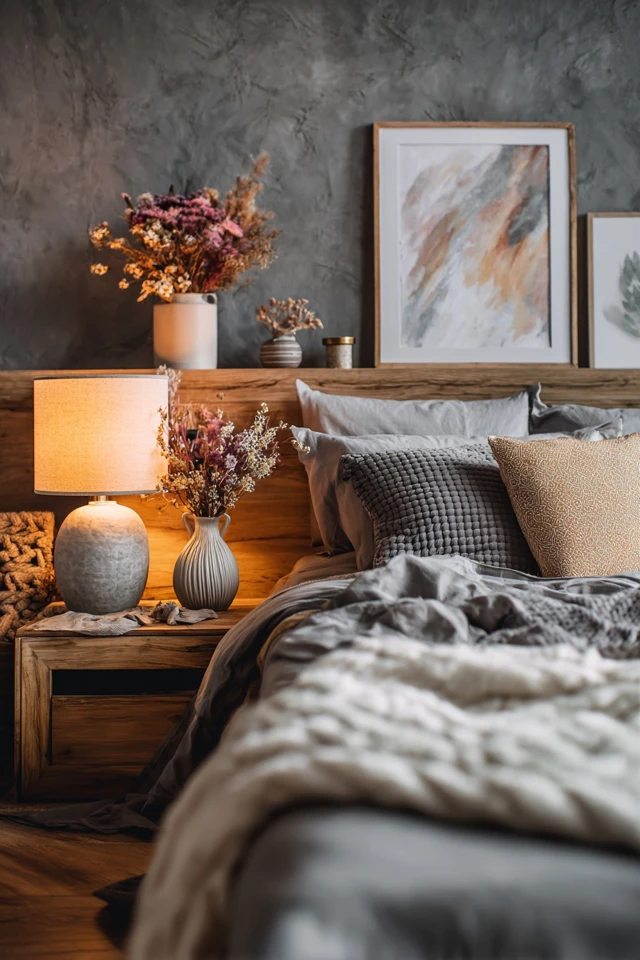
There is no strict code, but a reliable rule is one accent wall per room, chosen because it is the natural focal point. In a bedroom, that is almost always the wall behind the headboard, since it is the one you face when you walk in and the one with no door or window competing for attention.
Pick a wall without much interruption. A wall full of doors, vents and switches looks patchy once painted. If the room has two windows on one wall, that wall is a poor candidate unless you want the color to frame the windows. The solid wall opposite or beside them usually works better.
Should an accent wall be lighter or darker?
Darker is the usual choice, because depth pulls the eye and makes the wall recede slightly, which gives the room a focal point. Aim for two to four shades deeper than the surrounding walls, in the same undertone family, so it looks planned.
A lighter accent wall works in a small or dim room where a dark color would feel heavy. In that case, use a soft tint and add contrast through bedding and art. As an architect, I'd go darker in a large, bright room and lighter in a small, north-facing one.
Which bedroom accent wall colors work best?
Grey, from dove to charcoal
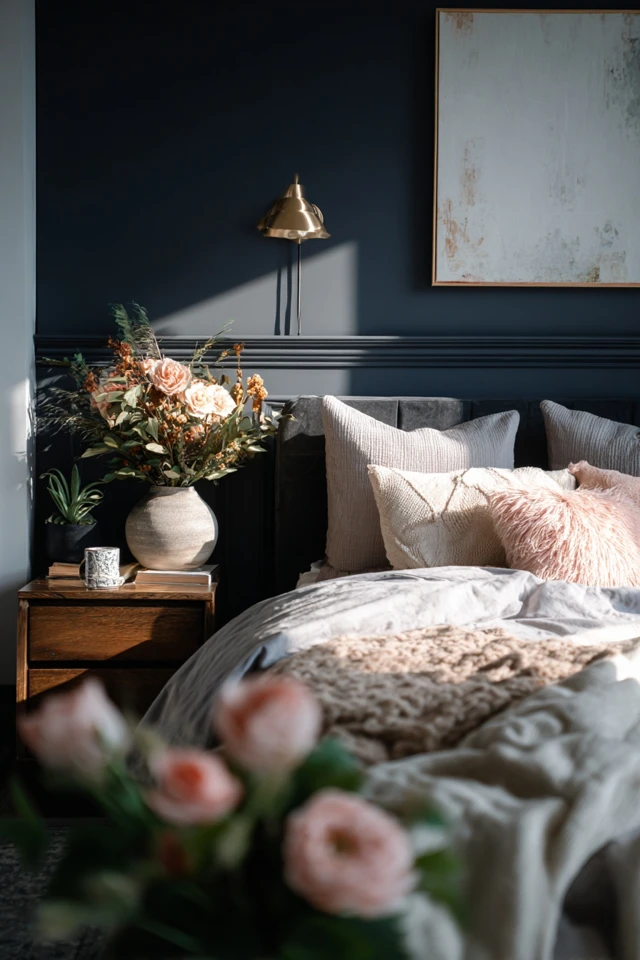
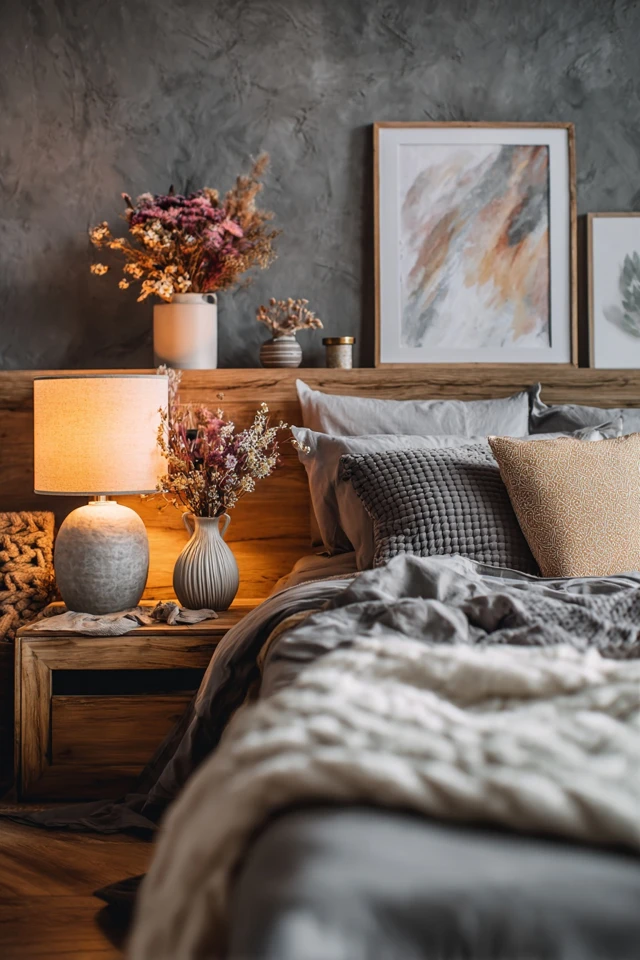
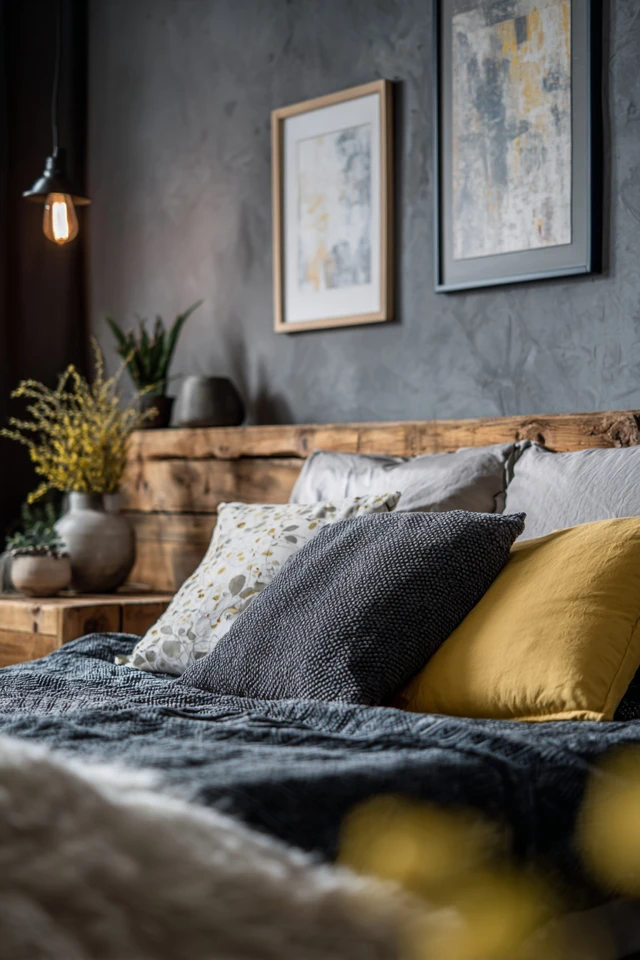
Grey is flexible, but it is not one color. Cooler greys with blue or green undertones feel crisp. Warmer greys with beige or taupe read as cozy. A mid-grey is calm and easy to live with, while a deep charcoal is dramatic and grounding. Among dark neutral accent wall paint colors, charcoal is the easiest to pair with wood, brass and white bedding.
Soft blues and other calming shades
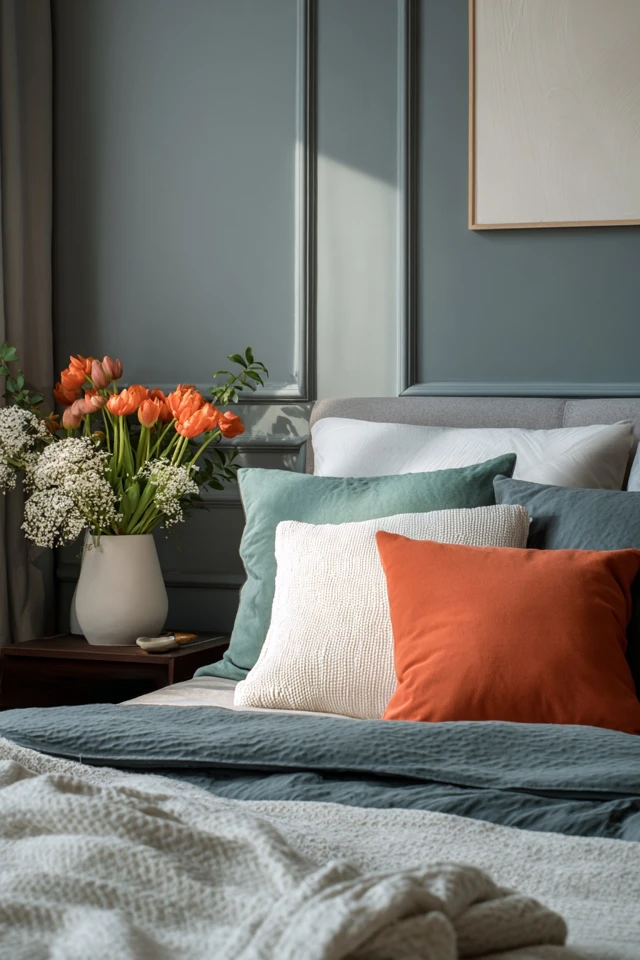
Blue is the classic answer for soothing wall colors for bedroom use. One study by Isabella S Bower at Deakin University found that, "The findings show that blue coloring of the built environment increases autonomic range and is associated with modulations of brain activity linked to emotional processing." That is evidence blue affects us, not proof it puts everyone to sleep, so choose a hue you personally find restful. Muted, greyed blues tend to feel quieter than bright ones.
Deep greens and earthy tones
Sage, olive and forest green bring a natural feel and pair well with warm wood and plants. They suit rooms with decent daylight. In a very dim room, a deep green can turn muddy, so sample it first.
Warm whites and brown neutrals
If you want an accent wall that barely shouts, try a warm greige, mushroom or soft brown against lighter walls. This also answers a common question: dark brown bedroom furniture looks best against walls that are lighter or warmer than the wood, such as warm grey, cream or soft sage, so the furniture does not disappear.
How do you choose between warm and cool tones?
Look at your light. North-facing rooms get cooler, steadier light, so a warmer grey or greige keeps them from feeling chilly. South- and west-facing rooms get warmer light and handle cooler greys and blues well.
Lighting also changes color after dark. Warm bulbs make greys look softer and a bit browner, while cool white LEDs push them toward blue. Use warm bulbs in the bedroom if you want the paint to look the way it did in the store.
Which finish and texture suit an accent wall?
Matte paint absorbs light and hides small wall flaws, which suits a restful bedroom. Eggshell is a little easier to wipe, which helps near a headboard or where a dog likes to lean on the wall. If you add trim or paneling, the New York Institute of Art and Design notes that doors and moldings should be painted in a glossier finish than the walls, which makes them durable and easy to clean.
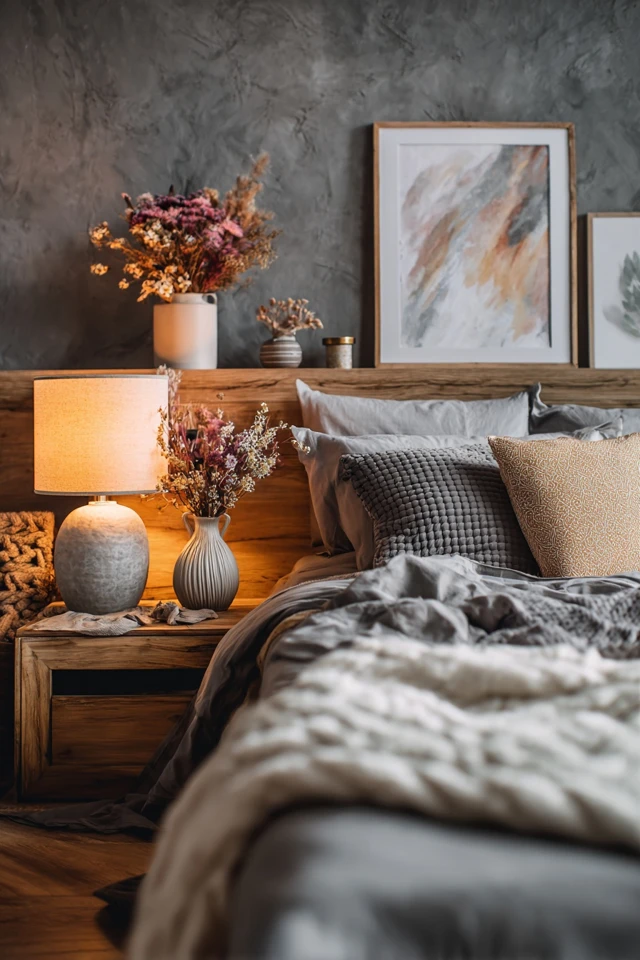
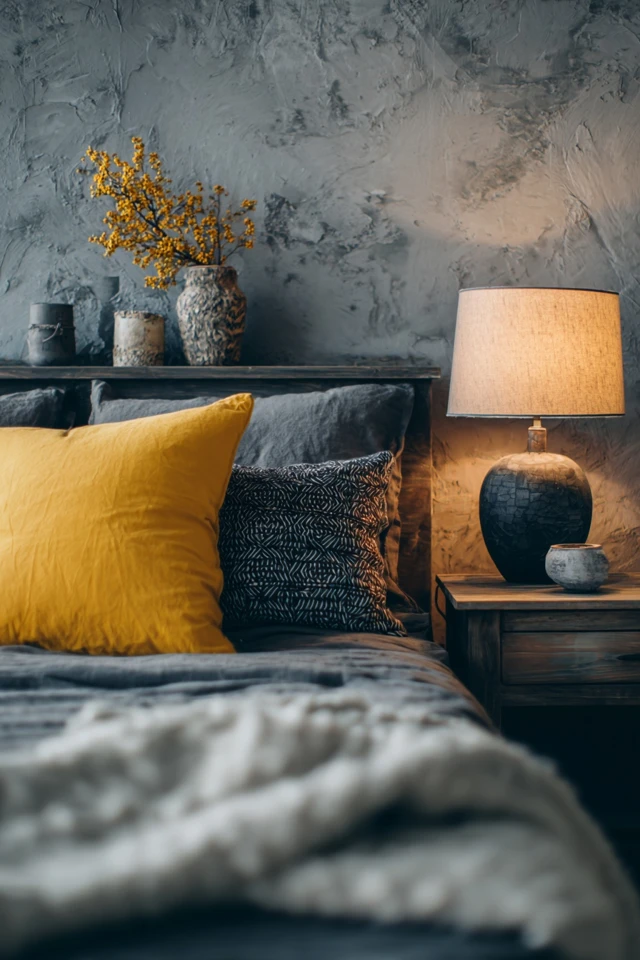
For texture, limewash or troweled plaster gives uneven, soft color that looks calm without extra decor. Board-and-batten or simple molding painted the same color adds shadow lines. If you like that idea, see our posts on wall trim and molding and shiplap accent walls.
How do you make it work in a small or odd-shaped room?
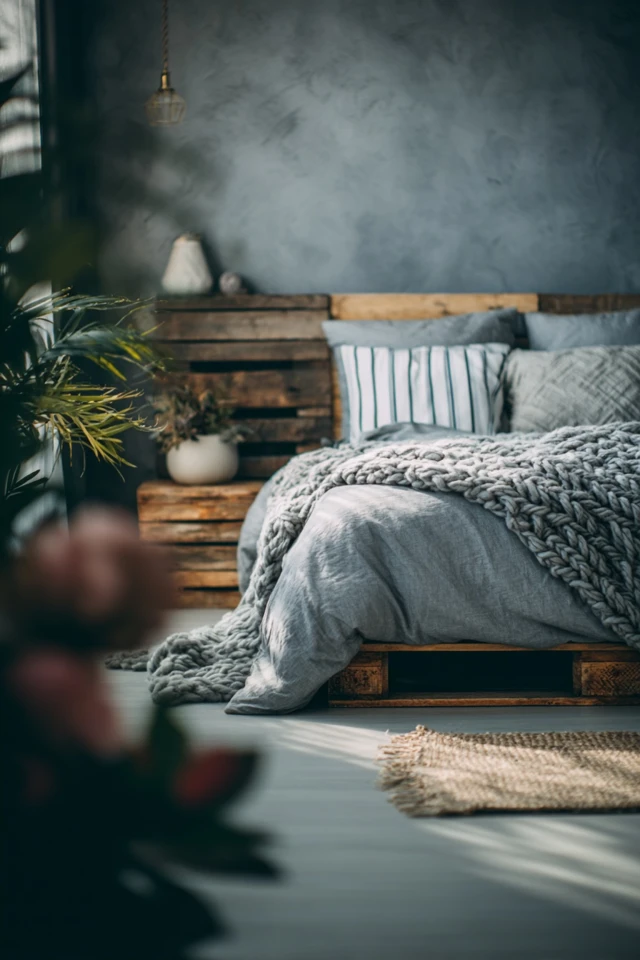
In a small room, choose a lighter grey or a soft blue-grey and keep furniture low. A mirror or pale bedding bounces light back. In an attic or sloped room, color on the main wall does the work, and you can see more ideas in our attic bedroom paint ideas. Basement rooms with little daylight do better with warm tones, covered in basement bedroom ideas.
With two windows on the accent wall, I recommend a color a shade or two deeper than the other walls and white or pale trim, so the windows read as framed openings rather than holes in a dark slab.
How to test your color before painting
- Paint a sample about 2 feet square, or use a large peel-and-stick sample, on the actual wall.
- Check it in morning, afternoon and evening light, and under your bedroom lamps.
- Hold your bedding, curtains and wood furniture next to it.
- Live with it for a few days before buying gallons.
Choose low-VOC paint if the room is closed up at night, and open a window while it dries. If pets sleep in the room, keep them out until the smell fades, and check with your vet if one seems bothered.
Wallpaper is a fair alternative if you want pattern. Peel-and-stick grey papers suit renters, but test a sample first, since scale looks different on a full wall.
Frequently asked questions
What is the best color for a bedroom accent wall?
Grey, soft blue and muted green are the most reliable. Choose the one that matches your light: warmer tones for north-facing rooms, cooler ones for sunny rooms.
What is the rule for accent walls?
Paint one wall, usually the one behind the bed, a few shades deeper than the rest. Choose a wall with few doors or windows so the color reads as a focal point.
Can I use dark colors in a small bedroom?
Yes, on one wall. Deep charcoal or navy can make a small room feel cozy, but only if it has decent light and the other walls stay pale.
Filed under
ArticlesMeet the author
Written by an architect.
Julio Arco is a passionate architect with years of experience in architecture, interior design, urban design, and housing. He studied at prestigious universities across North America and Europe.

- Name
- Julio Arco
- Job
- Architect and online interior designer
- Studied
- Architecture, ITESM · Urban Design and Housing, McGill
- Partner
- Thor, Australian Shepherd
- Thor’s title
- Head of quality control