Small Home Theater Ideas: Seating, Screen and Sound

By Julio Arco
Architect and online interior designer
In this post
- What is the best home theater setup for a small room?
- How to choose seating for a small theater room layout
- How far should you sit from the screen?
- Dark colors, blackout and lighting
- Sound and acoustics in a small room
- Small home theater ideas on a budget
- DIY ideas for tight spaces
- How to set up a mini theater at home
- Frequently asked questions
The best small home theater ideas start with seating, not gadgets. Pick compact seats that fit the room's depth, place them at the right distance from the screen, darken the walls and windows, and add soft surfaces to calm echo. Everything else is a bonus.
If your room is a spare bedroom, a basement corner or a section of the living room, don't worry. Small rooms often make better theaters than big ones: they're easier to darken, easier to fill with sound, and cozier by default.
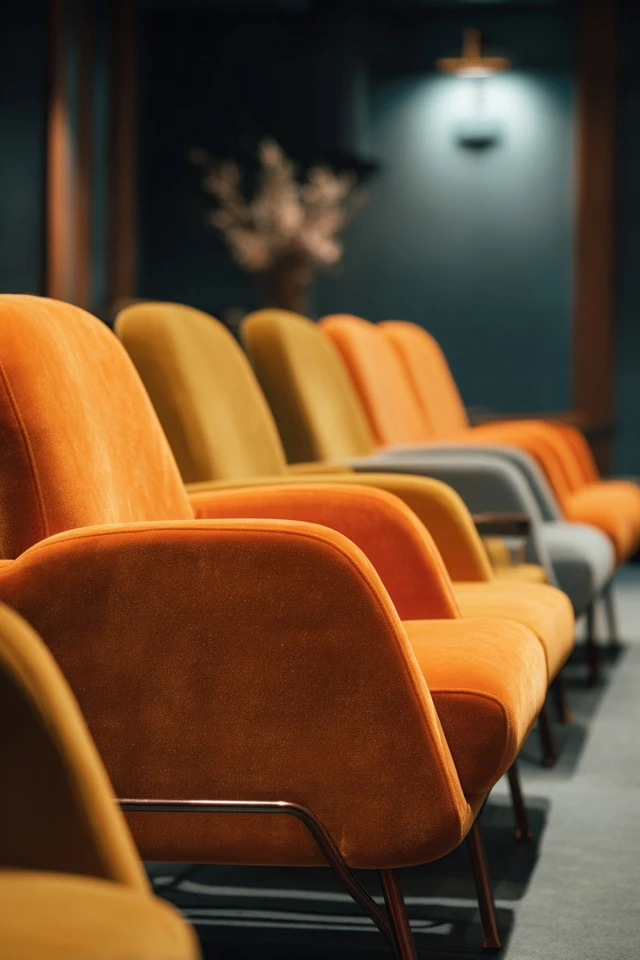
What is the best home theater setup for a small room?
The best home theater setup for a small room has one screen on the shortest wall or the most blank wall, one row of seats facing it, and sound that reaches the seats without bouncing off bare walls. Start by measuring the room and drawing it on paper, then mark the door swing, windows and walking paths.
Keep about 30-36 inches for a main walkway, and a little less (18-24 inches) for secondary paths beside or behind seats. If the room can't spare that, choose a single row and push the seats closer to the back wall.
How to choose seating for a small theater room layout
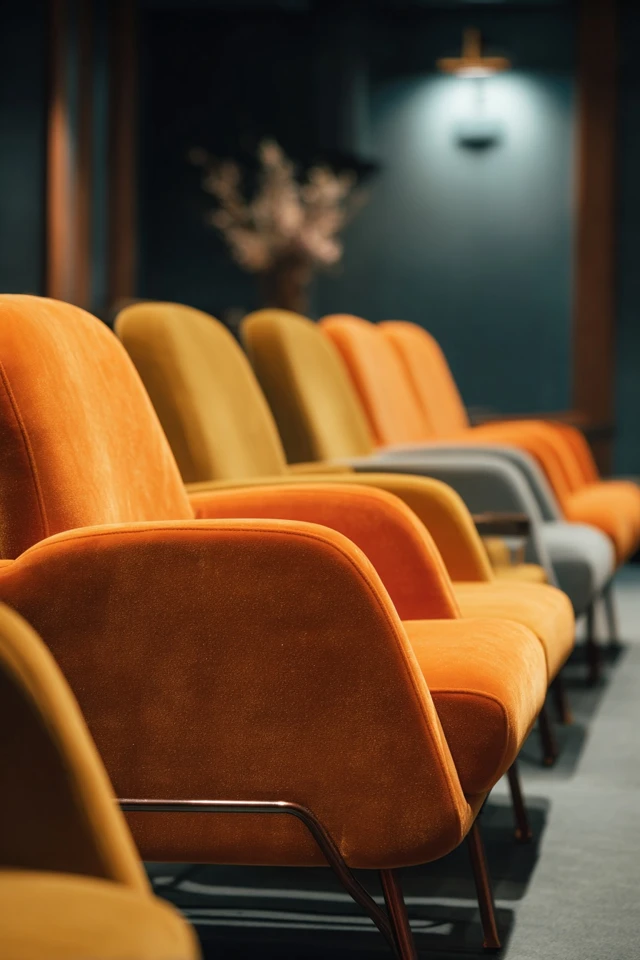
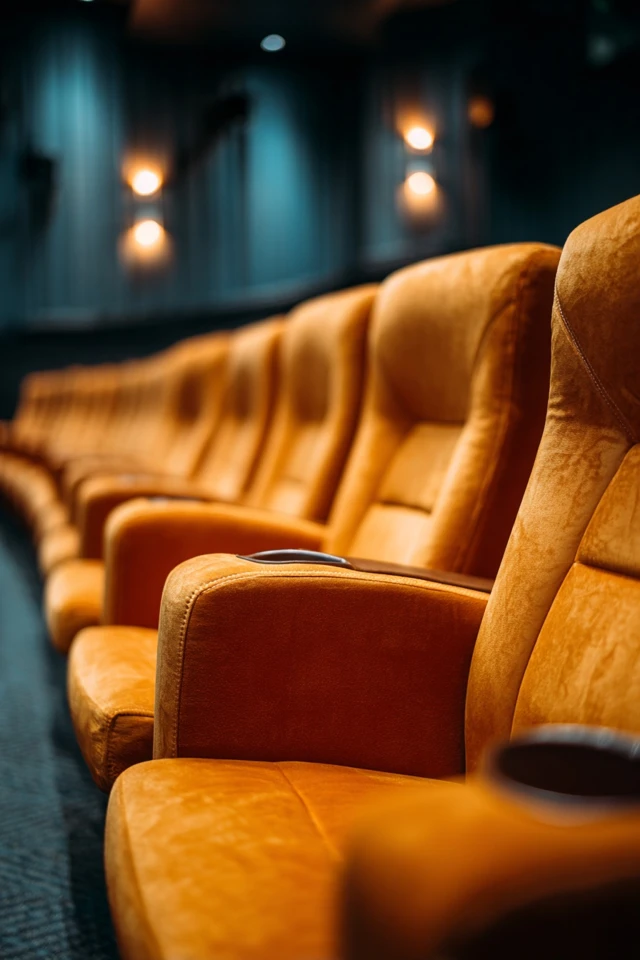
Scale matters more than style. An oversized sofa blocks sightlines and swallows the floor, while tiny chairs look lost. These layouts work in tight rooms:
- A compact loveseat, which suits two people and leaves space at the sides.
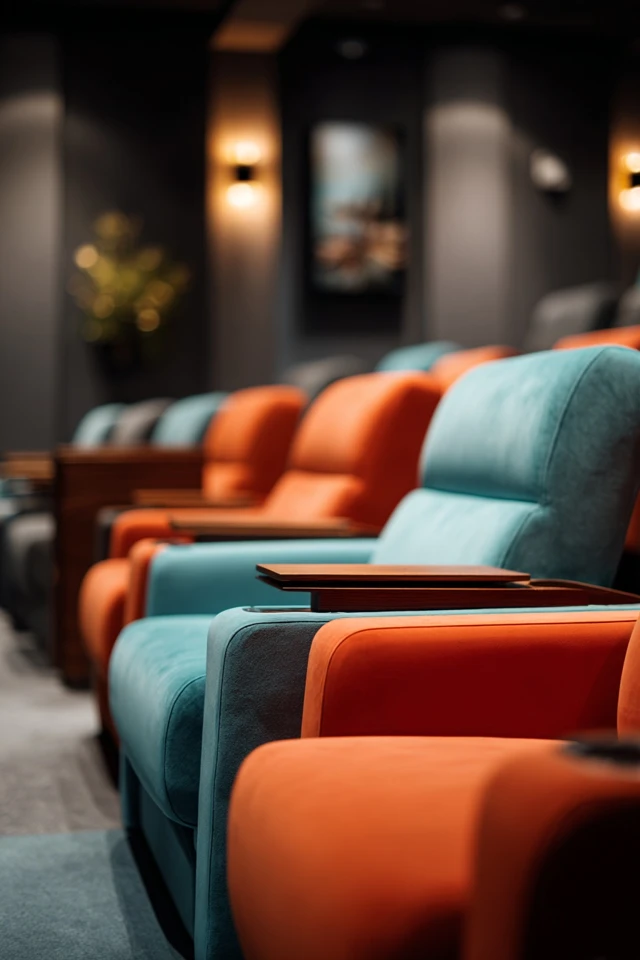
- Two apartment-size recliners with a slim table between them. Check how far they extend when reclined before you buy.
- A small modular sofa you can rearrange for movie night or guests.
- A loveseat plus one swivel chair, if the room also needs to work for conversation.
Two rows only work when the room is deep enough. If you try it, put the back row on a low riser so heads don't block the screen. Use painter's tape on the floor to mark each seat's footprint and sit in the taped outline before buying anything.
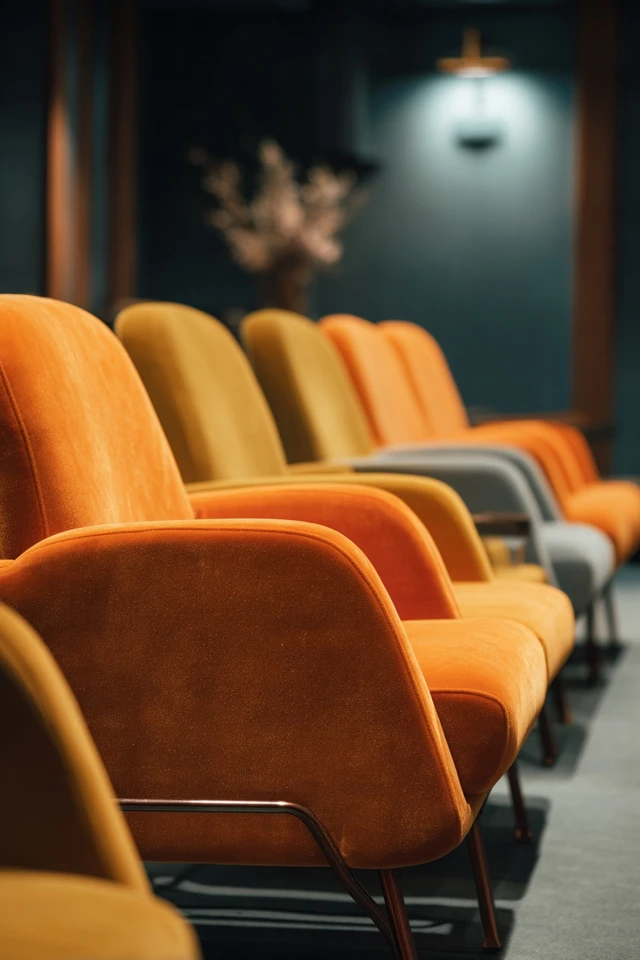
If a dog or cat shares the couch, I recommend tight-weave performance fabric or leather-look upholstery with removable, washable covers. Velvet and microfiber feel soft and absorb some sound, but check that the weave doesn't catch claws.
How far should you sit from the screen?
A common rule for TVs is to sit about 1.5 to 2.5 times the screen's diagonal away, and a little closer works well for a more immersive feel. In a small room, that often means picking the screen size to suit the distance, not the other way around. Center the main seat on the screen to avoid neck strain, and keep the screen at roughly eye level when you're seated.
If you use a projector, measure the throw distance in the manual first. Short-throw models fit small rooms better, but a plain painted wall or a basic fabric screen can do the job on a tight budget.
Dark colors, blackout and lighting
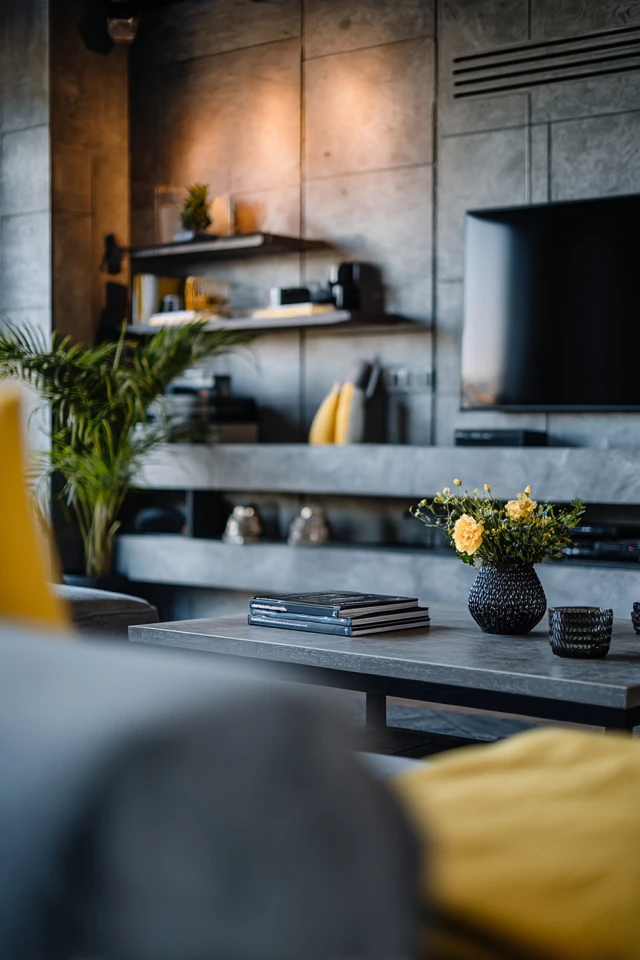
Light bounces. Glossy, pale walls throw reflections onto the screen, while matte, darker finishes absorb them. A deep slate, charcoal, navy or olive on the screen wall and side walls cuts glare and makes the picture look richer. A lighter ceiling keeps the room from feeling like a cave.
Cover windows with blackout curtains or roller shades, and let the curtain extend past the frame so light doesn't leak at the edges. Then layer the lighting: a dimmable lamp, a wall sconce, and a low LED strip behind the TV or along the floor so you can walk safely when the movie starts.
LEDs suit this job. The U.S. Department of Energy says good-quality white LED lighting products are expected to have a useful life of 30,000 to 50,000 hours or even longer, so a strip behind the screen is not something you'll replace often. Choose a warm color temperature for evening viewing; the Department of Energy explains that correlated color temperature (CCT) is one of the primary metrics used to characterize the visual appearance of light, and it's printed on most bulb and strip packaging.
Sound and acoustics in a small room
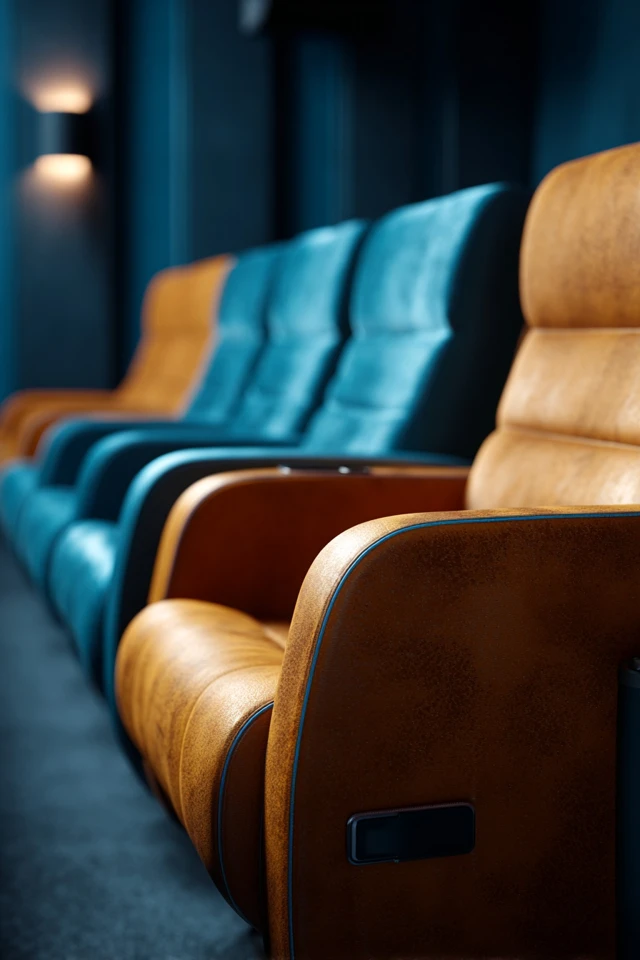
Small rooms bounce sound quickly, so softness helps. A rug, curtains, upholstered seats and a bookcase full of books all reduce echo. If you want more, fabric-wrapped acoustic panels on the walls beside and behind the main seat tame the first reflections.
Place speakers so the front ones sit near ear height when you're seated, and keep them away from corners if bass sounds boomy. A soundbar is a perfectly good choice for a small room; a 5.1 setup is worth it only if you can place rear speakers without wires crossing a walkway. Wood surfaces, such as a console or shelving, break up reflections better than a bare flat wall.
Small home theater ideas on a budget
If you're wondering how to make a cheap home theater, spend first on what you notice most: darkness, seat comfort and sound. Then add the finishing touches.
- Paint the screen wall a matte dark color. It costs far less than any gear.
- Hang blackout curtains or add liner panels to the curtains you own.
- Use a projector and a painted wall or a simple screen instead of a large TV.
- Add a soundbar before a full surround system.
- Put an ottoman with storage next to the seats for blankets and remotes.
- Use secondhand recliners or a loveseat and add washable slipcovers.
DIY ideas for tight spaces
Mock up the layout with tape before moving furniture. Build a shallow riser from a low platform if you want a second row. Frame fabric over insulation board to make your own acoustic panels. Hide cables in a cord cover along the baseboard. A slim console behind the seats can hold snacks and double as a divider if the theater shares an open room. If any of this involves new wiring or structural changes, hire a licensed professional.
How to set up a mini theater at home
- Choose the wall that will hold the screen and check where the outlets are.
- Measure and mark the seat positions on the floor.
- Darken the room with paint and blackout curtains.
- Mount or place the screen at eye level from the main seat.
- Place speakers and test the sound from every seat.
- Add dimmable lights and a small table for drinks.
Light also affects how you feel after the credits. The U.S. Department of Energy notes that "Light plays a key role in setting and regulating the body's biological clock." For late-night viewing, keep the lamps warm and low, and turn them off once everyone leaves.
For more ideas on compact media spaces, see our small TV room ideas, and if the theater shares a space with a desk, these home office designs show how to zone a room.
Frequently asked questions
What is the best small home theatre system?
For most small rooms, a good soundbar with a subwoofer and a TV or short-throw projector is enough. Move to separate surround speakers only if you can place them without crossing walkways.
How to make a cheap home theater?
Spend on darkness, comfortable seats and sound first. A matte dark paint color, blackout curtains, secondhand seating and a soundbar get you most of the way.
What paint colors work best for a small home theater?
Matte, low-sheen dark or muted colors such as slate, charcoal, navy or olive reduce reflections on the screen. A lighter ceiling helps keep the room from feeling heavy.
Is leather or fabric better for small home theater seating?
Both work. Leather is easy to wipe clean but can feel cool, while tight-weave fabric is warmer and softer for sound. With pets, choose a tight weave or washable covers.
Filed under
ArticlesMeet the author
Written by an architect.
Julio Arco is a passionate architect with years of experience in architecture, interior design, urban design, and housing. He studied at prestigious universities across North America and Europe.

- Name
- Julio Arco
- Job
- Architect and online interior designer
- Studied
- Architecture, ITESM · Urban Design and Housing, McGill
- Partner
- Thor, Australian Shepherd
- Thor’s title
- Head of quality control