TV Room Decor Ideas for Small, Modern Spaces

By Julio Arco
Architect and online interior designer
In this post
- How do you decorate a TV wall in a small room?
- What are the best modern TV room decor ideas?
- How should you style a TV stand or unit?
- Which lighting works behind and around the TV?
- What colors and materials suit a small TV room?
- How much space do you need for layout and viewing?
- What finishing touches are worth adding?
- Frequently asked questions
The best TV room decor ideas for a small space do three things: they keep the TV wall visually quiet, they add warmth with texture and soft light, and they leave a clear path around the furniture. Start with those and the room feels bigger and calmer, even before you buy anything.
Below are the ideas I'd try first, in roughly the order I'd do them, with the measurements that keep a small room comfortable.
How do you decorate a TV wall in a small room?
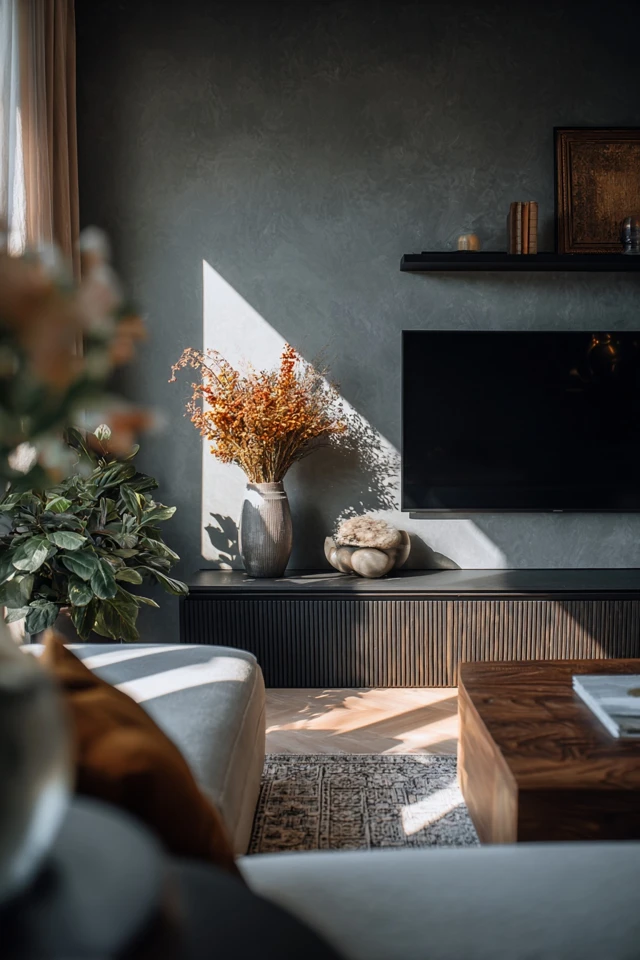
Treat the TV as one element in a composition, not the whole wall. A black rectangle is the heaviest thing in the room, so give it something to sit with: a shelf below, a paint color behind it, or a single piece of art beside it.
If you're wondering how to decorate a TV wall without crowding it, choose one of these approaches and stop there:
- Paint the wall a soft, slightly darker tone than the others so the screen blends in when it's off.
- Add wood slats or paneling behind the screen for warmth and a little sound absorption.
- Mount the TV and put a floating shelf underneath for a console's worth of storage without the floor footprint.
- Hang one or two framed pieces off to the side, not around all four edges.
As an architect, I'd pick one texture and one color change for the wall. Three finishes on a small wall reads as clutter.
What are the best modern TV room decor ideas?
Modern TV rooms lean on clean lines, hidden storage and integrated lighting. Flat-front cabinets with push-latch doors hide cables and game controllers. A matte finish cuts glare and looks calmer than gloss next to a screen.
A built-in with a mix of closed cabinets and a few open shelves works well, because the closed part holds the mess and the open part holds the nice things. If a full built-in is out of budget or you rent, a low wall-mounted cabinet gives a similar look.
How should you style a TV stand or unit?
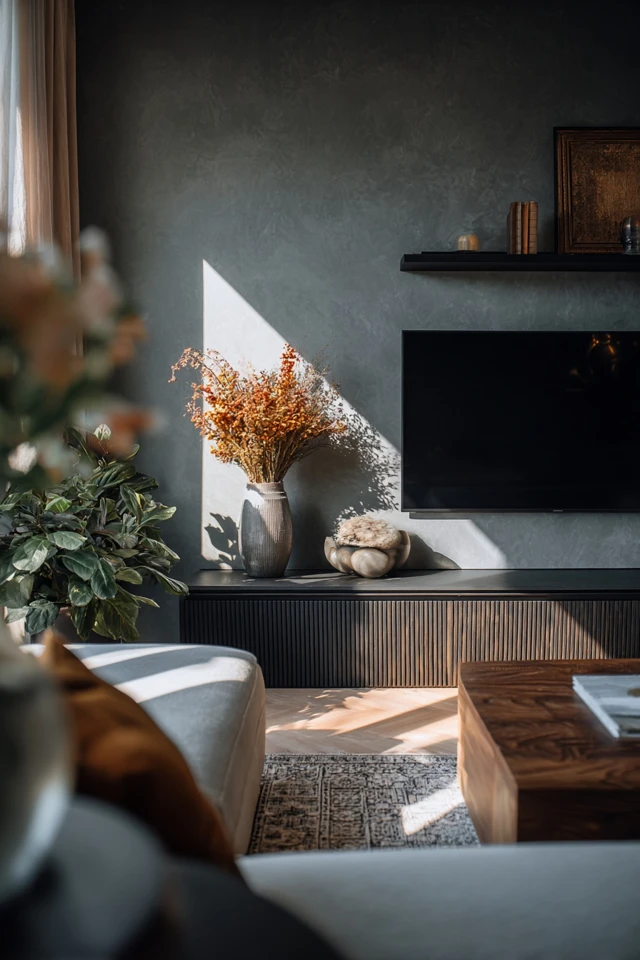
For living room TV stand decor and TV unit decoration ideas, think in small groups. Place a lamp or plant at one end, a stack of books and a bowl or tray in the middle, and leave some bare surface. Keep objects lower than the bottom edge of the screen so nothing cuts across the picture.
Pick a stand that matches the room's scale. In a small room, a low, narrow unit on legs lets you see floor underneath, and that visible floor makes the room feel larger. If you have a dog or cat, choose closed doors for anything breakable and avoid tall, top-heavy decor on a stand a pet can bump.
Which lighting works behind and around the TV?
Soft backlighting behind the screen reduces the contrast between a bright picture and a dark wall, which is easier on the eyes in a dim room. Avoid a bright overhead light shining at the screen, since it creates glare. Use dimmable lamps beside the seating instead.
LED strips are the easy way to do this. According to the U.S. Department of Energy's LED basics page, good-quality white LED products are expected to last 30,000 to 50,000 hours or longer, so a strip behind the TV is a long-term fixture, not a yearly replacement.
Color temperature matters too. The Department of Energy notes that correlated color temperature is one of the primary metrics used to describe the look of light. In practice, choose a warm white for an evening TV room and keep every bulb in the room in the same range so the light looks consistent.
Evening light also affects sleep. The U.S. Department of Energy says, "Light plays a key role in setting and regulating the body's biological clock." If you watch late, dim the room and keep the lighting warm.
What colors and materials suit a small TV room?
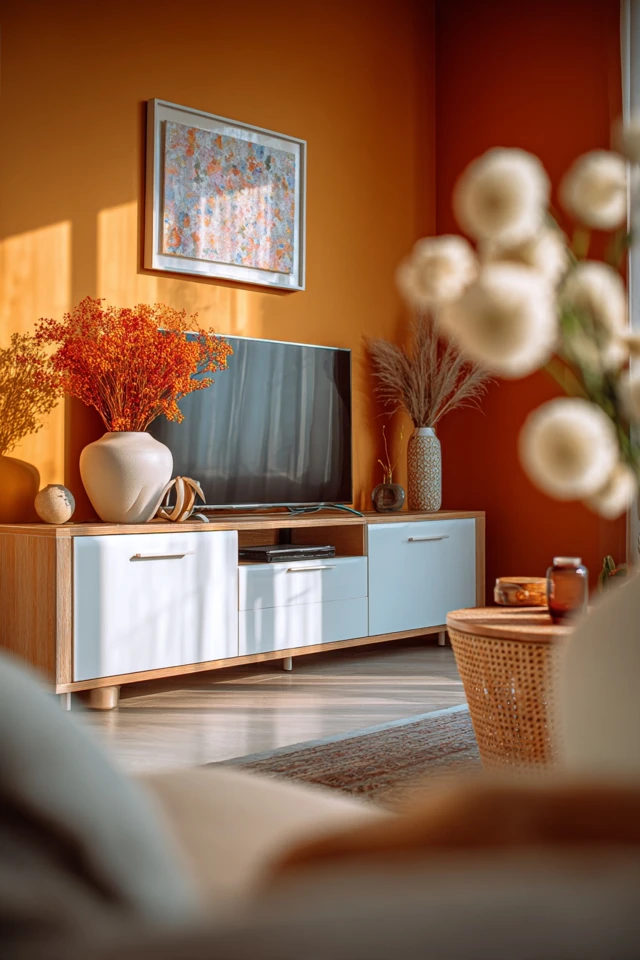
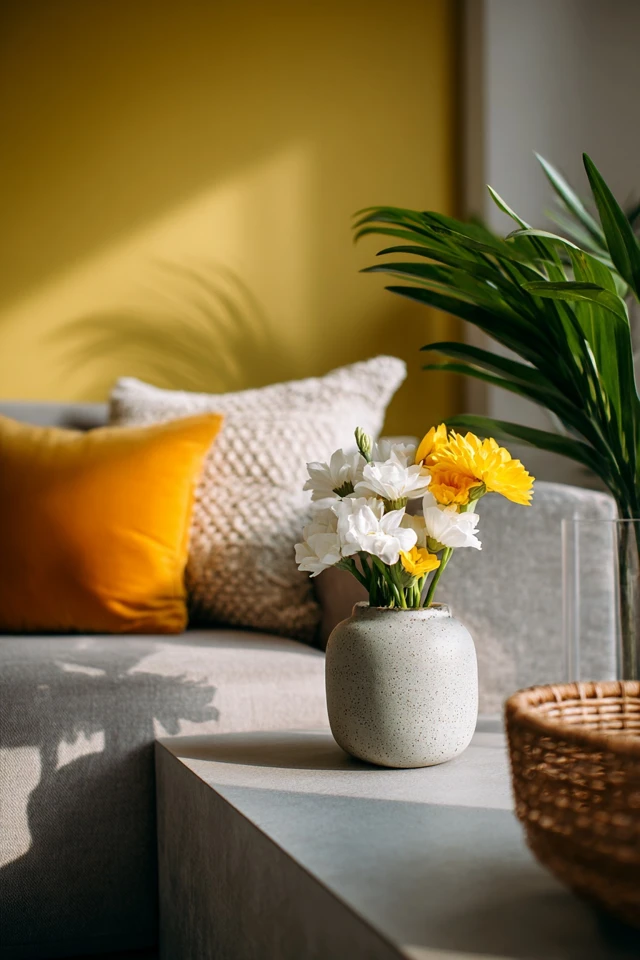
Light, desaturated walls (warm white, greige, muted green) make a small room feel larger. Dark, saturated colors can work in a room that's mainly used at night, because the walls recede and the screen takes over. Test a paint sample about 2 by 2 feet on the wall and look at it in morning, afternoon and evening light before committing.
Texture does the rest. Wood on the media unit, a wool or tightly woven rug, and lined curtains all absorb sound, which helps in a room where dialogue matters. For sofas, choose tightly woven or performance fabrics and washable covers if pets are allowed on the furniture.
How much space do you need for layout and viewing?
Leave about 30-36 inches for the main walkway and keep seating from blocking the door. Mount the TV so the center of the screen sits near eye level when you're seated, which is usually around 40-48 inches from the floor. Tilting a TV that's mounted too high strains the neck, so lower it if you can.
In an open plan, a rug under the seating and a low console behind the sofa define the TV area without walls. Small rooms benefit from a loveseat or small sectional and a storage ottoman, because one piece can serve as a footrest, a seat and a place to hide blankets. For bigger setups, see these small home theater seating ideas.
What finishing touches are worth adding?
- One plant, such as a sturdy pot on a shelf or floor. If you share the room with pets, check with your vet that the species is safe before buying.
- A fabric wall panel, bookcase or heavy curtain to reduce echo.
- A few personal objects or framed photos, arranged with space between them.
- Dimmable lamps at two different heights for layered light.
If the room doubles as a play space, the modern game room ideas have storage tricks for consoles and controllers. For a more botanical look, try the tropical living room ideas.
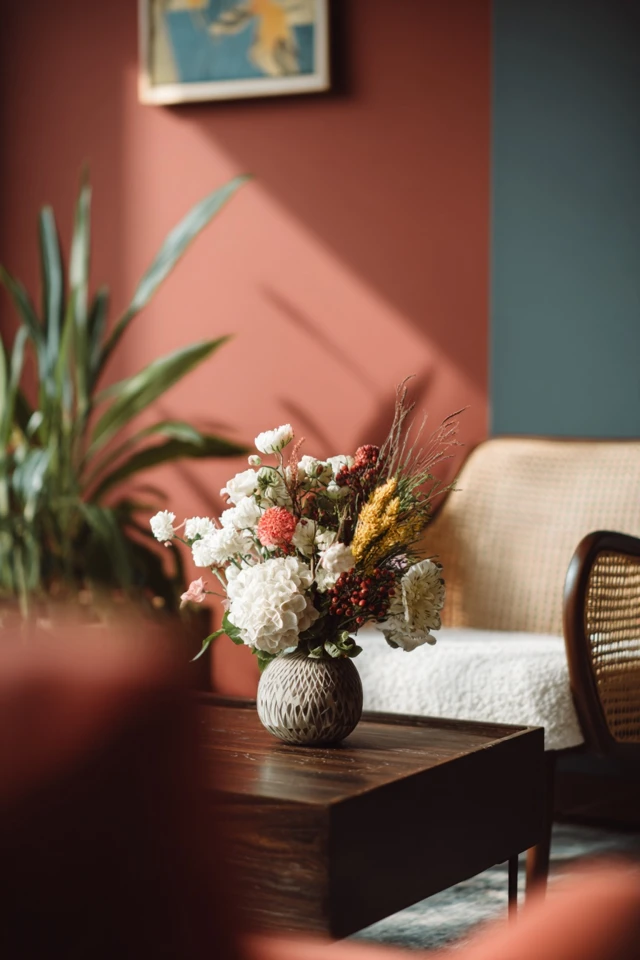
For night viewing, the Illuminating Engineering Society and the International Dark Skies Association describe in their joint Five Principles a sensible approach: "The Five Principles advocate thoughtful deployment of light at night, optical control to direct light only where it is necessary, using the minimum amount of light necessary, use of controls to use light only when necessary, and careful selection of color temperature." At home, that means a few low, warm sources aimed where you need them.
Frequently asked questions
How can I decorate a TV wall?
Pick one treatment, such as a paint color, wood slats or a floating shelf, and add a small amount of art or a plant to the side. Keep the rest of the wall plain so the TV doesn't compete with the decor.
How can I make a small TV room feel larger?
Use light, cohesive wall colors, mount the TV to free floor space and choose low-profile furniture on legs. Keep walkways clear at about 30-36 inches.
What is the 3-5-7 rule in decorating?
It's a styling guideline that groups decor items in odd numbers, such as three, five or seven, because uneven groups tend to look more natural. Use it on a shelf or console, and leave some empty space.
Where should lighting go for TV viewing?
Avoid bright overhead light that reflects on the screen. Use dimmable lamps beside the seating and soft backlighting behind the TV.
Filed under
ArticlesMeet the author
Written by an architect.
Julio Arco is a passionate architect with years of experience in architecture, interior design, urban design, and housing. He studied at prestigious universities across North America and Europe.

- Name
- Julio Arco
- Job
- Architect and online interior designer
- Studied
- Architecture, ITESM · Urban Design and Housing, McGill
- Partner
- Thor, Australian Shepherd
- Thor’s title
- Head of quality control