Bathroom Styles: How to Choose One for a Small Bathroom
Compare popular bathroom styles, from modern to rustic and boho chic, with palettes, materials and tips to choose one that fits a small bathroom.

By Julio Arco
Architect and online interior designer
In this post
The most popular bathroom styles are modern, rustic, transitional, industrial, traditional and boho chic. For a small bathroom, pick the style whose materials and palette you can live with every day, then edit it down: fewer finishes, one dark accent, and as much visible floor and wall as you can keep.
This guide walks through each style, what defines it, and how it behaves in a compact room. It leans on modern rustic, since that's where most small-bathroom questions end up.
How to choose your bathroom style
Start with what the room already has: window position, tile you can't afford to replace, the color of the tub. A style that works with those facts will cost less and look more intentional than one that fights them.
Then ask two practical questions. How much cleaning are you willing to do? And what mood do you want when you walk in: calm and bare, or warm and layered? Matte black and dark grout look sharp, but they show water spots. Natural wood feels warm, but it needs sealing. Decide with upkeep in mind.
Bathrooms are also hard on materials. The EPA notes that bathrooms are by far the largest water users in the home, so whatever style you choose has to tolerate splashes, steam and daily wiping.
Modern and minimalist bathrooms
Modern bathrooms rely on flat planes, simple lines and very few objects. Think frameless glass, a wall-hung vanity, large-format tile with thin grout lines, and a palette of white, gray or soft neutrals.
In a small room this is the easiest style to pull off. Wall-hung toilets and vanities show more floor, and a clear glass shower panel keeps your sightline open. The risk is coldness, so add one warm material such as a wood shelf or a linen towel.
Industrial and classic bathrooms
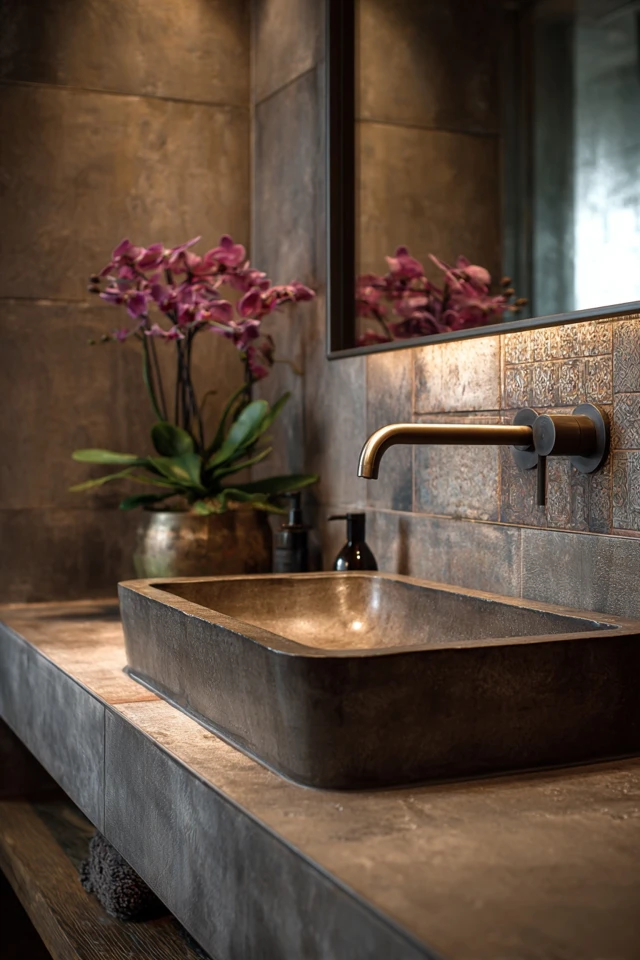
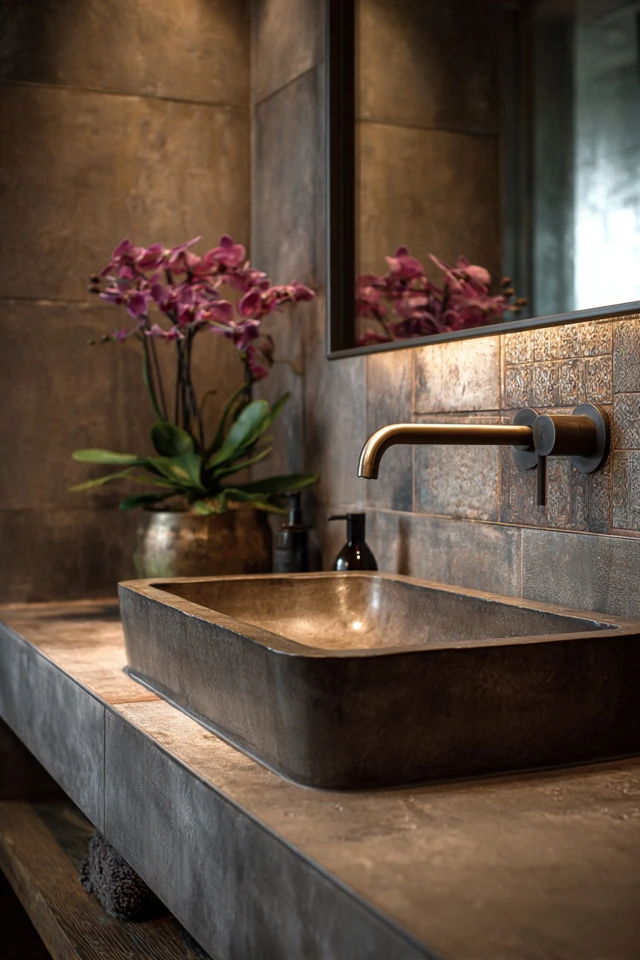
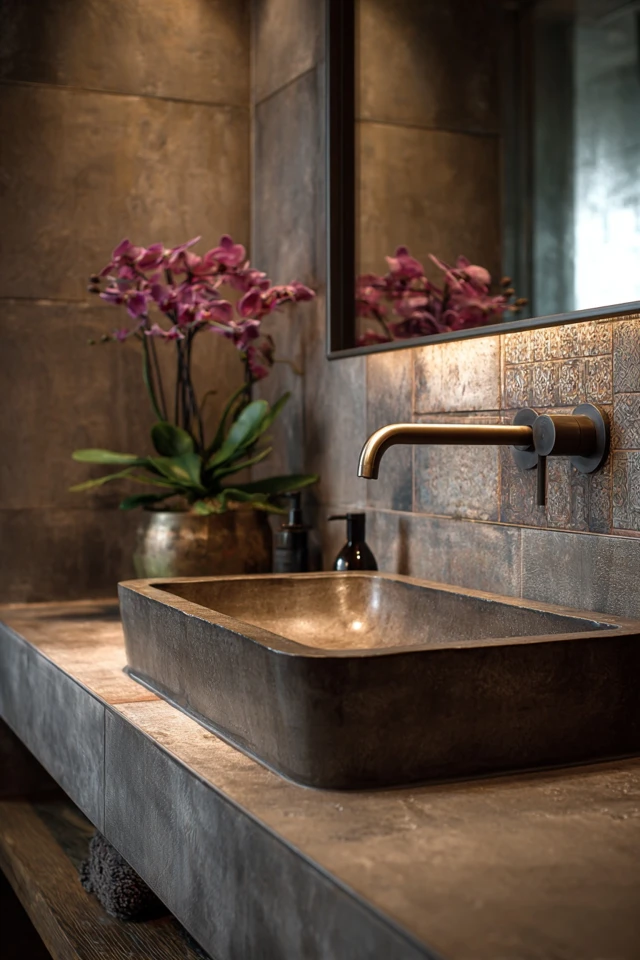
Industrial leans on exposed metal, concrete-look surfaces, black frames and plain bulbs. It reads best with a limited palette of charcoal, white and a little brass or steel. Keep it to one or two strong elements in a small room, such as a black-framed shower screen and a metal shelf, or it turns heavy.
Classic bathrooms use white subway or hex tile, pedestal or furniture-style sinks, and chrome or nickel fixtures. They're forgiving and easy to resell, which makes them a safe pick if you're not sure about a bolder look.
Transitional and traditional bathrooms
Traditional bathrooms favor paneling, detailed trim, framed mirrors and richer colors. Transitional bathroom design takes the same shapes and simplifies them: a shaker-style vanity, a plain framed mirror, neutral walls and one or two metal finishes.
If you and a partner disagree on style, transitional is the usual compromise. It also suits a master bathroom, where there's room for a freestanding tub or a double vanity without the space feeling themed.
Rustic and modern rustic bathrooms
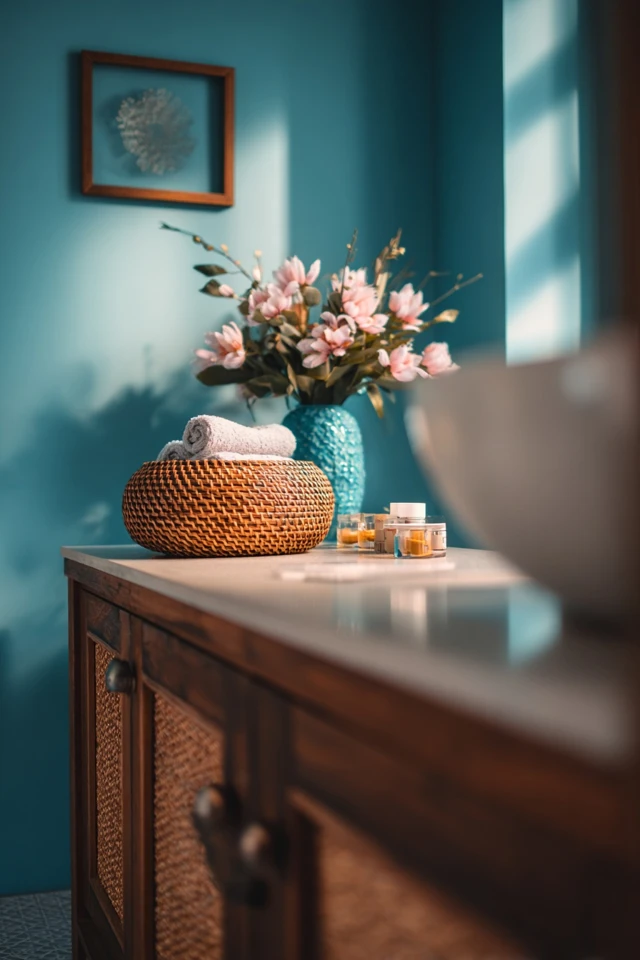
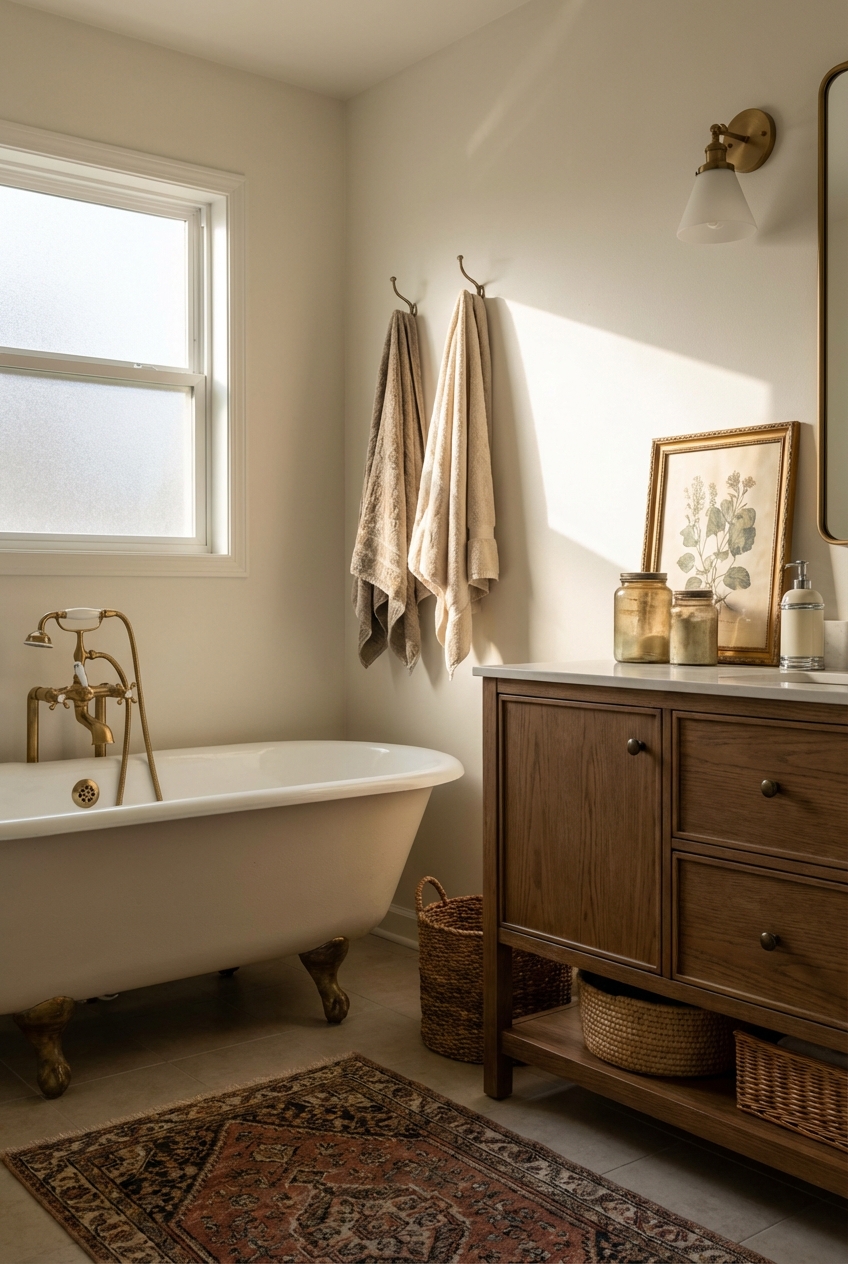
Rustic bathroom ideas center on natural materials: wood, stone, plaster, woven fibers. The modern version keeps those materials but trims the ornament, so you get a clean vanity in warm oak, matte black hardware and plain walls instead of heavy beams and busy accessories.
Palette and materials
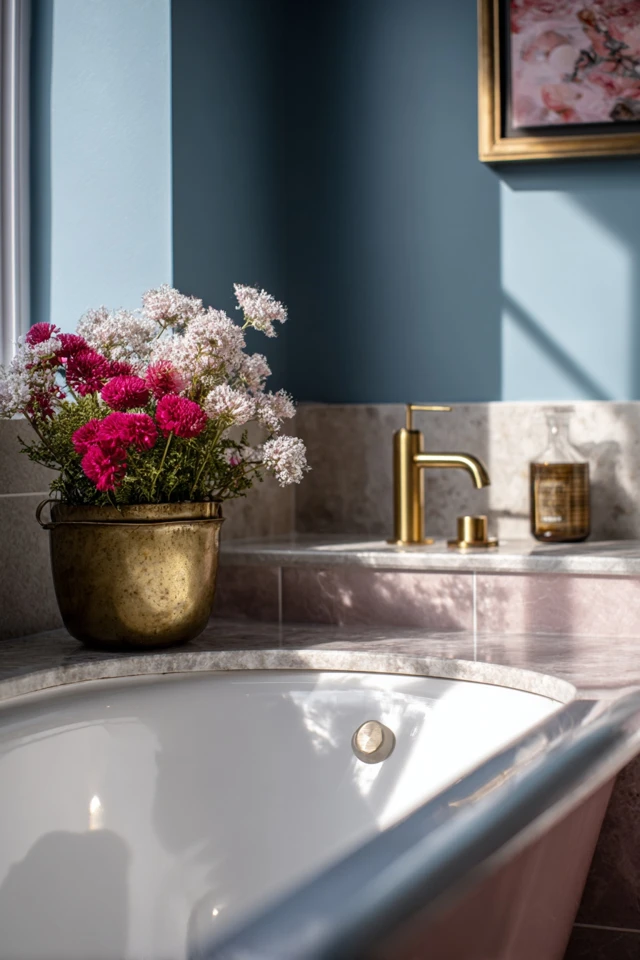
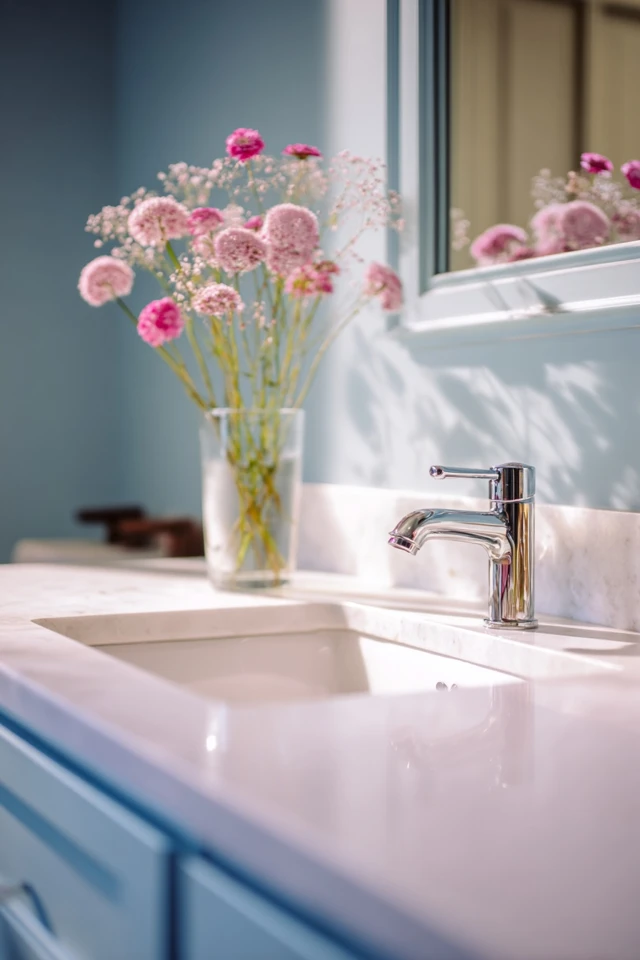
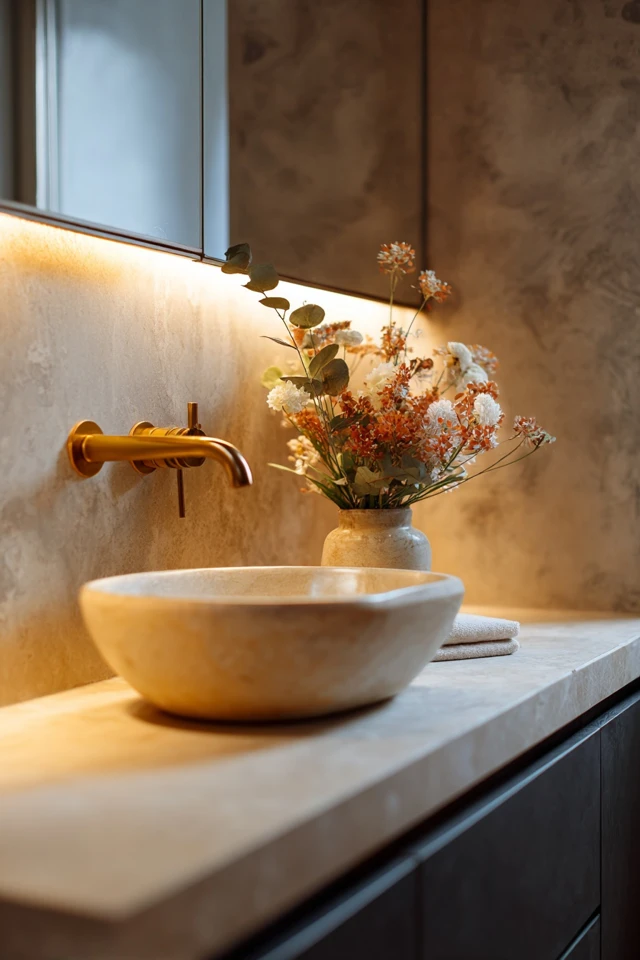
Use a muted base such as warm greige, soft sage, clay or pale plaster, and save saturated color for towels or art. Warm tones sit well with wood. Cooler tones like slate blue or gray calm the room and feel cleaner. Mixing a warm oak vanity with cool stone tile is a good balance.
Choose matte or honed finishes over high gloss, which can feel clinical in a small room. If you like soapstone, know that it doesn't need to be sealed but does need to be oiled regularly, according to Iowa State University Extension. Reclaimed or solid wood should be sealed properly for moisture.
Making it work in a small room
Keep the wood to one big piece, usually the vanity, and let everything else stay quiet. A rough guide is mostly one base material, a smaller share of wall finish, and only a little metal. Repeat the metal finish on the faucet, mirror frame and light so it reads as a plan, not a collection.
If you want more of this look, the small farmhouse bathroom ideas are a close cousin with more white and painted surfaces.
Boho chic bathrooms
A boho chic bathroom is layered and relaxed: patterned tile or a vintage-style rug, rattan or cane accents, macramé or woven baskets, lots of plants and warm, earthy colors. It's the opposite of minimalist, so in a small room the trick is to layer with soft things you can swap out instead of permanent finishes.
Practical note on rugs: thick or loose ones are a trip hazard and a problem for wheelchair users. The U.S. Access Board says that carpet that is thick, cushiony, or loose impairs accessibility. A low, firmly backed bath mat is the safer choice, and it's kinder to a dog that skids across wet floors, too.
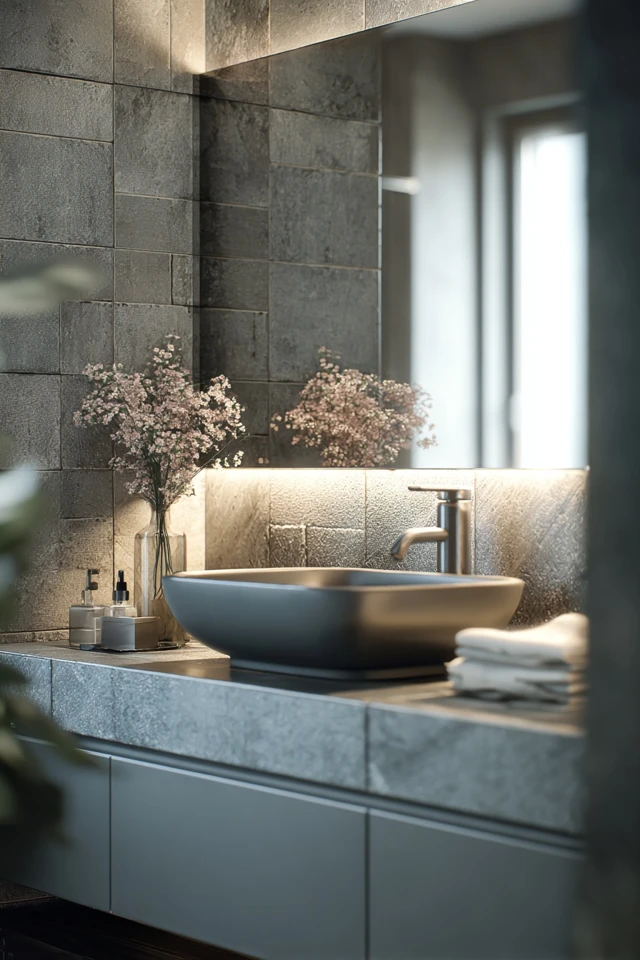
Small bathroom styles: layout and light matter more than the label
Whatever style you pick, a small bathroom depends on a few moves that work in all of them:
- Line fixtures up along one wall, or use a corner shower, to keep a clear path.
- Store vertically with tall cabinets or shelves above the toilet so the floor stays open.
- Hang one large mirror to bounce light. A thin wood or metal frame suits rustic and transitional looks.
- Layer light: a dimmable overhead, sconces beside the mirror, and warm to neutral bulbs (about 2700K-3500K) so wood and plaster look good.
- Add low-light plants such as pothos or a snake plant. Check with your vet before placing any plant where a pet can reach it.
Counter styling follows the same rule of restraint. A soap pump, a cup and one decorative object on a wood or stone tray is enough.
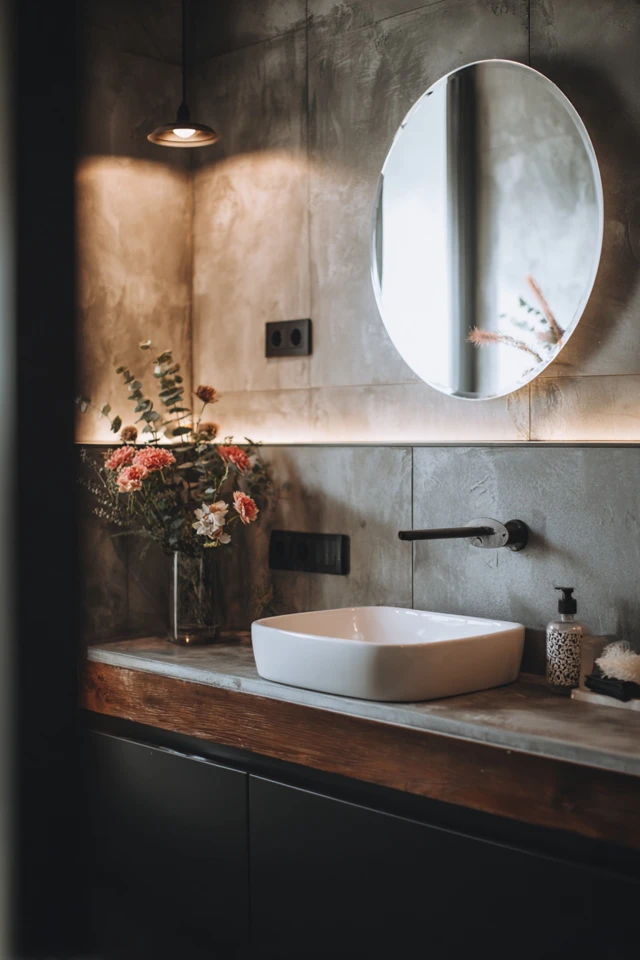
Mixing bathroom styles
You can combine styles if one leads. As an architect, I'd choose a dominant style for the big, permanent pieces (tile, vanity, tub) and let a second style show up in the easy-to-change items: mirror, hardware, textiles, art.
Modern plus rustic is the easiest pairing, because both like simple shapes and honest materials. Industrial plus classic also works if you keep the metals consistent. Avoid mixing three strong styles in a small room. I'd also keep one pattern in one place, such as the shower wall, and vary texture elsewhere.
If you're renovating, it's worth choosing efficient fixtures at the same time. The EPA says a remodel with WaterSense fixtures can save nearly 10,000 gallons of water every year. For color ideas that pair with these styles, see these gray bathroom ideas and blue vanity ideas.
Frequently asked questions
What are the three types of bathrooms?
Bathrooms are usually grouped by fixtures: a full bath (toilet, sink, tub or shower), a half bath or powder room (toilet and sink), and a three-quarter bath (toilet, sink and shower without a tub).
What are five common mistakes to avoid when designing a bathroom?
Common ones are choosing finishes that don't tolerate moisture, skipping layered lighting, crowding the floor with oversized furniture, using slippery flooring or thick rugs, and picking a trend for the permanent pieces.
What are the current trends for bathrooms?
Popular directions include matte black hardware, warm neutral palettes, textured plaster walls, natural wood vanities and plants. Put trends in swappable items like mirrors and textiles, and keep tile and fixtures classic.
Can I use rustic elements in a rental bathroom?
Yes. Swap hardware with your landlord's approval, add a wood tray or shelf, hang a framed mirror, and layer towels and baskets. Peel-and-stick tile can also work if the surface allows it.
Filed under
ArticlesMeet the author
Written by an architect.
Julio Arco is a passionate architect with years of experience in architecture, interior design, urban design, and housing. He studied at prestigious universities across North America and Europe.

- Name
- Julio Arco
- Job
- Architect and online interior designer
- Studied
- Architecture, ITESM · Urban Design and Housing, McGill
- Partner
- Thor, Australian Shepherd
- Thor’s title
- Head of quality control