Bathroom Styles: How to Choose One for Your Home
Compare popular bathroom styles, from modern to rustic and boho chic, with palettes, materials and tips for choosing one that fits your space.

By Julio Arco
Architect and online interior designer
In this post
The most popular bathroom styles are modern, minimalist, industrial, classic, transitional, rustic and boho chic. Pick the one that matches your room's size, your light and how much upkeep you'll tolerate. If you're on a budget, rustic is one of the easiest to do cheaply, because it relies on texture and warm materials rather than expensive fixtures.
It's very common to love three styles at once, so don't feel bad if you can't decide. Below you'll find each style's look, palette and materials, plus a way to narrow the choice.
How to choose your bathroom style
Start with the room, not the Pinterest board. Measure the floor, note where the window is and check how much daylight you get. Then ask what mood you want when you walk in: calm and spa-like, bright and crisp, or cozy and earthy?
A few practical filters help:
- Small rooms favor light colors, wall-hung vanities and few materials.
- Dark, matte finishes suit rooms with a good window or strong lighting.
- If you have a dog that gets bathed in the tub, choose floors and tile that tolerate splashes and grit.
- Keep the existing tub, toilet and layout if you can. Moving plumbing is where budgets disappear.
As an architect, I'd settle the layout first and the style second. Style is mostly paint, hardware, lighting and textiles, so it's the cheapest thing to change later.
Modern and minimalist bathrooms
Modern bathrooms use flat-front cabinets, straight lines, large-format tile and very little decoration. The palette is white, gray or soft black, usually with one warm accent such as wood.
This style suits small bathroom styles well. A frameless glass panel and a floating vanity keep sightlines open, so the room reads larger. The trade-off is that clutter shows immediately, so you need closed storage.
Industrial and classic bathrooms
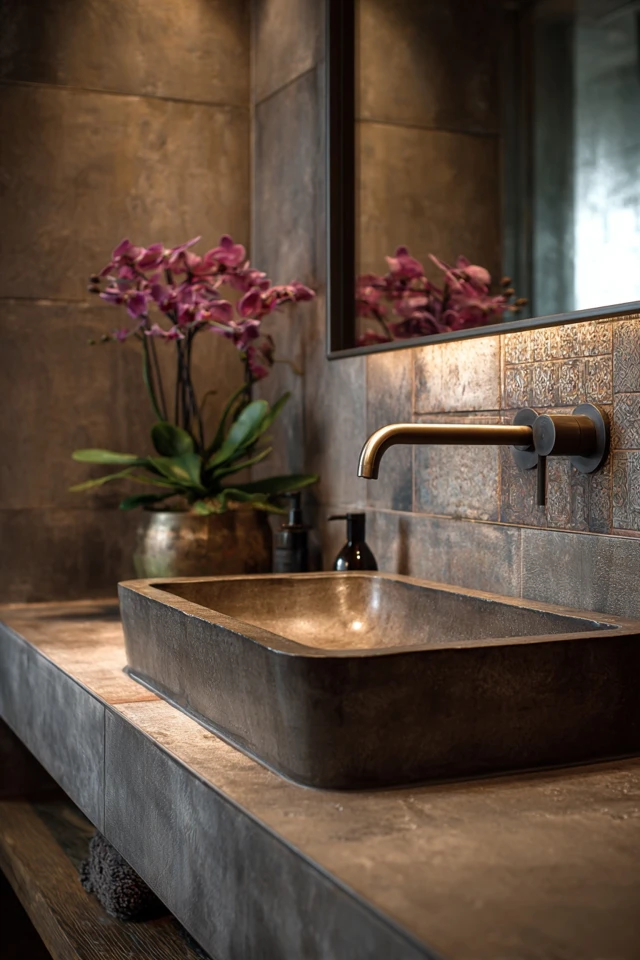
Industrial leans on matte black metal, concrete-look tile, exposed pipe-style fixtures and bare bulbs. Classic goes the other way: white subway tile, pedestal sinks, polished chrome and symmetrical layouts. Both age well because neither depends on a trend.
Glossy surfaces bounce light and create sharp reflections, while matte ones absorb it. Industrial rooms with matte finishes feel moodier, and classic rooms with gloss tile feel brighter.
Transitional and traditional bathrooms
Transitional bathroom design sits between traditional and modern. Think a shaker-style vanity with simple hardware, neutral walls, a framed mirror and one or two metal finishes. It's a safe pick if you plan to sell or if two people in the house disagree about style.
Traditional adds more detail: paneling, ornate trim, framed mirrors and brass or nickel fixtures. If you like that look on a budget, wainscoting is a relatively cheap way to add it.
Rustic or natural bathrooms
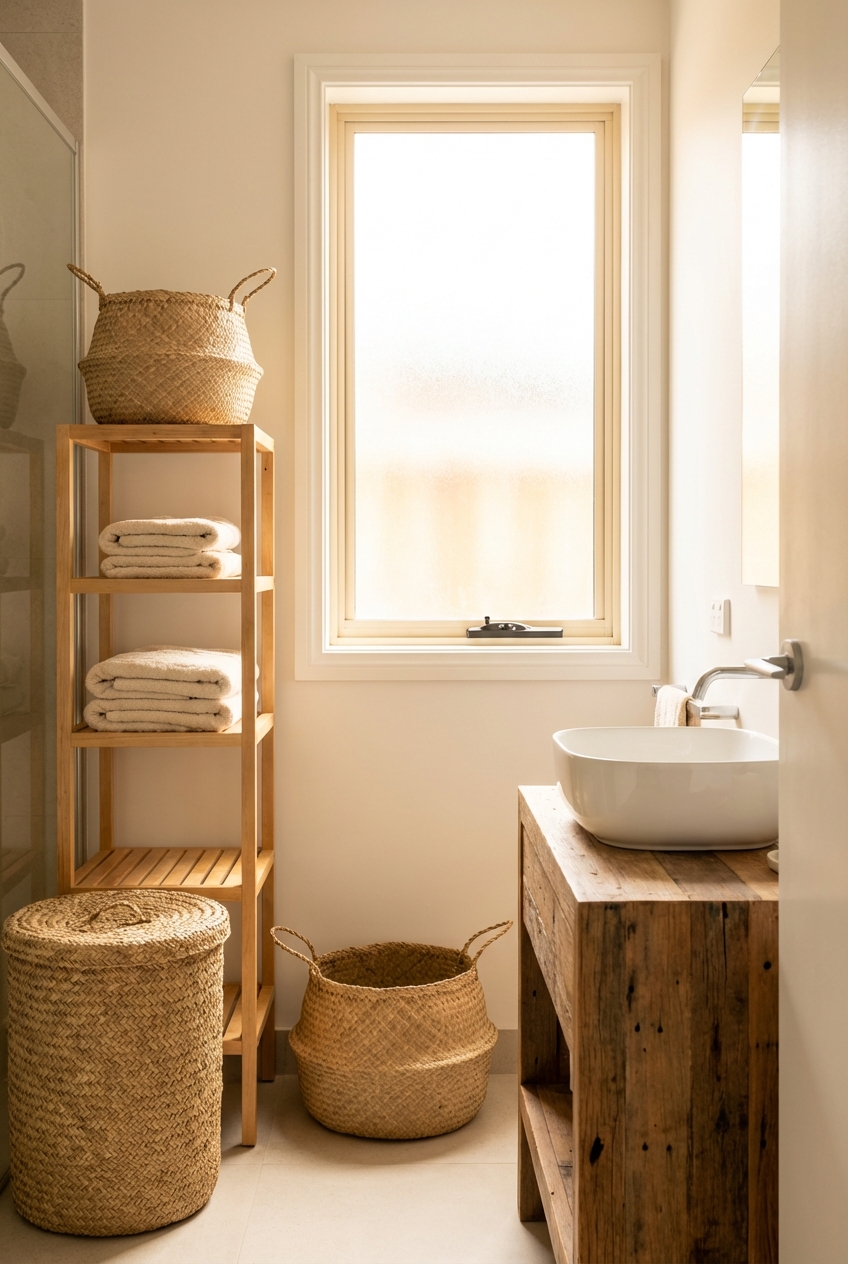
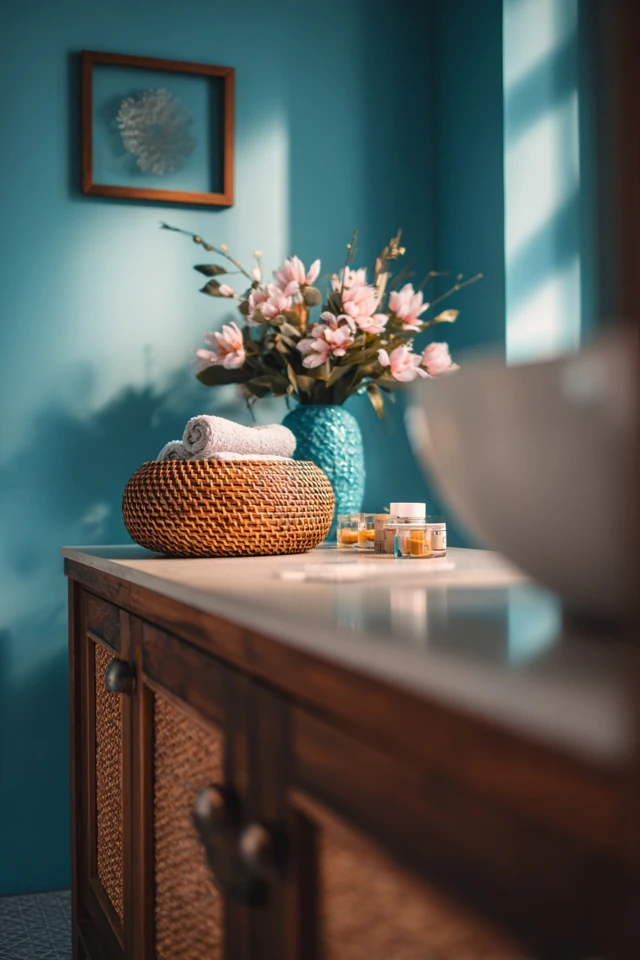
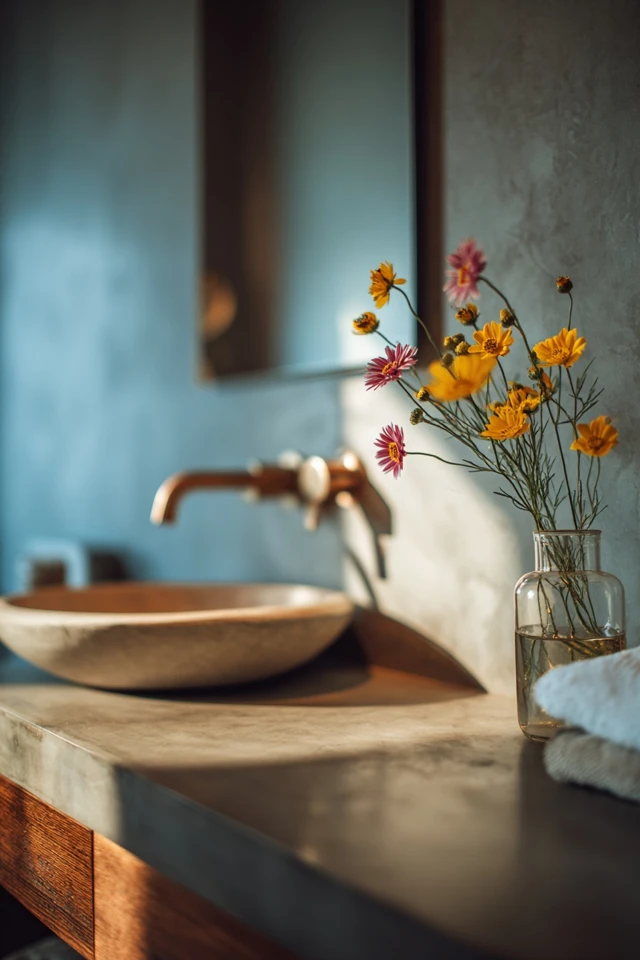
Good rustic bathroom ideas start with materials that look lived in: wood, stone, woven textiles and matte metal. The palette is warm neutrals, muted greens, soft blues and the occasional charcoal accent.
Budget moves that work
- Refinish an old dresser or console as a vanity, and seal the wood well for humidity.
- Swap pulls and faucet for matte black or aged brass.
- Add a wooden stool, a woven basket for rolled towels and linen or cotton curtains.
- Use a dimmable fixture and a sconce at the mirror. Warm bulbs around 2700K-3000K flatter wood tones.
- Choose a humidity-tolerant plant, such as a fern or pothos. If you have pets, check with your vet before bringing any plant home.
Materials to watch
Wood needs sealing and an exhaust fan. Keep it out of the direct spray path, or put tile behind it. If you like stone, soapstone does not need sealing, but Iowa State University Extension notes it needs regular oiling, like a butcher block counter.
Boho chic bathrooms
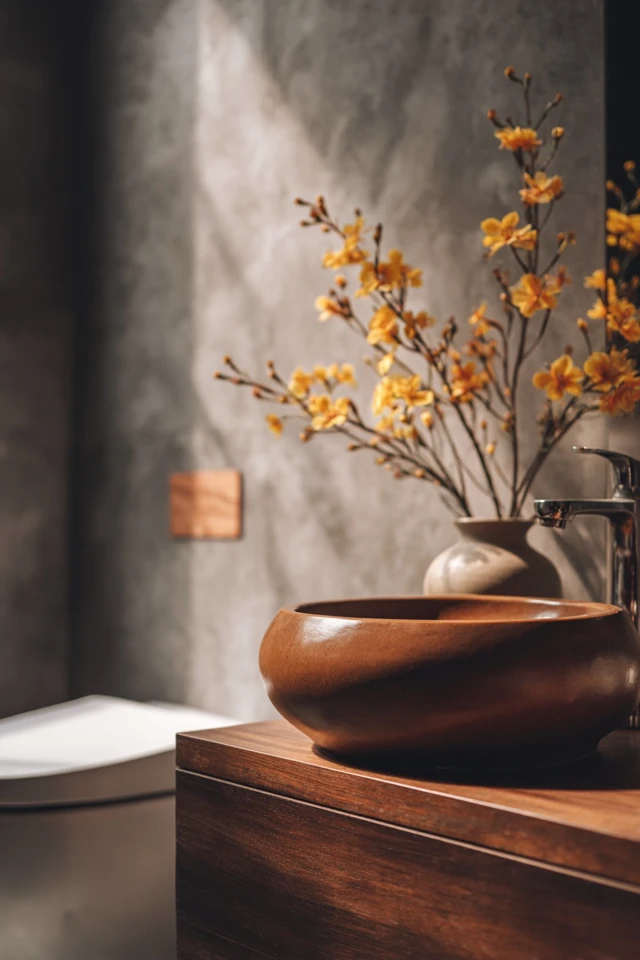
A boho chic bathroom layers pattern and texture: patterned cement-look tile, rattan, macramé, mixed plants and colorful towels. Colors run from terracotta and mustard to deep green and cream.
It's forgiving and cheap to start, since most of it is accessories. Keep the base calm, then add pattern in one or two places so it doesn't look busy. Be careful with thick bath rugs: the U.S. Access Board notes that thick, cushiony or loose carpet impairs accessibility, particularly wheelchair maneuvering. Loose rugs are also a slip risk for anyone, so use a rubber backing.
Colors and materials for each style
| Style | Typical palette | Typical materials |
|---|---|---|
| Modern / minimalist | White, gray, black | Large tile, glass, flat cabinetry |
| Industrial | Charcoal, concrete gray | Matte black metal, concrete-look tile |
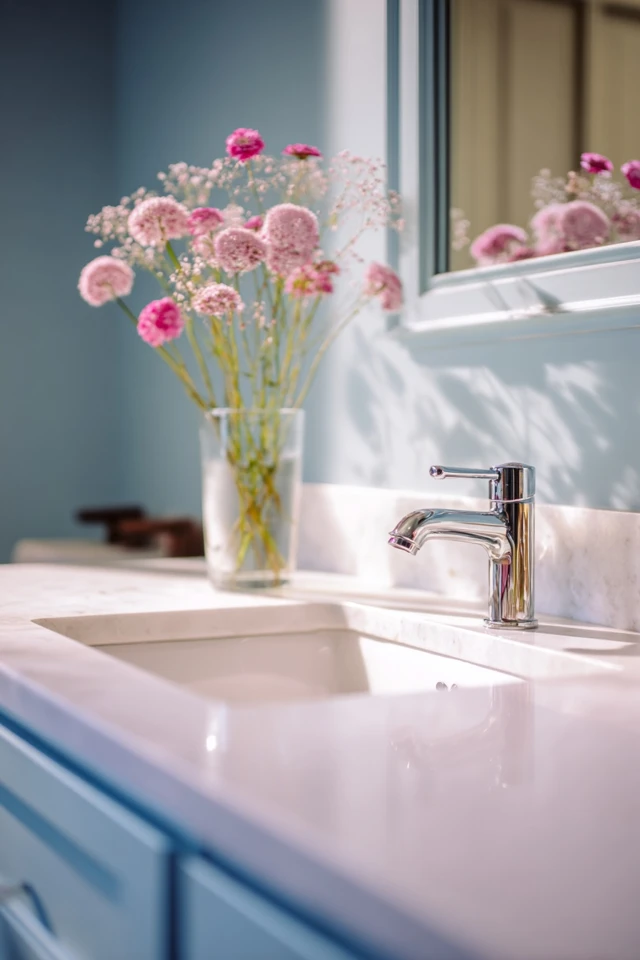
| Classic | White, soft blue, chrome | Subway tile, porcelain, polished metal |
| Transitional | Greige, white, soft navy | Shaker cabinets, simple stone |
| Rustic | Warm neutrals, sage, charcoal | Wood, honed stone, linen |
| Boho chic | Terracotta, green, cream | Rattan, patterned tile, plants |
Mixing bathroom styles
Mixing bathroom styles works when one style leads and the other supports. Choose a dominant look for tile, vanity and walls, then borrow from a second style in accessories and lighting. Modern lines with rustic wood is the easiest pairing.
Limit yourself to two metal finishes and keep a single wood tone. For a more forward-looking look, see our bathroom of the future ideas.
Layout and water use
Leave about 30 inches of clear width in front of fixtures, and keep a clear path from the door. Bathrooms are also where a lot of water goes: the EPA says bathrooms account for more than half of all the water families use indoors. Swapping in WaterSense fixtures is a style-neutral upgrade, and it works in any of the looks above.
Frequently asked questions
What are the three types of bathrooms?
Bathrooms are usually grouped by fixtures: a full bath has a toilet, sink and tub or shower, a half bath (powder room) has only a toilet and sink, and a three-quarter bath has a shower instead of a tub.
What are five common mistakes to avoid when designing a bathroom?
Common ones are poor ventilation, too little storage, slippery flooring, weak lighting at the mirror and moving plumbing without need. Checking clearances before buying fixtures avoids most of them.
What is the cheapest bathroom style to do?
Rustic and boho chic are usually the cheapest, because they rely on paint, textiles, hardware and lighting rather than new tile or cabinetry.
Filed under
ArticlesMeet the author
Written by an architect.
Julio Arco is a passionate architect with years of experience in architecture, interior design, urban design, and housing. He studied at prestigious universities across North America and Europe.

- Name
- Julio Arco
- Job
- Architect and online interior designer
- Studied
- Architecture, ITESM · Urban Design and Housing, McGill
- Partner
- Thor, Australian Shepherd
- Thor’s title
- Head of quality control