Zen Meditation Room Ideas for a Calm, Simple Space

By Julio Arco
Architect and online interior designer
In this post
A good Zen meditation room needs very little: a clear floor, one comfortable place to sit, soft light and a few natural materials. You don't need a spare room, either. A corner about 4 by 4 feet is enough for a cushion and some breathing space.
Below are the choices that matter most, in the order I'd make them: layout, color, light, materials, then the small extras.
How do you lay out a meditation room?
Start with the seat. Put your cushion or low bench where you'll face a calm view, such as a plain wall, a window or a single plant, rather than a doorway or a pile of storage. Sitting with your back to a solid wall tends to feel more settled than sitting in the middle of a room.
Then protect the floor. Leave enough clear space to sit, stand and stretch without stepping around things, and move extras onto wall-mounted shelves or a closed cabinet. Visual clutter competes for attention, and that's the opposite of what this room is for.
Small rooms and corners
Keep furniture low and the palette light. A folding bench, a wall hook for the cushion and one narrow shelf will do. A mirror can add depth, but place it so you aren't staring at yourself while you sit.
Larger rooms
Mark out the practice area with a rug or a low shelf so it feels like its own zone. A partial screen works too. As an architect, I'd rather create a snug nook inside a big room than leave one cushion floating in the middle of it.
Which colors work best?
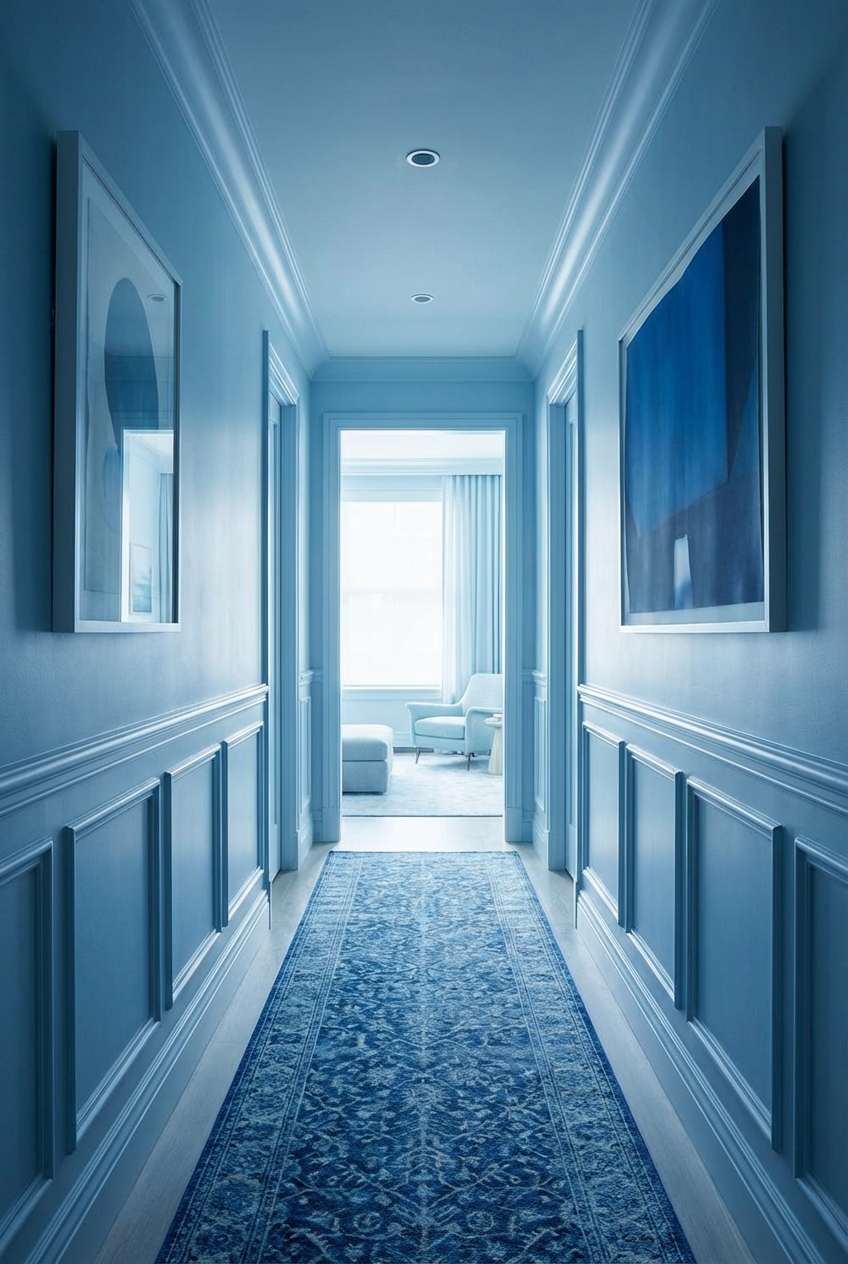
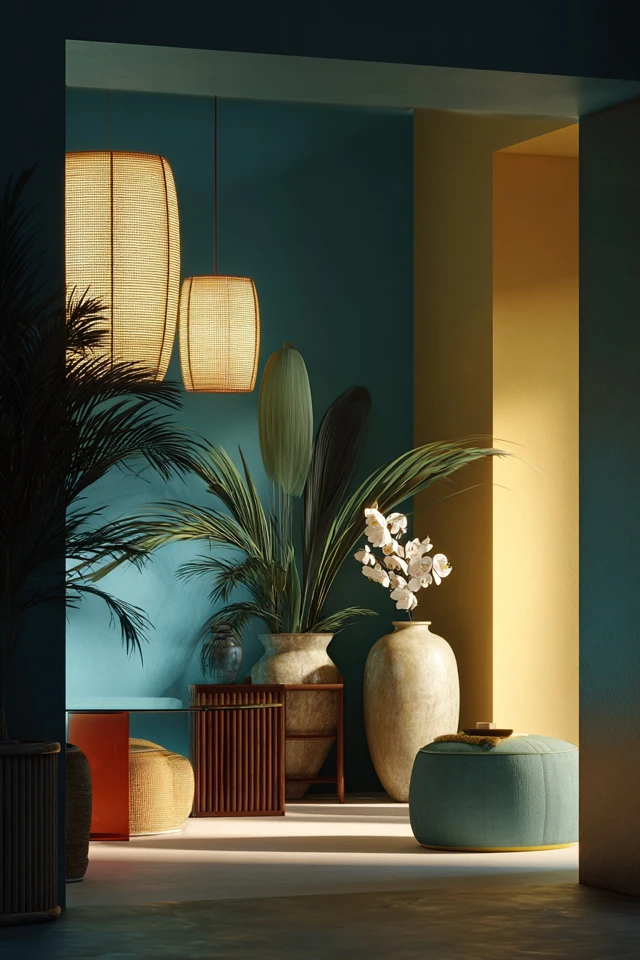
Low-saturation, mid-to-light shades are the safest choice: soft greens, muted blues, warm beige, pale gray. Strong, saturated colors tend to energize, and very dark walls can feel heavy in a small room. If you want warmth, go with sandy neutrals or a soft clay tone.
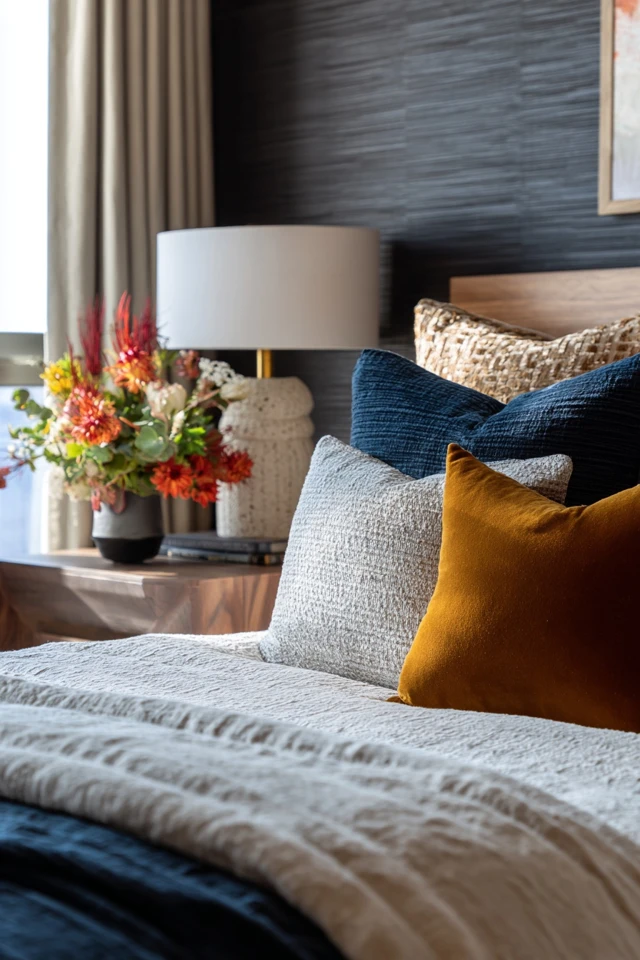
Use accent color sparingly. One ochre cushion or a moss-green throw gives the eye a place to land without taking over. Test paint swatches on the wall and look at them in morning and evening light before committing, since daylight shifts the same color quite a bit.
What lighting suits a meditation room?
Aim for layers you can dim: a soft overhead or wall light, plus a floor or table lamp for the practice area. Light also affects your body clock. The U.S. Department of Energy notes that "Light plays a key role in setting and regulating the body's biological clock." So a bright, cooler light is reasonable for a morning session, and a dim, warm one makes more sense in the evening.
Bulb color is described by correlated color temperature, which the Department of Energy explains is one of the primary metrics used to characterize the visual appearance of light. In practice, look for about 2700-3000K on the box for a warm evening glow. Keep lamps shaded or placed to the side so you never look straight at a bare bulb.
If you like candles, an LED version is a calmer choice in a home with a dog or cat that might wander in. And if you use incense or diffusers, check with your vet first, since some scents can bother pets.
Which materials and textures feel calm?
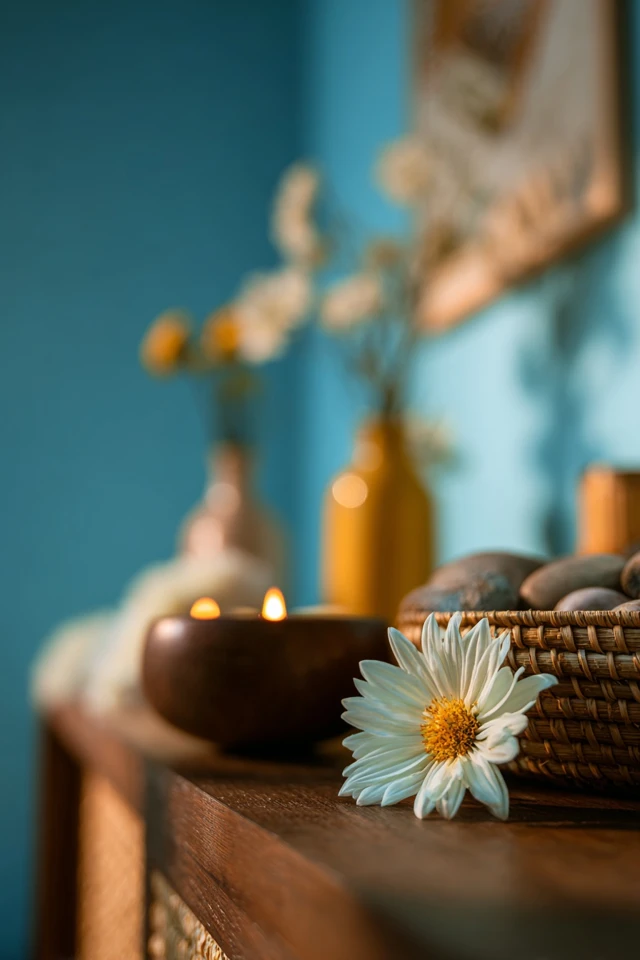
Natural, matte surfaces do most of the work: wood, bamboo, stone, linen, cotton, wool and woven fibers. Matte finishes soak up light and soften shadows, while glossy chrome or polished surfaces bounce light around and add visual noise.
- A woven or wool rug under the seat softens sound and gives knees and ankles some padding.
- Cushions filled with buckwheat hulls or kapok hold their shape well for sitting.
- Removable, washable covers make upkeep easy, especially if pets claim the cushion when you're not on it.
Stick to a small mix of textures, about three to five, so the room feels layered without feeling busy.
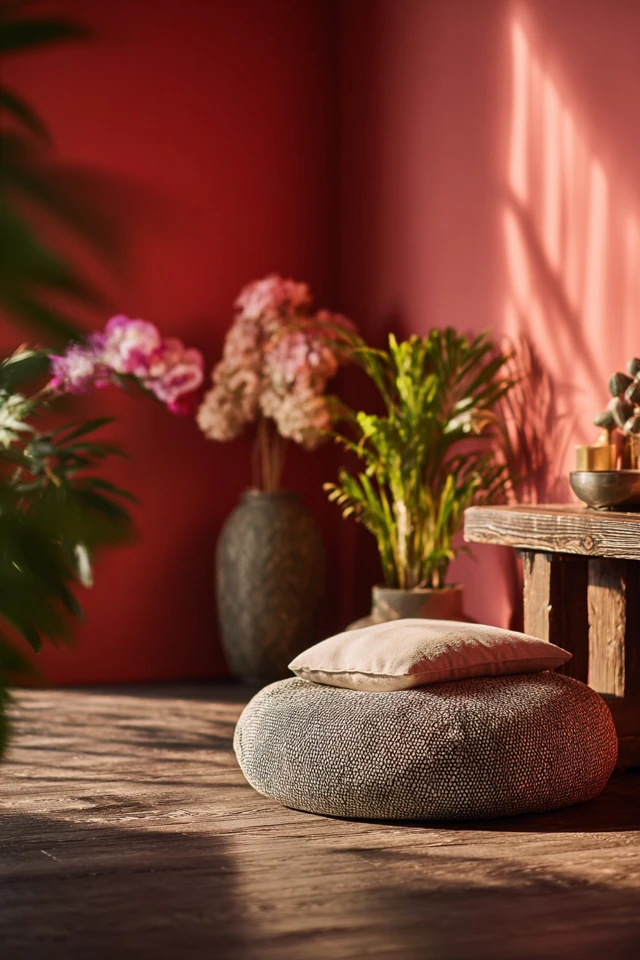
Where do plants, sound and decor fit in?
One or two plants are plenty. Pick low-care ones and set them where you can see them from your seat. If you share your home with pets, check any plant against the ASPCA's toxic plant list or ask your vet before you buy.
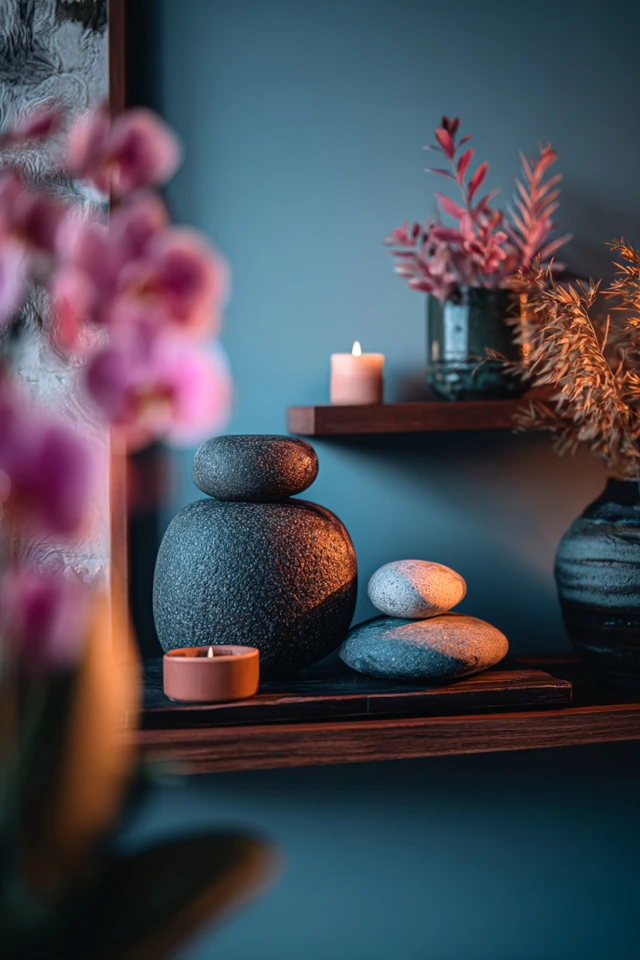
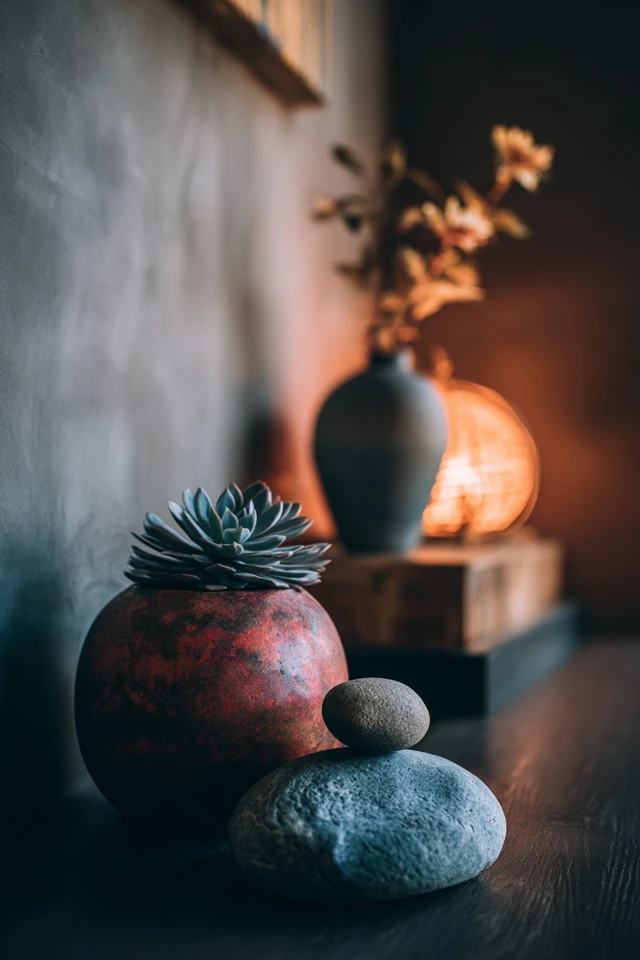
For sound, a small tabletop fountain, a speaker for guided sessions or simply a thick rug and some fabric on the walls will quiet the room. For decor, keep to a few meaningful objects, such as a stone, a bowl or a small shelf. If an item doesn't help you settle, it can live in another room.
If you like the Japanese-inspired look, you can carry it outside as well. Our Japanese backyard ideas pair well with a meditation room that opens onto a garden, and our beginner Zen room makeover walks through a simpler first pass.
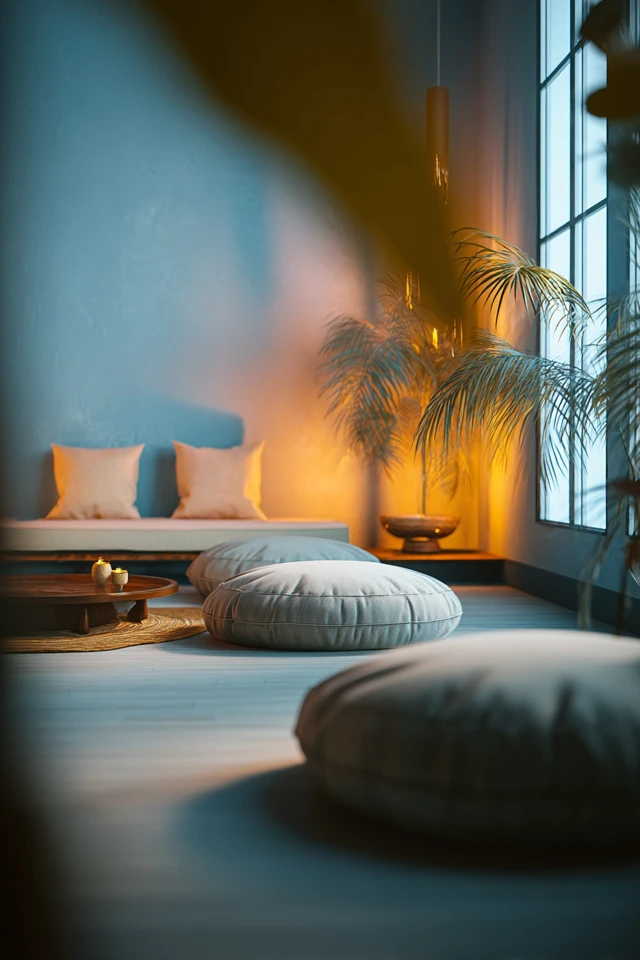
Which trends are worth trying?
Japandi styling (Japanese and Scandinavian simplicity), biophilic touches and sustainable materials all suit this kind of room. Adopt them through pieces that are easy to swap: a modular bench, a plant stand, natural-fiber textiles. Keep the permanent parts plain, meaning neutral walls, a low seat and simple storage, so the room doesn't date quickly.
I recommend starting with decluttering and lighting before you buy anything new. Those two changes cost the least and shift the feel of the room the most.
Frequently asked questions
How can I make a small room feel larger for meditation?
Use light, low-saturation colors, keep the floor clear and choose one focal point. Wall-mounted lighting and a folding bench free up surface area.
What paint colors work best for a calming meditation room?
Soft greens, muted blues, warm beiges and gentle grays are reliable. Choose a low-sheen finish to limit glare and test swatches in both daylight and lamplight.
Should a meditation room be completely minimal?
Not necessarily. Keep only items that serve the practice or mean something to you, and avoid anything that pulls your attention while you sit.
How do I mix patterns without creating distraction?
Limit yourself to one or two pattern scales, such as a small geometric cushion and a larger, quieter rug. Balance them with solids and keep patterns out of your direct line of sight.
Filed under
ArticlesMeet the author
Written by an architect.
Julio Arco is a passionate architect with years of experience in architecture, interior design, urban design, and housing. He studied at prestigious universities across North America and Europe.

- Name
- Julio Arco
- Job
- Architect and online interior designer
- Studied
- Architecture, ITESM · Urban Design and Housing, McGill
- Partner
- Thor, Australian Shepherd
- Thor’s title
- Head of quality control