Zen Meditation Room Ideas for Beginners
Easy zen meditation room ideas for beginners: pick a spot, choose calm colors, set warm lighting, and add a few natural textures this weekend.

By Julio Arco
Architect and online interior designer
In this post
A zen meditation room needs less than you think: one defined spot on the floor, a calm color on the walls, soft light and very little clutter. You can set this up in a weekend, in a spare bedroom, a corner or even a closet.
It's very common to feel you need a whole dedicated room before you can start. You don't. Below is how I'd approach it, in the order that gives the biggest change for the least effort.
Where should you put a meditation space?
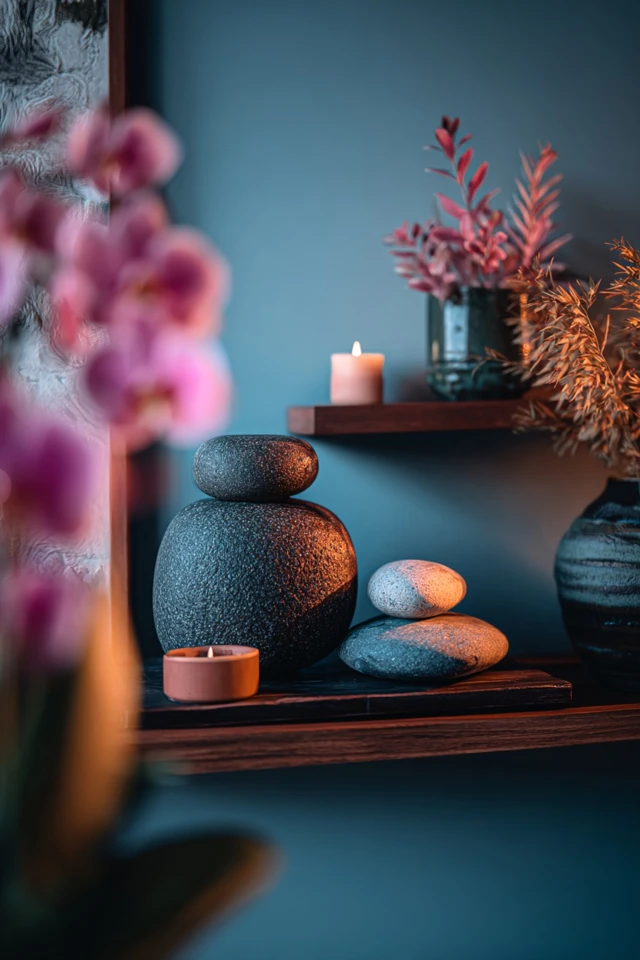
Pick the quietest corner with the fewest things asking for your attention: away from the TV, the desk and the main walkway. A spare room is ideal, but a corner of a bedroom works if you can screen it off with a plant, a folding screen or a shelf. If your spare room already doubles as something else, my guest room and playroom ideas show how to share a space without it feeling chaotic.
Decide what you'll actually do there. Seated meditation needs a cushion and maybe a shelf at eye level. Stretching or breathwork needs open floor. Journaling needs a low table. The use decides the layout, so choose it first.
How do you lay out a small meditation room?
Anchor the spot with a rug or mat. A defined patch of floor tells you (and anyone else in the house) that this is a different kind of space. Then keep a clear path of about 3 feet so you can walk in and settle without stepping around things.
- Keep furniture low so sightlines stay open and the room feels larger.
- Use wall-mounted shelves or lamps instead of floor pieces in a tight room.
- In a larger room, mark a corner with a rug, a screen and a plant or two.
- Hide props such as yoga blocks and journals in a basket or closed cabinet.
Scale matters here. A big sofa in a small meditation room crowds you, while a few tiny objects in a large one look lost. Aim for human-scale pieces: a cushion, a compact bench, a modest lamp.
Which colors suit a zen meditation room?
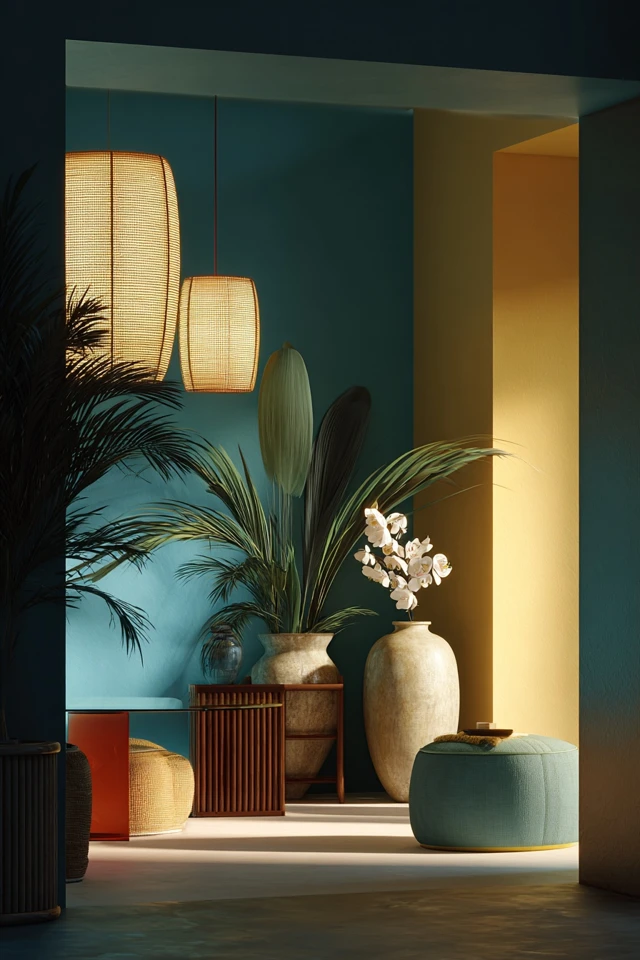
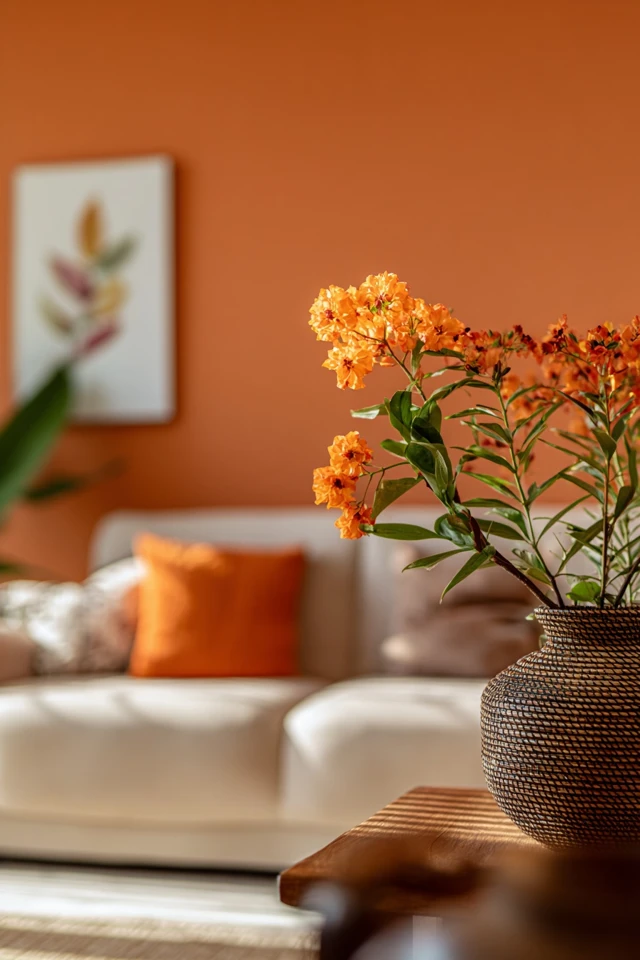
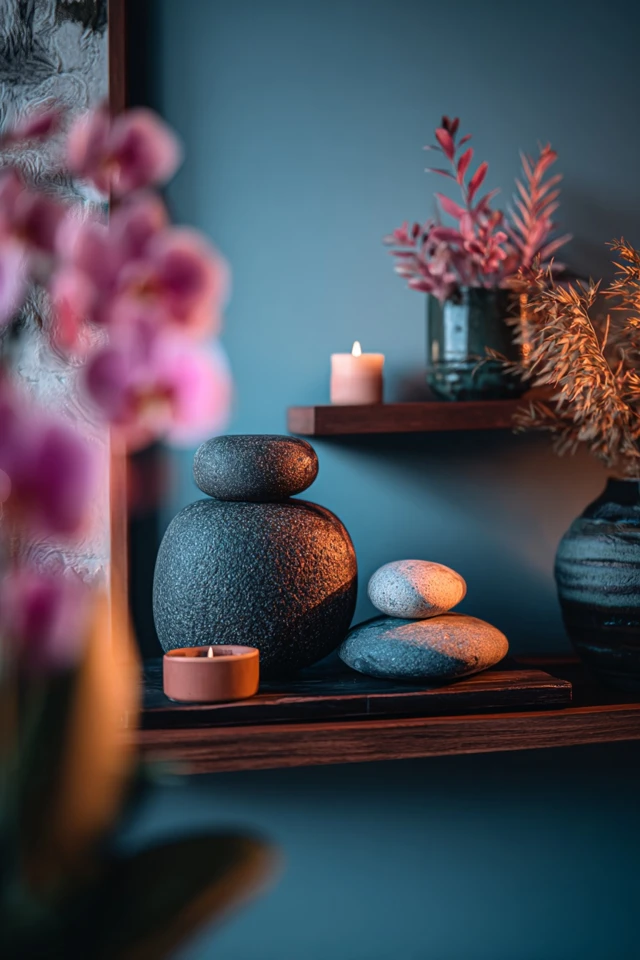
Choose muted, low-saturation shades: soft greige, warm white, desaturated sage, pale blue-gray. Strong contrast and glossy finishes create sharp reflections and busy shadows, while matte paint absorbs light and keeps the room quiet visually.
A simple scheme is one neutral for the walls, a second tone for textiles and a single accent from nature, such as olive, clay or muted indigo. Daylight changes color through the day and with the direction a window faces, so test a swatch on two walls and look at it morning and evening before you paint.
What lighting works best for meditation?
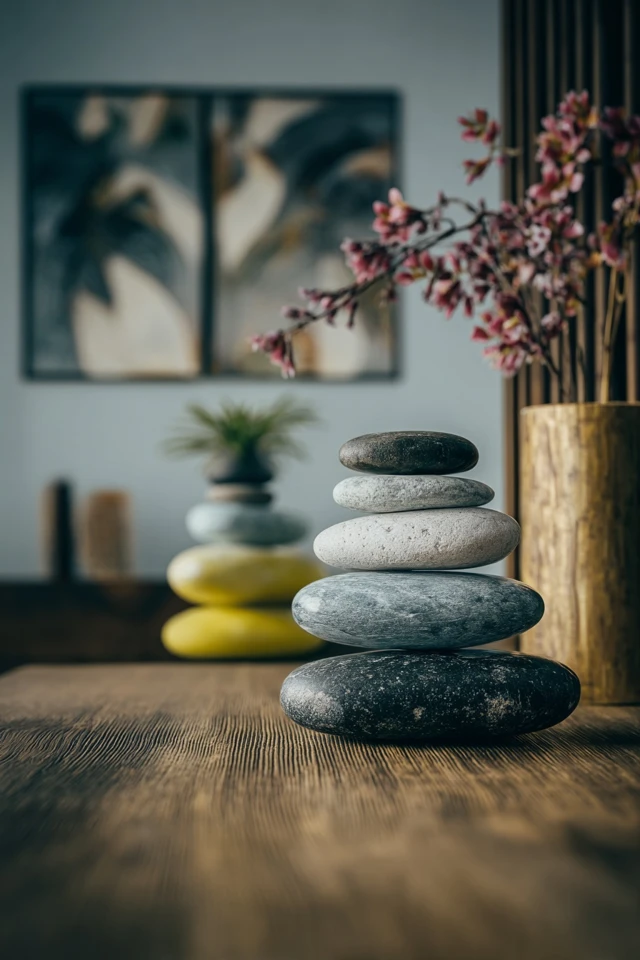
Warm and dimmable. Bulbs around 2700-3000K give a cozy, candle-like tone, while cooler bulbs of 4000K and up read as office light. The U.S. Department of Energy describes correlated color temperature as one of the primary metrics for characterizing the visual appearance of light, so it's the number to check on the box.
Light also affects when you feel sleepy or alert. The Department of Energy puts it this way: "Light plays a key role in setting and regulating the body's biological clock." For an evening practice, I recommend a dimmer on the main fixture plus one low lamp, so you never sit under a bright overhead light.
The same idea shows up in the Illuminating Engineering Society and International Dark Skies Association principles for night lighting: use only the light you need, where you need it. A single lamp near the cushion follows that rule well.
Which textures and materials calm a room?
Natural ones. Linen, cotton, jute, wool, unfinished wood and ceramic feel grounded and age well. Mix two or three textures for depth: a wooden bench, a wool rug and a ceramic bowl is plenty. Breathable fibers are more comfortable than synthetic velvet or faux fur, which can trap heat during a longer sit.
If you're repainting or sealing anything, look for low-VOC products and open a window while it cures. If you share your home with a dog, pick a washable cushion cover and a rug you can vacuum easily, because a meditation spot is a very tempting place for a nap.
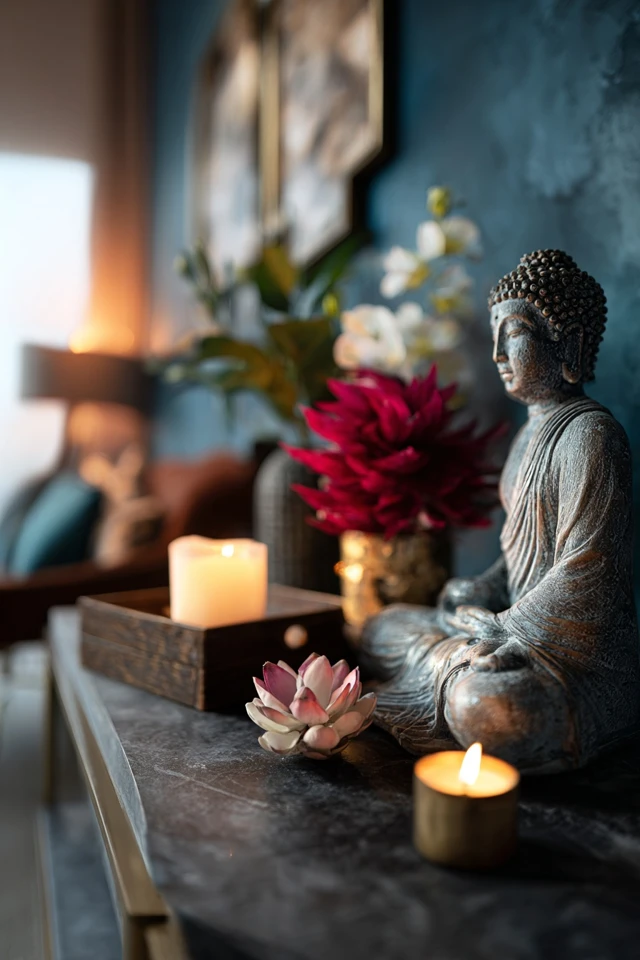
What do you really need to buy?
Less than a shopping list suggests. In rough order of importance:
- A supportive cushion or low bench you can sit on comfortably for 10-20 minutes.
- A natural-fiber rug to define the spot and soften sound.
- A dimmable lamp with a warm bulb.
- A basket or small cabinet for props.
- One or two low-maintenance plants, such as a snake plant or ZZ plant. Both are listed as toxic to pets, so check with your vet or choose pet-safe plants if your dog or cat chews leaves.
Limit wall art to one calming piece. Keep technology minimal: a small speaker for guided sessions is enough, and your phone can live in a drawer.
For more direction on style, see the best zen meditation room trends, and if you'd rather bring the same calm into the place you sleep, try these zen bedroom ideas.
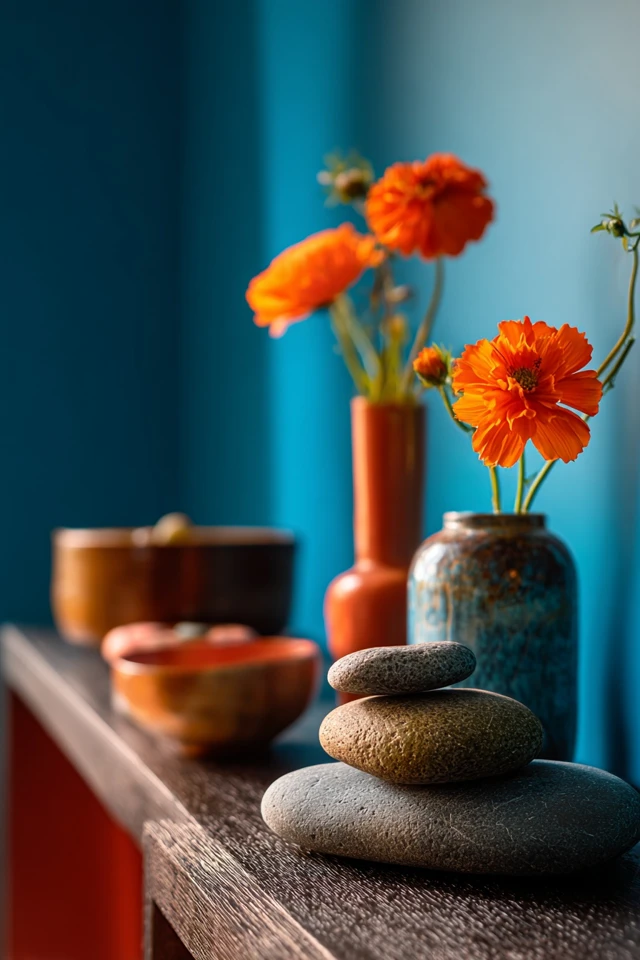
A weekend plan
Saturday morning: clear the space and choose the corner. Saturday afternoon: paint if you want to, or simply swap in a calmer textile. Sunday: set the rug, cushion, lamp and basket in that order, then sit for five minutes and see what feels off. Move one thing, not five. A meditation room is finished when it's easy to walk in and sit down.
Frequently asked questions
How can I make a small room feel larger for meditation?
Use light, muted colors, keep furniture low and leave the center of the floor open. A mirror placed to reflect a plant or soft lamp adds depth, but avoid pointing it at clutter.
What paint colors work best for a zen meditation space?
Soft greige, warm white, desaturated green and pale blue-gray all suit it. Test swatches on different walls and check them at several times of day.
Can I mix patterns in a meditation room?
Yes, if you keep them few and low in contrast. One subtle patterned rug with solid and textured fabrics around it stays calm.
Should I include technology in my meditation room?
Keep it minimal. A small speaker for guided sessions is enough, and devices should be put away or silenced when you sit.
Filed under
ArticlesMeet the author
Written by an architect.
Julio Arco is a passionate architect with years of experience in architecture, interior design, urban design, and housing. He studied at prestigious universities across North America and Europe.

- Name
- Julio Arco
- Job
- Architect and online interior designer
- Studied
- Architecture, ITESM · Urban Design and Housing, McGill
- Partner
- Thor, Australian Shepherd
- Thor’s title
- Head of quality control