Accent Chair Ideas: 1950s Styles for a Chic Home
Accent chair ideas inspired by 1950s design: how to choose, place and style one, plus tips on matching your sofa and fitting small rooms.

By Julio Arco
Architect and online interior designer
In this post
- Which 1950s chair shapes work best as accent chairs?
- How do you match an accent chair with your sofa?
- What colors and materials suit a 1950s accent chair?
- How do you style an accent chair?
- Accent chair ideas for a small living room
- Layout ideas for larger rooms and open plans
- Keeping the look current without chasing trends
- Frequently asked questions
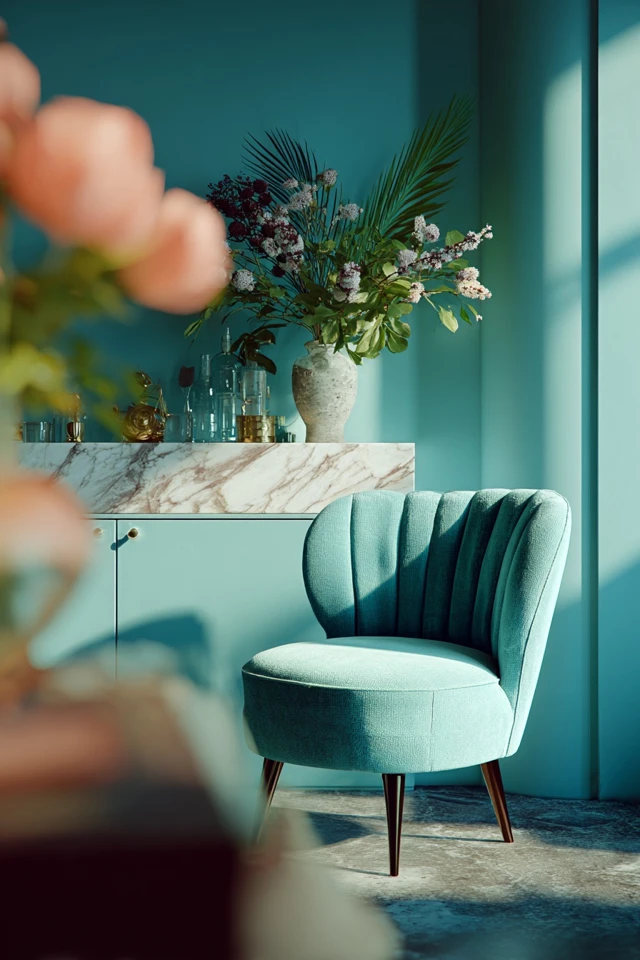
If you want accent chair ideas for a living room that will still look good in ten years, start with the 1950s. Molded shells, tapered wooden legs, slim lounge frames and rounded backs were designed to be seen from every side, which is exactly what an accent chair needs.
The short version: pick one chair with a clear silhouette, give it a little breathing room, add a light source and a side surface, and repeat one color or material from the chair somewhere else in the room. The sections below walk through how.
Which 1950s chair shapes work best as accent chairs?
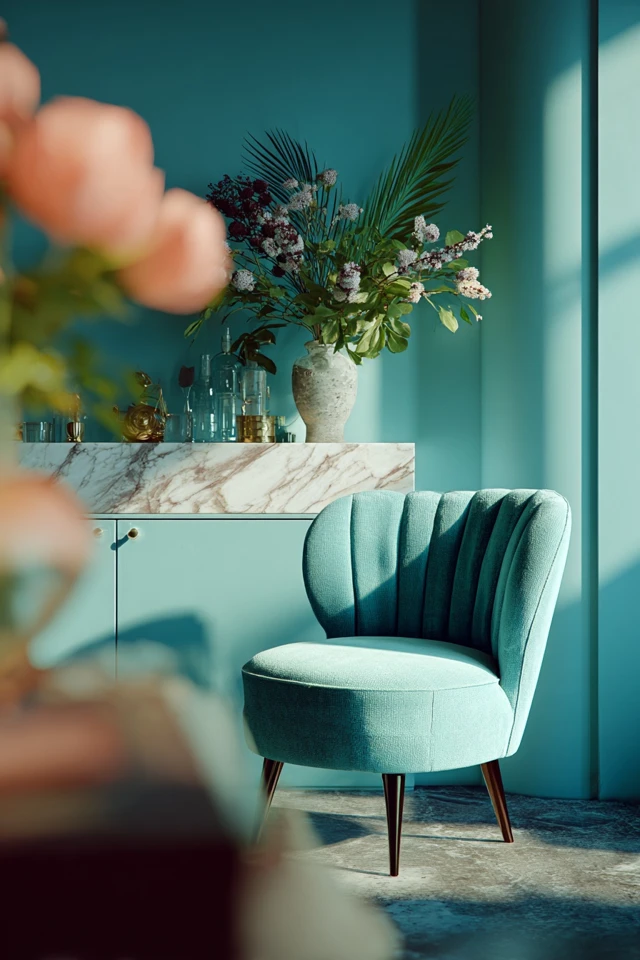
Mid-century chairs tend to have compact footprints but a lot of presence. That makes them good accent chair ideas for living rooms where you want a statement without a bulky piece.
- Molded shell chairs: sculptural, easy to move, and a good contrast with soft sofas.
- Tapered-leg lounge chairs: warmer and more relaxed, good for reading.
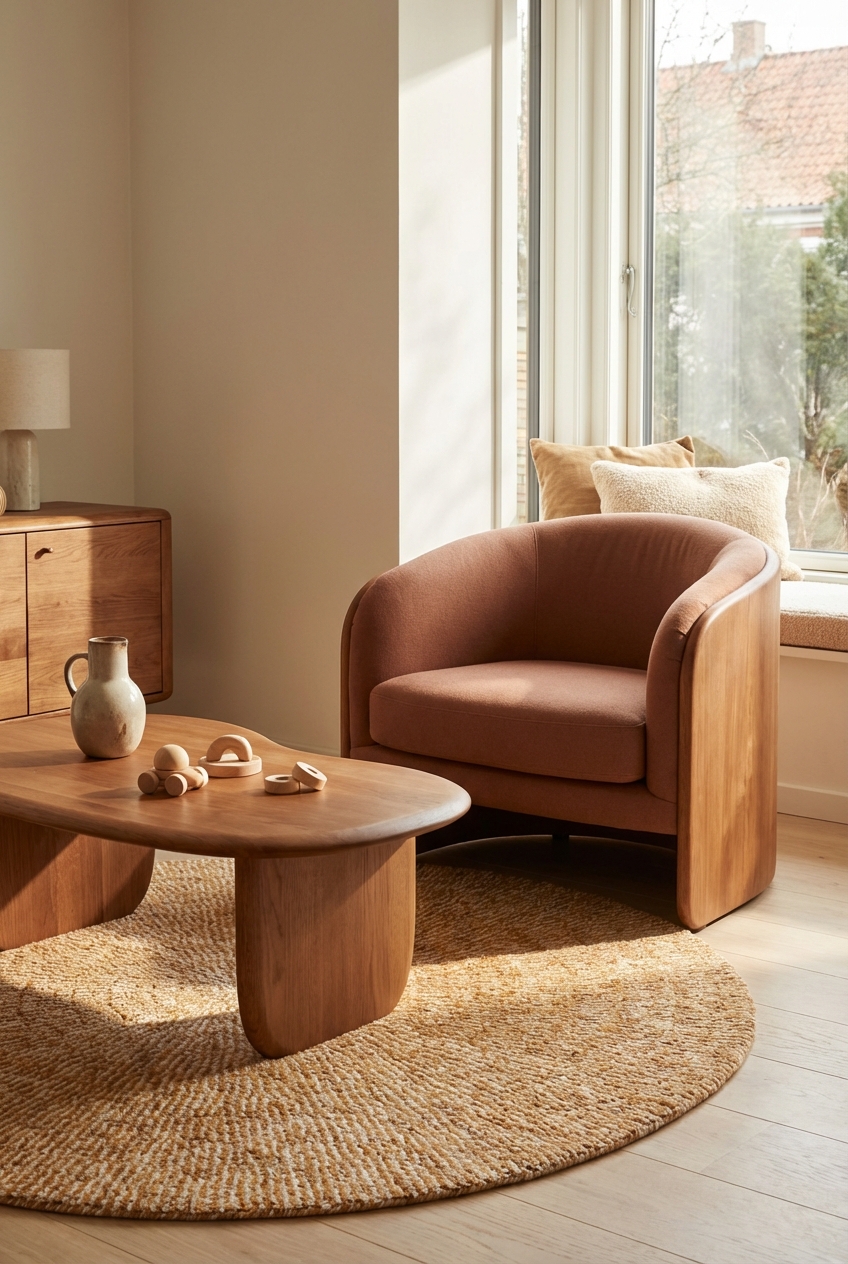
- Tub and barrel shapes: cozy and enclosing, better in larger rooms.
- Slim wooden-frame chairs with arms: lighter visually, and the arms help if you want to sit for a while.
Exposed legs let you see the floor underneath, so the chair feels lighter than it is. Check the seat height against your side table too. A table that sits about level with the chair's arm or a bit below is easy to use.
How do you match an accent chair with your sofa?
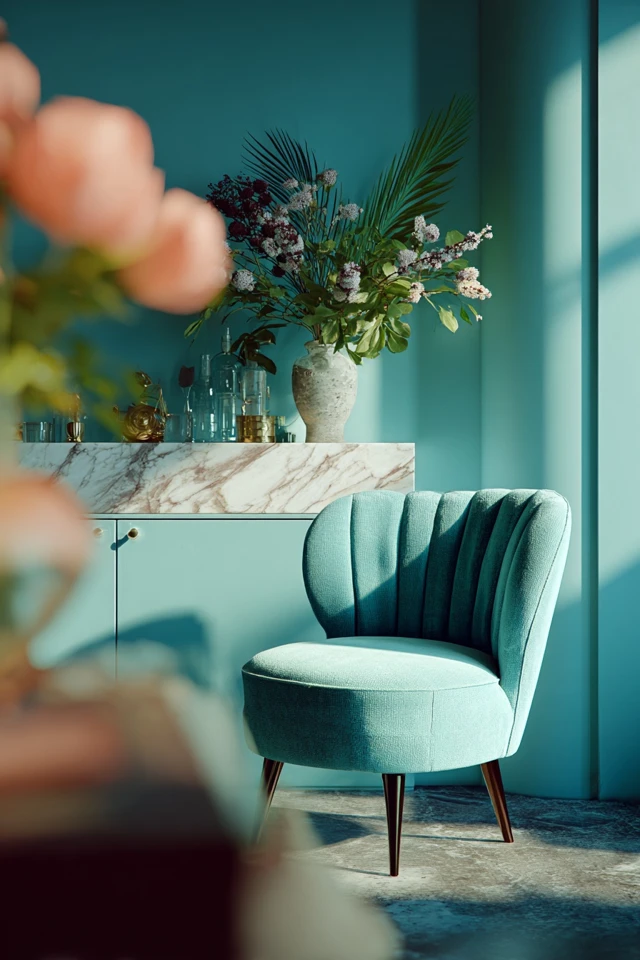
Do accent chairs have to match? No. They only need to relate. A chair that copies the sofa exactly looks like a leftover from a set, and one that ignores it can look dropped in by accident.
If you're wondering how to match accent chairs with a sofa, pick one link and let everything else differ:
- Repeat a wood tone from the chair legs in a shelf, frame or coffee table.
- Pick a chair color that appears in a pillow, rug or artwork.
- Keep the same level of formality: a rough wool chair next to a sleek leather sofa works, but a very ornate chair next to a minimalist sofa usually doesn't.
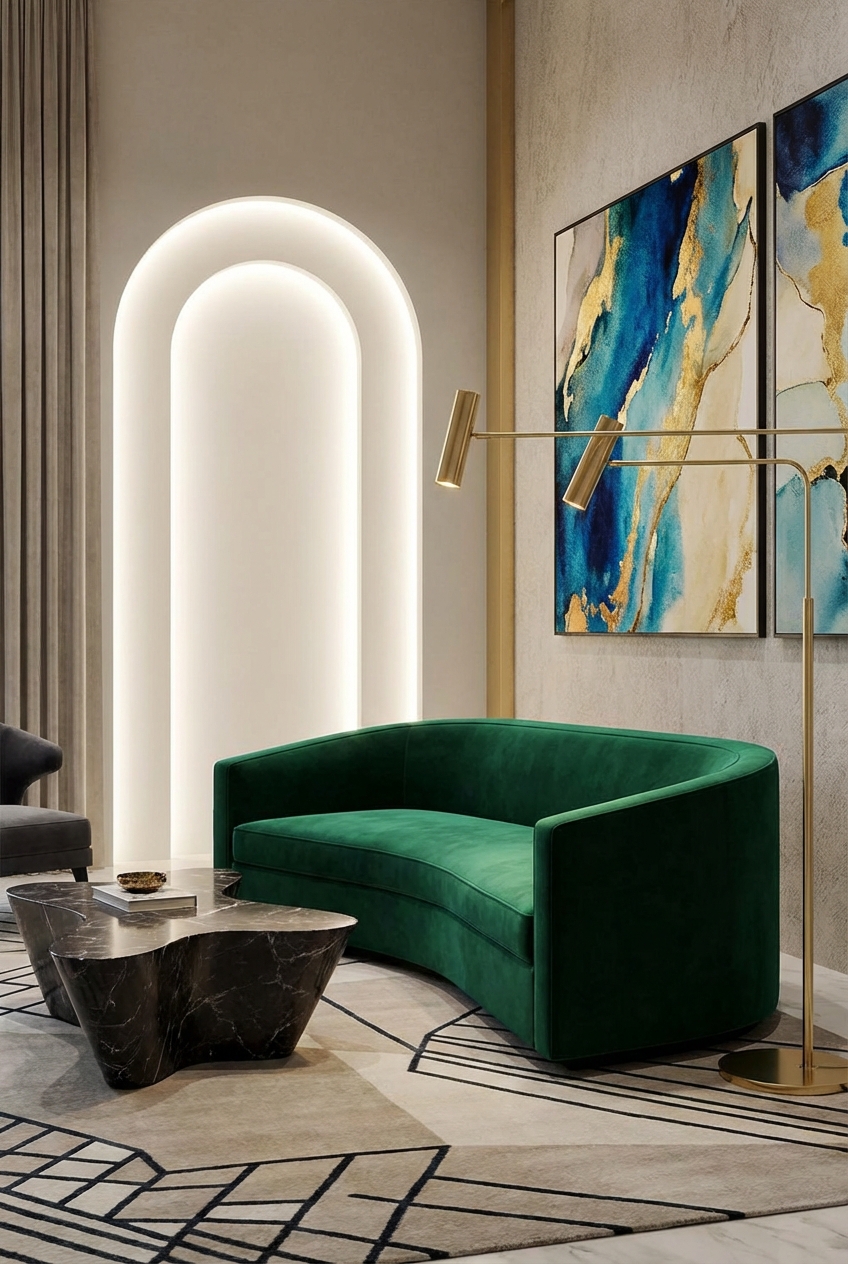
Should the chair be darker or lighter than the sofa? Either works. A darker chair anchors a pale sofa, and a lighter one lifts a heavy sofa. I'd avoid the middle ground where the two are almost the same shade but not quite, because it reads as a mistake.
Mismatched pairs of chairs can work too. Combine a shell chair with a tapered-leg lounge chair as long as the leg finish, fabric texture or color repeats.
What colors and materials suit a 1950s accent chair?
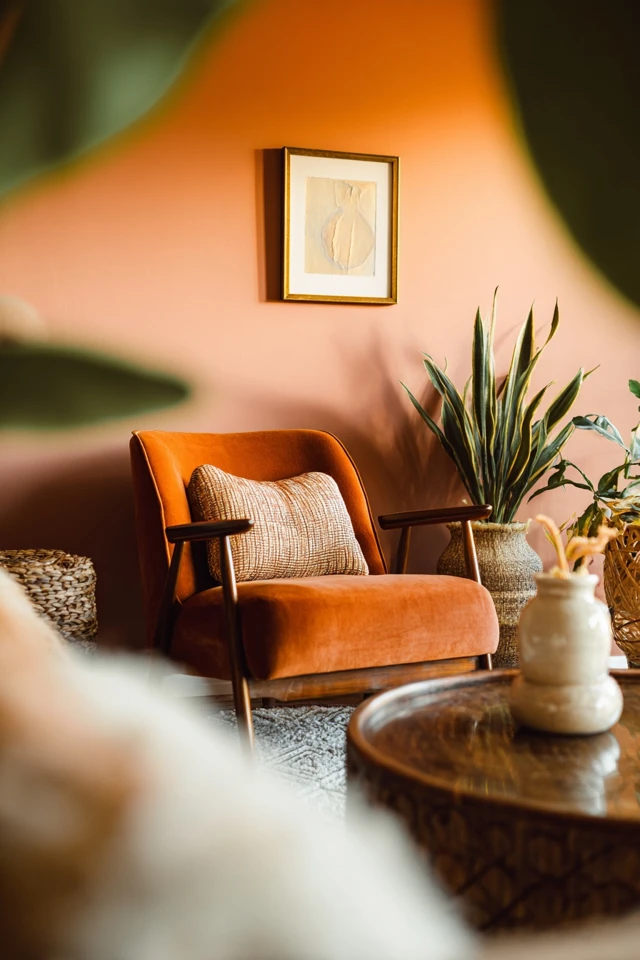
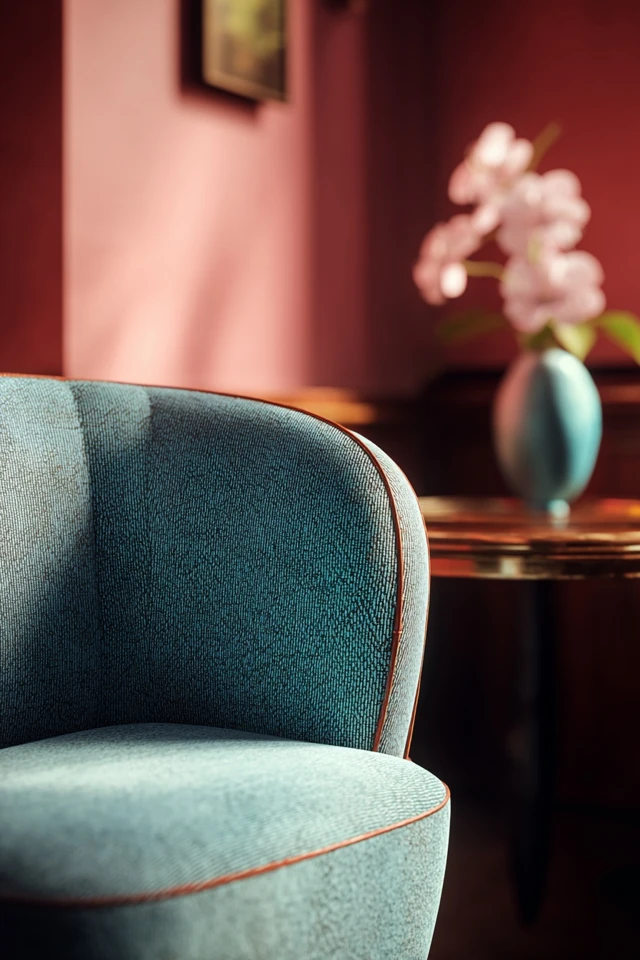
Warm tones such as mustard, terracotta and olive feel sociable and suit living rooms. Cooler teal, slate and soft blue feel calmer, which helps in a reading corner or bedroom. Muted shades look restful, and saturated ones make the chair the focal point.
Light changes everything. A walnut finish glows in daylight and flattens under a cool bulb. Warm bulbs (about 2700-3000K) flatter warm palettes, and cooler ones (about 3500-4000K) sharpen blues and greens. Check a fabric swatch in your room at morning and evening before you commit.
On materials, wood, leather and wool are the classic 1950s mix. Boucle and textured weaves add contrast against smooth leather. If a dog or cat shares the sofa with you, choose a tightly woven or performance fabric and a removable cushion, since loops and loose weaves catch claws. Leather wipes clean but can scratch, so check the care instructions for the specific finish.
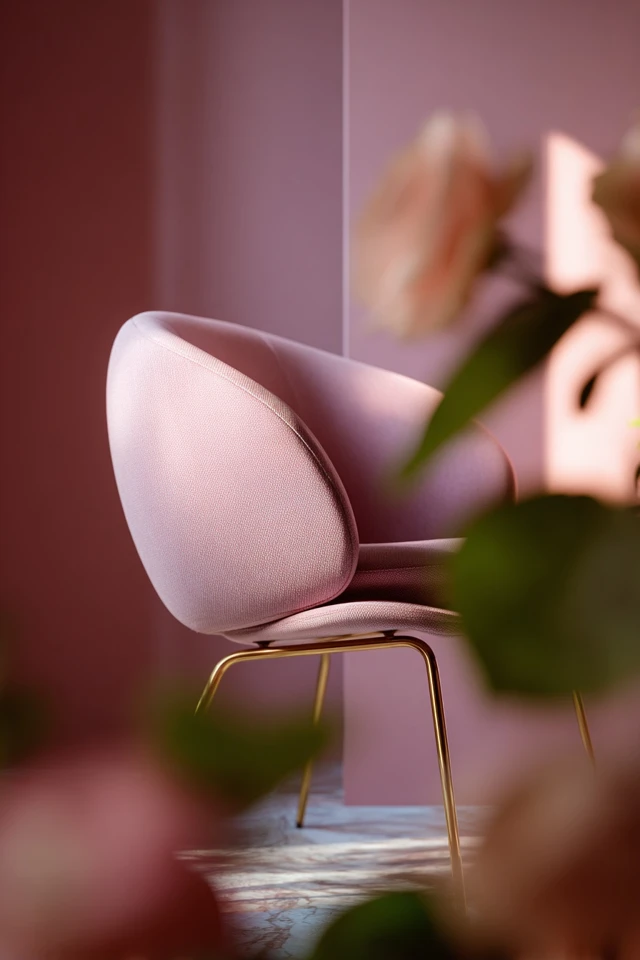
How do you style an accent chair?
The simplest way to style an accent chair is to build a small vignette around it.
- Place the chair at a slight angle to the sofa or toward the focal point, such as a window or fireplace.
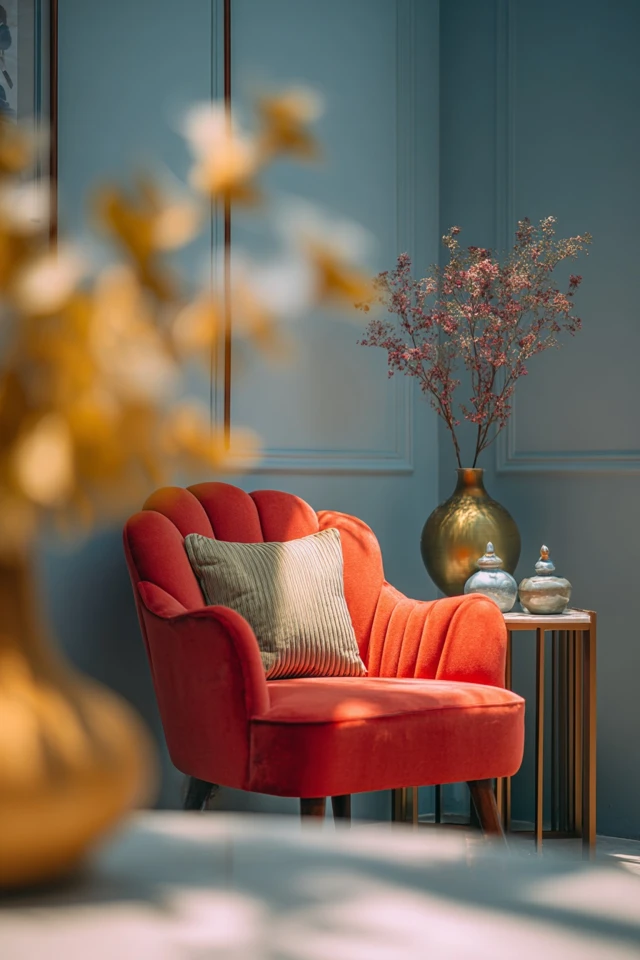
- Add a narrow side table within easy reach.
- Put a lamp beside it, either a floor lamp or a table lamp, so the corner works for reading.
- Add one throw or pillow in a texture that contrasts with the upholstery.
- Finish with a tall plant or a piece of art hung at eye level for a seated person.
Keep patterns in check: one large (a rug), one medium (a pillow), one small (a lampshade). And limit the surfaces nearby to a few objects so the chair stays the star.
As an architect, I'd try the layout with painter's tape on the floor before buying. It takes ten minutes and saves a return.
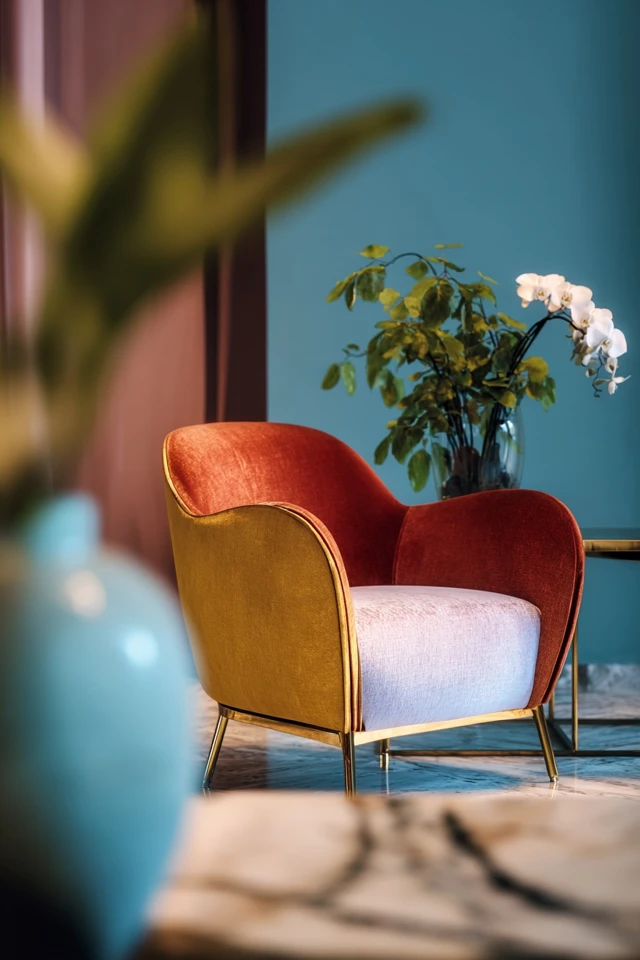
Accent chair ideas for a small living room
In a small space, the chair has to earn its footprint. A few ways to do that:
- Choose armless or slim-profile chairs with raised legs so the floor stays visible.
- Go for light upholstery or a color that matches your walls' undertone.
- Use a lightweight chair you can move to the table, the sofa or a window as needed.
- Keep a walking route of about 30-36 inches clear around it.
One well-placed chair usually feels more intentional than several small pieces squeezed in. If you want arms for comfort, pick a narrow frame with open sides rather than a padded block.
Layout ideas for larger rooms and open plans
In an open plan, a pair of lounge chairs flanking a low table can mark off a conversation area without walls. A rug under the front legs of the chairs helps define the zone. For conversation, keep seating close enough that people don't have to raise their voices, roughly 8-10 feet across is comfortable in most living rooms.
In big rooms you can try larger shapes, such as tub chairs, balanced by a low, long sofa. Repeat a color or material in each cluster so they feel related. If you're also planning the rest of the room, our notes on fireplace walls with a TV help with deciding which way the seating should face, and the chic bedroom ideas post covers the same approach for a bedroom corner.
Keeping the look current without chasing trends
Vintage revival, sustainability and bold accents are all popular now, and 1950s chairs fit each of them. Refurbished originals or well-made reproductions keep the silhouette authentic. Put trend-led color in removable pieces such as cushions or a slipcover, and keep the chair itself classic. One or two trend-forward choices per room is plenty.
For vintage pieces, vacuum upholstery regularly, treat spills quickly, condition leather, and dust wood. For a truly valuable antique, ask a restoration specialist before cleaning it yourself.
Frequently asked questions
Should accent chairs be darker or lighter than sofas?
Either can work. A darker chair grounds a pale sofa, and a lighter chair relieves a heavy, dark one. Avoid shades that are nearly the same but slightly off.
What are some good decor ideas for an accent chair?
Pair it with a narrow side table, a lamp for reading and a plant or artwork nearby. Add a throw in a contrasting texture and repeat one color from the chair elsewhere in the room.
Can I mix different 1950s chair styles in the same room?
Yes, if one element ties them together, such as leg finish, fabric texture or color. A molded shell chair and a tapered-leg lounge chair can share a room that way.
What paint colors go with mid-century chairs?
Warm neutrals like soft beige or greige are versatile. Mustard or olive chairs also look good against muted teal or charcoal. Test swatches in your own lighting first.
Filed under
ArticlesMeet the author
Written by an architect.
Julio Arco is a passionate architect with years of experience in architecture, interior design, urban design, and housing. He studied at prestigious universities across North America and Europe.

- Name
- Julio Arco
- Job
- Architect and online interior designer
- Studied
- Architecture, ITESM · Urban Design and Housing, McGill
- Partner
- Thor, Australian Shepherd
- Thor’s title
- Head of quality control