Accent Chair Ideas: 1960s Styles for a Warm Living Room
Accent chair ideas inspired by the 1960s: how to pick a shape, match or mismatch with your sofa, and place the chair in small rooms and reading corners.

By Julio Arco
Architect and online interior designer
In this post
- What makes a 1960s chair work as an accent piece?
- Which colors and textures suit accent chair ideas for a living…
- Do accent chairs have to match the sofa?
- How do you style an accent chair in a small room?
- Where should an accent chair go?
- Which materials hold up best?
- Small styling details that finish the corner
- Which trends are worth borrowing?
- Frequently asked questions
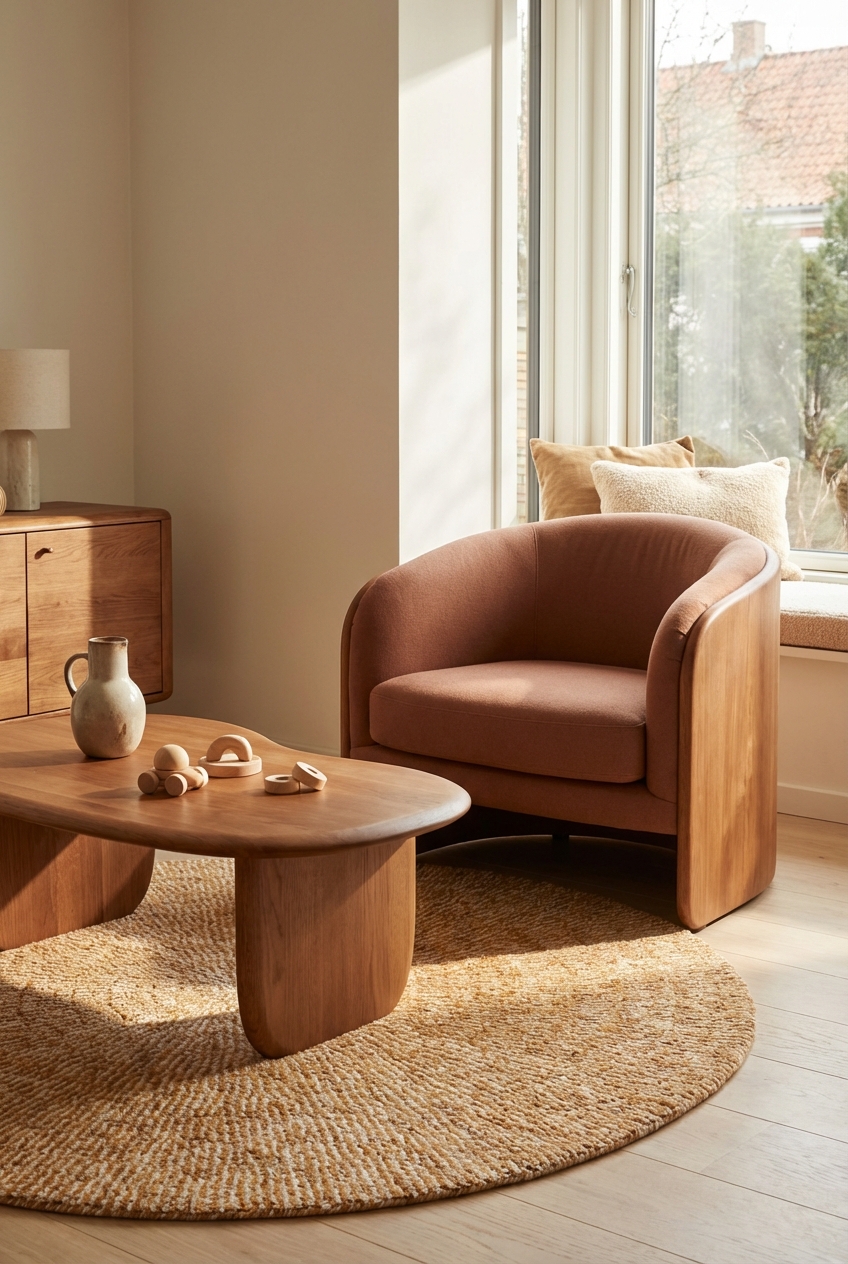
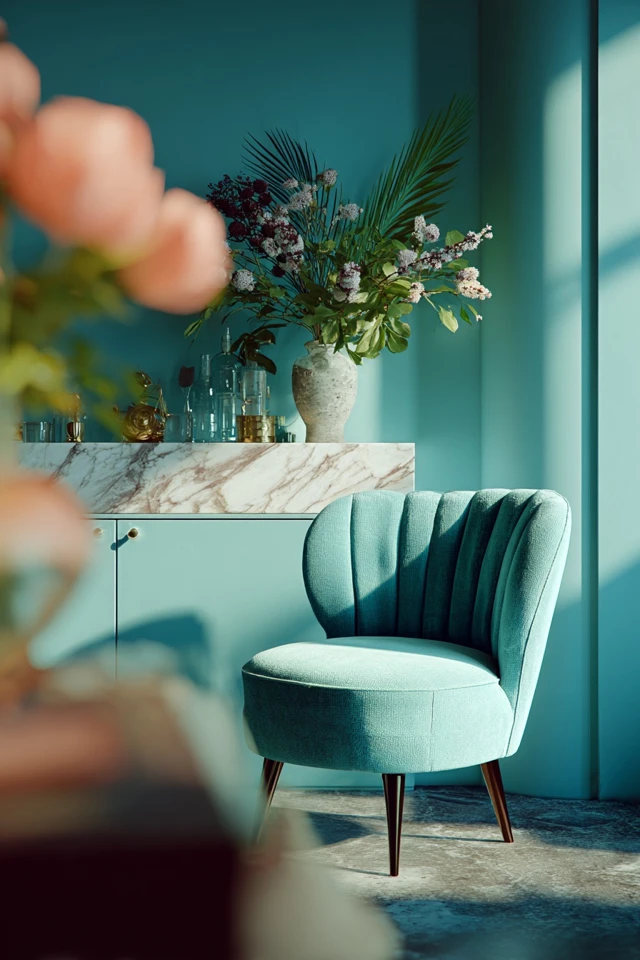
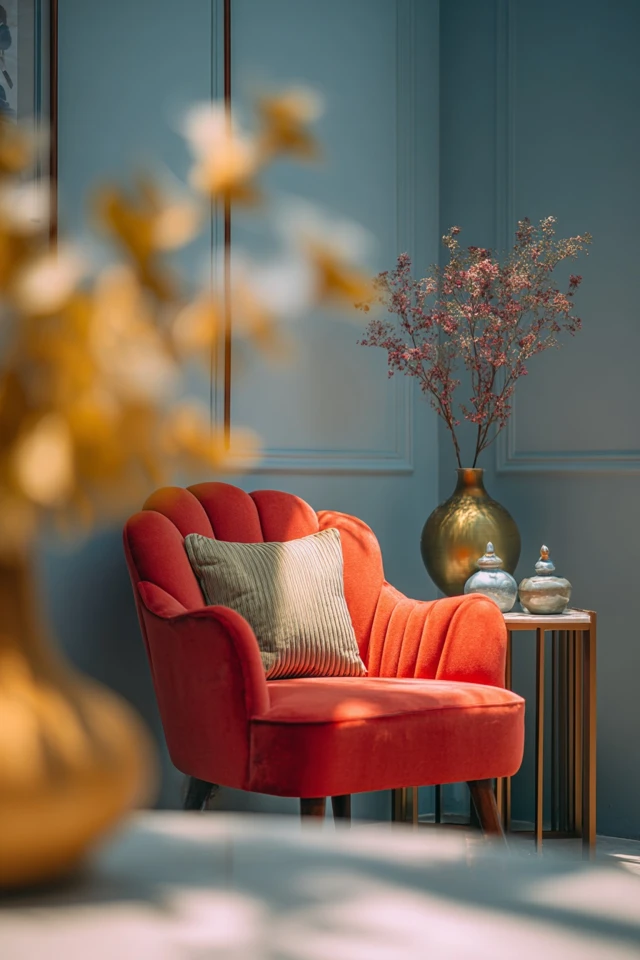
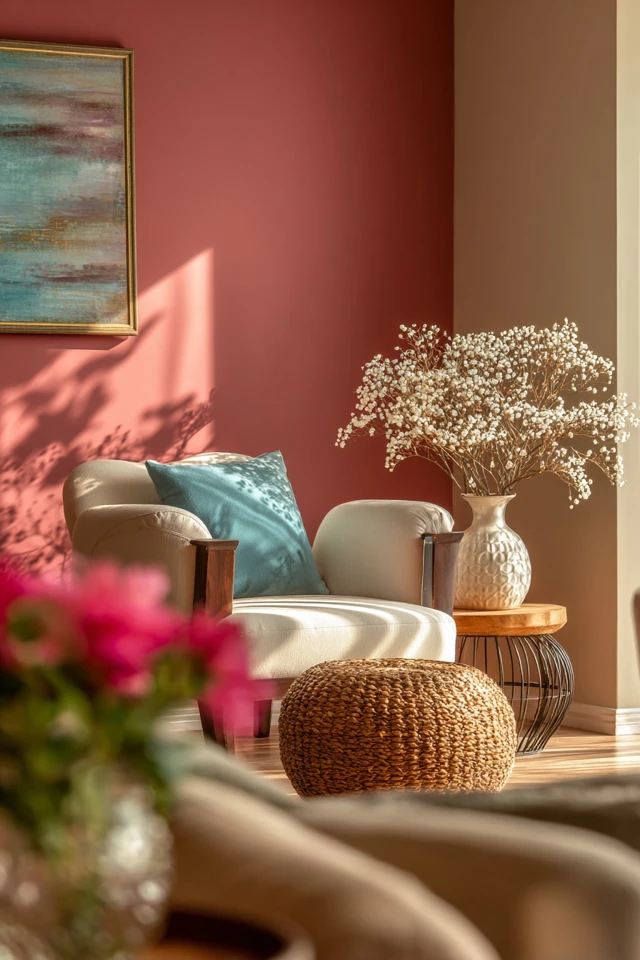
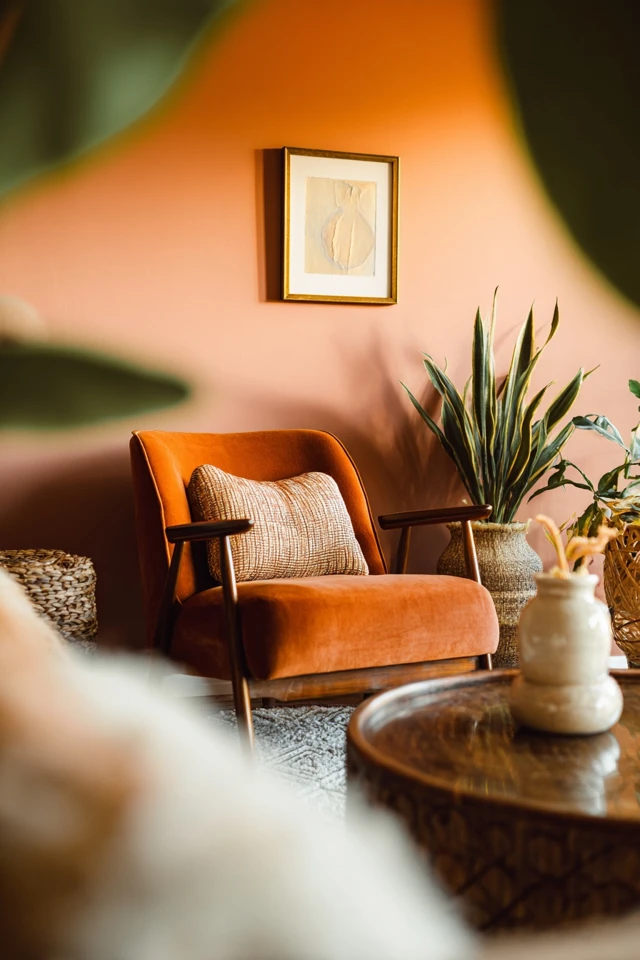
A 1960s-style chair is one of the easiest accent chair ideas to build a room around. The shapes are low, curved and human-scaled, the frames are usually wood or metal, and the upholstery runs from wool to bouclé to leather. Pick one, give it some breathing room, and let it be the thing people notice first.
Below you'll find ideas for choosing the shape, color and material, how to place the chair, and what to do about the sofa.
What makes a 1960s chair work as an accent piece?
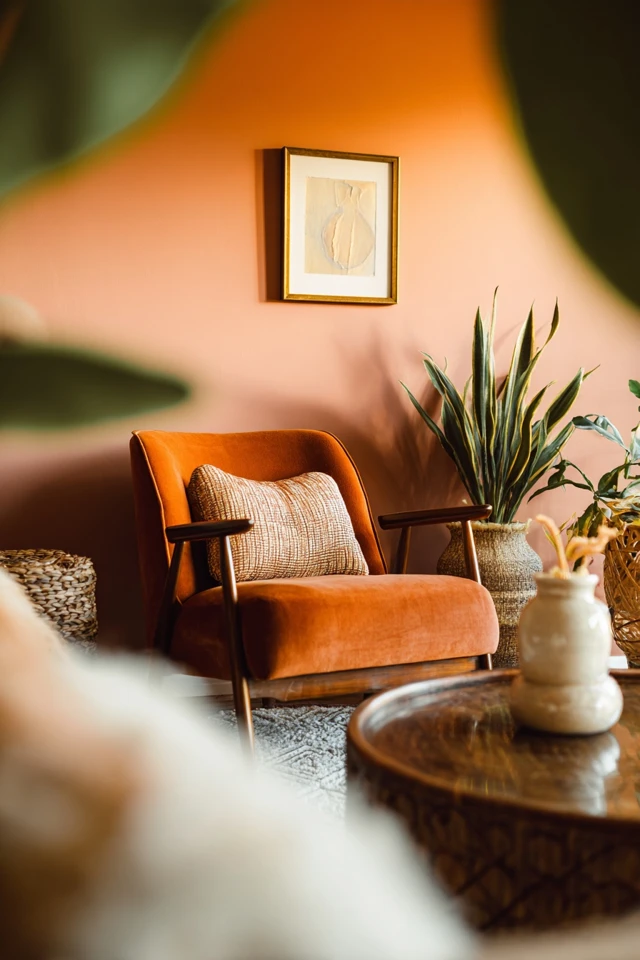
Mid-century chairs tend to have exposed legs, tapered or curved lines and modest proportions. That matters in a living room because you can see the floor underneath, so the chair reads lighter than a skirted armchair of the same size.
Think of balance first. A single bold chair needs a counterweight: a low sofa, a floor lamp, or a side table with a stack of books on the other side. Asymmetry feels relaxed, and it keeps the chair from looking like it wandered in from another house.
Which colors and textures suit accent chair ideas for a living room?
Classic 1960s palettes lean warm: olive, mustard, rust, warm taupe and charcoal. A saturated chair against quiet walls gives you a focal point without shouting. Muted tones are calmer, so choose by how lively you want the corner to feel.
Light changes everything. Warm tones look stronger in south- and west-facing rooms, while a north-facing room can use warmer textiles to offset cool daylight. Bulbs around 2700-3000K keep wood tones from going gray in the evening.
For texture, pair opposites. A smooth teak frame looks good with a wool throw, and a sleek molded shell chair likes a plush rug underneath. Glossy surfaces bounce light and make crisp shadows, while bouclé and wool soften them.
Do accent chairs have to match the sofa?
No. They shouldn't match exactly, because a matching chair just looks like part of a set. Aim for a connection instead: repeat a color from a pillow, a wood tone from the coffee table, or a curve from a lamp.
Mismatched accent chairs in a living room work best when two things stay constant. Keep a similar visual weight (a chunky sofa with a spindly chair can look lopsided), and keep one shared element, usually color family or material.
Should the chair be darker or lighter than the sofa?
Either can work. As an architect, I'd go darker or more saturated when the sofa is neutral, so the chair becomes the accent. If the sofa is already bold, choose a quieter chair and let texture do the talking.
How do you style an accent chair in a small room?
For accent chair ideas for a small living room, choose a chair with exposed legs and slim arms. You keep sightlines open, and the floor continues visibly beneath it.
- Pull furniture about 6-12 inches off the wall so the room has some air.
- Keep about 30-36 inches clear for the main walkway.
- Use a pouf or a small side table with storage instead of two separate pieces.
- Keep the palette tight so the chair doesn't compete with five other colors.
Where should an accent chair go?
A reading corner
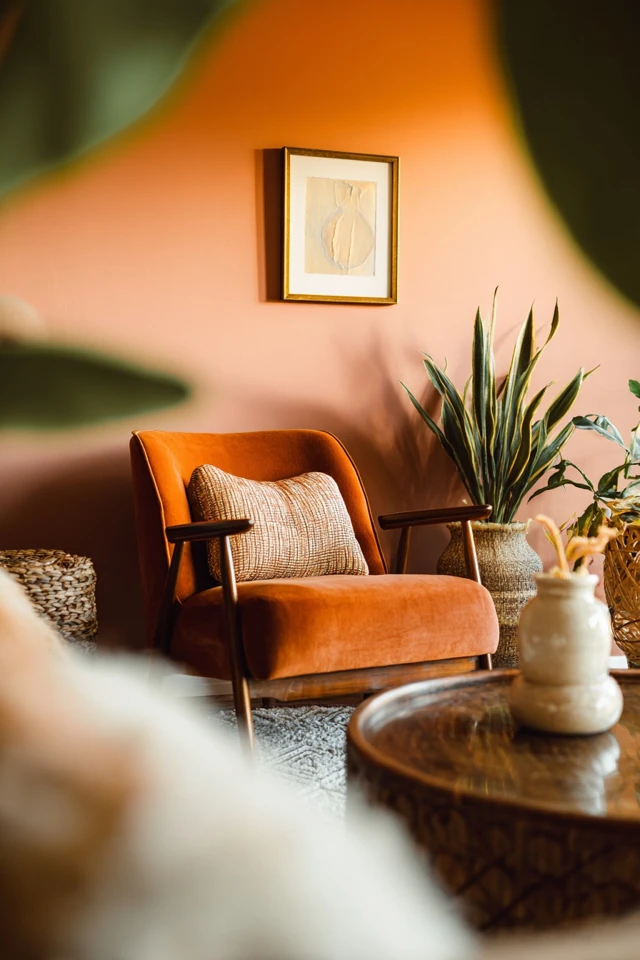
Put the chair near a window, add a low side table and a warm lamp, and you're done. A throw over the back adds comfort. If the chair back is low, a small lumbar cushion helps you sit longer.
Conversation groups
Angle the chair toward the sofa or fireplace so people can talk without twisting. Placing the front legs on the rug ties the chair to the seating group.
An empty corner
A chair plus a floor lamp or a large plant fills the gap. In bigger rooms, you can create a second small vignette with its own rug and light.
Which materials hold up best?
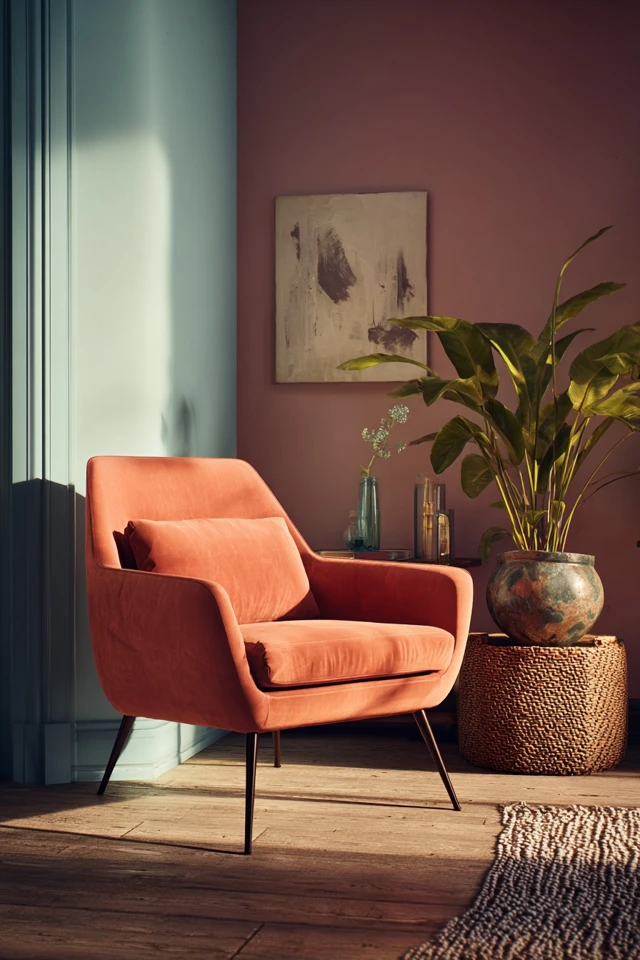
Wood and metal frames last. Wool and bouclé are warm to the touch but can snag, which is worth thinking about if a dog or cat shares the chair. I recommend a tight weave or a performance fabric for any chair that gets pet traffic, and a washable throw on top. Leather wipes clean, though claws can mark it, so check how it handles scratches before buying.
Vintage upholstery can be fragile. If you find a good frame in worn fabric, reupholstering in a modern performance textile keeps the look and makes daily use easier.
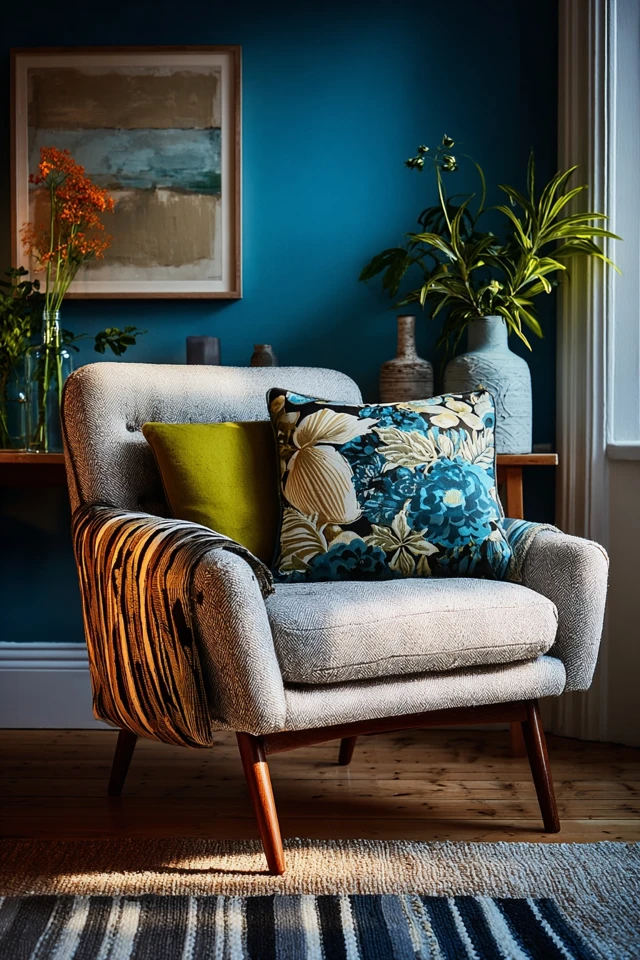
Small styling details that finish the corner
- Choose one main metal, such as brass or matte black, and use a second one sparingly.
- If the chair is patterned, keep the throw and cushions solid. If it's solid, add one patterned cushion.
- Hang art at eye level when seated so it relates to the chair, not to the ceiling.
- Add a plant with large leaves nearby. Check with your vet that any plant is safe around your pets before you bring it home.
If you want a similar warm color story elsewhere, colors that go with yellow pairs well with mustard upholstery. For a bolder backdrop behind the chair, see these cool wallpaper ideas, and the same logic applies in a bedroom corner.
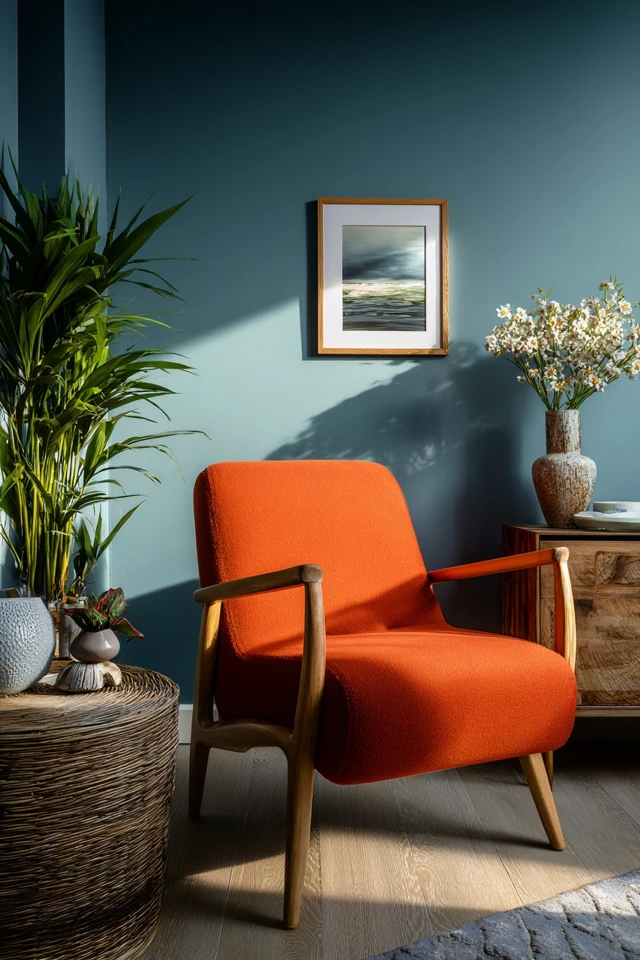
Which trends are worth borrowing?
Earthy palettes, sustainable upholstery and mixed metals are all showing up. Take them in small, reversible steps: a trend-colored cushion or a new lamp costs less than a new chair. Keep the large pieces neutral and the frame well made, and the chair will outlast the trend.
Frequently asked questions
What are some good decor ideas for an accent chair?
Pair it with a small side table and lamp for a reading nook, angle it toward the sofa for conversation, or fill an empty corner with the chair and a floor lamp. A throw and one patterned cushion add texture.
Should accent chairs be darker or lighter than sofas?
Either works. A darker or more saturated chair stands out against a neutral sofa, while a bold sofa calls for a quieter chair.
How can I make a small room with a 1960s chair feel larger?
Choose a chair with exposed legs, keep the palette light and cohesive, and float furniture slightly off the wall. A mirror opposite a window helps reflect light.
How do I mix patterns with a bold upholstered chair?
Keep one dominant neutral, add one medium-scale and one small-scale pattern, and repeat a shared color. Let the chair stay the focal point.
Filed under
ArticlesMeet the author
Written by an architect.
Julio Arco is a passionate architect with years of experience in architecture, interior design, urban design, and housing. He studied at prestigious universities across North America and Europe.

- Name
- Julio Arco
- Job
- Architect and online interior designer
- Studied
- Architecture, ITESM · Urban Design and Housing, McGill
- Partner
- Thor, Australian Shepherd
- Thor’s title
- Head of quality control