Timeless Oriental Landscape Decor for a Chic Home
Asian landscape design explained: the principles, plants, layout steps and small-space ideas to build a calm, low-maintenance garden at home.

By Julio Arco
Architect and online interior designer
In this post
Asian landscape design comes down to a few repeatable moves: layered foliage, a short list of materials, a limited palette, and a sense of enclosure that makes a yard feel calm. You don't need a big lot or a pond to use them.
Below are the principles, the elements to borrow, a simple layout method and some pet-aware notes, plus a short section on bringing the same look indoors.
What is Asian landscape design?
It's a broad family of garden traditions (Japanese, Chinese, Korean and Southeast Asian among them) that treat the garden as a composed piece of nature rather than a lawn with plants around it. Michigan State University's Beal Botanical Garden notes that most Asian garden designs are influenced by cultural philosophies, and the design spirit is always surrounded by mother nature.
Landscape architect Yun Cao, writing for the same collection, puts the goal this way: "Including culture into the garden makes the space meaningful rather than just a plant collection." In practice, that means choosing fewer things and placing each one on purpose.
Key principles to borrow
These are the ideas that carry across most styles, and they work in any climate if you pick plants to match.
- Asymmetric balance. Place a boulder and a small tree off-center and let open ground weigh against them.
- Foliage over flowers. Texture and shape do the work, so blooms are a seasonal bonus.
- A restrained palette. Greens, grays and stone tones, with one or two accents at most.
- Enclosure. A fence, hedge or screen planting separates the garden from the street and makes it feel like a room.
- Revealed views. A bend in the path or a screen of leaves means you don't see everything at once.
Key elements of a Japanese garden
The key elements of a Japanese garden most often listed are stone, water, plants, a path, an ornament such as a lantern, and some form of enclosure. You can use all of them or only two. A single well-placed rock group with moss or low groundcover around it already reads as the style.
Water doesn't have to mean a pond. A small basin or a bed of raked gravel standing in for water is a common substitute, and it's easier to keep clean and safer around a dog that likes to wade.
How to layout a Japanese garden
If you're asking how to layout a Japanese garden, work from the outside in, and measure before you buy anything.
- Decide the main view, usually from a window, a patio or the front door. Everything is composed for that spot.
- Set the enclosure first: fence, hedge or tall screen planting along the edges.
- Place the largest stones and one focal tree, off-center, in odd-numbered groups.
- Lay a path that curves slightly, wide enough for one person (about 24-36 inches), with stepping stones or compact gravel.
- Fill in with layered planting: tall, medium, then groundcover.
- Add one ornament, such as a lantern or a bowl, and stop there.
Best plants and layered planting
Think in layers: a canopy tree or large shrub, mid-height evergreens or grasses, ferns or hostas in shade, and groundcover at the base. Bamboo, Japanese maple, azaleas, mosses and ornamental grasses are the usual cast, but choose what survives your climate and ask your local nursery what's hardy. If a dog or cat chews plants, check each species with your vet before planting it.
Plant in drifts rather than single specimens. As Master Gardener Deb Christopher of Westmoreland County explains, "If disease or pest problems arise, the entire monoculture planting may be killed. Instead, consider planting drifts or groups of single species, providing a patchwork-quilt effect."
For groundcover, Colorado State University Extension says plants that are low-growing (generally less than 24 inches) and spread easily are suitable ground cover plants. Skip plastic landscape cloth under them: Penn State Extension notes that it is not recommended to use plastic or synthetic landscape cloth on top of or under the soil, because it can increase erosion and water runoff.
Asian landscape design for small spaces
Asian landscape design for small spaces works well because the style already favors restraint. For small Asian garden ideas, try these:
- One boulder group, one small tree and a groundcover, with nothing else competing.
- A gravel or stepping-stone path that bends, even if it's only 6-8 feet long.
- Tall, narrow plants such as clumping bamboo in a container along a fence, which add height without taking floor area.
- A bench or a single bowl as the one focal object.
For a front yard, keep the same palette as the house and let a curved path and layered planting replace part of the lawn. A backyard can go further, with a screened seating corner and a gravel zone.
Making it dog-friendly
Gravel and stone are hard on paws if they're sharp, so pick rounded pea gravel for walkways and test it barefoot. If you want to keep a patch of green, the UC Marin Master Gardeners point out that white clover does not show pet urine damage. Fence gaps and loose stone stacks are easy for dogs to knock over, so build them low and stable. As an architect, I'd also keep the main route through the garden clear so the dog's usual run doesn't trample your new plants.
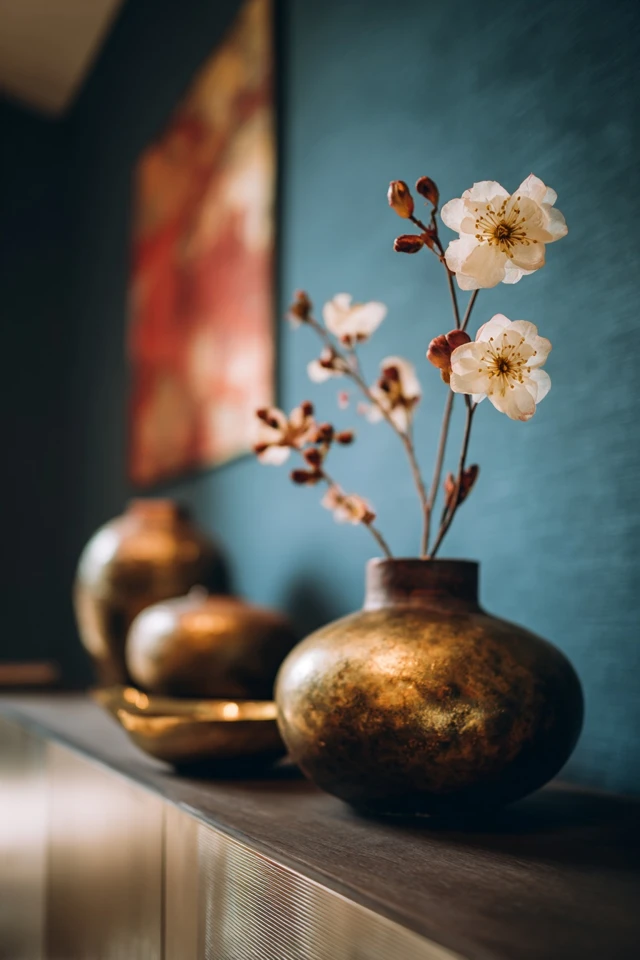
Bringing the look indoors
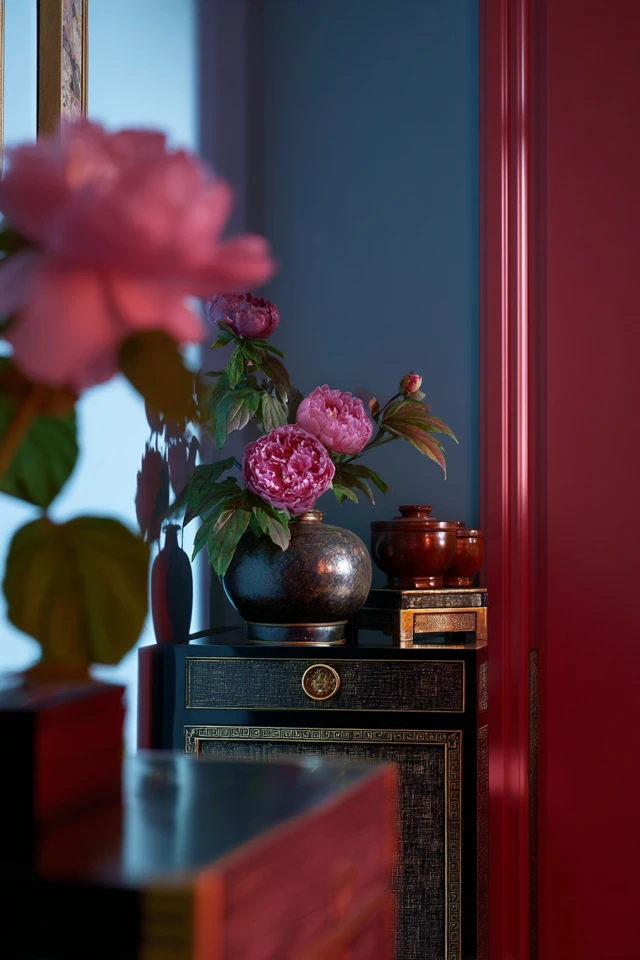
You can echo the garden inside with a landscape print, a low bowl of stones or a wood and linen palette near the window that faces the yard. The same restraint applies: one focal piece, not a collection. If you want a full room built on this calm, see the zen bedroom ideas and the chic bedroom ideas.
Frequently asked questions
What are some ideas for Asian-style landscaping?
Start with a gravel or stepping-stone path, a small group of boulders, layered foliage plants and a screen of bamboo or a fence for privacy. One lantern or bowl is enough decoration.
What is Japanese landscaping called?
It's usually called a Japanese garden (nihon teien in Japanese). Subtypes include dry gravel gardens, tea gardens and stroll gardens.
Can I build an Asian-style garden in a small yard?
Yes. Use one focal tree, a boulder group, a curved path and a single groundcover, and keep the palette to greens and stone tones.
Filed under
ArticlesMeet the author
Written by an architect.
Julio Arco is a passionate architect with years of experience in architecture, interior design, urban design, and housing. He studied at prestigious universities across North America and Europe.

- Name
- Julio Arco
- Job
- Architect and online interior designer
- Studied
- Architecture, ITESM · Urban Design and Housing, McGill
- Partner
- Thor, Australian Shepherd
- Thor’s title
- Head of quality control