Pool Deck Ideas: Affordable Options for Any Pool
Pool deck ideas for above ground and inground pools, from cheap gravel and pavers to wood and concrete, plus tips on layout, plants and safety.

By Julio Arco
Architect and online interior designer
In this post
The cheapest pool decks that still look good use one hard material close to the water (pavers, poured concrete or wood), then soften the edges with gravel, potted plants and groundcover. You don't need to cover the whole perimeter. A deck or patio on the side where you sit, and planting everywhere else, is how most budget projects work.
Below are ideas for above ground and inground pools, a comparison of materials, and the layout and planting rules I'd follow for a tropical, lush look without a landscaper's bill.
What are the best options for decking around a pool?
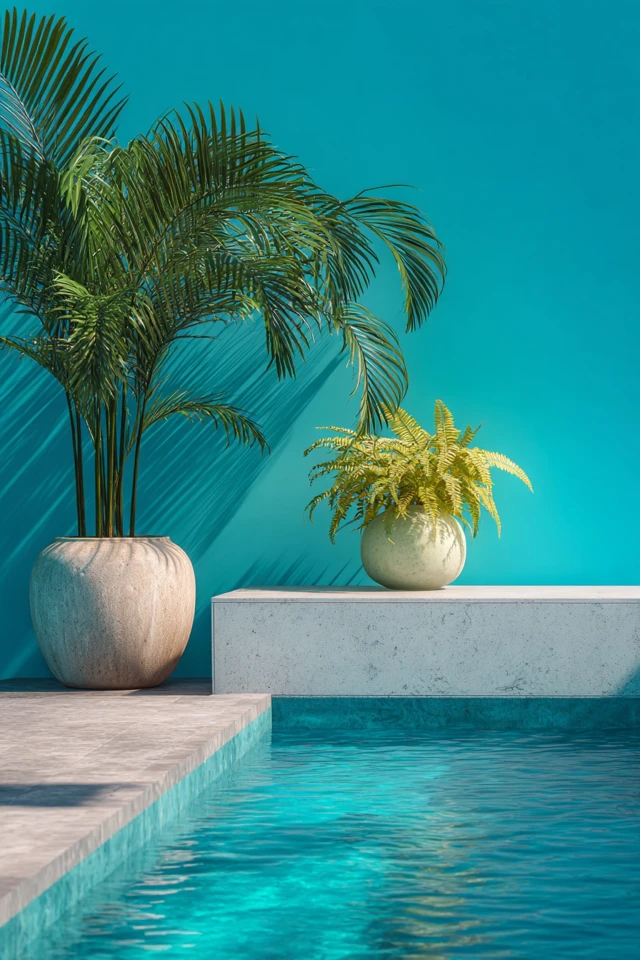
There are four common choices, and each trades cost against upkeep and comfort underfoot.
- Wood: warm and easy to cut to odd shapes, but it needs sealing and can splinter.
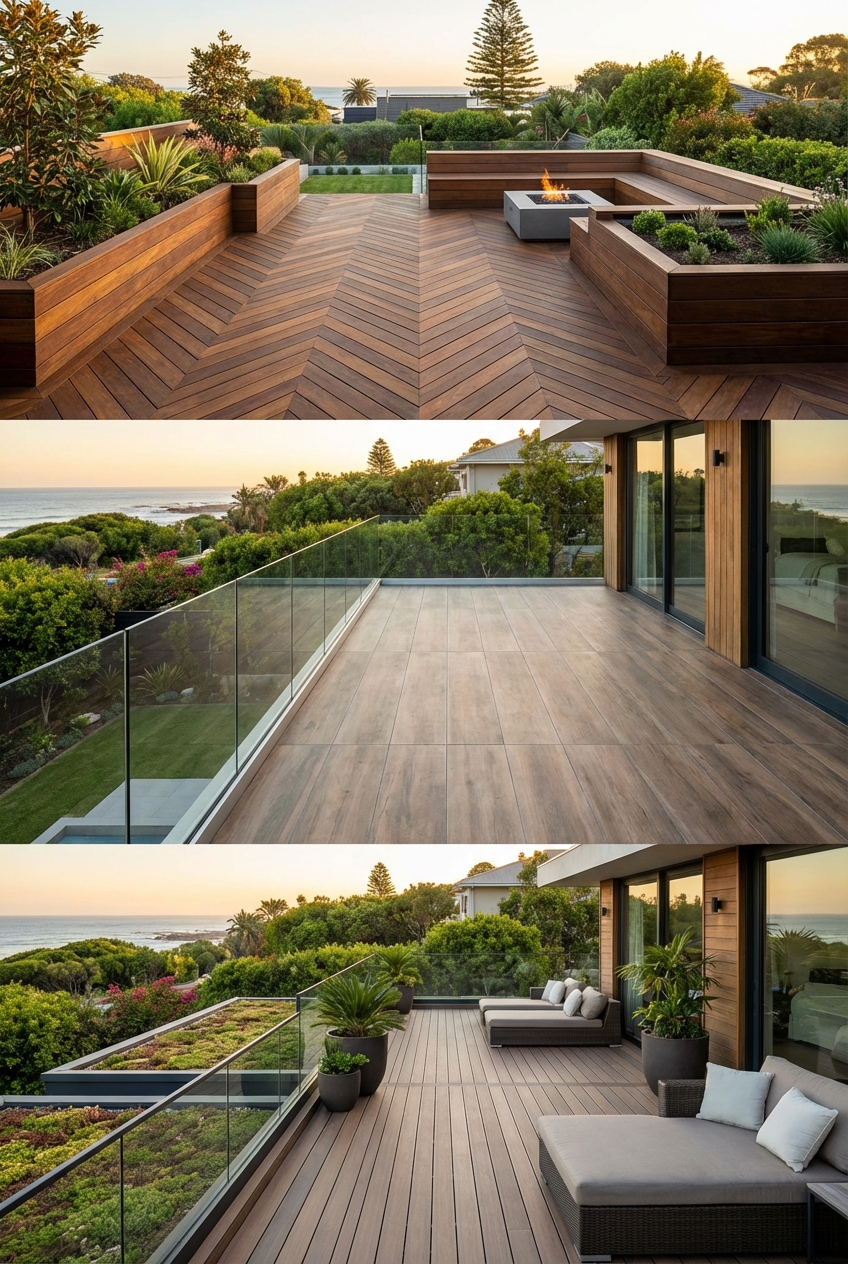
- Composite: costs more up front, resists fading and rot, and needs little care.
- Concrete: durable and cheap per square foot, and it can be stamped, stained or textured.
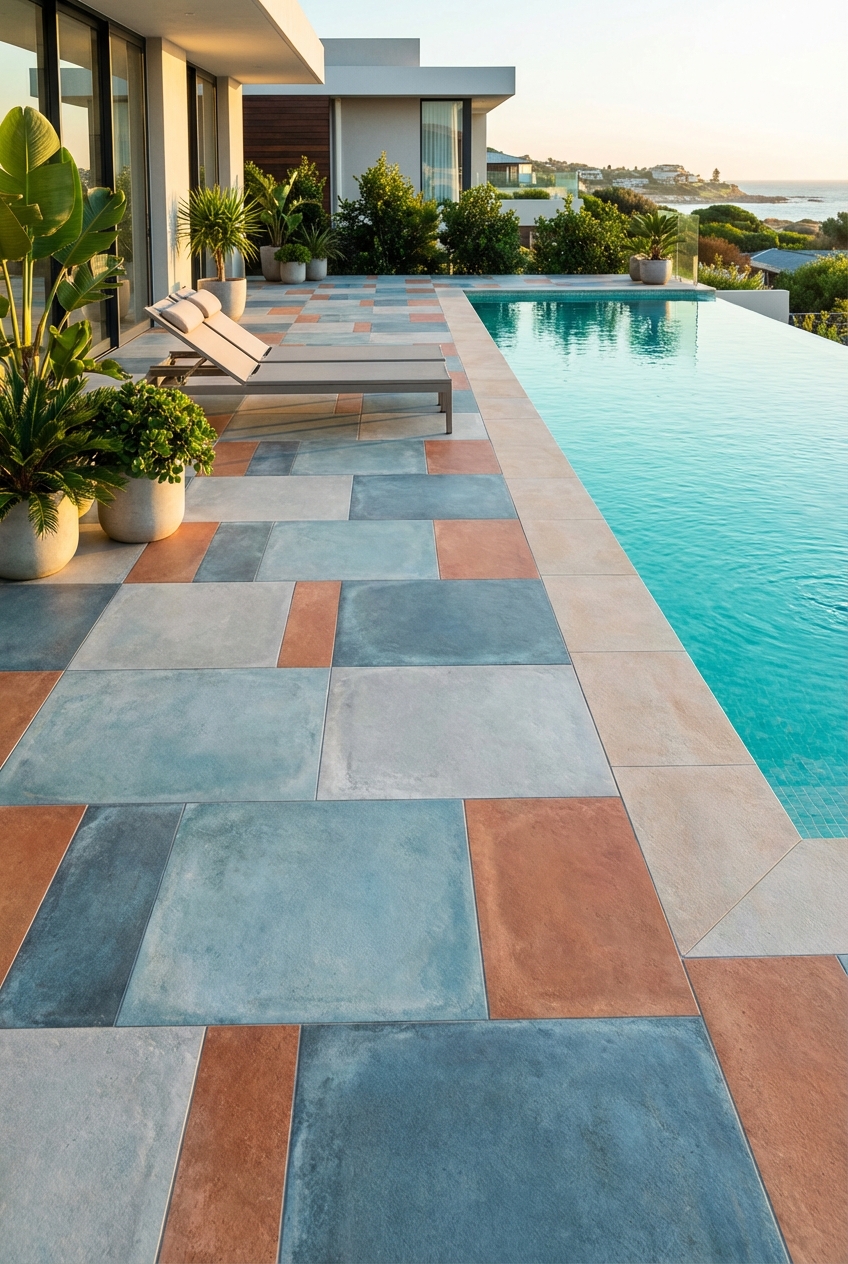
- Pavers and natural stone: easy to repair one piece at a time, and travertine or textured stone gives good grip when wet.
Whatever you pick, choose a textured, slip-resistant finish. A smooth surface next to water is a bad bet, especially with kids and dogs running barefoot or on paws.
Wooden pool deck ideas
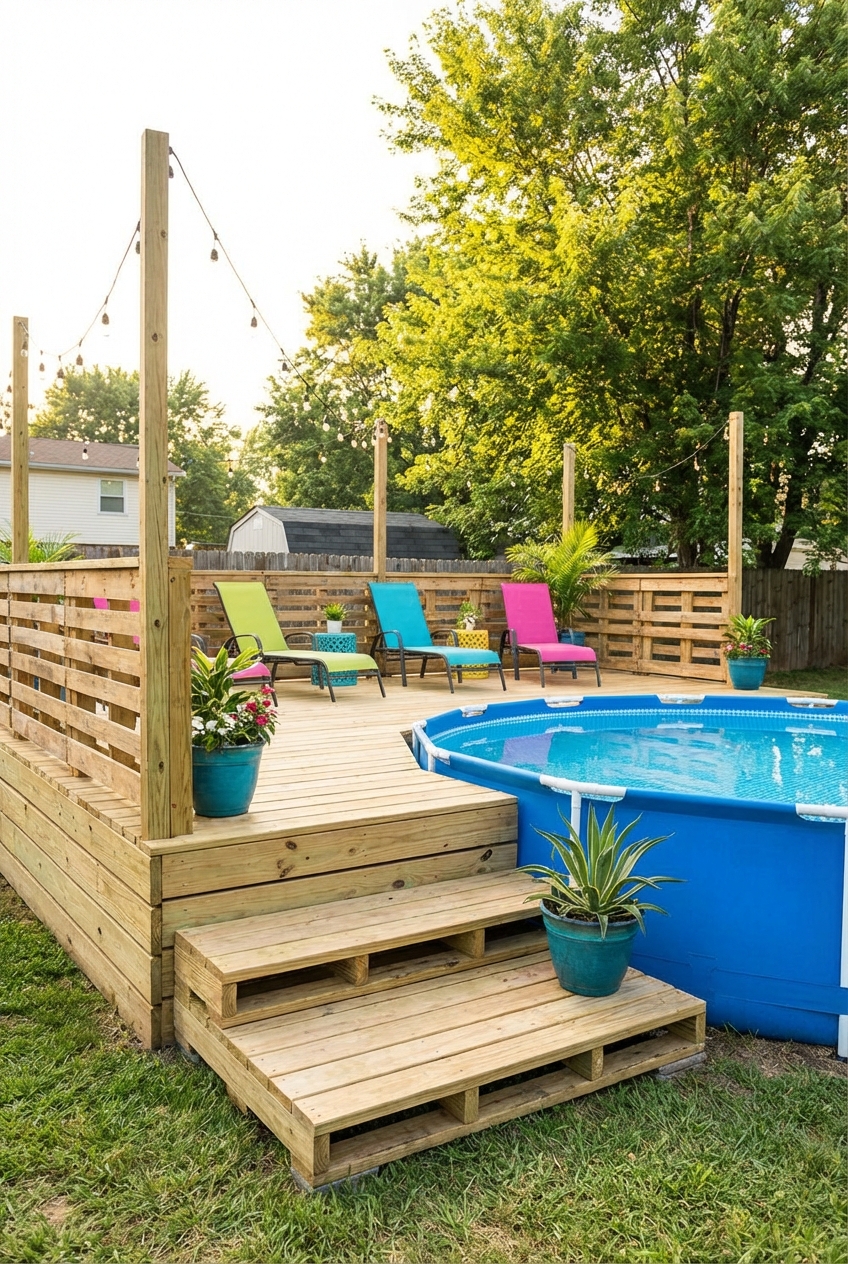
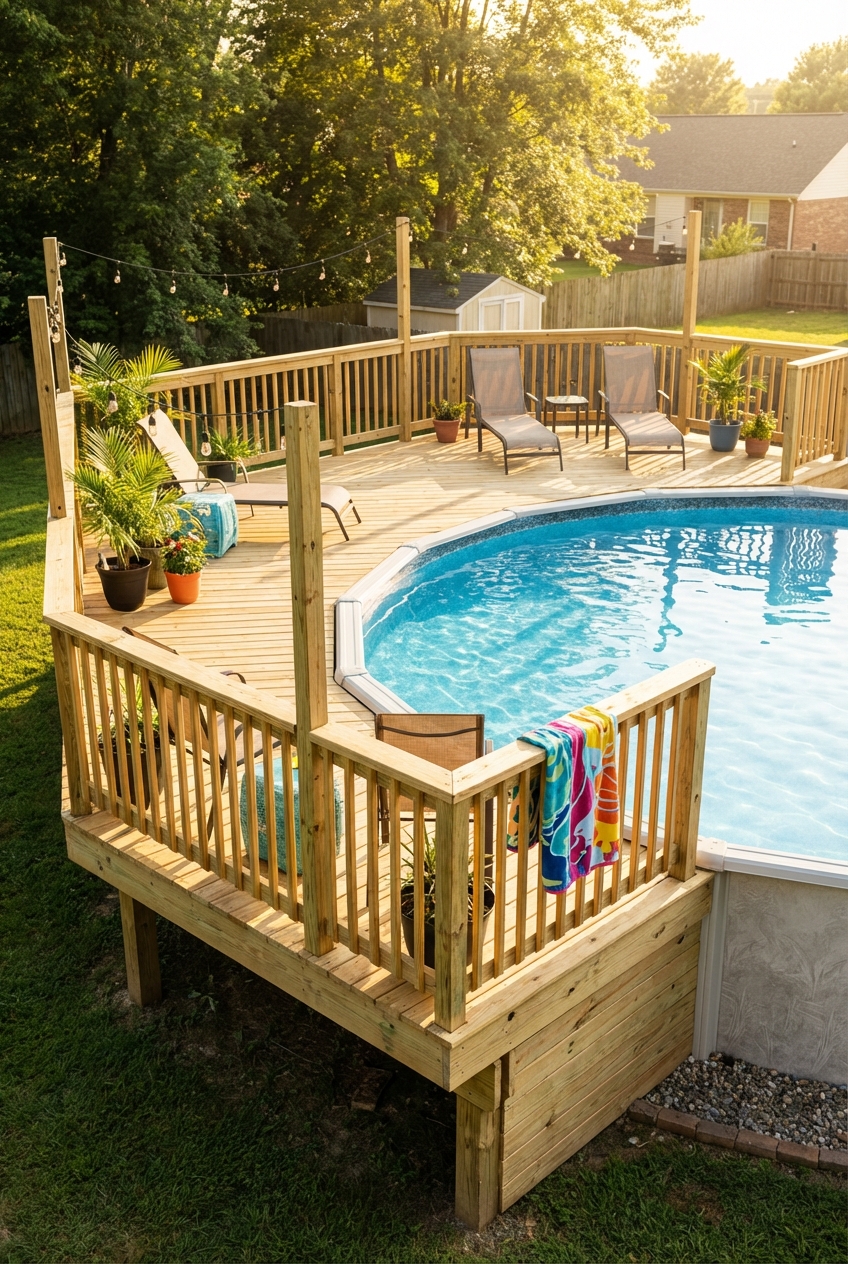
Wood suits above ground pools best, because a deck can wrap one side and bring you up to the rim. A simple platform with a rail, a built-in bench and a gate is far cheaper than a full wraparound. Pressure-treated lumber is the budget option. Hardwoods like ipe or teak last longer but cost much more.
Leave small gaps between boards so water drains, and seal the wood on a schedule. Check the deck attachment and railing with a licensed contractor if the deck is high or tied to your house, since it's a safety structure.
Concrete pool deck ideas
Concrete is the workhorse for inground pools. A broom finish gives grip, and a light color stays cooler underfoot than a dark one. Stamping or staining can imitate stone for less than real stone. Add control joints so it cracks where you want it to.
If a full slab is out of budget, pour a smaller pad for loungers and a table, then use gravel or pavers for the rest.
Pool deck ideas on a budget
These are the cheap pool surround ideas I'd start with:
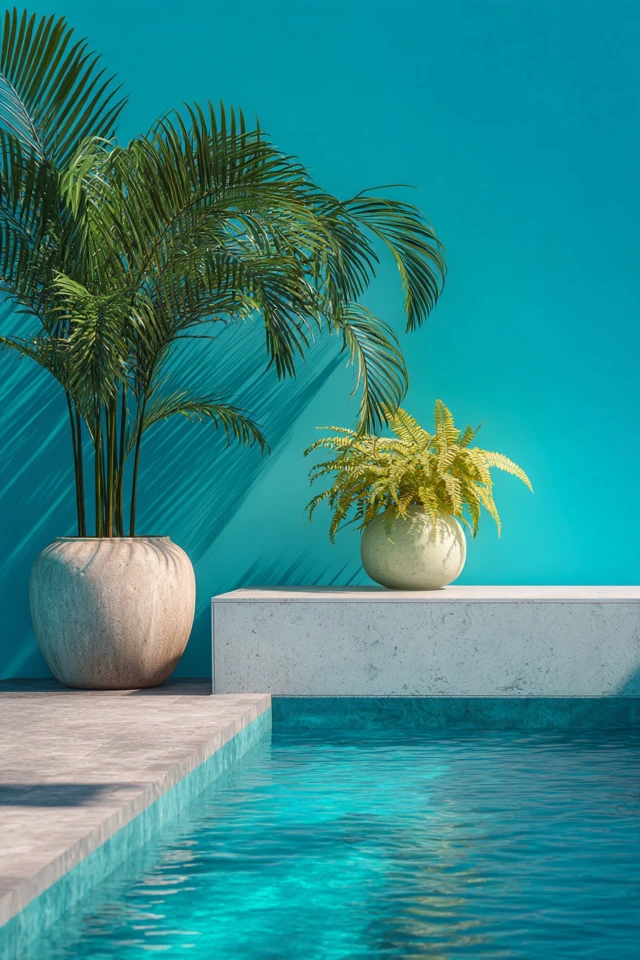
- Pea gravel or crushed stone with solid edging. It drains well and costs little, but keep it away from the skimmer so pebbles don't end up in the water.
- Concrete pavers laid on compacted base, one section at a time as money allows.
- Interlocking deck tiles over a level, firm surface for a quick lounging area.
- A small platform deck only where you sit, with planting around the rest of the pool.
- Mulch beds with large pots for instant height.
A partial deck is usually the better use of money than a thin, cheap deck on all sides. Spend on the zone you'll actually use.
Inground vs. above ground: how the surround changes
With inground pool deck ideas, the surround sits flush with the coping, so the material you pick is also your main walking surface. Drainage should slope away from the pool.
For above ground pool deck ideas, the goal is to hide the wall and give safe access. A deck on one or two sides, skirted with lattice or planting, makes the pool feel built in. Round and oval pools both work with a straight-sided deck against one flat side, which avoids expensive curved cuts.
How do you make it feel tropical?
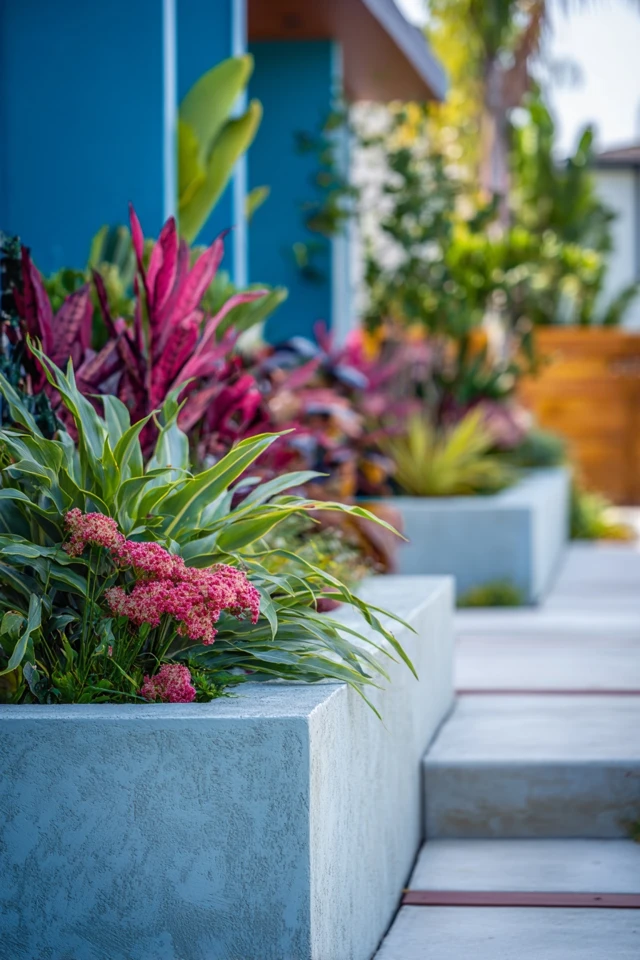
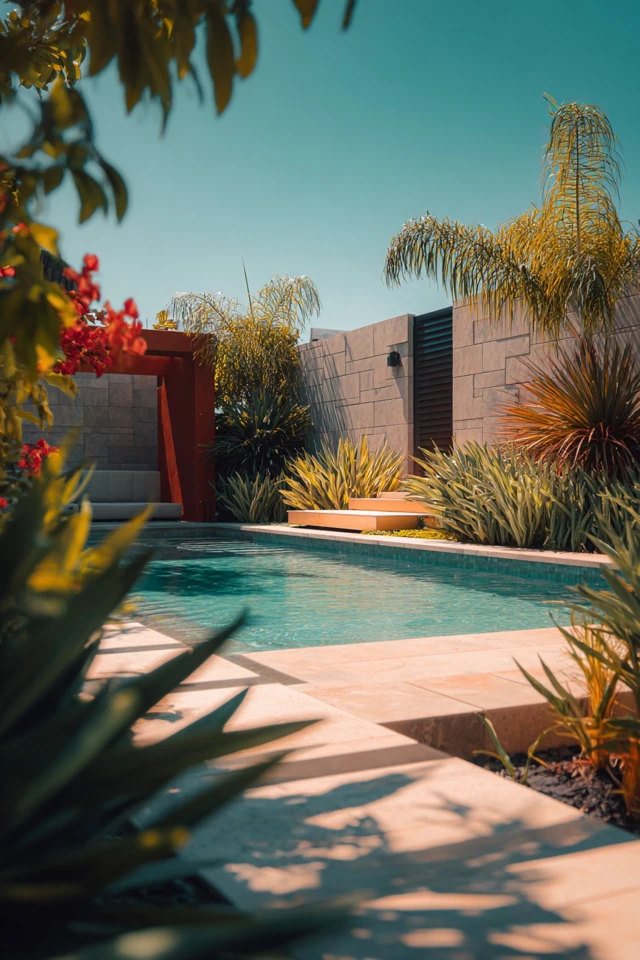
Layer plants by height: groundcover, mid-height plants like bird of paradise or ornamental grasses, and a few taller palms or banana plants in pots. Choose plants suited to your climate, and skip anything that drops heavy litter into the water.
Groundcover is cheaper than lawn to keep up. Colorado State University Extension notes that plants under about 24 inches that spread easily make suitable groundcovers. For a lawn patch near the pool, UC Marin Master Gardeners report that white clover does not show pet urine damage, which helps if your dog uses the yard.
Plant in groups instead of one of everything. Master Gardener Deb Christopher, in Penn State Extension's piece on native groundcovers, says: "If disease or pest problems arise, the entire monoculture planting may be killed. Instead, consider planting drifts or groups of single species, providing a patchwork-quilt effect."
Layout, scale and safety
Keep about 36 inches clear for a main walkway, and leave room for a lounger plus someone walking behind it. Scale matters: Penn State Extension defines it as the relative size of the elements in the whole design, so a huge planter overwhelms a small deck and a tiny bistro set disappears on a large one.
Safety comes first. Keep a fence and self-latching gate around the pool as local codes require, keep plants away from the water's edge, and use a cover when the pool isn't in use. As an architect, I'd settle circulation and sightlines from the house before choosing a single plant.
Color, materials and finishing touches
Light pavers or concrete stay cooler in sun. Dark foliage and mulch anchor planting beds. Stick to two or three hardscape materials and repeat them, since unity is what makes a design read as planned. Penn State Extension calls it the harmonizing quality that ties a design together.
Add warm string lights, outdoor performance fabrics and bamboo or lattice screens for privacy. If you're planning a water feature next, see our ideas for a pond on a budget. Skip plastic landscape cloth under beds: Penn State Extension says it can increase erosion and water runoff.
Frequently asked questions
What are the cheapest options for pool surrounds?
Gravel with solid edging, concrete pavers laid in stages and mulch beds with potted plants cost the least. Covering only the area where you sit is cheaper than decking the whole perimeter.
What are some creative ideas for pool surrounds?
Try a built-in bench on a platform deck, raised planters that double as seating, a gravel lounge nook or lattice screens with climbing vines. Repeating one material across zones keeps it cohesive.
How can I make a small pool area feel larger?
Use light paving, run boards or pavers lengthwise to stretch the view, and add vertical planting on trellises. Keep furniture compact so the walkway stays clear.
Can I mix concrete with tropical plants?
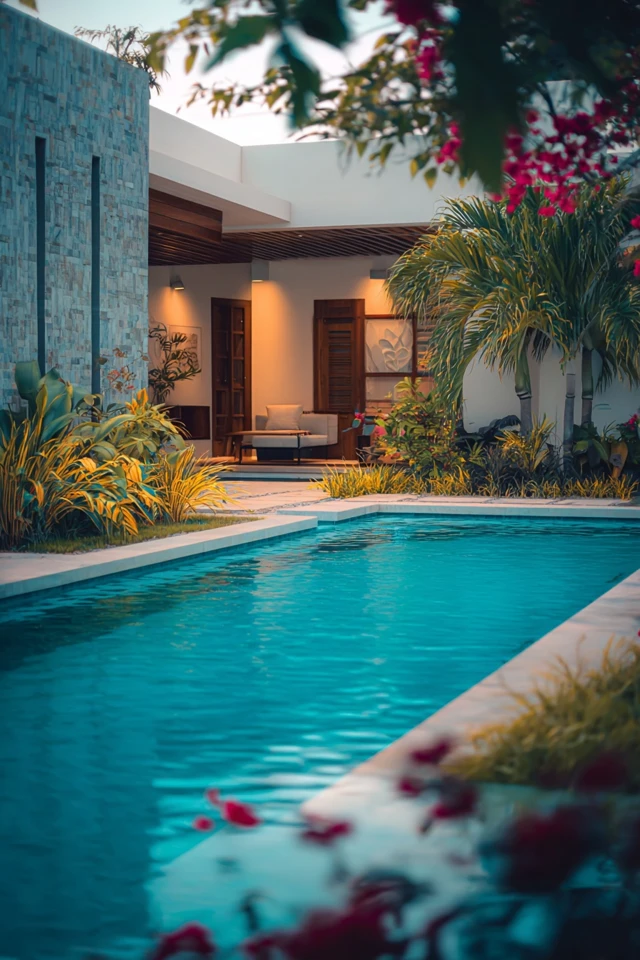
Yes. Concrete gives a clean backdrop for leafy plants. Soften it with wood accents, large pots and planting beds so it doesn't feel stark.
Filed under
ArticlesMeet the author
Written by an architect.
Julio Arco is a passionate architect with years of experience in architecture, interior design, urban design, and housing. He studied at prestigious universities across North America and Europe.

- Name
- Julio Arco
- Job
- Architect and online interior designer
- Studied
- Architecture, ITESM · Urban Design and Housing, McGill
- Partner
- Thor, Australian Shepherd
- Thor’s title
- Head of quality control