Desert and Gravel Landscaping Ideas for an Arizona Backyard

By Julio Arco
Architect and online interior designer
In this post
- What does a desert yard with gravel actually look like?
- Which gravel is best for desert landscaping?
- How do you build gravel paths and patios?
- Which surfaces stay cooler underfoot?
- Which plants work for desert landscaping with no grass?
- What is low maintenance desert and gravel landscaping?
- How can you do it on a budget?
- How much shade and seating space do you need?
- Finishing touches
- Frequently asked questions
A good Arizona backyard comes down to four decisions: a cooler ground surface, a gravel or decomposed granite base that sheds monsoon water, tough plants grouped in odd numbers, and real shade. Get those right and the yard is usable in summer and easy to maintain.
If you're starting from a patch of dirt or a tired lawn, don't worry. Desert yards are forgiving once the layout is sorted, and most of the work is choosing materials well.
What does a desert yard with gravel actually look like?
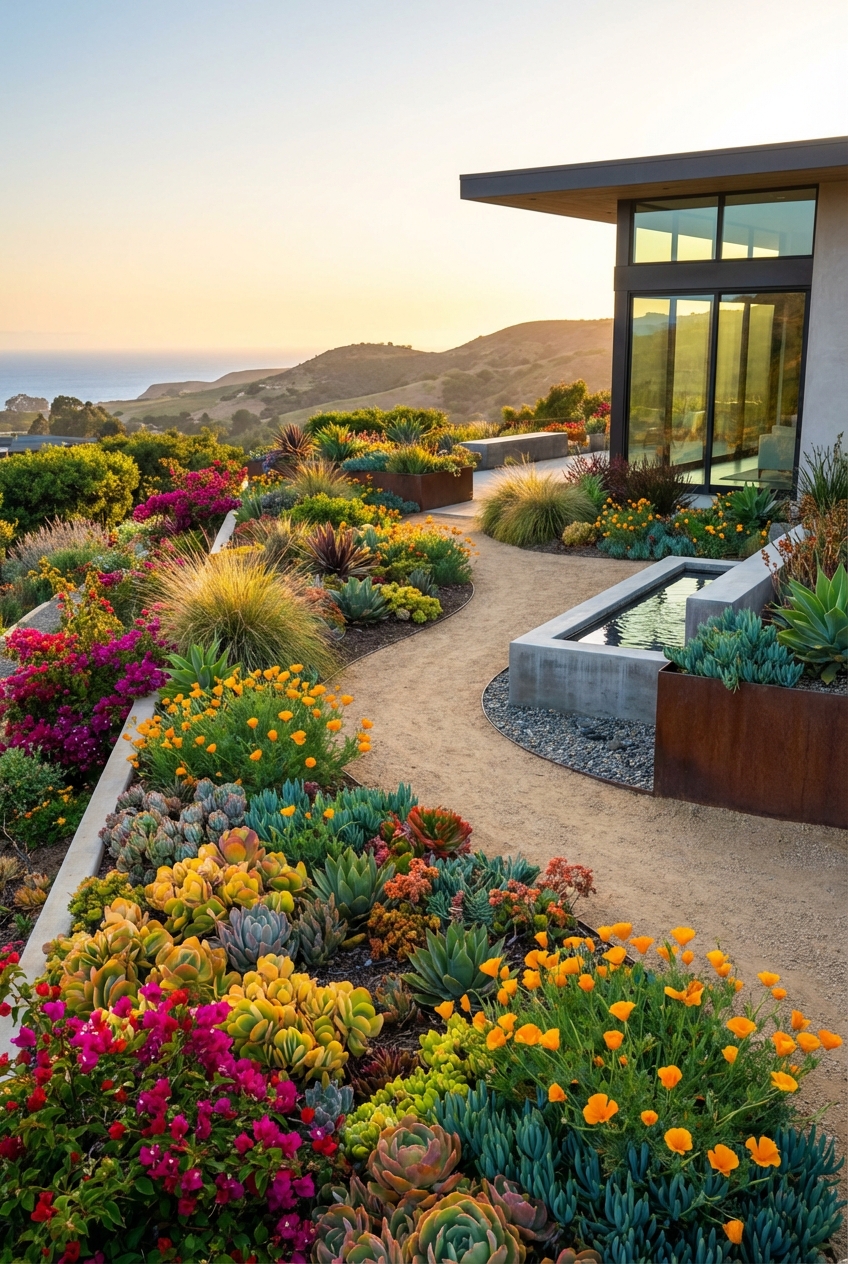
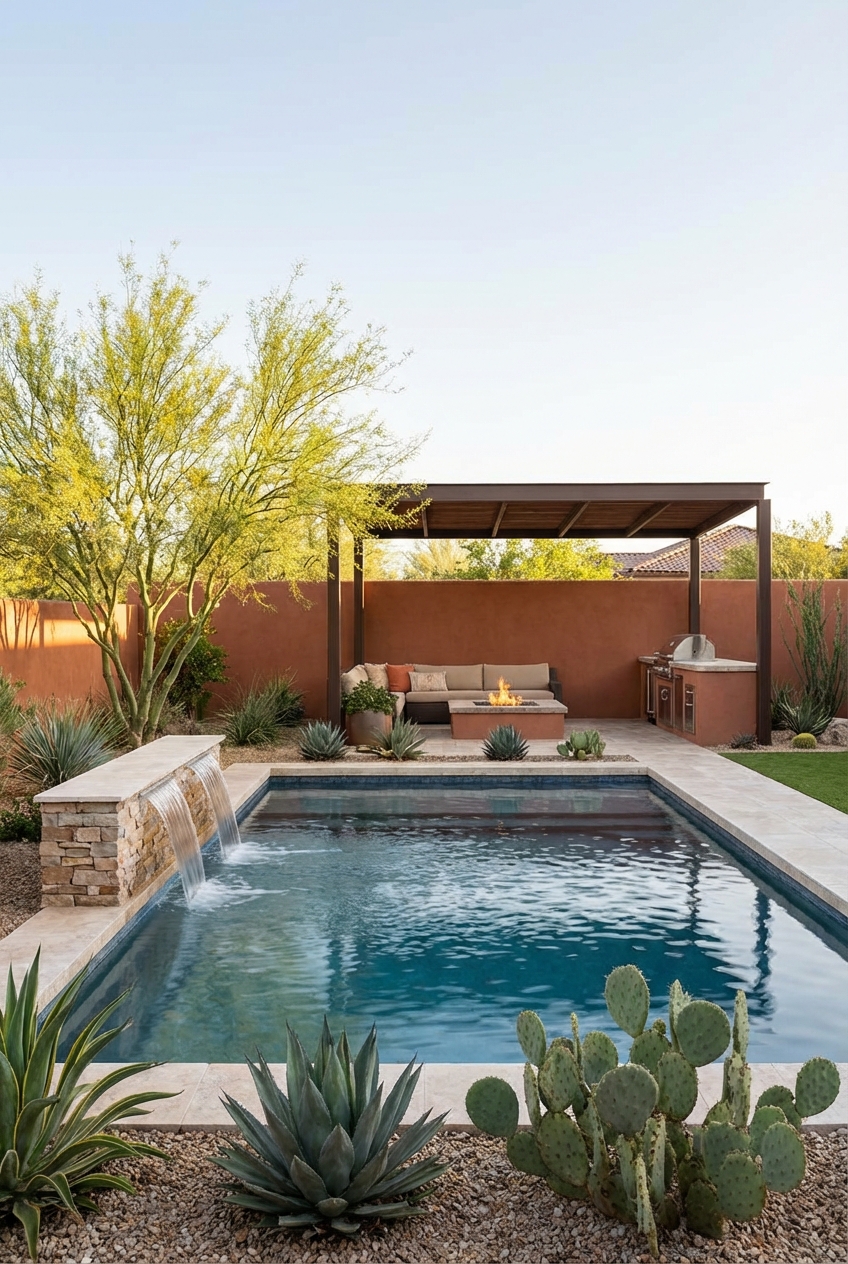
Many people picture a yard of gravel and one lonely cactus. A well-designed one has layers: a tree for shade, shrubs for structure, and low plants or rock at ground level. Gravel is the quiet background that ties those layers together.
Scale matters here. Penn State Extension describes scale as the relative size of the elements of the whole design, including the house and every planting. A tiny boulder in front of a big stucco wall looks lost, so go larger than feels natural.
Which gravel is best for desert landscaping?
The best gravel for desert landscaping depends on where people and paws will walk. Here is how the common options behave:
- Decomposed granite (DG) packs down into a firm, fine surface. It suits paths, patios and dog runs where you want a stable footing.
- Crushed rock, about 3/4 inch, drains well and stays put on slopes and beside walls.
- Rounded river rock looks good in dry creek beds and drainage swales, but it shifts underfoot, so keep it out of main walking routes.
- Large cobble and boulders work as accents, not as ground cover.
Choose a warm tone, such as tan or gold, over gray. Warm earth colors make green foliage stand out. For more on one popular option, see these decomposed granite landscaping ideas.
How do you build gravel paths and patios?
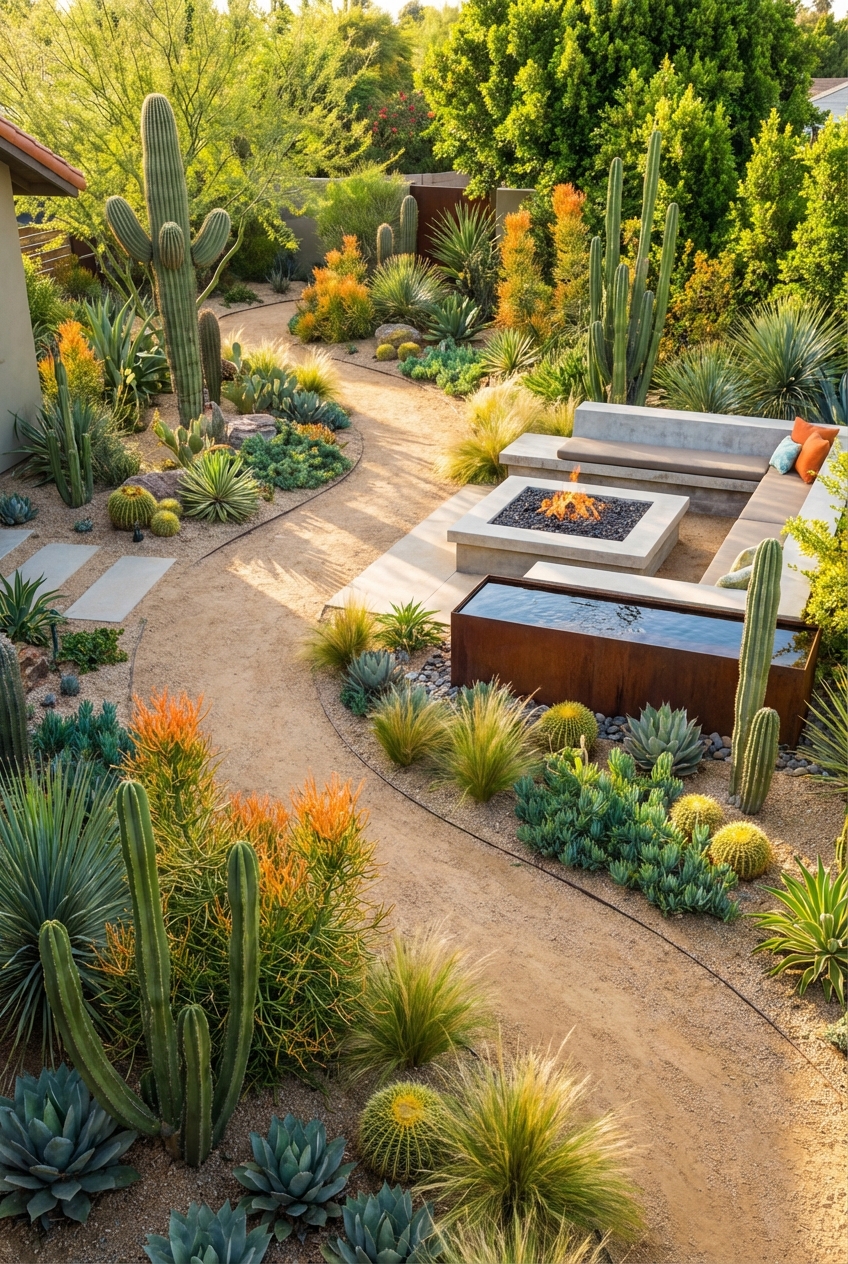
Start with a compacted base, edge the area with steel or stone so the gravel stays in place, then add the surface layer. These decomposed granite pathway ideas work well in a backyard: a gently curving path to a fire pit, a straight band between planting beds, or a stabilized DG patio under a tree.
One caution on weed fabric. Penn State Extension says plastic or synthetic landscape cloth is not recommended on top of or under the soil because it can increase erosion and water runoff. Spread a thick layer of gravel and pull the few weeds that show up.
Leave a border of permeable gravel between a paved slab and your property wall. Monsoon water then has somewhere to go instead of pooling against the block.

Which surfaces stay cooler underfoot?
Dark paving soaks up sun and can get uncomfortable or unsafe for dog paws and bare feet. As an architect, I recommend light-colored pavers or travertine near the house, where people walk most, and gravel in the outer zones. If you're unsure about a surface, press the back of your hand to it in the afternoon. If you can't hold it there, your dog can't walk on it.
Bring a sample of your indoor flooring outside and compare tones side by side. A cool gray interior pairs well with a silver-toned paver, and warm oak pairs well with ivory or walnut tones.
Which plants work for desert landscaping with no grass?
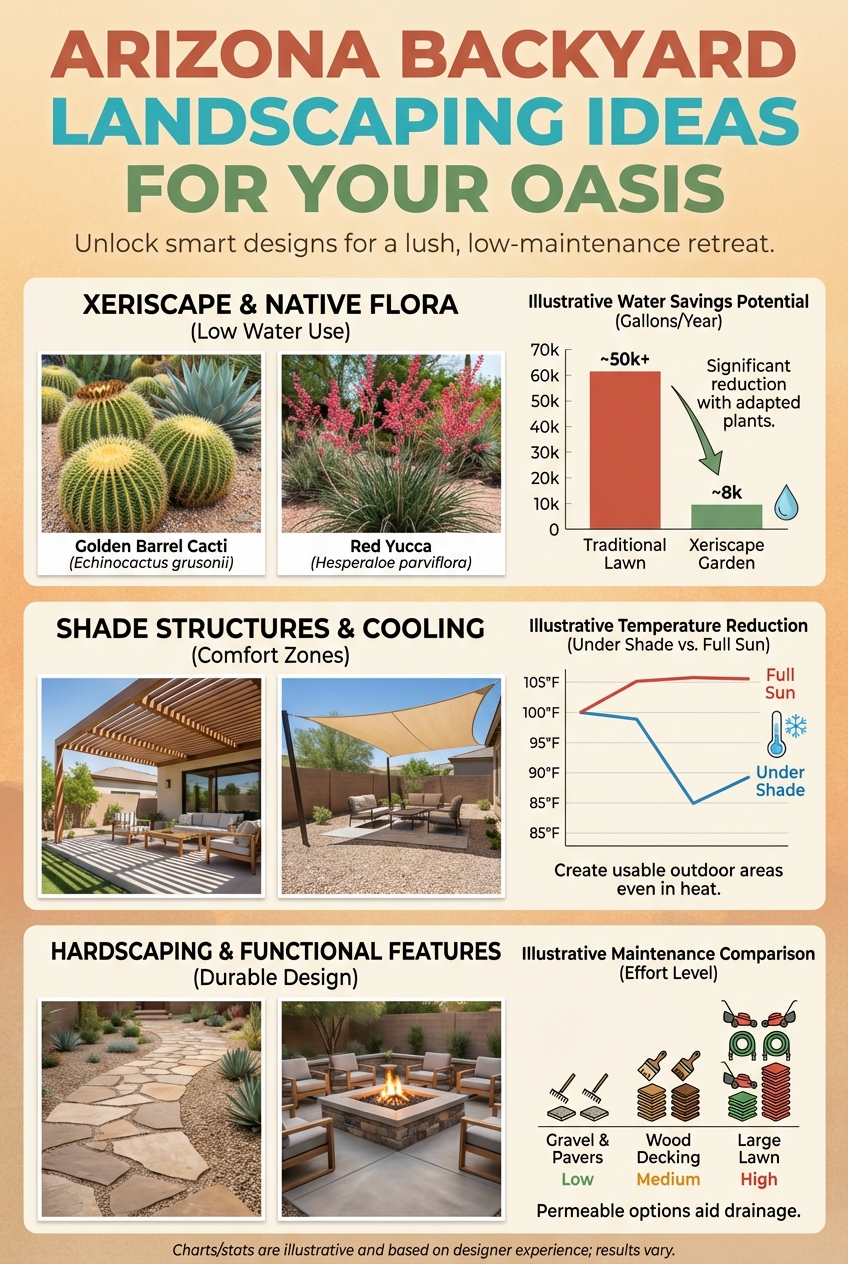
Desert landscaping ideas with no grass rely on plants that handle low water. Start with the tallest layer (a shade tree such as a Museum palo verde on the southwest side of the patio), then shrubs, then low ground cover. Penn State's guidance defines unity as the harmonizing quality that ties a design together, which is a good reason to repeat the same few plants and one gravel color.
Plant in groups of three or five, not singles scattered about. Master Gardener Deb Christopher of Westmoreland County puts the case for grouping this way, in Penn State Extension's piece on native groundcovers: "If disease or pest problems arise, the entire monoculture planting may be killed. Instead, consider planting drifts or groups of single species, providing a patchwork-quilt effect."
Pet-aware planting
Skip sago palms if a dog can reach them. They are widely reported as highly toxic to dogs, so check with your vet if you already have one (and see these sago palm landscaping ideas for homes without pets). Spiny chollas and sharp-tipped agaves cause puncture injuries. Smooth-leaved types like foxtail agave are friendlier, and spiny ones can go in raised planters out of nose height.
What is low maintenance desert and gravel landscaping?
Low maintenance desert and gravel landscaping comes from fewer decisions repeated across the yard. Use one or two gravel types, a short plant list, and drip irrigation with the tubing hidden under the gravel so you don't see black lines snaking around. Use oversized pots, since small ones dry out quickly and look cluttered.
For gravel landscaping around the house, keep a clear strip of gravel against the foundation and slope the ground away from the walls. I recommend asking a licensed contractor to check grading if water has ever collected near your foundation.
How can you do it on a budget?
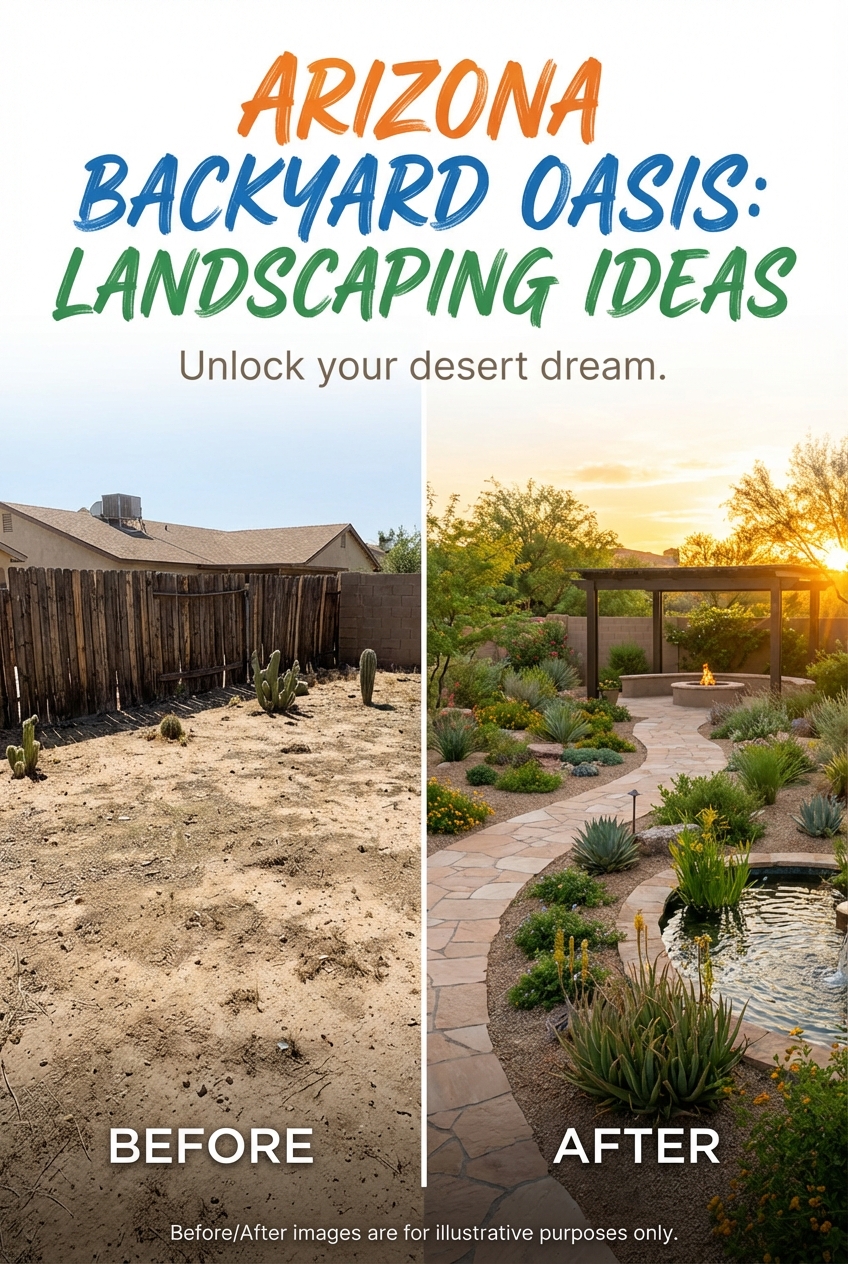
Desert landscaping ideas on a budget start with phasing. Do the grading, drainage and shade tree first. Add gravel in the main areas, and fill in plants over a couple of seasons. Small plants cost less and catch up faster than you'd expect in warm weather.
Bulk gravel delivered by the yard usually costs less than bagged stone. Alumawood patio covers look like wood and avoid painting, which can be a cheaper route to shade than a custom pergola. If your style leans clean and modern, these midcentury modern landscaping ideas pair nicely with a gravel base.
How much shade and seating space do you need?
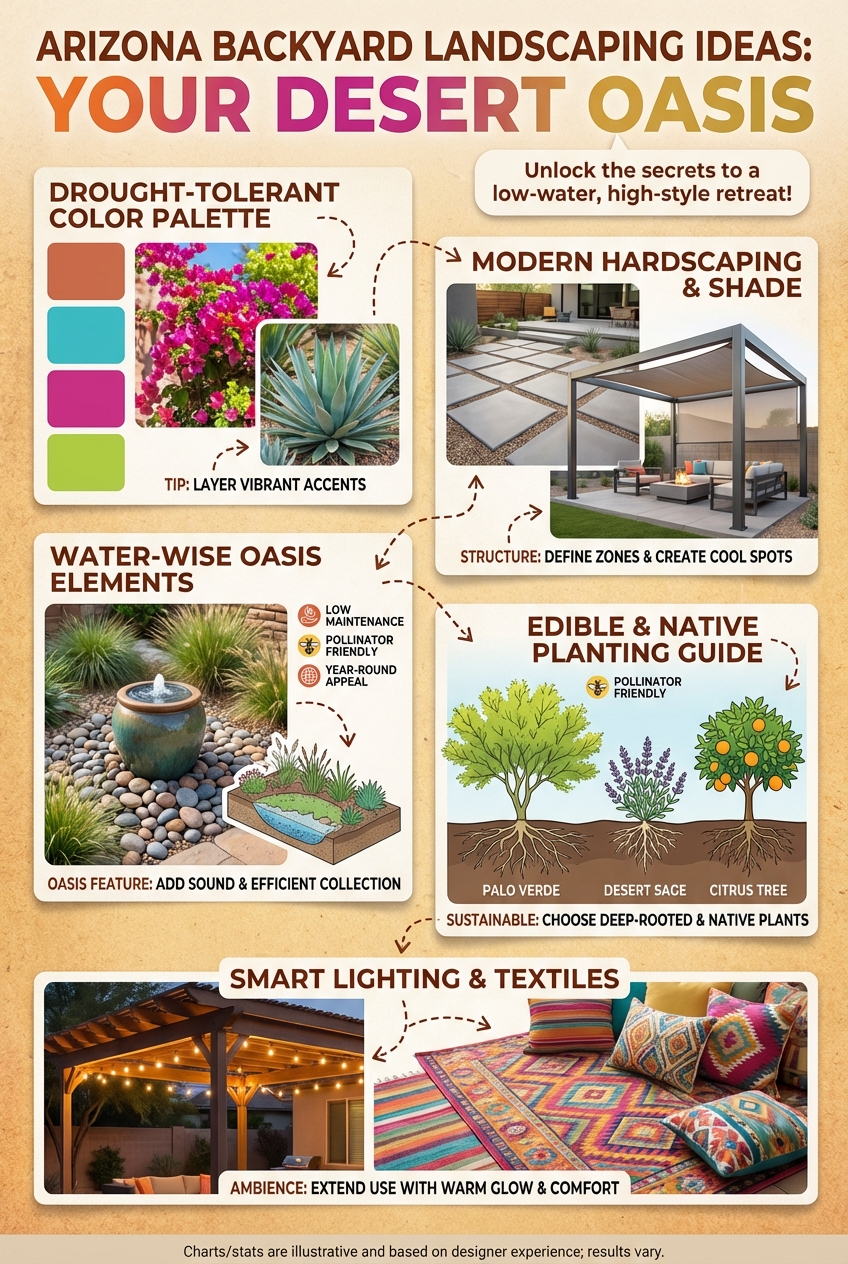
Shade decides whether the yard gets used at all. Aim for a solid patio cover with about 9 to 10 feet of clearance so hot air can rise, and extend it roughly 2 feet past your furniture because the sun moves. If a ceiling fan goes under it, choose one rated for wet locations.
Standard clearances help the layout feel comfortable:
- About 36 inches behind each dining chair.
- About 18 inches between a sofa and a coffee table.
- About 36 to 48 inches between a fire pit edge and the seating.
A fountain or small water wall also helps. The sound masks traffic noise bouncing off block walls, and an auto-fill valve saves the pump when evaporation is fast.
What about artificial turf?
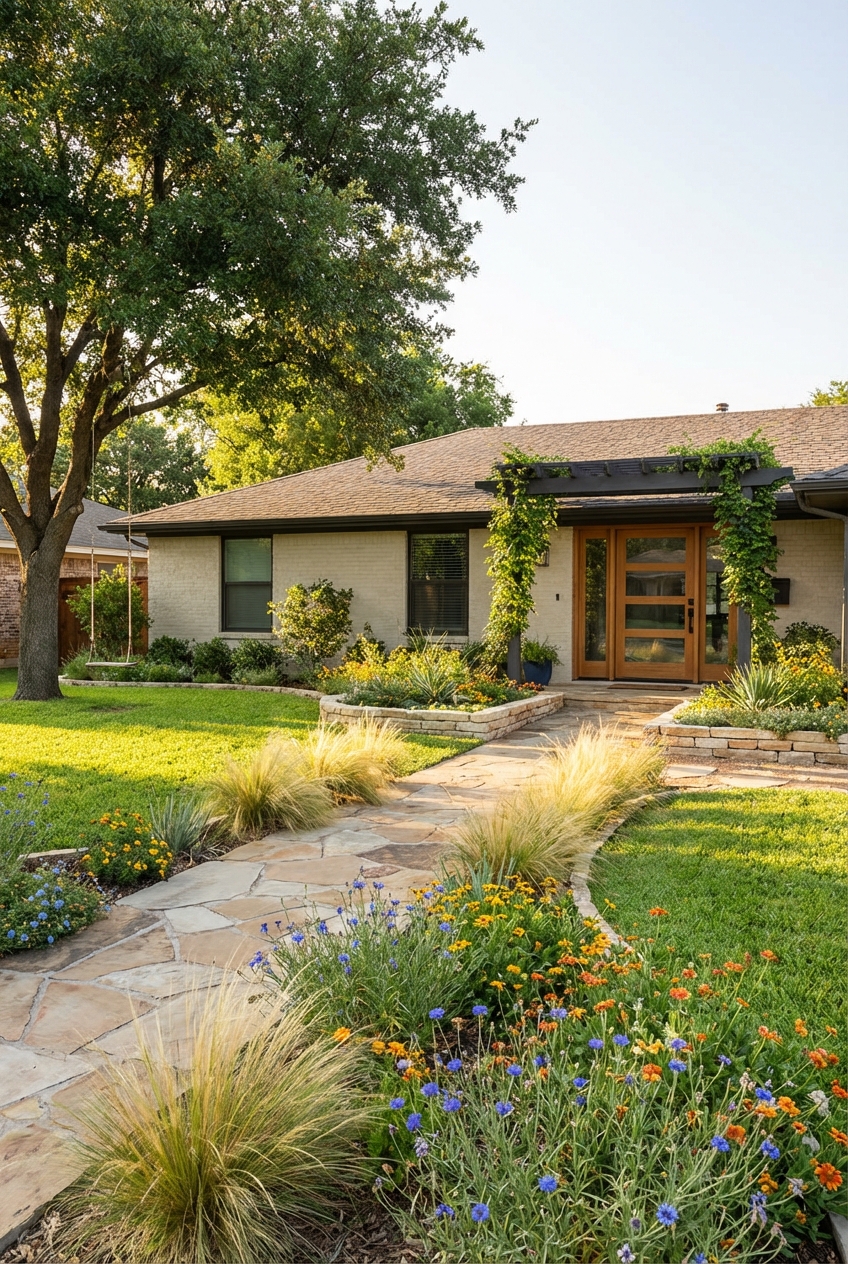
Synthetic turf can get very hot in direct sun. If you have a dog, keep it in shade or use it as a small accent, and expect to rinse it before use in summer. Gravel with a dedicated potty patch is often simpler. The ranch home landscaping ideas show how to mix a few small accents with a gravel yard.
Finishing touches
- Choose 2700K warm white landscape lighting, and uplight the trunks of trees such as palo verde.
- Use solution-dyed acrylic cushions, which hold color better in strong sun.
- Pick polypropylene rugs that hose off after a dust storm.
Frequently asked questions
What type of gravel is best for desert landscaping?
Decomposed granite is a good all-round choice for paths and patios because it packs firm. Crushed rock handles drainage areas and slopes, and rounded river rock is best kept to accent beds.
What is the 3-5-7 rule in landscaping?
It is a common planting guideline: group plants in odd numbers such as three, five or seven so the bed looks natural and balanced. It is a design habit, not a strict rule.
What are some inexpensive desert landscaping ideas?
Spread bulk gravel instead of laying pavers, plant small drought-tolerant plants and let them fill in, and phase the project over a few seasons. Shade and drainage come first.
How do I keep dust off my patio furniture?
Use covers during monsoon season and choose sleek frames like aluminum or teak, which wipe clean more easily than intricate wicker weaves.
Filed under
ArticlesMeet the author
Written by an architect.
Julio Arco is a passionate architect with years of experience in architecture, interior design, urban design, and housing. He studied at prestigious universities across North America and Europe.

- Name
- Julio Arco
- Job
- Architect and online interior designer
- Studied
- Architecture, ITESM · Urban Design and Housing, McGill
- Partner
- Thor, Australian Shepherd
- Thor’s title
- Head of quality control