Desert and Gravel Landscaping Ideas for a Low-Care Yard

By Julio Arco
Architect and online interior designer
In this post
- What defines a desert and gravel landscape?
- What is the best gravel for desert landscaping?
- Gravel landscaping ideas for a front yard
- Gravel landscaping around the house
- How do you edge gravel so it stays put?
- Decomposed granite pathway ideas
- Desert landscaping ideas with no grass
- Plants and boulders
- Desert landscaping ideas on a budget
- Small desert and gravel landscaping ideas
- Frequently asked questions
A good desert and gravel yard comes down to three decisions: which stone covers the ground, how you keep it in place with crisp edging, and which few plants and boulders break up the surface. Get those right and the yard needs very little from you.
If your current yard is a patchy lawn that eats water and weekends, you're in good company. Swapping it for gravel and tough plants is one of the more practical changes you can make to a front yard.
What defines a desert and gravel landscape?
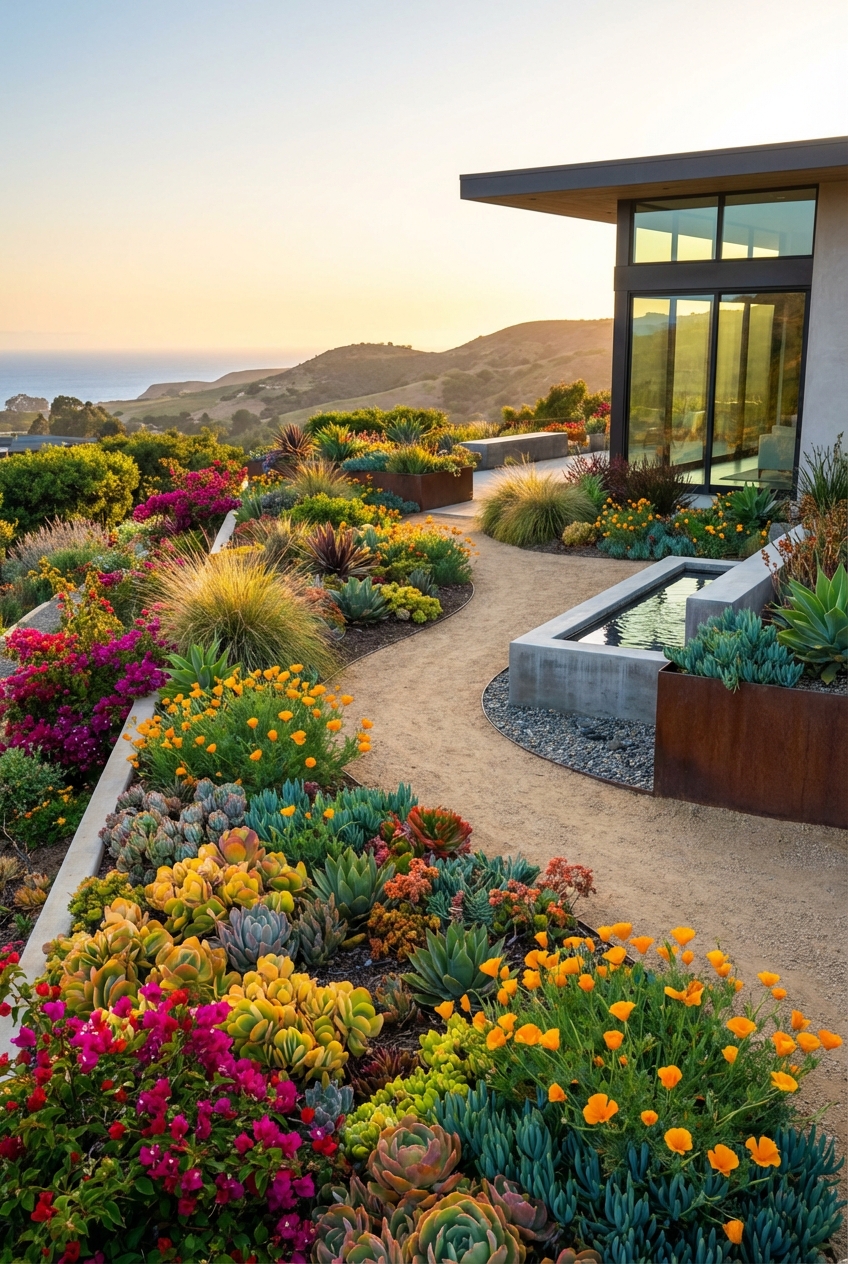
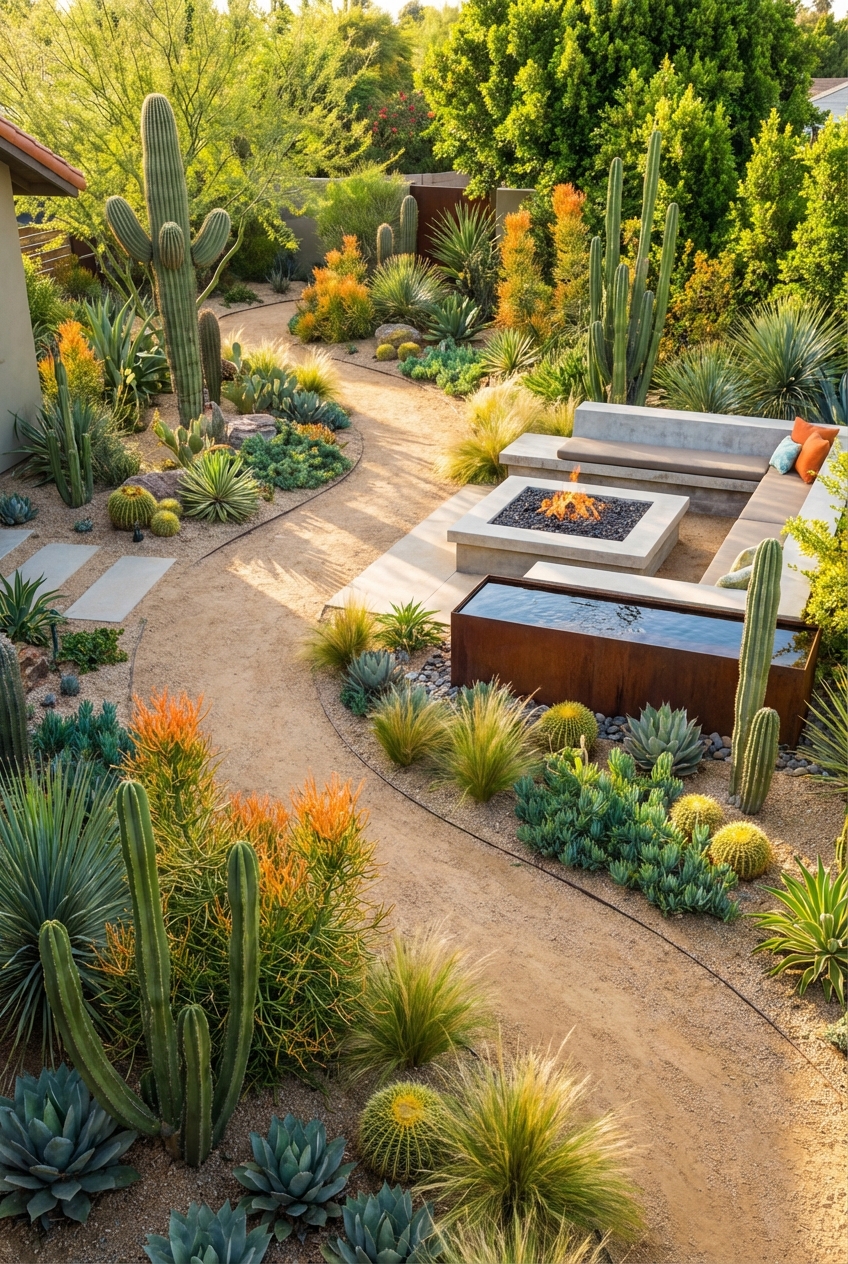
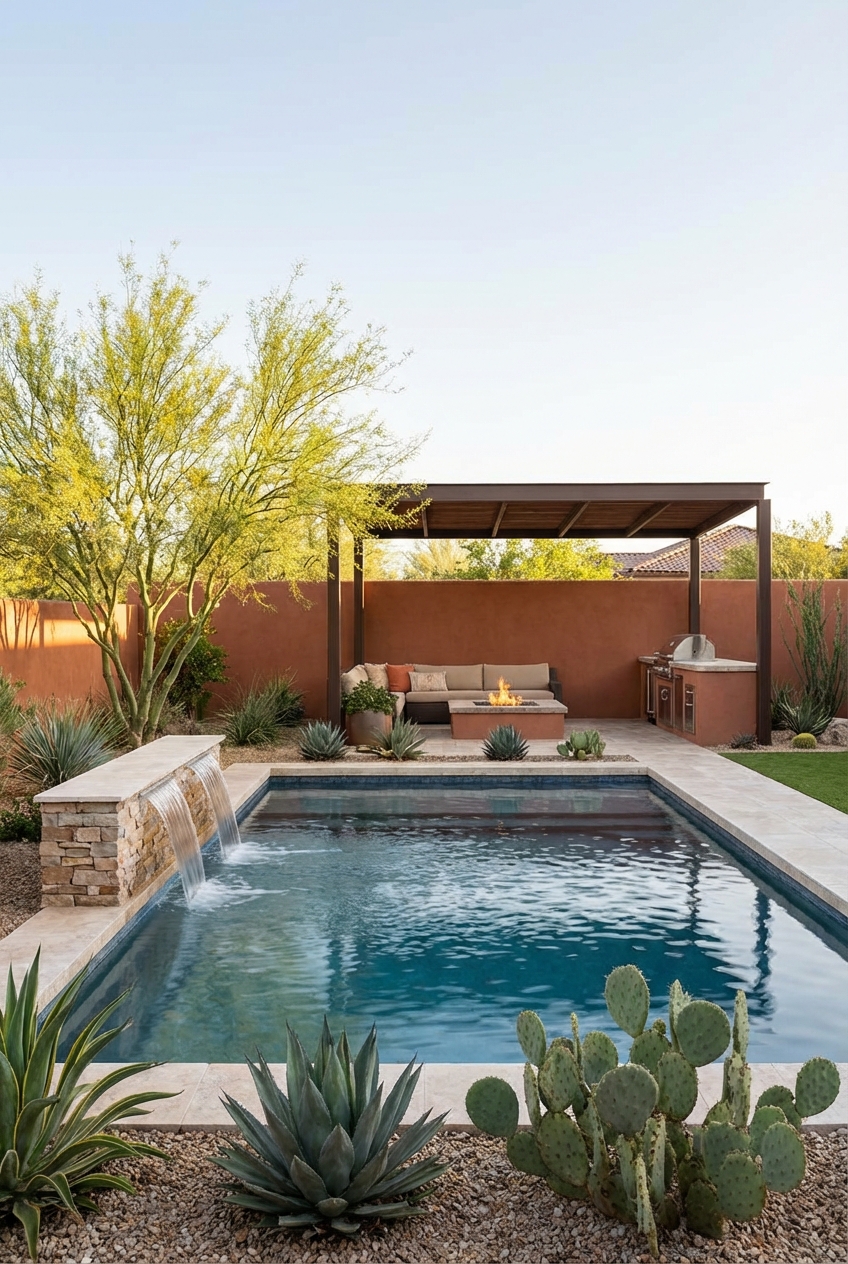
It's a yard built from mineral surfaces (gravel, decomposed granite, boulders, flagstone) with plants placed in groups instead of spread everywhere. Plant beds are small and deliberate, and the stone does most of the visual work.
Edging matters more here than in a lawn yard, because loose stone migrates. A clean line between gravel and planting bed, or between path and bed, is what makes the design read as intentional instead of as a pile of rock.
What is the best gravel for desert landscaping?
There's no single best stone. Pick by what the area does:
- Angular crushed gravel (about 3/4 inch) locks together underfoot, so it suits driveways, side yards and areas around the house.
- Rounded pea gravel looks softer but shifts when walked on. Keep it to decorative beds, not paths.
- Decomposed granite packs into a firm, fine surface. It's the usual choice for paths and patios.
- River rock in larger sizes works for dry creek beds and drainage swales.
Choose a color that echoes your house and roof. Tan and warm gray hide dust and look natural in most arid regions. Pure white and very dark stone show every leaf and bounce a lot of heat and glare.
If you have a dog, I recommend skipping sharp, coarse chips where it runs or lies down, and testing a handful on your own palm first. Smooth-edged, mid-size stone is gentler on paws.
Gravel landscaping ideas for a front yard
The front yard is where proportion shows most. The Penn State Extension notes that scale refers to the relative size of the elements of the whole design, including the house, the garden and the plantings. In practice, a small bungalow wants smaller boulders and a narrower path than a large two-story house does.
- Run a curving path of decomposed granite from the street to the door, with steel or stone edging on both sides.
- Group three or so boulders of different sizes near a corner instead of lining them up like fence posts.
- Leave a clear band of gravel around the house foundation so the wall stays visible and dry.
Gravel landscaping around the house
A gravel strip against the foundation keeps soil and splashing water off the walls and gives you a tidy transition to the beds. Make sure the ground slopes away from the house, and ask a licensed contractor about drainage if water pools anywhere near the foundation.
Skip plastic sheeting under the stone. Penn State Extension says it is not recommended to use plastic or synthetic landscape cloth on top of or under the soil because it can increase erosion and water runoff. Weeds still find their way through fabric over time anyway, so a deeper gravel layer and spot-pulling work as well.
How do you edge gravel so it stays put?
Edging is the detail that holds the whole yard together. Steel strips give the thinnest, sharpest line. Poured concrete or a row of set stone is heavier and lasts longest. Timber is warmer but wears out sooner in sun and rain.
Set the top of the edge about an inch above the gravel surface so stone doesn't spill over it. Where a path meets a bed, use one edging material throughout. Mixing three styles in one small yard looks busy.
Decomposed granite pathway ideas
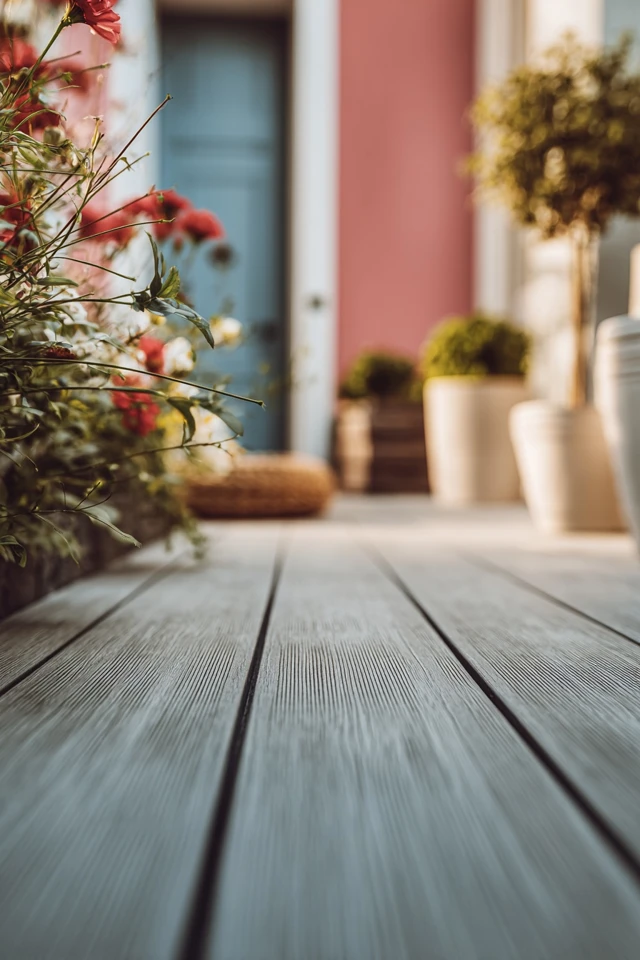
Decomposed granite is cheaper than pavers and softer to walk on. Compact it in layers over a firm base, and keep the path at least 36 inches wide for a main walkway, or about 24 inches for a secondary garden path.
Stepping stones set into the granite give you a hard surface for wheelbarrows and wet days. Edge the path so the fines don't wash into beds during storms.
Desert landscaping ideas with no grass
Removing turf is the biggest single change. The University of Maryland Extension points out that turfgrasses require constant maintenance that comes with costs, including pesticide exposure for people and pets and water waste. That is a fair reason to reconsider lawn in a dry climate.
If your dog needs a spot to run, keep a small patch of something tougher than gravel. White clover does not show pet urine damage, according to UC Marin Master Gardeners, though it suits milder climates better than true desert. For plants beyond that, ask your local extension office what grows in your zone.
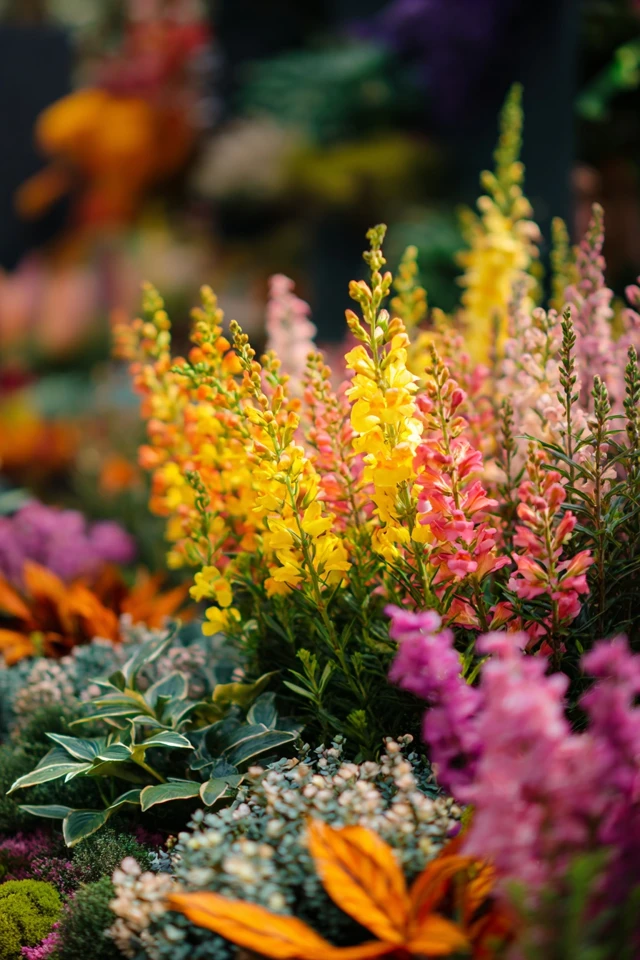
Plants and boulders: keep them few
Plant in drifts. Master Gardener Deb Christopher of Penn State Extension advises, "If disease or pest problems arise, the entire monoculture planting may be killed. Instead, consider planting drifts or groups of single species, providing a patchwork-quilt effect."
Low ground covers help fill gaps between stones. Colorado State University Extension says plants that are low-growing (generally less than 24 inches) and spread easily are suitable ground cover plants.
Check any plant against the ASPCA's toxic plant list or ask your vet before planting where a dog roams. Several popular desert plants have sharp spines too, so keep those away from paths and play areas.
Desert landscaping ideas on a budget
- Do it in phases: one bed or one side of the yard per season.
- Buy gravel in bulk by the ton from a stone yard instead of by the bag.
- Use decomposed granite for paths and save pricier stone for the front-facing beds.
- Start with small plants and give them room to grow.
- Reuse any stone or pavers already on site.
Small desert and gravel landscaping ideas
In a small yard, restraint pays off. One focal boulder, one curved path and a single planting group look calmer than several competing features. Penn State Extension says unity is critically important, defined as the harmonizing quality that ties a design together. A single gravel color and one edging material is the easiest way to get that.
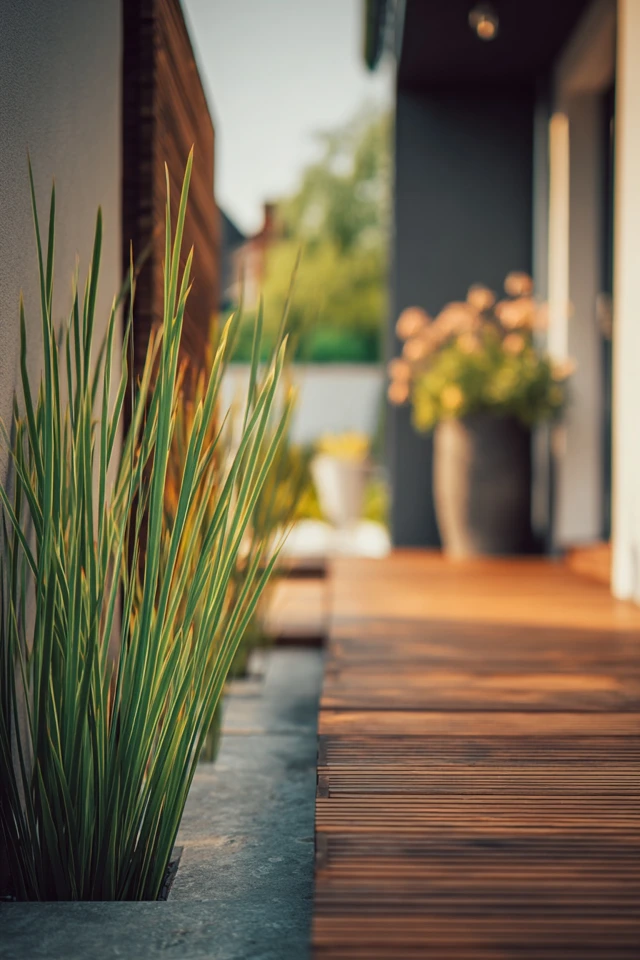
As an architect, I'd also line up the path with a door or a window view so the gravel has a clear purpose, then let the planting follow it.
Frequently asked questions
What type of gravel is best for desert landscaping?
Angular crushed gravel of about 3/4 inch works well for general ground cover because it stays in place. Decomposed granite is better for paths and patios. Choose a tan or warm gray tone to suit the house.
What is the 3-5-7 rule in landscaping?
It's a common rule of thumb for planting in odd-numbered groups of 3, 5 or 7 so beds look natural instead of lined up. It's a guideline, not a requirement, and works well for boulders too.
What are some inexpensive desert landscaping ideas?
Buy gravel in bulk, use decomposed granite for paths, work in phases, and start with small plants. Reusing stone already on your property also cuts cost.
Filed under
ArticlesMeet the author
Written by an architect.
Julio Arco is a passionate architect with years of experience in architecture, interior design, urban design, and housing. He studied at prestigious universities across North America and Europe.

- Name
- Julio Arco
- Job
- Architect and online interior designer
- Studied
- Architecture, ITESM · Urban Design and Housing, McGill
- Partner
- Thor, Australian Shepherd
- Thor’s title
- Head of quality control