Desert and Gravel Landscaping Ideas for Low-Care Yards

By Julio Arco
Architect and online interior designer
In this post
- What makes a desert landscape?
- What is the best gravel for desert landscaping?
- Gravel landscaping ideas for a front yard
- Desert landscaping ideas with no grass
- Decomposed granite pathway ideas
- Gravel landscaping around the house
- Desert landscaping ideas on a budget
- Small desert and gravel landscaping ideas
- Keeping it low maintenance
- Frequently asked questions
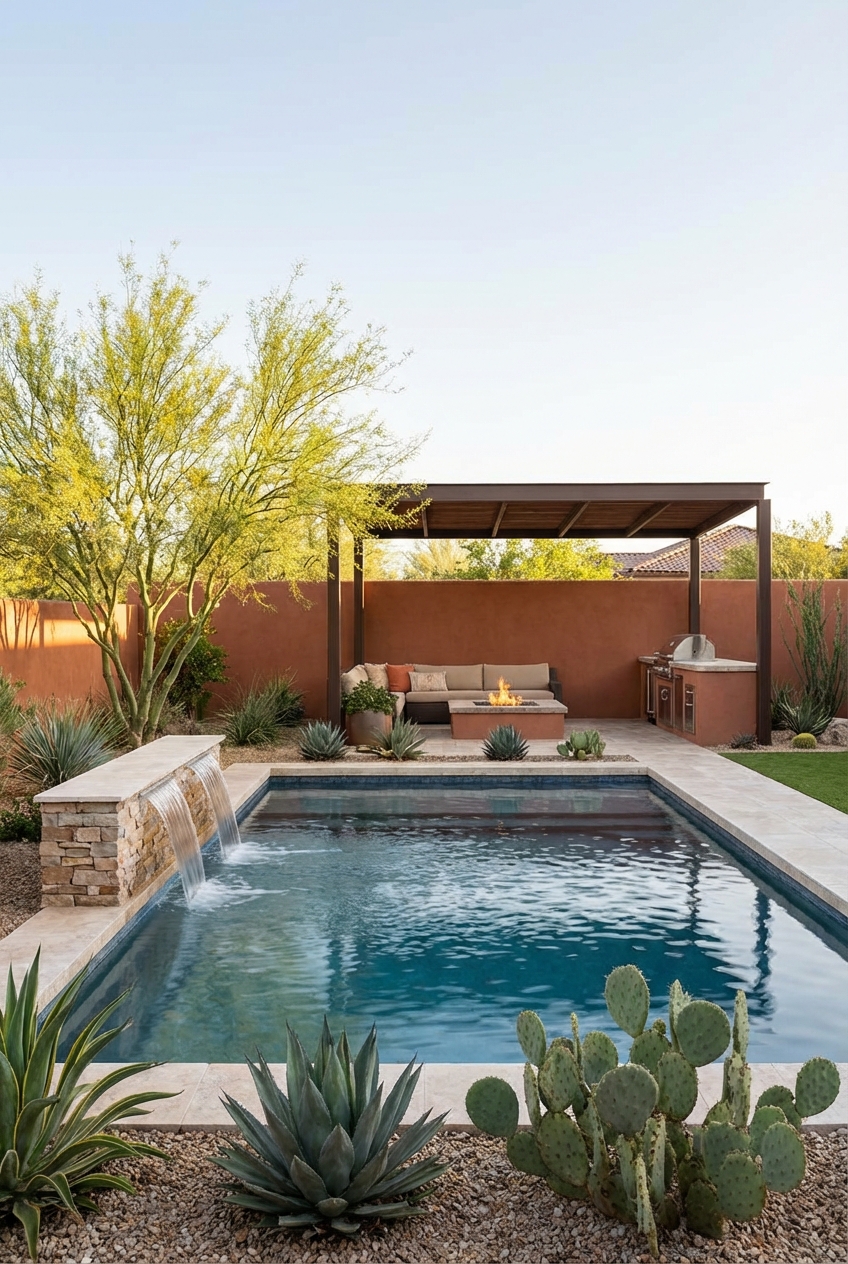
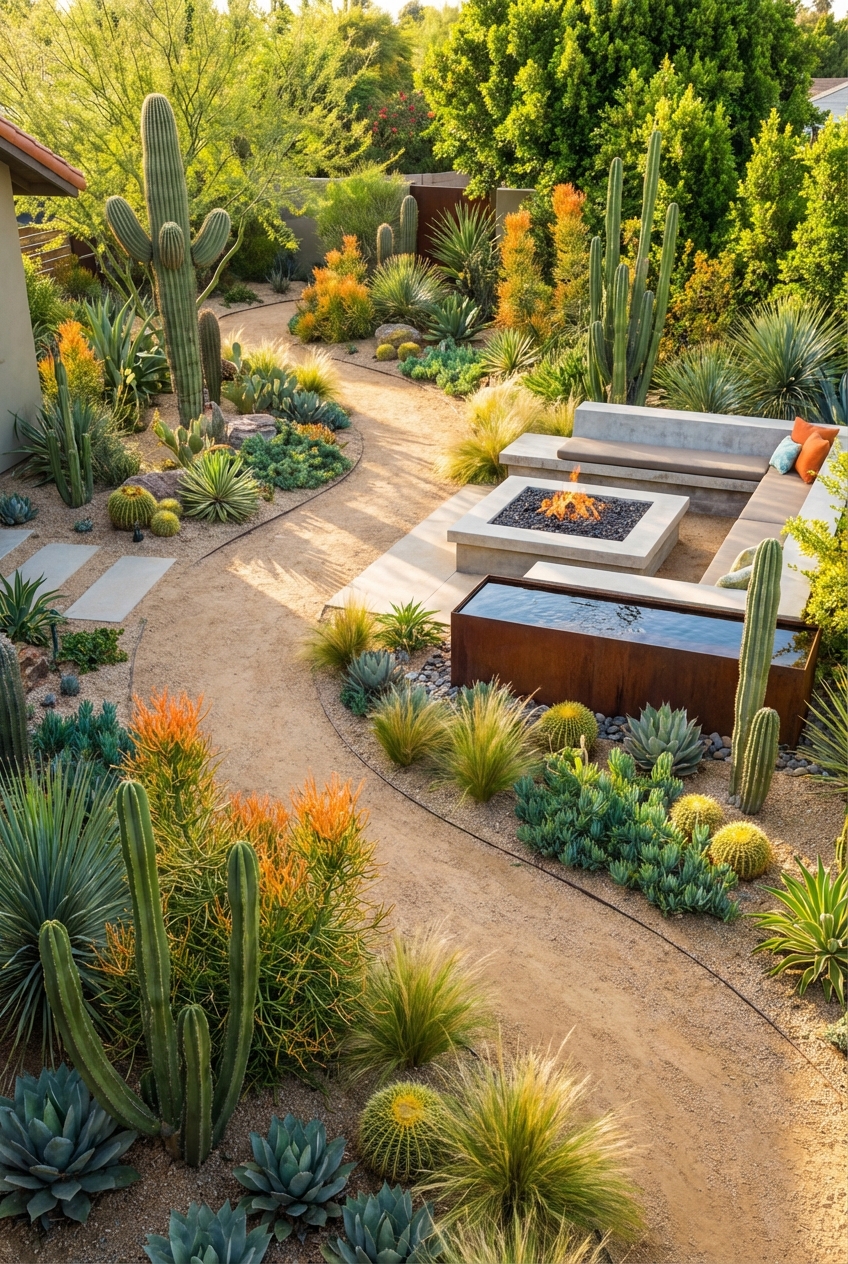
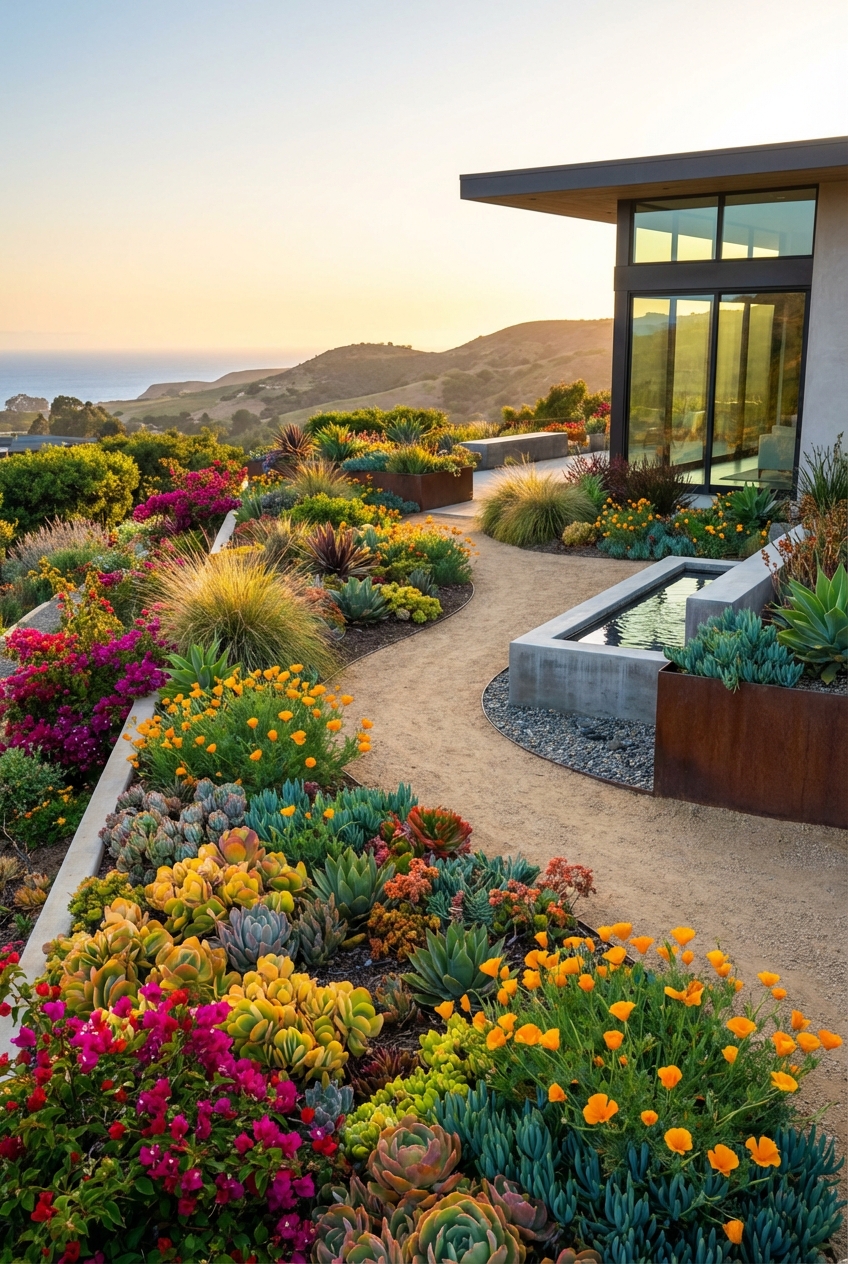
A good desert yard is built on three things: a layer of gravel or rock that suits the spot, a few tough plants set in groups, and paths that are wide enough to use. Skip the lawn, keep the planting simple, and the yard looks tidy with very little work.
If you're staring at a thirsty patch of grass and wondering where to start, you're in good company. Below you'll find the ideas I'd start with, plus how to choose gravel, where decomposed granite works best, and how to keep costs down.
What makes a desert landscape?
A desert-style yard relies on mineral surfaces (gravel, decomposed granite, boulders, flagstone) and plants that handle dry summers: agaves, grasses, salvias, low shrubs. The look is about texture and spacing rather than masses of flowers.
It also suits regions with water limits. Turf demands constant care, and University of Maryland Extension notes that it brings pesticide exposure for people and pets, pollution and water waste. Gravel and drought-tolerant beds reduce most of that.
What is the best gravel for desert landscaping?
There isn't one winner. Pick by how the area will be used.
- Decomposed granite (DG): fine, tan, packs firm. Best for paths and seating areas.
- Crushed rock with sharp edges (about 3/4 inch): locks together, good for driveways, side yards and borders.
- Pea gravel: rounded and loose. Comfortable in planting beds, but it shifts underfoot and scatters onto walkways.
- River rock and cobble: heavier, good for dry creek beds and drainage swales, tiring to walk on.
Choose colors that match your soil and house, usually tans, warm browns and soft grays. Warm tones look more natural against dry plants than cool slate. If you have a dog, I recommend avoiding large sharp rock where they run and settle, since fine, packed surfaces are kinder to paws.
Gravel landscaping ideas for a front yard
The front yard is where proportion matters most. Penn State Extension defines scale as the relative size of the house, the garden and everything planted in it, so a tiny boulder in front of a big facade looks lost.
- Make the main walkway 48-60 inches wide so two people can walk side by side. Secondary paths can be 30-36 inches.
- Set two or three large boulders, partly buried, rather than many small stones.
- Group plants in drifts of one species. Master Gardener Deb Christopher of Westmoreland County advises on Penn State Extension: "If disease or pest problems arise, the entire monoculture planting may be killed. Instead, consider planting drifts or groups of single species, providing a patchwork-quilt effect."
- Repeat one or two materials. Penn State calls unity the quality that ties a design together, and a limited palette is the easiest way to get it.

Desert landscaping ideas with no grass
Replacing a lawn is mostly a matter of choosing what covers the ground. A few options:
- Gravel with planted islands, where mounds of soil and boulders break up the flat surface.
- Low spreading plants. Colorado State Extension says suitable ground covers are generally under 24 inches tall and spread easily.
- A flagstone patio set into gravel, with a dry creek bed to handle runoff.
A note for dog owners: urine burns turf, and some ground covers cope better than others. UC Marin Master Gardeners report that white clover does not show pet urine damage, though it needs more water than a pure gravel yard. Give dogs one defined patch of a durable surface rather than letting them wear down your beds. For plant safety, check any species with your vet.
Decomposed granite pathway ideas
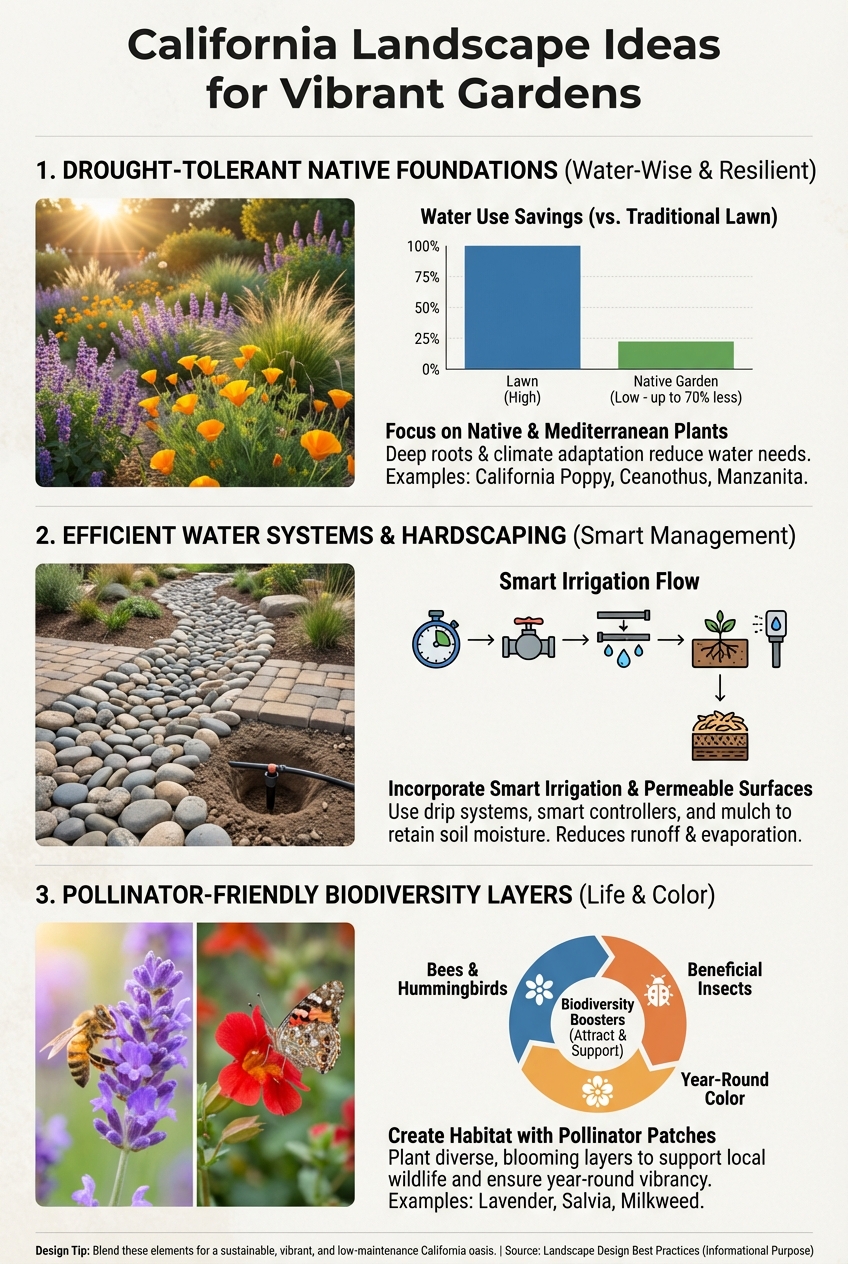
DG is permeable, so rain soaks in rather than running toward the house. It also gives a soft, natural surface that suits dry planting.
- Lay 3-4 inches over compacted base and compact it again. Loose DG tracks indoors.
- Add steel or stone edging so the path stays crisp.
- Use a stabilizer in seating areas so chair legs don't sink or wobble.
- Slope hard surfaces away from the house, at least 1/4 inch per foot.
Skip plastic or synthetic landscape cloth under it. Penn State Extension does not recommend it, because it can increase erosion and water runoff.
Gravel landscaping around the house
A band of gravel along the foundation keeps soil splash off walls and gives a clean edge. Keep plants out of the first foot or two, and always grade the surface so water moves away from the building. If the ground is flat or drainage is doubtful, ask a licensed contractor about a swale or French drain.
Desert landscaping ideas on a budget
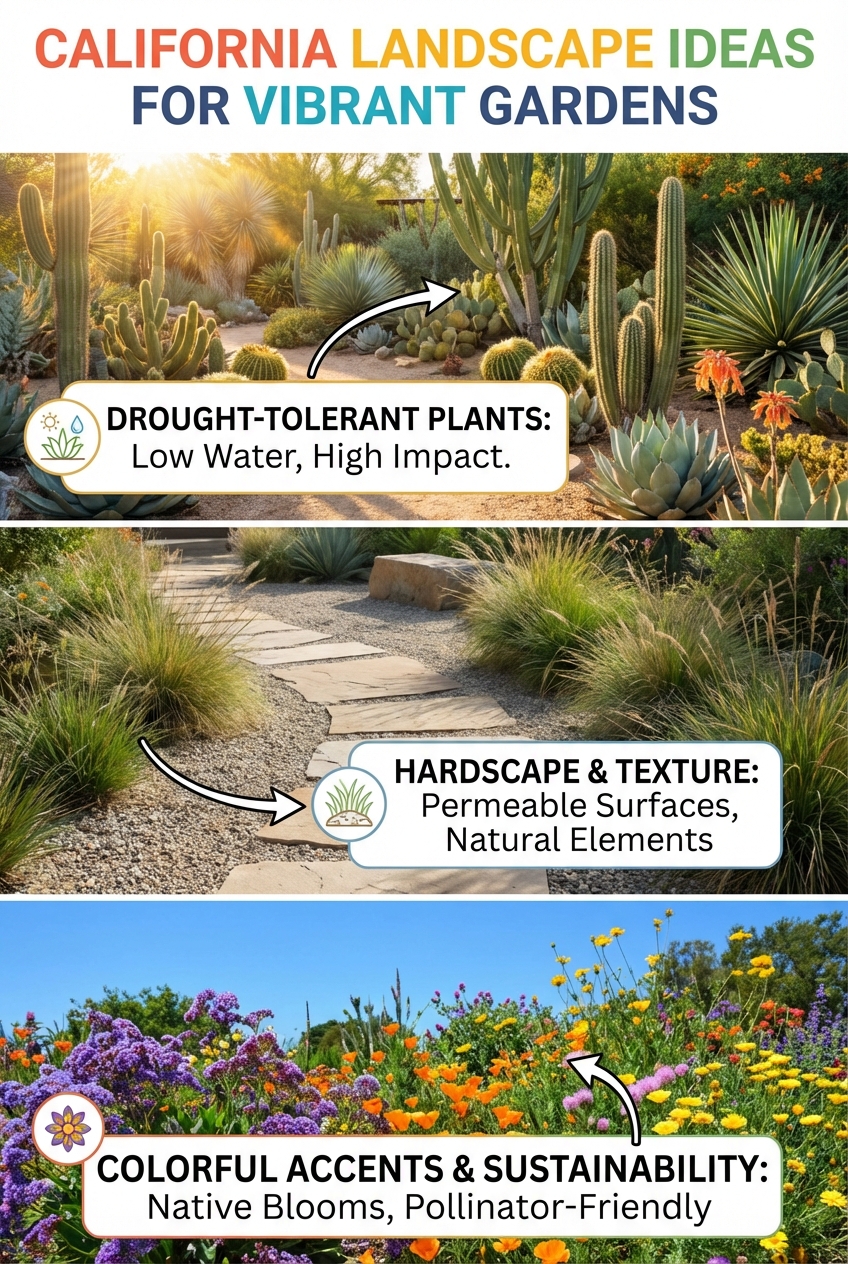
- Buy small plants. One-gallon plants usually settle in faster than big ones, and they cost far less.
- Kill the lawn by sheet mulching (cardboard and mulch) instead of paying for removal.
- Use crushed rock for paths and save flagstone for one small patio.
- Build in phases: layout and paths first, then trees and shrubs, then filler.
- Improve planting soil where you need it. Colorado State suggests 3 to 5 cubic yards of compost per 1,000 square feet for ground cover beds, though desert plants that like lean soil need much less.
Small desert and gravel landscaping ideas
In a small yard or courtyard, use one gravel color, two or three plant types and a single focal point, such as an agave in a large pot. Go vertical with a trellis on the side yard, and let a narrow gravel path lead the eye through. Space plants for their mature width: a shrub that grows 5 feet wide needs about 2.5 feet from a wall or path.
Keeping it low maintenance
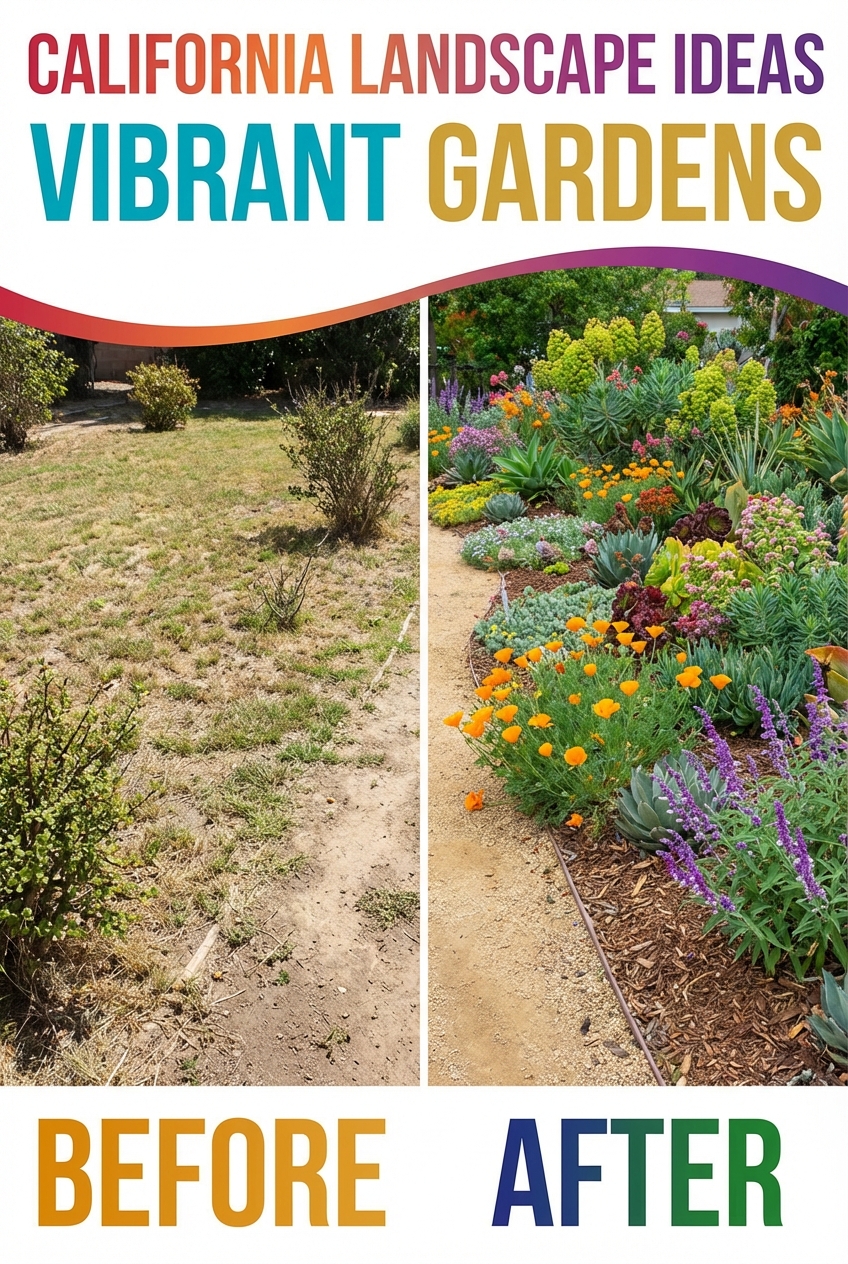
- Install drip irrigation, and water new plants deeply while they establish, then taper off.
- Top up gravel every year or two where it thins.
- Pull weeds while they're small, and don't let leaf litter build up on the rock.
Frequently asked questions
What type of gravel is best for desert landscaping?
Decomposed granite suits paths and patios, while angular crushed rock works well in beds and borders. Match the color to your soil and house, and avoid loose pea gravel on walkways.
What is the 3-5-7 rule in landscaping?
It's a common rule of thumb for planting in odd-numbered groups of 3, 5 or 7 so beds look natural rather than lined up. It's a guideline, not a hard rule.
What are some inexpensive desert landscaping ideas?
Use small plants, sheet mulch the lawn, choose crushed rock over stone for paths, and build the yard in phases. One boulder group and a gravel path can change a front yard cheaply.
How deep should gravel be in a landscape bed?
About 2-3 inches is typical for beds, and 3-4 inches for compacted paths over a firm base. Thin layers let soil show through and weeds appear.
Filed under
ArticlesMeet the author
Written by an architect.
Julio Arco is a passionate architect with years of experience in architecture, interior design, urban design, and housing. He studied at prestigious universities across North America and Europe.

- Name
- Julio Arco
- Job
- Architect and online interior designer
- Studied
- Architecture, ITESM · Urban Design and Housing, McGill
- Partner
- Thor, Australian Shepherd
- Thor’s title
- Head of quality control