Asian Bedroom Design: Calm, Modern Ideas That Work
Asian bedroom design made practical: low beds, earthy colors, natural materials, warm lighting and small-room tips for a calm Japanese or Chinese look.

By Julio Arco
Architect and online interior designer
In this post
Asian bedroom design comes down to a low bed, a short list of natural materials, soft layered light and very little clutter. Get those four right and the room feels calm even if the walls are plain and the budget is small.
Below are the ideas I'd start with, from layout and color to lighting and small-room fixes. They borrow mostly from Japanese and Chinese traditions, adapted for a modern home.
What makes a bedroom look Asian?
Three things do most of the work: low furniture, natural materials (wood, paper, linen, ceramic) and an uncluttered floor. Ornament is used sparingly, so one painted screen or one framed textile carries the personality of the room.
Balance is usually asymmetrical. A bed against one wall, a low bench at its foot and a single plant off to the side feel relaxed, where two matching nightstands and matching lamps feel formal. If you've wondered how to make your room look Asian without buying a themed set, start by removing things and lowering the furniture line.
How do you lay out a Japanese-style bedroom?
Japanese bedroom design leans on a low platform or tatami-inspired frame, which keeps the room's horizontal lines long and calm. Put the bed against a solid wall so it anchors the room.
- Leave about 30-36 inches for the main walking route, door to bed to window.
- Use a rug, a screen or low storage to mark a reading or dressing corner instead of building partitions.
- Keep the floor as open as you can. Storage that sits under the bed or recessed into the wall does more for calm than any decor.
If you share the bed with a dog, a very low platform is easy for them to hop onto, but a washable cover on the mattress or duvet is worth having. Check with your vet if an older dog has trouble with jumping.
Which colors suit a modern Asian bedroom?
Muted, earthy tones are the safest base: soft beige, warm gray and taupe. They pair well with warm wood and keep the room feeling enveloping instead of stark. For accents, olive green, indigo or slate blue on textiles give a cooler counterpoint.
Chinese-inspired rooms often bring in deeper reds or lacquer-like finishes. For a modern take, keep those to one element, such as a headboard, a lamp base or a piece of art, and leave the walls quiet.
Test paint swatches in the room itself. Daylight and evening bulbs change how a neutral reads, and warm gray can turn greenish or pink depending on the light.
What materials and furniture work best?
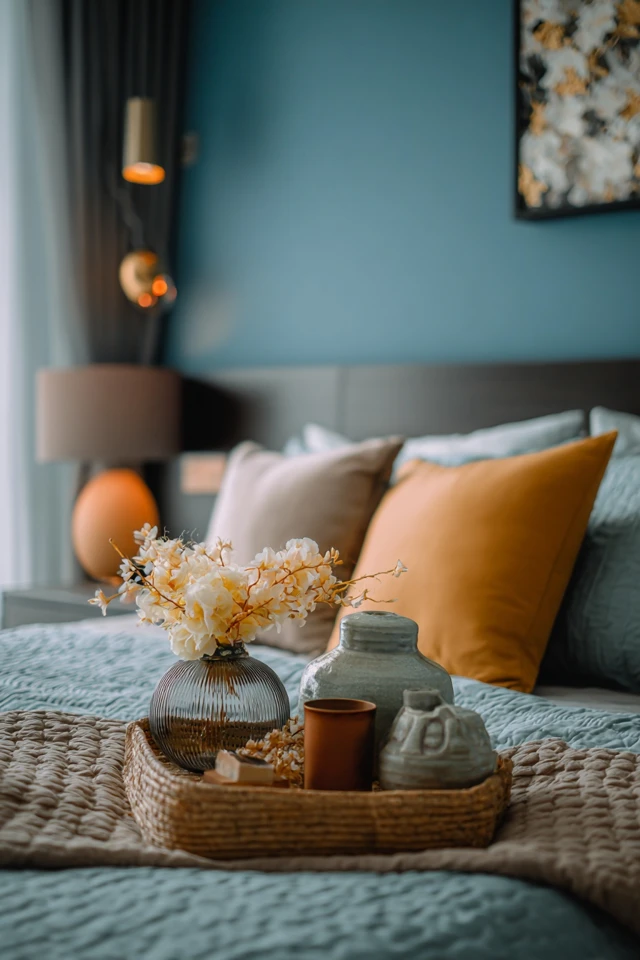
Pick one dominant material, usually wood, and support it with two textures such as linen bedding and a matte ceramic piece. Matte or oiled finishes feel softer than high gloss, and glossy surfaces bounce light and create sharp reflections, which works against a restful mood.
- Wood: oak, walnut or bamboo for the bed frame and a low console.
- Paper and fiber: rice-paper lamps, grasscloth, woven baskets.
- Stone and ceramic: a slate tray or matte vase on the bedside table.
- Metal: brushed brass or dark steel for hardware, used lightly.
When shopping for Asian inspired bedroom furniture, look at proportions first. A low, simple frame with clean joinery will read as Asian-influenced far more than a piece covered in carved detail. For a rug, choose a flat weave or a washable one if pets sleep in the room.
How do you design a small Asian bedroom?
Asian bedroom design for small rooms works well because the style already favors low, simple pieces. A few adjustments help:
- Choose a bed with drawers or a storage platform, so you don't need a bulky dresser.
- Mount floating shelves or use recessed niches to keep the floor open.
- Use one mirrored or lacquered surface at most. More than that and the room starts to feel busy.
- Stick to a tight palette of two or three tones.
For a bigger room, scale the furniture up but keep it low: a wide platform bed and a long console keep sightlines open. A shoji-style or woven screen can make a semi-private corner and soften sound.
How should you light it?
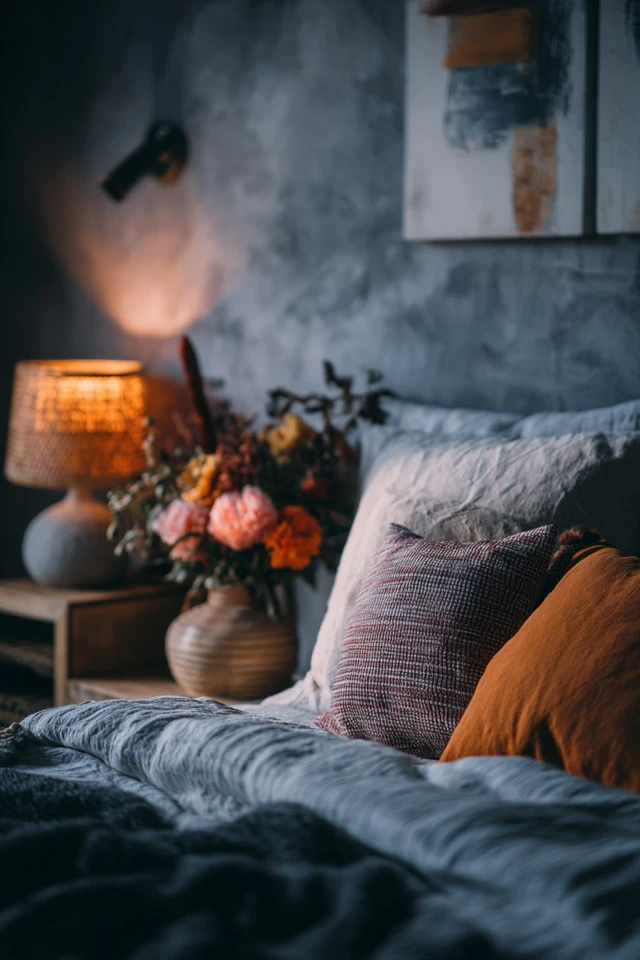
Layer three kinds of light: ambient, task (reading lamps) and accent (a sconce or table lamp). Choose warm bulbs, roughly 2700K-3000K, for evenings. Paper lanterns and rice-paper shades diffuse the glow, which suits the style and avoids harsh shadows.
Put lamps on dimmers if you can. As an architect, I'd spend on good bedside lighting and decent window coverings before buying any decor, since you use them every night. Blackout curtains or lined linen panels help with early sun.
Small styling moves that finish the room
- Keep each bedside surface to a lamp, a small tray and one plant or personal object.
- Add one medium plant you can see from the bed. If you have a dog or cat, check any plant against the ASPCA's toxic plant list or ask your vet before bringing it home.
- Hang art so its center sits at eye level when you're seated on the bed. One large piece or a matched set of three beats a cluster of small frames.
- Build textiles in layers: plain sheets, a textured duvet, then one patterned pillow.
Use cultural pieces with some care. Artisan-made objects and family heirlooms, whose meaning you actually know, feel better than mass-produced symbols. For a similar approach in the rest of the home, see our Asian interior design tips, and for lower-cost ideas try these affordable Asian themed bedroom ideas. If your ceiling slopes, the slanted ceiling guide helps with where a low bed fits best.
Frequently asked questions
How to make your room look Asian?
Lower the furniture, limit materials to wood, paper, linen and ceramic, and clear the floor. Add a paper lamp and one piece of art or a screen as the focal point.
What do Japanese bedrooms look like?
They are usually simple and low, with a platform or tatami-style bed, neutral walls, natural textures and very few objects on display. Storage is typically hidden or built in.
What is Asian style decor called?
There is no single name, since the look spans many cultures. Japanese-inspired rooms are often called Zen or Japandi when mixed with Scandinavian style, and Chinese-inspired ones are often called Oriental or Chinoiserie.
What is the feng shui rule for bedrooms?
A common guideline is to place the bed where you can see the door without being directly in line with it, and to keep the space uncluttered. Treat it as a tradition-based layout preference rather than a proven rule.
Filed under
ArticlesMeet the author
Written by an architect.
Julio Arco is a passionate architect with years of experience in architecture, interior design, urban design, and housing. He studied at prestigious universities across North America and Europe.

- Name
- Julio Arco
- Job
- Architect and online interior designer
- Studied
- Architecture, ITESM · Urban Design and Housing, McGill
- Partner
- Thor, Australian Shepherd
- Thor’s title
- Head of quality control