Pool Deck Ideas for Plain Concrete: Easy Budget Makeovers
Pool deck ideas to refresh plain concrete: stain, paint, wood, pavers, rugs and plants, with spacing and safety tips for budget-minded beginners.

By Julio Arco
Architect and online interior designer
In this post
- What is the cheapest way to update a plain concrete pool deck?
- How do you finish concrete so it stays safe by the water?
- Which concrete pool deck ideas look best?
- Can you add wood to a concrete pool surround?
- How much space do you need around the pool?
- Creative pool surround ideas with plants
- How do you keep the look cohesive?
- Frequently asked questions
If you have a bare concrete slab around your pool, you don't need to tear it out. The cheapest route is to clean it, color it with stain or masonry paint, add traction, and then layer in wood, rugs and planters. Most of these steps are beginner-friendly.
Plain concrete is actually a good starting point. It's flat, durable and already drained, so you're decorating rather than rebuilding. Here are the pool deck ideas I'd try first, roughly in order of cost.
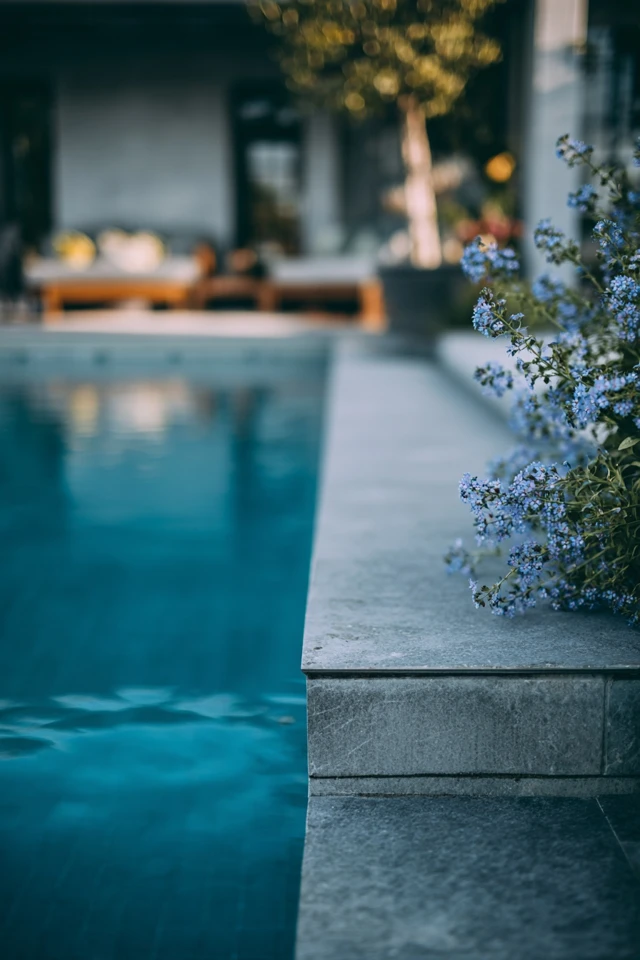
What is the cheapest way to update a plain concrete pool deck?
Start with a pressure wash. Concrete that looks dingy is often just dirty, and a clean slab shows you what you really have: cracks, stains, or a surface that's fine as is.
After that, these are the lowest-cost changes, which work as pool deck ideas on a budget:
- Concrete stain or a tinted sealer to shift the tone without demolition.
- Masonry paint with a stenciled border or geometric pattern.
- An outdoor rug and quick-dry cushions on the loungers.
- Large planters to hide pool equipment and add height.
- Peel-and-stick outdoor tiles for a temporary pattern, if you rent or want to test a look.
These are also the most reversible cheap pool surround ideas, so a color you regret isn't a big commitment. Test any paint, stain or tile on a hidden patch first.
How do you finish concrete so it stays safe by the water?
Traction comes before looks. Polished or glossy concrete is easy to clean but slippery when wet. Choose a non-slip finish, or add a fine aggregate to the topcoat so bare feet grip.
Use products made for exterior concrete: UV-resistant and flexible. Non-porous sealers also cope better with chlorine and pool chemicals. Check grout lines and edges now and then, because water that gets under a surface causes most of the damage later. For slip-resistance standards, ask your local building authority, since codes vary.
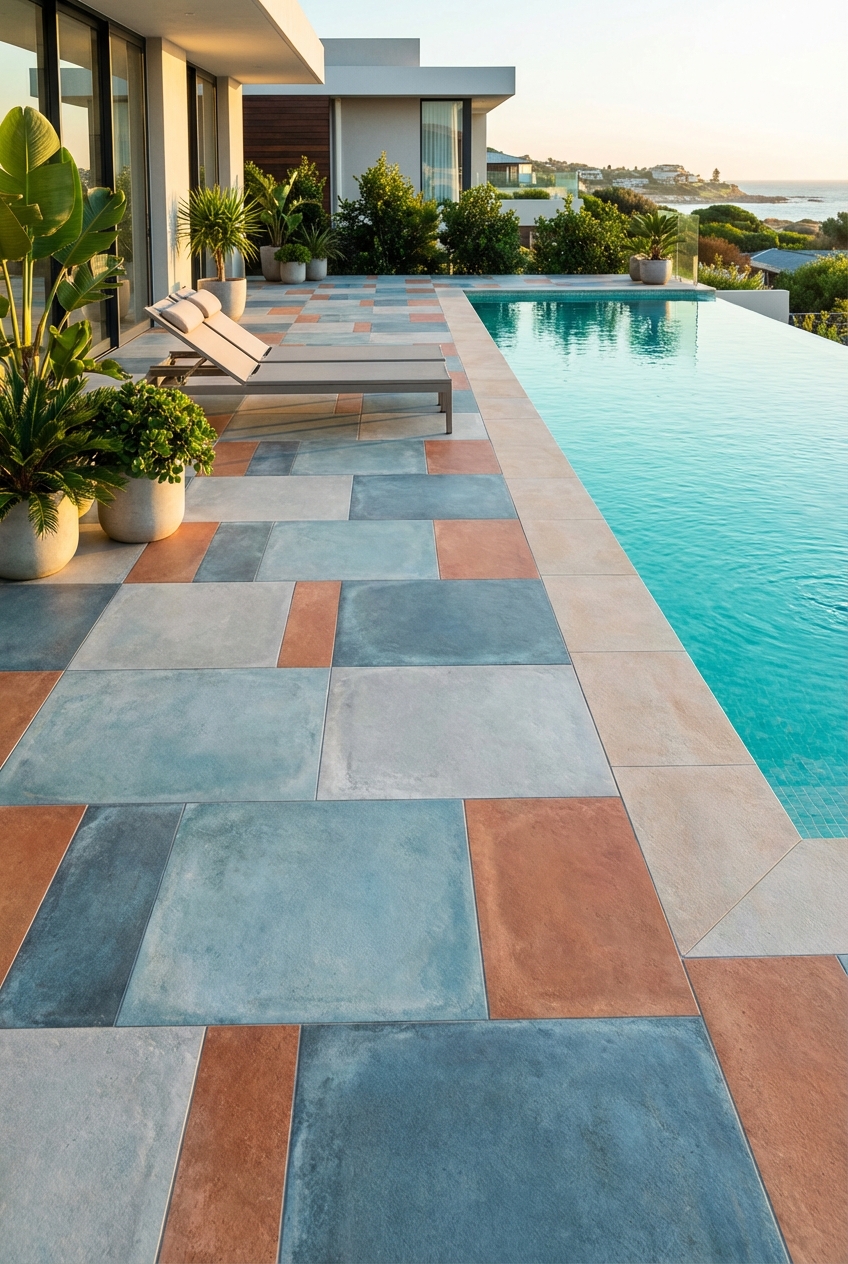
Color matters for comfort too. Lighter finishes stay cooler underfoot, which dogs and kids will appreciate. Darker tones hide stains but hold heat. A light main surface with a darker band near the pool edge gives you both, and the contrast also makes the edge easier to see.
Which concrete pool deck ideas look best?
Concrete pool deck ideas fall into a few families:
- Acid stain: translucent, variable color that looks like natural stone. Hard to reverse.
- Concrete paint: the widest color range and the easiest for beginners. Needs recoating over time.
- Stamped or overlay finishes: mimic tile or flagstone. Better handled by a pro.
- Inlays and bands: a deeper color strip that marks the walkway or pool edge.
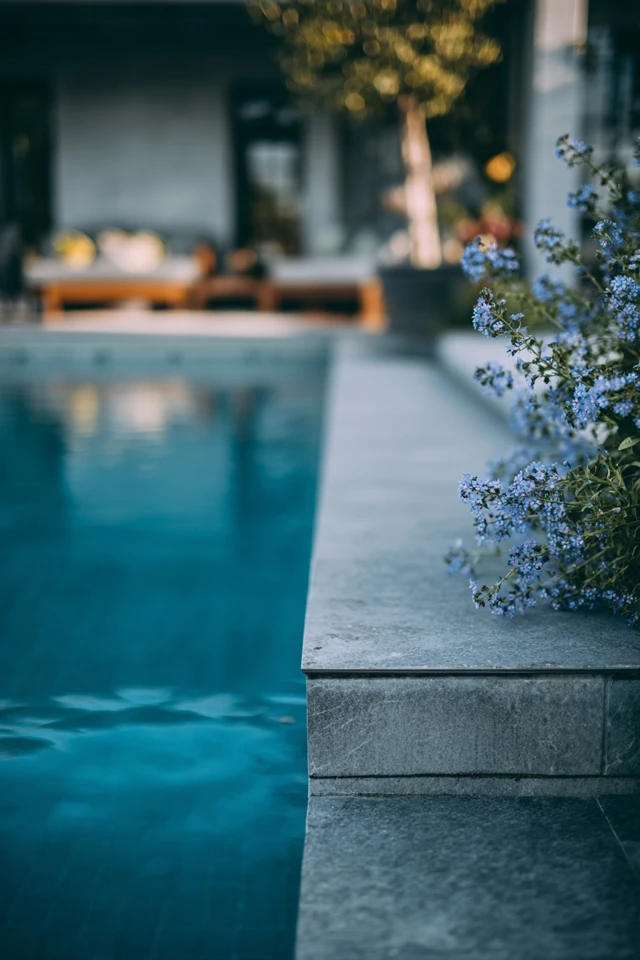
If you want more finish ideas, I cover them in concrete around pool ideas for a look you'll love.
Can you add wood to a concrete pool surround?
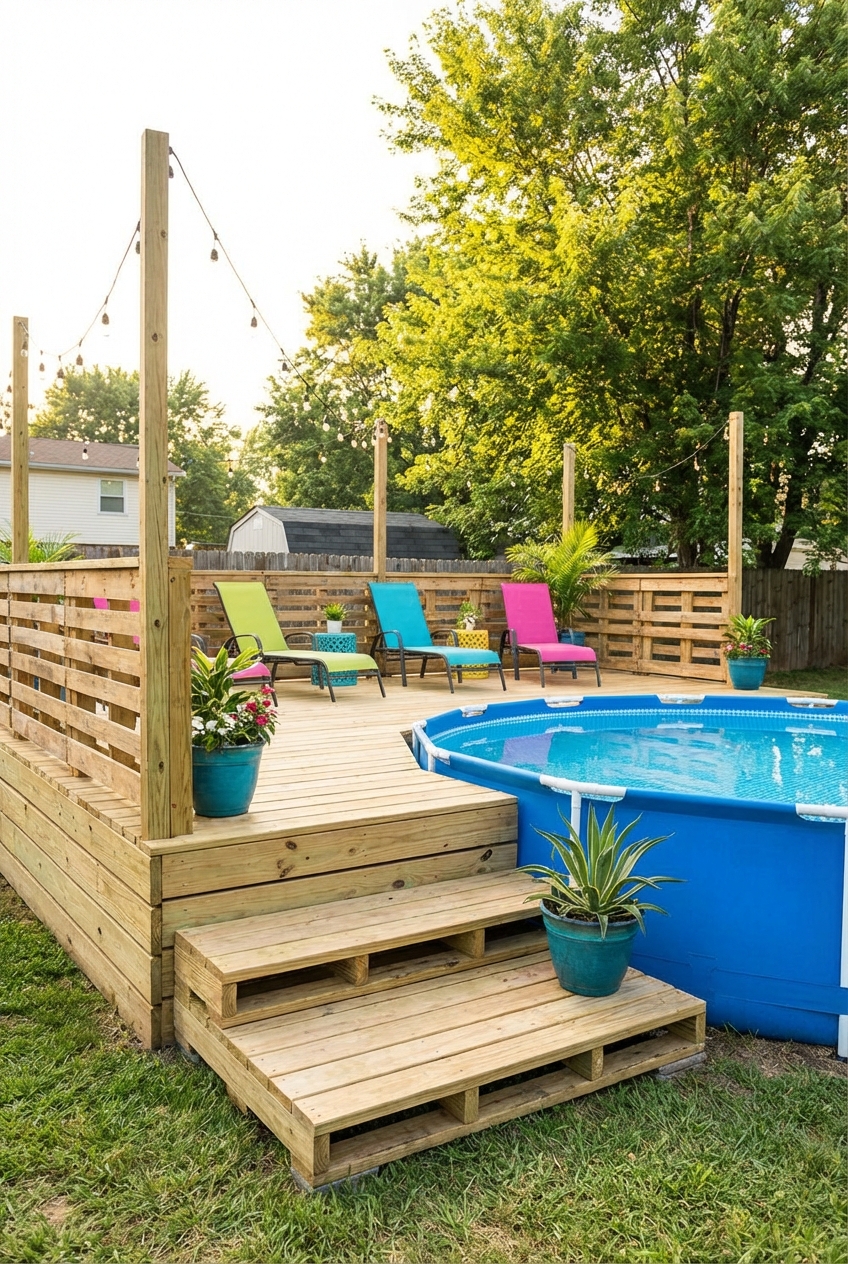
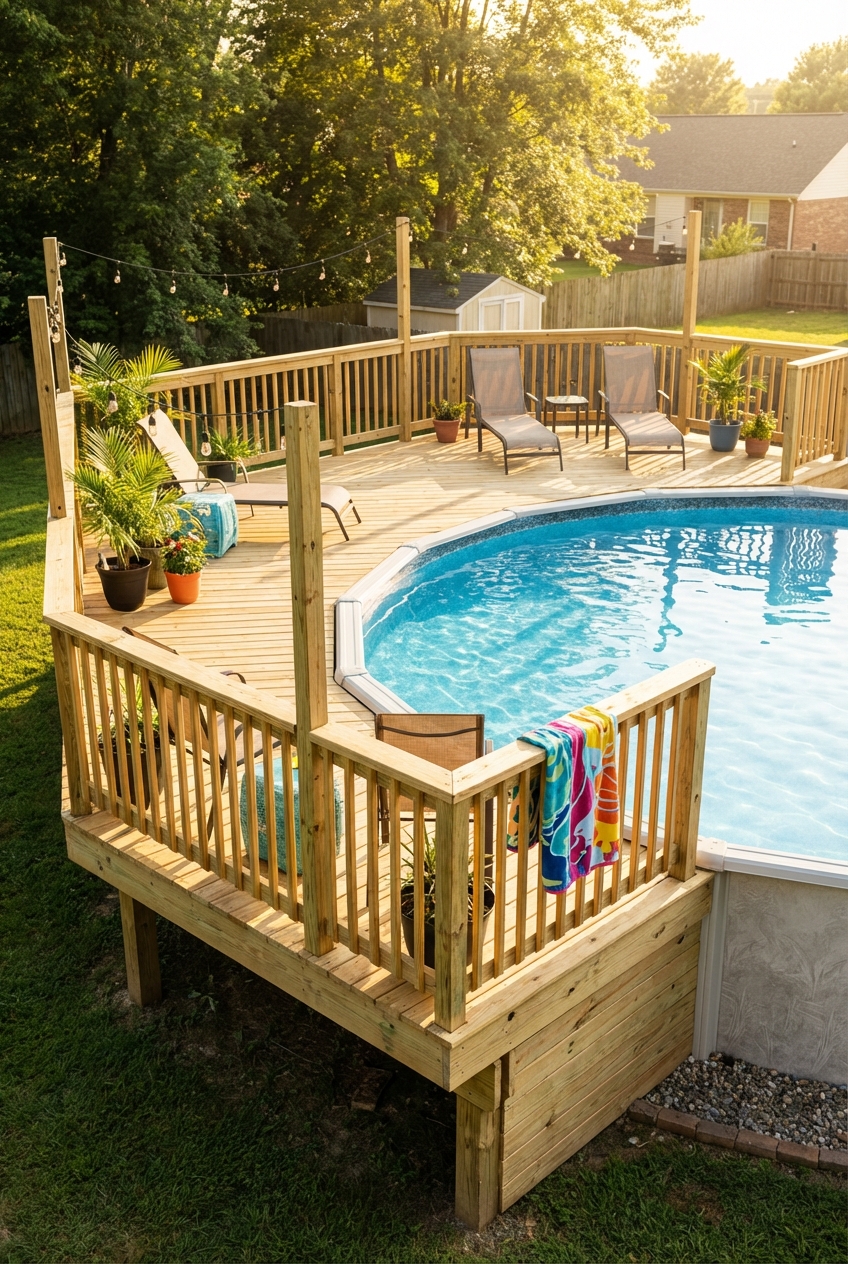
Yes, and it's one of the best wooden pool deck ideas for softening a hard slab. Wood or composite decking feels warmer than concrete, and it doesn't need to cover everything. Slatted walkways, a raised lounge platform or a cedar bench can sit directly on the existing slab.
Partial coverage is cheaper than a full deck and keeps the concrete's easy drainage where people walk wet. Composite costs more up front but needs less upkeep than wood. Anything raised or attached to the slab should be installed with a licensed contractor in mind, particularly near stairs or a drop, because local codes apply.
How much space do you need around the pool?
Keep a clear path of about 3-4 feet on the busiest sides. Everything else can be arranged around that. Mark the route with a paint band, pavers or a runner so people follow it without a barrier.
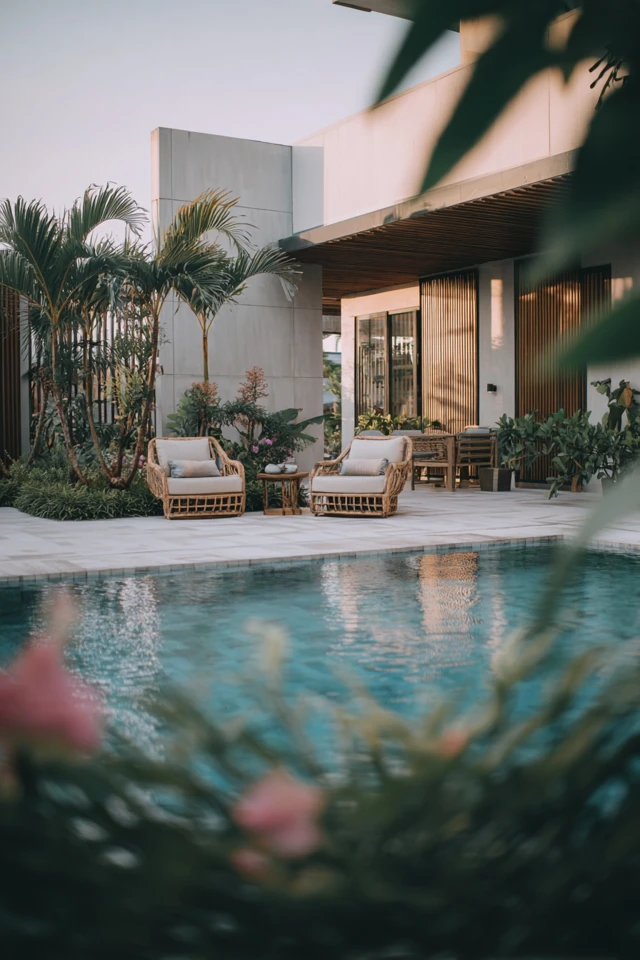
Think of the deck as a small outdoor room with zones: lounging, dining, and a clear walkway. Two loungers, a small sofa and side tables in a loose group work better than a single long row. On small decks, benches with storage and folding tables earn their place. On large ones, rugs and planters can divide the area.
Keep sightlines open from the house to the water, and anchor lightweight furniture so it can't tip toward the pool. If you're planning for an oval pool, curved planters and a rounded seating group follow the shape better than hard rectangles.
Creative pool surround ideas with plants
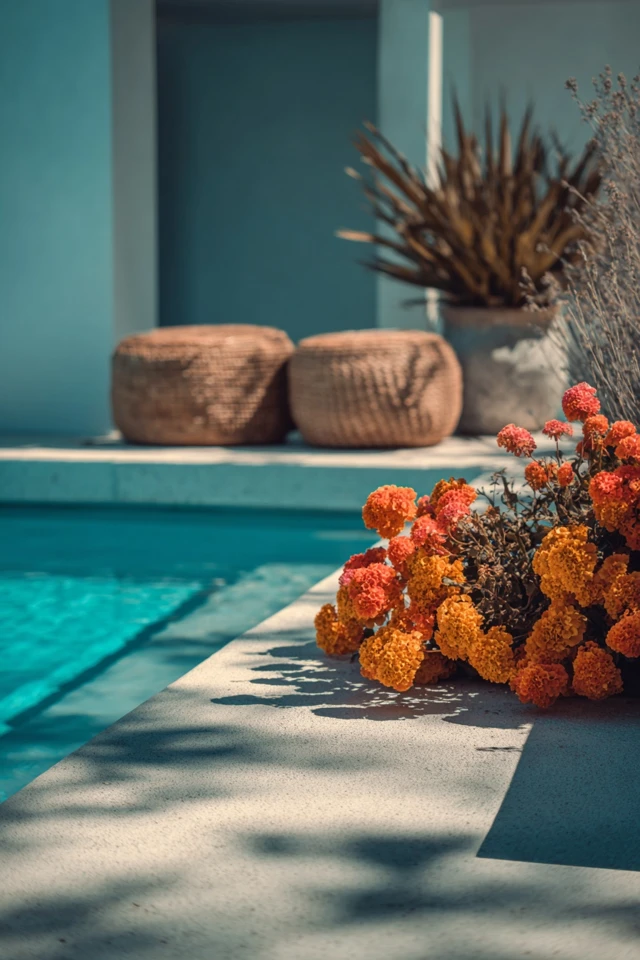
Planting is one of the most creative pool surround ideas because it breaks up the hard edge. Large planters work on concrete without cutting anything. If you do have bare ground next to the slab, low ground covers are a practical edge. Penn State Extension notes that landscape cloth is not recommended on top of or under the soil because it can increase erosion and runoff.
Plant in groups rather than a single species everywhere. Master Gardener Deb Christopher of Westmoreland County says, in Penn State Extension's guidance on native groundcovers: "If disease or pest problems arise, the entire monoculture planting may be killed. Instead, consider planting drifts or groups of single species, providing a patchwork-quilt effect."
Choose salt-tolerant, low-maintenance plants near the water. If your dog uses the garden, check with your vet or the ASPCA's plant lists before planting anything new.
How do you keep the look cohesive?
Pick a small palette and repeat it. Penn State Extension describes scale as the relative size of the elements of the whole design, including the house and the garden. On a pool deck, that means furniture sized to the slab: oversized pieces crowd it, tiny ones get lost.
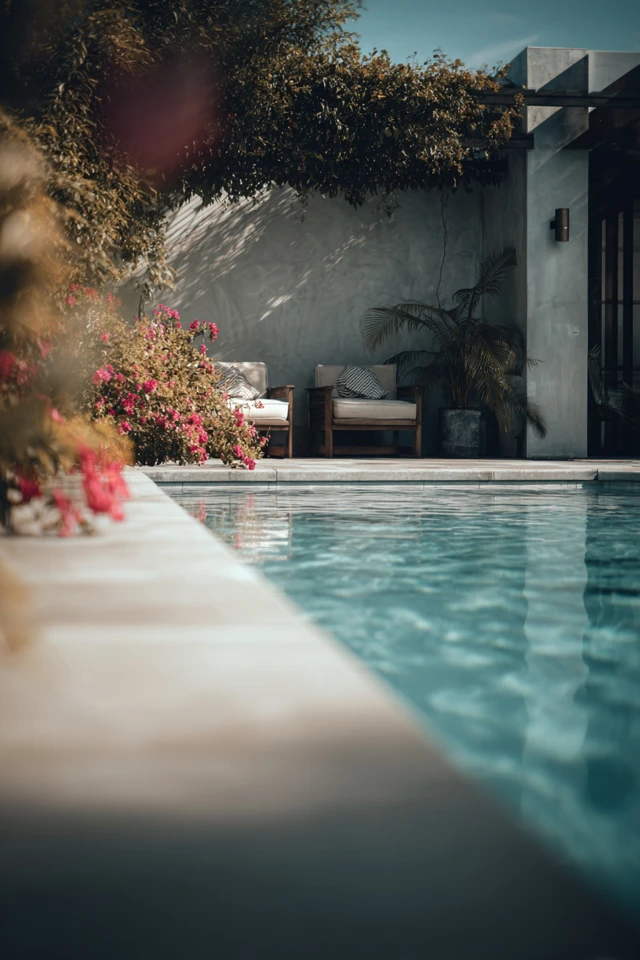
Cool palettes (soft blues, greens) echo the water. Warm sand and terracotta tones give a Mediterranean feel. Neutral grays and whites let plants and furniture be the focus. Keep the base neutral and use bold color in things you can swap, like an umbrella, cushions or a planter.
For lighting, combine path lights, string lights and step LEDs so the deck is usable after dark. Solar options avoid wiring, and any hardwired lighting near water needs a licensed electrician.
If your concrete area is more of a covered patio, you may also like these wood-cabin ideas for warm timber accents.
Frequently asked questions
What are the best options for decking around a pool?
Composite decking is low-maintenance, wood is warmer and cheaper up front, and pavers or stained concrete handle wet feet and drainage well. Whatever you pick, choose a slip-resistant surface.
What are some inexpensive ideas for a pool deck?
Pressure-wash, then stain or paint the concrete, add an outdoor rug, and use large planters. Peel-and-stick outdoor tiles are a low-cost way to try a pattern.
How can I make a small pool deck feel larger?
Use one light, unified palette, slim multi-use furniture and a clear walkway. Linear patterns running along the length of the deck also help.
Can I mix patterns and still keep the space calm?
Yes. Limit yourself to two or three colors and vary the scale of the patterns, such as a large geometric rug with small-print cushions.
Filed under
ArticlesMeet the author
Written by an architect.
Julio Arco is a passionate architect with years of experience in architecture, interior design, urban design, and housing. He studied at prestigious universities across North America and Europe.

- Name
- Julio Arco
- Job
- Architect and online interior designer
- Studied
- Architecture, ITESM · Urban Design and Housing, McGill
- Partner
- Thor, Australian Shepherd
- Thor’s title
- Head of quality control