Craftsman Style Interiors: Ideas for Every Room
What defines craftsman style interiors, and how to use built-ins, natural wood, warm color and handmade details in a living room or a modern home.

By Julio Arco
Architect and online interior designer
In this post
- What defines Craftsman style interiors?
- Which materials and finishes fit best?
- What colors work in a Craftsman room?
- Craftsman style living room ideas
- Craftsman style furniture and handmade accents
- How do you do modern Craftsman style interiors?
- How do you mix patterns without losing the look?
- Frequently asked questions
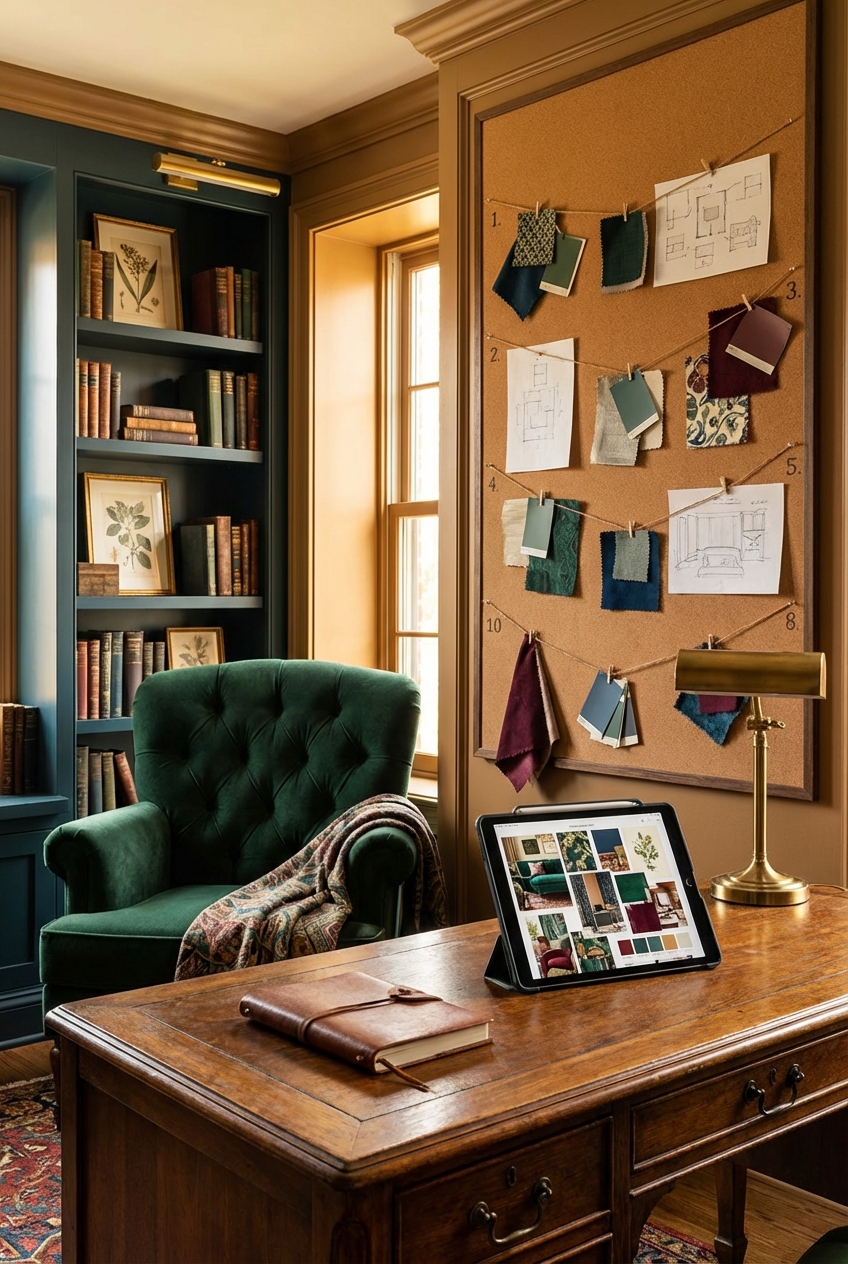
Craftsman style interiors rely on visible wood, built-in storage, a hearth that anchors the main room, and warm, earthy color. Everything is sized for people, so rooms feel snug rather than showy. If you get those four things right, the rest is styling.
This guide covers what to look for in a Craftsman bungalow, how to set up a living room, which finishes and furniture suit the style, and how to bring it into a newer house.
What defines Craftsman style interiors?
The style grew out of the Arts and Crafts movement, which valued handwork and honest materials over ornament. Inside, that shows up as simple, solid shapes: thick trim, square-edged furniture, exposed joinery and wood left looking like wood.
It's a useful contrast with the styles that came before it. Greek Revival houses, for example, were inspired by the classical Greek temple, according to the National Park Service, and Italianate houses are known for low, overhanging roofs with decorative eave brackets. Craftsman rooms go the other way: less applied decoration, more structure left visible.
Common hallmarks of a Craftsman bungalow interior:
- Exposed beams or rafters, and wide, flat window and door casings
- Built-in bookcases, window seats and buffets
- A fireplace in brick, tile or stone as the room's focal point
- Grouped windows that bring in daylight at human height
- Low-sheen finishes on wood and walls
Which materials and finishes fit best?
Wood does most of the work. Oak, maple and cherry with visible grain suit the style, ideally in an oil or matte finish. Glossy lacquer fights the handmade feel. Glossy surfaces bounce light and throw sharp shadows, while matte ones absorb it and soften the room, which is the mood you want here.
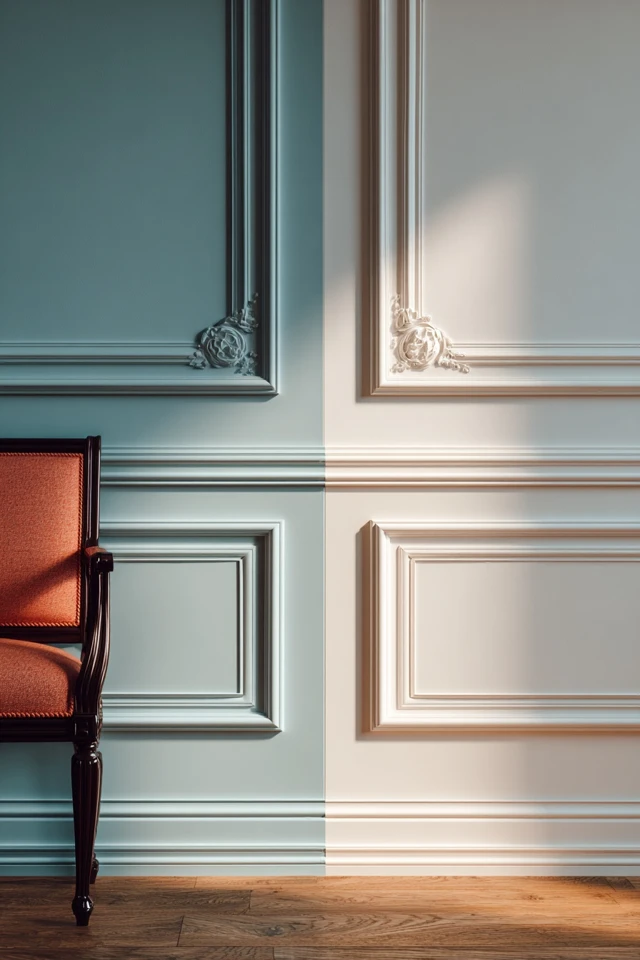
On walls, a flat or low-sheen paint with satin trim keeps the woodwork as the star. A lightly textured plaster finish also works and hides small dings. For hardware and lighting, bronze, aged brass and blackened steel look right in small doses. Pick pieces with a hammered or patinated surface over mirror-bright ones.
Pet note: if a dog shares your couch, matte oiled wood is easier to live with than high gloss, since light scratches blend in. Wool and tightly woven cotton hold up better than loose weaves that snag on claws.
What colors work in a Craftsman room?
Think moss green, amber, muted terracotta, warm gray and soft cream. These are low to medium saturation, so they stay easy on the eyes and layer well with wood tones. Add one cooler accent, such as sage or slate blue, to keep a warm room from feeling heavy.
Light changes everything. Rooms facing south can carry deeper tones. North-facing rooms look cooler, so lean toward warmer pigments. Paint large samples on two walls and check them morning and evening before you buy gallons.
Craftsman style living room ideas
Start with the hearth or the biggest window and point the seating at it. As an architect, I'd center the rug under the seating group, not the room, and keep it large enough that the front legs of every chair and sofa sit on it.
- Leave about 30-36 inches for the main walking path, and don't block doors or windows with furniture.
- Use a console behind the sofa to separate a living area from a dining area in an open plan.
- Balance a heavy wood piece on one side with a pair of chairs and art on the other. Craftsman rooms prefer asymmetry that still feels stable.
- Layer light: a ceiling fixture, a reading lamp by each chair and a dimmer for evenings.
In a small room, choose low-profile pieces, hang curtains high and wide, and place a mirror opposite the window. In a large one, split the space into two or three groupings so it keeps that close, human scale. The same logic applies to a TV room, where seating and sightlines matter more than the screen.

Craftsman style furniture and handmade accents
Craftsman style furniture is sturdy and rectilinear, with visible joinery such as mortise-and-tenon or pegged connections, slatted backs and thick legs. A leather or wool-upholstered armchair with wood arms is the classic piece. Pair a chunky wood coffee table with slim metal lamps for contrast without clutter.
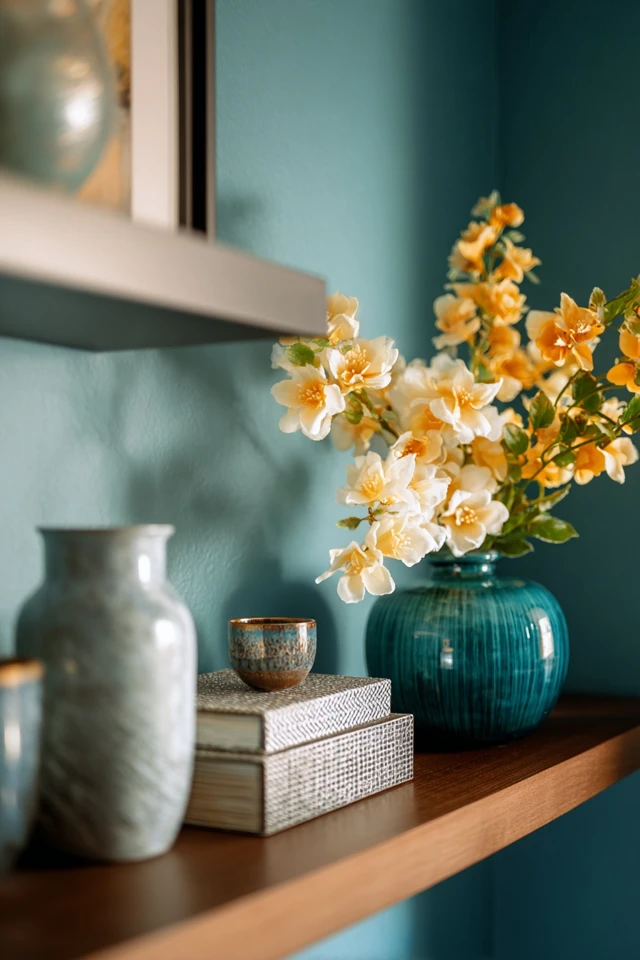
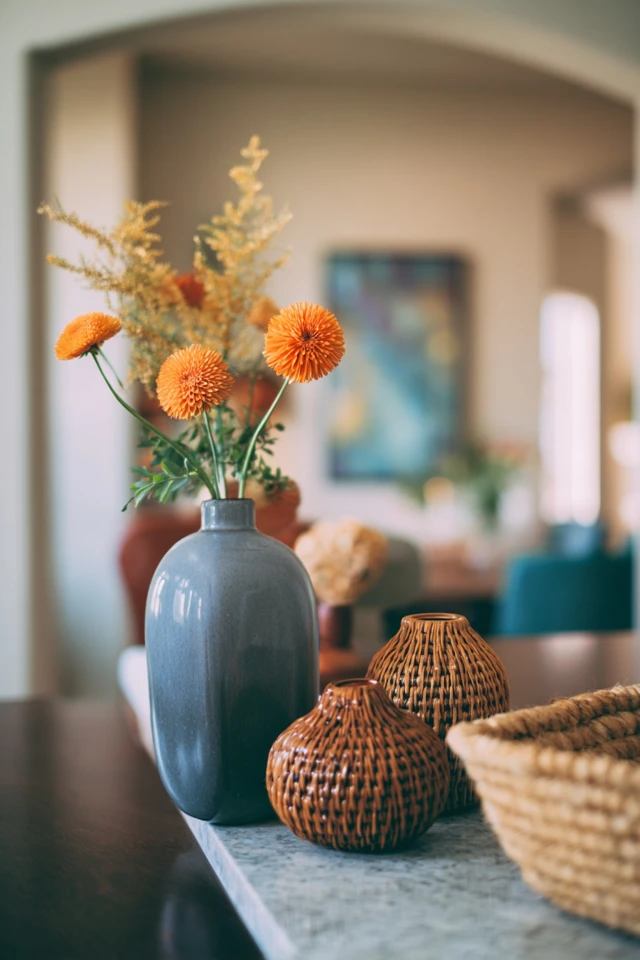
For accents, look for pottery, woven baskets, hammered copper and simple stained glass. Group objects in odd numbers, vary heights and leave empty surface. A crowded shelf hides the craft you're trying to show. Plants suit the style well too; choose ones that match your light, and check with your vet before bringing anything home if your dog or cat chews leaves.
What is a Craftsman style interior door?
Craftsman style interior doors usually have a flat-panel design, often with one to three vertical panels or a row of small glass lites across the top, set in a plain, wide casing. They're painted or stained in a solid color and fitted with simple hardware in bronze or black. If you're replacing doors, keep the casing profile consistent room to room.
How do you do modern Craftsman style interiors?
Modern Craftsman style interiors keep the materials and proportions but cut the layers. Use the same warm woods and muted palette, then simplify: fewer patterns, cleaner lighting, and storage that's built in rather than collected.
- Choose sustainable or reclaimed wood for floors and cabinetry.
- Mix in contemporary light fixtures with classic finishes.
- Save trendy colors for pillows and throws that are easy to swap.
- Add a few heirlooms or local handmade pieces so the room feels personal.
If your house has no original woodwork, I recommend adding one strong element, such as a built-in bench, a stained mantel or wide trim, rather than scattering small Craftsman details everywhere. Swapping drawer pulls and light fixtures is the cheapest update, and refinishing existing wood comes next. Similar restraint works in other rooms, such as a foyer where a single bench and good hooks carry the look.
How do you mix patterns without losing the look?
Anchor the room with a neutral base, then use patterns that echo handwork: small geometrics, restrained florals and stripes. Vary the scale (one large, one medium, one small) and keep them within the same palette. Natural fibers like wool, linen and cotton in woven textures add depth without adding color.
Frequently asked questions
What is a modern Craftsman style home?
It keeps Craftsman proportions, natural wood and warm colors but uses simpler lines, cleaner lighting and fewer decorative layers. Open plans and updated kitchens are common.
What is the difference between Craftsman and Arts and Crafts architecture?
Arts and Crafts is the broader design movement that prized handwork and honest materials. Craftsman is the American house and interior style that grew from it, with built-ins, exposed structure and low-pitched roofs.
How can I make a small Craftsman-style room feel larger?
Use light, muted wall colors, hang curtains high and wide, and choose low-profile furniture. A mirror opposite a window and clear walking paths also help.
What are budget-friendly ways to get a Craftsman feel?
Start with paint, hardware, lighting and textiles. Refinish existing wood, swap fixtures and add a wool rug before buying new furniture.
Filed under
ArticlesMeet the author
Written by an architect.
Julio Arco is a passionate architect with years of experience in architecture, interior design, urban design, and housing. He studied at prestigious universities across North America and Europe.

- Name
- Julio Arco
- Job
- Architect and online interior designer
- Studied
- Architecture, ITESM · Urban Design and Housing, McGill
- Partner
- Thor, Australian Shepherd
- Thor’s title
- Head of quality control