Home Office in the Kitchen: Layout and Style Ideas
Set up a home office in the kitchen with smart zoning, lighting, ergonomics and noise tips that keep cooking and work from getting in each other's way.

By Julio Arco
Architect and online interior designer
In this post
- Where should the desk go in a kitchen?
- How do you separate work and cooking zones?
- How should you set up the desk ergonomically?
- What lighting works for a kitchen office?
- Which colors and materials suit a kitchen workspace?
- How do you keep kitchen noise out of calls?
- Small details that keep the corner tidy
- Frequently asked questions
A home office in the kitchen works when the desk has its own zone, its own light and a clear edge from the cooking area. Pick a spot away from the stove and the main walkway, give it a proper chair and a task lamp, and keep the surface clear of food.
It's a very common setup, so don't feel bad if your "office" is one end of a counter. A few measured decisions make it feel like a real workspace instead of a laptop balanced between the fruit bowl and the mail.
Where should the desk go in a kitchen?
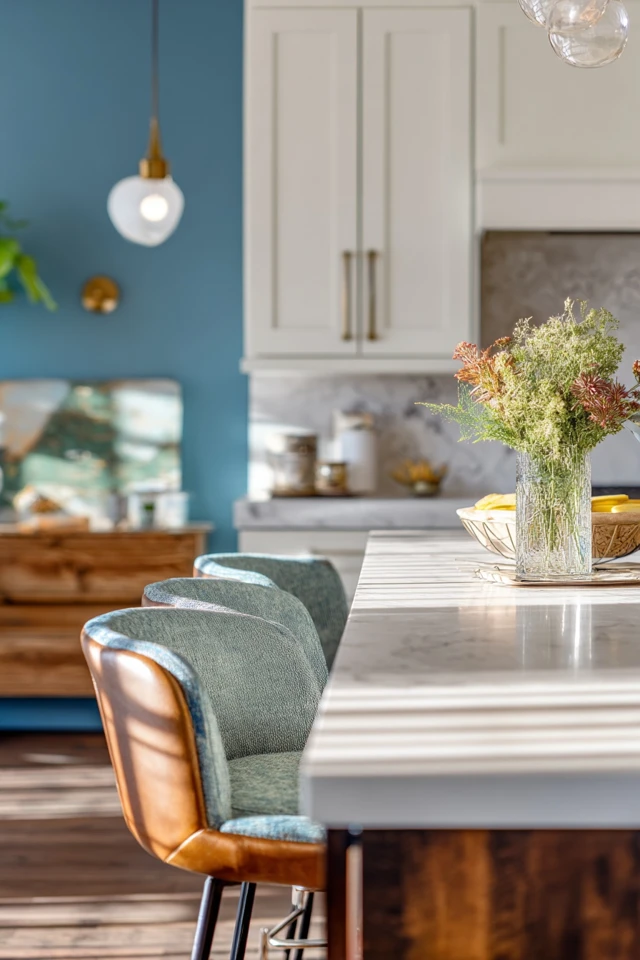
Start by mapping how you move. Cooking happens in the triangle between sink, stove and fridge, so keep the desk outside that path. A main walkway needs about 36 inches, and a chair pulled out from a desk needs more behind it.
Good candidates are the end of a peninsula or island, a bay window, a short wall beside the pantry, or a nook at the edge of an open-plan room. If you have a small footprint, a fold-down desk or a deep shelf at counter height can do the job. In a larger room, a low bookcase behind the chair gives a sense of enclosure without blocking sightlines.
If the kitchen opens onto a living or dining area, kitchen partition ideas between living and dining spaces can help you separate the work corner without building a wall.
How do you separate work and cooking zones?
You rarely need walls. A rug or runner under the chair marks the desk area visually. A different surface, such as a wood desktop beside stone counters, reads as a change of use. A floating shelf, a pegboard and a lamp above a narrow desk also build a vertical zone that takes little floor space.
Storage matters more than it seems. Give office supplies one shallow drawer or a lidded basket so you can clear the surface in under a minute at dinnertime. Multi-use pieces such as a storage bench or a banquette that doubles as seating help in tight rooms. For more ideas on compact layouts, see these small apartment kitchen ideas.
How should you set up the desk ergonomically?
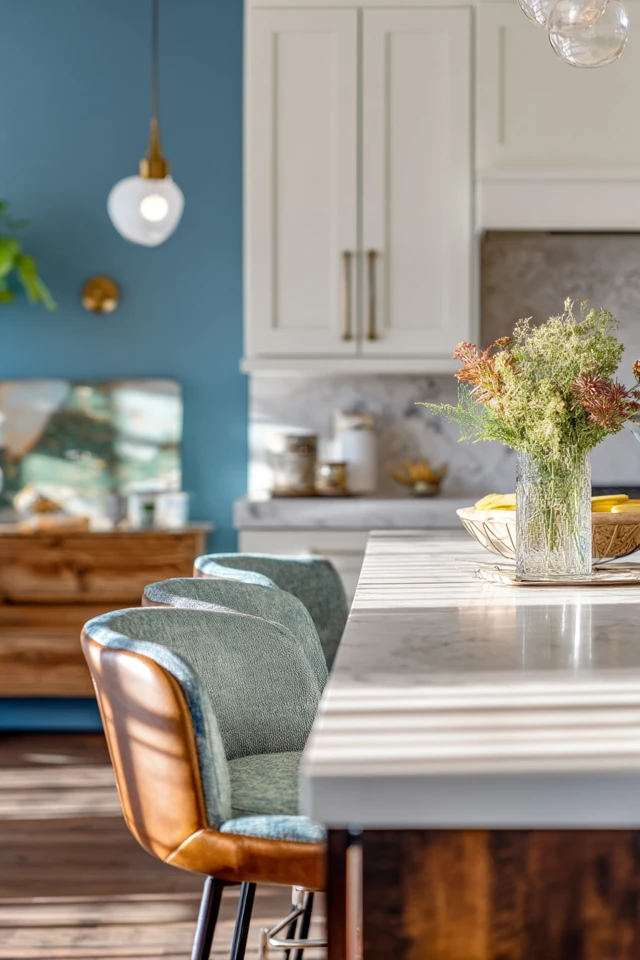
Kitchen counters are usually 36 inches high, which is taller than a standard desk. If you work standing, that can be fine for short sessions. For long days, use a table-height surface and a real chair.
OSHA's computer workstation guidance says the top of the monitor should be at or just below eye level. It also describes elbows that stay close to the body and are bent between 90 and 120 degrees. A laptop on a stack of books with a separate keyboard gets you there cheaply.
As an architect, I'd choose a slim chair with a supportive back over a bar stool, even if it looks less tidy. You'll feel the difference by the second hour.
What lighting works for a kitchen office?
Layer it. Use ambient light (pendants or under-cabinet strips), a task lamp you can aim at the work surface, and a soft accent if you like one. Under-cabinet lights alone often leave your face in shadow on video calls, so add a lamp to the side.
Color temperature is worth checking on the box. The Department of Energy notes that correlated color temperature (CCT) is one of the primary metrics used to describe the visual appearance of light. In practice, warm white around 2700-3000K feels cozy for the room, while a slightly cooler task lamp helps for detail work. Keep the bulbs in the same family so the desk doesn't look like a different room.
Glare is the other trap. Glossy counters and tile bounce light into your screen, while matte finishes absorb it. Place the monitor at a right angle to the window rather than facing it or with your back to it.
Which colors and materials suit a kitchen workspace?
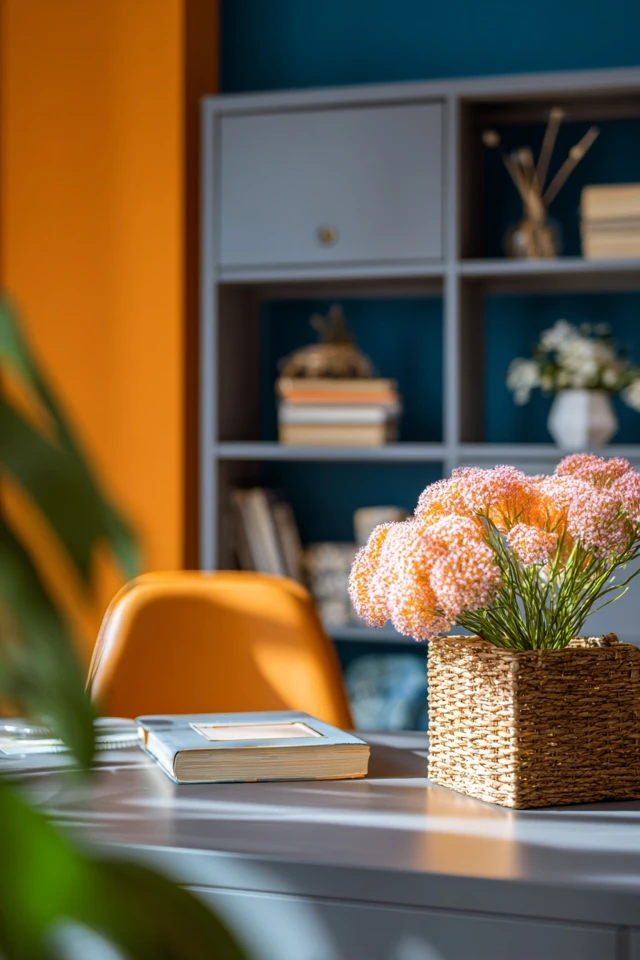
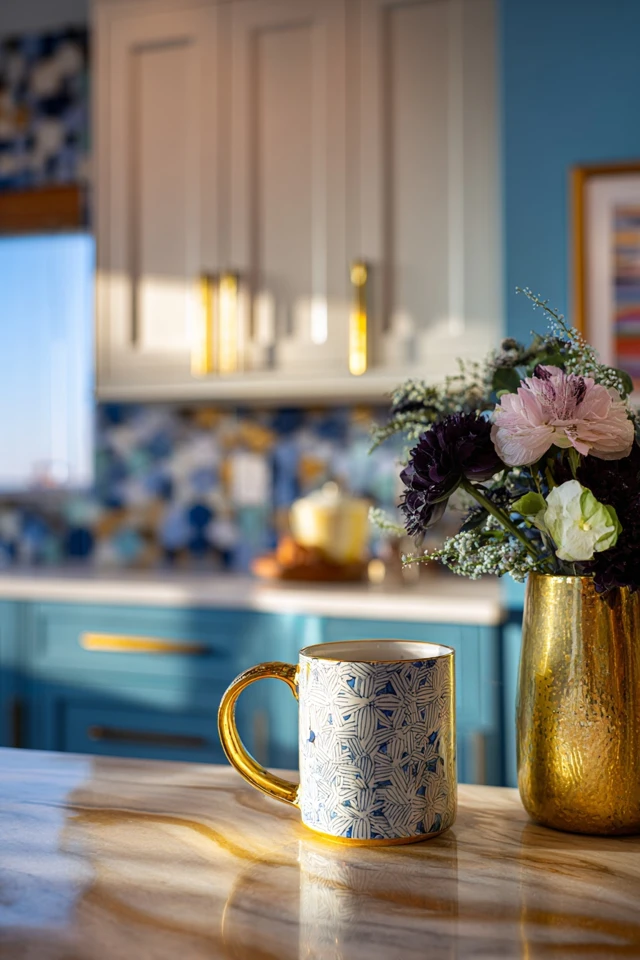
Low to medium saturation is easiest to live with for hours. Soft greige, muted sage or slate blue on a desk wall keep the eye calm, and wood, brass or terracotta accents add warmth. Test paint samples in the room at morning and evening, because kitchens often change character after sunset.
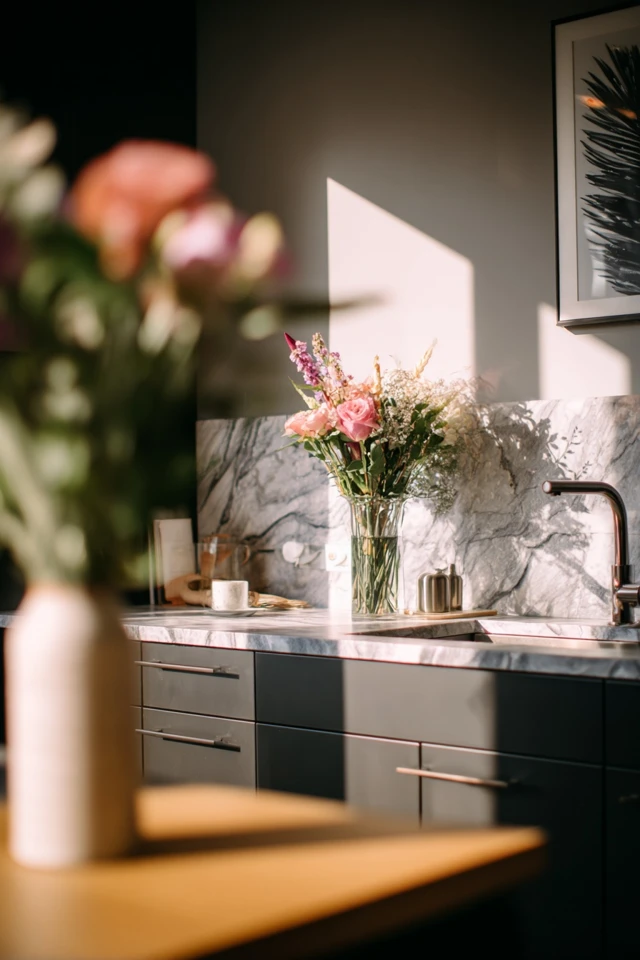
For surfaces, a matte or honed desktop reduces glare and fingerprints. Wood warms up the screen-heavy corner. Add fabric where you can: a woven rug, linen curtains or an upholstered seat pad soften sound and feel better against your forearms than stone.
If pets share your kitchen, choose a washable rug with a low pile and keep cables in a tray or behind a cover so they can't be chewed. Check with your vet if your dog or cat tends to gnaw cords.
How do you keep kitchen noise out of calls?
Hard surfaces make a kitchen echo. A rug, curtains and a fabric-covered pinboard behind the desk cut reverberation. A headset with a noise-cancelling microphone helps more than any decor. Place the desk away from the dishwasher and fridge if you can, and schedule calls around cooking.
Small details that keep the corner tidy
- Run cables through a tray, a grommet or a simple basket instead of letting them drape over the counter.
- Keep one or two personal objects, such as a plant or a favorite mug, and put the rest away.
- Use a closing shelf or cabinet for paperwork so it doesn't migrate to the table.
- Photograph paint and fabric samples in place before you commit.
If you also need room for creative projects, the same zoning logic applies in a home art studio setup. And if your pantry could absorb office supplies, a small pantry layout may free a drawer for them.
Start with the cheapest change first: move the desk lamp, add a rug under the chair, then see what still bothers you after a week of real work.
Frequently asked questions
Can I use the dining table as my kitchen office?
Yes, if you clear it daily. Keep a lidded box for your laptop, charger and papers so setup and cleanup take a minute, and use a proper chair rather than a stool.
What paint colors are best for concentration in a kitchen office?
Muted blues, soft greens and warm greige are easy on the eyes. Pair cooler tones with wood accents and test samples under your kitchen's own light.
How can I make a small kitchen feel larger with a workspace?
Keep furniture slim and proportional, use open shelving to preserve sightlines, and choose light, low-saturation finishes. A fold-down desk keeps the floor clear when you're not working.
Is a kitchen too noisy for video calls?
It can be, mainly because hard surfaces echo. Soft furnishings, a good headset and a desk placed away from appliances usually solve it.
Filed under
ArticlesMeet the author
Written by an architect.
Julio Arco is a passionate architect with years of experience in architecture, interior design, urban design, and housing. He studied at prestigious universities across North America and Europe.

- Name
- Julio Arco
- Job
- Architect and online interior designer
- Studied
- Architecture, ITESM · Urban Design and Housing, McGill
- Partner
- Thor, Australian Shepherd
- Thor’s title
- Head of quality control