Home Art Studio Ideas for Small Spaces and Budgets
Practical home art studio ideas: where to put one, a layout that works, what to include, lighting, furniture and how to organize supplies on a budget.

By Julio Arco
Architect and online interior designer
In this post
- How do you create an art studio at home?
- Where can you put a home studio?
- What is a good art studio design layout?
- What should be included in an art studio?
- How do you organize an art studio at home?
- How do you set up a studio on a budget?
- How do you make it feel cozy and modern?
- Frequently asked questions
You don't need a spare room to make a good studio. A corner, a closet or half a bedroom works if you give it three things: steady light, a work surface at the right height, and storage you can reach without stopping mid-stroke.
Below are home art studio ideas by space type, a layout that keeps your workflow short, and a list of what to include. It's written for painters and drawers, but most of it applies to clay, sewing and printmaking too.
How do you create an art studio at home?
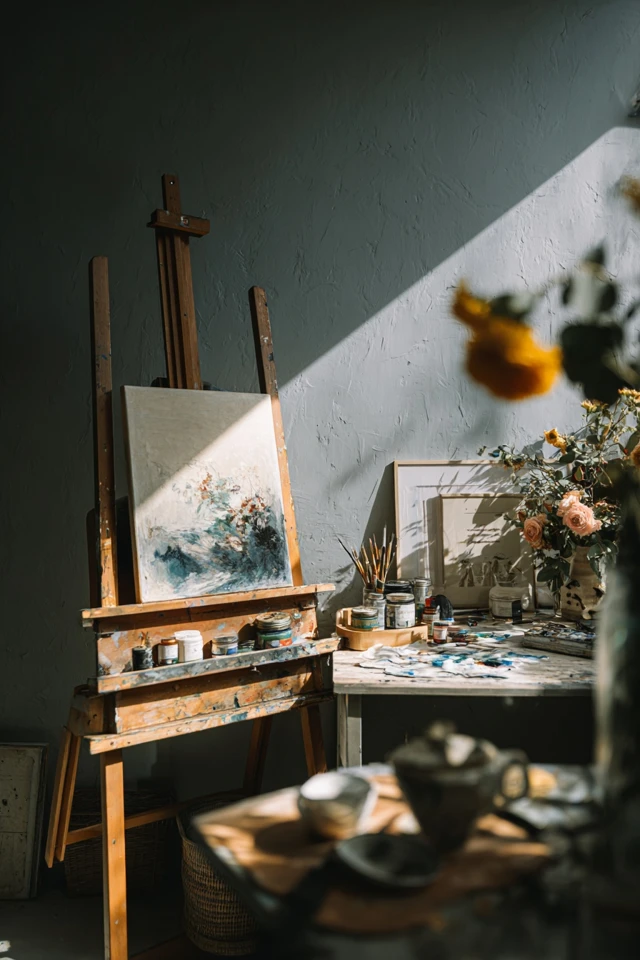
Start with what you make, not with furniture. Painting in oils needs ventilation and floor protection. Drawing needs a tilted surface and good light. Clay needs water nearby and a surface you can wipe down. Write down your messiest task and your most frequent task, then pick the spot that suits both.
Then measure. Get a tape measure and check the wall, the window and the floor area you can really claim. Leave about 36 inches in front of the work surface so you can step back and move a chair. If pets share the room, add a spot where paints, solvents and small tools are out of reach.
Where can you put a home studio?
Take over a corner
This is the best of the home art studio ideas for small spaces. Put a desk or easel against two walls, add a shelf above and a rolling cart beside it. A rug under the chair marks the zone and protects the floor.
Divide a room
In an open living area, a low bookshelf works as a divider without blocking daylight. Face the open side of the shelf toward the studio so supplies stay at hand and the living side sees only the back.
Convert a closet
A closet is deep and has shelves already. Remove the doors or fold them back, set a narrow table at elbow height, and add a clip-on or wall light. It's small, but everything is within arm's reach and you can close it up for guests.
Use a spare bedroom
A whole room lets you separate zones: a main table, a materials shelf and a chair for looking at your work from a distance. If you also need a desk, see how a home office can share space with another room.
Shed or garage
Detached spaces give you freedom to be messy, but check temperature before you store anything there. The Ohio State University Extension, in its pantry guidance, says canned goods should not be stored above 95 degrees F, such as in a storage shed or garage. The same heat can be hard on some paints and glues, so read the labels and, if in doubt, keep sensitive supplies indoors.
What is a good art studio design layout?
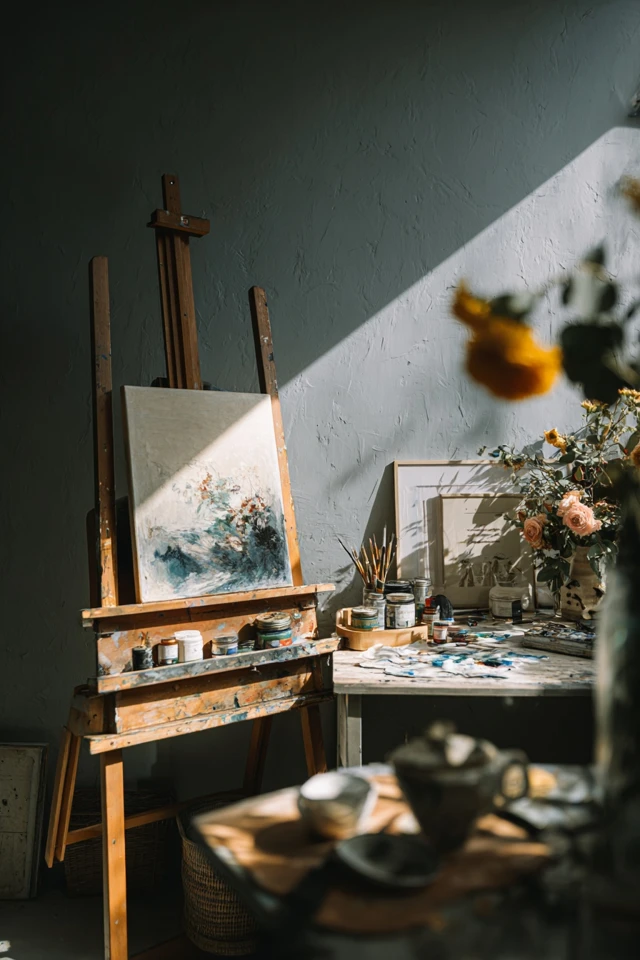
Think of three points: where you make, where you store, and where you sit back and judge. Keep the steps between the first two short, since you'll make that trip hundreds of times per session. The sitting spot can be a stool across the room.
- Put the work surface near the window, with the light coming from the side opposite your drawing hand to reduce shadows.
- Keep daily tools within one arm's reach and the rest on shelves above or beside.
- Leave a clear floor path of about 30-36 inches to the door.
- Use a rug or mat under the work area, not wall to wall, so spills stay local.
What should be included in an art studio?
The short list: a sturdy work surface, a comfortable chair or stool, good light, storage for materials, a place to dry or display work, and a surface or bin for waste. Add water access if you can, even if it's just a bucket and a nearby sink.
Lighting
Use daylight where you have it, plus a task lamp for evenings. Color accuracy matters for painters. The U.S. Department of Energy explains that correlated color temperature is one of the primary metrics used to characterize the visual appearance of light, so check the color temperature on the bulb box and use the same type in all lamps over your table. LEDs are also a sensible choice: the DOE notes that good-quality white LED products are expected to last 30,000 to 50,000 hours or even longer.
Light also affects how you feel. The DOE puts it this way: "Light plays a key role in setting and regulating the body's biological clock." If you paint late, a dimmer or warmer evening lamp is kinder than a bright overhead.
Home art studio furniture
Choose pieces that fold, roll or double up. A wall-mounted drop-leaf table, a rolling cart and a flat file or shallow drawers cover most needs. For the work surface, a sealed wood top or a replaceable mat protects the table from spills. As an architect, I'd avoid high-gloss tops under task lights, since they bounce glare into your eyes and make colors harder to judge.
How do you organize an art studio at home?
Go vertical first. Pegboards, magnetic strips and tall shelves keep the floor open. Then sort by how often you reach for things.
- Clear, labeled bins for pigments, pastels and small tools.
- Shallow drawers or jars for brushes, grouped by type.
- A picture rail or cork board for works in progress, which keeps paper off the table.
- A closed cabinet or high shelf for solvents and anything harmful to pets.
Rotate your supplies now and then. University of Georgia Extension specialist Judy Harrison, Ph.D., writes about food, but her advice to rotate non-perishable staples once or twice a year is a good habit for dried-out paints and old glues too. End each day by wiping the table and returning tools to their spots. Five minutes is enough.
How do you set up a studio on a budget?
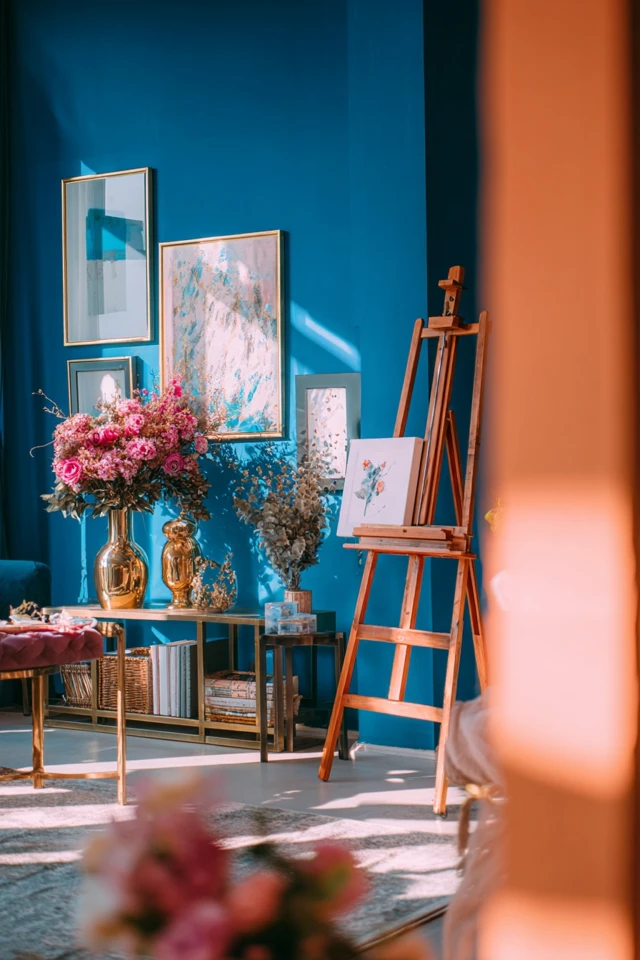
Home art studio ideas on a budget mostly come down to reusing what you own. A solid door on two trestles or filing cabinets makes a large table. Jars, tins and a shoe organizer hold supplies. A clip-on LED lamp costs far less than built-in lighting and can move with you.
Spend first on the chair and the light, since you'll feel those every session. Spend last on decor. For more ideas, see these affordable art studio ideas and this roundup of stylish home art studio ideas.
How do you make it feel cozy and modern?
Keep furniture clean-lined and add warmth through materials: wood, cork, wool and linen. Soft goods also absorb echo, so a rug, curtains or a fabric-covered pinboard calm the room. Choose a restrained palette and let your artwork provide the color. A mid-tone neutral on the wall behind your work table helps you judge color without a strong cast.
I recommend washable covers on any seat a dog is allowed on, because studios collect paint and fur at about the same rate. For styling ideas beyond the basics, there's more in this art studio styling guide.
Frequently asked questions
How can I create an art studio at home?
Pick the spot that suits your messiest and most frequent task, measure it, then add a work surface, light and storage in that order. A corner, closet or half a room is enough.
What should be included in an art studio?
A sturdy work surface, a comfortable seat, good lighting, storage for materials, a place to display or dry work, and a waste bin. Water access helps if your medium needs it.
What are some good ideas for a home studio?
Take over a corner, divide a room with a low shelf, convert a closet, use a spare bedroom, or fit out a shed. Fold-down tables and vertical storage suit tight spaces.
Can I keep art supplies safe around pets?
Store solvents, paints and small tools in closed cabinets or on high shelves. Check with your vet about any material your pet may have touched or eaten.
Filed under
ArticlesMeet the author
Written by an architect.
Julio Arco is a passionate architect with years of experience in architecture, interior design, urban design, and housing. He studied at prestigious universities across North America and Europe.

- Name
- Julio Arco
- Job
- Architect and online interior designer
- Studied
- Architecture, ITESM · Urban Design and Housing, McGill
- Partner
- Thor, Australian Shepherd
- Thor’s title
- Head of quality control