Home Office Shelving Ideas: Smart, Stylish Storage

By Julio Arco
Architect and online interior designer
In this post
- What should go on your shelves first?
- Which wall-mounted shelf ideas work best?
- What are good small home office shelving ideas?
- Can you build home office shelves yourself?
- How do you organize office shelves for files?
- How do you make office shelves look nice?
- What are some unique shelving ideas for an office?
- Frequently asked questions
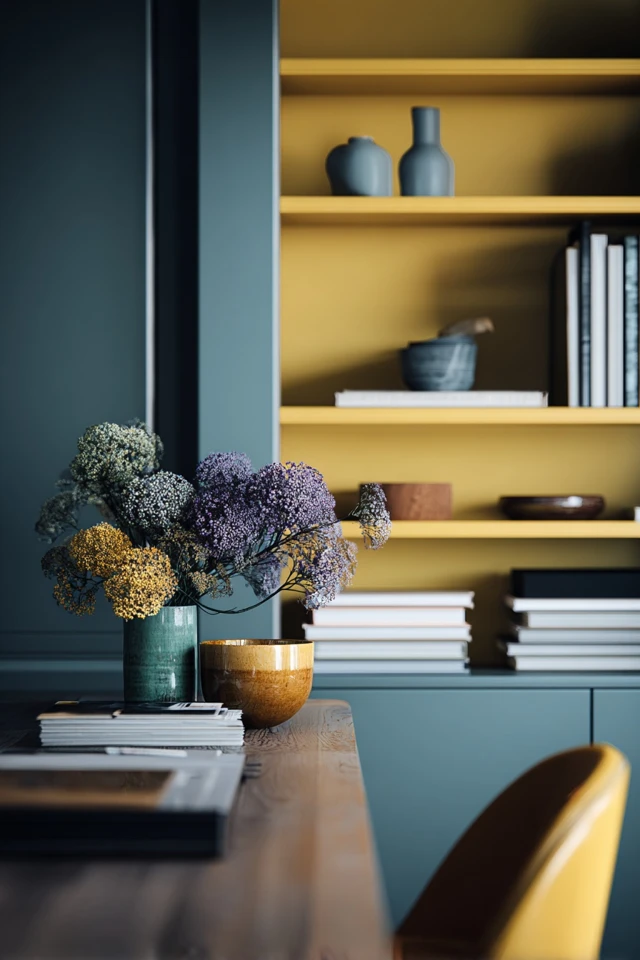
The best shelving for a home office does two jobs: it keeps the things you touch every day within arm's reach, and it gives the eye a calm place to land. Start with what has to live on the shelves, then pick the format, then style it.
If your office is a corner of the bedroom or living room, don't worry. Most of the ideas below work on one wall, and several need nothing more than a drill and a level.
What should go on your shelves first?
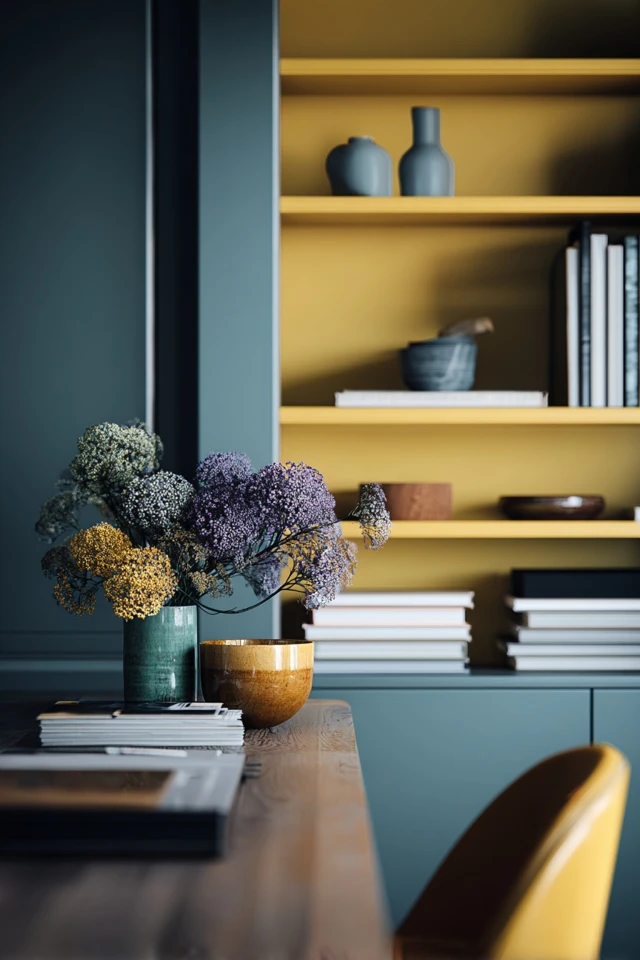
Sort everything into three piles: daily tools, reference material, and decoration. Daily tools (notebooks, a printer, chargers) go closest to your chair. Reference material, like binders and old projects, can sit higher or lower. Decoration gets whatever space is left, which is usually less than you think.
The ergonomics side matters too. OSHA's computer workstation guidance says the top of the monitor should sit at or just below eye level, so a shelf right above your screen is a spot for light, rarely used things, not a stack of heavy binders. Keep frequent reaches between hip and shoulder height, and you won't be stretching all day.
Which wall-mounted shelf ideas work best?
Layer floating shelves
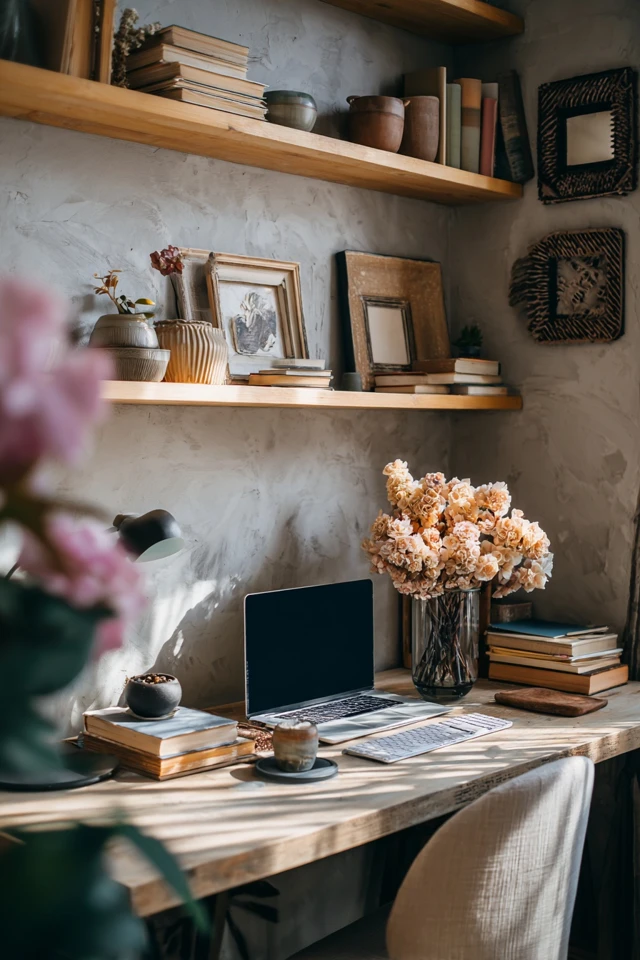
Floating shelves in a corner or over the desk free the floor completely. Stagger two or three lengths at different heights instead of lining them up like a ruler. Staggering looks relaxed and lets you fit tall and short items in one run.
Mix shelves with closed storage
Pair open shelves with a low cabinet or lidded boxes. Open shelves show off the nice things, closed storage hides cords, paper and the drawer of mystery cables we all own. As an architect, I recommend putting closed storage low and open display at eye level, because that's where the eye lands first.
Stack shelves toward the ceiling
Tall units use wall height you're already paying for. Keep the top shelves for seasonal or archive items and use a small step stool. If you share the room with a dog or cat, anchor tall pieces to the wall studs so a jump or a bump can't tip them.
Fake a built-in look
Run two matching bookcases on either side of a window or desk, then add a shelf or trim across the top. Paint the whole group the wall color and it reads as custom millwork for a fraction of the cost.
What are good small home office shelving ideas?
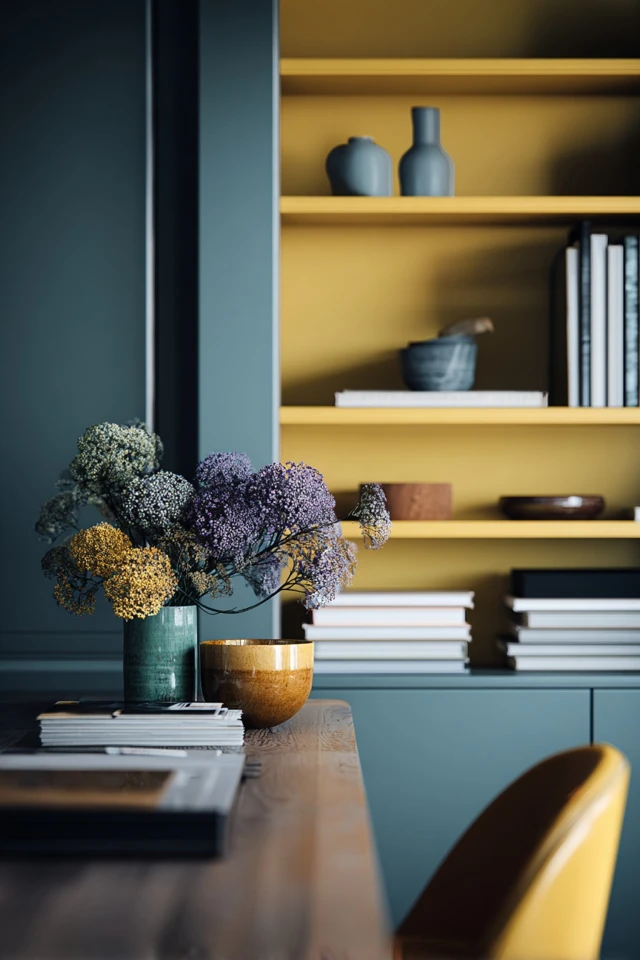
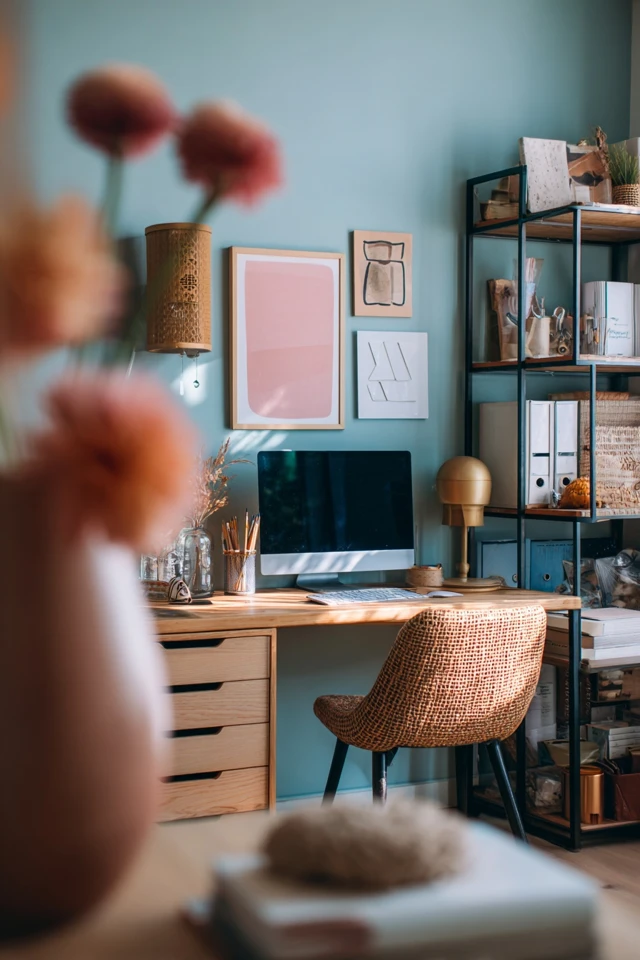
In a small room, go up and go shallow. Shelves about 8-10 inches deep hold books, files and baskets without sticking out into the walkway. A narrow ladder-style shelf, a pegboard with a couple of short shelves, or a desk with a hutch can replace a bulky bookcase.
Light finishes and slim edges keep the wall from feeling heavy. A wall behind the desk is often the best candidate, since it's already the part of the room you're facing and the part your camera sees.
Can you build home office shelves yourself?
Yes, and simple DIY shelves are one of the easiest upgrades. A basic plank on metal or wooden brackets is enough for most offices. Find the studs, or use wall anchors rated for the load, and check with a level before you tighten anything. Books are heavy: a full shelf of them can weigh far more than people expect, so choose solid wood or thick board rather than thin particleboard for long spans.
Is it cheaper to build or buy? Basic planks and brackets are usually cheaper than a finished bookcase, but a ready-made unit saves time and often comes with adjustable shelves. For wiring or anything cut into the wall, hire a licensed professional.
How do you organize office shelves for files?
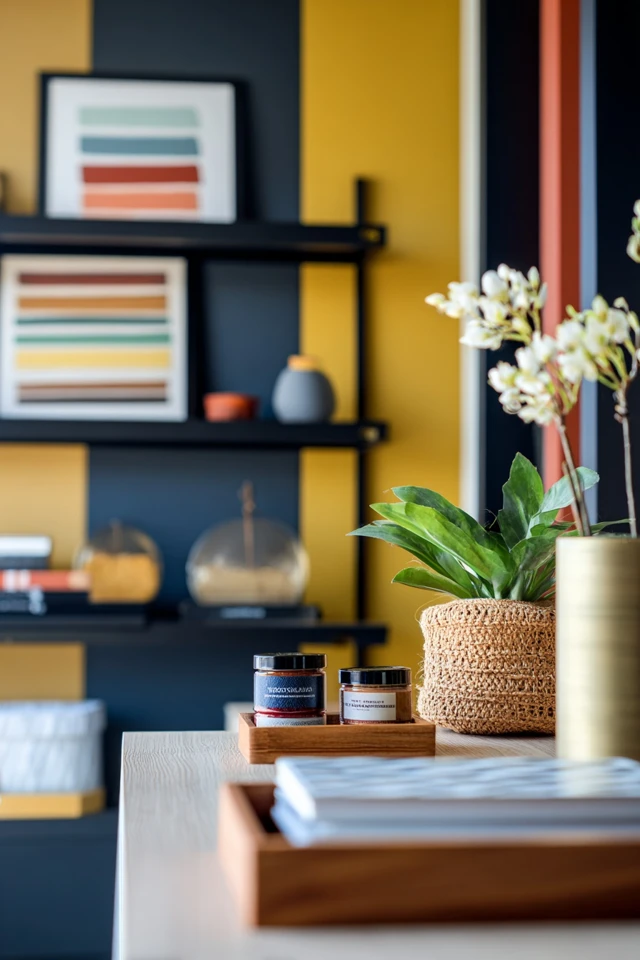
Vertical file holders, magazine boxes and labeled bins turn a plain shelf into storage for paperwork. Place them at waist to shoulder height if you reach for them weekly. Archive boxes can go on the top or bottom shelf.
Rotate what you keep. The University of Georgia's Judy Harrison, writing about food supplies, makes a point that applies here too: "Keep the supply fresh by rotating non-perishable staple items in general storage once or twice a year." A twice-yearly sweep for old paper and dead pens keeps shelves useful.
How do you make office shelves look nice?
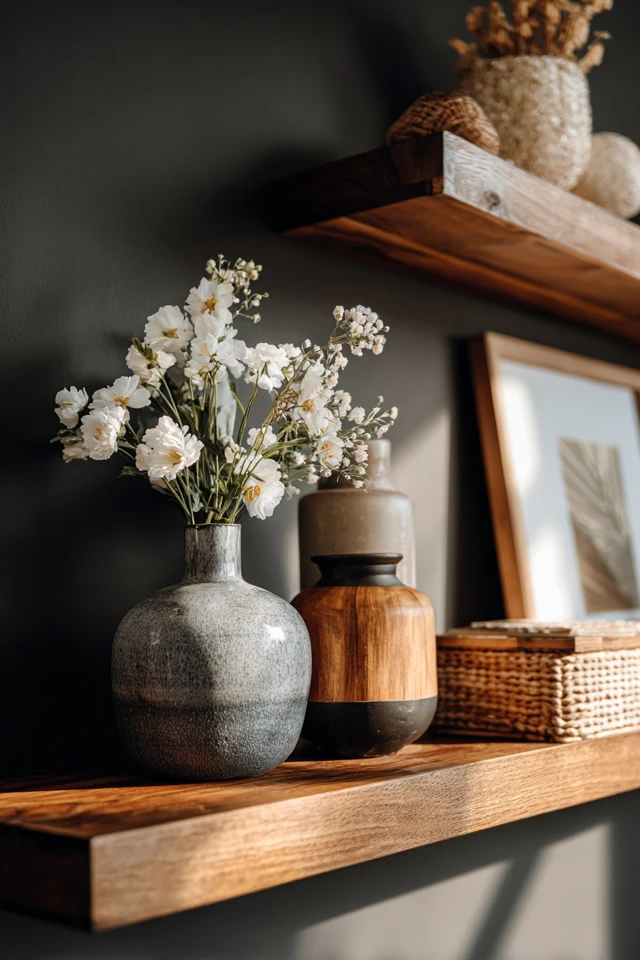
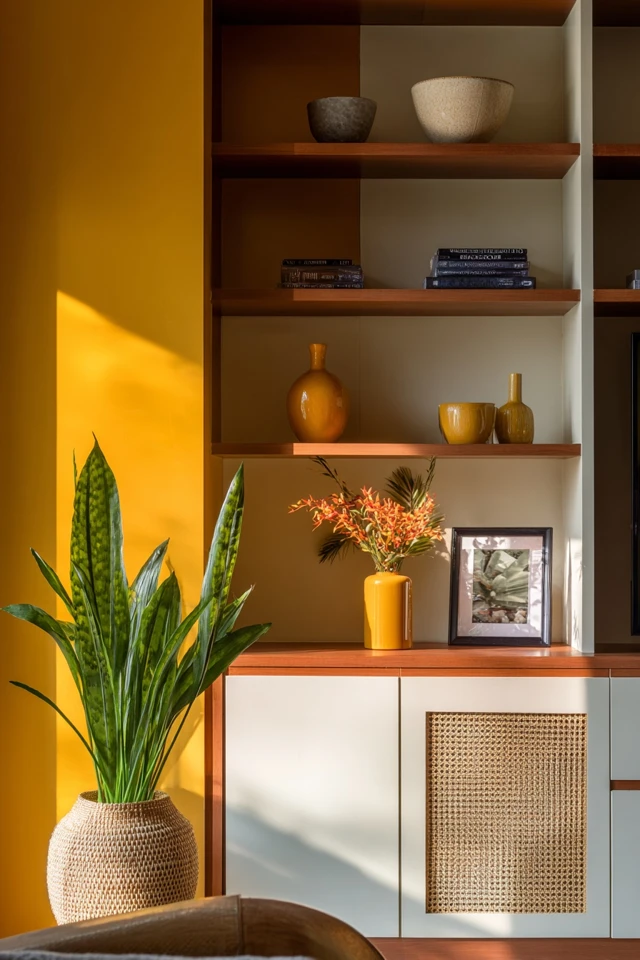
Good shelf styling is mostly editing. Leave some empty space, because a shelf packed edge to edge looks like storage, not display.
- Group objects in odd numbers, usually three or five, and vary the heights.
- Use books as horizontal and vertical anchors, with a plant or small object on top of a stack.
- Repeat one or two colors and materials across the shelves, such as wood, matte ceramic and one metal.
- Pull a few items forward and push others back so the shelf has depth.
- Reserve one spot for a framed print or an object you like to look at.
That odd-number habit is the usual answer to the rule of three: it's a styling guideline, not a law, and it simply looks less stiff than pairs.
Under-shelf LED strips add task light and make the display glow. If you take video calls, check what sits behind your head: a plant or a single framed piece looks calmer on camera than a busy stack. For more on arranging a working room, see our home art studio ideas.
What are some unique shelving ideas for an office?
Try a picture-ledge wall for art and notebooks, a closet office with shelves built into the door frame, or a bookcase that doubles as a room divider in a shared space. Pegboards work for tools and cords, and corner shelves use the dead space most rooms have. Choose the idea that fits how you work, then keep it tidy.
If your office shares a room with the TV, these TV room layout ideas may help you separate the zones.
Frequently asked questions
What is the rule of three for shelves?
It means grouping decorative objects in odd numbers, usually three, with different heights and shapes. Odd groupings tend to look more natural than matching pairs.
Is it cheaper to build or buy shelves?
Simple planks and brackets usually cost less than a finished bookcase. Ready-made units save time and often have adjustable shelves, so compare the two for your wall.
What are some unique shelving ideas?
A picture-ledge wall, a closet office with built-in shelves, or a bookcase used as a room divider are good options. Corner shelves and pegboards also make use of overlooked space.
How deep should office shelves be?
About 8-10 inches suits most books and files and keeps walkways clear. Go deeper only for printers, bins or large binders.
Filed under
ArticlesMeet the author
Written by an architect.
Julio Arco is a passionate architect with years of experience in architecture, interior design, urban design, and housing. He studied at prestigious universities across North America and Europe.

- Name
- Julio Arco
- Job
- Architect and online interior designer
- Studied
- Architecture, ITESM · Urban Design and Housing, McGill
- Partner
- Thor, Australian Shepherd
- Thor’s title
- Head of quality control