Home Office Shelving Ideas for Every Size of Room

By Julio Arco
Architect and online interior designer
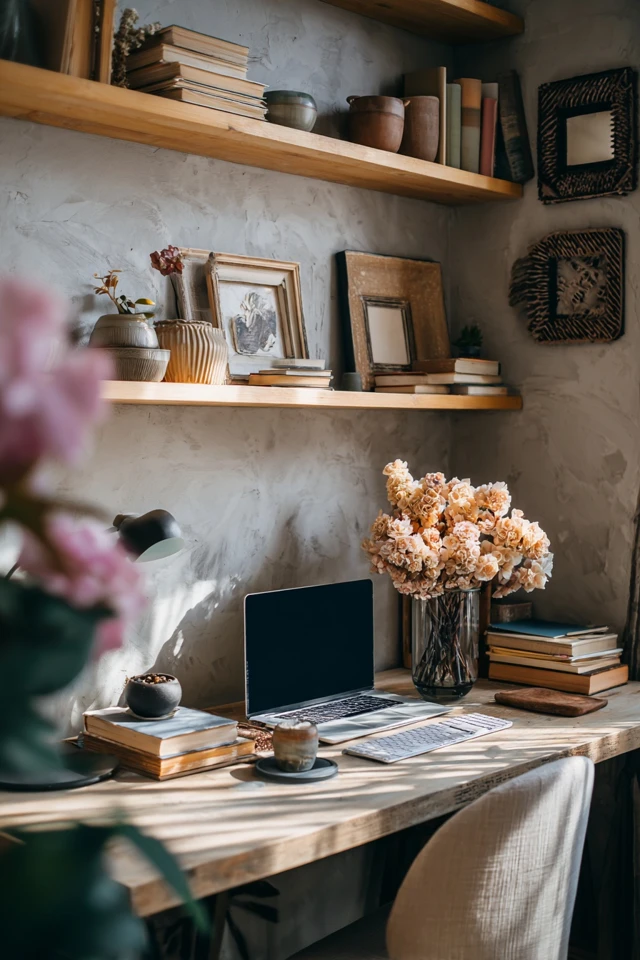
In this post
The best home office shelving takes storage off your desk and floor and puts it on the wall, within arm's reach of where you work. Start with the things you touch daily, keep them between knee and shoulder height, and push the rest higher or behind doors.
It's very common for an office to start with a desk and a stack of boxes that slowly spreads. Shelving fixes that, and the ideas below work whether you have a spare room, a corner of the dining room or a closet.
Which shelves work best behind the desk?
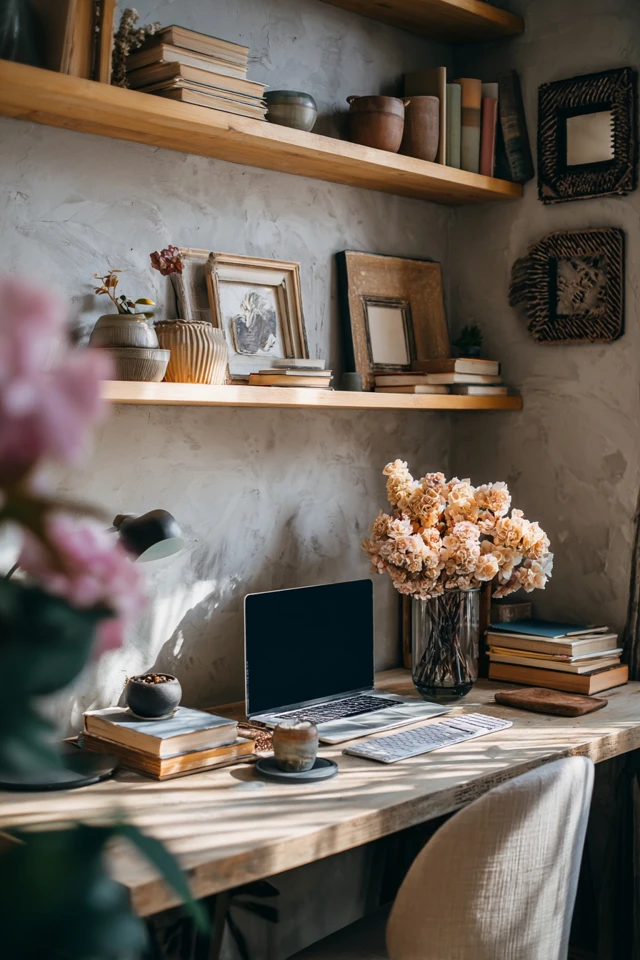
The wall behind your chair is the easiest place to add storage, because you can turn around and reach it without leaving your seat. It's also what shows up on video calls, so it's worth tidying.
Keep a gap of about 36 inches between chair and shelves so you can roll back and stand up. Put heavy binders and reference books on the lower shelves and lighter objects higher. If the desk faces the room instead, shelves on the side wall do the same job.
Small home office shelving ideas
In a tight room, go vertical. A tall, narrow bookcase takes about 12 inches of floor and holds far more than a wide low unit.
- Mount home office wall shelves in two or three short rows above the desk, leaving about 15-18 inches of clear wall above the desktop for your monitor and lamp.
- Run shelves up toward the ceiling and keep rarely used items, like archived paperwork, on the top rows.
- Use a shallow shelf, about 8-10 inches deep, for books and boxes. Deeper shelves just collect clutter at the back.
- Fit a corner with stacked floating shelves, which use dead space without blocking the walkway.
If your office is a closet or a garage corner, the same rules apply. You'll find more on that setup in our garage office ideas.
Home office wall shelves: floating, ladder or built-in look
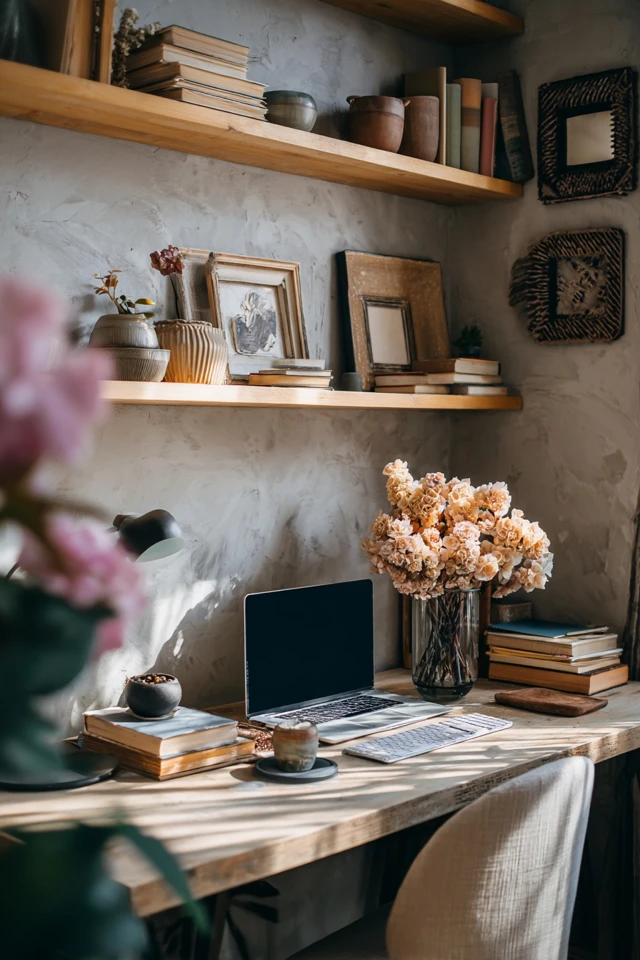
Floating shelves keep the floor clear and the wall feeling light. Anchor them into studs or use heavy-duty anchors rated for the load, because books are heavier than they look. If you're unsure about your wall, ask a licensed contractor.
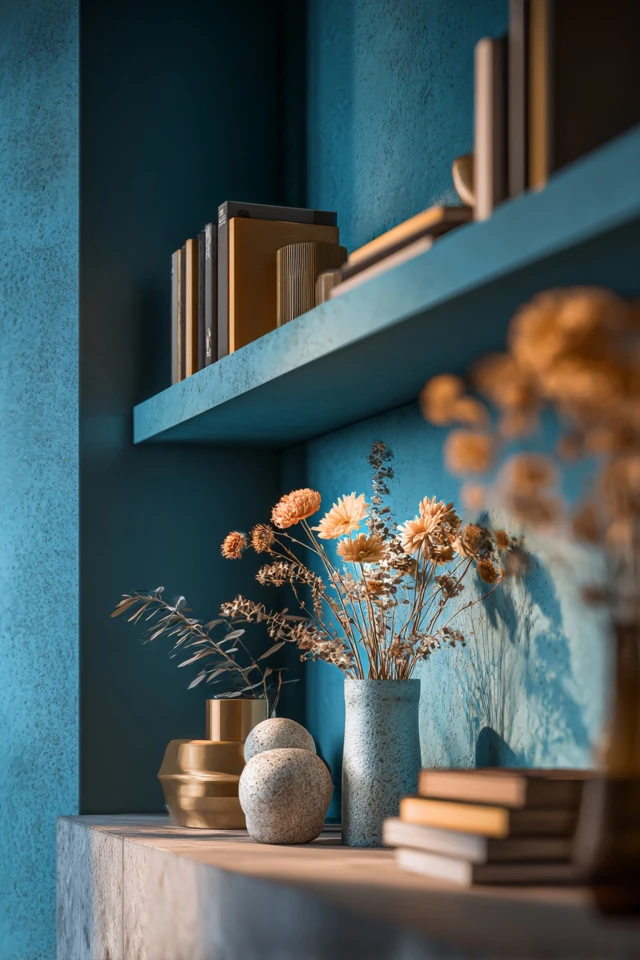
To fake a built-in look, line a wall with matching bookcases from corner to corner, add trim across the top and paint everything the wall color. As an architect, I'd paint the units and wall the same shade: the shelves then read as part of the room, and a dark color hides the odd crooked book.
Ladder shelves lean against the wall and need no drilling, which suits renters. Secure the top to the wall if you share the room with a dog or kids, since a leaning unit can tip.
Office shelves for files and paperwork
Paper is the hardest thing to make look good, so give it a closed home. Magazine files, lidded archive boxes and a shallow cabinet below the shelves all work. Label the spines and keep only the current year within easy reach.
A sturdy low shelf or cabinet near the desk is best for active files. Older records can sit on the top shelf in matching boxes, which looks tidy and saves your neck from constant reaching. Hide cables with a cord box or clips on the back of the shelf so the wires don't hang down.

DIY home office shelving ideas
Building shelves yourself is usually cheaper than a custom unit, and it lets you cut them to fit an odd wall. It isn't always cheaper than a basic store-bought bookcase, so compare before you buy lumber.
- Measure the wall and sketch the shelf spacing, with taller gaps for binders.
- Choose boards that won't sag: solid wood or plywood about 3/4 inch thick, with supports every 24-30 inches.
- Find the studs and mount brackets into them.
- Sand, seal and let it cure with the window open before you load it.
Pegboards beside shelves are a cheap way to hang supplies and change the layout as your needs shift.
How to make office shelves look nice
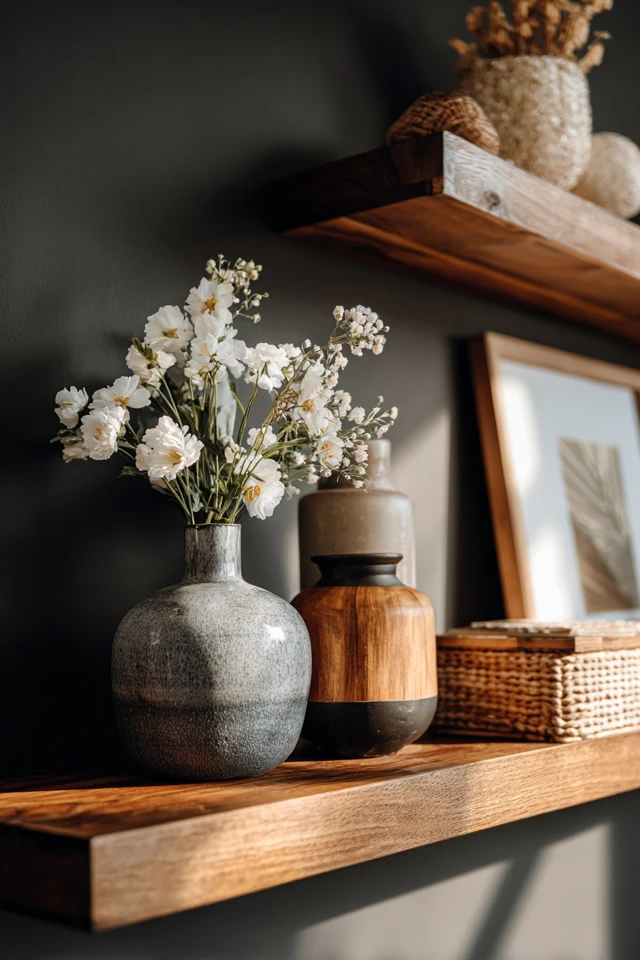
A common rule is to group objects in odd numbers, often three, with different heights so the eye moves across the shelf. Treat it as a starting point, not a law.
- Leave some shelf space empty. Crowded shelves look like storage, not styling.
- Mix books stacked flat and upright, a plant, a framed print and one personal object.
- Repeat a color or material across shelves, such as wood tones or black frames.
- Put baskets and boxes on the lowest rows to swallow the mess.
- Add a small LED light under a shelf to light the work surface and make the display glow.
For a darker, moodier look, see our ideas for a black office, or go lighter with a gray office.
Keep shelves from hurting your posture
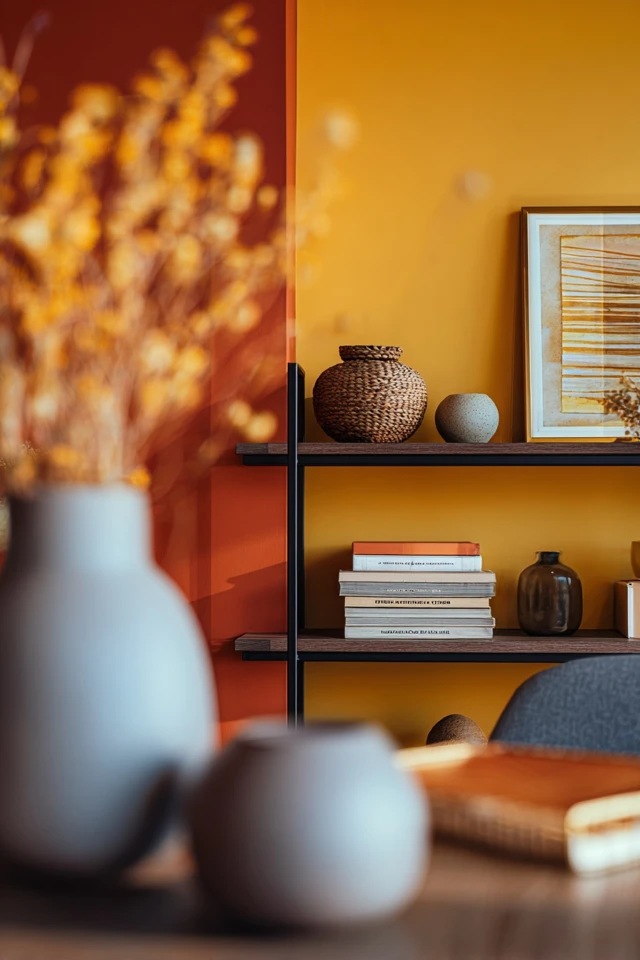
Shelves should support your setup, not crowd it. OSHA's computer workstation guidance says the top of the monitor should be at or just below eye level, so avoid placing a shelf directly in front of the screen at a height that forces you to look up. Items you use all day should sit where your elbows stay close to your body, so keep the daily reach zone free.
If a shelf puts the printer or reference books too high or too far, move them to a spot you can reach without stretching.
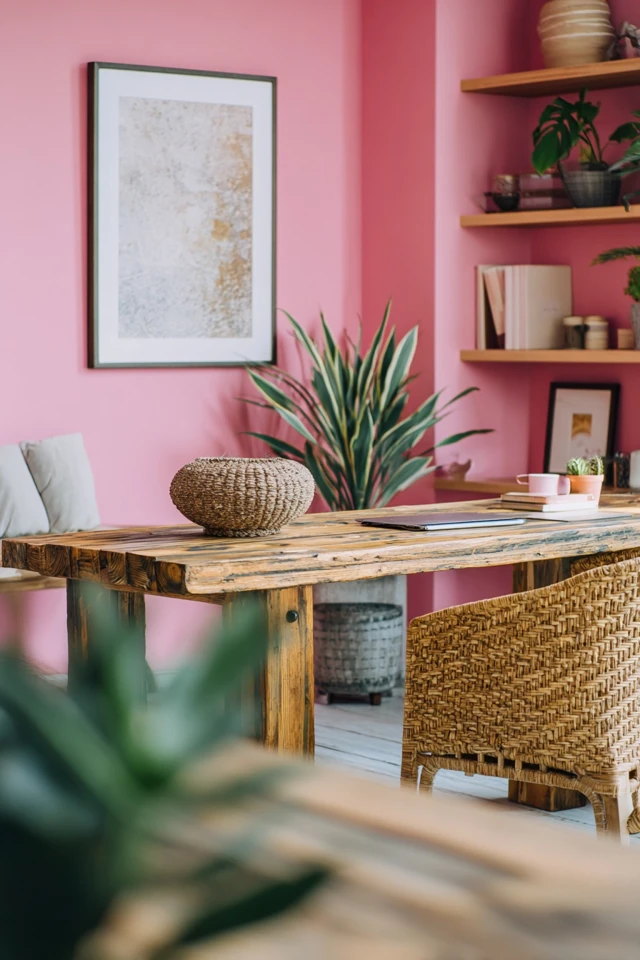
Unique shelving ideas for an office
- A shelf built over the window to hold plants and use the light.
- A narrow rail picture ledge for rotating art and notes.
- A cube unit that doubles as a room divider in a shared space.
- A cabinet-and-shelf pairing, with doors below and open shelves above.
If you have a pet that jumps, keep fragile things off low shelves and check with your vet about any plants you place within reach.
Frequently asked questions
What is the rule of three for shelves?
It means grouping decor in sets of three objects at different heights so the arrangement feels balanced. It's a handy guide for styling, and an even number can work just as well.
Is it cheaper to build or buy shelves?
Simple DIY shelves are often cheaper and fit odd spaces better. A basic ready-made bookcase can cost about the same once you count lumber, brackets and tools.
How do you make office shelves look nice?
Leave breathing room, vary object heights, repeat one color or material and hide paperwork in matching boxes. Keep the most used items within reach and the decor on the shelves at eye level.
What are some unique shelving ideas?
Try a shelf over the window, a picture ledge, a cube unit that divides the room or a cabinet topped with open shelves. Each adds storage while giving the office its own character.
Filed under
ArticlesMeet the author
Written by an architect.
Julio Arco is a passionate architect with years of experience in architecture, interior design, urban design, and housing. He studied at prestigious universities across North America and Europe.

- Name
- Julio Arco
- Job
- Architect and online interior designer
- Studied
- Architecture, ITESM · Urban Design and Housing, McGill
- Partner
- Thor, Australian Shepherd
- Thor’s title
- Head of quality control