Home Art Studio Ideas for Any Room, Big or Small
Home art studio ideas that fit a corner, closet or spare room: layout, lighting, furniture and storage, plus what to include and how to organize it.

By Julio Arco
Architect and online interior designer
In this post
- How do you create an art studio at home?
- Which spaces turn into a studio most easily?
- What is the best art studio design layout?
- What should be included in an art studio?
- Which home art studio furniture is worth buying?
- How should you light an art studio?
- What colors work on studio walls?
- How do you organize an art studio at home?
- How do you keep it looking good on a budget?
- Frequently asked questions
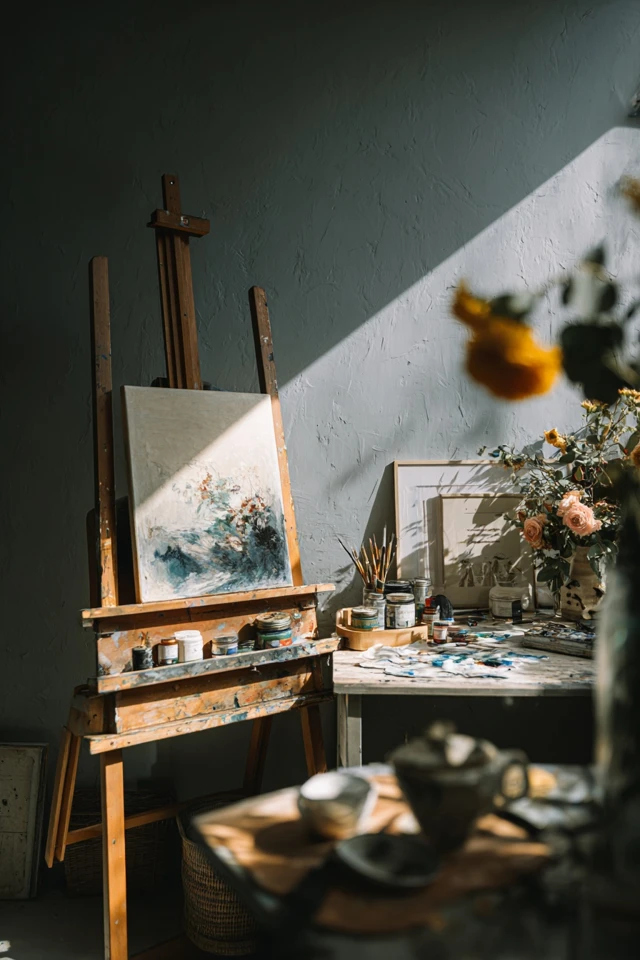
You don't need a spare building to make art at home. A corner, a closet, a divided section of a room or a spare bedroom can all work, as long as you have a stable work surface, good light, and storage within arm's reach. Start with those three and the rest is styling.
If you've been staring at a blank wall wondering where an easel could possibly go, that's normal. Most people start with a leftover space, and a few measured decisions make it work.
How do you create an art studio at home?
Work in this order. It keeps you from buying furniture before you know what the space can hold.
- List what you make. Painting at an easel, sewing, printmaking and digital illustration need different amounts of floor and table space.
- Pick the spot with the best daylight. A window you can face or sit beside beats any lamp.
- Measure the room, then the furniture. Sketch a simple plan on paper before moving anything.
- Set up the main work surface first, then lighting, then storage.
- Add the comfort layer last: a rug, a plant, a pinboard for work in progress.
Which spaces turn into a studio most easily?
A spare bedroom
This is the easiest option because you have walls, a door and usually a window. Move the bed out if you can. If it has to stay, a daybed or sofa bed lets the room serve guests without losing the studio.
A corner of a living room or bedroom
A corner gives you two walls to use for shelves and pinboards. Separate it from the rest of the room with a bookcase, a folding screen or a rug that marks the edge. This also helps your brain switch into work mode.
A closet
Remove the doors or swap them for curtains, take out the hanging rod, and fit a deep shelf at desk height. A closet suits drawing, small-scale painting and crafts. Use a wall-mounted light, since ceiling light rarely reaches in.
A shed or garage
These give you the most room, but temperature and moisture are the problem. Paper, canvas and paints suffer in heat and damp. As a reference point, Ohio State University Extension advises against keeping canned goods above 95 degrees F, such as in a storage shed or garage. That's a food guideline, but it shows how hot these spaces get. If you go this route, insulate, and have a licensed electrician handle any wiring.
For more ideas in the same vein, see our other home art studio roundup.
What is the best art studio design layout?
Put the main work surface where the light is best and leave a clear zone around it. For a standing easel, plan for about 3 feet of free floor on each side so you can step back and see the piece. A main walkway should stay around 30-36 inches wide.
Keep your most-used tools on the side of your dominant hand. Place wet or messy work near a washable floor or a sink if you have one. Store finished and drying pieces vertically, on a rack or against a wall, so they don't eat table space.
Layout tips for small spaces
For home art studio ideas for small spaces, go vertical and fold things away:
- A wall-mounted fold-down table gives you a work surface only when you need it.
- A pegboard holds brushes, scissors and tape off the table.
- A rolling cart slides under a desk and moves to where you're working.
- A storage ottoman doubles as a seat and a place for bulky supplies.
What should be included in an art studio?
The basics are the same for nearly every medium:
- A sturdy work surface at a comfortable height
- A chair or stool that lets your feet reach the floor
- Task lighting plus general lighting
- Storage for supplies, sorted by how often you use them
- A place to display or dry work
- A floor that tolerates spills, or a washable mat over the existing one
Add a small trash bin, a roll of paper towels and a good ventilation plan if you use solvents or sprays. Read the labels, and open a window.
Which home art studio furniture is worth buying?
Choose a table first. An adjustable-height or sloped drafting table suits drawing and painting, while a flat table with a cutting mat suits crafts and sewing. I recommend a surface with a matte, easy-to-wipe finish, since glossy tops throw glare onto your work.
Next, pick seating. A stool with a footrest or an adjustable office chair protects your back over long sessions. Then storage: open shelves for things you grab constantly, closed cabinets or lidded bins for dust-prone items like pastels and fabric.
If you share the home with a dog or cat, keep paints, solvents and small items like beads and pins in closed storage on a shelf the animal can't reach. Ask your vet about any material you're unsure about.
How should you light an art studio?
Light is the part of a studio that changes how your work looks, so spend effort here. Daylight is best for judging color. Put your table beside a window rather than facing it, so your hand doesn't cast a shadow on the page.
For evenings, use LEDs. The U.S. Department of Energy says good-quality white LED lighting products are expected to have a useful life of 30,000 to 50,000 hours or even longer, so a good task lamp is a one-time purchase for most people. Look at color temperature too: the Department of Energy explains that correlated color temperature is one of the primary metrics used to characterize the visual appearance of light. In practice, check the label and keep every bulb at your table the same color temperature, so colors don't shift when you switch lamps.
Light also affects when you feel awake. The Department of Energy notes that "Light plays a key role in setting and regulating the body's biological clock." If you paint late, choose a warmer lamp for the last hour.
What colors work on studio walls?
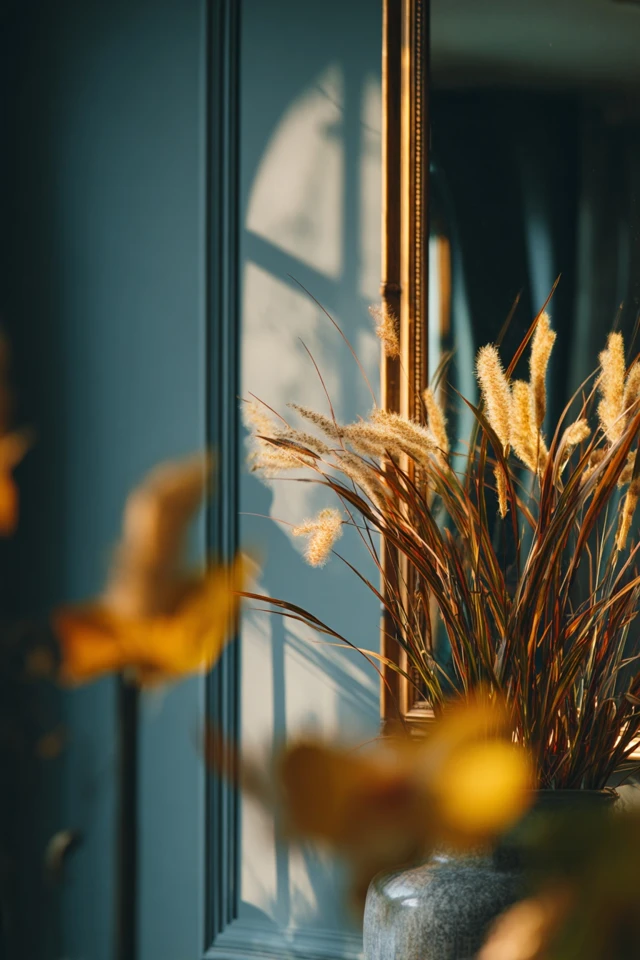
Keep large surfaces neutral: white, soft gray or a pale warm tone. Strong wall colors tint how you see your own palette. Save color for small items such as a painted shelf, a stool or a pinboard.
Test paint swatches on the wall and look at them in the morning and at night. Matte paint absorbs light and cuts glare on the work surface, while gloss bounces it around. For a studio, matte is the safer pick.
How do you organize an art studio at home?
Sort supplies by how often you use them. Daily tools go in jars or on a rail within reach. Weekly items go in drawers or labeled bins. Seasonal or backup stock goes up high or in a closet.
- Group by task (drawing, painting, framing) rather than by product type.
- Label bins on the front so you can read them on a shelf.
- Clip a limit on duplicates: if the jar is full, stop buying pencils.
- Do a quick reset at the end of each session, wiping the surface and putting tools back.
Rotation helps with supplies that expire or dry out. A University of Georgia extension specialist, Judy Harrison, Ph.D., advises food storage households to "Keep the supply fresh by rotating non-perishable staple items in general storage once or twice a year." It's written about pantries, but the habit suits paints, glues and markers too: check them once or twice a year and use up the oldest first.
If your studio doubles as an office, the shelving ideas in this home office shelving post carry over well.
How do you keep it looking good on a budget?
Home art studio ideas on a budget start with what you own. A solid door on two filing cabinets makes a large desk. Jars and mugs hold tools. Peel-and-stick or removable hooks suit renters, and a thrifted shelf takes paint well.
Spend money where it matters to your body and your work: a supportive chair and a decent lamp. Style the rest slowly. A few pieces of finished work framed on the wall will make the space feel like yours. If your corner sits awkwardly in the room, these corner design ideas can help you plan it.
Frequently asked questions
How can I create an art studio at home?
Choose the spot with the best light, set up a sturdy work surface, then add task lighting and storage. Use a corner, closet or spare room, and arrange the layout around how you actually work.
What should be included in an art studio?
A stable table, a supportive chair, good lighting, organized storage, a place to dry or display work, and a floor that handles spills. Add ventilation if you use solvents or sprays.
What are some good ideas for a home studio?
Divide part of a room with a bookcase or screen, claim a corner, convert a closet, or use a spare bedroom. Fold-down tables, pegboards and rolling carts help in tight spaces.
Can I set up a studio in a rental?
Yes. Use freestanding shelves, removable hooks and a washable mat over the floor, and avoid painting or drilling unless your lease allows it.
Filed under
ArticlesMeet the author
Written by an architect.
Julio Arco is a passionate architect with years of experience in architecture, interior design, urban design, and housing. He studied at prestigious universities across North America and Europe.

- Name
- Julio Arco
- Job
- Architect and online interior designer
- Studied
- Architecture, ITESM · Urban Design and Housing, McGill
- Partner
- Thor, Australian Shepherd
- Thor’s title
- Head of quality control