How to Hide a Washer and Dryer: 7 Practical Ways
Hide a washer and dryer with doors, curtains, slat panels or a closet. Get clearances, hose tips and ventilation advice that keep laundry easy to reach.

By Julio Arco
Architect and online interior designer
In this post
- Can you hide a washer and dryer with a curtain?
- How do you hide a washer and dryer behind doors or cabinets?
- Is it safe to enclose a washer and dryer?
- How do you hide washer hoses and hookups?
- Can a frame or slat panel work as a screen?
- How do you hide a washer and dryer in a living room?
- What storage and decor make laundry areas look finished?
- Frequently asked questions
The easiest way to hide a washer and dryer is to put something in front of them that opens: a curtain, bi-fold doors, or a cabinet front. Whatever you pick, the machines still need air, a clear path for the lid and room for service, so plan access before you plan looks.
Top-loaders add one extra rule. The lid swings up, so anything above the machine has to leave room for it. Below are the options I'd consider, from cheapest to most built-in.
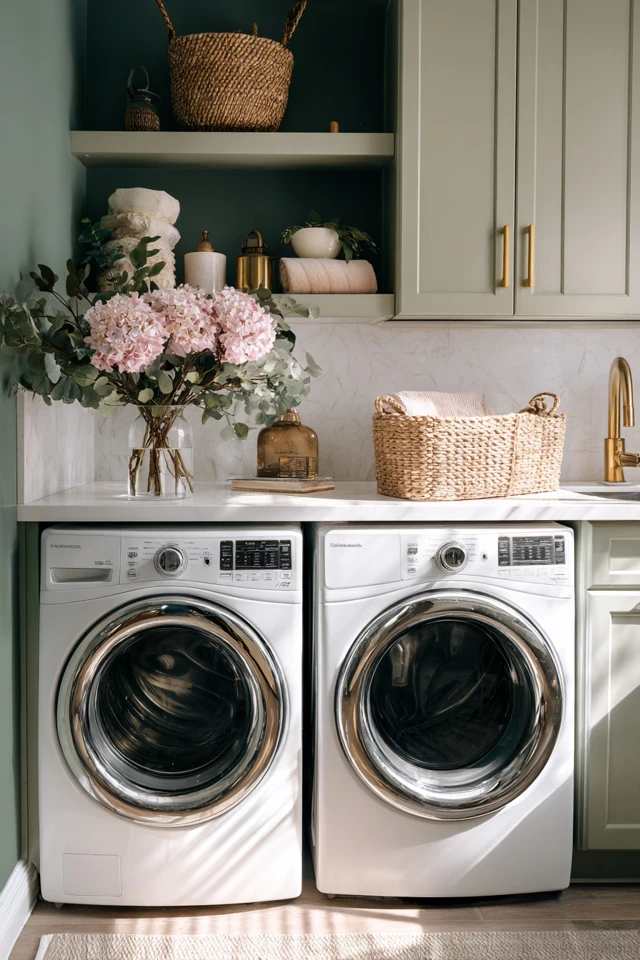
Can you hide a washer and dryer with a curtain?
Yes, and it's the lowest-effort fix. A curtain on a sturdy rod or tension rod costs little, works in a rental and lets you reach the machines in seconds. Choose a washable fabric, since laundry areas collect lint and humidity, and hang the rod high enough that the hem clears the floor so it doesn't drag in any leaks.
Linen-look or cotton fabrics soften the area. If you want more structure, mount the curtain on a simple frame or pair it with a lightweight screen. If a dog or cat likes to nap by the machines, keep the hem short so nobody tugs on it.
How do you hide a washer and dryer behind doors or cabinets?
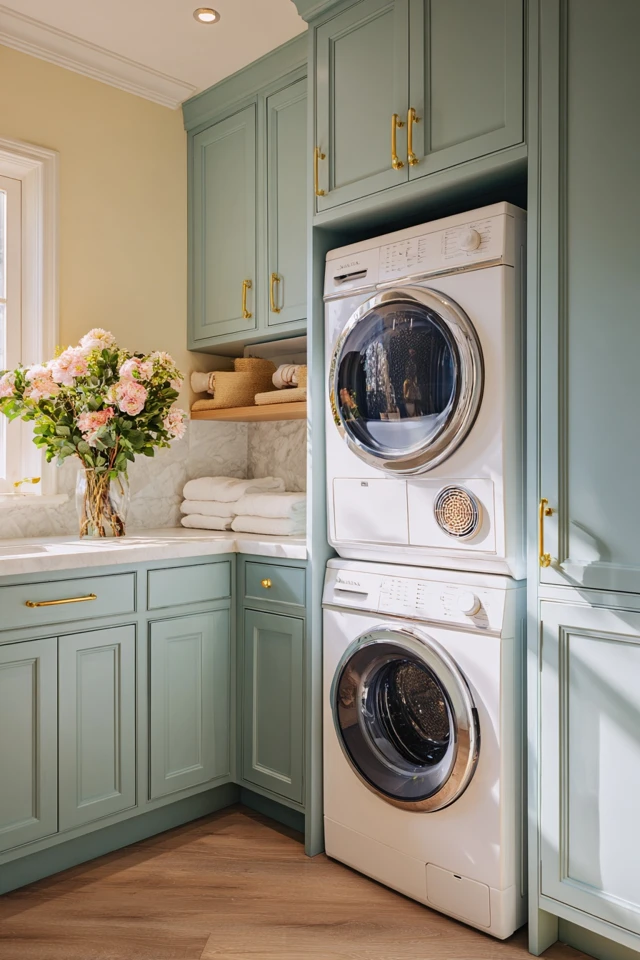
Doors give the cleanest result. Bi-fold and sliding doors save swing space in a hallway, and a barn-style door works when you have wall room beside the opening. Full cabinet fronts suit a kitchen setup, where matching the cabinetry makes the machines read as part of the run.
- Leave a few inches behind the machines for hoses and vents, and some side clearance. Check the manual for the exact figures.
- Make the opening wide enough that you can open the doors fully while loading.
- Add vents at the top and bottom of an enclosure, or use louvered doors.
If you already have a closet, the washer dryer closet approach is often the simplest conversion.
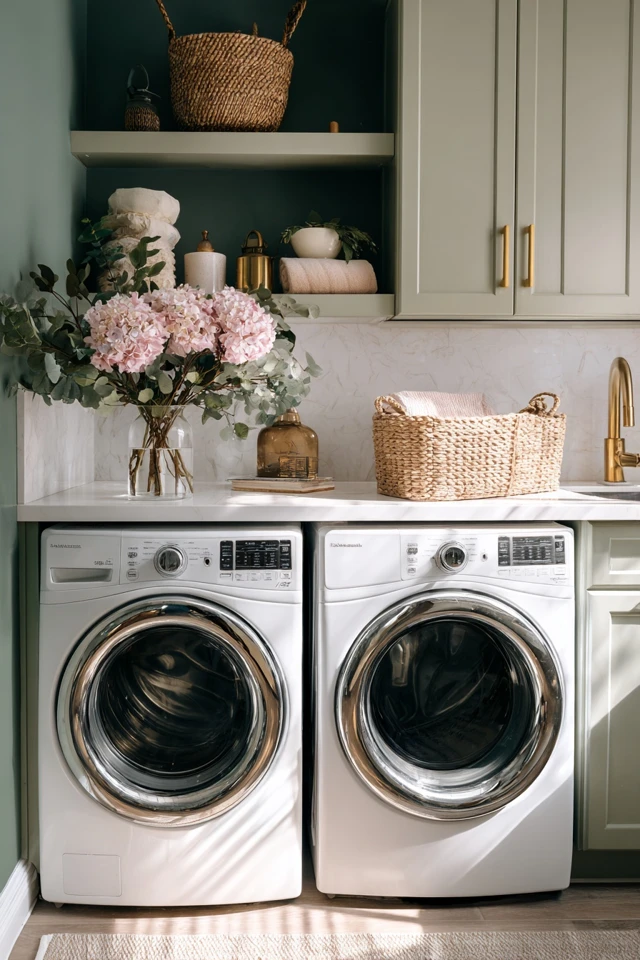
Is it safe to enclose a washer and dryer?
Washers are fairly forgiving. Dryers are the concern: they produce heat and lint and need airflow and a properly vented duct. As an architect, I recommend following the manufacturer's installation guide for clearances and venting, and having a licensed professional handle gas lines, electrical changes and ducting.
Never close a dryer into a sealed box. Keep the lint trap and exhaust duct reachable, and use removable panels so you can service them. Heat also matters for what you store nearby. Ohio State University Extension notes that cabinets near heat sources are too warm for keeping food safe and at top nutritional quality, so don't treat a cabinet next to a dryer as pantry space.
How do you hide washer hoses and hookups?
Hookups are the part that makes a laundry corner look messy, and you don't need to remodel to improve them. A few options:
- Slide the machines back as far as the manual allows, then bundle hoses neatly with ties.
- Use a hose cover or a short panel across the back gap.
- Install a recessed outlet and valve box in the wall, which pulls connections out of sight. A plumber and electrician should do this.
- Fit a removable toe-kick or access panel so you can still shut off the water.
Keep the shutoff valves reachable. If a hose fails, you want to turn the water off in seconds, not move a cabinet.
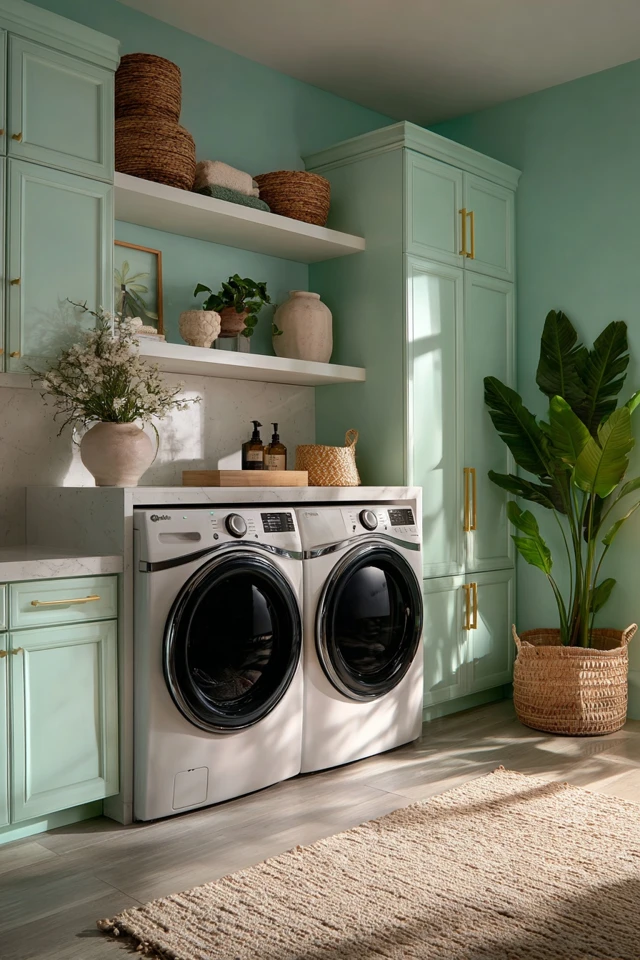
Can a frame or slat panel work as a screen?
A slatted wood panel is a good middle path in open-plan homes. It hides the machines while letting air through. Build it on hinges or casters so it swings or rolls aside, and keep the slats spaced for ventilation. Fluted or slatted fronts also repeat a rhythm the eye reads as furniture rather than appliances.
Matte finishes help. Glossy fronts and metal control panels catch light and draw attention, while matte paint or wood grain absorbs it. A cabinet painted a muted tone slightly darker than the wall tends to recede.
How do you hide a washer and dryer in a living room?
Treat the laundry like built-in furniture. Put a continuous cabinet run or sliding doors along one wall, and match them to nearby shelving. Noise is the bigger issue here, so place a rubber mat under the washer to dampen vibration and consider where the machines face relative to the sofa.
If you can't build, a folding screen or curtain track on the ceiling gives you a flexible divider. A rug, a plant and a lamp nearby also pull attention away from the machines.
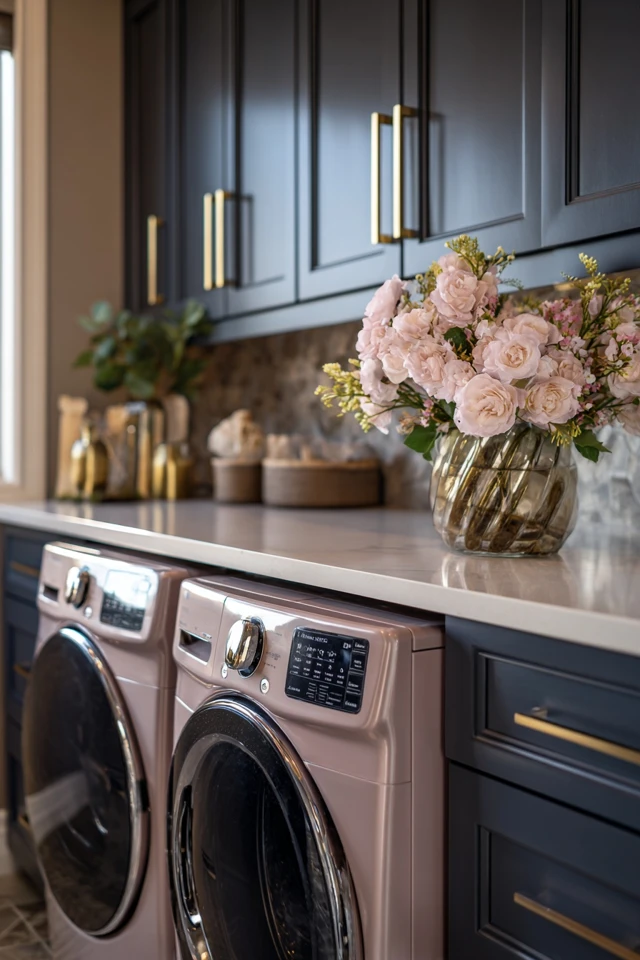
What storage and decor make laundry areas look finished?
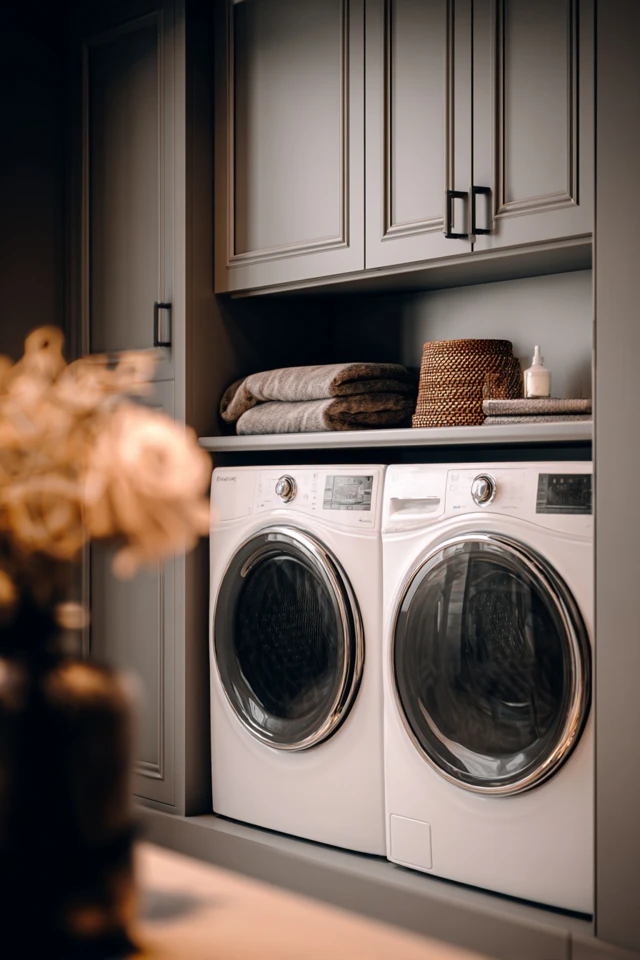
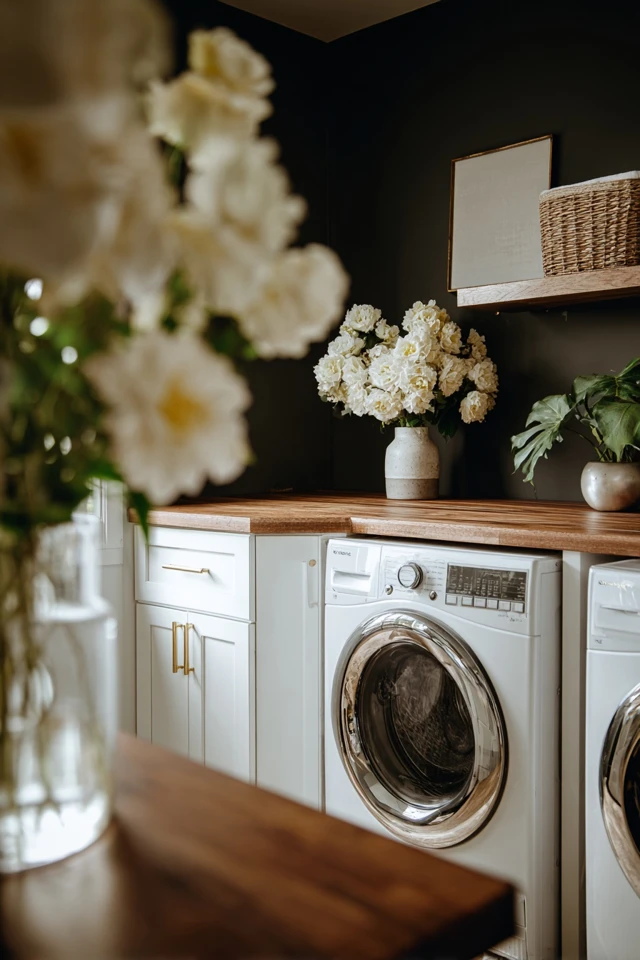
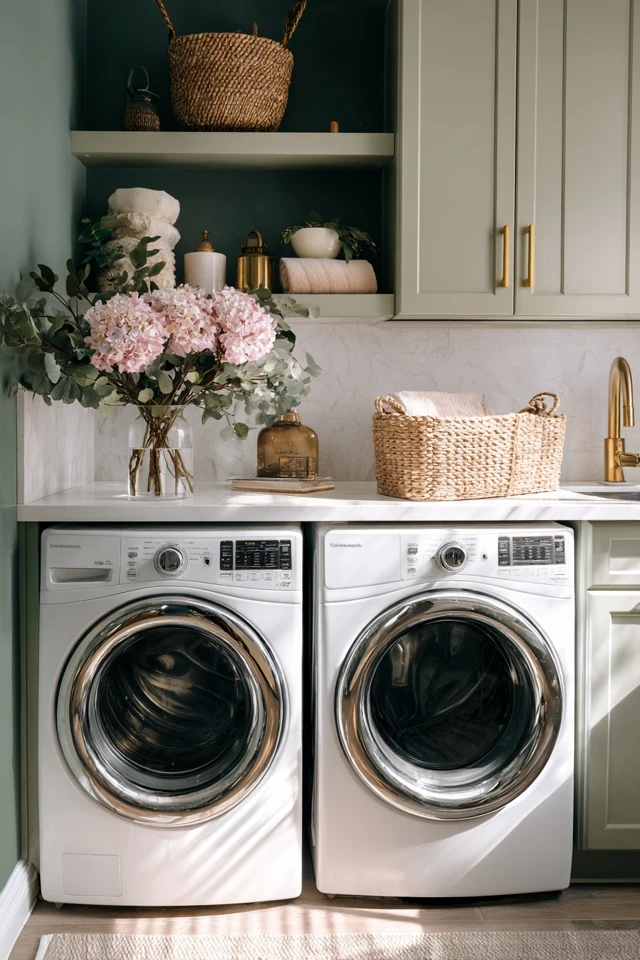
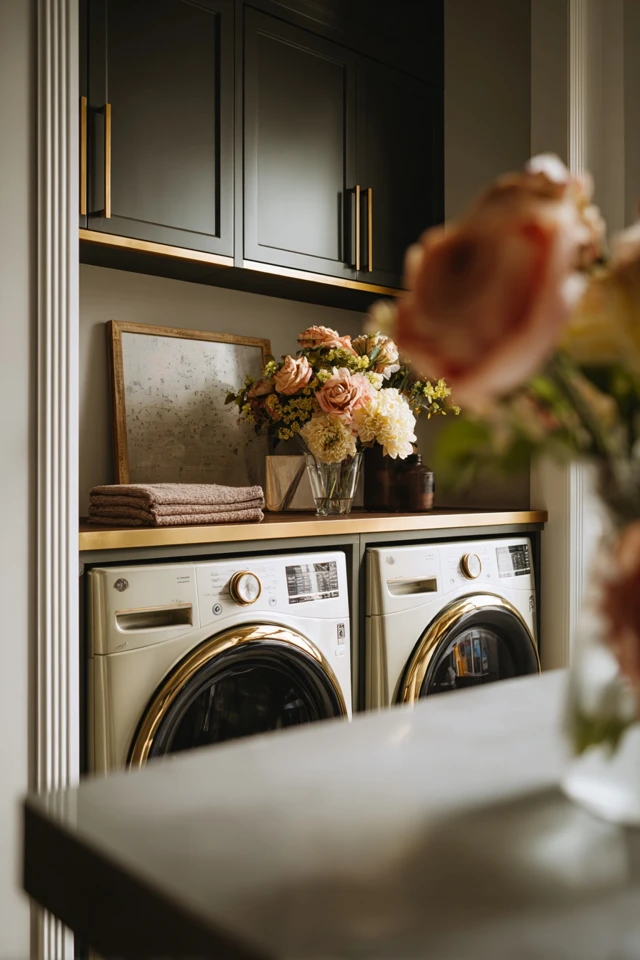
A countertop over front-loaders gives you a folding surface. With top-loaders, it needs to lift, hinge or come off, or the lid can't open. Shelves above should sit high enough to clear the open lid.
- Matching baskets and hampers keep the visual noise low.
- Under-shelf LED strips make sorting easier.
- A hardy plant on a shelf softens the hard edges, as long as you check with your vet that it's safe around pets.
- Hooks and a small drying rod handle delicates.
More ideas for awkward corners carry over well to a laundry nook.
Frequently asked questions
What can I use to hide my washer and dryer?
Curtains, bi-fold or sliding doors, a cabinet front, or a slatted panel all work. Pick the one that still lets you open the lid, reach the hookups and keep air moving around the machines.
How to hide laundry room hookups?
Pull the machines back as far as the manual allows, bundle hoses, and add a cover or access panel. A recessed valve and outlet box is the cleanest fix, but have a licensed plumber and electrician install it.
Is it safe to enclose a washer and dryer?
It can be, if the dryer keeps its venting, clearances and access to the lint trap. Follow the manufacturer's installation guide and use a licensed pro for gas, electrical and duct work.
Can I hide a top-loading washer under a countertop?
Only if the countertop lifts, hinges or comes off, because the lid needs room to swing up. Otherwise leave open space above or choose a front-loader.
Filed under
ArticlesMeet the author
Written by an architect.
Julio Arco is a passionate architect with years of experience in architecture, interior design, urban design, and housing. He studied at prestigious universities across North America and Europe.

- Name
- Julio Arco
- Job
- Architect and online interior designer
- Studied
- Architecture, ITESM · Urban Design and Housing, McGill
- Partner
- Thor, Australian Shepherd
- Thor’s title
- Head of quality control