How to Hide a Washer and Dryer in a Kitchen
Practical ways to hide a washer and dryer in a kitchen: doors, curtains, panels and tips for hoses, hookups, ventilation and noise.

By Julio Arco
Architect and online interior designer
In this post
- What can you use to hide a washer and dryer?
- How do you hide a washer and dryer with a curtain?
- How do you hide washer and dryer hoses and hookups?
- Is it safe to enclose a washer and dryer?
- How to hide a washer and dryer in a small kitchen
- How do you make the enclosure look good?
- Where to put storage so it stays tidy
- Frequently asked questions
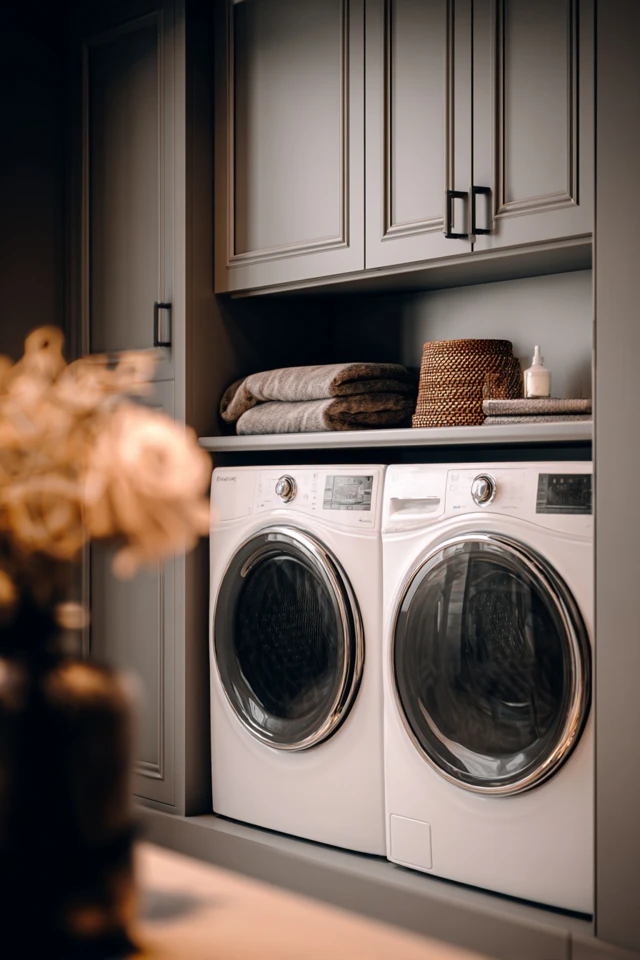
The simplest way to hide a washer and dryer in a kitchen is to give them a front that matches the cabinets: doors, a pocket door, or a fabric curtain if you want something cheaper. Whatever you pick, plan for airflow, hose access and a way to pull the machines out for service.
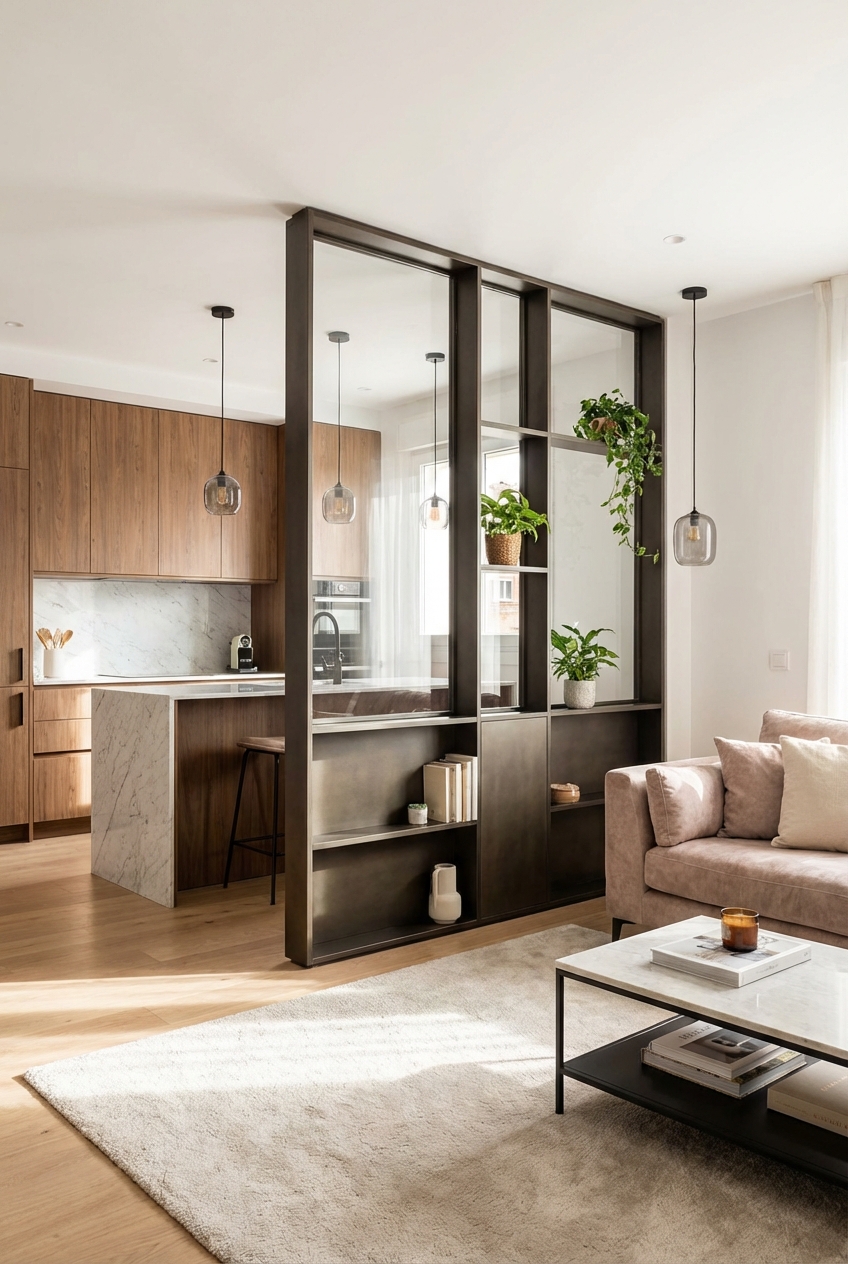
It's very common for a laundry pair to end up in the kitchen, especially in apartments and open-plan homes, so don't feel bad about it. Here are the options, from quick fixes to small carpentry jobs.
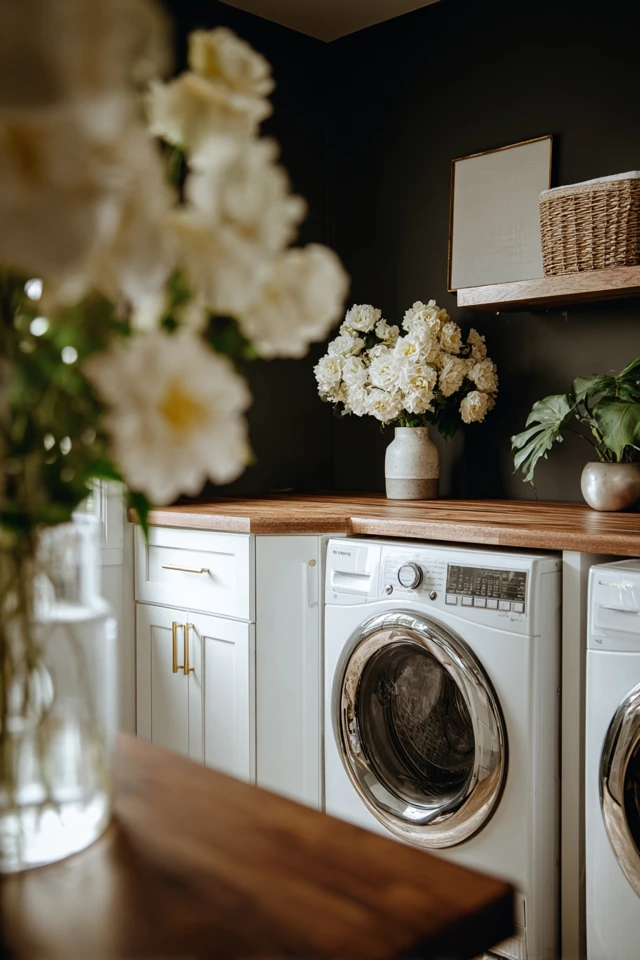
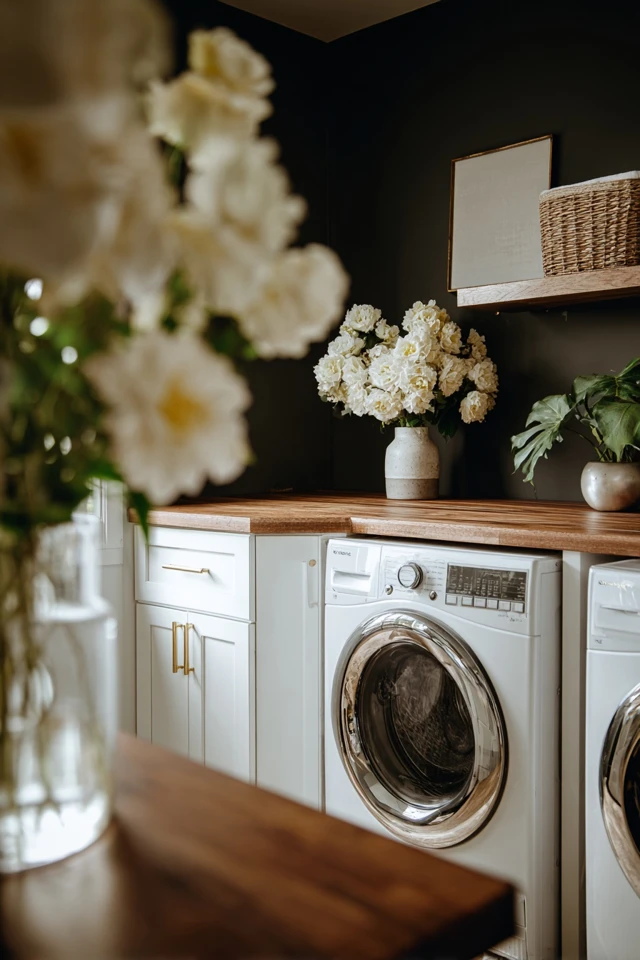
What can you use to hide a washer and dryer?
Pick based on how often you use the machines and how much work you want to do. A curtain suits renters. Doors suit anyone who can install hinges or track. A built-in cabinet wall is the most polished and the most work.
- Curtain on a rod or track: fast, cheap and easy to wash.
- Cabinet-style doors, bifold or hinged: looks built in.
- Pocket or sliding door: saves swing space in a tight kitchen.
- Slat panel or screen: lets air through and hides the front.
- Tall cabinetry on both sides: makes the machines read as part of the run.
How do you hide a washer and dryer with a curtain?
Mount the rod or track on the ceiling or just under the upper cabinets, so the fabric hangs from a clean line. Make it a little wider than the machines so it can be pushed fully aside while you load. Choose a washable, mid-weight fabric in a color from the kitchen, such as a linen blend, and let it hang to about an inch above the floor so it won't drag through spills.
If you have a dog or cat, skip loose, long folds near the floor. Pets love to tug at hems, and a short hem is easier to keep clean.
How do you hide washer and dryer hoses and hookups?
The mess usually lives behind the machines, so deal with it there. Leave a gap of a few inches behind so hoses don't kink, and make sure the water shut-off valves stay reachable.
- Use a recessed wall box for the water supply and drain, so the connections sit inside the wall instead of sticking out.
- Run the hoses neatly with clips, and keep the dryer vent duct as short and straight as you can.
- Cover the wall behind with a painted panel, or let the doors do the hiding.
- Never wall in a shut-off valve. Use a removable panel instead.
Gas or electrical hookups, and any change to venting, are jobs for a licensed plumber or electrician. As an architect, I'd settle this before choosing the finish, because it decides how deep the enclosure needs to be.
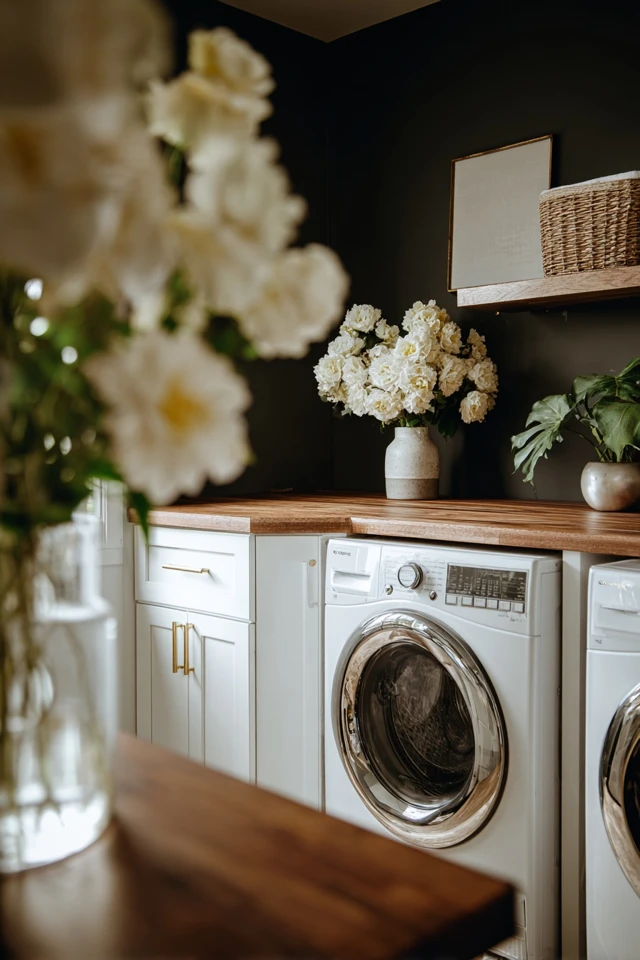
Is it safe to enclose a washer and dryer?
It can be, if the machines can breathe and be reached. A dryer produces heat and moisture, so a closed cabinet with no ventilation is a bad idea. Check your appliance manual for the required clearances and door venting, and keep the dryer's exhaust duct vented to the outside as the manufacturer specifies.
Practical rules I recommend: keep doors open or slatted while the dryer runs, leave space around the machines as the manual says, and never store detergent or lint-prone fabrics piled against a hot dryer. Heat matters elsewhere in the kitchen too. Ohio State University Extension notes that cabinets near appliances that give off heat are too warm for keeping food safe, so don't use the laundry cabinet as an overflow pantry.
How to hide a washer and dryer in a small kitchen
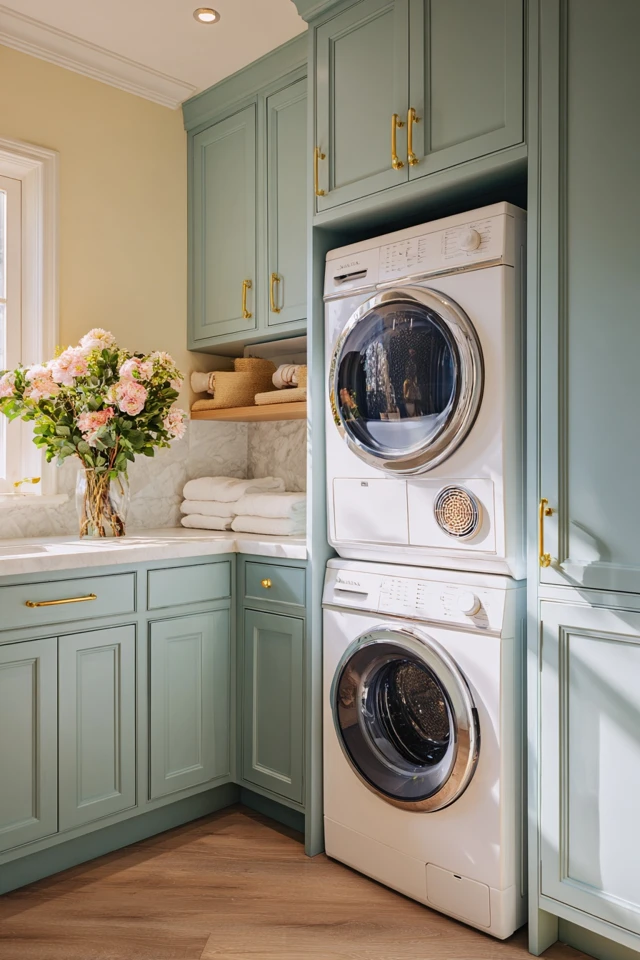
Small kitchens need doors that don't swing into the walkway. Bifold doors, sliding doors or a pocket door keep the path clear. If the machines are stacked, a single full-height door looks calmer than two separate ones.
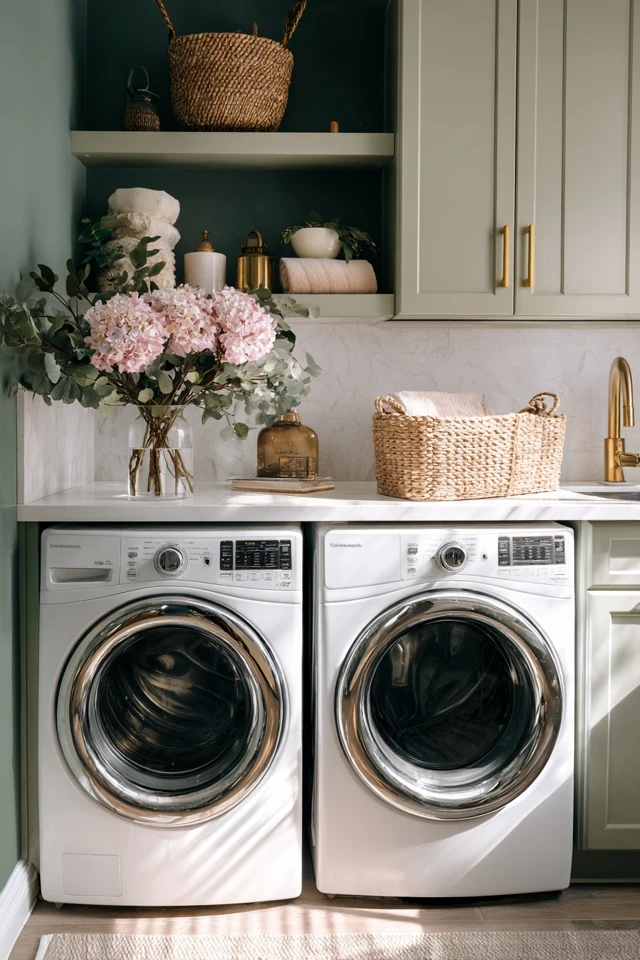
A shelf above the machines uses dead wall space for baskets and detergent. A countertop over front-loaders, if your models are made for it, gives you a folding surface and visually ties the machines to the cabinet run. Check the manual first, because vibration and venting rules vary. If you're dealing with a top-loader, the lid needs headroom, so see how to hide a top-loading washer and dryer.
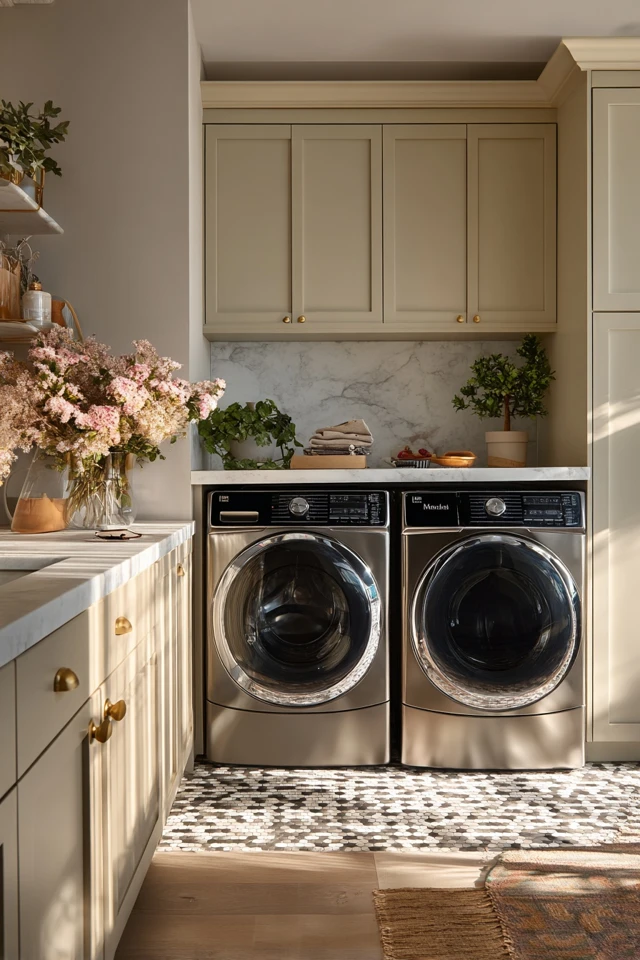
How do you make the enclosure look good?
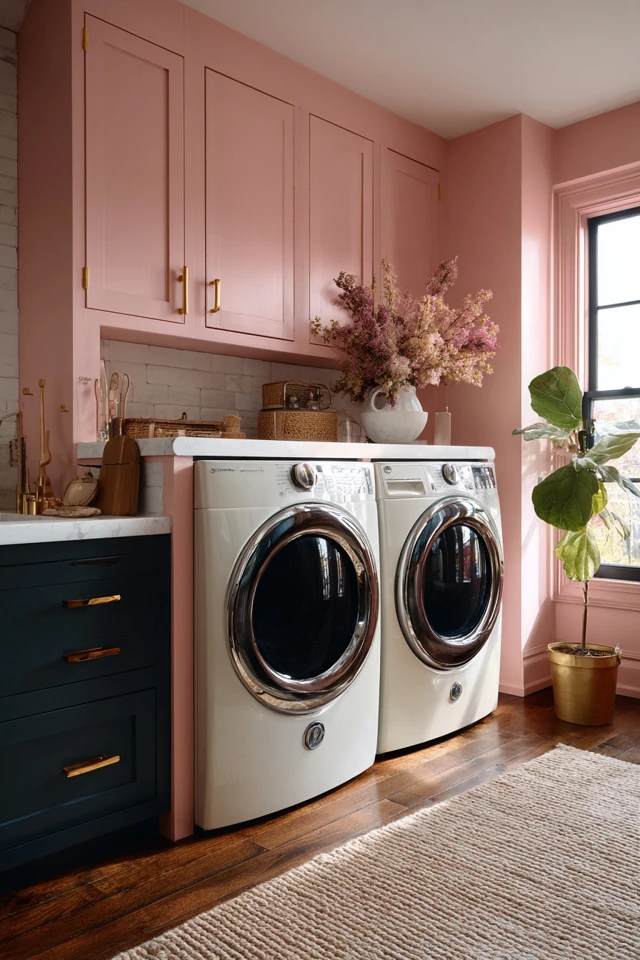
Match the door finish to the nearby cabinets, and repeat the hardware. A matte surface hides fingerprints and splashes better than gloss, which bounces light and shows every smudge. In a kitchen with industrial touches, a metal mesh or slatted panel works well. In a softer room, painted wood doors in the wall color make the machines nearly disappear.
Noise is part of the design too. Solid-core doors and soft-close hinges cut the clatter, and a rug in the dining area absorbs some of the hum during a spin cycle.
Where to put storage so it stays tidy
Hidden machines only look good if the supplies are hidden as well. Put a hamper or two baskets beside the machines, a small shelf for detergent, and a hook or rod for air-drying. If you want more storage nearby, a small-kitchen pantry can take the overflow, but keep it away from the dryer's heat. Store detergent and pods high and closed if you have pets or small children, and ask your vet about any product your animal might get into.
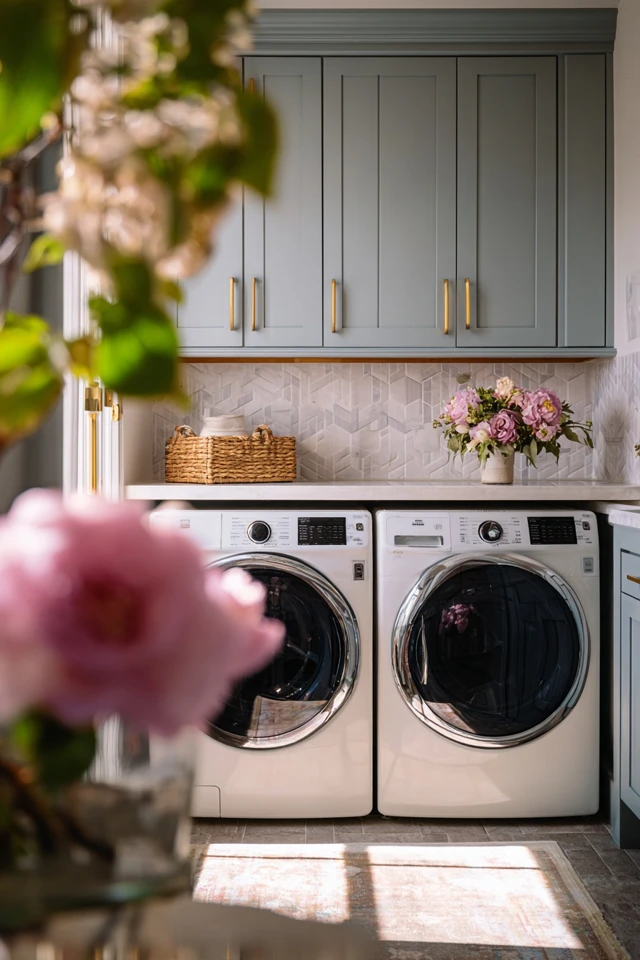
If you like the idea of a pull-out ironing board or fold-down counter inside the enclosure, add it while the doors are being built, since retrofitting is harder.
Frequently asked questions
What are the trends for laundry rooms in 2026?
Trends lean toward laundry areas hidden behind cabinet-style fronts, matte finishes and built-in storage. Pick what suits your kitchen, since a hidden setup that matches your cabinets will outlast a trend.
Is it safe to enclose a washer and dryer?
Yes, as long as you follow the clearances and ventilation in the appliance manual. Keep the dryer vented outdoors and leave doors open or slatted while it runs.
What can I use to hide my washer and dryer?
A curtain, bifold or sliding doors, a slat panel or matching cabinetry all work. Curtains are the easiest and doors give the most built-in look.
How to hide laundry room hookups?
A recessed wall box tucks water and drain connections inside the wall. Keep shut-off valves reachable and ask a licensed plumber or electrician to handle any changes.
Filed under
ArticlesMeet the author
Written by an architect.
Julio Arco is a passionate architect with years of experience in architecture, interior design, urban design, and housing. He studied at prestigious universities across North America and Europe.

- Name
- Julio Arco
- Job
- Architect and online interior designer
- Studied
- Architecture, ITESM · Urban Design and Housing, McGill
- Partner
- Thor, Australian Shepherd
- Thor’s title
- Head of quality control