How to Hide a Washer and Dryer: 7 Practical Ideas
Hide a washer and dryer with doors, curtains, slat panels or a cabinet, plus how to cover hoses and hookups and keep enough airflow around the machines.

By Julio Arco
Architect and online interior designer
In this post
- Can you hide a washer and dryer with a curtain?
- What doors and cabinets hide laundry best?
- How do you hide washer hoses and hookups?
- Can you build a frame, box or slat panel around them?
- Is it safe to enclose a washer and dryer?
- How do you hide laundry in a living room or open plan?
- What else makes a hidden laundry easier to live with?
- Frequently asked questions
The simplest way to hide a washer and dryer is to put a door, curtain or panel in front of them and leave room for air to move. Which one you pick depends on how much wall you have, how often you do laundry, and whether the machines sit in a kitchen, a hallway or a living area.
It's very common to end up with laundry in the middle of the home, so don't feel bad if yours is. Below are the options I'd consider, from cheapest to most involved, plus how to deal with the hoses and the safety questions.
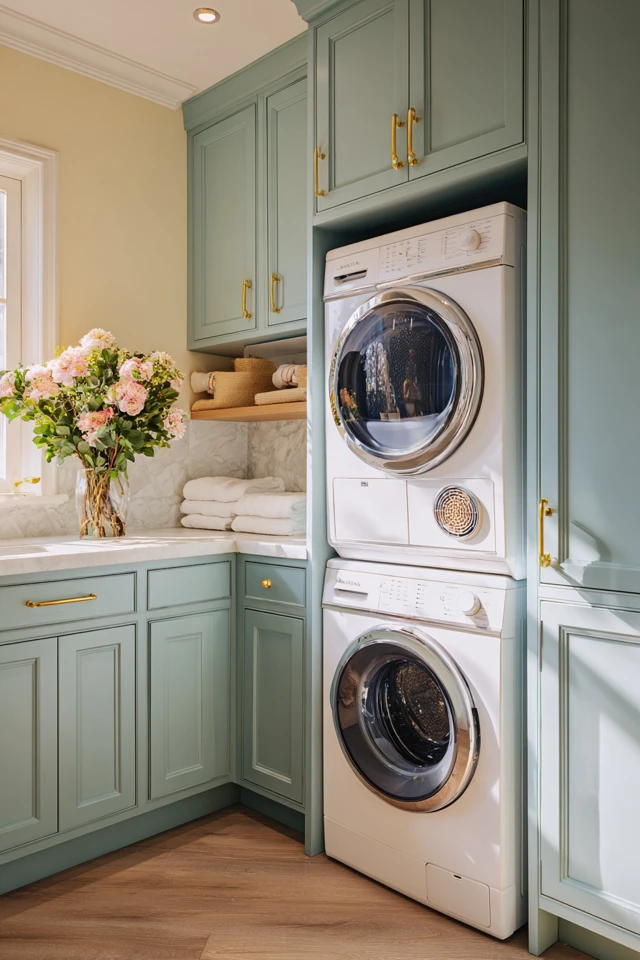
Can you hide a washer and dryer with a curtain?
Yes, and it's the easiest fix for renters. A curtain on a ceiling-mounted or tension rod costs little, needs no carpentry and can be taken down when you move.
- Mount the rod a few inches wider than the machines so the fabric stacks to the side and doesn't pinch against the door of a front loader.
- Choose a washable fabric such as cotton or linen blend. Lint and dog hair collect fast near a dryer.
- Let the curtain hang an inch or two off the floor so air can still reach the machines.
- Leave it open while the dryer runs. Fabric that sits against a hot, running machine is not a good idea.
A curtain that matches the drapes in the adjacent room reads as part of the decor, not as a cover-up.
What doors and cabinets hide laundry best?
Doors give the cleanest look. Bi-fold doors need little swing space, pocket doors need none, and sliding panels suit a wide alcove. Louvered or slatted fronts let air pass, which is useful when the appliances are close to the opening.
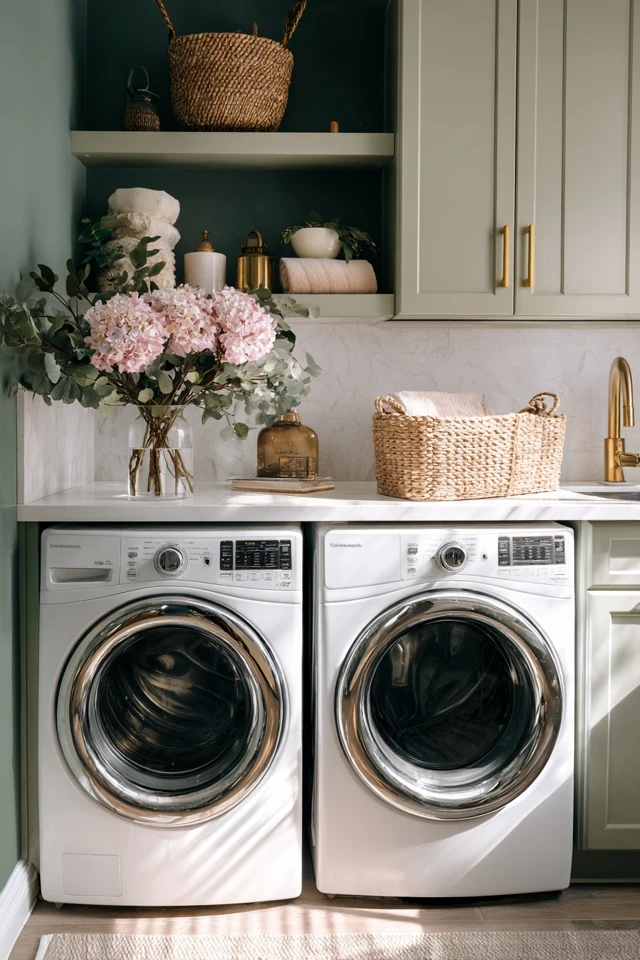
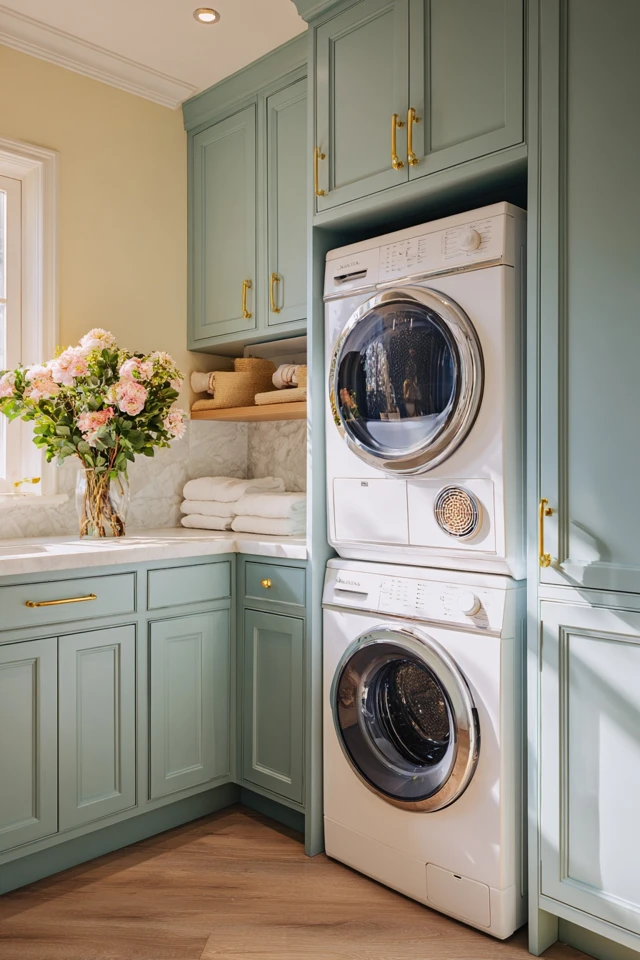
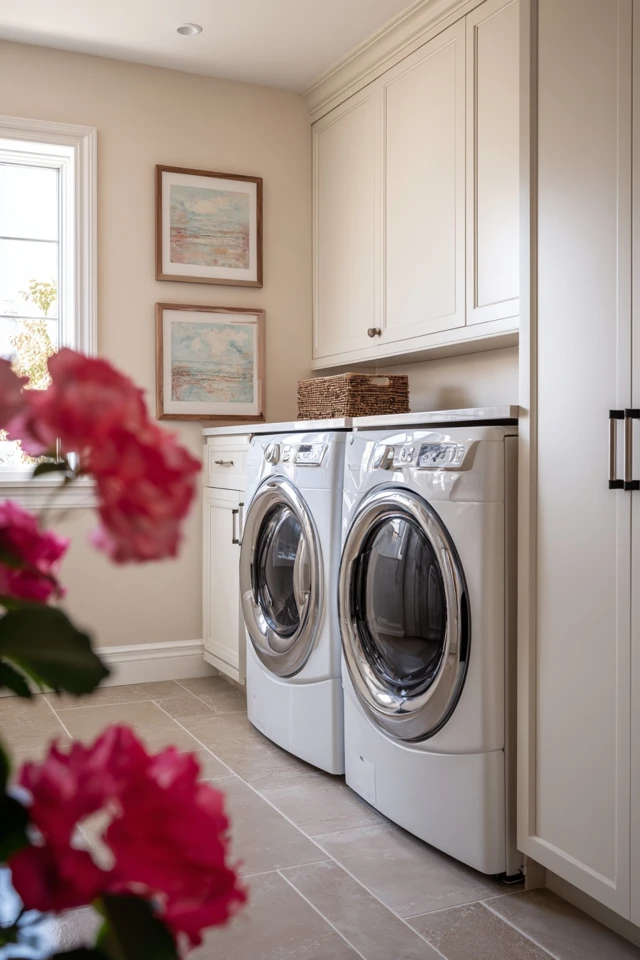
If the machines stand in a room that is already a kitchen, a run of cabinet-style doors can make them look like part of the cabinetry. That is the usual way to hide a washer and dryer in a kitchen: match the door finish and hardware to the cabinets around them. Matte finishes tend to hide fingerprints better than gloss, while a glossy surface bounces more light into a dim nook.
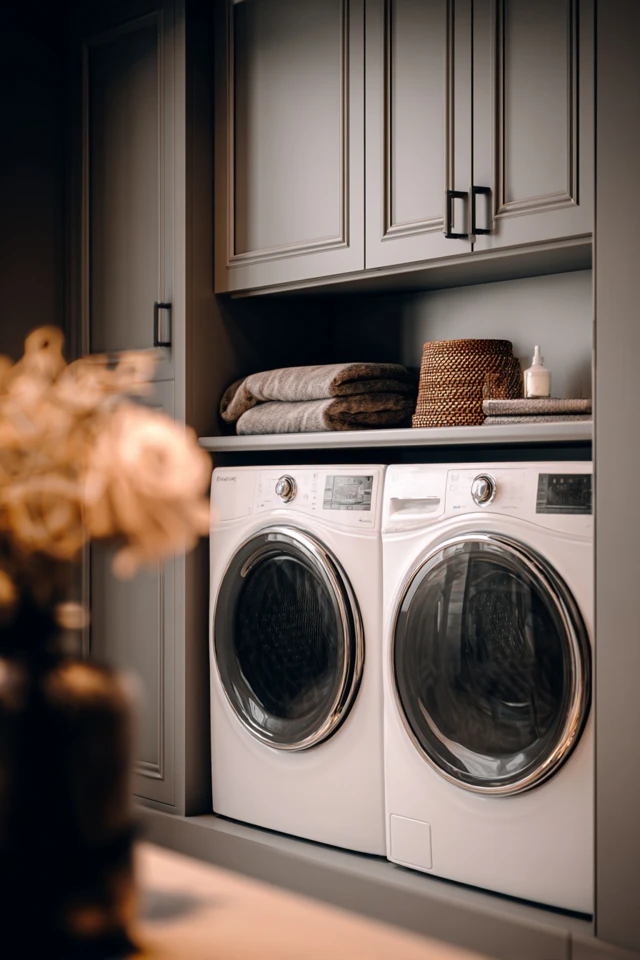
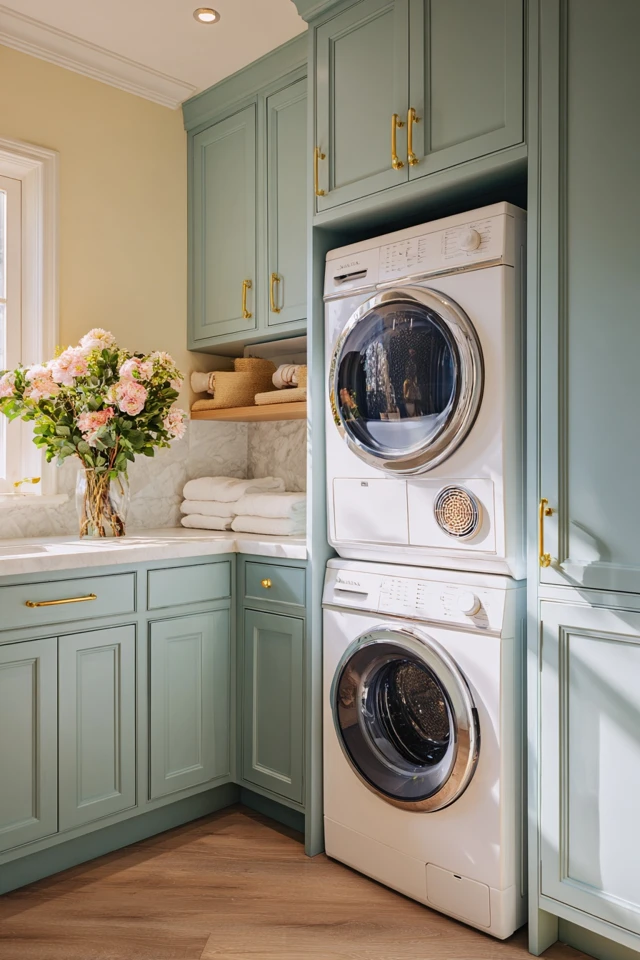
For a stacked pair, a tall closet with two doors works well. Keep a working counter nearby if you can, and set it at roughly elbow height, about 36 inches, so folding doesn't strain your back.
How do you hide washer hoses and hookups?
Hoses and shutoff valves are the part that makes a hidden laundry look messy, and they must stay reachable. Whatever you build, keep a way to get to the valves.
- Paint the wall behind the machines the same color as the surrounding wall, so the hoses recede.
- Use a recessed washer box, which pulls the valves and drain into the wall. Plumbing changes are a job for a licensed plumber.
- Add a narrow removable panel or a small access door beside the machines.
- Bundle loose hoses and cords with clips so they don't dangle. Don't kink them.
- Slide the machines forward only as far as the manufacturer's manual allows, then cover the gap with a trim piece you can lift off.
If you're wondering how to hide laundry room hookups without opening walls, a slim cabinet or a slat panel just in front of them is usually enough.
Can you build a frame, box or slat panel around them?
A wood slat panel is a good middle path. Vertical slats look intentional, let air through and can be built as a removable frame. A simple box with a hinged top also works over a washer if you only need to cover the controls and lid area, though never over a dryer's vent path.
Scale matters. Heavy, oversized doors on a small alcove feel clunky, and thin slats across a large wall look flimsy. Match the module size of your panel to the width of the machines.
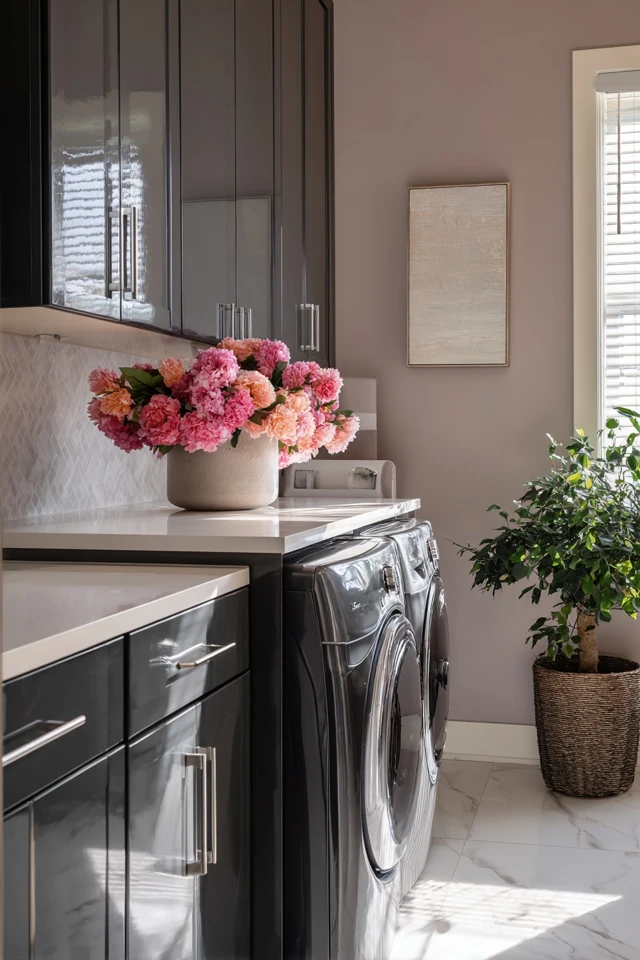
Is it safe to enclose a washer and dryer?
It can be, with some conditions. A dryer gives off heat and moisture, so it needs air around it and an exhaust that vents outside. Check your dryer's manual for the clearances the manufacturer requires, and don't close doors on a running dryer unless the enclosure is made for it. Louvered doors, a gap at the top and bottom, and a clear vent duct are the usual measures.
The heat is also worth thinking about for storage. Cabinets close to heat sources are warm, and Ohio State University Extension notes that cabinets next to the range, dishwasher or refrigerator exhaust are too warm for keeping food safe. The same logic applies to a shelf above a dryer: keep detergent and cleaning supplies there, and keep food elsewhere. For anything involving vent ducts, gas or electrical work, I recommend a licensed professional.
How do you hide laundry in a living room or open plan?
When the machines are near the sofa, noise and sightlines both matter. A closed door with an insulated front helps with sound, and a tall cabinet in the same finish as your media wall makes the machines disappear. If you're planning a living area with a TV wall, see these living room with TV ideas for ways to share one run of cabinetry. Apartment dwellers may find the layouts in these apartment living room ideas helpful for fitting a closet into a tight plan.
What else makes a hidden laundry easier to live with?
- Add a hamper or two pull-out bins inside the cabinet so sorting happens in one place.
- Put lighting inside the closet. A motion-sensor strip is cheap and makes the space feel finished.
- Use a fold-down counter or a pull-out drying rack that tucks away.
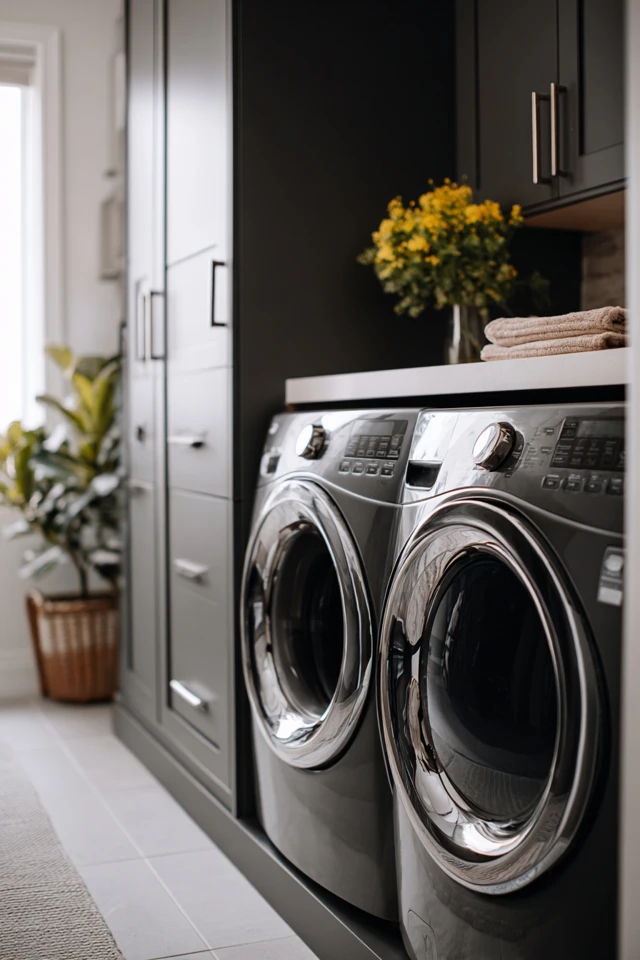
- Keep a plant or woven basket on top of the cabinet to soften the look. If you have a dog or cat, check with your vet before choosing a plant.
- Wipe the floor behind the machines now and then. Pet hair collects there.
Start with the cheapest option that fits your room. A curtain or a painted wall will tell you quickly whether you need a full cabinet.
Frequently asked questions
What can I use to hide my washer and dryer?
Curtains, bi-fold or pocket doors, louvered cabinet fronts and slat panels all work. Pick the one that matches your budget and leaves room for airflow and access to the valves.
Is it safe to enclose a washer and dryer?
It can be if the dryer has the clearance its manual requires and vents outside. Use louvered doors or leave gaps for air, and ask a licensed professional about ducting.
How to hide laundry room hookups?
Paint the wall to match, add a recessed washer box, or place a removable panel or slim cabinet in front. Always keep the shutoff valves reachable.
Can I hide a washer and dryer in a kitchen?
Yes. Cabinet-style doors in the same finish as your kitchen cabinets make the machines read as part of the run. Leave ventilation and a service gap.
Filed under
ArticlesMeet the author
Written by an architect.
Julio Arco is a passionate architect with years of experience in architecture, interior design, urban design, and housing. He studied at prestigious universities across North America and Europe.

- Name
- Julio Arco
- Job
- Architect and online interior designer
- Studied
- Architecture, ITESM · Urban Design and Housing, McGill
- Partner
- Thor, Australian Shepherd
- Thor’s title
- Head of quality control