Industrial Farmhouse Decor: How to Mix Rustic and Raw
Learn what industrial farmhouse decor is, how to mix wood, metal and brick, and which palette, lighting and textiles keep the look warm, not cold.

By Julio Arco
Architect and online interior designer
In this post
Industrial farmhouse decor pairs the raw materials of old factories (steel, brick, concrete) with the softer, lived-in side of a farmhouse (wood, linen, wool). Keep a quiet neutral base, pick one or two metals, add warm wood, and soften everything with textiles.
If your home leans cold, or too country, this blend is a handy fix. Each side corrects the other.
What is industrial farmhouse style?
It's a hybrid. Farmhouse brings simple forms, natural wood and a cozy, practical feel. Industrial brings exposed structure, metal and a pared-back look. The result is a room that feels sturdy and relaxed rather than polished or themed.
Farmhouse as a reference has deep roots. The National Park Service notes that the Italianate style, most prevalent in America between the 1850s and the 1880s, was inspired by rambling, informal Italian farmhouses. The informal, honest-materials attitude carries over into today's version.
Do industrial and farmhouse go together?
Yes, because they share values: durable materials, visible craft and little ornament. They differ in temperature. Industrial reads cool and hard, farmhouse reads warm and soft. Mixing them works when you balance the two instead of letting one win.
As an architect, I'd keep roughly two-thirds warm (wood, fabric, soft light) and one-third hard (metal, brick, concrete). Flip that ratio and you get a loft that feels like a workshop.
Key elements of industrial farmhouse style
- A neutral base: warm white, greige, soft gray, with charcoal or black for contrast.
- Wood with visible grain, such as reclaimed beams, a plank table or an open shelf.
- Black or aged metal in light fixtures, shelf brackets, window frames and hardware.
- One raw surface: exposed brick, concrete, or a plaster wall with some texture.
- Textiles that add softness: wool throws, linen curtains, a flat-weave rug.
- Simple, sturdy furniture with little ornament.
How do you mix wood and metal?
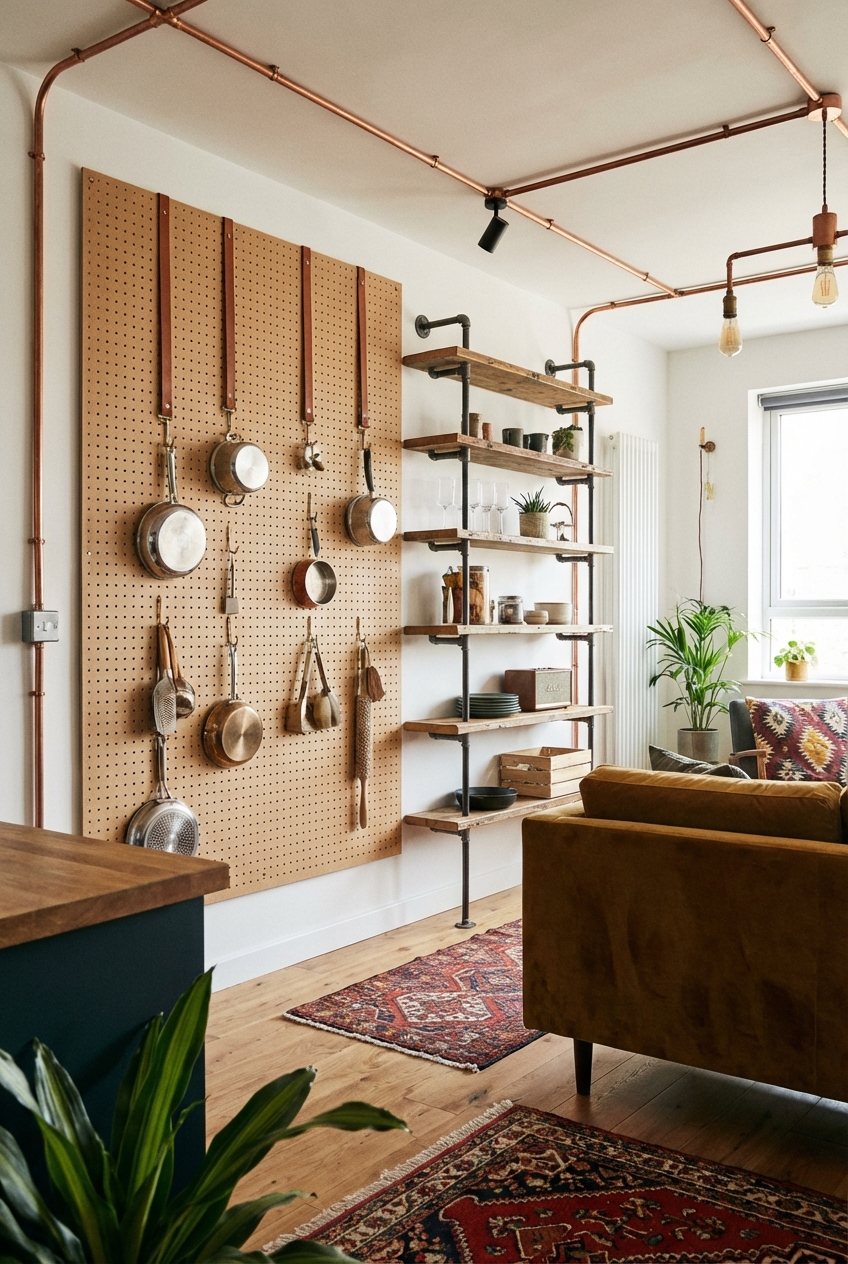
Choose a dominant material for each room and let the other act as an accent. A wood dining table with black steel chairs works. So does a steel-framed shelf holding wood boxes and a few plants.
Stick to one or two metal finishes. Black iron and aged brass sit well together; add chrome, copper and gold and the room starts to look scattered. Repeat each finish at least twice so it reads as a decision.
Matte finishes absorb light and soften shadows. Glossy ones bounce it around. In a room with lots of metal, favor matte wood and fabric so the surfaces don't compete.
Which colors work best?
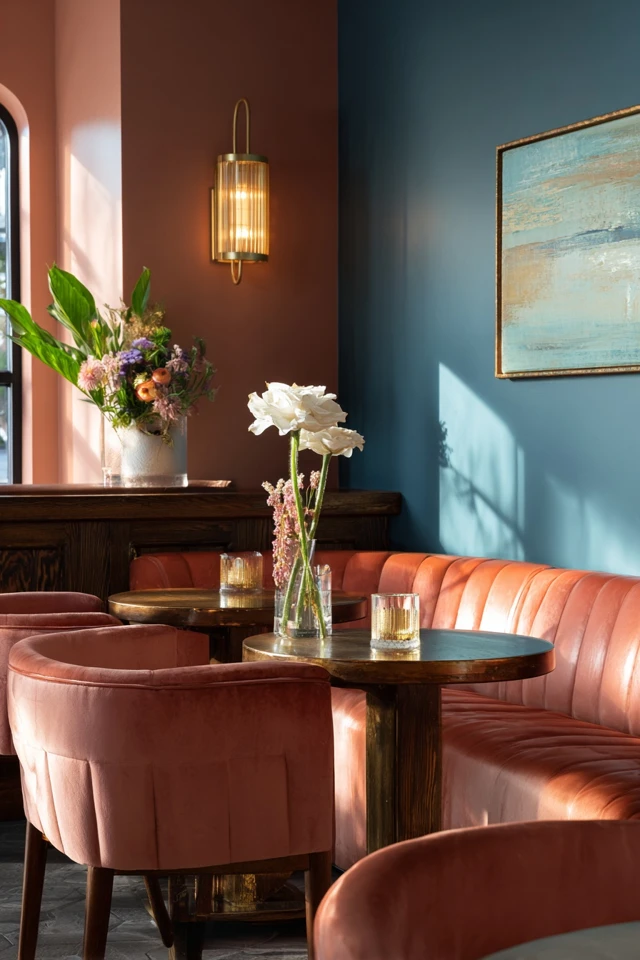
Start with a calm base and let materials supply the interest. Warm white or greige walls keep brick and steel from feeling harsh. Charcoal works for a grounding piece like a sofa, a cabinet or window frames. If you want color, choose one muted accent such as rust, olive or deep blue, and repeat it in a pillow, a print and a lamp shade.
Test paint swatches on the wall and look at them morning and evening. Daylight changes the same gray from cool to warm.
Room-by-room ideas
Industrial farmhouse living room
Anchor the room with a sofa in a washable, textured fabric. If a dog sits on it, I recommend removable covers or a tightly woven fabric that you can brush clean. Add a wood coffee table, a metal floor lamp and a large wool or flat-weave rug that defines the seating area.
A brick or concrete wall is a great backdrop. Keep what's in front of it uncluttered so the texture can do the work.

Industrial farmhouse kitchen
Open shelves in thick wood on black brackets show off everyday dishes. Pair them with closed cabinets so clutter has somewhere to go. Pendant lights in black metal over an island or table add the industrial note, and a butcher-block or wood counter supplies warmth.
Use hardware in one finish and keep backsplashes simple, like plain tile or painted brick.
Bedroom and entry
In a bedroom, a metal bed frame or black wall sconces plus linen bedding and a wool throw keeps things restful. In an entry, a steel-and-wood bench with a basket underneath handles shoes and leashes. For more storage in small spots, see our shoe rack ideas.
Layout and lighting
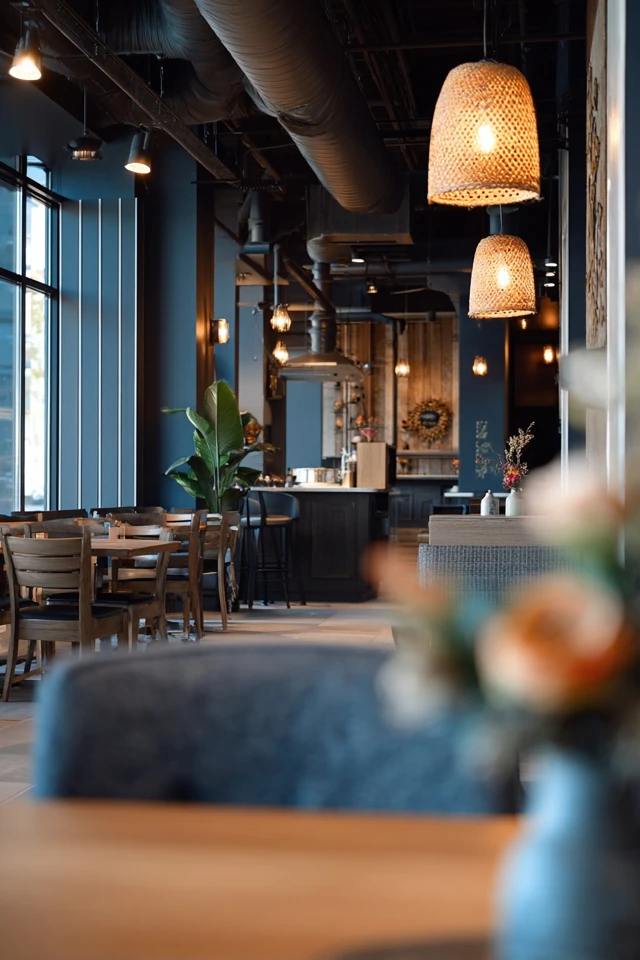
Open plans suit this style, but they need zones. Use rugs, a low shelf or a console behind a sofa to separate living, dining and work areas without blocking sightlines. Leave about 30-36 inches for main walkways.
Layer light: ceiling or pendant light for general use, a lamp for tasks, and a warm bulb for evenings. Warm light is the quickest way to take the chill off metal and brick.
Keeping it from feeling like a theme
Skip the faux signs and mass-produced "rustic" slogans. Pick fewer, better pieces: a real wood table, one good pendant, a rug that can handle paws. Visual order helps too. In perception research, the first Gestalt principle is the figure-ground relationship, in which we sort a scene into figure and ground. In a room, that means a plain wall lets one strong object, such as a lamp or an old table, stand out.
Metal finishes are easy to care for. Wipe them with mild soap and a soft cloth, avoid abrasive cleaners, and treat a patina as character. For a lighter take on neutral kitchens, compare the Scandinavian kitchen approach.
Frequently asked questions
What is industrial farmhouse style?
It combines farmhouse warmth (natural wood, soft textiles, simple forms) with industrial materials like black metal, brick and concrete. The result is a practical, relaxed look with a bit of edge.
Do industrial and farmhouse go together?
Yes. Both favor honest, durable materials and little ornament. Balance the cool metal and brick with plenty of wood and fabric.
What are some ideas for industrial decor?
Try black metal pendants, open wood shelving, an exposed brick or concrete wall, a leather or linen sofa and a wool rug. Keep the palette neutral and repeat one metal finish.
How do I keep industrial farmhouse decor from feeling cold?
Add warm bulbs, wood surfaces and layered textiles such as throws, curtains and rugs. Limit metal to one or two finishes.
Filed under
ArticlesMeet the author
Written by an architect.
Julio Arco is a passionate architect with years of experience in architecture, interior design, urban design, and housing. He studied at prestigious universities across North America and Europe.

- Name
- Julio Arco
- Job
- Architect and online interior designer
- Studied
- Architecture, ITESM · Urban Design and Housing, McGill
- Partner
- Thor, Australian Shepherd
- Thor’s title
- Head of quality control