Modular Shelving Ideas for Every Room and Budget

By Julio Arco
Architect and online interior designer
In this post
- What makes shelving modular?
- Modular shelving ideas for the living room
- Modular shelving ideas for the bedroom
- Modular shelving for a small apartment
- How much space should you leave around shelving?
- Wood, metal or wire
- Is it cheaper to build or buy?
- How do you style modular shelves?
- Using modular shelves in the kitchen or pantry
- Frequently asked questions
The best modular shelving ideas start with one decision: what the shelves are for. Storage, display or a room divider each call for a different depth, height and mix of open and closed modules. Pick the job first, then size the system to the wall.
A modular shelving system kit lets you build in stages and rearrange later, which is why it suits renters and anyone who isn't sure how a room will end up. Below are ideas by room, sizing rules, material trade-offs and styling steps.
What makes shelving modular?
Modular shelving is made of repeatable units (frames, shelves, cabinets, drawers) that connect in different combinations. You can start with two columns and add a third next year, swap an open shelf for a closed cabinet, or take the whole thing apart when you move.
That flexibility is the main selling point. A fixed bookcase is finished the day you assemble it. A modular system keeps changing with you.
Modular shelving ideas for the living room
For a living room, the most useful setup is closed storage at the bottom and open shelves above. Cabinets hide remotes, cables, dog toys and blankets. The open shelves above hold books and a few objects you like looking at.
- Run a wide, low unit along the wall behind a sofa or beside the TV to anchor the seating group.
- Use a double-sided, open-back unit as a divider in an open-plan room. Light still passes through.
- Leave a gap for a lamp or a plant so the wall doesn't read as one solid block.
If the shelves sit near a TV, see our TV room ideas for how to balance screen and storage.
Modular shelving ideas for the bedroom
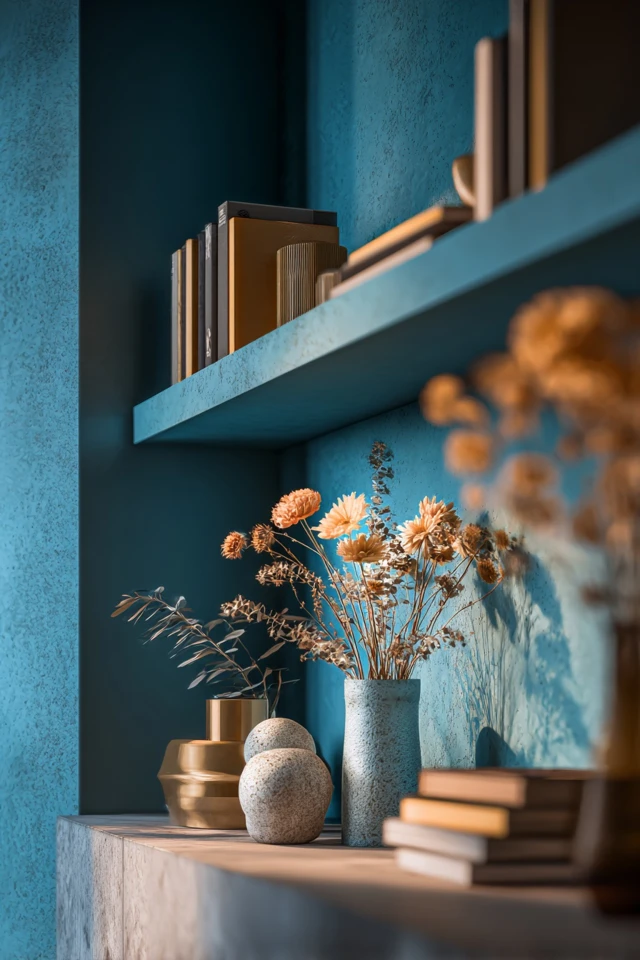
In a bedroom, keep things calmer and lower. A short unit beside or behind the bed can replace a nightstand and a dresser at once. Modules with drawers are useful here: socks, chargers and spare sheets disappear, and the open cubes hold a book stack and one or two objects.
Avoid tall, heavy units directly above the headboard. Anything that could fall while you sleep is better placed on a wall away from the bed, and tall units should be anchored to the wall studs.
Modular shelving for a small apartment
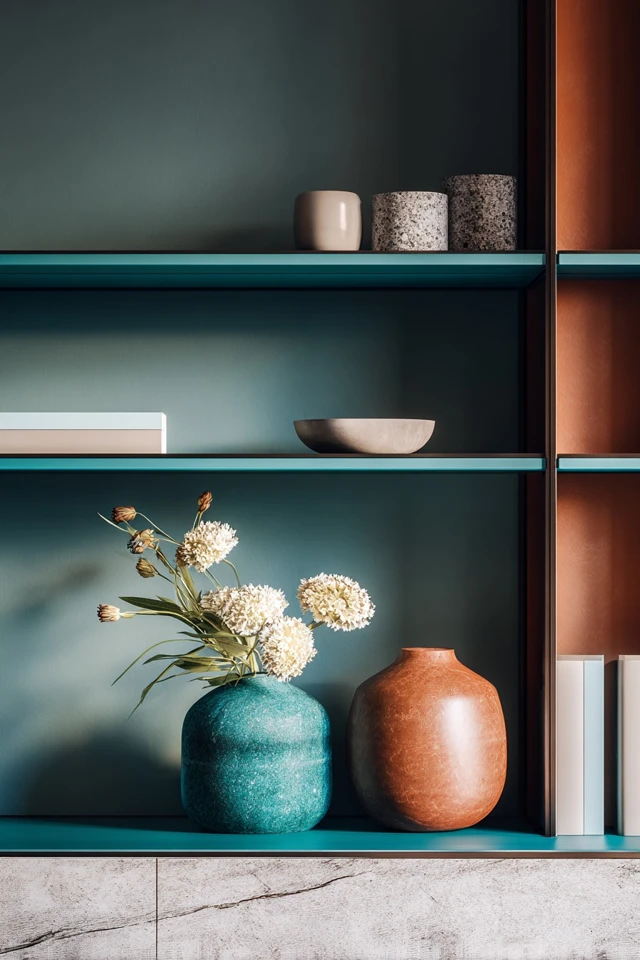
In a small apartment, go vertical and shallow. Shelves about 10-12 inches deep hold books and everyday items without eating the floor, and a tall narrow column draws the eye up instead of crowding the room.
- Choose light finishes or open backs so the wall stays visible.
- Skip heavy base cabinets that cover a lot of floor.
- Look for modules that double as a desk surface or a bench.
- Renters: freestanding or tension-mounted kits avoid big holes in the wall.
How much space should you leave around shelving?
Keep a main walkway about 30-36 inches wide. Where shelving sits beside a sofa or bed, a few inches of breathing room stops the wall from feeling cramped. Measure the wall corner to corner, mark the footprint with painter's tape, and live with the tape for a day before you buy.
Put everyday items between waist and eye level, decorative or seasonal things up high, and heavy objects low. As an architect, I recommend anchoring any unit taller than about 4 feet to the wall, especially if kids or pets share the room.
Wood, metal or wire: which material works?
Each material has a trade-off:
- Wood looks warm and takes paint or stain, but cheap particleboard sags under heavy books and dislikes humidity. Sealed wood handles moisture better.
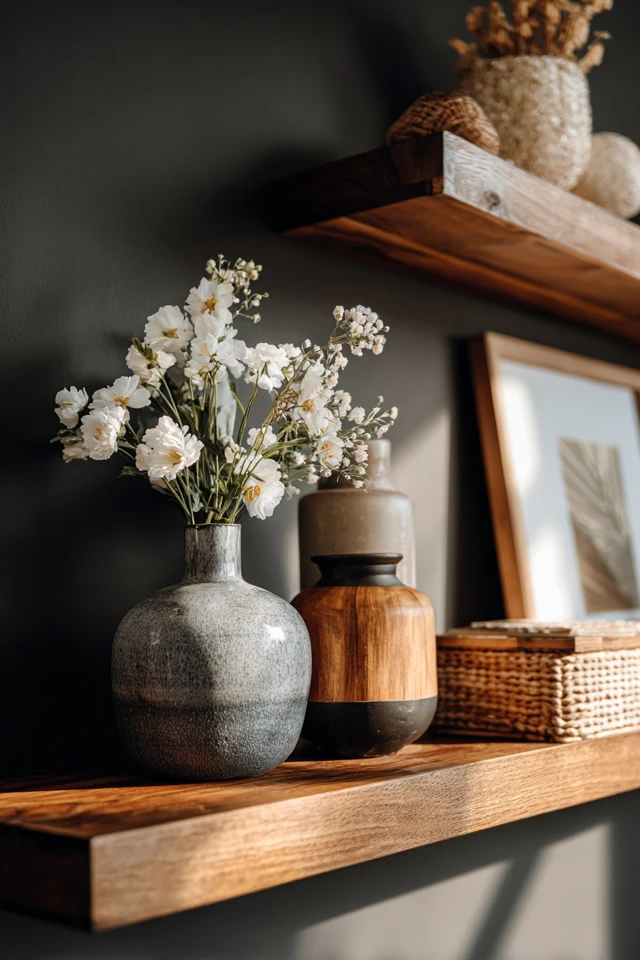
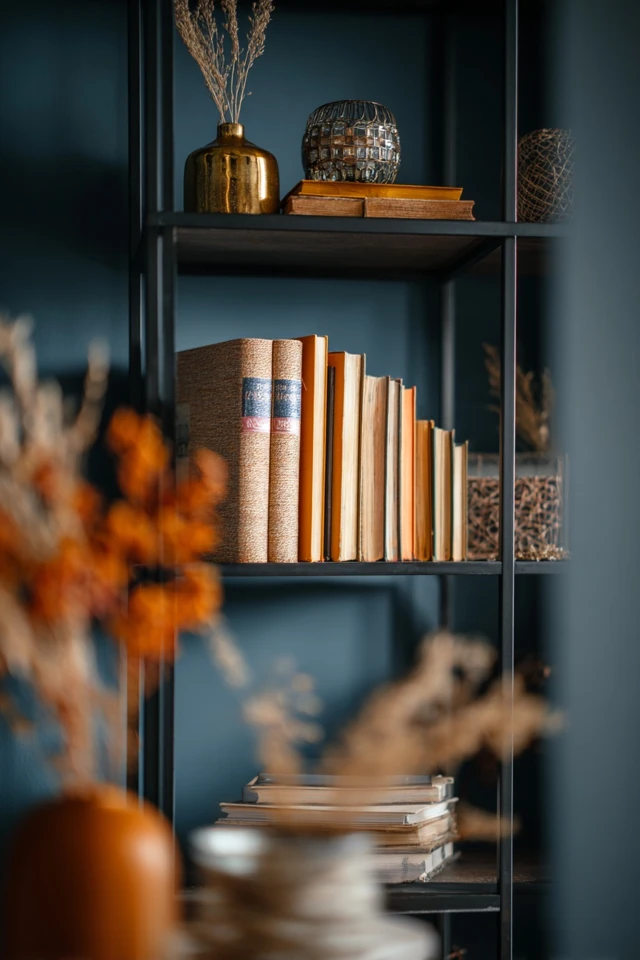
- Metal frames are slim and strong. A wood shelf on a black or brass frame is a reliable pairing.
- Wire is the most affordable and lets light through, though small objects tip over and it looks more utilitarian.
Matte finishes hide fingerprints and paw smudges better than glossy ones, and they reflect less glare. Woven baskets add softness and hide clutter on lower shelves.

Is it cheaper to build or buy?
Buying a kit is usually the simpler route: the parts are cut, drilled and tested for load. Building your own with boards and brackets can cost less if you already own the tools, and it lets you size shelves to an odd wall. For affordable modular shelving options, start with a basic frame and add drawers or doors later, one module at a time. Our modular shelving trends post shows current finishes worth waiting for.
How do you style modular shelves?
Use the triangle idea: arrange objects so the eye travels in a loose triangle across a shelf, with a tall item, a medium one and a low one. Group odd numbers, vary heights, and leave empty space. A shelf filled edge to edge looks like storage, not display.
- Sort items into everyday, decorative and seasonal, and give each its own zone.
- Place flat things (books, trays) at the back and sculptural pieces in front.
- Repeat one or two accent colors across shelves.
- Add a puck light or LED strip to warm the display.
- Swap a few objects with the seasons.
For more arrangement ideas, see our modular shelf styling guide and more modular shelving ideas.
Using modular shelves in the kitchen or pantry
Modular units work well for pantry storage, but placement matters. Ohio State University Extension notes that canned foods stored above 70 degrees F have a shorter shelf life, and that cabinets near the range, dishwasher or refrigerator exhaust are too warm for food. Keep food shelves away from those spots and use them for dishes and pans instead.
Frequently asked questions
What are some unique shelving ideas?
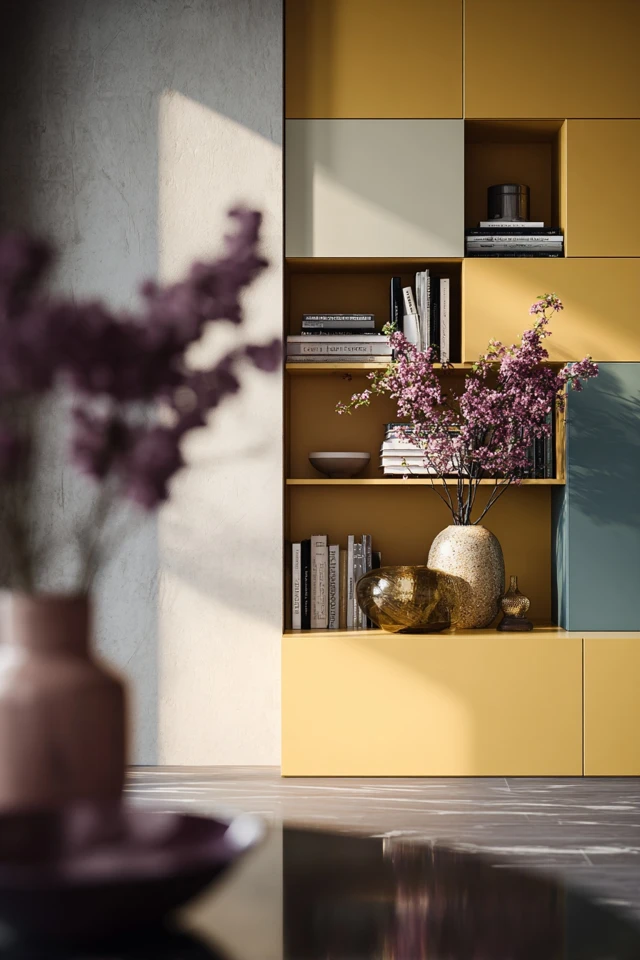
Try an open-back unit as a room divider, staggered modules that leave gaps for lamps or plants, or a shelf interior painted in a muted accent color. A built-in desk or bench module adds function.
What is the triangle rule for decorating shelves?
Arrange objects of different heights so they form a loose triangle: one tall piece, one medium and one low. It keeps the eye moving and avoids a flat row.
Are there modular shelving systems that are renter-friendly?
Yes. Freestanding and tension-mounted kits need little or no drilling. Tall freestanding units should still be anchored per the maker's instructions, so check your lease.
How often should I restyle my shelves?
There's no rule. A few swaps a year, such as plants, textiles or a stack of books, are enough to keep them fresh.
Filed under
ArticlesMeet the author
Written by an architect.
Julio Arco is a passionate architect with years of experience in architecture, interior design, urban design, and housing. He studied at prestigious universities across North America and Europe.

- Name
- Julio Arco
- Job
- Architect and online interior designer
- Studied
- Architecture, ITESM · Urban Design and Housing, McGill
- Partner
- Thor, Australian Shepherd
- Thor’s title
- Head of quality control