Air Plant Types: Easy Tillandsia Varieties for Your Home
Learn the main air plant types, how xeric and mesic Tillandsia differ, which are easiest for beginners, and how to display them around your home.

By Julio Arco
Architect and online interior designer
In this post
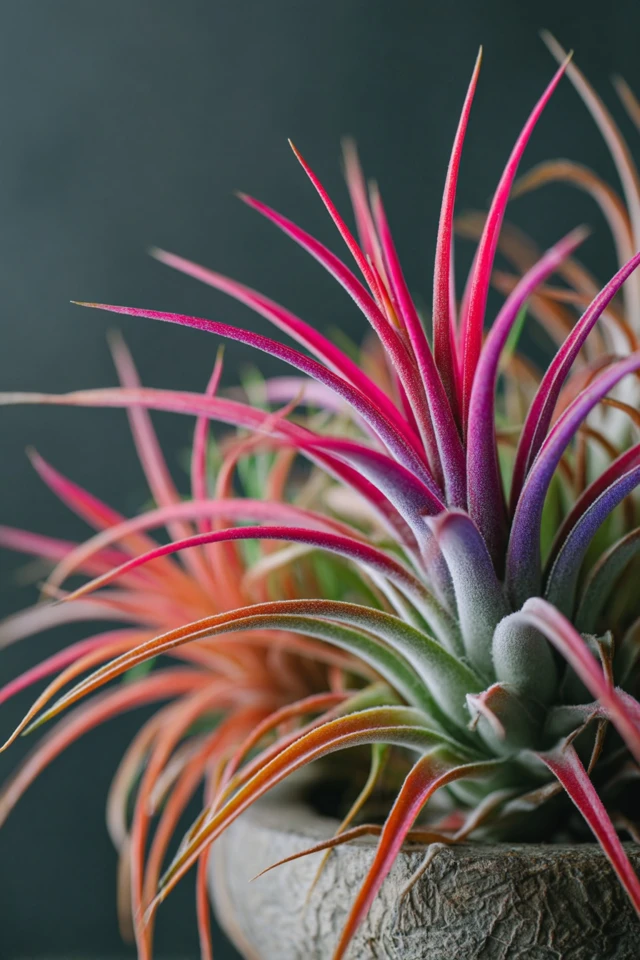
Air plants are all Tillandsia, a large genus with hundreds of species, and for home use you can sort them into two groups: xeric (silvery, fuzzy, drought-tolerant) and mesic (greener, smoother, happier with more moisture). If you want an easy start, pick a small ionantha, a bulbosa or a caput-medusae.
Below you'll find the types of air plants most people buy, how to tell which one you have, and where each one looks good in a home.
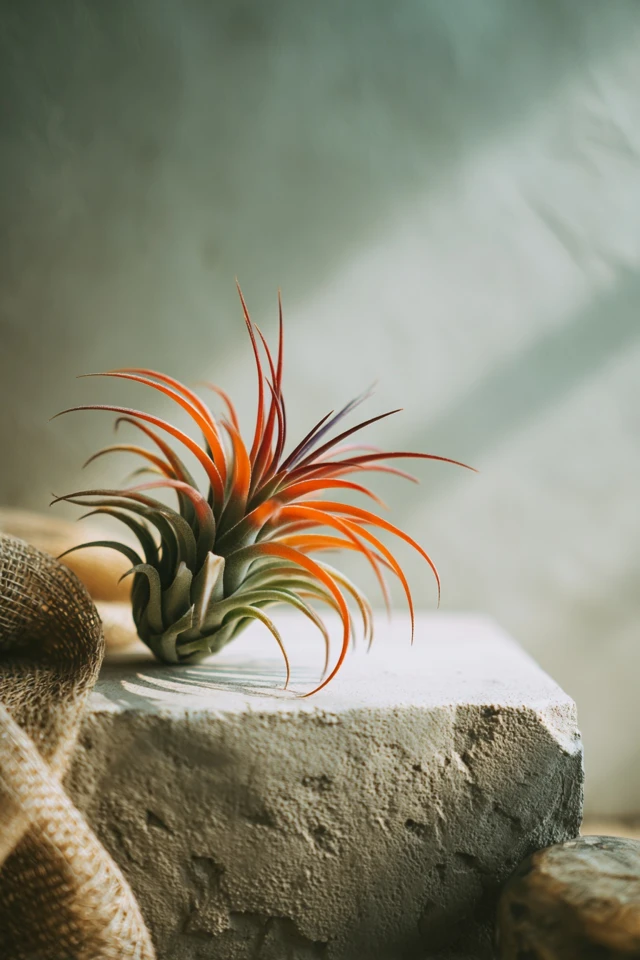
What are air plants?
Air plants grow without soil. They collect water through specialized cells on their leaves called trichomes, which absorb moisture from the air or rain. Those tiny scales are also what give many species their silver, fuzzy look.
No soil means no pot, which is why they work on a shelf, a piece of driftwood or a wall mount.
Xeric vs mesic air plants
This is the most useful distinction when you're choosing between air plant types, because it tells you how the plant will behave in your home.
Xeric types
Xeric plants come from drier, brighter places. They have dense, silvery trichomes, stiff leaves and often a sculptural shape. Tillandsia xerographica, the large rosette people put on coffee tables, is the classic example. They want strong light and tolerate dry air better.
Mesic types
Mesic plants have greener, thinner leaves with fewer visible trichomes. They prefer a bit more humidity and slightly more frequent watering. Many of the small, bright green plants sold for terrariums fall here, though plenty of popular species sit in between.
Most popular air plants
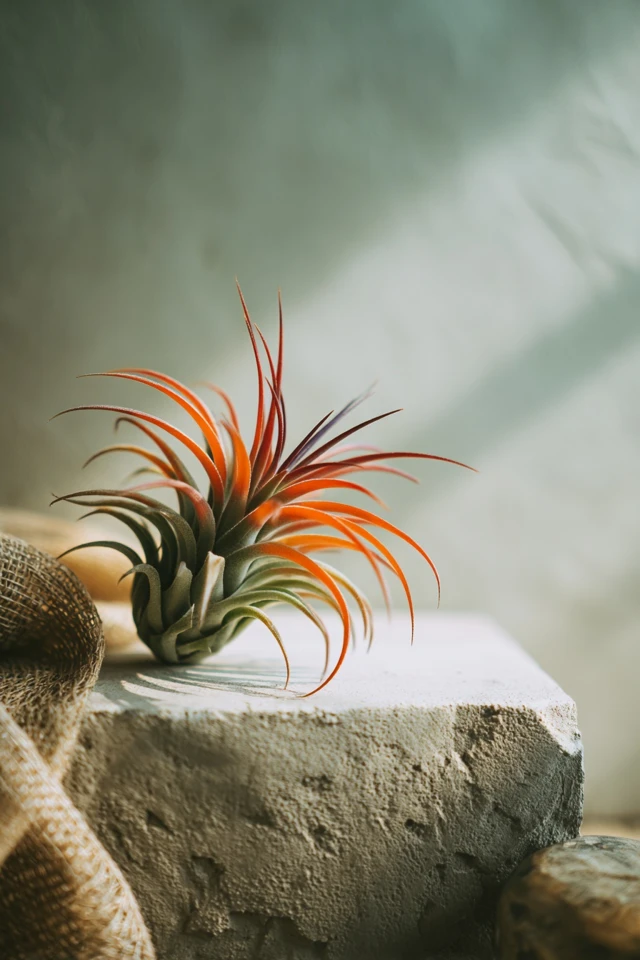
- Tillandsia ionantha: small, tight rosette that blushes red-pink before it blooms. Easy to tuck anywhere.
- Tillandsia xerographica: wide, curving silver leaves. The statement piece, and slow growing.
- Tillandsia bulbosa: swollen base with long, curly leaves that look a bit like tentacles.
- Tillandsia caput-medusae: similar bulbous base, with twisting leaves. Named for Medusa's hair, and it earns it.
- Tillandsia tectorum: very fuzzy, almost white. Handle it gently and keep water off the leaves when you can.
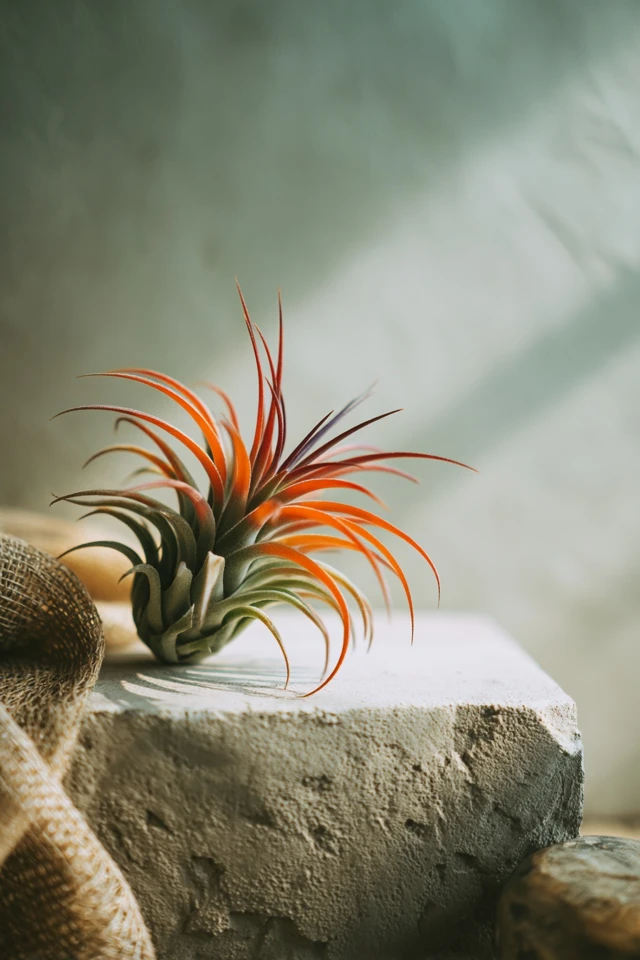
Which are the best beginner friendly air plants?
Ionantha, bulbosa and caput-medusae are forgiving and widely available. If you like the look of a bigger plant, xerographica is fine once you've got the watering routine down, but it costs more, so practice on a cheaper one first.
For more on routines, see our guide to caring for air plants.
How to identify your air plant
If you're wondering how to identify my air plant, work through these clues:
- Check the color. Silver and fuzzy points to a xeric species such as tectorum or xerographica. Bright green and smooth leans mesic.
- Look at the base. A swollen, bulb-like base suggests bulbosa or caput-medusae.
- Check the size and shape. A small, dense rosette is often ionantha. A wide, open rosette with broad leaves is likely xerographica.
Many hybrids exist and look like several species at once, so a certain ID from a photo isn't always possible. Our post on air plant species identification goes further, and this roundup of types shows more varieties.
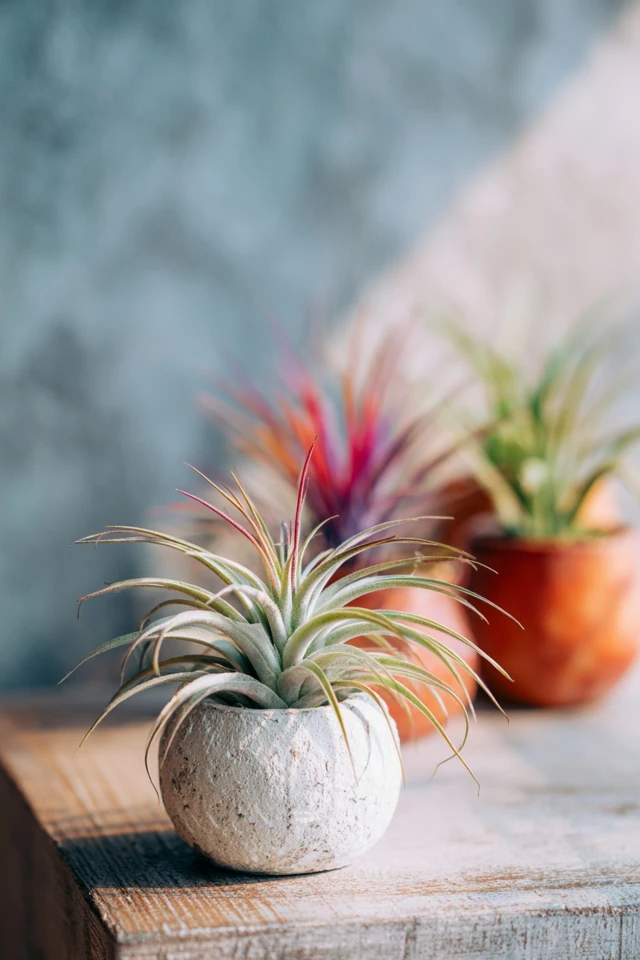
Light and water, briefly
Most houseplants look their best in bright, indirect light, and air plants are no exception. Distance matters: light levels drop quickly as you move away from the window, so keep them within a few feet of one. Too little light fades them and too much burns them, so avoid hot afternoon sun straight through glass.
For watering, the Iowa State extension recommends submerging air plants in room temperature water for about 30 to 60 minutes, then shaking them out well so water doesn't pool in the leaves and cause rot. I'd add one habit: turn the plant upside down on a towel afterward and let it dry in open air. Xeric types can go a little longer between soaks than mesic ones.
How to display air plants
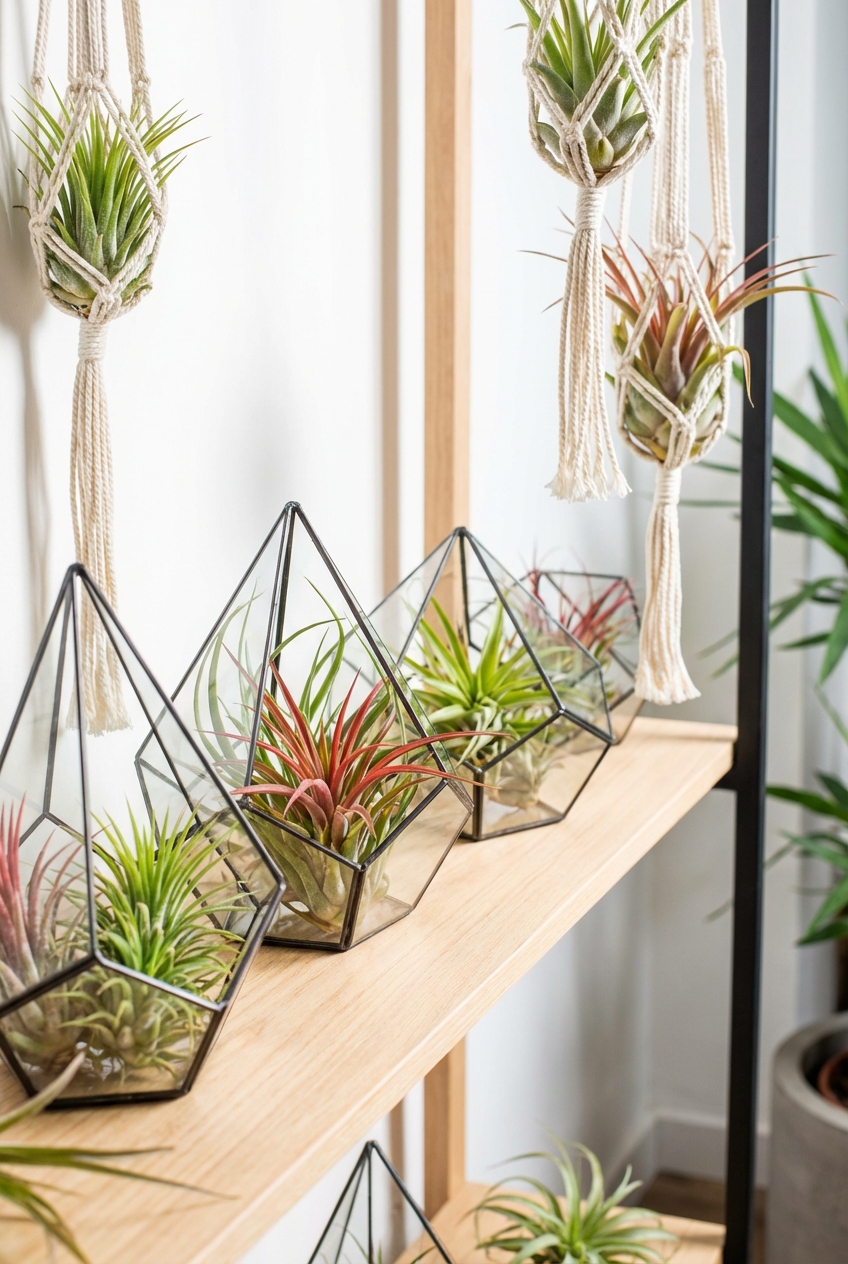
Air flow matters more than the container. Open holders such as driftwood, wire frames, shells or a wall board let leaves dry fast. I'd avoid sealed glass globes unless they're open at the top and you can empty any water.
- Group in odd numbers, like 3 or 5, with one larger plant and smaller ones around it.
- Use a small plant on a narrow shelf or window ledge, where it adds green without using floor space.
- In a hallway or entry, repeat the same holder material at eye level so the row reads as intentional.
- Pair silvery xeric plants with warm woods and terracotta. Bright green ones show well against slate, navy or matte black.
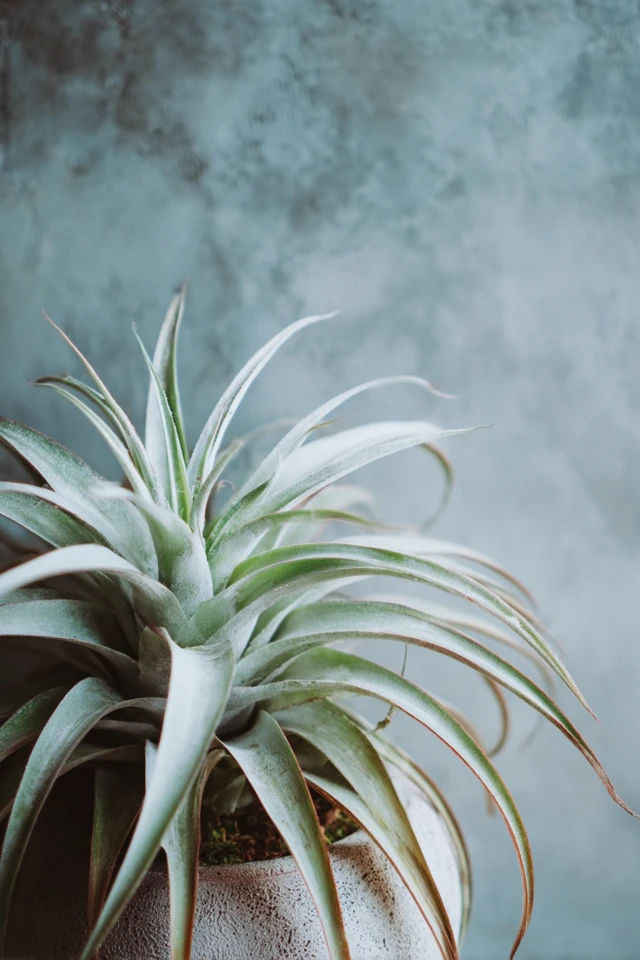
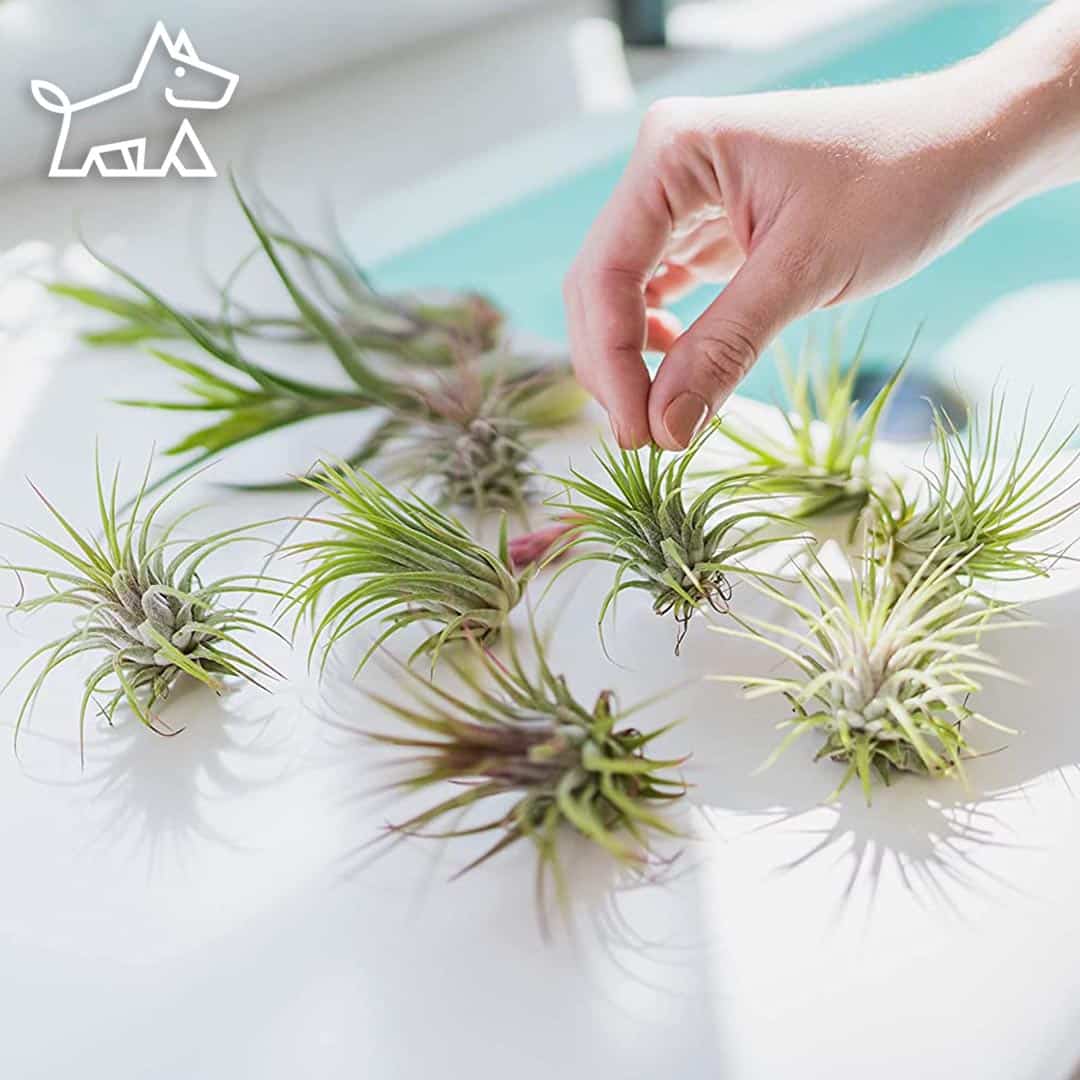
If you share your home with a dog or cat, keep displays up high or wall-mounted so nobody chews the plant or the holder. Check with your vet about whether a specific species is safe for your pet.
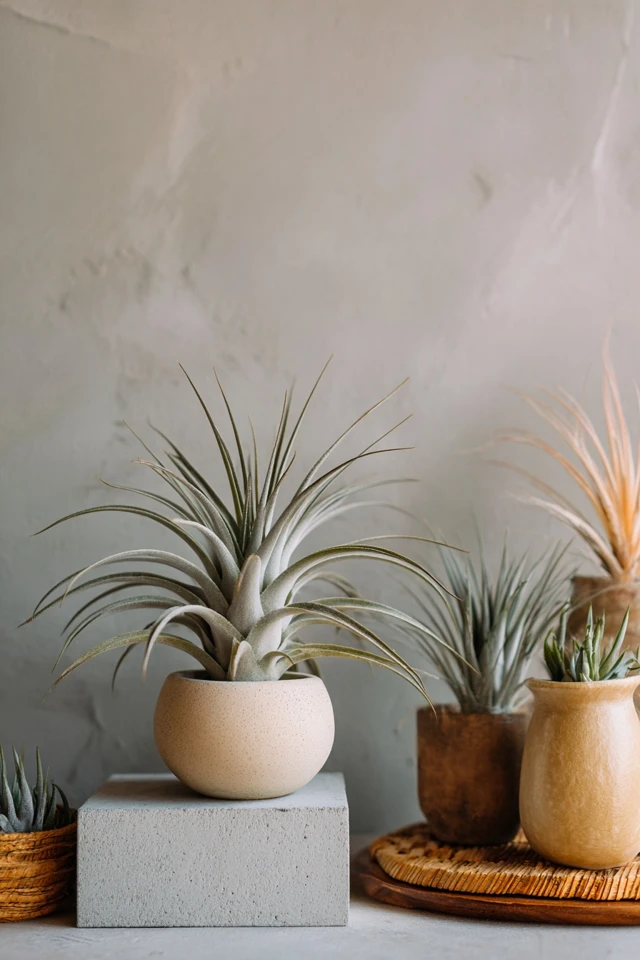
Browsing for more ideas? Try the foyer ideas post for entryway styling.
Frequently asked questions
What are the different types of air plants?
All air plants are Tillandsia, and home growers usually split them into xeric (silvery, fuzzy, drought-tolerant) and mesic (greener, more moisture-loving) types. Popular species include ionantha, xerographica, bulbosa, caput-medusae and tectorum.
How do I identify my air plant?
Start with color, base shape and size: silver and fuzzy suggests a xeric species, a swollen base suggests bulbosa or caput-medusae, and a small tight rosette is often ionantha. Hybrids can blur these clues.
What are the top 10 most popular air plants?
Ionantha, xerographica, bulbosa, caput-medusae and tectorum are among the most commonly sold. Others often seen are streptophylla, brachycaulos, capitata, juncea and aeranthos.
Do air plants purify the air?
Don't count on an air plant to clean your indoor air in a measurable way. Choose them for their looks and low upkeep.
Filed under
ArticlesMeet the author
Written by an architect.
Julio Arco is a passionate architect with years of experience in architecture, interior design, urban design, and housing. He studied at prestigious universities across North America and Europe.

- Name
- Julio Arco
- Job
- Architect and online interior designer
- Studied
- Architecture, ITESM · Urban Design and Housing, McGill
- Partner
- Thor, Australian Shepherd
- Thor’s title
- Head of quality control