Air Plant Types: How to Tell Them Apart and Pick One
Learn the main air plant types, how xeric and mesic Tillandsia differ, which are easiest for beginners, and how to identify the one you already own.

By Julio Arco
Architect and online interior designer
In this post
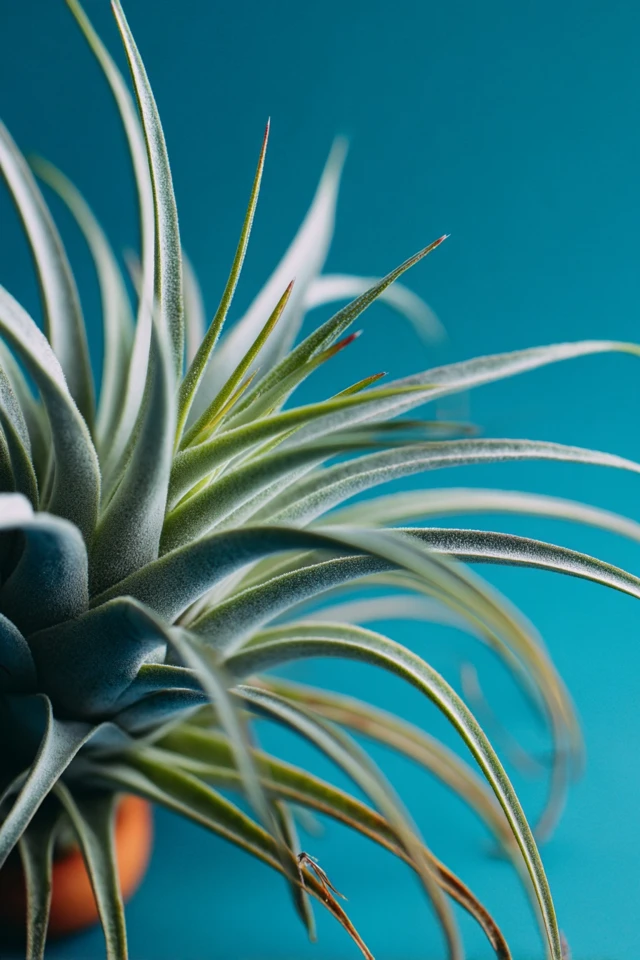
Air plants are Tillandsia, and the easiest way to sort the many types of air plants is by how they handle water and light. Silvery, fuzzy-leaved plants (xeric) cope with dry, bright spots. Greener, smoother-leaved plants (mesic) want a bit more moisture. Start there and the rest gets simple.
If you want a safe first pick, Tillandsia ionantha is small, forgiving and easy to find. It also looks good on a shelf, which is where most of us end up putting them.
What are air plants?
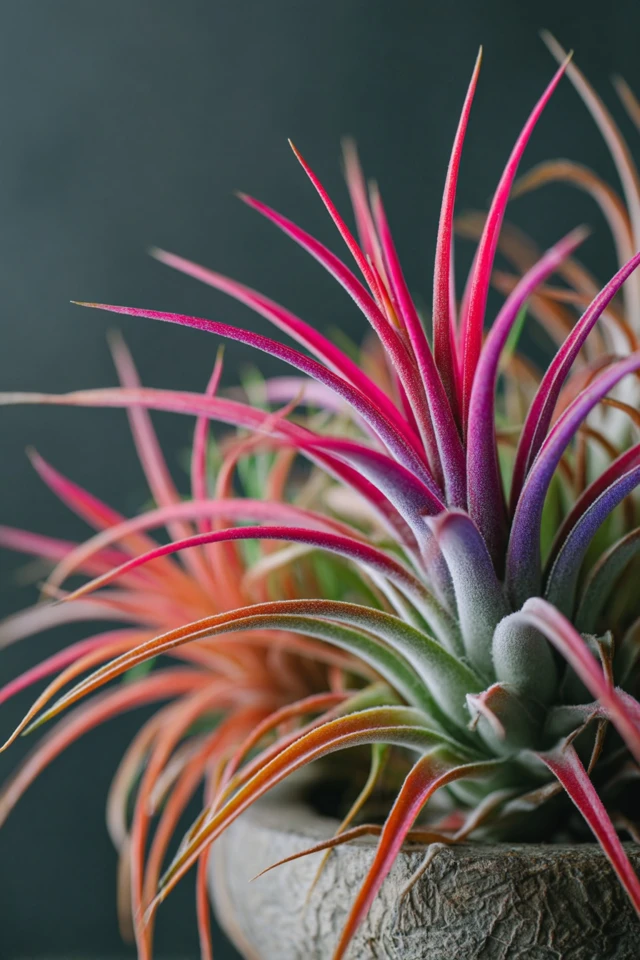
Air plants grow on trees and rocks rather than in soil. They take in water through tiny cells on their leaves called trichomes, which, per Iowa State University Extension, absorb water from the air or rain. That is why you can mount them on a board, set them in a bowl or hang them from a cord.
How many types of air plants are there?
There are hundreds of Tillandsia species, plus many hybrids and cultivars, and I won't try to give you an exact count. You don't need one. A shop will usually carry a dozen or so, and those fall into two practical groups.
Xeric vs mesic air plants
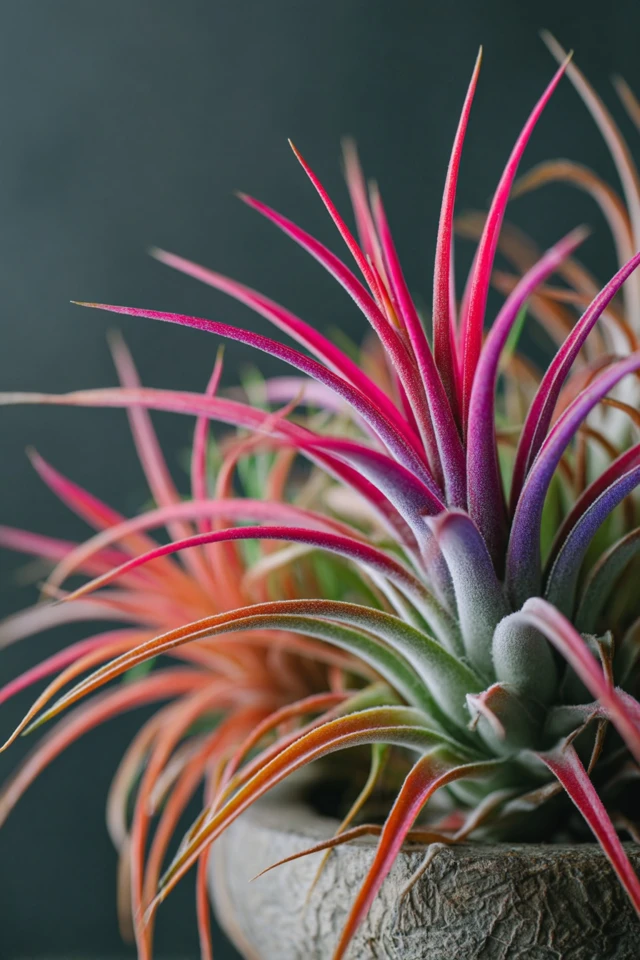
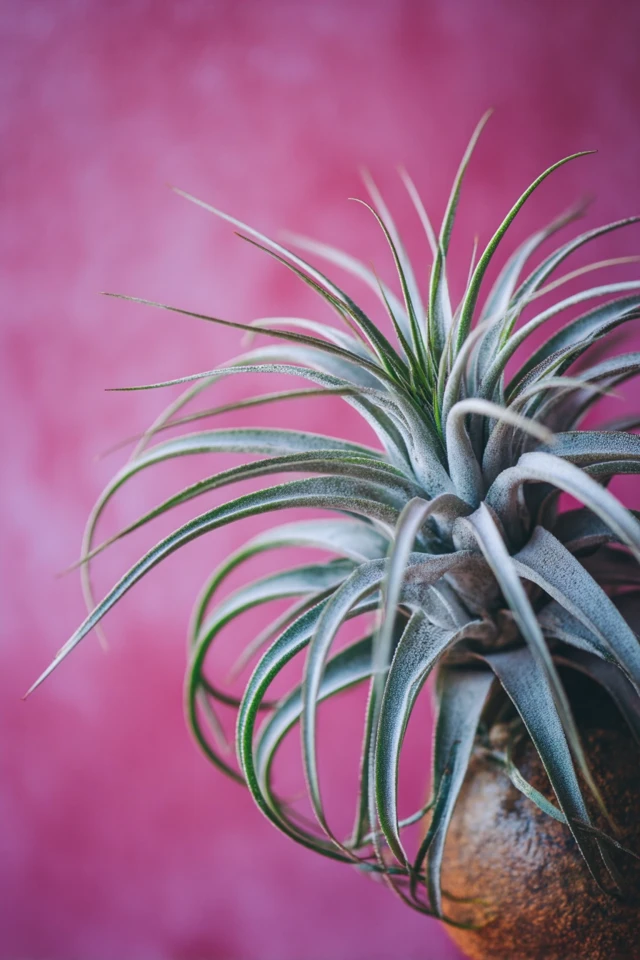
Xeric types come from drier, sunnier places. Their leaves are stiff, thick and covered in silvery trichomes, which gives them that frosted look. They tolerate brighter light and recover from a missed watering better.
Mesic types come from more humid, shaded places. Their leaves are greener, smoother and often thinner. They need more frequent watering and gentler light, and they sulk faster in a dry, heated room.
As an architect, I'd match the plant to the room before I buy it: a dry, sunny south-facing shelf suits a xeric plant, while a humid bathroom with a bright window suits a mesic one.
Popular air plant varieties
These are the most popular air plants you'll meet, and what each is good for.
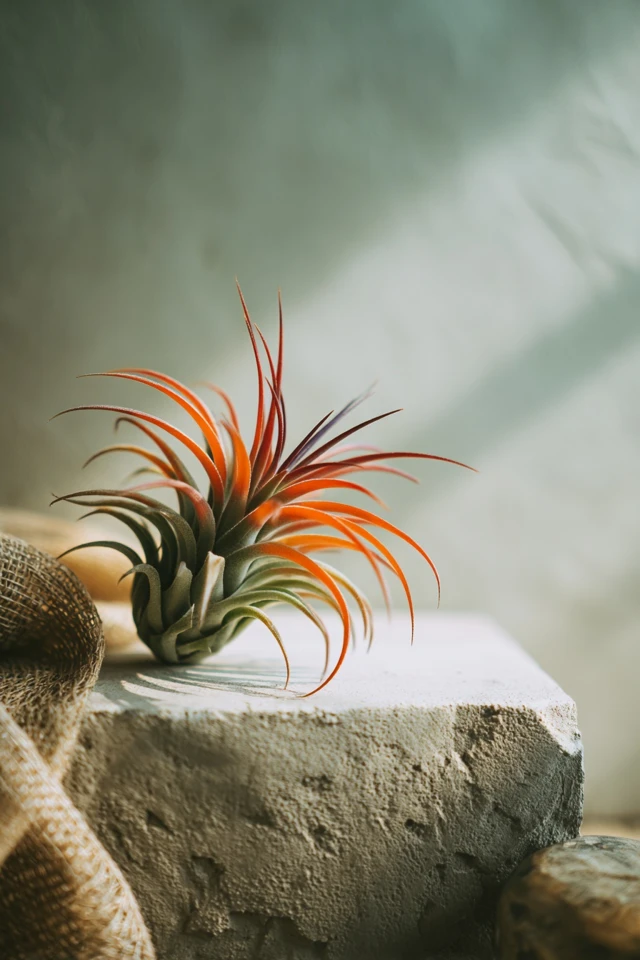
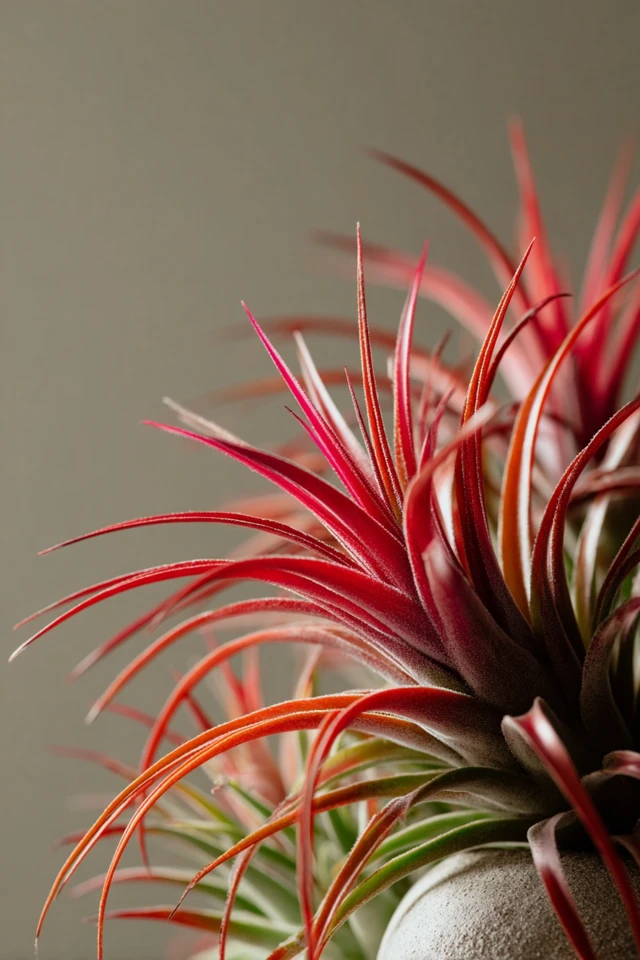
- Tillandsia ionantha: a small rosette, often blushing red when it is about to bloom. Good for groupings and tiny vessels.
- Tillandsia xerographica: a large, wide, silvery plant. It works alone as a sculptural piece in an alcove or on a table.
- Tillandsia stricta: upright, slim leaves. It adds height next to rounder rosettes.
- Tillandsia usneoides (Spanish moss): long, thin strands that drape. Hang it where it has room to fall.
- Tillandsia caput-medusae: curling, twisting leaves on a bulbous base. A strong choice for a mounted display.
Beginner friendly air plants
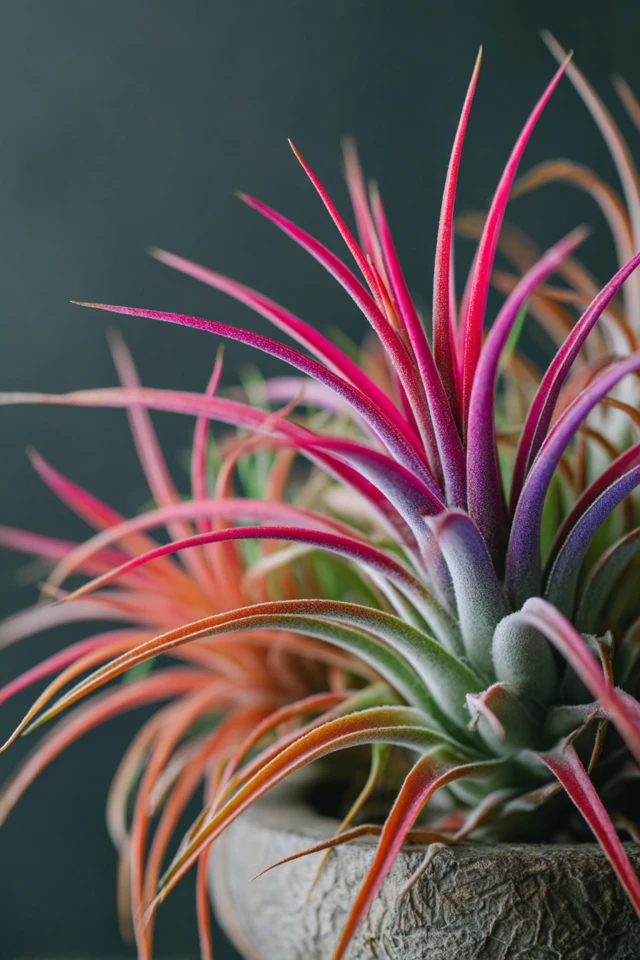
For beginner friendly air plants, look for xeric types with thick, silvery leaves: ionantha, xerographica and caput-medusae are all common and forgiving. Skip the thin-leaved mesic types until you have a feel for your light and humidity.
Buy a plant that looks plump and firm, with no brown, mushy base. Small plants are cheaper, so you can experiment with a few.
How to identify my air plant
If you're wondering how to identify my air plant, work through these clues in order:
- Check the leaf color. Silvery and fuzzy usually means xeric; green and smooth usually means mesic.
- Look at the shape. A tight rosette, an upright tuft, a trailing strand and a bulbous base each point to different species.
- Measure the size. A palm-sized plant and a dinner-plate-sized plant are rarely the same species.
- Look for flowers or color changes. Many species blush before blooming, which narrows the options.
- Compare against the seller's label or photos. Species identification from a single photo is hard, and hybrids make it harder.
How to water and light air plants
Iowa State University Extension suggests submerging air plants in room temperature water for about 30 to 60 minutes, then shaking them out well so water doesn't pool in the leaves and cause rot. Wisconsin Horticulture also notes that improper watering is a primary cause of plant death, so stand them upside down or on a rack to dry.
Bright, indirect light suits most of them. Iowa State notes that light levels drop quickly as you get further away from the window, so keep air plants within a few feet of one. Wisconsin Horticulture adds that too little light causes faded leaves and stunted growth, while too much can burn them. Mesic plants show scorch first.
Dry, heated rooms in winter mean more frequent soaking. If a plant's leaves curl inward or feel papery, it is thirsty.
How to display air plants
Keep the display simple. A few plants in a tray, a glass bowl or a wall-mounted frame look better than a crowded shelf. Group odd numbers of different sizes, and repeat one material (matte ceramic, wood or metal) so the set reads as one piece.
Choose containers that drain or can be emptied, because trapped water is what kills them. If you want more ideas for placement, see these air plant ideas for refreshing your home, or outdoor plant shelf ideas for a sheltered porch. Small rooms work well too, as in a studio apartment, since air plants take up little floor space.
If you share your home with a dog or cat, set plants out of reach and check with your vet about whether a specific plant or fertilizer is safe around pets.
Frequently asked questions
What are the different types of air plants?
Air plants are Tillandsia species, usually grouped as xeric (silvery, fuzzy, drought-tolerant) or mesic (greener, smoother, wanting more humidity). Popular examples include ionantha, xerographica, stricta and Spanish moss.
What are the top 10 most popular air plants?
Common picks include ionantha, xerographica, caput-medusae, stricta and Spanish moss, along with other widely sold Tillandsia. Availability varies by shop, so choose by look and light conditions rather than a fixed ranking.
How do I identify my air plant?
Compare leaf color and texture, overall shape and size, and any flower color against the seller's label or photos. Hybrids are common, so an exact species can be hard to confirm.
Do air plants need soil?
No. They grow on trees or rocks in nature and absorb water through their leaves, so they can sit in a bowl, on a board or on a hanger.
Filed under
ArticlesMeet the author
Written by an architect.
Julio Arco is a passionate architect with years of experience in architecture, interior design, urban design, and housing. He studied at prestigious universities across North America and Europe.

- Name
- Julio Arco
- Job
- Architect and online interior designer
- Studied
- Architecture, ITESM · Urban Design and Housing, McGill
- Partner
- Thor, Australian Shepherd
- Thor’s title
- Head of quality control